



Senator seeks 16-year single tenure for president in Nigeria
By Kamal Alkasim
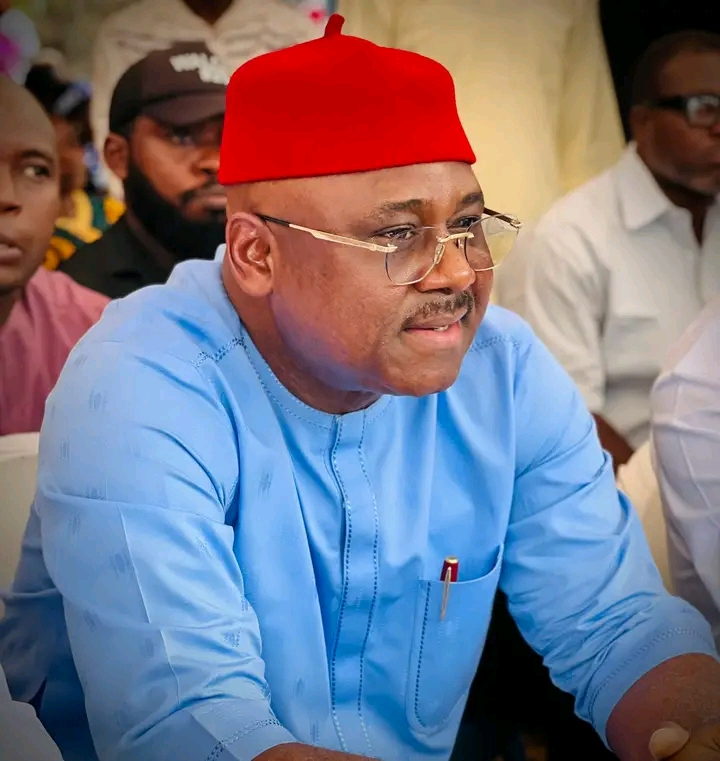
Kenneth Eze (APC-Ebonyi) has called for a nationwide debate on replacing Nigeria’s current two-term, four-year presidential cycle with a single 16-year tenure.
(APC-Ebonyi) has called fotionwide debate on replacing Nigeria’s current two-term, four-year presidential cycle with a single 16-year tenure.
Mr Eze, chairman of the Senate Committee on Information and National Orientation, said this on Monday while addressing journalists at his Ohigbo-Amagu country home in Ezza South LGA.
He noted that frequent election cycles undermined policy continuity and stalled national development.
“Every four years, we return to campaign mode. By the third year, governance slows as attention shifts to re-election; that is why projects are abandoned, and policies are not allowed to mature.
“Nigeria’s constitution provides for a four-year presidential term, renewable once, but if you ask me, I will advocate one tenure of 16 years. It sounds controversial, but it will allow policies to run their full course and stabilise the system,” Mr Eze explained.
Mr Eze, therefore, proposed scrapping the two-term structure in favour of a single, extended tenure that would free leaders from electoral pressures and enable them to pursue long-term reforms.
The lawmaker noted that critical sectors such as power, infrastructure, agriculture and fiscal reform required sustained commitment beyond short political cycles.
According to him, irrigation schemes, mechanised farming programmes, and energy reforms require continuity to yield a measurable impact. He defended recent economic measures, including the removal of the fuel subsidy, describing them as unavoidable steps to avert fiscal collapse.
”We were borrowing to pay salaries. That is not sustainable for any country; tough decisions are necessary to secure long-term stability,” said Mr Eze.
Mr Eze maintained that his proposal should be seen as a governance conversation, not an assault on democracy. He called for a broader national dialogue on constitutional reform to determine whether an extended tenure could improve implementation while preserving checks and balances.
He acknowledged that any amendment would require approval by the National Assembly and ratification by state legislatures, but stressed that the process must remain transparent and participatory.
Beyond tenure reform, Mr Eze urged citizens to embrace civic responsibility and patriotism. He challenged journalists, teachers, civil servants and parents to promote national values, warning that policy changes alone could not transform the country.
Prestianni issues statement after racism allegation involving Vinicius Jr
By Sabiu Abdullahi
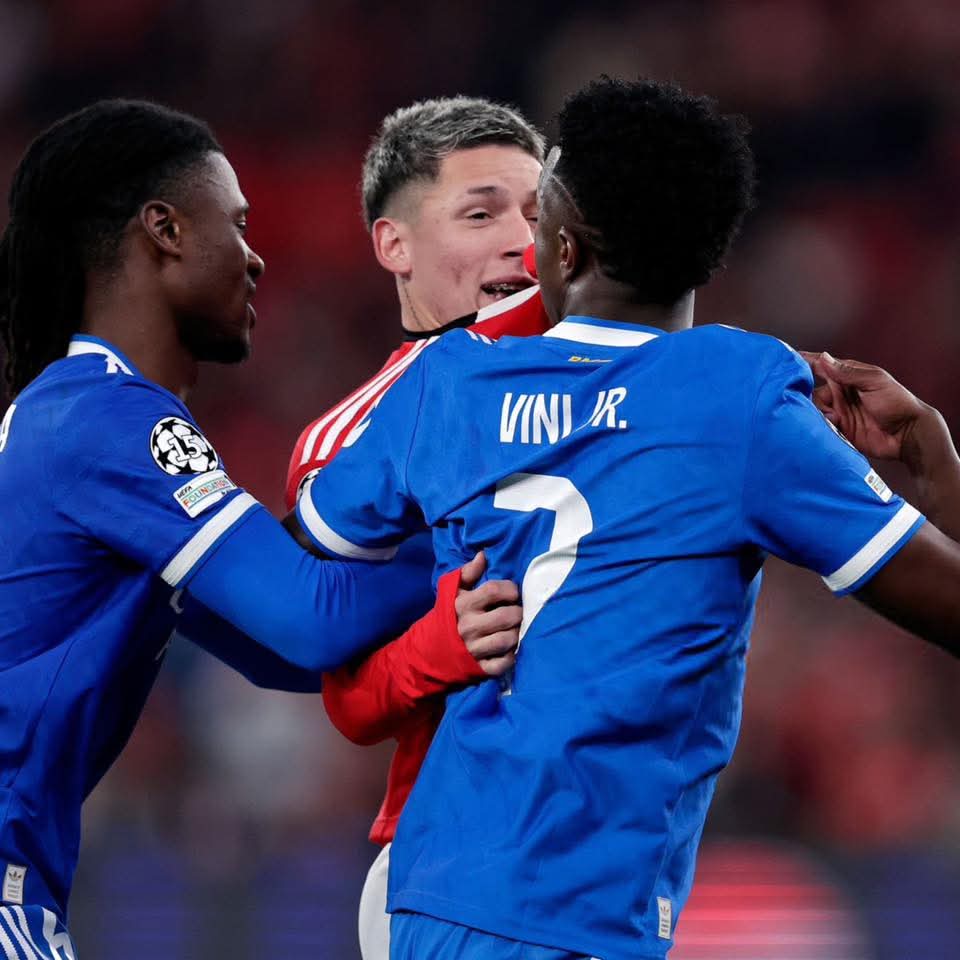
Argentine youngster Gianluca Prestianni has released a public statement after he was accused of directing racist remarks at Vinicius Jr during a recent encounter.
The allegation sparked tension on the pitch and drew reactions from players associated with Real Madrid, leading to widespread debate across football circles and social media.
Responding to the claims, Prestianni denied engaging in any racist conduct. He said the situation stemmed from a misunderstanding.
“I wanna clarify that at no time did I direct racist insults to Real Madrid player Vinicius Jr — who has regrettably 𝐦𝐢𝐬𝐮𝐧𝐝𝐞𝐫𝐬𝐭𝐨𝐨𝐝 what he thought heard from me”. ❌
He insisted that discrimination does not reflect his character or values as a professional footballer.
“I was 𝐧𝐞𝐯𝐞𝐫 racist with anyone and I regret the 𝐭𝐡𝐫𝐞𝐚𝐭𝐬 I received from Real Madrid players”, Prestianni added.
The incident has continued to generate reactions, with many observers calling for calm while awaiting any further clarification or possible review from match authorities.

Four Northern traders reportedly killed as protest rocks Rivers market
By Sabiu Abdullahi
Leaders of the Hausa community in Rivers State have alleged that four of their members lost their lives during last weekend’s protest said to be directed at northerners at Oil Mill Market, located in the Rumuokwurusi axis of Port Harcourt.
The Chairman of the Hausa Community in the state, Mr. Musa Saidu, made the disclosure on Tuesday. He spoke after leading a delegation of northern leaders to the market to evaluate the level of damage recorded during the unrest.
He explained that many business premises owned by northern traders were attacked. Several shops were looted, while others were destroyed.
While addressing journalists, Saidu appealed to northerners residing in the state to remain calm despite the tension. He stressed that northern residents are peaceful people who conduct legitimate businesses like other Nigerians living in Rivers State.
“About four northern traders were killed during the protest at Oil Mill Market. I visited the area today with some journalists. We went round the shops of those affected and saw that many had been looted,” he said.
The protest was linked to the killing of an indigene identified as Nchelem Samuel Festus. He was allegedly killed by a northern commercial motorcyclist in Igwuruta, within Ikwerre Local Government Area.
Festus had been accused of stealing a motorcycle from a shop owned by northerners. Trouble started when an effort was made to recover the motorcycle. An argument broke out in the process. The motorcyclist allegedly stabbed Festus, who later died from the injuries he sustained.
The incident, which occurred on February 10, triggered protests in the area. Demonstrators accused northern commercial motorcycle operators of responsibility for Festus’ death. They also alleged that some riders were involved in crimes such as rape and kidnapping.
Protesters blocked the Port Harcourt International Airport Road. They demanded an immediate prohibition of commercial motorcycle activities by northern riders.
Fresh tension surfaced on Saturday after another violent incident at the same market. A wheelbarrow pusher, Zakara Afaaruwu, allegedly stabbed a trader from Benue State, Higightor Wenem, during a disagreement over trading space. Wenem died from the attack.
The development led to renewed assaults on northern traders. More shops and businesses were vandalised and looted in the process.
Police authorities confirmed that Afaaruwu had been arrested. They added that he remains in custody as investigations continue, with prosecution likely to follow.
However, the Police Public Relations Officer in Rivers State, CSP Grace Iringe-Koko, dismissed claims that four northern traders were killed.
“I’m not aware of any killing. I have already stated what happened during the protest,” she said.
El-Rufai, Ribadu and the politics of mutual destruction
By Abdulhamid Abdullahi Aliyu
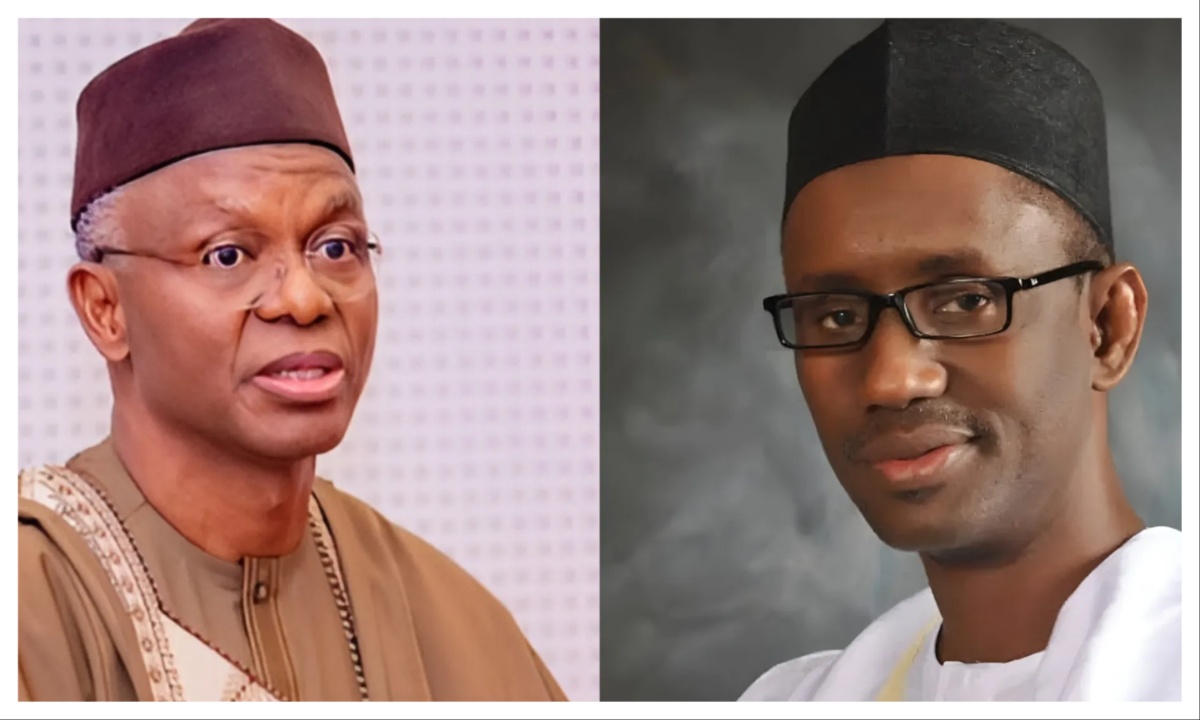
Nigeria has seen political fallouts before, but few are as unsettling as the growing public rupture between Nasir El‑Rufai and Nuhu Ribadu. What makes the moment troubling is not merely the personalities involved, but what their dispute threatens to do to national cohesion, public trust and the already fragile boundary between politics and security.
If two men who once symbolised reformist zeal and institutional courage now choose a path of mutual destruction, they should pause and reflect—on their faith, their region, and the national interest. Because stripped of rhetoric and television soundbites, this is no longer about governance, security reform or leadership ethics. It is the bare-knuckle politics of succession, alignment and survival ahead of the next election cycle.
There was a time when this clash would have been unthinkable. Both men emerged from the same political generation shaped by the reformist moment of the early 2000s under Olusegun Obasanjo. El-Rufai, the outspoken technocrat as Minister of the Federal Capital Territory, and Ribadu, the dogged anti-corruption crusader as Chairman of the Economic and Financial Crimes Commission, were once celebrated as “Obasanjo’s boys”—symbols of a new order that promised discipline, accountability and institutional renewal.
They shared proximity to power, similar access to the president, and a reputation for fearlessness. Their friendship appeared not only political but personal—jolly, confident, mutually reinforcing. That such men could become open adversaries a decade later is not just strange; it is genuinely shocking.
What, then, went wrong? Part of the answer lies in the nature of Nigerian elite politics, where alliances are often forged by circumstance rather than conviction. Power rearranges loyalties. Ambition redraws friendships. And as the political terrain shifts, yesterday’s allies can quickly become today’s obstacles.
But there is a deeper, more consequential problem. When elite rivalries migrate into the realm of security narratives and intelligence insinuations, the damage goes far beyond the individuals involved. Allegations and counter-allegations—especially those touching on surveillance, coercion or misuse of state power—can corrode public confidence in institutions that should remain above partisan struggle.
This is why the current El-Rufai–Ribadu episode deserves sober national reflection, not cheering from partisan sidelines. Nigeria is a country where trust in institutions is already thin. Security agencies operate in an environment of suspicion, insurgency and widespread fear. When senior political actors publicly weaponise security claims—whether substantiated or not—they risk weakening the very structures holding the state together.
It is also important to situate this dispute within the broader northern political landscape. Both men command followings. Both are seen, rightly or wrongly, as voices of influence in the region’s political future. Their feud therefore does not remain personal for long; it reverberates across communities, factions and aspirations. In a region already grappling with insecurity, poverty and political fragmentation, elite infighting of this nature sends the wrong signal.
Faith, too, imposes restraint. Public officials who openly profess moral and religious values must recognise that conduct matters, not just intent. Politics may be a rough trade, but there are lines that, once crossed, are difficult to redraw. The public expects elders of the political class to rise above personal grievances when national stability is at stake.
None of this is to deny that grievances can be real, or that power can be abused. Whistleblowing has its place. Accountability is essential. But there is a difference between principled dissent and public escalation that inflames tension, invites speculation and drags sensitive institutions into political theatre. Mature democracies resolve such disputes through discreet inquiry and institutional processes, not media duels.
Perhaps the most sobering lesson here is how quickly reformist legacies can be overshadowed by personal wars. History is rarely kind to public figures who allow ambition to consume perspective. Nigerians may forget policy details, but they remember conduct—especially when it appears reckless or self-serving.
As the country edges closer to another election cycle, the temptation to settle scores early and loudly will grow. That is precisely why restraint is needed now. The question is not who wins this clash, but what Nigeria loses if it continues.
El-Rufai and Ribadu have both served the Nigerian state at critical moments. Their names are etched into recent political history. They owe the country—and perhaps themselves—something better than mutual ruin. Because when elephants fight, it is not the elephants that suffer most, but the grass beneath them.
Nigeria cannot afford to be that grass.
Abdulhamid Abdullahi Aliyu is a journalist and syndicate writer based in Abuja.
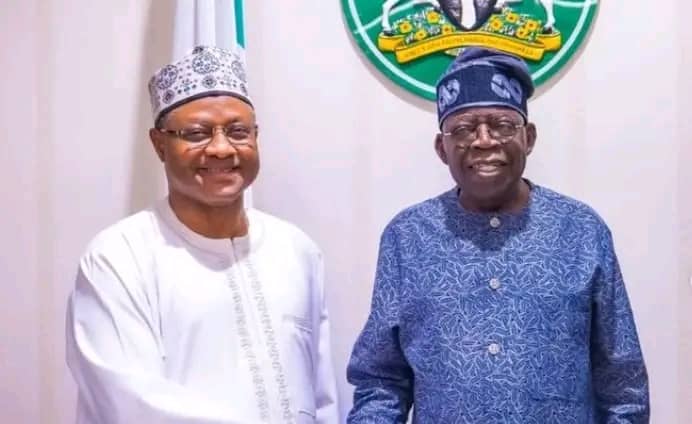
Tinubu names Governor Uba Sani as APC deputy DG for mobilisation, Renewed Hope ambassador
By Abdullahi Mukhtar Algasgaini
President Bola Ahmed Tinubu has appointed Kaduna State Governor, Uba Sani, as a Renewed Hope Ambassador and the Deputy Director-General for Party Outreach, Engagement, and Mobilisation.
The appointment, which takes immediate effect, is aimed at strengthening the ruling All Progressives Congress (APC) ahead of the 2027 general elections.
According to a statement released on Monday, the President leveraged Governor Sani’s “salient leadership and organisational abilities” to fill the role. As Deputy Director-General, Sani will work closely with the party hierarchy, particularly the National Chairman, Abdullahi Ganduje—to ensure harmony and strategic coordination across the party’s mobilisation framework.
In an official letter conveying the appointment, President Tinubu outlined the strategic importance of the new role.
“The overall objective of your appointment is to ensure that the entire citizenry is aware of, understands, and ultimately supports our party and its candidates at all levels for broad national acceptance in the 2027 election,” the President wrote.
“Preparation is critical and essential to achieving this outcome, and your leadership will be central to guiding this process effectively and strategically.”
The President further charged Sani with galvanising support for the party’s policies and milestones, reinforcing the “Renewed Hope” agenda nationwide.

2026: Sultan declares Wednesday first day of Ramadan
By Abdullahi Mukhtar Algasgaini
The Sultan of Sokoto, Alhaji Muhammad Sa’ad Abubakar, has declared Wednesday, 18th February, 2026 as the first day of Ramadan 1447AH following the confirmed sighting of the new moon.
The announcement was contained in a press release signed by Prof. Sambo Wali Junaidu, Wazirin Sokoto and Chairman of the Sultanate Council Advisory Committee on Religious Affairs.
According to the statement, reports from various National Moon Sighting Committees across the country confirmed the sighting of the new moon on Tuesday, 17th February, which marked the 29th day of Sha’aban 1447AH.
Accepting the reports, the Sultan, who is also the President General of the Nigerian Supreme Council for Islamic Affairs (NSCIA), officially declared Wednesday as the first day of the holy month.
The Sultan congratulated the Muslim Ummah in Nigeria and prayed for Allah’s guidance and blessings throughout the period. He urged all Muslims to use the season to pray for peace, progress, and development of the nation.
He wished all Muslims a happy and blessed Ramadan Kareem, praying that Allah (SWT) accepts all religious deeds.

Osimhen breaks silence, accuses Napoli of maltreatment after exit
By Sabiu Abdullahi
Super Eagles striker Victor Osimhen has spoken publicly about the circumstances that led to his controversial departure from Napoli in 2024, alleging disrespect and unfair treatment during his final days at the club.
In an interview with La Gazzetta dello Sport, the Nigerian forward said his relationship with the Italian side deteriorated after videos that mocked him were posted on the club’s TikTok page. He explained that the incident marked the beginning of the crisis between him and the club’s hierarchy.
Osimhen disclosed that he reacted by removing all photos of himself in Napoli colours from his Instagram account. According to him, the club then turned supporters against him.
Speaking on a penalty he missed during a Serie A match at the peak of the controversy, he said, “Anyone can miss a penalty, anyone can be mocked for it. Napoli only did it to me, and with certain innuendos, too. I was the victim of racist insults, and I made my decision: I wanted to leave. I deleted photos of me in a Napoli shirt from my Instagram, and they seized the opportunity to turn the fans against me.”
The striker further revealed that there had been an understanding that he would be allowed to leave the club the following summer. He alleged that the agreement was not respected.
“We had a gentleman’s agreement that I could leave the following summer, but the other side didn’t fully keep their promise.”
Osimhen said the club’s conduct afterward made the situation worse, claiming he was pushed around without regard for his career plans.
“They tried to send me to play everywhere, treating me like a dog. Go here, go there, do this, do that. I worked so hard to advance my career, I couldn’t accept that kind of treatment. I’m not a puppet,” he said.
Following the dispute, Napoli excluded the forward from their squad ahead of the 2024/25 season. He was not registered for Serie A action and was later sent out on loan to Galatasaray. He eventually sealed a permanent exit from the Italian side, completing a €75 million move to his current club last year.
Osimhen’s remarks have reignited debate among fans and analysts over the breakdown in relations between the Nigerian international and his former employers.

Saudi Arabia confirms Ramadan crescent, first fast holds February 18
By Sabiu Abdullahi
Saudi Arabia’s Supreme Court has announced the sighting of the crescent that signals the start of Ramadan for the year 1447 AH.
The confirmation came on Tuesday evening, 29 Sha’ban 1447 AH, corresponding to February 17, 2026. With this development, Wednesday, February 18, 2026, has been fixed as the first day of fasting in the Kingdom.
Following the declaration, Muslims across Saudi Arabia will observe the first Taraweeh prayers on Tuesday night shortly after the Isha prayer. The special prayers will take place in mosques nationwide, including the Grand Mosque in Makkah and the Prophet’s Mosque in Madinah.
The court’s announcement emerged despite earlier projections by major astronomical institutions such as the International Astronomy Center (IAC), which had argued that sighting the moon that evening would be impossible across the Arab and Islamic world. The body explained that the crescent would set before sunset or only minutes after, making it difficult to observe either with the naked eye or telescopes.
Saudi authorities, however, acted in line with the Kingdom’s established practice, which gives precedence to verified physical sighting once credible witnesses present testimony. Reports submitted to the moon-sighting committee were reviewed and authenticated before the ruling was issued.
Based on the confirmed commencement date, Eid al-Fitr, which marks the end of Ramadan, is projected to fall on either Thursday, March 19, or Friday, March 20, 2026. The exact date will depend on the sighting of the Shawwal crescent.
Muslims in Saudi Arabia and several countries that follow the Kingdom’s moon-sighting decision will now begin the sacred month devoted to fasting, prayer, and spiritual devotion. Ramadan this year falls within the winter period, with fasting expected to last about 13 hours daily.
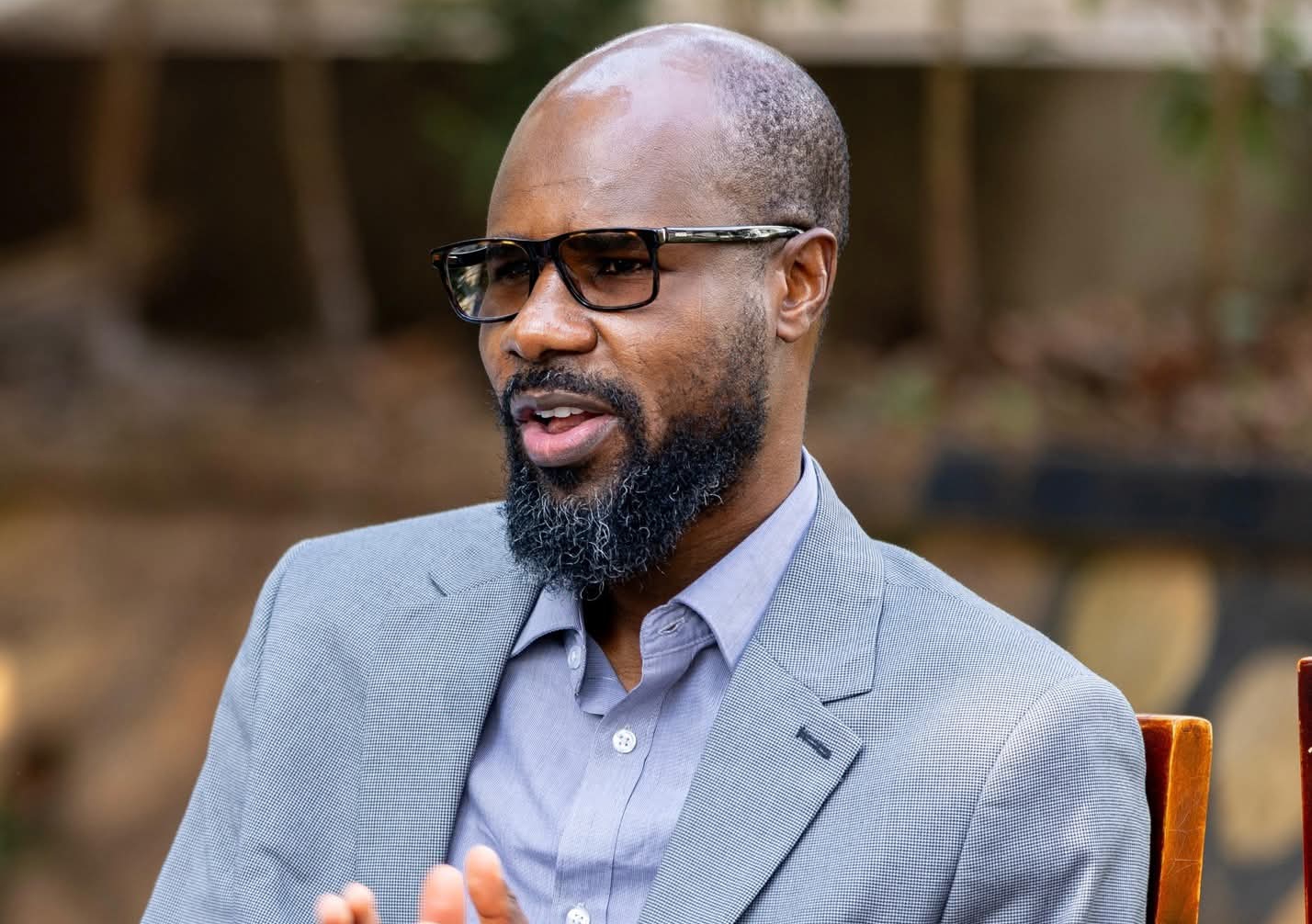
Human rights lawyer Audu Bulama Bukarti raises concern over deployment of US troops in Bauchi
By Sabiu Abdullahi
Human rights lawyer Audu Bulama Bukarti has called for transparency following the announcement by the Defence Headquarters that about 100 United States military personnel have arrived at the Bauchi Airfield.
According to the statement, the troops are in Nigeria to support the Armed Forces in training and intelligence-sharing operations.
Bukarti raised concerns over the lack of detail in the official release, noting that it did not indicate whether the US troops will be permanently stationed in Bauchi or are simply passing through to another location.
He said, “If they are going to stay in Bauchi, the public deserves to know why that location was chosen instead of frontline theatres of terrorism such as Zamfara, Niger or Borno.”
He acknowledged that there may be tactical or strategic reasons for the deployment but warned that the absence of clear communication fuels speculation. “Given the sensitivities surrounding foreign military presence on Nigerian soil, transparency is not a luxury – it is a necessity,” Bukarti added.
The lawyer further reiterated that Nigerians should be informed about the specific scope, duration, and limits of the mission. “The public deserves to know how long the US personnel will remain, the specific nature of the training they will conduct and mechanisms for Nigerian oversight,” he wrote.
Bukarti noted that if the partnership is lawful, limited, and in Nigeria’s best interest, a straightforward explanation would build public trust. “Silence or opacity, however, risks fuelling suspicion, speculation and misinformation at a time when clarity and candour are most needed,” he stressed.

Long-serving directors at health ministry ordered to retire immediately
By Sabiu Abdullahi
The Federal Ministry of Health has directed the immediate retirement of directors who have spent eight years or more in the directorate cadre.
Those affected include directors working within the ministry, federal health institutions, and related agencies. The directive was contained in an internal memo obtained by our correspondent in Abuja on Tuesday morning.
This development follows an earlier report that the Federal Government had instructed all Ministries, Departments, and Agencies to implement the eight-year tenure policy for directors and permanent secretaries. The instruction came with a fresh deadline issued through the Office of the Head of the Civil Service of the Federation.
The memo enforcing the decision in the health ministry was signed by the Director overseeing the Office of the Permanent Secretary, Tetshoma Dafeta. It stated:
“Further to the Eight (8)-Year Tenure Policy of the Federal Public Service, which mandates the compulsory retirement of Directors after eight years in that rank, as provided in the Revised Public Service Rules 2021(PSR 020909) copy attached, I am directed to remind you to take necessary action to ensure that all affected officers who have spent eight years as Directors, effective 31st December, 2025, are disengaged from Service immediately.
“Accordingly, all Heads of Agencies and Parastatals are by this circular, to ensure that the affected staff hand over all official documents/possessions with immediate effect, their salaries are stopped by the IPPIS Unit and mandate the officers to refund to the treasury all emoluments paid after their effective date of disengagement.
“This is reiterated in a circular recently issued by the Office of the Head of the Civil Service of the Federation, Ref. No. HSCF/3065/Vol.I/225, dated 10″ February 2026. A copy is herewith attached for guidance, please.
“In addition, you are to forward the nominal roll of all directorate officers (CONMESS 07/CONHESS 15/CONRAISS 15) In your institution, send to DHRM@health.gov.ng and Agudosi.obinna@health.gov.ng. You may please note that officials from the Office of the Head of the Civil Service of the Federation and the Ministry will conduct a monitoring exercise to ensure compliance.
“Failure to adhere to paragraph 2 above shall be met with stiff sanctions.”
The policy has its roots in the revised Public Service Rules introduced in 2023. The former Head of the Civil Service of the Federation, Folasade Yemi-Esan, announced the implementation during a lecture held at the State House, Abuja, to mark the 2023 Civil Service Week.
In a circular issued at the time to permanent secretaries, the Accountant-General of the Federation, the Auditor-General for the Federation, and heads of extra-ministerial departments, she confirmed the enforcement date.
“Following the approval of the revised Public Service Rules (PSR) by the Federal Executive Council (FEC) on September 27, 2021, and its subsequent unveiling during the public service lecture in commemoration of the 2023 Civil Service Week, the PSR has become operational with effect from July 27, 2023,” the circular read.
Under Section 020909 of the revised rules, permanent secretaries are to serve a four-year tenure, renewable only on the basis of satisfactory performance. The same rules prescribe compulsory retirement for any director on Grade Level 17, or its equivalent, after eight years in office.