
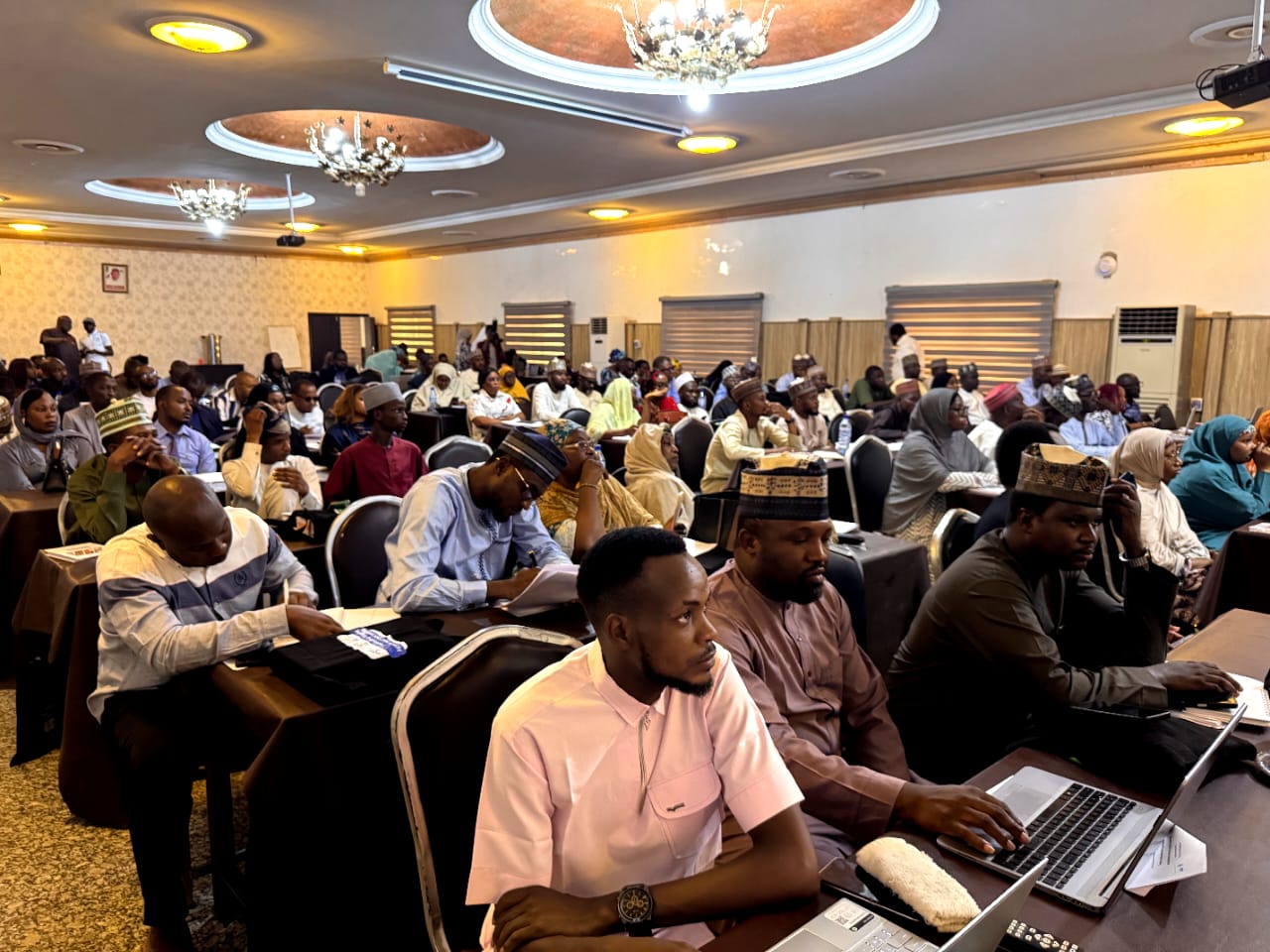
L-PRES Facilitates Farmer-Bank Linkage in Kano To Boost Livestock Financing Access
By Uzair Adam
The Livestock Productivity and Resilience Support Project (L-PRES) says it is working to bridge the financing gap in Nigeria’s livestock agribusiness sector by connecting small businesses with financial institutions through capacity-building programmes.
Officials of the project disclosed this on Wednesday at the ongoing Regional SMEs/PFIs Capacity Building Programme on “Bridging the Livestock Agribusiness Finance Gap: Building Capacity for Inclusive Growth,” which started on Monday in Kano.
The programme, supported by the World Bank and the Development Bank of Nigeria (DBN) brought together participating financial institutions (PFIs), livestock-based small and medium enterprises (SMEs), insurance firms and other stakeholders from Kano, Kaduna, Sokoto and Zamfara states.
Speaking at the event, the National Project Coordinator of L-PRES, Dr. Sanusi Abubakar, represented by the Value Chain Consultant, Heather Ronke Akanni, said the initiative was designed to expose financial institutions to opportunities in the livestock sector and help SMEs become investment-ready.
She explained that the livestock sector had long faced financing constraints due to limited documentation, weak business structures and perceived risks by financial institutions.
“Before now, the livestock sector has not been looked into so much, so banks and financial institutions were reluctant to finance livestock farmers,” Akanni said.
According to her, the programme provides a platform for SMEs and PFIs to engage directly, exchange ideas and better understand opportunities across livestock value chains, including production, processing, packaging, input supply and advisory services.
She added that similar regional engagements had already been held in the South-East, South-West and North-East, while the North-Central programme would be concluded in Kwara State.
Akanni stressed the need for SMEs to maintain proper financial records and separate personal and business accounts to improve access to credit.
“Some SMEs mix their private accounts with business accounts, making it difficult for banks to assess their businesses properly. Now they understand that business transactions should be clearly documented,” she said.
She further noted that some financial institutions had begun to show renewed interest in livestock financing after direct engagement with farmers under the programme.
“In Enugu, a pig farmer who had struggled for years to secure a loan eventually attracted the interest of banks after they visited his farm during the programme,” she added.
The State Project Coordinator of L-PRES in Zamfara State, Nasiru Muhammad, represented by the Animal Health Officer, Dr. Muktar Salihu Anka, said the project had made steady progress despite starting later than other participating states.
He explained that L-PRES had supported livestock farmers through capacity building, veterinary interventions, poultry development and infrastructure projects aimed at improving production systems.
“This workshop is going to bridge the gap between farmers and the PFIs because many livestock farmers have been asking questions about access to loans,” he said.
Also speaking, the Kaduna State L-PRES Coordinator, Dr. Shitu Salisu Hashim, described the training as essential in addressing concerns from financial institutions regarding livestock lending risks.
He said banks often worry about disease outbreaks, lack of collateral and weak cooperative structures among farmers.
“The importance of this training cannot be overemphasized because it balances the relationship between farmers and PFIs,” Hashim said.
He added that the programme introduced an Impact Credit Guarantee mechanism to reduce collateral challenges faced by farmers.
“If the collateral requirement is 100 per cent, the Impact Credit Guarantee can provide up to 70 per cent, while the farmer provides the remaining 30 per cent,” he explained.
Hashim also noted that the inclusion of non-interest financial institutions was expanding access to finance for livestock farmers in Northern Nigeria.
Representing the Kano State Project Coordinator, Dr. Salisu Muhammad Inuwa, Abubakar Muhammad Kabiru, Animal Husbandry Officer of L-PRES, said participants were taken on a field visit to key livestock value chain facilities in Kano State.
He said the team visited L&Z Company in Kumbotso Local Government Area, Milk Collection Centre in Kadawa, Garun Malam Local Government Area, Dawakin Kudu Cooperative Society Limited, and the International Cattle Market.
Kabiru explained that the visits were designed to expose participating financial institutions to real-life livestock business operations.
“We wanted the PFIs to see the opportunities available and understand how these businesses operate so they can confidently support beneficiaries with loans,” he said.
He added that SMEs from Kano, Kaduna, Sokoto and Zamfara participated in the programme to improve their capacity to access and manage financing.
One of the participants, Hajiya Halima Ahmad, said the programme had changed the mindset of many women in livestock business regarding access to loans.
She said many women previously avoided banks due to concerns over interest rates and limited knowledge of financial documentation.
“I have been in the poultry business for over 25 years, but I have never gone to a bank to request a loan,” she said.
“Most of the factors stopping us were the issue of interest because of religious implications. But this training has equipped us with the necessary skills on documentation and business management.”
She added that the presence of non-interest banks at the programme had encouraged participants to explore financing opportunities for business expansion.
Kano Ulama Coalition Calls for Peaceful Politics, Cautions Youths Against Political Violence
By Muhammad Abubakar
The Coalition of Ulama and Islamic Organisations in Kano State has expressed concern over rising political tension in Kano State, warning that the increasing use of inflammatory language and politically motivated violence could threaten peace and stability in the state.
In a statement issued on Wednesday, the coalition condemned recent incidents linked to political activities and urged politicians and their supporters to avoid actions capable of inciting unrest.
The group said the growing trend of insults, intimidation, and provocation in the political space was disturbing and inconsistent with the values of peace and mutual respect long associated with Kano.
The coalition also cautioned youths against allowing themselves to be used as tools for violence by desperate politicians, urging them instead to uphold law and order. It called on political leaders to embrace issue-based engagement and conduct their activities responsibly in the interest of public peace.
The statement, signed by the coalition’s secretary, Saidu Ahmad Dukawa, prayed for continued peace and unity in Kano State and urged residents to remain calm and law-abiding.
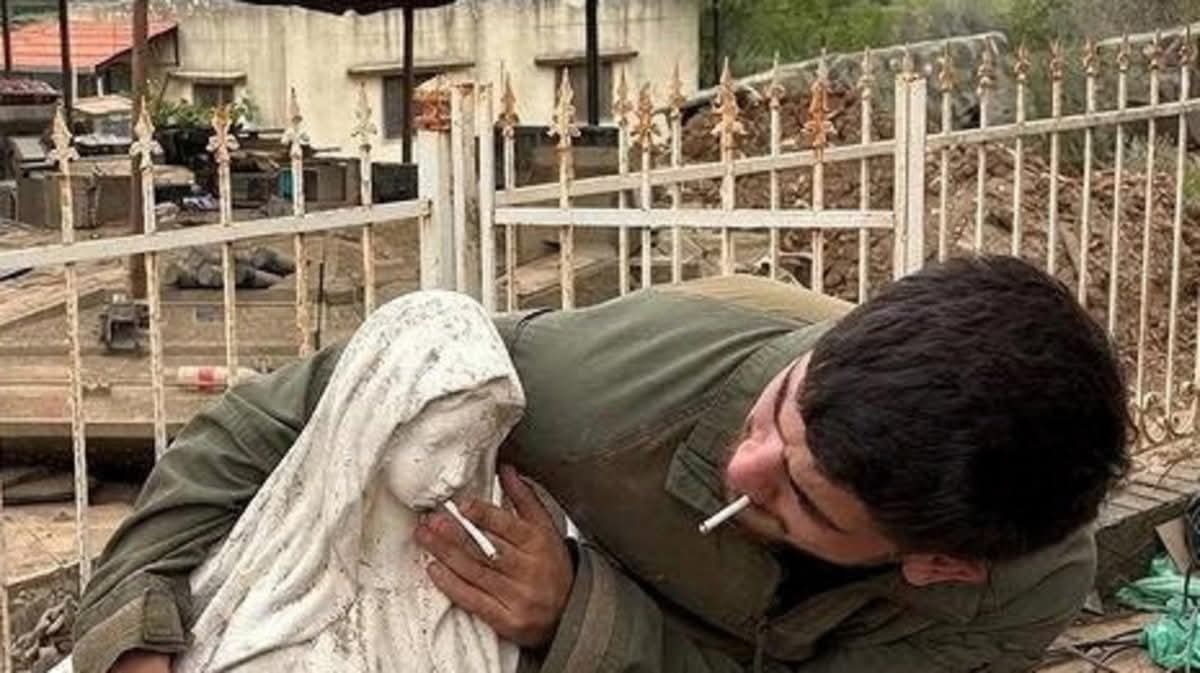
Israeli Military Probes Soldier Over Desecration of Virgin Mary Statue in Lebanon
The Israeli military has opened an investigation after a photograph circulated online allegedly showing one of its soldiers desecrating a statue of the Virgin Mary in southern Lebanon.
According to reports published on Wednesday, the image showed the soldier placing a cigarette in the mouth of the statue while also smoking.
The military described the matter as serious and vowed to take action against the soldier. The Times of Israel reported that the army viewed the “incident gravely”.
Preliminary findings indicated that the photograph was taken several weeks ago in Debel, a Christian-majority village in southern Lebanon. However, the image only surfaced online on Wednesday.
The development has added to growing accusations of misconduct by Israeli troops in southern Lebanon. Last month, another Israeli soldier was reportedly photographed damaging a statue of Jesus in the same community.
Lebanese media outlets also alleged that Israeli troops destroyed solar panels used to power the town’s water supply system. Reports further claimed that homes, roads and olive trees in the area were damaged.
The latest controversy comes amid intensified Israeli military operations in Lebanon. Israeli forces have carried out repeated attacks in Beirut and other parts of the country. Israel said the operations target Hezbollah fighters and infrastructure.
Israeli troops still maintain a presence in parts of southern Lebanon. Residents and officials in the area have expressed concern over widespread destruction in communities affected by the conflict.
Meanwhile, concerns have continued to mount over reported attacks against Christians in Israel and the occupied Palestinian territories.
Religious organisations have documented incidents involving harassment and violence against Christian pilgrims, clergy members and Palestinian Christians. Some of the reported attacks allegedly involved ultra-Orthodox Jewish seminary students.
One incident involved a French nun near Jerusalem’s Old City last month. Video footage reportedly showed a man pushing the nun to the ground, causing a head injury, before returning to kick her while she was on the ground.
Israeli police later announced the arrest of a 36-year-old suspect after the video drew international attention.
Following criticism over the destruction of the Jesus statue in Debel, the office of Prime Minister Benjamin Netanyahu condemned the act. The two soldiers involved were removed from combat duties and sentenced to 30 days in prison.
In another incident in March, Netanyahu’s office apologised after Israeli police prevented Latin Patriarch of Jerusalem Pierbattista Pizzaballa from accessing the Church of the Holy Sepulchre to lead Palm Sunday mass.
Observers say disciplinary measures against Israeli soldiers remain uncommon despite repeated allegations involving military conduct.
The report also referenced the killing of Al Jazeera journalist Shireen Abu Akleh, who was shot dead during an Israeli military operation in the occupied West Bank in 2022.
In Gaza, several religious sites have suffered destruction during the war. These include the historic Great Omari Mosque and Saint Porphyrius Church, one of the oldest churches in the world.
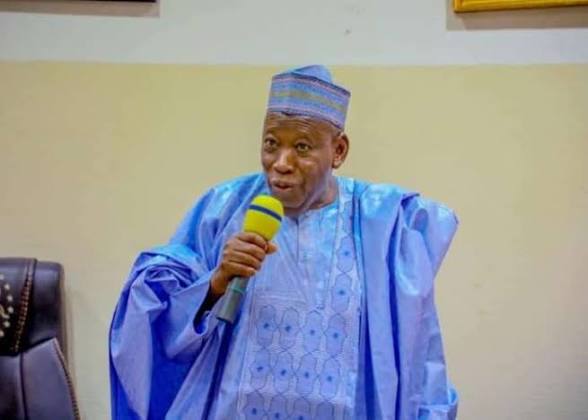
Emirship Dispute: Ganduje Clarifies Remarks on Sanusi, Defers To Supreme Court
By Uzair Adam
Former Kano State Governor, Dr Abdullahi Umar Ganduje, has said the final decision on the ongoing Kano emirship dispute rests with the Supreme Court, stressing that Governor Abba Kabir Yusuf will be bound to implement the court’s verdict in line with the rule of law.
Ganduje stated this while reacting to reports alleging that he had endorsed Muhammadu Sanusi II as the Emir of Kano and Chairman of the Kano State Council of Chiefs.
In a statement issued by his former Commissioner of Information and current Chief of Staff, Muhammad Garba, the ex-governor described the reports as a misinterpretation of his remarks during the swearing-in ceremony of the Deputy Governor.
He explained that his reference to Sanusi by his traditional title at the event was purely out of respect and adherence to protocol, not an endorsement.
“It is important to clarify that what happened was simply an expression of respect in a public gathering. It should not be misconstrued as an endorsement,” Ganduje said.
He noted that the emirship tussle remains before the court, warning that comments on the matter must be made cautiously to avoid contempt.
Ganduje recalled that the Court of Appeal had earlier directed all parties to maintain the status quo pending the final determination of the case by the Supreme Court.
He explained that the current legal position recognises Aminu Ado Bayero as the 15th Emir of Kano and Muhammadu Sanusi II as the 14th Emir, pending the apex court’s ruling.
The former governor added that he lacks the constitutional authority to endorse or reject any claimant, noting that the responsibility lies solely with the judiciary and, subsequently, the state government.
He further criticised sections of the media for amplifying the issue, saying a routine remark was taken out of context.
“The interpretation being given to the remark is clearly exaggerated,” he said, urging all parties to remain calm and await the Supreme Court judgment expected next year.
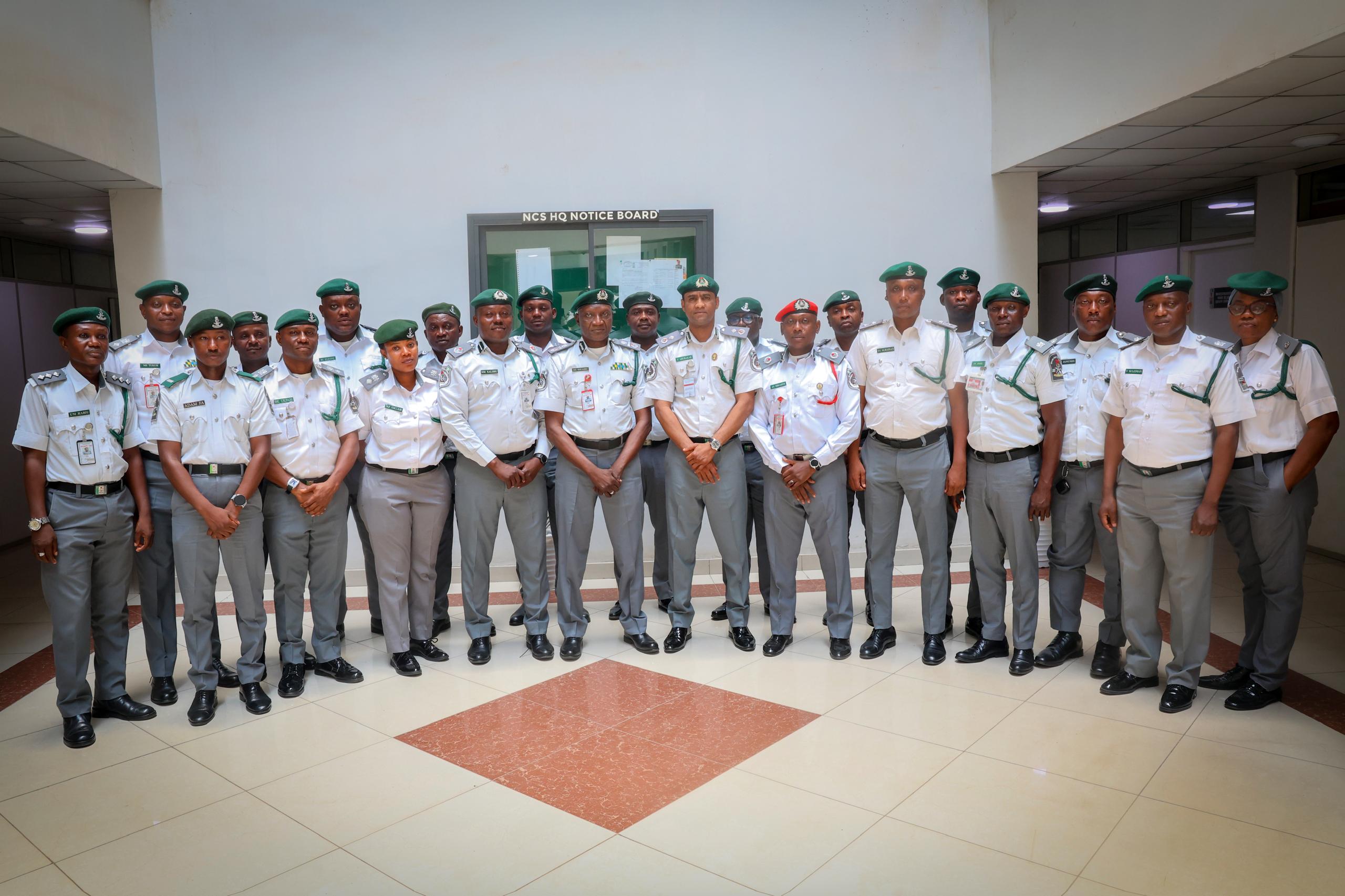
Nigeria Customs Strengthens Anti-Money Laundering Drive Through Sensitisation Programme
By Sabiu Abdullahi
The Nigeria Customs Service (NCS) has stepped up efforts to curb illicit financial activities and terrorism financing through a sensitisation programme on Anti-Money Laundering and Combating the Financing of Terrorism (AML/CFT). The event took place at the Service Headquarters in Maitama, Abuja.
The programme was held on Monday, 4 May 2026. It formed part of the agency’s first-quarter operational review and training exercise for officers attached to the AML/CFT Unit. The session focused on building capacity, promoting ethical conduct and improving cooperation with relevant agencies.
During the programme, the Assistant Comptroller-General in charge of Headquarters, Muhammad Shuaibu, said the initiative shows the rising importance of AML/CFT operations within the Service and across Nigeria’s financial and security system. He explained that the Unit’s work goes beyond ports and border points. He added that its performance in the past year has made it a key player in protecting the country’s financial system.
Shuaibu also pointed to recent progress in Nigeria’s financial sector. He said bank cards issued in Nigeria now function globally and allow users to carry out transactions abroad with automatic currency conversion.
“This is a major milestone. Nigerians can now travel and use their cards anywhere in the world, with transactions reflecting the local currency. This is a significant achievement for the nation,” he said.
He advised officers to view postings to the AML/CFT Unit as an opportunity for career development. He also mentioned ongoing collaboration with the World Customs Organization to ensure compliance with international standards.
In his remarks, the Acting Provost Marshal, Deputy Comptroller of Customs, Saulawa Sunusi, called for discipline and professionalism among officers.
“Officers must remain disciplined, professional, and committed to ethical conduct. Integrity remains the foundation of everything we do,” he said.
Sunusi urged personnel to improve their skills through regular training. He asked them to show leadership through good conduct and maintain fairness and punctuality in their duties. He also stressed the need for teamwork and proper conflict resolution within the Service.
Participants were advised to stay alert, maintain high morale and perform their duties without bias. They were warned against sharing sensitive information without authorisation and asked to follow official communication procedures strictly.
The programme also featured a lecture by Deputy Comptroller of Customs, Faisal Abubakar, who spoke on service correspondence and its role in official communication.
In a separate address, the National Coordinator of AML/CFT, Assistant Comptroller of Customs, Mas’ud Salihu, said financial crimes are becoming more complex. He noted that many illegal activities are now taking place in digital and virtual spaces.
Salihu explained that efforts are ongoing to strengthen enforcement, identify operational gaps and improve communication between field officers and management. He said sensitisation remains vital in tackling financial crimes and encouraged officers to stay proactive in detecting new threats.
He commended participants for their active involvement and thanked the Service leadership for its continued support in strengthening the AML/CFT framework.
Sultan Rejects ‘Islamisation’ Claims, Calls for Religious Unity
By Uzair Adam
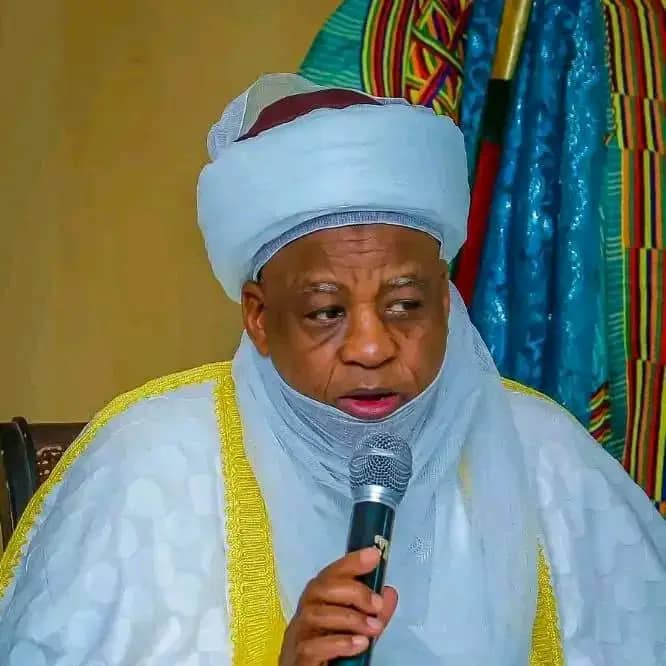
The Sultan of Sokoto and President-General of the Nigerian Supreme Council for Islamic Affairs (NSCIA), Muhammad Sa’ad Abubakar III, has dismissed claims that there is a plan to Islamise Nigeria, describing such narratives as divisive and unrealistic.
Speaking on Wednesday at the meeting of the Nigeria Inter-Religious Council in Abuja, the monarch said Muslims have no agenda to undermine Christians, stressing that both religions coexist for a divine purpose.
He reaffirmed the importance of dialogue, noting that NIREC remains a critical platform for fostering understanding between faiths.
According to him, engagement rather than conflict is the only path to national peace.
“We believe talking is better than fighting. Let us understand our differences rather than trying to ignore them. I am a Muslim, you are a Christian, and we must live together with mutual respect,” he said.
The Sultan, who also serves as Co-Chairman of NIREC, highlighted his long-standing commitment to interfaith dialogue, noting that he has consistently attended council meetings over the past two decades.
On religious literacy, he warned against the growing influence of unqualified clerics, cautioning that fluency in Arabic does not automatically confer Islamic scholarship, just as some Christian preachers in the Middle East also use the language.
He urged religious leaders to deepen their knowledge in order to guide followers responsibly and prevent the misuse of religion for personal or political purposes.
Addressing insecurity, the Sultan rejected the profiling of criminals along religious lines, insisting that bandits and terrorists should not be associated with Islam.
He maintained that anyone who kills in the name of religion acts against its teachings.
He further lamented that many victims of banditry and terrorism in northern Nigeria are Muslims, underscoring the need to confront the issue without religious bias.
Looking ahead to the 2027 general elections, he called for stronger trust between religious leaders and their followers, warning that national development would remain difficult without it.
He also commended NIREC’s collaboration with international partners, referencing recent interfaith engagements in London involving the Archbishop of Canterbury and Islamic scholars aimed at addressing Nigeria’s challenges.
The Sultan expressed appreciation to the Federal Government for its support and encouraged council members to remain committed to promoting unity and peace across the country.

FG Bans Honorary Degree Holders from Using ‘Dr’ Title
By Hadiza Abdulkadir
The Federal Government of Nigeria has barred recipients of honorary degrees from using the “Dr.” prefix in official and professional settings, warning that violations could amount to academic fraud.
Announcing the decision after a meeting of the Federal Executive Council, Education Minister Tunji Alausa said the move is aimed at curbing the abuse and politicisation of academic titles.
Mr Alausa further clarified that only holders of earned doctorates or qualified medical professionals may use the title, while honorary awardees must instead adopt post-nominal forms such as D.Sc. (Honoris Causa).
The National Universities Commission has also introduced stricter rules, limiting institutions to three honorary awards per convocation, requiring prior approval, and banning awards to serving public officials.
The reforms follow an investigation that uncovered 32 illegal “degree mills” selling fake titles, as authorities seek to restore credibility to Nigeria’s academic system.
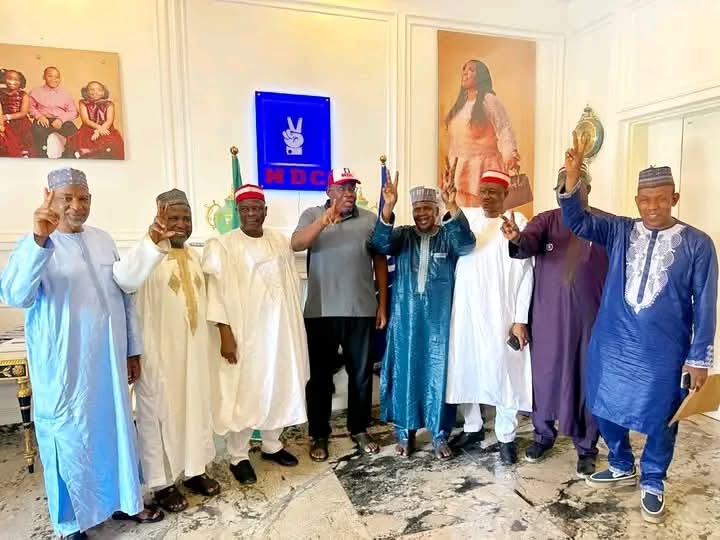
Kwankwaso Meets Kano NDC Chairman Over Party Crisis
By Uzair Adam
A former Kano State Governor, Rabiu Musa Kwankwaso, on Tuesday held a crucial meeting with the Kano State Chairman of the Nigeria Democratic Congress, Hussaini Mairiga, to resolve the lingering crisis within the party.
The Daily Reality reports that Mairiga confirmed the meeting in an interview with journalists on Tuesday, explaining that it brought together key party stakeholders at the state level.
He said the engagement focused on addressing disagreements surrounding the party’s structure and leadership in Kano State.
Following the meeting, Mairiga announced that the crisis had been resolved and pledged support for Kwankwaso’s leadership.
He said, “We had a fruitful discussion with Sen. Kwankwaso and other critical stakeholders of our great party. All lingering issues have been amicably resolved in the interest of unity and progress.
“As a party, we have agreed to move forward together, and we recognise Sen. Rabiu Musa Kwankwaso as our leader in Kano State.”
Mairiga further urged party members to remain calm and committed to the party’s ideals, stressing that unity would be crucial for future electoral success.
“I call on all our members to remain steadfast and work collectively for the growth of the party. This resolution marks a new beginning for the NDC in Kano,” he added.
The development followed days of tension within the Kano chapter of the party after Kwankwaso’s defection to the NDC alongside Peter Obi, a move that raised concerns over control of the party structure.
The crisis had deepened earlier after the state chairman rejected alleged moves to hand over the party’s leadership to the former governor, insisting that the existing executives would not relinquish control.
He also disclosed that initial attempts to integrate Kwankwaso into the party stalled due to disagreements over leadership arrangements, with both sides holding separate meetings that failed to produce a consensus.
Tensions escalated further amid claims that the party’s planned state congress was suspended, fuelling suspicions among some members over possible moves to restructure the party leadership in Kano.
Examining BUK’s 59th Inaugural Lecture: Lessons from “One World, Different Nations…”
By Ibrahim Aliyu Gurin
There are lectures you attend and forget, and there are those that stay with you and encourage you to rethink familiar ideas. The 59th Inaugural Lecture at Bayero University Kano belonged firmly to the latter.
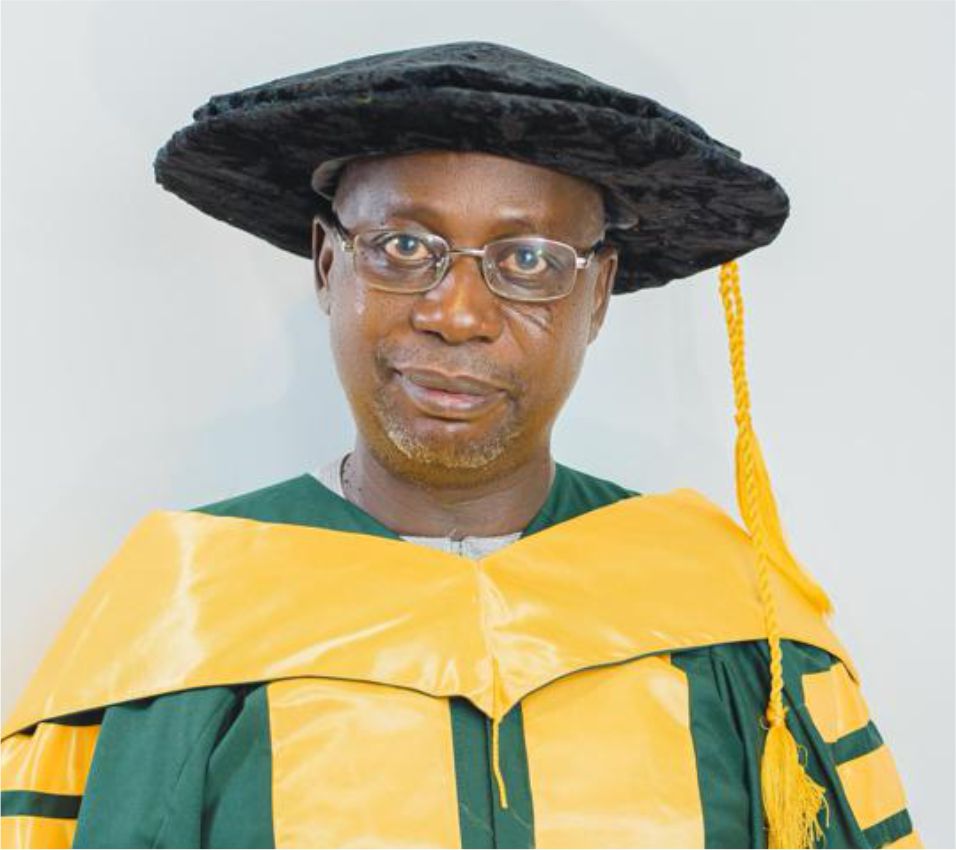
The BUK’s 59th Inaugural lecture delivered by Adamu Idris Tanko, FRGS, FANG, a Professor of Geography at Bayero University Kano, titled: “One World, Different Nations… and the Many Lessons to Learn,” offered a simple but powerful message: development is more than economic growth.
From the beginning, Professor Tanko explained that development is not a fixed goal. Instead, it is a continuous process that changes over time and across places. What progress looks like in one country may be very different from what it looks like in another.
In the past, development was mostly about economic growth, meaning how much a country produced and earned. However, over time, this idea expanded. Attention shifted to education, healthcare, housing, and later to environmental sustainability and quality of life.
Today, we can agree that growth alone is not enough. This is clearly shown in global tools such as the Human Development Index (HDI), developed by the United Nations Development Programme, which assesses health, education, and living standards. In the same way, economist Amartya Sen argues that development should be about improving people’s freedom and opportunities.
However, the lecture also showed that even these measures do not always tell the full story. A country can grow economically while many people remain poor. In other words, growth does not always improve everyday life.
This is why geography matters. Development is not the same everywhere. In richer countries, people may focus on better living conditions and environmental quality. But in poorer regions, the main concerns are still basic needs like food, shelter, and healthcare.
While the difference is visible in Sub-Saharan Africa, the region, including Nigeria, has great potential, especially because of its young population. At the same time, it faces serious challenges, including weak infrastructure, inequality, and climate-related problems.
Additionally, even where progress is visible, it does not reach everyone equally. Improvements in health or education can easily be affected by economic problems or conflict. As a result, development is often slow and uncertain.
One of the most important parts of the lecture focused on youth. As the lecturer noted, “our estimates suggest that over 60 per cent of the population in Nigeria is youth and under the age of 35.” This, in itself, should be a major advantage. However, many young people still struggle to find jobs after school, and their skills and energy are often underutilised. This creates a bigger problem because they must eat, and when legitimate means are unavailable, they find their own ways. In most cases, their formal and non-formal ways may not be legitimate and often lead to criminality, and this is not just about unemployment—it is about wasted potential.
To address this, the lecture called for new approaches. These include improving technical education, supporting entrepreneurship, and expanding digital skills. It also stressed the importance of the service sector in creating opportunities.
Interestingly, Professor Tanko also spoke about the role of sports. At first, it may sound a bit unusual, but when you think about it, it actually makes sense. In places like Kano, you see young people every day on open fields and street corners, playing football and other games. They show real passion and raw talent. The problem is that this energy often goes unnoticed and unsupported, leaving so much potential untapped.
If properly developed, sports can create jobs and opportunities. It can involve many areas such as coaching, healthcare, media, and event management. It also helps build discipline, teamwork, and confidence. In this way, sports can become part of a broader development strategy.
Overall, the lecture reminds us that development must reflect real life. It must focus on people, not just numbers. It must also take into account local realities and provide practical solutions. For Nigeria, this message is important. The country’s future depends on how well it supports its people, especially its youth, and, most importantly, on how it turns ideas into action.
It is a clear reminder to policymakers, scholars, and society that progress should be measured by how much it improves the lives of ordinary people. The real challenge is not just to grow, but to ensure that growth is meaningful, inclusive, and sustainable.
Ibrahim Aliyu writes from Baba Ahmed University, Kano. He can be reached via ibrahimaliyu5023@gmail.com.
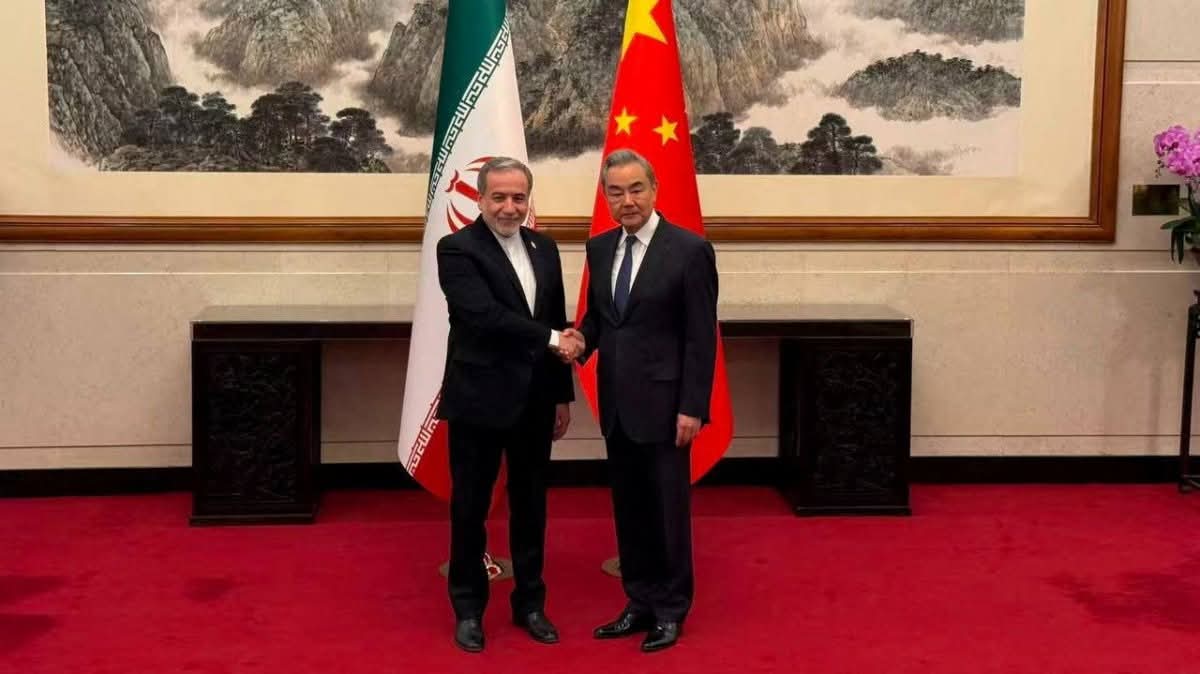
Iran Foreign Minister Meets Chinese Counterpart In Beijing Amid Hormuz Tensions
By Sabiu Abdullahi
Iran’s Foreign Minister, Abbas Araghchi, on Wednesday held talks with China’s top diplomat, Wang Yi, in Beijing as tensions continue to rise over the Strait of Hormuz.
The visit comes just one week before United States President Donald Trump is expected in Beijing for a summit with Chinese President Xi Jinping scheduled for May 14 and 15.
China’s state news agency, Xinhua, confirmed that the meeting between both officials had commenced, although it did not disclose details of the discussions.
This trip marks Araghchi’s first visit to China, a key ally of Tehran, since the US-Israel war on Iran began on February 28. Since the outbreak of the conflict, both ministers have maintained contact through several phone conversations.
In Washington, DC, US Secretary of State Marco Rubio said he hopes China will urge Iran to ease its grip on the Strait of Hormuz, a crucial route for global oil and gas shipments.
Iran shut the strait shortly after the conflict started, a move that triggered a sharp rise in fuel and fertiliser prices and unsettled the global economy.
Although a ceasefire was reached in April, the United States later imposed a blockade on Iranian ports in an effort to pressure Tehran into accepting its conditions for peace.
Reporting from Beijing, Al Jazeera’s Katrina Yu said the meeting is expected to focus mainly on sustaining the ceasefire and reopening the Strait of Hormuz.
“We know that China has been very critical of the US’s naval blockade on Iranian ports, calling it dangerous. But increasingly, Beijing has also been critical of Iran’s decision to continually close that vital chokepoint,” Yu said.
She added that China may seek clarity from Iran on its future actions, while Tehran is also looking for assurances of continued Chinese support.
“Iran will need Chinese backing, for example, at the United Nations, to continue to block any action that would put any additional sanctions on Iran because of its closure of the strait,” Yu said.
“Reportedly, the Iranian foreign minister is looking for clarity from Beijing as to what it will put on the table when Xi meets with Trump, and whether Beijing will be making any concessions to Washington that could make Tehran nervous.”
China, on its part, is said to be seeking guarantees from Iran that it will avoid any escalation ahead of the high-level meeting between Xi and Trump.
Meanwhile, President Trump has announced a temporary halt to a US military mission aimed at escorting stranded vessels through the Strait of Hormuz.
The operation, which started earlier in the week, had heightened tensions after the US military claimed it destroyed several Iranian boats that allegedly tried to disrupt the effort. The United Arab Emirates also accused Iran of launching missile and drone attacks, including one that caused a fire at an oil facility. Tehran has denied involvement.
Trump wrote on Truth Social that the pause followed appeals “on the request of Pakistan and other Countries” and because “Great Progress has been made toward a Complete and Final Agreement with Representatives of Iran”.
Pakistan has been playing a leading role in mediating between Washington and Tehran. Direct talks were held in Islamabad on April 11 and 12, but both sides failed to reach an agreement.
Key disagreements remain, including US demands for Iran to stop all nuclear enrichment activities, while Tehran insists on maintaining control over the Strait of Hormuz.