Opinion

Chores before health education graduates

By Mallam Musbahu Magayaki

I write to advise and to equally draw the attention of the Nigerian 2021 Health Education graduates to the vital task of putting their obtained certificates into positive and useful ways before securing various job opportunities, whether in the government or private sectors.

Some determinants traumatize many Nigerians’ healthy conditions, such as open defecation, drug abuse, and sexual assault. These factors, if our educated health graduates would voluntarily embark on advocacy visits to people living both in rural and urban communities, would be averagely diminished, if not eliminated.

Let’s take open defecation as a case study, as Nigeria is ranked as the highest country with the highest percentage of people defecating openly. They do so either because they do not have toilets readily accessible or due to unhealthy traditional and cultural practices. However, as for me, a 200-level student of health education, the practices of this determiner are prevalent in rural areas due to traditional cultural practices, as said earlier.

As a result, health education campaigns in rural and urban areas by 2021 health education graduates and those who have obtained their certificates but have yet to start working would be hugely advantageous in updating or promoting many people’s thoughts.

Some people engaged in the practice of risking diseases, either deliberately or naively, are uninformed of the hazards of their false assumptions; paying them advocacy visits would enable them to fully comprehend their harmful ideas and substitute them with knowledgeable ones. You should not arrogantly approach them, asking them to stop doing this and start doing that. No, this is not the most effective technique to teach people. Many academics argue that polite communication effectively leads to a good understanding.

Finally, several primary health care centres in Nigeria do not have enough employees to care for patients. Apart from that, our health education graduates should look for these hospitals and volunteer to serve but with a bit of incentive that would make them more zealous in rendering their voluntary services. Without the support of its citizens, no nation will be able to overcome its insurmountable hurdles.

Therefore, it is not optional but binding for us to support our country by being involved in various positive innovations that would improve our country’s potential to achieve optimally positive advancements.

Mallam Musbahu Magayaki is a 200-level student of Health Education at Aminu Saleh College Of Education Azare. He can be reached via musbahumuhammad258@gmail.com.

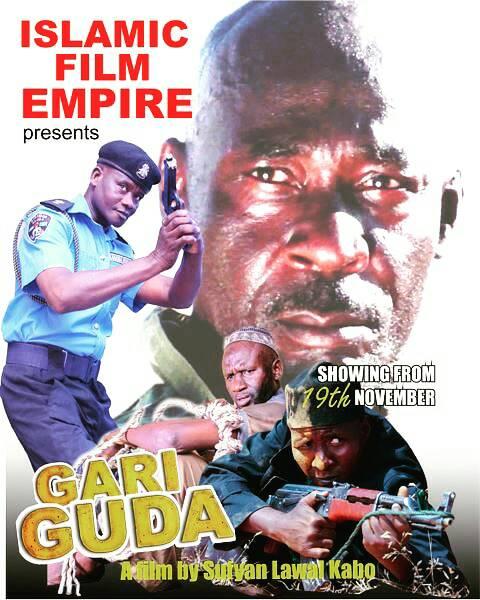
Kannywood Movie Review: Gari Guda

Director: Sufyan Lawal Kabo

Language: Hausa

Release date: 26-11-2021

Company: Islamic Film Empire

Cast: Musa Lawal, Ibrahim Hassan, Mahmoud Mukhtar, Fatima Lawal, Binta Miko, etc.

Most of the criticisms around Kannywood are rooted in its personnels’ attitude towards filmmaking. They seem to focus on irrelevant, modern love stories, neglecting serious topics. Their films are therefore accused of cultural aberration and promoting moral decadence. However, as the criticisms became louder, a production company, Islamic Film Empire, came to change the narrative with its movie titled Gari Guda.

Set in Northwestern Nigeria, Gari Guda explores social vices like banditry and kidnappings that bedevil the region. It commences with a scene of a bandit attack on a village, where they kidnap many people, including its Chief Imam, and take them to their hideout in Dunguru Forest.

There is Abdul (played by Musa Lawal) on another side. He is a family man who, after losing his job, becomes bankrupt and cannot cater for them. His fruitless search for another job gets him increasingly frustrated with life, and he decides to end it all. He goes far away to Dunguru for the execution but eventually finds himself in the bandits’ camp. However, after hearing his story, their kingpin, Jalo (played by Ibrahim Hassan), asks him to work as their cyber-man.

Would Abdul accept the offer or turn it down? Find out in the cinemas!

Gari Guda is, indeed, a powerful film, not only for dealing with a pressing issue but for doing that effectively. It is shot in suitable locations that perfectly capture Northern Nigeria’s ecology. This makes it a realistic portrayal of the region and its current condition.

The film is a socio-political critique of the Northern political elites. It depicts their abuse of power as the posits that as the primary cause of the terrible mess the region faces. This is suggested when Jalo tells Abdul that he holds an LL.B degree, and his inability to afford “Law School” makes him resort to kidnapping. The intention of Abdul to commit suicide also reiterates the misconducts unemployed citizens could engage in.

The film is, in addition, overtly didactic. Its portrayal of Abdul, who encounters troubles for throwing his parents away, clearly symbolizes the consequence of parental disobedience. There are also many instances where the director incorporates moral teaching into the dialogue. I salute him for the job well done, together with all the cast and crew members.

Nonetheless, the film’s plot progresses too slowly. And while some scenes are lengthy with unnecessary details, some important points are missed. For example, what transpired with the people kidnapped at the beginning remains unknown. The director also fails to strike a balance between education and entertainment. Except for Abdul’s comical father character, there is no comic relief – something to allow the audience to recover from the tensions and excessive gunshots – in the film.

In conclusion, Gari Guda enlightens and educates. It is typical of what you would expect from the “Islamic Film Empire”. Therefore, I recommend it for the serious-minded—rating 3/5.


Reviewer:

Habib Ma’aruf

habibumaaruf11@gmail.com

Beyond true/false: Things to know about information consumption in the era of Infodemic (I)

By Isah Nasidi

A report has it that about three hundred and sixty-one million (361,000,000) videos were uploaded on YouTube in just 30 days, and about 19,200 articles have been published on Google Scholar in the year 2020. Similarly, around 550 million tweets, including terms like “coronavirus,” “COVID-19, or “pandemic”, were recorded in March 2020. These are just a few platforms where information is produced, distributed, and consumed. Imagine the gross total of all the information shared on the entire world of conventional media, new media, and media.

New information technologies fueled the overabundance of information known as the “infodemic,” which is now the new feature of the information flow. Due to technological affordances, a fair percentage of people have the technical know-how to produce authentic and unauthentic information and circulate it without any professional gatekeepers. This makes it difficult for people to differentiate between accurate and inaccurate information, which in the end may cause disinformophobia. However, it is not only about the accuracy but also the safety or health of the information.

For journalists, social media influencers, and the entire audience or users to produce, circulate and consume safe information and avoid information disorder syndrome, media literacy on the ecosystem of information disorder is a must.

Basically, fact-checking organisations use truth metres or scales to categorise information. Depending on the in-house style, information can be divided into four categories based on the dimension of true or false: purely true, largely/partly true, false, largely/partly false, unconfirmed.

True information is not always good. Information can be true yet harmful to society. Information that is true and harmful is labelled as “malinformation”. Such information can be hate-speech, leaks about personal privacy without any justification of public interest, stereotypes, prejudice, and embarrassment. For instance, it is a true representation of identity when you call a Hausa man Aboki or Malam, but the intent and the approach may be harmful.

The largely/partly true information is the most common strategy for information contamination and is very dangerous and challenging to deal with. Here, the root of the information is genuine but diluted with false information, misinterpreted or misrepresented. This is what I call diluted information (dil-information). The intent may be good or bad. For instance, the military has been accused of reducing the number of casualties from their side while increasing the number of casualties from the enemy side. Yes, the Nigerian Army indeed killed some scores of bandits, but the number is not correct.

The false information can be classified as “false,” “transformed false,” or “unknown false. False information happens when both the producer and the consumer know the false status of the information. The majority of the content shared for entertainment purposes is false, and it is treated as such. However, known false content may be shared with another community of consumers that do not know the origin of the information, thus considering it true, which is transformed into true. This is very common in this era of globalisation, where content can be shared easily across the globe.

The unknown false information can be from either the source or the consumer. For instance, a journalist may unknowingly receive false information and share it as true, or he may deliberately fabricate information and share it as true. The former is classified as misinformation while the latter is called disinformation. In both cases, the consumers of the information do not know the false status of the information.

We will continue.

Isah Nasidi is a media consultant and research fellow at PTCIJ.

On power rotation, Nigeria should face reality

By Aliyu Ammani Junior

Leadership has been one of the common unbalanced difficulties in Nigeria’s political space since independence: 1964 Federal Election Crisis, January 1966 coup, 1966 counter-coup, Nigeria/Biafra civil war, Gideon Orkar’s failed coup, post-June 12 political crisis, and more. All in one way or another—linkable to one part’s sentiment of being marginalized, omitted, or denied the sense of representation.

Ideally, merit, competency, integrity, and capacity are the benchmarks in selecting a leader, not a power rotation or sharing formula. Nevertheless, the situation in Nigeria, a complex country of multiethnic and multi-religious organizations with uneven federalism that is almost consolidated, is not about competency, merit, integrity, and capacity.

A centralized structure ravaged by agitation, deep suspicion of fear of ethnic and religious hegemony demands a rotating power between north and south to accommodate the emotions and sentiments of these regions and their people. Providing a rotation formula would go a long way in sustaining a united Nigeria considering the existing deep divisions among Nigerians. It will produce fairness, equality, equity, justice, a sense of possession, and identification.

Unless a requisite equate is attained, where every part and tribe has developed a sense of possession, identification, and the federalism is no longer leaning; Nigeria will always require a practical formula for unifying the diverging segments that formed ‘The Federal Republic Of Nigeria.’

The fault of power rotation is theoretical and unrealistic; some argue that it is ‘undemocratic’ because it deprives certain people with competence, capacity, and experience the right to be voted—for when zoning does not favour their locus. There is no universal structure of democracy; what is universal about democracy is the basic principles that guide it. The focus of democratic practical demands remains locally confined. As a substantial social value, democracy has complex and diverse considerations and needs. Therefore, it should be hacked to suit local conditions and circumstances.

It is deceiving and tricky to limit the democratic system to mechanical conditions (popular will) without referring to instrumental conditions like the blanket sense of identity—inclusiveness—possession from every component.

Another narrowed argument against the rotating formula is that it is ineffectual and of no help – since a typical citizen from the leader’s zone is not better comforted ‘materialistically’ than other citizens from distant zones. Realistically, it is restricting, reducing, and neo-Marxist to limit the decisive quest of political aspirations and struggles to ‘distribution of resources’ without appreciating other factors; recognition, possession, and sense of identification. In a heterogeneous populace, it is significant to feel represented and connected by having someone from your spot and its experience, occupying a high post (including the office of the President) at least—in a while.

As earlier acknowledged, in usual events—merit, competency, integrity, and capacity should be ‘benchmarks’ in deciding a leader, not a formula. Undeniably, the merit, competency, integrity, and capacity test is a dubious and probable trial.  With a power rotating procedure, the questionable and possible trial remains untouched. Except that something is going to be fixed, every portion will develop a sense of possession, identification, and responsibility “I played: it’s time for someone.”


Aliyu Ammani Junior

Kaduna, Nigeria.

Should hate be taught as a primary school subject?

By Amara Sesay

We have heard the stories of hate. And they all come in different textures and tenors. There is the hate for a tribe, the hate for a race and then the hate for a country. But anytime we want to sit down and talk about hate, people get really emotional. As if it doesn’t exist!

I think the problem arises from our native perspective on hate. This makes it effortless to hate but embarrassing to admit it. So people get emotional when others develop the courage to analyse their hatred politely. It makes them feel sad. And the person who did the exposè sometimes ends up feeling guilty.

But what if every child had the basics of hatred right from primary school?  Such tough preparation for the future makes it easy to confront and respond to hate in a more calculated and strategic way.

Children deserve to know their historic enemies. And how new enemies are formed both online and offline. And how sometimes they themselves unwittingly recruit their own enemies by the things they say or show (read: show off)

Already, we teach them in nuanced and more pernicious ways. But schools can do the job better, I believe. Because with schools, there is respect for taxonomies, hierarchies and references or evidence. The affective domain should not be entirely left to homes, especially where bitter and frustrated bigots or extremists parade as parents.

Children deserve to know that their competitive nature will attract hatred and enmity; that their relentless strides towards excellence will attract a few more enemies. Every milestone they hit attracts more assassins with buckets of stones waiting for the perfect time and angle to pelt them. They should learn that for every change or significant reform they spearhead, friends will become enemies, and enemies will become arch-enemies. This might not always be the case, but they should learn and prepare for such eventualities.

When we leave hate studies to parlour talk and swathes of private histories taught at night, the wounds of centuries continue to rot unhindered. And nations stagnate while others are progressing.

Let’s be more intentional about teaching hate. And let our children learn this early. Late awareness of such an important issue is always costly, if not fatal.

Amara Sesay wrote from Lagos. He can be reached via amarasesay.amir@gmail.com.

Why we should decisively end rape menace in Nigeria

By Abdullahi Adamu

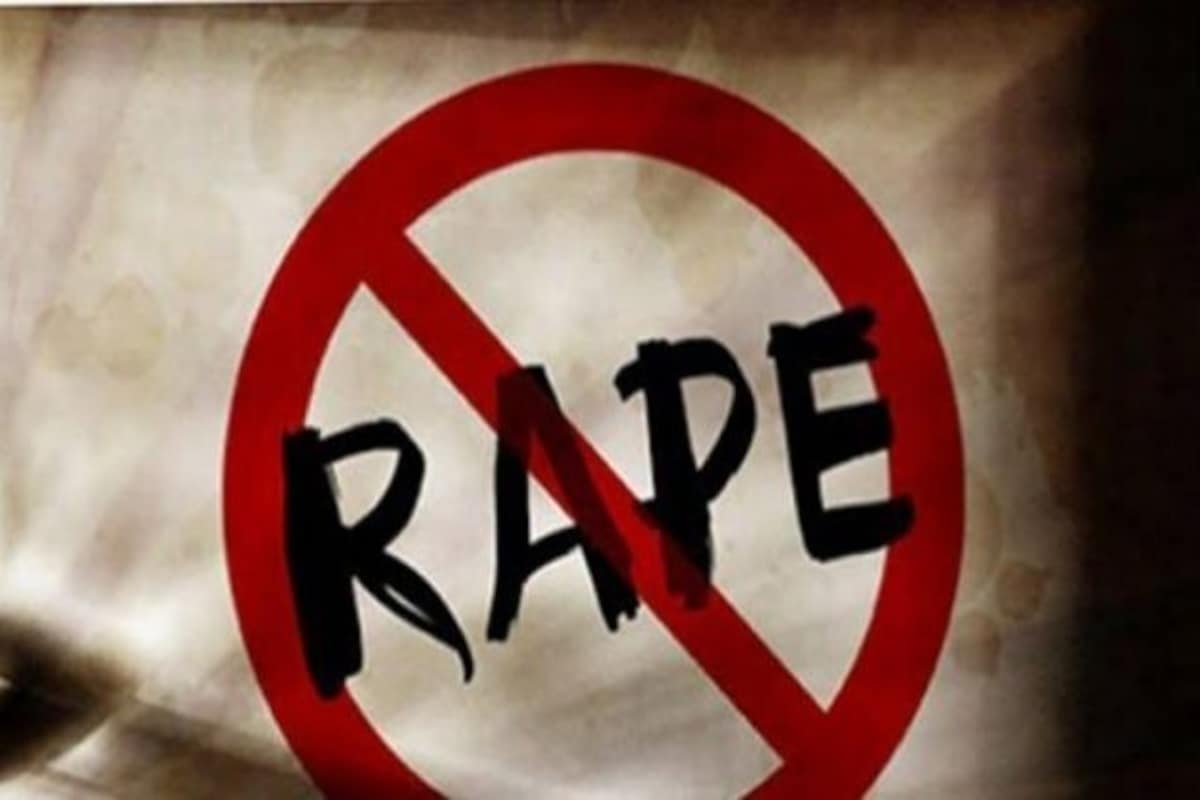
Rape is dishonourable, immoral and sinful to humans and must be outrightly condemned by all. Everyone has a woman in their life – mother, wife, sister, niece, or daughter. We should understand that rape is a crime to the existence of humans and must be kicked out of this nation now.

It is dishonourable because it takes away the victim’s pride that has been raped and her skin engraved in a deep wound that may take years to heal.

It is immoral because society frowns at it as it goes against the general acceptable way and conduct in any given community. It is also sinful because it goes against the dictates of the creator and amount to stealing from the other person, the victim.

We have heard the government of Nigeria speak against it but with no pragmatic line of action. Instead, we have seen the hand of the law taking a long but slow road to this issue.

One of the challenges of rape is the low level of prosecution despite the high number of media-reported cases. As a result, some victims agree to ‘settle the matter’ with the active connivance or encouragement of law enforcers. Although the Penal Code of Nigeria (Section 282), the Criminal Laws of Lagos State (Section 258), and Violence Against Persons Prohibition Act (Section 1) all present rape as a serious offence.

One unconfirmed report states that there have been only eighteen convictions in Nigeria! Most rape cases are never reported. Even some ladies find it difficult or impossible to tell their parents or guardian

Government should declare a national crisis on rape. Women and children safety must be paramount across Nigeria. The security agents should wake up and take a necessary measure on the issue of rape in the country and stop keeping mute like a  dog that cannot bark.

As a woman, you need to take it upon yourself to resist the societal attempt to objectify yourself. Your “womanness” is not by how good you conform to the stupid societal standard of you being an object. You’re a woman, and that alone validates your “womanness”

And as a man, you need to understand that the idea of being “a dog who respects no fair play in the game” only puts you on the same pedestal as animals. Your real trophy will come from the number of women you choose to treat strictly as “women” and not “objects” like society implores you to do. You’re a man, not a dog!

Rapists are criminals and should be prosecuted and convicted. Victims identities should be protected. Known rapists should be named and tagged. A special anti-rape police unit should be created in the Nigeria Police dominated by trained women.

Abdullahi Adamu can be reached via nasabooyoyo@gmail.com.

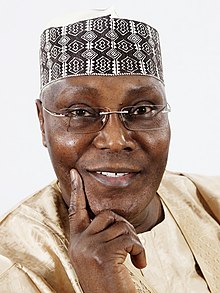
Atiku @75: Celebrating a true democrat

Thursday, November 25th, 2021, former Vice President and Waziri Adamawa, Atiku Abubakar turns 75 years old.

An opportunity to celebrate a Diamond Jubilee is a rare gift from the Almighty Allah- few humans celebrate it in good health with vigor and in a privileged status in the society. Atiku is one of the blessed Nigerians in that regard.

Atiku is a true democrat and a true Nigerian, a leader in the North, a shining example from the Northeast, and the beloved son of Adamawa state- Adamawa people and Jimeta-Yola citizens, in particular, are appreciating the Waziri Adamawa for bringing more development to Adamawa state. We appreciate Atiku for bringing productive employment to Adamawa youths and stimulating the local economy- Faro bottling company, American University of Nigeria (AUN), ABTI Printing and Publishing, Rigo Gado Farms, Gotel TV and Radio, AUN Hotels, Standard Micro Finance Bank, the Woven Sack Plant and Shrink Laminate Plant of the Prim Group, Chicken Cottage and the foundation for the less privilege in the society including several philanthropic ventures

At 75, Atiku’s politics, energy and synergy are waxing stronger- he is the candidate to beat for the PDP 2023 Presidential Ticket- so far, it appears, like 2019; 2023 PDP presidential ticket is Atiku’s. Love or hate him, Atiku has an immense war chest and enjoys a vast political network and connections nationwide. Atiku is adventurous in politics, a lover of democracy and a promoter of new ideas for the development of human capital

One salient thing about Atiku’s 75th birthday is, so many individuals from Atiku’s immediate constituency, the North and Adamawa state are celebrating with him, this is showing how more and more people are supporting Atiku

Happy Birthday, Waziri Adamawa

Musa Garba, President Madugu Group of Companies, wrote from Yola, Adamawa state

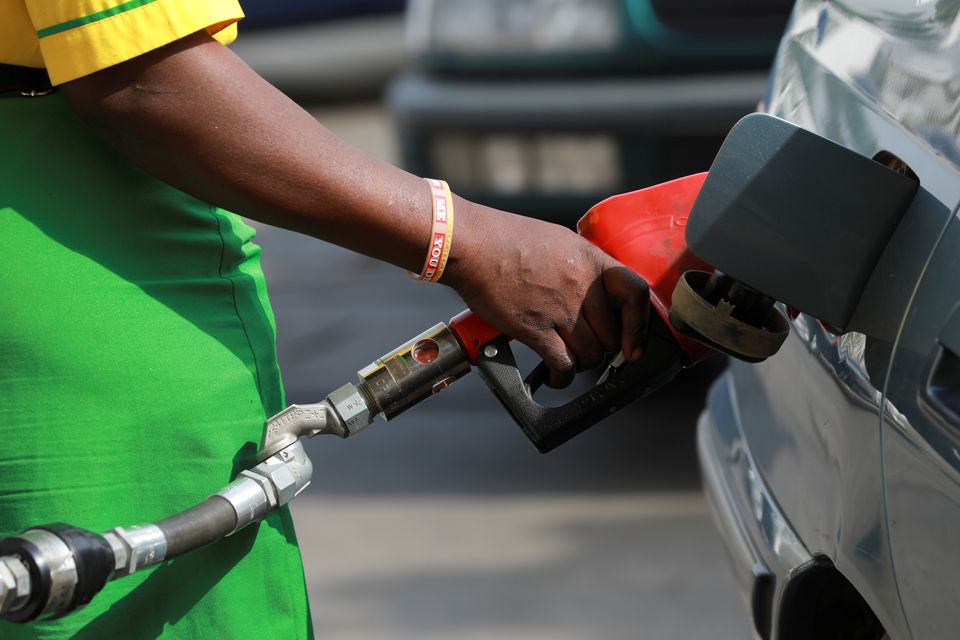
Remove this notorious subsidy but with conditions

I support the removal of fuel subsidy with conditions attached for the government. I have known that fuel subsidy is giving corruption a legal garb. But IMF didn’t tell government the whole truth. For government that cares for its people, removing fuel subsidy should only be done after the following conditions are taken care of:

1- Repair the refineries. As long as the refineries are working, petrol will come at reasonable price to Nigerians. The transport, NPA, custom duty and throughput components of the price will be taken care of.

2- Stop importation of petrol- fuel subsidy is not the only way government wastes money. Fuel importation in the most corrupt and wasteful venture of the government. As at June 2021, Nigeria spent N1.09trn on fuel importation. It is the cause of the deteriorating value of the Naira and Nigeria’s biggest import, the cause of our balance of trade and current account deficits. In fact fuel importation is the major cause of Nigeria’s economic crisis. As long as Nigerians will buy fuel without subsidy, they will be subsidizing government corruption and inefficiency.

3- Address the macro-economic crisis facing the country especially exchange rate and food inflation. Life is unbearable for Nigerians and removing fuel subsidy that will increase price of petrol will add more hardship to Nigerians. Fuel price increase has negative multiplier effects on cost of rents, transportation, school fees and prices of goods and services. When Nigerians are down with excruciating economic problems why add more hardships on them by jerking up the price of fuel?

4- Provide effective transport system like rails, good roads and bus services. In Nigeria, only Lagos has public transport system, even at that Lagos does not have rail system. Abuja has no public bus system and the light rail only covers a small fraction of the town. You can live in Abuja for months without seeing the train because it covers few stops. Other Nigerian cities don’t have public transport system.

5- Improve salaries of workers. Even without fuel price increase inflation has made Nigerian workers paupers. Without commensurate increase in salaries people will be working for nothing.

6- Solve the deliberating security situation affecting the roads and villages. People have no livelihood because they can’t farm. People cannot connect with towns and do business because of insecurity. Bandits have overrun most states in the Northeast and Northwest and people can’t till their lands or rear livestock.

7- Reduce cost of bureaucracy. The minister of finance said government did not budget anything for fuel subsidy for year 2022. But ask her, how much does the government budget for maintaining political appointees and you will know that the government thinks of itself not the poor Nigerians. According to former CBN governor and former emir of Kano State, Malam Sanusi Lamido Sanusi, at least 70% government revenue is spent on officials.The money to be spent on the president, vice president, ministers and CEOs of parastatals and members of house of assembly is far more than the fuel subsidy they are talking about. That covers fat salaries, allowances, estacodes, new expensive cars and even planes. But they will not touch their welfare. It is the same at state levels.

If the government can address these it can go ahead and remove fuel subsidy, otherwise it will be punitive to make life unbearable for Nigerians. Even the rich are crying in today’s Nigeria.

Aliyu Nuhu: is a social analyst, he lives in Abuja.

Should all Children in “Third World Countries” be taught the Philosophy of a Violence?

By A. F. Sesay

As young Africans, we grew up thinking if you are violent then you are evil. Yet, we have been victims of violence, right from the time of our forefathers. In fact, the majority of the global armed conflicts in the latter part of the last century and the early 21st century took place in the sub-Saharan Africa.


Now, note that I used “third world” and I also  used “sub-Saharan!” You already know that those words by their very nature are creative acts of violence meant to contain a people or even a race.


But the trillion dollar question is why are the most violent also the loudest about the evils if violence. And very quick to identify violence in others.


There comes the place of Philosophy! The people who move and shake civilizations know that such force and power rise and fall on violence. But then, if this knowledge is accessible to all,  life becomes brutish (not British), nasty and short. So, in order to win, conquer and dominate with violence you have got to refine it, and make it sophisticated. It has to be loaded with focus, force and formula. It has to be short lived(if possible) yet ruthless. And it must leave a bitter taste for centuries for maximum impact. Think Hiroshima and Nagasaki!


So, for the historically violated and oppressed to break free from  the fetters of poverty and disease, they must teach their children how to eschew emotion-driven violence for strategic and creative violence in words and deeds.


This will require revisiting  the curriculum and approaching such topics as Survival of the Fittest and the life of Carnivorous animals from a new lense.


Caveat: I am not violent, but you can’t help but admire the impact of strategic violence on the world as we know it today.

Private jet ownership, death of Nigeria Airways and the country’s “flying” corruption

By Aliyu Nuhu

The Boeing Business Jet, currently the one used by president Buhari, cost $80M, while the other jets favoured by other private individuals like Dangote and Adenuga are the Gulfstream (400-500 series) which cost $45M.

Other planes used by our elites are Hawker Siddley, Bombadier Challenger 600 series, Global Express, Embraer Legacy and Falcons; all depending on the deep pockets of the buyer. The least price of this category is $35million.

Forbes magazine claimed that Nigerians spent $6.5Billion on planes in the past five years. You will probably need a scientific calculator to get the Naira equivalent of that amount.

As the Nigerian leaders successfully abandoned, destroyed and completely killed our – National Carrier – Nigerian Airways, they become obsessed with private jets. Between 2007 and 2012 demands for private jets by the Nigerian class of the rich rose by 650 per cent. In the year 2000 Nigeria had 20 private jets shared among the presidency, NNPC, Shell and a few individuals. That time President Obasanjo and EFCC would sniff the accounts of any politician and businessman that ventured to buy a plane.

This number has increased exponentially in many folds as corruption and easy money gained ground during President Yar’adua administration and the President Jonathan government that showed no interest in fighting corruption. The result was an avalanche of expensive jets parked in the sun as status symbols of Nigeria’s greedy and boisterous elite.

In early 2015, the Guardian reported a total number of private jets at 200 and still counting with new orders placed in US and Canada. The figure is ten times the combined number of commercial aeroplanes in the country. There are presently only 20 operational commercial air crafts servicing the entire 200 million Nigerian public!

According to reports released by Bombardier Corporation of Canada, Nigeria is only behind the US, China and the UK in the placement of orders for private jets. We can excuse US and China at least they are the world’s biggest economies and China has 300 billionaires and over 15000 millionaires, the highest concentration in the world. All of them made their money through real-time investments and hard work. Corruption in China attracts the death penalty while the US punishes corruption with long jail terms. Both countries’ laws respect no status. However, Nigeria, since Obasanjo’s time, has stopped punishing people with corrupt cases. Poverty and unemployment are at epidemic and unacceptable levels now in Nigeria.

While the Federal Bureau of Statistics put the graduate unemployment figure level at 50%, the Federal Ministry of Labour put it at 45%. We don’t know who to believe, but it is well known that Nigeria is notorious for inaccurate statistics.

The World Bank however put the national unemployment figure at 56%, meaning that a population of 167million Nigerians will translate to 60 million jobless on count, the equivalent of the combined population of the entire countries in the sub-continent, lumping Benin, Togo, Ghana and Ivory coast together. I think World Bank is being modest, as the actual unemployment could well be 80 per cent.

Nonetheless, they are grim statistics and a real threat to growth and national security. Because our rich elites have no regard for cost-saving, they care less about the monumental waste of maintaining a plane. A private jet is a huge liability, costing money even when parked on the idle ground.

It cost 20 times 1st class commercial jet ticket to travel to London compared to a single trip on a private jet. Private planes are not like cars that you can just enter and drive off to your destination. To fly a plane you need all sorts of permits, ironically you cannot even taxi out of the hanger without permits which usually cost money. Servicing a plane is something that needs an entire life saving to carry, usually done out of this country which takes weeks to complete and is highly regulated.

To service a plane you need checking, removal and replacement of components, usually plugs, oils and hydraulics, replacement of tires, plates, cylinders, compressors that must all conform to stringent regulation and a certificate must be issued to back it up. Also, there are the routine A check, B check, C check and D check depending on the aircraft cycle.

In the case of D check which happens every 5 years, the entire plane is taken apart and is comprehensively subjected to rigorous overhaul that involved checking the entire fuselage metal skin and possible replacement of engines. This takes 40,000 man-hours calculated at a huge cost. No cost of aircraft maintenance is calculated in Naira here!

So why all the trouble?

The answer is pure ego trip and the Nigerian mentality of personal competition and the usual inferiority complex. The trajectory here is both wicked and ungodly to own a private jet in a land where frustration is written (in CAPITAL LETTERS) on virtually everyone’s face.

Warren Buffet who owns the largest plane manufacturing company in the US flies economy class in commercial airlines and has been known to drive a 2014 Cadillac XTS.

Bill Gates does not own a plane and drives a 1991 Porsche 911 Carrera, Porsche 930 and a 1988 Porsche 959 Coupe. When he came to Nigeria with his wife Belinda he flew a commercial economy ticket. So what is wrong with the Nigerian rich?

I don’t expect this kind of modesty and humility from the crop of leaders we have and the elite in Nigeria. They are undoubtedly easy money bags and hyenas that call themselves rich. Most of them were unemployed and in rags 15 years ago. They killed all our ways to Nigerian Airways. They now shamelessly fly in corruption.

Aliyu Nuhu is a social commentator and an expert in socio-economic and political commentary. He lives in Abuja, Nigeria.