Opinion

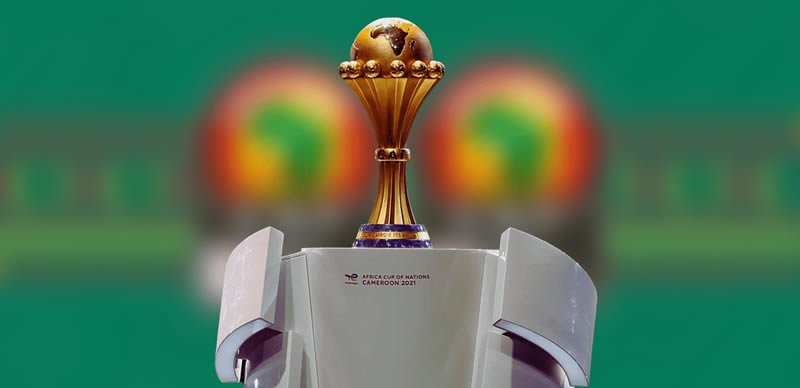
Now the real business begins at the AFCON

By Aliyu Yakubu Yusuf

The group stages have come and gone at the ongoing AFCON in Cameroon, with Algeria and Ghana being the biggest casualties. For the 2-time winners Algeria, it was nothing short of a travesty that they failed to qualify from their pool. After all, they were on a 33 game unbeaten streak before the tournament. They were also odds-on favourite to go all the way. And to be fair, they crafted more than enough chances to win their opening two games against Sierra Leone and Equatorial Guinea before they met their waterloo against Ivory Coast. But unfortunately, their tournament can best be summarized as a combination of poor finishing, complacency and rotten luck.

As for the 4-time champions Ghana, the least said, the better. They played some of the most dreadful football in the tournament. Add this to their ill-discipline, and you have the Ghanaians knocked out in the first hurdle. That they couldn’t defeat the debutant Comoros is a damning indictment of the once-proud footballing nation.

Now that the group stages are over, the margin for errors is entirely gone. Our own Super Eagles have been the team of the tournament so far, but that counts for nothing if we fail to get the job done in the subsequent tournament rounds. Our reward for winning three out of three games is a tantalizing tie against former champions Tunisia, who have largely underwhelmed in the tournament. On the evidence of what has been seen so far, bookmakers would have Nigeria as the firm favourite to advance to the quarter-finals; and rightly so. However, I earnestly pray that our fantastic showing does not get our players and coaching staff complacent. The winner takes all nature of knockout rounds makes it an unforgiving business. It only takes an avoidable error by a player or a coach for a team to book the next flight home. Besides, the Tunisians are no pushovers. On the contrary, they have the experience and the pedigree to cause an upset.

Often, a team performs wonderfully at the group stages only to be undone by their heralded opponents. I always remember the 2002/2003 UEFA Champions League quarter-finals in which Juventus sent Barcelona parking. At the time, Barcelona got 16 points from the second group and had won a total of 11 out of 12 group stage games (there were two group stages then, in case you were wondering), and Juventus managed to crawl their way out of the second group with 7 points. When they were paired against Barcelona, many football fans and pundits regarded it as a foregone conclusion. Against all odds, Juventus not only defeated the seemingly unbeatable Barca, but they went all the way to the final, where AC Milan narrowly defeated them via penalty shootouts. The biggest lesson I have learned from that encounter is that as long as a team is still standing, it stands a chance to win a tournament. I hope our players think the same way.

The round of 16 fixtures has drawn up the path to the trophy, with Nigeria, Senegal, Mali and Tunisia as the biggest teams on the same half of the draw and Egypt, Morocco, Cameroon and Ivory Coast on the other half. If (not when) we overcome Tunisia, we are scheduled to play the winner of Burkina Faso and Gabon. And if we win that tie, we would be facing one of Senegal, Cape Verde, Mali and Equatorial Guinea before the final showdown at Yaoundé. So here’s wishing the Super Eagles all the good luck in the world.

Aliyu is a lecturer at the Department of English and Literary Studies, Bayero University, Kano. He can be reached via aliyuyy@gmail.com.

Beware of Facebook, other hackers

By Abdulrahman Muhammad, PhD

A friend recently left Facebook after his friends were duped through his hacked Facebook account. The hacker took over the victim’s Facebook account and sent messages to the latter’s friends asking them to deposit money into an account and get double the amount deposited in two weeks!

Because of sheer trust and gullibility, they first transferred monies into the bank account given to them by the hackers before even contacting my friend via phone. A total of about 450000 naira was lost this way, one of the victims being a student.

Lessons:

1. A simple phone call to confirm the true source and authenticity of the message would have saved the victims the trauma of losing huge sums of money.

2. The susceptible can be found even among the educated. While working in New Bussa, a colleague excitedly showed me a text message from an ordinary number informing him that he had won a lottery in which he was a random passive participant. I warned him that it was fraudulent, but another colleague convinced him it was genuine. The most painful thing was that the fraudsters asked him to go to an ATM and called them from there so that they could instruct him on how to redeem his prize. He inserted his card into the machine and followed their instructions sheepishly, which led to the emptying of his bank account.

3. Even a smart person can be a victim if they are too trusting, careless and greedy. Nobody can double your money in two weeks. Haba! Be street-wise.

4. Some bankers seem to be collaborating with fraudsters. For example, when victims go to the bank and complain, the bankers say the bank account the victim transferred the money does not exist!

5. Some of us have not been duped only because we are too poor to be conned. Or, to put it more respectfully, we are not rich enough to be defrauded. Where is the money?

6. A simple test can expose hackers. Recently, a Facebook friend sent me a fraudulent solicitation message. I promptly suspected his account was hacked. Unfortunately, I didn’t have his mobile number, so I sent him a message via Facebook Messenger asking simple questions in Kanuri language. The hacker responded in English with wildly off-the-mark answers. I called his bluff, and he disappeared.

7. Any friend who wants to deposit money in my account is welcome, but they should get the correct account details directly from me through my mobile number. My bank account name is slightly different from my Facebook account name.

8. One can also use the Messenger voice call option to confirm the person’s identity soliciting for money.

God save us from fraudsters.

Dr Abdulrahman Muhammad wrote from Maiduguri, Borno State. He can be reached via abbakaka@yahoo.com.

Covid-19 and the parody of nose(face) mask usage in Kano

By Hussaina Sufyan Ahmed

When the coronavirus, also known as COVID-19, broke out in Nigeria in 2019, things changed, and lifestyles metamorphosed.

The virus moved from an imported case and elitist pattern to community transmission; its fatality rate stood at 2.8%, while the country recorded an upsurge of about 52% of total cases of the transmission of the virus even during the short lockdown.

The preventive measures of the virus popped out, hence the dissemination of awareness through media outlets – radio and television jingles, set up programs, sensitisation workshops, newspaper pages and even films.  

The use of facemasks, hand sanitisers and hand wash basins also became common. In addition, the practice of distance communication strengthened: no handshake, no hugs and no body contacts except with those already tested negative.

The spread of the coronavirus in Nigeria started as a sceptical phenomenon. Some towns and villages found it hard to believe a global plague could affect Africans directly. This notion is a myth that has lived in Africa for donkey years.

Some Africans believe that the Black man can hardly contact the virus because of melanin pigment in their veins, which preserves the dark skin. Therefore, for these Africans, the Black man is super strong and has immunes that fight against global pandemics and illnesses. However, with the strictness in lockdown worldwide for a year, many Nigerians and Africans who never believed Covid-19 existed were left to believe in it, hence the use of nose masks.

The nose masks market became a target for most traders. The high demand it continued to attract made it seem like the coronavirus never subsided, and this example is visible in Kano state. Nose masks became the equilibrium product of that time; demand, supply and price at active points.

The Nigeria Center for Disease Control (NCDC) reported that the total Covid-19 cases in Kano remained at seventy-three from 22nd of April to 24th of April, during the initial stage of the outbreak. These infection statistics remained at seventy-seven from the 25th of April 2020. However, there was no report from the 25th to the 27th of April 2020. This caused a gap in the state’s record of the infected and non-infected.

The reactionary steering that emanates after an opinion article is released might be expected as this introduction is achieved. So, what is next?

The rise in theft and immorality is relative; however, what is not relative is the understanding of societal norms and inscriptions. The use of nose masks has increasingly seen to the less spread of the virus. What is, however, not really questioned is the increase in crime and immorality in Kano state following the adoption of nose masks.

It is uncommonly common to find out that cheating in marriages grows by the day in Nigeria. This is because many marriages lack communication, leading to the partners engaging in extramarital relationships. However, this article is not about the reasons why couples cheat on each other, but about the narrative the nose(face)mask pushes in achieving the aim of stopping the spread of the virus.

The population of men who visit Ado Bayero Mall, Kano, is seven times higher than that of ladies. They go to woo ladies. They begin with the “I am married” and end up with “be my girlfriend” or “be my wife”. However, the girlfriend narrative is not pushed to a lady in need of marriage. It is to a lady who wants to have the fun of the relationship.

These men use nose(face) masks to shield their identity. This is not to say they are not helping reduce the spread of Covid-19, but what happened to the disapproval of vast Nigerians in accepting the coming of this virus? So, the concept of maintaining extramarital affairs with nose(face) masks is relatable and, at the same time, unrelatable. It all depends on the aim, be it to help not spread the virus or spread the virus.

The women population at the Mall is exemplary in front of the exit gate. This is because more stern security personnel man the entrance gate, so as a pedestrian or one who has no business with entering, you can only go about daily transactions in front of the exit gate.

Females who stand in front of the exit gate pass coded messages to ladies who pass through. Research showed that your nose(face) mask indicates that you want your identity shielded, so the prototype is “shielding your face is a sign that you are in for some business transactions”. This caused some people to halt the use of facemasks except during the entrance of the Mall. This is to kill the notion that they want their identities hidden from some actions they might not be proud of to be seen doing.

Since shyness is part of faith, there is a need to be shy in welcoming transactions that people will stigmatise. However, this is done in the Covid-19 era, and it makes it more serious as we need to curb the virus.

“I seek for a lady that I will take home as I am into women only. Are you game?” This was a question from a woman in a car on nose(face) masks to one of the researchers.

Over time, phone snatching and theft have increased in crowded and isolated areas of Kano state. The increase in phone snatching shows the negative side of nose(face) masks. Some of these perpetrators use nose(face) masks to shield their identities. This helps them curb the spread of Covid-19, of course, but also helps put people in despair over the loss of their treasured asset – their smartphones.

The preventive measures of Covid-19 in Kano have grown more serious as the count of infected people has reduced due to the massive increase in the purchase of nose(face) masks. But then, what about hand sanitisers to match up with this patronage? Personal research discovers that hand sanitisers have gained a decrease in demand. This is to say that the hand sanitisers market does not match up in equilibrium with the purchase of nose(face) masks anymore.

It is important to know that this article should help share the “use nose masks” tag, but the writer will not support the use of the masks while the market of hand sanitisers continue to grow low. So, there is a need to encourage hand sanitisers while the increase in the nose(face) masks increases.

Hussaina Sufyan Ahmed wrote from Kano via sufyanhussainaahmed@gmail.com.

The need for Nigeria to harness coconut production

By Amina Rabi’u Bako

Coconut is one of the most important and useful plants in the world. Apart from consuming the fruit and its water, many industries, such as pharmaceuticals, beverages and cosmetics, use its parts. As a rich fruit, it is encompassed with several opportunities that bring wealth to a nation. Everything about it is beneficial to man; it has economic, medicinal and nutritional value.

According to various global research findings, its uses can be seen from its components, ranging from the meat, oil, shell, coir, husk, water and lots more, making it more of a revenue economy booster. 

Coconut is nicknamed a tree of life. Nigeria established its first coconut plantation in 1876 in Badagry, Lagos State. The crop grows in over 30 of Nigeria’s 36 states, with Lagos and Akwa Ibom states having the largest production area.

With 83 per cent of Nigeria’s states into the production of coconut, the country should succeed in producing and exporting the product across the world. Unfortunately, however, according to the Food and Agricultural Organisation (FAO), Nigeria ranks 19th in the production of coconut globally, placing the country far behind Indonesia, the Philippines and India.

As reported by Premium Times, the data obtained from the United Nations Office shows that Nigeria spent $219446.53 and $293214.22 on coconut importation in 2019 and 2018, respectively, an amount higher than $186094.58 spent on coconut importation in 2017.

The price of coconut in Nigeria today has risen by almost 100 per cent. This is not unconnected with over-reliance on coconut importation.

A coconut seller, Dahiru Umar, said, “The price keeps rising day by day. A single coconut has now multiplied its price compared to last year.”

Halima Abbas said, “the rise of coconut made me pause my coconut macaroons business for a while to see if the price might go down.”

National Coconut Producers, Processors and Marketers Association of Nigeria (NACOPPMAN) is moving towards making sufficient coconut trees in every corner of Nigeria’s states. During the flag-off and election of NACOPPMAN held in Kano, the Chairman, Fatima Abubakar, in her speech, said, “We cannot continue to import what we can produce locally! Coconut sufficiency in Nigeria is a reality.”

We need to do much better than we are doing. For, among other reasons, coconut has several health benefits. The reader may visit the Healthline.com website to see some of the benefits, which space will not allow me to describe here.

Nigeria should not afford to be left behind in the production of coconut. With the NACOPPMAN, the country can realise its dream of actualising coconut sufficiency, thereby utilising its health benefits and leveraging its economic value. Moreover, it is pertinent for the government to provide an enabling environment to attract foreign investors to come into the business. The earlier we wake up, the better.

Amina Rabi’u Bako is of the Faculty of Communication, Bayero University, Kano.

A letter to Prof. Farooq Kperogi

By Muhammad Rabiu Jibrin (Mr.J)

I write this letter to you as a Nigerian and your follower for a long time. I am deeply concerned about having a better Nigeria, which is only possible if responsible leaders are elected. Leaders who have the country at heart think of her first before themselves or their families.

But the process or the means of discovering remains the problem to many Nigerians due to so many factors. We need to face that and address it as soon as possible. In so doing, Nigerians need to be guided by farsighted men like you. 

Prof. Kperogi, if Buhari, Osinbajo and Tinubu are “a troika of a treacherous villain” or “tarred with the same brush or the monsters of deceit and fraud” and Atiku happens to be among the “warhorses of corruption and ineptitude” as you pointed out in your recent piece, then who do you think should Nigerians go for come 2023?

It is indisputable that those you called names failed Nigerians on many fronts and seem not equal to the task based on the historical antecedents. But just pinpointing their lacunas that justified them as incapacitated and incompetent alone can’t suffice.

As a patriotic citizen, a critical thinker of reasonable foresight, with a wealth of experience and vast knowledge, you can endorse someone for Nigerians to vote for. Please, who do you think can lead Nigeria to the promised land?

With your pen, which is mightier than the sword they say, you can attempt changing the narration and have the Nigeria of our dream. Out of the 78,250 followers and 4999 friends you have on Facebook alone, plus those on your other social media handles, only God knows how many you can influence. As you shape their minds, they can also do the same to others, and the trend will go continuously. 

Nigerians want to stop being “clueless” and take off their heads the laurels of “enablers of Nigeria’s descent to the nadir of hopelessness”. So let’s do this together and make 2023 different.

Muhammad Rabiu Jibrin (Mr J) wrote from Gombe State via muhammadrabiujibrin@gmail.com.

Why do we lack a reading culture?

By Aliyu Muhammad Aliyu

We often ask ourselves the question, “why do we lack reading culture in our contemporary society?” The answers we get are associated with our background and perspective on the issue. To a teacher, knowledge of all fields and disciplines is documented mainly in writing. We explore and acquire it by reading relevant resource materials of our interest for their information. We read enough literature persistently to acquire what is sufficient to be knowledgeable through either the education process or self-learning. To read and continue reading, the reading itself has to be easy, attractive and exciting to the reader. In this way, it becomes second nature and a hobby unwitting.

As a common saying, “the beginning of everything is the most important.” When a child learns how to read and comprehend the information, write what is understood by their readers, and express themselves verbally, effective communication skills manifest, hence reading culture and knowledge acquisition. This marks the beginning of intellectual independence achievable only through standard, sound and comprehensive primary education.

Children are taught to be literate in primary schools; they familiarize themselves with alphabets and numerals, words recognition, pronunciation, formation of sentence and paragraph and finally, the whole passage comprehension and composition in mother tongue and lingua franca. Reading begins by reading adventure stories in which the heroes get into difficulties. Then, using the suspense technique, the readers’ interest is held until they find how the heroes escape in the end. This boosts readers’ imagination and interests, which results in reading more stories searching for ways to be heroes themselves. With age, the readers grow older and develop an interest in how people think, talk, feel and handle situations and circumstances. That makes them critical in their thoughts and figuring out how to solve their problems through someone’s experience put in writing.

A society that adopts a reading culture will produce vibrant youth of revolutionary character that will be satisfied only with the best from anyone in all circumstances. On the contrary, anything one does with difficulty, the interest in that particular issue gradually fades away until one loses it completely, more so on the reading activity as energy and time consuming are immense. Those who are incapable of reading a quarter of the minimum words expected per minute of an average reader will certainly lose interest in reading since they are expending what isn’t worth it when they can use the same amount of effort that bear fruit in other activities comfortably. They have to abandon reading and then lose all its life-changing attributes.

The cascade of events that lead to poor reading culture begins with poor primary school back and forth. Pupils attend poor primary schools and leave without learning anything substantial. They move to secondary school still without learning much because of a lack of foundation to support the lessons taught. Somehow, they manage to pass the final exams by exam malpractice or otherwise. They get admissions to higher schools of learning and can sail through in different ways. Some do that by cheating, and others with great difficulty of mere rote learning due to inefficient lecturers that are probably victims of poor primary education or lazy in evaluating their students’ performances.

The poor products are the so-called qualified teachers that are given the available teaching job in primary school to continue the vicious cycle. It is common knowledge that one learns much less than one is taught. So, this indicates that a negligible amount of knowledge and motivation is to be learnt from incompetent teachers. Moreover, this results in the decline of knowledge in every generation.

The only way to correct this existing problem and prevent its future occurrence is to recruit enough competent primary school teachers. They should also be given sufficient orientation training that focuses on what they are to teach according to the syllabus and continuously retrain all existing teachers. Furthermore, educated parents and guardians are to monitor the ability of their children’s literacy and numeracy by themselves to ensure their performance since results are faked by teachers, especially those private schools to mislead parents.

Primary school leavers taught by competent primary school teachers don’t need to spend a dime on them in private secondary schools because they’re well equipped to muddle through and even be among the best in the current unsound state of public schools. A qualitative primary education that leads to unlimited reading culture and curiosity is what the first-generation students and their successors got and proved to be highly knowledgeable in virtually all fields of learning despite their lower certificates. Contrary to what is currently obtainable with those with all the degrees but never fails to hide their ignorance of general knowledge and simple basics that were not obtainable right from primary school.

To fix a society, fix education. To fix education, fix primary education, as simple as it sounds.

Aliyu Muhammad Aliyu wrote from Kano via amabaffa@yahoo.com.

Haneefa’s Death: A true reflection of our society today

By Usama Abdullahi

The media is filled with the tragic story of the deceased Haneefa, who was abducted a couple of months ago in Kano State and later killed in a gruesome manner by her teacher—the abductor. When I came across the story, I couldn’t help but weep for the little pretty, innocent child. The shock in me is unbelievable. But did this happen for the first time? That was the question that popped up in my mind when I first read the news of her demise. 

That wasn’t the first occurrence, and I guess it wouldn’t be the last. A lot of babies have been killed for the past years. Still, more are being killed daily too. Sometimes we don’t hear about it because the abominable act is being done in private, hence beyond the reach of media. Unfortunately, irresponsible parents discard newborns like rotten cabbages; some get abducted while others are buried alive. Moreover, others are being sold as goods meant to be exchanged.

What is this telling you? Simple; it tells you more about our society and how unsparing we are today. This is a true reflection and clear proof of our today’s society. Indeed, we are a money-driven society. We crave excessive wealth badly. And we seek to get that in such venturesome and unacceptable ways. Unfortunately, some of us have turned beasts and cannibals in the process, thereby assassinating and eating the flesh of the unfortunate victims. 

This society stoops so low beyond imagination. Disturbingly, no possible help in sight to redeem such despicable acts and to tame or neutralise the evil-minded monsters doing these. Don’t we have leaders? You may perhaps ask. Yes, we do, but they are not helpful at all. Most of our leaders don’t deserve to live with us, let alone rule us. They are mostly the ones sponsoring these evils.

Imagine a so-called leader who hires hoodlums, feed them, rent five-star hotels for them so that he could assign them to abduct or take away the lives of those he wishes dead. When I was growing up as a kid, I used to deny the existence of “ritualism”. I thought that exists in fairy tales that we were taught at schools or watched on TVs. But, contrary to my kiddish thoughts, “ritualism” truly exists. It’s, in fact, become the norm.

As kids, our parents used to caution us against strangers, that we shouldn’t even exchange words with them. Because most of them are bad, they can wile us by giving us gifts, and when we take those gifts from them, we would be unconscious shortly after, and they would disappear with us to another world where they would waste us for their devilry reasons.

Our parents are damn right. But what our beloved parents need to know today is: it’s no longer strangers but our relatives; it’s now those we trusted and confided our care to. We might even feel more secure in a stranger’s abode than in some of our relatives’. Disgustingly, an uncle rapes his niece; a father kills his daughter; a mother copulates with her biological son, all these for worldly gains.

This is what we are now. One who’s supposed to protect and cater for you now turns to be your enemy. Our society is no longer safe. There are a lot of wolves in sheep’s clothing amongst us. Thus, we need to be extra careful because human lives aren’t sacred anymore. Sadly, humans are often hunted like wild animals in the jungle. Worst still, there’s a market for human organs, where every human body organ is available for sale.

Usama Abdullahi wrote from Abuja, Nigeria. He can be reached at usamagayyi@gmail.com.

A call to Nigerian youths on political apathy

By Salaudeen Teslim Olamilekan

Over the years, there has been an erroneously hard held belief among some Nigerians, especially the teeming youths of intellectuals, that, ordinarily, electorate votes don’t count in an election. This belief is more evidenced in social media discussions, particularly Facebook. Whether they vote in an election or not, the winner of an election is already known to the powers that be, even before the election day.

In preparation for the 2023 elections, I visited my local government secretariat to register my voter’s card. It was pretty disheartening and mind-boggling for me, realizing that what I observed the very first day I went, there was still the same thing I noticed. About 85% of the people on the queue waiting to be captured are old and mostly unlettered. They are illiterate market women, farmers and some senior civil servants. The numbers of youths in the queue were minuscule.

Many acclaimed young, exposed, and educated individuals who should know better about how a country is built are focused on venting anger and frustration on social media and gatherings against politicians. We fail to do what truly matters for the betterment of our country. It’s safe to say some youths and informed older people don’t even have voters cards, much less planning on voting. A fragment of this proportion doesn’t obtain the card for election purposes. It’s only some one-third among the youthful large social media users who lament and often weep for the country now and then will vote. In the end, the irony is, when an election comes, the old market women and farmers we often view as ill-informed and uneducated are the ones that pull the most votes.

In my conversation with some youths my age in my neighbourhood and the older ones, I discovered seemingly educated people who pride themselves on not having voters cards. They even hold and justify such ignorant views with their full chest. More surprising, a lady once told me that voters are the problem of Nigeria. She believes she’s wiser because she has never voted for any corrupt Nigerian leaders in the past. She has never exercised her right to choose who governs her country and who doesn’t, and she doesn’t seem to care. She sees people that vote as accomplices to the fraud in government. She’s among the many complainants that know every politician that’s not performing by their names but failed to see voting as a reasonable way to push them out of government and establish a new people-oriented government.

To say our votes don’t count in determining who wins or loses the election in Nigeria is a talk borne out of utter ignorance. The fact that the educated ones propagate such opinions makes it more embarrassing. Don’t let us fool ourselves. If our votes don’t count, politicians will not be spending billions of naira on advertisements and campaigns, touring every nooks and cranny of the country begging for votes. I believe anyone who shared in the anger, disappointment and dissatisfaction many of us have towards this current government and doesn’t have a voters card shouldn’t be taken seriously. You can’t complain your way into changing the political order of your country. You take action by voting. Your ignorance towards the poll keeps terrible people in power.

The thing about democracy is that you can’t separate or remove elections from its guiding principles and practices. The moment a country fails to choose its leaders by the polls, directly or indirectly, it cannot be identified as a democratic country. Elections are conducted to elect a leader to represent the people and ensure people’s dreams and aspirations are fulfilled. This mechanism hasn’t proven to be successful in choosing good leaders all the time, but it’s successful in making the majority’s will come to fruition.

It is wise that your hatred towards the ruling government should be why you’re voting, not why you’re apathetic to the poll. If you refuse to vote because you hate the government, your apathy will continue to keep bad people in power, and in so far as bad people are in control, their poor decisions will be ruling every aspect of our lives.

Nigerian politicians understand the power voters have. That’s why they focused more on enticing our poor, uneducated and easily-deceived parents with some handful of rice and N500 so that they could vote for them. Unfortunately, politics is a game of numbers. The more crowd a wrong person pulls based on his war chest, the more that wrong person will have chances of clinging to power.

My fellow Nigerian youths, come 2023, blame yourself if the wrong people win our most important national and regional political offices. Never complain. It’s your fault that you don’t vote. You should now understand that the quality of your life determines the quality of the people in power. How safe and healthy you’re, depends on the outcome of your political decisions. The political aspirations of the government in power affect the country’s political economy, including the highly established businesses and the small and medium scales. It will affect the bread sellers, labourers, and our society’s disadvantaged. We should do away from ego and ignorance and exercise our rights to vote for good and future-focused leaders.

Salaudeen Teslim Olamilekan is an undergraduate of the Federal Polytechnic Offa, Kwara, studying Mass Communication.

Tinubu and Osinbajo: Two sides of the same coin

By Ishaq Habeeb 

So I made a rather lengthy comment on Prof. Farooq Kperogi’s Facebook post regarding Bola Ahmad Tinubu’s presidential candidacy. He thought it was an excellent observation and thus an independent write up. Here is part of what the comment entails: “Tinubu is too old, too inebriated, too corrupt, too unhealthy, too controversial and too unfit to lead a nation that had just survived a tsunami”. That was my first reaction to the news making the rounds on social media since Tinubu officially made his intention public to run for the office of the President of the Federal Republic of Nigeria come 2023.

A week before Tinubu’s announcement, our Vice President, Prof. Yemi Osinbajo, declared his intention to run for the same office come 2023 and officially informed his principal to seek blessings as he intends to succeed him. My confusion here is: Mr Osinbajo’s declaration didn’t generate half the noise, Tinubu’s declaration is causing – although mainly in the negative. It makes me wonder, why are we all too focused solely on Tinubu? Everybody talking about what a terrible choice he’d be for the job, all attentions shifted away from Osibanjo.

Osinbanjo, Buhari’s VP since 2015, has never had any rift or imbroglio with his principal regarding the state of the nation. So now I put this to sleepy-eyed Nigerians: if Buhari is Pharaoh, doesn’t that make Osinbajo, the Vizier? Pharaoh’s Second-in-Command. That said, Osinbajo’s nonchalance to Buhari’s bad governance can only mean one of three (3) things:

1. That Osinbanjo is 100% with and actively part and parcel of the Buhari govt hence part to blame for the crass mismanagement of this country since they took over in 2015.

2. That he’s indifferent to the misruling and mismanagement of the country by his principal, so long as he remains the country’s VP and his family is safe and far away from the horrible effects of the bad governance, the Buhari regime – in which he’s the VP – has unleashed on Nigerians.

3. That he is not happy with the status quo but lacks the integrity and moral decency to do the pastoral thing and speak out against the ills or even step down, rather than feign indifference, watching the daily destruction of Nigeria and Nigerians by his principal, with himself, as second in charge.

Concluding thoughts…

Osinbajo is just as terrible as Tinubu for the job they’re eyeing, and Nigerians shouldn’t reject Taye but accept Kehinde. They’re two sides of the same coin. However, imperfect as they both are, if they’re the only two options, between the two, I’d rather go for the least, healthy, mentally and physically fit Osinbajo, over a sick, decrepitly-old, shady, and stinkingly-corrupt Tinubu. But thank God for multiple choices.

Ishaq Habeeb writes from Kano and can be reached via his Twitter handle @realishaqhabeeb.

A Snare

By Salma Yakubu

I sat on a bench under a neem tree behind the Faculty of Education lecture hall. I stared emptily at nothing in particular.

‘Hey! Karima!’ My classmate, Siyama, snapped me out of my thoughts.

‘What are you thinking?’ She scowled as she sat down.

‘The test, I hadn’t studied well.’ I complained.

‘You should have studied enough. You know that lecturer is very tough, he wouldn’t hesitate to fail you. Plus, you are not so good in his course.’ She blamed me.

‘Shut up!’ I roared in anger while already in remorse.

‘I should have studied.’  I murmured to myself.

I was still nursing the pain when Aliyu, the class rep, walked up to us. Aliyu is a young and vibrant student of average height and in his early twenties.

‘Oh, you guys are here; I have been looking for you.’ He said.

‘What’s up?’ I held my breath to hear if it was about another test, assignment, or attendance.

‘Mr. Bashir, statistics, asked me to call you.’ He said. My heart skipped a beat.

‘Why?’ I asked before I sprang to my feet. ‘Did I do anything wrong?’ I enquired.

‘I don’t know. He only said I should call you.’ He replied. I turned to Siyama, who was also in awe.

‘Okay, Aliyu, I’m right behind you.’ I threw my stuff inside the bag and started walking. Siyama followed me.

Two lecturers were leaving as we got to Mr Bashir’s office door. Immediately the door closed back, I knocked.

‘Come in’, Mr Bashir responded. So Siyama and I entered the office.

‘Karima only,’ he said without looking at either of us. Siyama and I exchanged a glance as she slammed the door behind her.

‘Sit down,’ he pointed at a sofa across the room. I sat anxiously and clutched tightly to my bag.

‘You…called…for me…sir.’ I stammered.

‘Yes, Karima.’ He removed his spec, dusted it off and placed it in the spec case. ‘You failed my statistics test, do you know that?’ He furrowed.

‘Yes,’ I nodded. He sighed.

‘You score seven out of twenty points. This is going to affect your grade. How do you plan to stop that from happening?’ He focused his eyes on me. I lowered my gaze in silence. ‘Study harder for exams?’ He asked.

‘Yes,’ I mumbled.

He chuckled. ‘You lost thirteen marks. That’s too much. You are most likely to fail the exam.’ He leaned forward. ‘But you have nothing to worry about. I will help you.’ He then retracted. I breathe in relief. ‘You know Karima; we have an unfinished business.’ He gave me a flirty stare. I felt chunks in my throat.

The very day Mr Bashir introduced himself as the statistics lecturer was the day he invited me for lunch, and that was in the first semester. I turned him down. And we never talked about it again. I have forgotten or almost forgotten we had such an encounter. Even the following morning, when we met in school, he didn’t say a word to me.

‘Are you with me?’ He lurched me out.

‘Yes, sir’

‘I still like you,’ he walked over to where I sat. I swallowed hard as he leaned in. ‘Karima, you are  beautiful and smart, but statistics break your egos.’ He laughed devilishly. ‘ In your last result, you got “E”. Do you know what comes after an “E” grade?

I was dumbfounded.

“Fail.” He said as if that means a well-deserved medal of honour. ‘You might repeat the same course.’ He squirmed. ‘Aren’t you worried about not graduating with your classmates?’ I lowered my gaze again. ‘I’m not only going to help you pass the exam but also provide you with a private tutor.’ He dropped his contact card beside me and returned to his chair. ‘Think about it.’ He said and sat down. ‘Oh! My bad! What will I offer you?’ He snapped out.

‘Nothing, I’m okay. Thank you.’ I faked a smile, and thankfully, just then, my phone buzzed.

‘What is vibrating?’ He asked.

‘My phone.’

Before I could answer it, the phone hung.

‘My friend is calling. We’re going home.’ I told him.

‘Oh, I am sorry to have kept you here.’ He slid out three thousand Naira notes from his pocket and forwarded them to me. ‘Please, fare with this,” he said.

‘I have transport fare, thank you.’ Then, in astonishment, he said okay, and I left.

By the time I got home, it was past six o’clock. My Abba was sitting in the parlour, his attention on the television when I entered. I greeted him and headed to my room.

‘Karima,’ Abba called out. I stopped halfway. ‘I’ll like  to talk to you later.’

‘Okayyyyyyyyyyyy,’ I said.

After a cold shower, I sat on the bedside drawer, towelling myself. My phone buzzed inside the handbag. While I was trying to locate the phone, Mr Bashir’s contact card fell off. I picked the contact card up and plugged my phone into charging while I threw on a long multicoloured chiffon gown and went to Abba. His focus was no longer on the television but a book on his hands. Edge of politics, I read the book title as I sat on the fur carpet by his side.

‘How are studies?’ Abba asked while his eyes were still searching on the book. How can I tell him the truth? Aren’t that studies fine?

‘Study’s fine,’ I lied. He shoved the book aside and turned to me.

‘Karima, you are doing well in a lot of things, especially your education. I’m proud of you.’ I smiled. He continued. ‘I want you to do whatever it takes to graduate with good grades. Don’t worry about a job; I am making arrangements for that. I don’t want you to fail, never.’ He said in a mixture of advice and threat.

This is the problem with Abba; he hates any excuse for failure. Did he know my academic challenges? No, he doesn’t. He consistently gives fare, feeds and if there is any need to buy, he gives the money. Abba thought he must have covered the basic problems in my studies. When I told him once about my difficulty in statistics, he laughed it off, saying that I was mumbling because I wasn’t paying attention and also hated the course. It was not true.

I also told Abba about my coursemate, who was willing to tutor me freely, but he rejected the idea. I know he hated to hear me call a male my friend.

‘You see this male tutor? They are fake. They will drive you into falling in love with them and end up messing with you. In the end, you will lose both love and tutoring. The same with girls, too. Don’t be too close; else, you will end up homosexual. You are just 19. Have you ever imagined what your life would look like when you let a boy or girl a mess with you?’ He would say, and I would squirm.

Since my Abba doesn’t like close relations with the same or opposite gender other than Siyama, who was his friend’s daughter, everyone is either a university mate, department mate, neighbour and nothing special.

‘Do you understand what I’m saying?’ His voice drew me back to our discussion.

‘Yes.’ I replied.

‘God bless you.’

‘Thank you, Abba. Can I join Umma in the kitchen?’

‘Yes, she’ll need you.’

‘Take this to your father.’ She served hot jollof rice and beans on a soleplate and arranged them on a tray.

I carried Abba’s food to the dining room, where he asked me to share the food with him. That was the most thing I derived joy from, eating with my father. I left the food halfway and told him I would observe Isha’i prayers.

I went to my room, performed ablution and observed my prayers. Still, on the prayer mat, I picked up a book from the bedside drawer to read; the thought of Abba’s words pinched me at heart. I nurse them deeply. My father might not be a rich Dad, but he was always on top of his responsibilities—a prestigious father. I would not want to either disappoint or do what he disapproved of me. But, the fear of statistics lingered at my heart and let blood flow on my face. I know or perhaps believe there is no way to pass the exam; worse, I scored so low on the test. Yet, my father saw the light and prospect in me, and I must keep that glittering.

Since I couldn’t disobey Abba to have a good tutor and Mr Bashir is offering to help me, I have no option but to take the first step. So I picked the card from my bedside drawer and typed the number on my phone. I managed to keep my breath steady and dial-up. It rang for few times before he answered.

‘Hello!’ I propped up. ‘Karima speaking.’ I listened to him ask which Karima, but he didn’t. Instead, he was awed.

‘How are you?’ He asked calmly.

‘Sir, I don’t want anything to delay my graduation, not even statistics.’ I mumbled. He chuckled and paused a bit.

‘Calm down. You shouldn’t fear. By the way, my birthday is tomorrow, and I’m inviting you. Will you come?’ He asked.

I mulled for a while before I answered him. ‘Yes’

‘I will send my address tomorrow.’ He said. I hung the phone and breathed in. By then, the sweat on my palms turned cold.

The following day, I woke up and, as usual, did chores. Then, I went to collect clothes from Umma’s tailor before  Kaduna’s hot sunset.

At 4 p.m., I sat in front of my mirror and applied cake powder, eye pencil and lip-gloss. Then wore a long black-stoned abaya and a yellow veil. Finally, I sprayed body perfume and picked my handbag.

I went to meet Umma, reading in her room.

‘Umma, I’m off to Siyama’s house.’ I said to her.

‘All this dressing for Siyama’s house?’ She asked. I knew she suspected nothing, but she always thought I sophisticated dressing for simple outings.

‘Siyama’s friend is having a birthday, so she invited me.’ She nodded and said, ‘Be careful. Return safely.’

‘Thank you, Umma.’ I smiled and left.

That is one thing my parents have for me: trust. They never question nor stop my outings. They believe I would never hurt them.

The cab drove me from Unguwan Rimi to Kigo road. We stopped at Balin hotel while I re-checked the address to ensure I was in the correct location. I brought out my phone and dialled Mr Bashir’s up.

‘I’m at Balin hotel.’ I said as he answered the phone.

‘I’m coming,’ he responded from the other end.

So, I paid and freed the tricycle rider.

After a few minutes of standing and clutching my handbag, a car hunk and stopped beside me, when I looked, it was Mr Bashir.

‘Salam Alaikum’, he greeted, winding the glass down. Without a word, I hurriedly sat in the car. I wouldn’t want anyone to recognize me, and thankfully, the car glass had a tint. He drove off to the end of the lane and cornered into the last street. It was two minutes drive into a three-bedroom flat. He parked the car at his garage, and we came out.

‘Welcome’, he said and led the way into the house. I was expecting to meet people, a lot of them. Thus, I arranged to shield myself to avoid running into somebody I knew.

‘Where are your guests? There isn’t seem to be anybody here.’ I rolled my eyeballs around.

‘On my birthday this year, I decide to invite only you.’ He smiled sheepishly. My heart skipped a beat.

‘Only me? No, I can’t stay with you in this building.’ I protested. He ended up reminding me of why I was there in the first place. My body chilled down instantly, and I followed him into the house. He walked me straight to the dining room. We sat down. Varieties of food and drinks were already served.

‘Is today truly your birthday?’ I asked doubtfully.

‘Yes,’ he replied without looking in my direction. ‘I only need both of us here. That’s why I invited only you.’

‘Happy birthday.’ I said.

‘Thank you. Shall we eat?’ He asked. I told him I was full, but he insisted I eat the food.

After the meal, I thanked him and stood to take my leave. I had expected him to see me out, but instead, he grabbed my wrist and yanked me to the sitting room.

‘I have something for you.’ He whispered. With his hands wrapped around my waist, lumps began to grow in my throat. One of his hands still held me while he used the other one to take a shopping bag from the centre table. We sat down while he unwrapped the stuff. It was a brand new phone, a wristwatch and shoes. I liked them, but I didn’t want to take them from him.

‘It is from my heart. You must go with them.’ He said. I had explained that my parent would kill me if I went home with the gifts. I started to leave, but he came behind and held me tightly. I went numb. Before I could bring myself to know what was happening, he threw me to the cushion and pinned me there. I tried to wriggle but couldn’t.

‘Stop!’ I barked, but he didn’t stop pulling my clothes.

When he finally loosened me, I ran home panting as if a dog chased me. Umma asked what was wrong, but I went to my room without a word. I could feel her eyes taking a step with me, but I cared less. I went straight to the bathroom, showered and lay on the bed.

‘Today, I broke my parent’s trust. I won’t be that same saint they had as a daughter.’ I wept the whole night.

I didn’t come out the following day, so Umma came to my room and asked why I hadn’t prepared for school. I quickly wiped my tears and sat up.

‘I can’t go for lectures today. My body aches; I have a fever, Umma.’ I explained even before she asked. She sat beside me on the bed and felt my temperature with the back of her hand.

‘Your temperature isn’t so bad. Anyway, get up and get some drugs and see if it subside, or else we go to the hospital. I’m going out right now.’ She dropped some money in my bedside drawer and left.

I breathed down in relief. It would be easy for Umma to decipher what was going on if I made any move. But, if she saw my gait, I’d be doomed because I haven’t been able to walk since I woke up that morning. My laps were sour and numb.

I could not talk to, text, or call Mr Bashir ever since the incident happened. And when he does, I never replied. 

A few weeks or about a month later, I  began to have itches around my lower abdomen. Then, it developed into a burning sensation, reddish rashes and lumps, and waist pain. Finally, it got worse that I couldn’t walk or urinate effortlessly without crying from the burning sensation. I told Umma about it.

‘How could you be so careless?’ She struck at me. ‘Let me see.’ She opened my legs, and I saw the situation by herself. She screamed out. ‘Is this what you have been living with?’

‘I’m sorry, Umma.’ I cried.

‘Let’s go to the hospital right now.’ She helped me walk down to her car and drive off.

We met a gynaecologist at the hospital. He immediately took a swap from me to the laboratory. After some time, he returned and asked Umma to follow him. Umma returned with tears. She sniffed and shook her head.

‘Umma, why are you crying?’ I asked.

‘Karima, you have gonorrhoea.’ She replied. My heart skipped a bit.

‘Mr. Bashir has finished me.’ I wailed.

Umma paused and faced me. ‘Who is Mr Bashir?’ She asked with curiosity. ‘What did you have with him?’

I narrated everything to her. I saw Umma weakened to her bones. But, even without a word from her, I knew she was pressing herself not to injure me.

‘Forgive me, Umma.’ I cried.

‘Where is he? Where is the dan iska [rascal]?’ She yelled.

‘He should be in the school.’ I said.

She stomped out of the ward.

By the time she came back, it was with my Abba. I almost peed on the bed. I threw my face away in shame.

‘Karima, I heard what you did.’ He turned his back to me. ‘I hope you know; I will never trust you?’ He said with all bitterness. ‘The so-called Mr Bashir whom you trust as your statistics god, the one who put you in this condition, has escaped my retribution.’

I was surprised but dared not ask him. Umma left the room as Abba set to say the final words. ‘He’s dead. The bastard is dead.’ He raged.

Cold ran down my spine.

‘What happen to him?’ I asked.

‘A tanker fell on his car yesterday as he was leaving the school.’ Abba said.

‘Noooooooo’ I screamed out. Abba’s heartbreak was boldly written in his eyes.

‘He can’t ruin me and die like that.’ I cried.

For the first time in my life, my parents were angry with me. Unfortunately, that would be the price for disobedience and too much fear. But, If Abba wasn’t too strict, I would have been tutored by my classmates, and things wouldn’t have been this way.

‘Abba, I was ready to do anything for you, to make you proud.’ I said while holding tightly unto his hand. That was when I saw tears roll down his cheeks.

‘I’m sorry, Karima. I cause this upon you.’ He held me, too.

‘Your exam is next week. I hope you will be able to read, okay?’ Abba said.

Salma Yakubu is the author of Behind The Moon. She can be reached via princessbeautynigeria111@gmail.com.