Opinion

From a wood-cutter to a university graduate

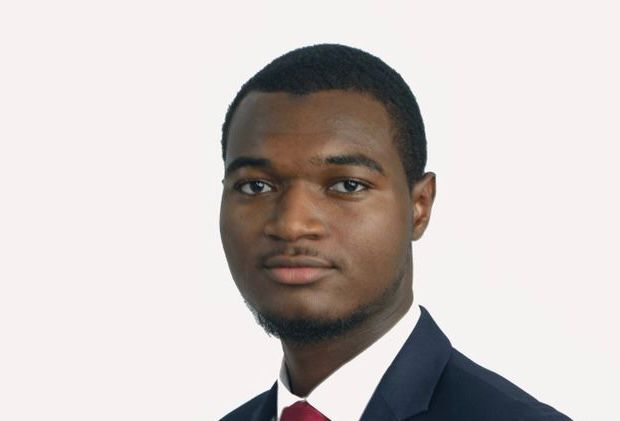
By Muhammad Isah Zng

For many students, gaining admission into a university marks the beginning of a hopeful journey toward a better future. For me, however, gaining admission to study Mass Communication at Bayero University, Kano (BUK) came with a difficult reality: I had no sponsor to support my education.

There was no one to take full responsibility for my expenses, including feeding and other basic needs. Yet despite this challenge, I refused to let my circumstances stop me from pursuing my dream. I held firmly to three principles that guided my journey throughout the university years: faith, hope, and hard work.

When I left home for BUK to begin my studies, I quickly realised that survival would require determination beyond the classroom. I had to find a way to support myself financially while keeping up with my academic responsibilities. Deep down, I knew that no one would suddenly come to rescue me from my situation. If I wanted to succeed, I had to depend on my own efforts.

With that understanding, I made a decision that would define my entire university experience. Every weekend, I would leave the university campus to work as a woodcutter. The job was physically demanding and exhausting, but it became my primary means of survival.

From my first year in university, I maintained this routine of attending lectures and focusing on my studies during the week, then travelling off campus on weekends to cut and process firewood for sale. The work was not easy, but it provided the little income I needed to sustain myself.

Over time, I found additional opportunities to work. During my second year at the university, I started working in two different locations outside BUK. I worked under individuals such as Dan Azumi and Alhaji Aminu Dorayi Babba. Through these jobs, I earned money that helped me meet my basic needs.

The income from the work was modest but meaningful. On average, I earn between ₦3,000 and ₦4,000. On better days, I could earn between ₦10,000 and ₦13,000. That money helped me buy food and other necessities. Sometimes, it even allowed me to support two of my friends who were also struggling to survive in school.

One remarkable thing about the work was its reliability. Whenever I went out to work, I was almost certain that I would return with something to eat. It taught me the dignity of labour and reminded me that no honest work should ever be looked down upon.

Although balancing academic studies with physical labour was challenging, I remained committed to completing my education. Each day of hard work reminded me that the sacrifices I was making were steps toward a brighter future.

Today, Alhamdulillah, I have successfully completed my four-year programme at Bayero University, Kano. My graduation marks the end of one important chapter of my life and the beginning of another phase filled with new responsibilities and aspirations.

Through my story, I want to encourage young people, especially students facing financial hardship, not to lose hope. Many young people today feel discouraged when they encounter difficulties in pursuing their education. However, challenges should not define our limits; instead, they can inspire us to find creative ways to achieve our goals.

There is dignity in every form of honest work. Whether it is cutting wood, farming, trading, or doing any other job, what truly matters is the determination to move forward despite obstacles.

Life is not always easy for people who come from humble backgrounds. But it can still be meaningful and inspiring when we use our difficult situations as opportunities for growth. Hard work, patience, and faith can transform even the toughest circumstances into stepping stones toward success.

My journey from wood-cutting to earning a university degree is a testament to the power of perseverance. It is a reminder that with determination and self-belief, even the most challenging path can lead to success.

Muhammad Isa wrote via isahmuhammad571@gmail.com.

Hajiya Bilkisu Maimota: Congratulating a true doyenne of Kano public service

By: Malam Khalid Imam

The appointment of Hajiya Bilkisu Maimaita, undoubtedly one of the finest Kano female technocrats, as the Acting Head of Service, by His Excellency, the Executive Governor of Kano State, Alhaji Abba Kabir Yusuf, on 10th March, 2026, is both historic and a strategic move in the right direction.

The esteemed Hajiya Bilkisu Maimaita, who hails from Yakasai Quarters in Kano Municipal LGA, is a true doyenne of public service, an astute policy maker, a seasoned public administrator, and a well-trained personnel who has been in active public service for over three decades, and now serving as the Permanent Secretary.

She is quite famed as a respected, tested, and trusted administrator. Maimaita is well known as one of the reliable wheels moving the vehicle of seamless public service sector, having served in different capacities over the decades. Her new appointment as the Acting Head of Service by His Excellency, Governor Yusuf, is indeed a strategic move to entrust the daunting task of ensuring the continuous function of the heart of Kano’s public service to the right hands.

Her trademarks in the service are trust, resilience, assiduity, capability, and reliability. Before her new role as the female Acting Head of Service, she has been serving as the Permanent Secretary, Administration and General Services (AGS) in the Cabinet Office.

No doubt, Hajiya Bilkisu Maimota’s appointment is a confirmation to her unwavering commitment to duty, unmatched experience and exemplary service. Sure, her wealth of experience and proven track record make her an ideal fit for this role.

In another light, Maimota’s appointment is a bold testament to Governor Abba Kabir Yusuf’s commitment to empowering more Kano professional women and recognizing their invaluable contributions to Kano State’s development. And without emphasizing, this shows that the governor values the impact of women in leadership positions and is willing to give them the platform to shine as he dedicates energy in pursuing the realization of his government’s Kano First Agenda.

A big kudos to Governor Abba Kabir Yusuf for this right move, which, without denying, is an astounding milestone, showcasing the government’s unwavering dedication to inclusivity and gender equality. Counting on her fabulous experience, Bilkisu Maimota’s leadership in this new role will undoubtedly inspire more women to take on key roles in the state.

Once more, kudos to Governor Abba Kabir Yusuf for this strategic move of entrusting in Maimota this task as well as opening windows to Kano professional women to serve their state with distinction. Indeed, Hajiya Bilkisu Maimota’s leadership is sure to propel Kano State’s public service to greater heights.

At this juncture, on behalf of the Yakasai Community, where she hails, I wish her Allah’s continued guidance and success in the service of our dear state. Wishing our Acting Head of Service sound health and prosperity in all her personal endeavours.
Congratulations to our very own reverential Hajiya Bilkisu Maimota, a true doyenne of Kano public service.

Khalid Imam is a Kano-based bilingual writer, educator and a Deputy Director at the Monitoring and Evaluation Unit, Science and Technical Schools Board, Kano, who also serves as the President of Kano Literary Space. He can be reached via: 07075403774 or khalidimam2002@gmail.com

[OPINION]: Generative AI and I, by Abdalla Uba Adamu

By Abdalla Uba Adamu

My most recent post on the Hausa traditional technologies of cloth-making and weaving raised a very interesting—and very welcome—comment: did I use AI to write the post? The simple answer is no. Now, let me unpack the issue (and while this sentence is not AI-generated, it is definitely AI-syntax!!!).

I have noticed over several weeks postings that are definitely AI by people whose writing I am quite familiar with. You get to notice these things after almost half-century of teaching and supervising student projects and dissertations at all level, and all in the English language. Words that keep popping up in these recent postings include: “ecosystem”, “DNA”, “spine”, “architecture”, “chamber”, “leverage”, “cartography”, “nuance”, “cascade”, and of course, “unpack.” 

Generative AI produces prose in a neat, grammatically correct and often archaic language. When someone is not used to writing in that syntax and they suddenly do, then it is AI at work. And words that don’t belong in normal conversation. For God’s sake, how frequently do you use “ecosystem” or “DNA”? But suddenly they begin to appear in someone’s writing! Even if it is not directly AI, you were subtly influenced by AI Grammar!

Further, AI can produce perfect grammar and spelling, but the content often lacks depth or original insight. Do you see spelling errors or factual mistakes? That’s human, not AI. Do you see polished perfect grammatically error-free narrative? Suspect, but not always, AI, especially if the person is not a seasoned or regular writer.

As I assured my commenter, none of my postings has ever been written by AI, nor will it be. Every word, comma and period are made by me in Ɗorayi Babba, Kano! My writing might seem like AI simply because I use an academic register in my normal writing. In other words, ingantaccen turanci, which the AI machine is not used to seeing in social media posts. AI detectors are guessing probabilities—not identifying authorship. I write very carefully, going over what I write at least three times, checking facts, spelling, context, before I press the send paper airplane icon (I also use my laptop for all postings, to avoid mistakes as much as possible).

Pick any of my writings from, say 2001, dump it in AI, it will tell you it was AI-written. This was before the Generative version of AI became commodified social conversations. Thus, in an academic writing AI will not flag my writing. But it might in social media posting because the AI checker will expect a loose, public-oriented syntax. Look for “human flags” in all my writings. In the post in question, the flag is: “Remove the cloth—and we revert back to our animal origins. Our shame exposed, because we are now aware.” No AI will write that because it is a human thought, expressed by a human. In fact, it even tells you that the human is religious—invoking religious imagery to make a point. AI is religiously, spiritually and politically neutral—except Grok!

The passage refers to the awareness Prophet Adam (AS) of his nakedness after eating the Forbidden Fruit in Paradise. The leaf he used to cover himself is now the clothe the picture glorifies—the civilizational tool which separates us from animals that are naked. That is religious philosophy. No AI can come up with this insight.

So, do I use AI?  Referring of course to Generative AI. Of course! In 2026 any person NOT using AI is in serious trouble in the global knowledge economy, in any sphere. I use the paid version which gives me more features (I will not tell you which AI I use so as not to advertise free for them!).

If I am asked to write a chapter for a book or a journal article, I never use AI for the main prose. I use it only to gather titles of reference materials (and I then fly to the Acibilistan Central Library, using Acibilisian Airways, to borrow copies), and I doubly verify the references are real, not AI-hallucination (I have caught it on one or two occasion, and I “warn” it never to give me what it thinks I want; only what is real). But the prose is mine. Funnily enough, even the AI I used is quietly impressed with the titles of my projects—go over my past publications and you will what I mean—and this was before the Generative AI revolution.

I don’t even use it for my lectures. I may ask for lecture outline—and promptly decline any offer of writing the lecture notes. The reason is that all my lectures are based on my ethnographic field experiences—with actual examples of videos, photos, or experiences shared with my students at all levels.

Other cases where I allow AI to draft something for me might be where I am asked on a short notice to be a keynote speaker. But give me weeks’ notice in advance, I cook my own meal.  Or write reference for someone. When it produces the draft, I go over it and input personal touches. (it will write, “he is a hard worker”, I will write, “he is an excellent co-worker and sociable person whom I have known for over ten years”).

One ongoing case where I use the AI is in editing my autobiography, and I find it tremendously useful at that. I have written more than 90% of the book, given it to human editors to correct, mainly article misplacement, grammar etc. Once I subscribed to the paid version of my AI, I send it the previous chapters (which, unwisely, were written in Third Person, but that’s a story for another day). It converted everything to the First Person POV I asked it to. Then it smoothened sentences, polished passages, but, and I warned it right from the beginning, did not add anything. I always use it in editorial mode. Save me lots of money from human editors (and time chasing them for return)! It has an often irritating tendency to lead you to a rabbit hole, but I always claw my way out of it. So, my Prompts tell it to be Editorial, not Authorial. It is a nice relationship that keeps the integrity of my words, and saves me a lot of money in paying human editors to edit the work.

I am happy that people are beginning to notice the increasing rise—and use— of Generative AI, even trying to pinpoint it. This is good. Equally happy that some AI tools are capable of answering Prompts in the Hausa language—thus opening up the Hausaphone world to the global knowledge economy.

Now, I ask you. Do you use Generative AI? In what ways. Are you happy with it, or do you feel you are surrendering your intellect to a machine? Or are you Die Mensch-Maschine (ask your AI to translate that!)?

Abdalla Uba Adamu
Department of Information and Media Studies
Faculty of Communication
Bayero University Kano
March 10, 2026

Bwala, Mehdi Hasan and the reality of global journalism

The recent exchange between Daniel Bwala and Mehdi Hasan on Al Jazeera’s Head to Head programme has sparked widespread debate across Nigeria’s political and media space. The interview, which quickly went viral on social media, has been interpreted by many observers as a revealing moment at the intersection of political communication, accountability, and international journalistic standards.

Appearances on global platforms such as Al Jazeera are rarely routine engagements. Programmes like Head to Head are built on a tradition of rigorous questioning, where political figures are expected to defend their arguments under intense scrutiny. For journalists such as Hasan, whose interviewing style is known for its directness, the objective is not merely to host a conversation but to interrogate claims with evidence, previous statements, and policy records.

It is within this context that Bwala’s performance, a media aide to Bola Ahmed Tinubu, has attracted considerable commentary. Some analysts argue that the controversy surrounding the interview reflects a broader challenge faced by many political spokespersons when transitioning from domestic media environments to global broadcast platforms. International interviews of this nature often demand a high level of preparation, particularly when the subject has an extensive public record that can be referenced during questioning.

One of the most notable aspects of the interview involved the presentation of Bwala’s earlier criticisms of Tinubu during the period leading to the 2023 Nigerian presidential election. Before aligning with the current administration, Bwala had publicly expressed views that were sharply critical of the president and his political movement. During the interview, those earlier remarks were revisited and contrasted with his present role as a defender of the government’s policies.

In professional journalism, such lines of questioning are neither unusual nor inappropriate. Public figures frequently encounter questions about their previous positions, particularly when those positions appear to contradict their current stance. The purpose is not necessarily to embarrass the interviewee, but to test the consistency and credibility of their arguments.

Following the broadcast, Bwala reportedly stated in subsequent media interviews that he felt “ambushed,” suggesting he had not anticipated extensive questioning about his past remarks on Tinubu. That explanation, however, has generated further discussion among media commentators. Critics maintain that any appearance on a programme known for its confrontational format should reasonably come with the expectation that past public statements may be scrutinised.

Beyond the immediate personalities involved, the episode highlights an important issue in Nigeria’s political communication culture. Many public officials are accustomed to interview formats within the local media environment, where questioning can sometimes be less adversarial and more conversational. While this approach may foster cordial interactions between journalists and political actors, it can also create a degree of unpreparedness when officials engage with international media institutions that operate under different professional expectations.

Global news networks often emphasise adversarial journalism as a way of ensuring accountability. Interviewers are expected to challenge power, confront inconsistencies and demand evidence for political claims. Within that framework, the intensity of the Hasan–Bwala exchange was largely consistent with established international broadcasting practices.

There is also a broader dimension to consider. When government representatives appear on international media platforms, their performance inevitably shapes perceptions of their country’s governance and political culture. Such appearances, therefore, carry implications that extend beyond individual reputations, touching on issues of national image and diplomatic communication.

Nevertheless, the controversy surrounding the interview also offers a useful moment for reflection. Nigeria’s democratic system benefits from open engagement with the media, both domestically and internationally. In an era where information circulates instantly across borders, political communicators must recognise that past statements remain accessible and can resurface at any moment.

Ultimately, the Bwala–Hasan interview serves as a reminder of an enduring reality in public life: political narratives are constantly subject to scrutiny. In the digital age, where every speech, interview or social media post becomes part of a permanent archive, consistency and preparation are essential tools for anyone representing government policy.

Whether one views the exchange as a difficult interview, a tactical misstep, or simply the normal workings of adversarial journalism, it reinforces the importance of accountability in democratic discourse. When political actors face rigorous questioning, the process may be uncomfortable, but it remains central to the role that journalism plays in holding power to account.

Abdulhamid Abdullahi Aliyu is a journalist and syndicate writer based in Abuja.

The Dangote skills acquisition center in Kano

By Ahmed Musa Husaini

I’m genuinely fascinated by the Aliko Dangote Skills Acquisition Center in Kano, not just because of how well-equipped it is, but also because of the quality and relevance of the courses it offers.

That center alone has the potential to, in the medium term, send 2,000 skilled Kano artisans to the European market every year. If this was the only thing Aliko Dangote ever did for Kano, I’d say he has paid his dues.

Jobs like electricians, welders, mechanics, plumbers, carpenters, scaffolders, excavator operators, bricklayers, fitters, solar installers, HVAC technicians, and instrumentation mechanics are in very high demand across Europe. And this isn’t a temporary trend – it’s structural – driven by aging populations and declining birth rates. That means the demand for these skilled workers is here to stay.

Currently, Europe faces an estimated shortage of about 5 million skilled artisans, with an additional 400,000 replacement jobs opening up every year due to retirements. In the UK alone, 10,500 new electricians are needed annually just to maintain the current workforce, yet only about 7,500 apprentices are produced, leaving a huge gap.

Countries like Germany and the Netherlands offer expedited visa pathways for skilled workers in these high-demand occupations, with competitive salaries often at par with mid-level professionals, in addition to strong labor protections and social security systems.

Many countries in the Global South are already positioning their citizens to take advantage of these opportunities. In 2024, Kenya signed a comprehensive migration and mobility partnership with Germany, creating legal pathways for skilled Kenyan workers. That same year, Senegal signed its skills partnership with Germany, and Tunisia followed with the Africa Skills for Germany (AS4G) program. Earlier this year, India signed a mobility pact aimed at aligning its national qualifications with European standards, enabling mutual recognition of apprenticeship certifications.

Back home, Nigeria is also part of the Global Skills Program in construction, designed to address labor shortages in Nigeria and Germany through a partnership involving the Nigeria College of Practical Skills Enugu, the International Center for Migration Policy and Development, and private firms from Germany and Austria.

Which brings me back to the Dangote Center.

As impressive as the facility is, I believe the biggest mistake Dangote made was handing over its management to the state government. Governments, especially in Nigeria, are notoriously poor at running institutions like this. At the outset, Dangote had pledged to hire expatriates to run the center and ensure its operations and curriculum remained globally competitive. It is obvious that the pledge never quite materialized.

Going forward, Dangote should take back management of the center through the Aliko Dangote Foundation, or hand it over to a competent private operator. It would be a tragedy of historic proportions if a facility with this much potential is allowed to waste.

Just imagine the impact: 2,000 highly skilled Kano-born artisans working in Europe, each earning  €35,000-€50,000 annually. The cumulative long-term impacts of the remittances alone would transform Kano’s economy, in addition to the new ventures, diaspora connections, and cultural exchanges that would follow. Now imagine scaling that number year after year for the next decade.

That’s not just a skills center, it has the potential to be Kano’s most important incubator of wealth if properly run.

Honouring the elderly, securing the future in Jigawa State

How the healthcare reforms of Governor Umar Namadi Danmodi are restoring dignity to the aged while protecting the youngest generation.

By Lamara Garba Azare

In every society, the true character of leadership is revealed not in grand speeches or towering structures, but in how it treats those who can no longer compete in the rush of daily survival. In Jigawa State, a quiet but meaningful transformation is unfolding, one that places dignity, compassion, and human wellbeing at the centre of governance.

Through the J Basic Healthcare Services for Vulnerable Citizens, the administration of Governor Umar Namadi Danmodi has woven a protective safety net around those who often struggle in silence. At the heart of the programme are elderly citizens aged sixty five years and above, men and women whose lives of labour and sacrifice helped build the very communities they now inhabit.

For many elderly citizens, the passage of time often brings not only wisdom but also frailty. The body grows tired, the bones lose their strength, and the cost of maintaining good health begins to rise beyond what many can afford. Years spent cultivating farms, trading in markets, and serving society sometimes end with fragile health and limited financial resources. Yet these are the same men and women who nurtured families, preserved traditions, and sustained the social fabric of their communities.

By guaranteeing free access to healthcare for them, Jigawa State is restoring dignity to ageing. It sends a powerful message that the twilight years of life should not be overshadowed by fear of hospital bills or untreated illness. Instead, they should live with the comforting knowledge that society remembers their contributions and values their presence.

The scale of the initiative reflects both ambition and fairness. A total of 143500 beneficiaries have been enrolled across the state, drawn from all 287 political wards. Each ward accommodates 500 individuals within the programme, ensuring that the benefits reach every corner of the state. Among these beneficiaries are elderly citizens who now have guaranteed access to treatment in primary and secondary healthcare facilities without the burden of financial strain.

This policy goes far beyond the provision of medical services. It represents a redefinition of the relationship between government and the governed. A society that cares for its elderly is one that understands continuity. Elders are not merely older citizens; they are custodians of memory, guardians of tradition, and living bridges between the past and the future. Protecting their wellbeing strengthens the moral foundation upon which communities stand.

Governor Umar Namadi has consistently emphasized that the programme is not an act of charity but a duty of leadership. When elderly citizens receive the healthcare they deserve, families become more stable and communities become stronger. Healthy grandparents remain sources of wisdom and emotional support within households, guiding younger generations with the lessons of experience.

The programme also extends its protective embrace to another vulnerable group, children under the age of five. This thoughtful balance between caring for the oldest and protecting the youngest reflects a deep understanding of social development. Early childhood is a delicate stage of life when illness can shape the course of a child’s future. Access to free healthcare during these formative years can mean the difference between fragile beginnings and healthy growth.

By safeguarding children at the dawn of life while protecting the elderly in their later years, Jigawa State is nurturing the full circle of human existence. It is a reminder that development is not merely about roads and buildings but about the health and wellbeing of people across generations.

The J Basic Healthcare programme was carefully designed to ensure transparency and inclusiveness. Community leaders, civil society organisations, and healthcare workers played key roles in identifying beneficiaries. This grassroots approach not only ensures fairness but also strengthens public confidence in the programme’s implementation.

Beyond this initiative, the state government continues to invest in broader health sector reforms. Primary healthcare centres are being revitalised across communities, new general hospitals are under construction, and specialised services such as free dialysis treatment for renal patients are being provided. Together, these efforts form a comprehensive strategy aimed at improving public health and expanding access to quality medical services.

At a time when rising healthcare costs continue to push many families into poverty, the Jigawa initiative offers a refreshing example of what compassionate governance can achieve. It demonstrates that public policy, when guided by empathy and foresight, can shield vulnerable citizens from hardship while strengthening social stability.

The true impact of the programme will not only appear in official statistics. It will be seen in the elderly farmer who can now manage his blood pressure without worrying about medical bills. It will be felt by the grandmother who visits a clinic without depending entirely on her children for financial assistance. It will be reflected in the laughter of a child whose illness is treated early enough to ensure a healthy future.

These quiet transformations are the building blocks of a healthier society. When the elderly are cared for and children are protected, communities become more resilient and families become more secure. Healthy citizens contribute more productively to society, and productive societies build stronger economies.

Governor Umar Namadi’s approach therefore carries a deeper philosophical meaning. It reminds us that genuine progress is not measured solely by economic statistics or physical infrastructure but by the quality of life enjoyed by ordinary citizens. It shows that leadership guided by compassion can shape policies that preserve dignity while creating opportunity.

In the final analysis, the strength of a society is not measured by the wealth it accumulates but by the care it extends to those who once carried its burdens and those who will inherit its future. By protecting the elderly and nurturing young children, Jigawa State is quietly planting the seeds of a healthier and more humane tomorrow.

Under the watch of a caring leader like Governor Umar Namadi Danmodi, governance takes on a deeper meaning. It becomes not merely the exercise of authority but the practice of service. And when leadership chooses compassion over indifference, it leaves behind something far greater than policy. It leaves behind hope, dignity, and a legacy that generations will remember.

Lamara Garba Azare, a veteran journalist, writes from Kano.

Nigeria’s economic crisis is a moral crisis

By Muhammad Umar Shehu

Nigeria’s economic crisis is often discussed in technical language. We talk about inflation rates, exchange rates, GDP growth, fiscal deficits, and monetary tightening. Experts debate policy direction, subsidy removal, and currency reforms. Yet beneath all these discussions lies a deeper truth that we are reluctant to confront: Nigeria’s economic crisis is, at its core, a moral crisis.

In Adam Smith and Islam, Waseem Naser reminds us that economics was never meant to be detached from ethics. Adam Smith, widely regarded as the father of modern economics, was first a moral philosopher. Before writing The Wealth of Nations, he wrote The Theory of Moral Sentiments, where he emphasised sympathy, justice, and moral restraint. Markets, in his view, could not function in isolation from moral responsibility.

Islamic economic thought shares this foundation. Trade is encouraged, wealth is permitted, and enterprise is respected. But all of these operate within firm moral boundaries. Justice is non-negotiable. Exploitation is forbidden. Wealth carries responsibility. Accountability is certain.

When we examine Nigeria’s current situation through this lens, the picture becomes clearer.

Inflation continues to erode the purchasing power of ordinary citizens. The naira struggles for stability. Youth unemployment remains alarmingly high. The cost of food and transportation has risen beyond the reach of many families. These are economic realities. But they are also symptoms of deeper institutional and moral weaknesses.

An economy cannot thrive where corruption undermines trust. Adam Smith insisted that justice is the main pillar that upholds society. Once justice collapses, society itself begins to crack. In Nigeria, public funds are routinely mismanaged, contracts are inflated, and accountability mechanisms are weak. This is not merely inefficiency. It is moral decay.

Islamic principles reinforce this argument. Leadership is considered a trust. Public office is an amanah, not a private investment opportunity. When leadership becomes a means of personal enrichment, the moral foundation of governance collapses. What follows is predictable: inequality widens, poverty deepens, and citizens lose faith in the system.

The recent economic reforms, including the removal of fuel subsidies and exchange rate adjustments, may have theoretical justification. Many economists argue they were long overdue. However, reform without structured social protection reflects a failure of moral sensitivity. When policies disproportionately burden the poor while elites remain insulated, justice is compromised.

Adam Smith did not promote greed. He believed self-interest operates within moral boundaries shaped by social conscience. Islam teaches a similar balance. Wealth creation is legitimate, but not at the expense of human dignity. In Nigeria, however, profit often overrides public welfare.

Consider the widening gap between political elites and ordinary citizens. Luxury convoys move through streets where citizens struggle to afford basic commodities. Public spending priorities often appear disconnected from public suffering. This visible inequality damages more than economic stability. It damages national unity.

Islamic economic thought provides mechanisms for social balance, such as zakat and structured redistribution. These are not acts of charity alone. They are instruments of justice. In Nigeria, social intervention programs frequently suffer from poor targeting, lack of transparency, and political manipulation. The result is minimal impact and widespread distrust.

Nigeria does not lack natural resources. It does not lack human capital. What it lacks is consistent ethical leadership and institutional discipline. An economy built on fragile moral foundations cannot stand firm.

The lesson from both Adam Smith’s moral philosophy and Islamic economic principles is straightforward. Markets require trust. Trust requires justice. Justice requires accountability. Without these elements, reforms remain cosmetic.

If Nigeria is to move forward, economic reconstruction must be accompanied by moral reconstruction. Transparency must replace opacity. Accountability must replace impunity. Public service must replace personal gain.

Economic indicators may improve temporarily, but without ethical grounding, instability will return. Sustainable growth demands more than sound monetary policy. It demands character in leadership and integrity in institutions.

Nigeria’s future will not be secured by technical adjustments alone. It will be secured when justice becomes the true foundation of governance.

Until then, our economic crisis will remain what it has always been: a reflection of a deeper moral failure.

Muhammad Umar Shehu wrote from Gombe. He can be reached via: umarmuhammadshehu2@gmail.com.

Tribute to my late lecturer and mentor, Professor Kabiru Isah Dandago

By Ahmad Zubair Chedi, PhD

It is with deep sorrow yet immense gratitude that I pay tribute to my late lecturer, mentor, and Academic guide, Prof. Kabiru Isah Dandago, whose remarkable contributions have greatly shaped my academic and professional journey.

I had the rare privilege of being taught by Prof. Dandago at both my undergraduate and postgraduate levels, where he imparted to me invaluable knowledge and Academic discipline.

During my studies, he taught me several key courses that formed the foundation of my understanding of the accounting profession, including Cost Accounting, Management Accounting, Advanced Financial Accounting, Auditing and Investigation, Public Finance, Accounting Theory, and Seminar in Accounting. Through these courses, he not only delivered knowledge but also instilled analytical thinking, research curiosity, and professional integrity.

Prof. Dandago’s mentorship went far beyond the classroom. He played a pivotal role in my Academic development at critical stages of my postgraduate journey. Prof. Kabiru Isah Dandago was instrumental in facilitating my admission to both the MSc and PhD programmes, opening doors that enabled me to advance in my academic pursuits. His support and mentorship were key pillars in my Academic progress.

He served as the Panel Chairman during my MSc Accounting Internal Defence, where his constructive insights and scholarly guidance strengthened my research work. Furthermore, he was my PhD. Internal Supervisor, guiding me with patience, wisdom, and encouragement throughout the demanding process of Doctoral research.

One of the most defining moments of my Academic career came when he encouraged me to write my first journal article. His belief in my potential motivated me to take the bold step into Academic publishing. Not only did he inspire me to write, but he also supported and guided me in presenting my research paper at an International Conference, an experience that significantly broadened my Academic exposure and confidence.

Prof. Dandago was more than a lecturer; he was a mentor who nurtured scholars, a teacher who inspired excellence, and a leader who dedicated his life to advancing knowledge and the success of his students. His influence on my Academic journey is profound and will remain with me forever.

Though he has departed from this world, the knowledge he shared, the guidance he gave, and the inspiration he instilled will continue to live on in the lives of those he mentored. His legacy is written not only in books and research but also in the many scholars he helped shape.

May Almighty Allah forgive his shortcomings, reward his lifelong dedication to knowledge and mentorship, and grant him Aljannatul Firdaus. Ameen.

Rest in peace, Prof. Kabiru Isah Dandago. Your impact will never be forgotten.

A tribute to Professor Kabiru Isa Dandago

By Tijjani Ahmad, PhD 

In Northern Nigeria’s academic landscape, few names resonate as profoundly as Professor Kabiru Isa Dandago’s. For those who pursued accounting and related disciplines from the mid-1990s onward, his name was not just familiar; it was synonymous with excellence, innovation, and unwavering commitment. 

A household figure whose books lined our shelves and whose insights shaped our minds, Prof. Dandago lived a life dedicated to paying his dues in every sphere he touched: academically, professionally, administratively, socially, and spiritually. 

Prof. Dandago’s academic journey spanned an impressive 36 years (since 1990), with 19 of those as a full professor, during which he poured his heart into teaching, supervision, and research. His classrooms were not mere lecture halls but crucibles of intellectual growth, where students emerged transformed. He authored numerous papers and books that became foundational texts, demystifying complex financial concepts and inspiring generations of accountants, managers, and scholars. 

At Bayero University, Kano (BUK) and beyond, his supervision of theses and dissertations was legendary, rigorous yet nurturing, always pushing mentees to reach their highest potential. Even in his final days, his contributions to knowledge remained undiminished, a reminder that true scholars never truly retire.

Professionally, Prof. Dandago’s influence extended far beyond academia. He was a pillar in Nigeria’s accounting bodies, serving with distinction at both national and district levels in the Institute of Chartered Accountants of Nigeria (ICAN), the Association of National Accountants of Nigeria (ANAN), and the Chartered Institute of Taxation of Nigeria (CITN). His expertise shaped policies, standards, and practices, ensuring ethical integrity in a field often tested by challenges. 

Administratively, he held pivotal roles, including as Commissioner of Finance in Kano State and as a member of the Tax Appeal Tribunal, where his decisions were marked by fairness, precision, and a deep sense of public duty. These positions were not stepping stones for personal gain but platforms for service, where he navigated fiscal complexities with the wisdom of a sage.

Yet, Prof. Dandago’s greatness was not confined to boardrooms or lecture podiums. Socially, he was a force for good, deeply invested in community service and mentorship. He guided countless young professionals, offering counsel that extended beyond careers into life itself. 

His actions spoke volumes – quiet acts of kindness, support for the underprivileged, and a commitment to uplifting Northern Nigeria’s youth. Spiritually, he lived as a devout Muslim, his faith evident in his humility, generosity, and moral compass. He was a man who walked his talk, drawing from Islamic principles to foster harmony and ethical living in all he did.

My own path with Prof. Dandago began indirectly, through whispers of his reputation. As a student at ABU, I first encountered his name in the books that formed the backbone of our curriculum and in the glowing accounts from our seniors at BUK, who spoke of him with reverence. Little did I know our worlds would intersect so meaningfully. 

Our first direct meeting came in 2011 during my MBA program, when he was assigned to teach Financial and Management Accounting alongside the late Prof. Mohammed Liman, another erudite scholar we lost just last August. Their tandem was a masterclass in itself, blending rigour with inspiration.

Two years later, in 2013, fate brought us together again at Universiti Utara Malaysia, where his presence felt like a continuation of that earlier guidance. From that point onward, Prof. Dandago became more than a teacher; he was a constant in my journey, following my progress with genuine interest. 

Our paths crossed repeatedly—in projects, fora, committees—each encounter enriching me with wisdom. Whether through his direct words, sharp and insightful, or through the subtle power of his example, no one left his company unchanged. He was the true definition of a professor: not just a dispenser of facts, but a cultivator of minds and spirits.

Prof. Dandago’s life was a symphony of service, where every note contributed to a greater harmony. In a world often driven by self-interest, he stood as a paragon of selflessness, reminding us that true success lies in what we give, not what we gain. 

As we gather to honour his memory, his burial today echoes the profound impact he had, crowds drawn not by obligation, but by love and respect for a life well-lived.

May Allah (SWT) grant him eternal peace, forgive his shortcomings, and admit him into Jannatul Firdaus, the highest paradise. 

Adieu Prof.! Sai mun zo.

A tribute to Professor Kabiru Isa Dandago, by Tijjani Ahmad

In the Northern Nigeria’s academic landscape, few names resonate as profoundly as that of Professor Kabiru Isa Dandago. For those who pursued accounting and related disciplines from the mid-1990s onward, his name was not just familiar, it was synonymous with excellence, innovation, and unwavering commitment. A household figure whose books lined our shelves and whose insights shaped our minds, Prof. Dandago lived a life dedicated to paying his dues in every sphere he touched: academically, professionally, administratively, socially, and spiritually.

Prof. Dandago’s academic journey spanned an impressive 36 years (since 1990), with 19 of those as a full professor, during which he poured his heart into teaching, supervision, and research. His classrooms were not mere lecture halls but crucibles of intellectual growth, where students emerged transformed. He authored numerous papers and books that became foundational texts, demystifying complex financial concepts and inspiring generations of accountants, managers, and scholars. At Bayero University Kano (BUK) and beyond, his supervision of theses and dissertations was legendary, rigorous yet nurturing, always pushing mentees to reach their highest potential. Even in his final days, his contributions to knowledge remained undiminished, a reminder that true scholars never truly retire.

Professionally, Prof. Dandago’s influence extended far beyond academia. He was a pillar in Nigeria’s accounting bodies, serving with distinction at both national and district levels in the Institute of Chartered Accountants of Nigeria (ICAN), the Association of National Accountants of Nigeria (ANAN), and the Chartered Institute of Taxation of Nigeria (CITN). His expertise shaped policies, standards, and practices, ensuring ethical integrity in a field often tested by challenges. Administratively, he held pivotal roles, including as Commissioner of Finance in Kano State and as a member of the Tax Appeal Tribunal, where his decisions were marked by fairness, precision, and a deep sense of public duty. These positions were not stepping stones for personal gain but platforms for service, where he navigated fiscal complexities with the wisdom of a sage.

Yet, Prof. Dandago’s greatness was not confined to boardrooms or lecture podiums. Socially, he was a force for good, deeply invested in community service and mentorship. He guided countless young professionals, offering counsel that extended beyond careers into life itself. His actions spoke volumes – quiet acts of kindness, support for the underprivileged, and a commitment to uplifting Northern Nigeria’s youth. Spiritually, he lived as a devout Muslim, his faith evident in his humility, generosity, and moral compass. He was a man who walked his talk, drawing from Islamic principles to foster harmony and ethical living in all he did.

My own path with Prof. Dandago began indirectly, through whispers of his reputation. As a student at ABU, I first encountered his name in the books that formed the backbone of our curriculum and in the glowing accounts from our seniors at BUK, who spoke of him with reverence. Little did I know our worlds would intersect so meaningfully. Our first direct meeting came in 2011 during my MBA program, when he was assigned to teach Financial and Management Accounting alongside the late Prof. Mohammed Liman, another erudite scholar we lost just last August. Their tandem was a masterclass in itself, blending rigor with inspiration.

Two years later, in 2013, fate brought us together again at Universiti Utara Malaysia, where his presence felt like a continuation of that earlier guidance. From that point onward, Prof. Dandago became more than a teacher; he was a constant in my journey, following my progress with genuine interest. Our paths crossed repeatedly—in projects, fora, committees—each encounter enriching me with wisdom. Whether through his direct words, sharp and insightful, or through the subtle power of his example, no one left his company unchanged. He was the true definition of a professor: not just a dispenser of facts, but a cultivator of minds and spirits.

Prof. Dandago’s life was a symphony of service, where every note contributed to a greater harmony. In a world often driven by self-interest, he stood as a paragon of selflessness, reminding us that true success lies in what we give, not what we gain. As we gather to honor his memory, his burial today echoes the profound impact he had, crowds drawn not by obligation, but by love and respect for a life well-lived.

May Allah (SWT) grant him eternal peace, forgive his shortcomings, and admit him into Jannatul Firdaus, the highest paradise.

Adue Prof.! Sai mun zo.