Education

Mentorship in danger

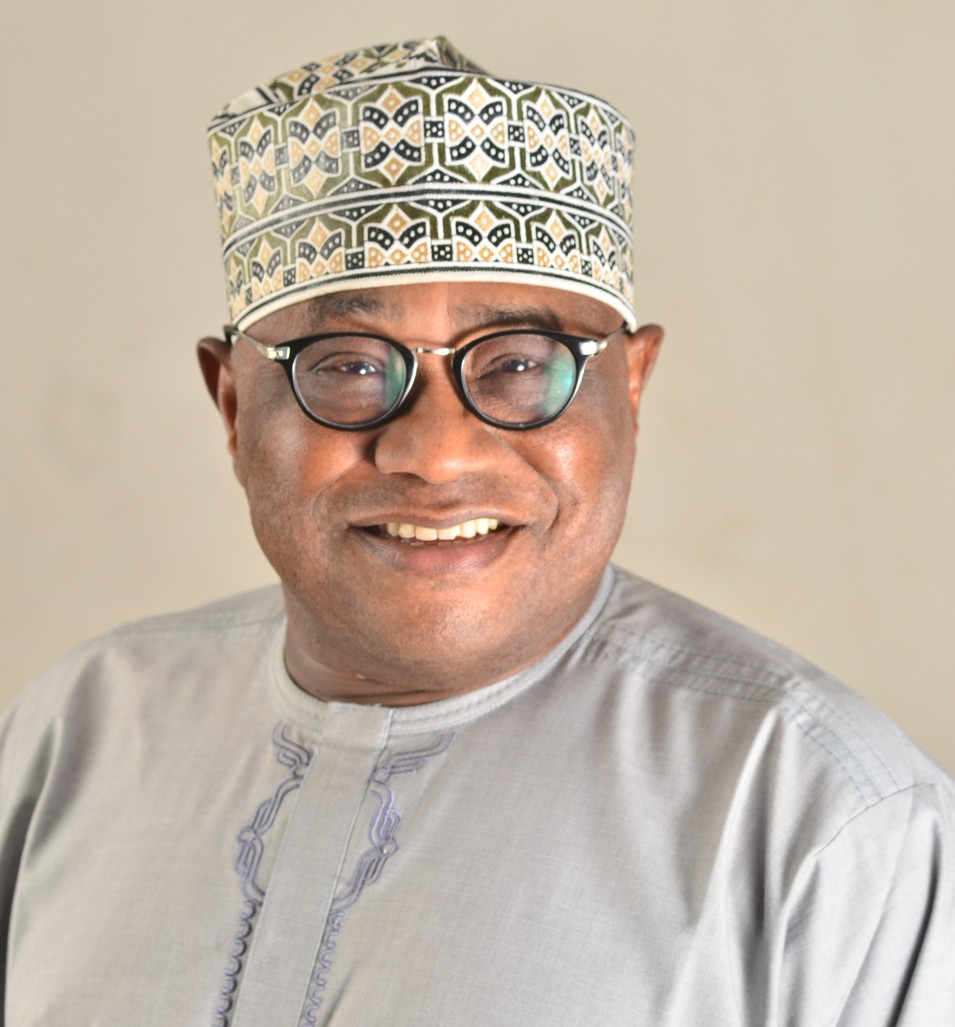
By Professor Abdalla Uba Adamu

The phrase can be read in two ways: the dangers within mentorship, and the danger that mentorship itself may be disappearing.

As one grows older and accumulates experience, visibility, and a measure of goodwill, public culture often expects a form of “payback.” One of the most valued ways to do this is by mentoring younger colleagues—especially those approaching exit points in their careers. Nowhere is this expectation more pronounced than in academic circles. Yet over the years, I have watched the mentorship process deteriorate from both mentors’ and mentees’ perspectives.

When I began my career, mentees were frequently exploited. They carried out the basic research for their mentors—data gathering, analysis, and preliminary drafting—while the senior scholar ultimately received the credit in subsequent publications. When some mentees later attempted to assert ownership of their intellectual labour by publishing from the same datasets, mentors simply stopped working with them. By then, however, the senior academics had already crossed the Rubicon: they had secured their place in the system and had little incentive to look back.

Being exploited intellectually is not a small matter. In academia, one’s ideas, labour, and reputation are the core of one’s identity. When these are appropriated or manipulated, it feels like a violation — not just of professional ethics, but of dignity. Watching others suffer the same fate, and then seeing the perpetrators continue to flourish without consequence, naturally intensifies the sense of injustice.

A later generation of mentors adopted a more tactical strategy. Mentees were still required to do most of the “dirty work,” often writing up results for papers or book chapters, after which mentors insisted on being listed as joint authors. I objected to this practice on several occasions, arguing that a mentor is institutionally remunerated to support the mentee’s development, not to appropriate the mentee’s intellectual rewards. Yet some mentees willingly entered into such parasitic arrangements, convinced that the mentor’s visibility would enhance their own prospects. Meanwhile, mentors leveraged the mentees’ labour to boost citation counts and online academic metrics—the modern equivalent of academic swagger.

Mentees themselves have not been entirely blameless. Whether within formal institutional settings or in the more fluid spaces of public culture, mentorship ideally enables individuals to reach their potential. Increasingly, however, the relationship is being instrumentalised for economic gain or opportunistic advantage. Recent distressing experiences involving well-known academics [on Facebook and a young man named Ismail Sani] illustrate how goodwill and a willingness to assist can be exploited by outright scams. Such incidents inevitably make potential mentors more cautious, and sometimes less willing, to extend help in the future.

What we are witnessing, therefore, is a shift in expectations from intellectual mentorship to personal patronage. In many of our social environments, the two easily get conflated. Respect for elders, the culture of assistance, and the visibility that comes with academic success can combine to create the assumption that a mentor is also a benefactor. When repeated often enough, the requests begin to feel less like genuine emergencies and more like a pattern of dependence. That can make even a generous person start to withdraw.

Another troubling dimension is the subtle guilt-tripping employed by some would-be mentees. I have received numerous requests to serve as a referee for individuals I scarcely know. We may have met briefly at an event, or they may simply have encountered something I wrote. To them, I appear as a convenient “low-hanging fruit.” Basic courtesy would require prior contact—at the very least, a reminder of the context in which we met. I usually decline such requests. After all, referees are expected to have genuine knowledge of a candidate’s work and character. How can one write an honest assessment based on nothing more than fleeting acquaintance or social-media followership?

Social media has radically transformed access to public figures, rendering them perpetually available. Once a mentoring relationship is established, some mentees interpret access as entitlement. The boundary between guidance and material obligation becomes blurred. Social media makes this worse because it creates intimacy without context — people feel they “know” you, and therefore feel justified in making personal demands. Over time, the mentor begins to anticipate the next request, and the original intellectual purpose of the relationship is quietly eroded.

In the physical, offline world, proximity often enables one to gauge the sincerity of requests for guidance or assistance. The anonymity and immediacy of online interaction, however, have produced what might be called a form of “closed distance”: a space stripped of emotional grammar and contextual obligation. In such a space, panhandling can easily be reframed as a moral claim upon those perceived as accessible or influential.

The cumulative effect is worrying. Mentorship, as a meaningful intellectual and moral relationship, may itself be in danger.

What have your own experiences been?

Kano Govt Scraps Higher Education Ministry, Merges It with Education

By Muhammad Sulaiman

Abba Kabir Yusuf has approved the merger of the state’s Ministry of Higher Education with the Ministry of Education in a move aimed at strengthening coordination and accelerating reforms in the education sector.

The decision was announced in a statement on Sunday by the governor’s spokesperson, Sunusi Bature Dawakin Tofa.

According to the statement, the newly unified body will operate as the Ministry of Education, with a specialised Directorate of Higher Education established within the ministry to oversee tertiary education in the state. The directorate will be headed by a permanent secretary and supported by relevant personnel to ensure effective administration of higher education institutions.

The statement added that agencies previously under the Ministry of Higher Education, including the state Scholarship Board, will now be returned to the Ministry of Education. State-owned universities and other tertiary institutions will also be supervised by the Directorate of Higher Education under the restructured ministry.

The restructuring forms part of the government’s broader education sector reform agenda, which seeks to eliminate duplication of responsibilities, improve policy coordination across all levels of education, and reduce the cost of governance.

Governor Yusuf said the reform is intended to enhance efficiency, strengthen accountability, and improve the overall quality of education administration in the state.

He reiterated his administration’s commitment to implementing comprehensive reforms that will revitalise the education sector and create better opportunities for the younger generation.

The Office of the Secretary to the State Government and the Office of the Head of Service have been directed to ensure the immediate and smooth realignment of the affected ministries and their departments.

From a wood-cutter to a university graduate

By Muhammad Isah Zng

For many students, gaining admission into a university marks the beginning of a hopeful journey toward a better future. For me, however, gaining admission to study Mass Communication at Bayero University, Kano (BUK) came with a difficult reality: I had no sponsor to support my education.

There was no one to take full responsibility for my expenses, including feeding and other basic needs. Yet despite this challenge, I refused to let my circumstances stop me from pursuing my dream. I held firmly to three principles that guided my journey throughout the university years: faith, hope, and hard work.

When I left home for BUK to begin my studies, I quickly realised that survival would require determination beyond the classroom. I had to find a way to support myself financially while keeping up with my academic responsibilities. Deep down, I knew that no one would suddenly come to rescue me from my situation. If I wanted to succeed, I had to depend on my own efforts.

With that understanding, I made a decision that would define my entire university experience. Every weekend, I would leave the university campus to work as a woodcutter. The job was physically demanding and exhausting, but it became my primary means of survival.

From my first year in university, I maintained this routine of attending lectures and focusing on my studies during the week, then travelling off campus on weekends to cut and process firewood for sale. The work was not easy, but it provided the little income I needed to sustain myself.

Over time, I found additional opportunities to work. During my second year at the university, I started working in two different locations outside BUK. I worked under individuals such as Dan Azumi and Alhaji Aminu Dorayi Babba. Through these jobs, I earned money that helped me meet my basic needs.

The income from the work was modest but meaningful. On average, I earn between ₦3,000 and ₦4,000. On better days, I could earn between ₦10,000 and ₦13,000. That money helped me buy food and other necessities. Sometimes, it even allowed me to support two of my friends who were also struggling to survive in school.

One remarkable thing about the work was its reliability. Whenever I went out to work, I was almost certain that I would return with something to eat. It taught me the dignity of labour and reminded me that no honest work should ever be looked down upon.

Although balancing academic studies with physical labour was challenging, I remained committed to completing my education. Each day of hard work reminded me that the sacrifices I was making were steps toward a brighter future.

Today, Alhamdulillah, I have successfully completed my four-year programme at Bayero University, Kano. My graduation marks the end of one important chapter of my life and the beginning of another phase filled with new responsibilities and aspirations.

Through my story, I want to encourage young people, especially students facing financial hardship, not to lose hope. Many young people today feel discouraged when they encounter difficulties in pursuing their education. However, challenges should not define our limits; instead, they can inspire us to find creative ways to achieve our goals.

There is dignity in every form of honest work. Whether it is cutting wood, farming, trading, or doing any other job, what truly matters is the determination to move forward despite obstacles.

Life is not always easy for people who come from humble backgrounds. But it can still be meaningful and inspiring when we use our difficult situations as opportunities for growth. Hard work, patience, and faith can transform even the toughest circumstances into stepping stones toward success.

My journey from wood-cutting to earning a university degree is a testament to the power of perseverance. It is a reminder that with determination and self-belief, even the most challenging path can lead to success.

Muhammad Isa wrote via isahmuhammad571@gmail.com.

BUK probes student for allegedly defrauding Prof. Kperogi, others

By Sabiu Abdullahi

Bayero University Kano (BUK) has begun an investigation into claims that one of its students engaged in online impersonation and financial fraud.

The case centres on Ismail Sani after several people publicly said they were deceived and lost money.

In a statement released on Wednesday, the university’s Director of Public Affairs, Lamara Garba, confirmed that the institution is aware of reports circulating on social media that link the student to alleged fraudulent activities.

The university explained that the conduct of any individual does not reflect its values. It also said disciplinary steps will follow if the accusations are proven.

“Any conduct capable of bringing the name and reputation of the university into disrepute is treated seriously,” Lamara Garba said.

The issue attracted wide attention after Nigerian academic based in the United States, Professor Farooq Kperogi, shared his experience online. He said someone posing as “Halima Tahir,” who claimed to be a 300-level microbiology student at BUK, repeatedly obtained money from him.

Kperogi later said he discovered that the identity belonged to Ismail Sani, who studies veterinary medicine at the university.

According to him, the student first contacted him in 2024 and claimed he had just gained admission and needed help with school fees.

“I helped him without asking for verification. He later made more requests, including money for an old woman’s medicine. Then he reappeared as ‘Halima Tahir’ to scam me again,” Kperogi wrote.

He added that several digital records linked the alleged scam to the student. These materials included email addresses, payment receipts and JAMB registration documents. Kperogi said the student denied any wrongdoing when confronted.

“He is clearly a dangerous, well-practiced scammer. Or perhaps mentally unwell. Whatever the case, he does not belong in polite society. He belongs in prison, or somewhere he cannot harm people,” Kperogi said.

Following the revelation, other individuals, including social media influencers, said they had similar encounters. They explained that the person behind the messages often used emotional appeals, religious language and fabricated stories to gain sympathy and financial assistance.

BUK said a preliminary inquiry is already underway. The university added that relevant authorities are examining the matter through its disciplinary procedures.

The institution also commended people such as Kperogi who provide financial support to students. However, it urged the public to avoid speculation and allow the investigation to run its course.

Nine students suspended for exam malpractice at Al-Istiqama University

By Hadiza Abdulkadir

The management of Al-Istiqama University, Sumaila has rusticated nine students over their involvement in examination malpractice during the first semester examinations of the 2025/2026 academic session.

The decision was announced in a Special Bulletin issued by the university’s Registry following the approval of the institution’s Senate after reviewing reported cases of examination misconduct and plagiarism.

According to the bulletin, the affected students were found guilty of violating the university’s examination regulations. As a result, the Senate approved their rustication for one academic session as part of disciplinary measures to maintain academic integrity.

The university management said the action reflects its commitment to promoting honesty, discipline, and fairness within the academic environment.

It also reiterated that examination malpractice and all forms of academic dishonesty will not be tolerated under any circumstances.

Students were therefore urged to strictly adhere to examination rules and regulations, with the management emphasising that integrity remains central to the institution’s mission of producing morally upright and academically sound graduates.

Members of the university community were advised to take note of the Senate’s decision and continue to uphold the core values of the institution.

How Nigerian scholar in France develops biological concept to help cereals access atmospheric nitrogen

By Uzair Adam

A Nigerian researcher working in France has developed a new biological concept that could help cereal crops obtain nitrogen from the atmosphere without genetic modification, potentially reducing reliance on costly synthetic fertilizers.

Dr. Mubarak Mahmud, a researcher at French National Research Institute for Agriculture, Food and Environment (INRAE) and affiliated with Université Bourgogne Europe under its Agroecology research unit, disclosed this in an interview on Thursday.

Mahmud said the study focuses on improving nitrogen nutrition in cereal crops such as maize, wheat and rice by strengthening naturally occurring interactions between plants and soil organisms.

The Daily Reality reports that Nitrogen is widely considered the most limiting nutrient in cereal production globally. Although nitrogen gas constitutes nearly 78 percent of the earth’s atmosphere, major cereal crops cannot directly use it in its gaseous form.

As a result, farmers depend heavily on synthetic nitrogen fertilizers to maintain crop yields. However, the fertilizers are expensive and are associated with environmental challenges including greenhouse gas emissions, soil degradation and water pollution.

Mahmud explained that while leguminous crops such as beans can access atmospheric nitrogen through root nodules that host nitrogen-fixing bacteria, cereals lack this biological mechanism.

According to him, the research explores whether cereal crops can indirectly benefit from atmospheric nitrogen by strengthening existing soil symbiotic relationships.

The study centres on arbuscular mycorrhizal fungi, microscopic soil organisms that colonize plant roots and form underground networks capable of transporting nutrients to plants.

These fungi are already known to assist plants in absorbing nutrients such as phosphorus in exchange for sugars produced by the plant.

Mahmud said the research hypothesizes that nitrogen-fixing bacteria in the soil could be linked to these fungal networks, allowing biologically fixed nitrogen to move through the fungal pathway into the plant.

“In practical terms, nitrogen-fixing microbes convert atmospheric nitrogen into usable compounds, while the fungal network serves as a biological bridge between the soil and plant roots,” he explained.

“This allows the plant to receive nitrogen through the fungus’s existing nutrient exchange pathway.”

He emphasized that the approach does not involve genetic modification but instead builds on natural biological partnerships already present in agricultural soils.

Unlike conventional microbial biofertilizers that rely on bacteria operating freely in the soil, Mahmud said the concept aims to improve how biologically fixed nitrogen is directed toward the plant through the already efficient plant–fungus nutrient delivery system.

The research is still in its early stages and is currently being tested under controlled experimental conditions. Scientists involved in the study are examining how nitrogen moves within the system and how plants respond when synthetic fertilizer inputs are reduced.

Mahmud said if validated through greenhouse and field trials, the concept could improve nitrogen-use efficiency in cereal production, reduce dependence on synthetic fertilizers and lower production costs for farmers.

“This approach builds on biological partnerships that already exist in nature. The goal is to enhance how crops access nitrogen in a more efficient and sustainable way,” he stated.

He added that the research team is seeking collaboration with research institutions, soil microbiologists, agronomists and biotechnology partners interested in advancing sustainable nitrogen solutions for cereal farming systems.

Controversy trails alleged Ramadan restrictions as Federal Polytechnic Bauchi breaks silence

By Sabiu Abdullahi

The Federal Polytechnic Bauchi has dismissed a circular circulating on social media which claims to impose restrictions on male and female students during the Ramadan period.

In a statement signed by Tanimu Ibrahim Gambo, ACEO, Public Relations, on behalf of the Registrar, the school management said the document is false and did not originate from the Office of the Registrar or any official channel of the school.

“The attention of the Management of the Federal Polytechnic Bauchi has been drawn to a malicious and misleading circular currently circulating on social media platforms, said to have been issued from the Office of the Registrar of the Polytechnic.”

The statement also rejected the claims contained in the document, stressing that they are unfounded.

“The said circular, which makes spurious claims regarding restrictions on male and female students during the month of Ramadan, is entirely false, baseless, and did not emanate from the Federal Polytechnic Bauchi or any of its officials.”

The institution further clarified its position on student interactions and religious inclusiveness. It explained that it remains a co-educational federal institution that allows proper academic and social engagement within laid-down rules. It also noted that it accommodates people from different religious and cultural backgrounds and does not enforce any single religious practice in its policies.

Management added that neither the Registrar nor any official of the Polytechnic would issue such a directive. It urged members of the public, including students, parents, and stakeholders, to ignore the circular completely. The statement described it as the work of individuals who intend to damage the reputation of the institution.

It also advised the public to always confirm information through the Polytechnic’s official communication channels.

Kebbi to reintroduce housing, vehicle loans for school teachers

By Sabiu Abdullahi

Governor Nasir Idris of Kebbi State has announced plans to bring back soft loan schemes for teachers in the state. The initiative will target primary and secondary school teachers, with support for housing, vehicles, and motorcycles.

The governor made this known on Tuesday during the commissioning of 12,779 pieces of furniture for schools across the state. The items are meant for both teachers and students.

At the ceremony held in Birnin Kebbi, Idris said his administration remains committed to improving the welfare of teachers.

He said, “The government of Kebbi will continue to look into the plights of our teachers.

“In-Sha-Allah, by this year, 2026, we will come up with a package that teachers of primary and post-primary schools will benefit from.

“We shall soon come up with a soft loan package for teachers, this will cover: car loan, motorcycle loan and house loan, among others.

“This is with a view to giving our teachers a sense of belonging.”

The governor also stated that teachers would no longer be treated as second-class citizens. He noted that the provision of furniture forms part of efforts to improve conditions in schools across the state.

Idris said his government is determined to provide a suitable environment for teaching and learning. He added that the furniture distribution complements ongoing construction and renovation projects in schools.

“I want to assure the good people of Kebbi that this is just the beginning; we will continue to provide this kind of furniture for both teachers and students,” he stated.

He further directed that the furniture should be shared equally between the Ministry of Basic and Secondary Education and the Universal Basic Education Board.

Earlier, the Commissioner for Basic and Secondary Education, Halima Bande, commended the governor for his commitment to education and other sectors of the economy.

While expressing appreciation, she said, “We are happy for the projects you have been executing not only for education but across all sectors of the economy.”

JAMB says Hijab removal not required during UTME registration

By Sabiu Abdullahi

The Joint Admissions and Matriculation Board (JAMB) has stated that candidates are not asked to remove their hijabs during registration for the Unified Tertiary Matriculation Examination (UTME).

The clarification followed a viral video that sparked concerns over alleged discrimination against Muslim candidates at Afe Babalola University.

In the video shared by a social media user, AsakyGRN, a man complained about the treatment his sister received at a registration centre.

“I followed my sister to the JAMB centre to collect her form. She was told to remove her hijab before she could be captured,” the man said.

“After the capturing, they asked her to sign an undertaking for wearing a hijab. Are Muslims now being discriminated against for wearing hijabs?”

Reacting in a statement posted on its X platform on Saturday, JAMB explained that it has never issued any directive banning the use of hijabs during registration.

The examination body noted that, as part of biometric requirements used worldwide, candidates are expected to have their ears visible during photograph capture for identification purposes.

“This requirement is purely technical and is intended to ensure that proper facial recognition and identification do not require the candidate to remove her hijab,” the board said.

JAMB also addressed the incident at the university. It said the candidate’s religious belief was respected throughout the process.

“She was requested to formally state in writing that she personally chose not to comply with the guideline regarding ear visibility, so that the record would accurately reflect the circumstances and prevent future misrepresentation,” the board said.

“She obliged and was successfully captured, albeit after considerable time and effort.

“For clarity, candidates are not required to remove their hijab. The simple requirement is that the ears be visible during photo capture, which can be done without removing the hijab itself.

“This is a standard biometric procedure, similar to what is obtained during passport or visa applications at embassies worldwide.”

The board urged members of the public to avoid spreading misleading information and encouraged them to seek proper clarification when necessary.

JAMB also reaffirmed its commitment to respecting the rights and religious beliefs of all candidates, regardless of their background.

NERDC, Junior Achievement Nigeria move to integrate entrepreneurship into national curriculum

By Uzair Adam

The push to equip Nigerian students with practical skills for a rapidly evolving global economy received a boost on Wednesday as the Junior Achievement Nigeria paid a courtesy visit to the headquarters of the Nigerian Educational Research and Development Council (NERDC) to deepen collaboration on entrepreneurship and experiential learning.

The Daily Reality reports that the delegation, led by the Chief Executive Officer of Junior Achievement Nigeria, Olaolu Akogun, met with the Executive Secretary of NERDC, Prof. Salisu Shehu, at the council’s headquarters on Monday.

The visit underscored a shared commitment to embedding enterprise education and innovation-driven learning within Nigeria’s national curriculum framework.

Mr. Akogun was accompanied by the organisation’s Programme Specialist, Ndepawe Jonah Kwghe, and other officials.

They were received by Prof. Shehu alongside the Head of Policy and Programmes Unit, Dr. Famade Oladiran; the Special Assistant (Technical) to the Executive Secretary, Dr. Garba Gandu; and the Head of Curriculum Development Centre (CDC), Dr. Chima Egbujuo.

Discussions centred on forging a strategic partnership to advance entrepreneurship education, financial literacy, work readiness and innovation-focused learning for students across the country.

Both institutions stressed the importance of aligning educational content with global best practices while remaining responsive to Nigeria’s socio-economic realities.

In his remarks, Prof. Shehu reaffirmed NERDC’s resolve to enrich the national curriculum with practical and future-oriented competencies that would empower learners to become self-reliant and productive citizens.

He commended Junior Achievement Nigeria for what he described as its impactful programmes designed to equip young people with entrepreneurial and leadership skills.

Mr. Akogun, in his response, expressed appreciation for the warm reception and reiterated his organisation’s readiness to collaborate with NERDC in integrating structured entrepreneurship and enterprise education modules into the national curriculum.

The meeting concluded with both parties pledging closer cooperation in driving innovative educational reforms aimed at preparing Nigerian students to thrive in a dynamic and competitive global economy.