Business

You can add some category description here.

Ponzi scheme: An ugly race for easy money (II)

By Bilyamin Abdulmumin

In the first part of this article, Ponzi alias pyramid schemes were discussed in detail, including their cunning modus operandi. If you come to these schemes with suspicion and scepticism, the chance is that you would notice some funny or dubious traits associated with them. The second part wishes to discuss these traits.

An obsession to prove originality

When someone is not truthful, he knows. So, he will assume the suspect mode consciously or unconsciously. He will always show the urge to convince others that he is a saint. This phenomenon is a funny trademark of Ponzi schemes.

These vague platforms float all kinds of certificates at any given opportunity to prove they are real. The more one becomes obsessed, the easier it becomes to detect his flaws. For instance, how could a firm claiming to be a global investment but floating a CAC with business name registration (which even a market woman can get) as evidence of originality? Many Ponzi agents woo potential subscribers with certificates as evidence of legitimacy, “mai kaza a aljihu ba ya jimirin” as” loosely means “he who has a skeleton in the cupboard live in fear.”

Unprofessional communication

 In this 21st century, communication has become a fundamental part and parcel of any firm, especially the one claiming to be a global player. Any renowned firms there will seek to prove to be professionals in their platforms and customer service delivery. For instance, if you visit any Nigerian telecommunications or bank platforms or engage their customer service agency, you will find them very professional. Likewise, their command of the English language is standard. But that is not the case with many Ponzi schemes. One will find their platform full of average written English, their responses sometimes as good as any street English user.  I have observed one costly mistake from these platforms; they kept replying “transaction successced (sic)” instead of “transaction succeeded” This is an embarrassing mistake no firm would afford. 

Definite and stable gains

Market forces dictate that there is always a level of uncertainty for the return of any investment, but not in the world of seemingly Ponzi schemes. Most legitimate investments are based on “gain and loss”. Sometimes the investment return will be much, small, or even deficit depending on the market forces. Still, as mysterious as it is, this basis of ‘gain and loss’ does not exist in the realm of Ponzi schemes. The song is always the same in these fraudulent platforms: gain and gain, invest x naira and recoup 2x naira.

 Some market forces not long ago that caught the global economy unaware were Covid-19 and Ukraine inversion by Russia. The only market immune from the shocks was the Ponzi scheme. So, dear investors looking for easy money, wake up and smell the coffee.

Camouflage 

Of course, anyone who wants to play a shady game will woo others into believing him by camouflaging a well-known establishment. The Ponzi schemers are masters of camouflage. They float a famous brand as their own. But a simple way to discern this trait is by noting the difference in name between the platform and its website address; let me emphasize this point by riding on the back of the white paper issued on Sunpower.

Sunpower is an acclaimed online investment but was found untrustworthy by “nogofallmaga”, an NGO dealing with scam practices.  The pseudo-Ponzi scheme is known everywhere as Sunpower, but their website name is www.sunsolar.one. This appears to be camouflage because there is a genuine global brand with the name Sunpower and has www.sunpower.com as its website address. So, dear Sunpower, why is the vagueness (brand name different from the website address)?

The dubious and funny traits of fraudulent platforms are many. Control your desire for windfalls, and it becomes difficult to sell you a dummy.

Bilyamin Abdulmumin wrote via bilal4riid13@gmail.com.
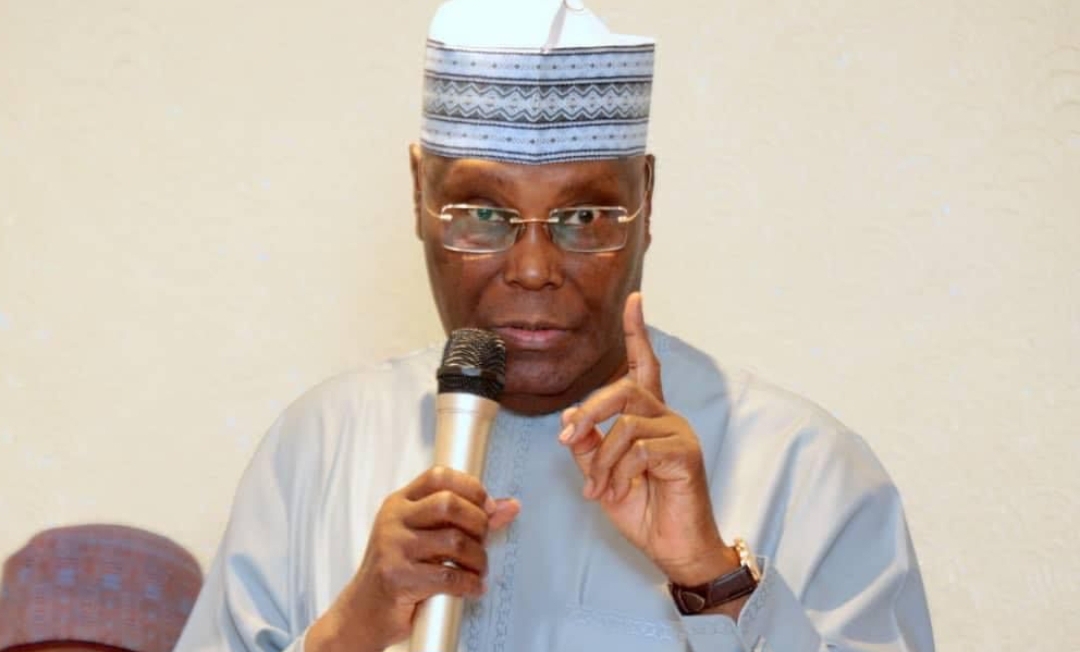
Atiku donates N50m to Kwari market flood victims

By Muhammad Aminu

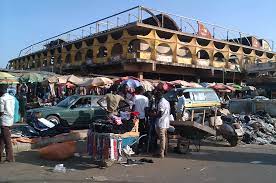
The presidential candidate of the People’s Democratic Party (PDP), Atiku Abubakar, has donated N50 million to Kantin Kwari textile market in Kano following a flood that affected the market.

The Star earlier reported that Kano has been witnessing torrential rainfall in the last few days that has led to floods in many parts of the metropolis, including the Kwari textile market.

The presidential candidate announced the donation Monday while welcoming former Kano State Governor Ibrahim Shekarau to the PDP.

He sympathized with the businessmen and women who were already suffering from an unfriendly business environment with economic hardship.

According to him, Shekarau’s defection is a win for the people of Kano State, the PDP and the country.

The former Kano State governor argued that Atiku was the most qualified candidate to get Nigeria working again come 2023.

Atiku was in Kano since Sunday alongside his running mate Governor Ifeanyi Okowa, Governor Aminu Waziri Tambuwal of Sokoto State, former Governor of Jigawa State, Sule Lamido, former Minister of Transportation, Senator Abdullahi Umar Idris, among other party chieftains.

Ponzi scheme: An ugly race for easy money (1)

By Bilyamin Abdulmumin

Needless to say, everyone wants money. Most of us have an insatiable love for them. There is this Hausa rhetoric:  if anyone says, “you have too much love for money, then the person saying that is playing with your intelligence”. In other words, the accuser is being unserious because what he said is a fact not only about you alone but everyone.

However, that is not the nitty-gritty of the matter because the like for money is one thing, and getting them is another. Getting the money is not as easy as pushing a standing pestle. Neither is it as easy as slapping a chick (in Dan Anace’s words)

To get the Phoenician’s invention, one has to invest a lot. It is a struggle for “survival of the fittest”. Those who bring or have the best ideas or strategy get them, thus putting us in constant skirmish and outweighing one another (capitalism in short).

Through their programs, some people have allegedly found a platform that can bring us this money almost effortlessly. In other words, the Ponzi scheme, alias pyramid, promises to free us from the bandage of suffering before getting the money.

To get to the utopia, according to these organizations, one will only invest a certain amount of money, and instantly a fixed profit is ensured (which one can claim after some time). The return of these investments is usually from 10 to 1000 per cent.

Initially, these Ponzi organizations’ operations were physical, with their offices and agents well known. One of such schemes that once cut across nook and cranny in Zamfara State was “oil and gas investment.”

The gale of the scheme in the state swept aside everyone on its path. It left neither business people, politicians, government workers, or even town heads. The “oil and gas” claimed an investment with a 100 per cent return in two weeks. For instance, an investment of 10,000 would qualify one to cash out 20,000 in two weeks. This is the type of eldorado business everyone can envisage, making it difficult to resist.

With the global transition from a physical to an online platform, the Ponzi schemes have followed suit. They would unleash their various applications where subscribers follow laid-down rules. Although different from the physical schemes, the concept remains the same: invest a certain amount of money and recoup mouth-watering profit (at 100 % assurance).

MMM was one online Ponzi that traversed the length and breadth of Nigeria, thanks to the subscribers’ testimonies like that of the oil and gas scheme. MMM promised and initially delivered 30 per cent profit to subscribers at every kobo invested within two weeks. This online investment was even riskier because the subscribers were dealing with faceless agents. When the MMM finally crashed, the bang of the burst was heard everywhere across the globe.

How the MMM founder from the far East of the globe, Russia, was able to convince Nigerians (some of whom are learned) to use not only their savings but other people’s money (staff salary, school registration fees, or money entrusted to them) was a mystery

The basic modus operandi of any pyramid scheme is the same: one particular schemer (the Ponzi initiator) would convince one to two people. Next, these two people convince four, four convince eight, and it keeps cascading like a symbolic pyramid hence the name pyramid scheme. Note the new subscribers in the pyramid pay the older ones; those at the top, especially the schemer who is at the top, bag the most money out of the scheme to the detriment of those at the bottom. For the scheme to remain healthy in operation, the new subscribers must always be able to pay the older ones; otherwise, the scheme becomes stuck in the mud.

Some of the Ponzi schemes recently to have met the waterloo are ISME and OSTIME. And according to “nogofalmaga”, an NGO specialist in dealing with Ponzi schemes, some other currently active schemes are only a matter of when not if they flow suit. These are SunPower, Tesla-recharger, Bitmaincenter sabrinascala, stormgain, among others.

In order not to take too much space, I reserved for the next article the discussion of some funny traits of Ponzi schemes

The elixir for easy money doesn’t exist. The Ponzi scheme can only provide for a few while robbing many others. If it is too good to be true, don’t trust it.

Bilyamin Abdulmumin wrote via bilal4riid13@gmail.com.
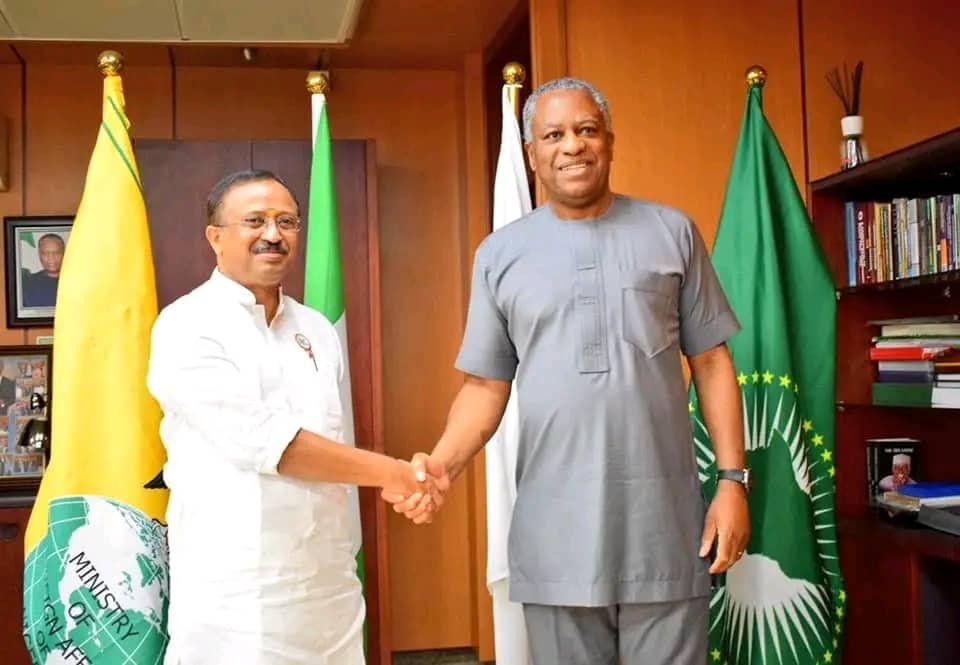
Nigeria, India to strengthen bilateral relations

Nigeria and India are looking for strategies to enhance their mutually beneficial and robust bilateral ties.

Geoffrey Onyeama, the minister of foreign affairs, revealed this on Monday when meeting Shri V. Muraleedharan, the state minister for external affairs of India.

Muraleedharan is in Nigeria to attend the Nigeria-India Business Council’s opening (NIBC). Nigeria, according to Onyeama, is attempting to benefit from India’s expertise in the fields of information, communication, and technology.

India is one of the biggest investors in Nigeria and one of the biggest consumers of Nigerian crude, he pointed out.

In the context of the Solar Alliance and Conference of the Parties on Renewable Energy, Onyeama acknowledged India as the primary instigator.

“On Defence cooperation, there is a joint initiative with some of our Defence institutions on the development of detection of Improvised Explosive Devices which we are working on.

“Of course, that will be an important addition to the armoury of our security forces”, he added.

Muraleedharan stated that the bilateral relationship between India and Nigeria is excellent and that the meeting covered topics such as commerce, consular matters, education, etc.

The minister expressed confidence that the NIBC would enhance bilateral trade and investment in a number of industries.

Muraleedharan indicated that his nation was prepared to lend soft credit to Nigeria so that it might construct solar power facilities.

“On Power, Nigeria is part of the International Solar which is the global alliance to ensure that sustainable power is there across the world”, he noted.

Commercial banks capital requirements and underdeveloped population: Regulation vs emotional sentiment

By Idris Mukhtar, PhD.

This write-up seeks the correct the perception of some people about the Commercial Banks’ operations and the Central Banks’ regulations.

A banking operation is a business like any other business. They collect money from those that have a surplus and channel it to those that are in deficit with the sole aim of making positive returns. In this sense, the business has to respect the law of demand and supply, which basically determines the prices. Human beings are rational in nature; thus, they try to avoid anything that could bring them dissatisfaction in favour of the things that could bring them satisfaction.

Basically, peoples are the owners of commercial banks. They invest their personal net worth in banks with the sole aim of making profits and avoiding disasters. However, because of the high-risk nature of the banking operations (i.e., dealing with money, complicated mode of operation, and the important roles these institutions play in economic development), the government, through Central Banks and other regulatory agencies, makes certain regulations with the aims to make their operations smoothly and to safeguard the investors’ money. The government regulates the banking system by setting a minimum Liquidity Requirement, Minimum Capital Requirements, Non-Performing Loans threshold, Maximum Expense vs Revenue (efficiency ratio) Requirement, Concentration Ratio, etc.

Based on the above, to ensure fairness to all (developed or underdeveloped) within a given jurisdiction, these regulations must be made equal among the banks in a particular category (i.e., International banks, National banks, Microfinance banks, etc.) by considering several factors. 

For example, regulators set the minimum Capital requirements for international banks differently from national banks or microfinance banks just to make sure fairness is achieved uniformly within the country. No particular region, segment, or people will be given preferential treatment over the other. In setting these regulations, due to the nature of banking operations, any preferential treatment because of the underdevelopment of the region will set that region or people preferred in the disadvantage stage because investors will definitely not find it easy to risk their capital in a high-risk region that did not have stringent regulations that could safeguard their money.

Because of the rationality of the consumers who are the capital providers to the banks, if the regulations are enforced in a particular region due to the so-called reason that the region is not advanced and the economic life is difficult in such a way that will temper with investors interest (i.e. attaining a positive return and avoiding negativity) to protect their personal wealth invested, they will run away from that region in favour of the region that has an adequate regulation to safeguard their hard-earned money. 

No one will stay in the region, which will cause them to lose money unless few. (even these few could only stay if they believed they could get a higher profit/interest rates by charging high markup on loans and advances to cover the high risk they took by staying in an area in which there is a high risk of defaults). This will cause economic hardship, a high rate of crime, terrorism, and continued deterioration of the conditions in such a region.

If we look all over the world, due to the loan default expectation, any region that proves to be economically more prosperous enjoys the teaming number of investors trooping to such a region for investment even though the gain is lower because of the competition. That is why the profit/interest rate on loans charged to borrowers in developed nations is much lower compared to what is charged in developing or underdeveloped nations that have lower ratings or high credit risk (this is basic as per as risk management is concerned), i.e., in Nigeria commercial banks charges between 20%-25% on loans while in the US or the UK the rate is lower than 5% per annum. What explains this scenario is simply, in comparison to US or UK, Nigeria is a high-risk country disturbed by a high rate of corruption, insecurity, terrorism, etc. which scare any rational investor away unless he could be compensated by charging a high-interest rate that will worsen the economic situations of the borrowers.

To me, the way forward for a less economically developed region to compete with another region is to continue educating its younger ones gradually. Research shows a positive correlation between education, low corruption, terrorism, and improvement of economic conditions. With a good and quality education, businesses will thrive, people will prosper, income will improve, and well-to-do members of the region or investors from outside will invest their surplus funds in such a region because of the expectation of positive gains on their investments and good business models that will ensure non-default in the loans.  

Any enforcement by the regulators on the people’s right to the investment of their personal wealth (i.e., calling for the government to enforce peoples invest their wealth in a region with a high risk of default in such a way that they will incur losses just because the government wants help that region or the region is less developed) is an illusion and will do more harm to the region than good in future. In the end, instead of that region prospering because of that policy, it will end up deteriorating.

Dr Idris Mukhtar wrote from Jeddah, Saudi Arabia, via mukhtaridrisu@gmail.com.

Jos Terminus market and politics of ethno-religious chauvinism

By Hamisu Hassan

Terminus Modern Market Jos was closed down in 2002 after a mysterious inferno that engulfed the market in the middle of the night and destroyed more than 270 shops and warehouses with goods estimated in billions of Nairas. The market was a source of livelihoods to business operators, traders and companies within and outside the State. It was also a source of huge revenues to the Plateau State Government.

Recently, there’s memorandum of understanding between Ja’iz Bank and Plateau State Government to rebuild the market for the state at no cost to the State Government. It is very clear after exactly 20 years of closing the market, Plateau State Government either have no intention to rebuild it or have no resources to rebuild the market again. It’s unfortunate, saboteurs and haters have started appearing from obvious quarters to halt the government actions against rebuilding the market. To them, the market should not be repaired by Jaiz. This is ridiculous and amazing at the same time. But some questions which always come to my mind are, is the government really ready to strike the deal? Also, is the governor afraid of some powerful forces, to the extent that they have to agree before the work sees the light of the day?

Plateau State is one of the parasitic states in Nigeria that depends heavily on monthly federal interventions. It has no sources of revenue and no magic to earn more apart from the federal allocation. The pungent, acrid taste of any Plateau State Governor is either to pay wages at the end of the month and forgo infrastructures or engaged in infrastructures and forgo salaries. That’s why the state of development in the state in terms of infrastructures is stagnant and static for good 20 years.

I recently have one on one chat with one of the governorship flag bearer’s of a certain party of the state. I asked him his plans about building infrastructures in the state. He bared his mind and told me that unless Plateau State devices ways of generating more revenues, no magic can be done to have infrastructures in the state. 

The Governorship contender said that the State is already heavily indebted to the tune of ₦100 billion Naira. The  loans obtained for building Secretariat Junction flyover isn’t settled yet. When the American Junction flyover would be completed, Plateau State would be indebted to the tune of ₦170 billion Naira. Which obviously means the windows for giving loans to Plateau State would be closed. My investigation discovered that the domestic profile of Plateau State 2018 was ₦122 billion Naira.

The reality in the face of Plateau State is very glaring. Plateau has to accept the reality and bow out of the ethnic and religious sentiments that held her neck for decades or lag behind the wheels of misfortunes. It is sad to see this giant state with abundant idle resources and opportunities, such as those of tourism, mineral resources, underground water, business environments, most serene and favorable weather conditions, sufficient rainfall for agricultural and more, but these have become clogs behind its wheels.

Note: It’s my fear that Plateau State Government is fun of playing political fantasy of setting interest in the state during every election to gain more votes but it has no real intention of rebuilding the market in oder not to go out of favors for some myopic interests. But the truth is, the market is a milking cow for the revenue bloc of the state. Being pragmatic in decision making will not augur well for anyone at the helm of affairs. As they said, a stitch in time, saves nine.

Hamisu Hassan is socio political and economic analyst from Jos South, Plateau State. He can be reached via hamisuhassan@yahoo.com

FrieslandCampina calls for applications from graduates 

By Muhammad Sabiu

FrieslandCampina WAMCO, otherwise known as Peak Milk in Nigeria, has opened its job application portal for recent graduates.

The company, on its website, stated that an ideal candidate for the job offer should have a bachelor’s degree or a Higher National Diploma, also abbreviated as HND, and must have graduated with an upper second class honours degree or an upper credit.

An ideal candidate must have also completed the NYSC and should not have more than two years’ work experience.

Leading worldwide dairy cooperative FrieslandCampina strives to cultivate high-potential new people so they may contribute to something greater and take on leadership roles in the future, enabling us all to succeed in the market both today and in the future.

Interested candidates are advised to click this link and apply: https://careers.frieslandcampina.com/global/en/page/graduate-professional-scheme-gps

How much is your salary?

By Hamza Sulayman, PhD

One of the most difficult questions to answer among Nigerians is “How much is your salary?”. It does not matter who asked the question; the answer is always tricky. It might be a father asking his son or daughter after spending a fortune paying for their education, or a wife asking her beloved husband. The reason behind this varies from one person to another.

I came across a US-based content creator (IG: americanincome) who moves around the cities of the US asking strangers about their annual salary. To my surprise, they always answer right away and specifically to the last dollar. He asked some follow-up questions, like what did you study? And from which university, how many years of experience do you have? And what advice will you give someone who wants to follow in your footsteps?

To me, that type of content creation is amazing because it provides the young generation with factual data on how they can achieve their goals, which is much better than what the guidance and counselling departments of schools and universities can offer. That is, if the department exists.

My recent interaction with some youth led me to believe that they are after the money or, as they say, “secure the bag”. So, for example, if you are willing to get $150,000 per year, you should work as a Data Analyst, Model, or Software Engineer. If you are humble, you can be a high school teacher and earn about $42,000 a year. If you have a higher taste, you can be a doctor or dentist and rake about $200,000 to $300,000. There are other non-formal sectors with high income, like a professional barber earning $300,000 (I was surprised too) and a sneaker dealer earning $150,000. Top on the list was a luxury watch seller that makes $1,200,000 yearly.

Enough with the numbers, can you answer the question? How much is your salary? Many people cannot answer the question because they don’t even know. After all, what they received is not what is on their offer/pay slip, or the amount is laughable. Some people don’t answer the question because of what people might expect from them. I remember one of my colleagues. He told me that when the salary scale of academic staff was circulating on social media, it became a blessing for him because his family and extended family saw his salary as a Professor and decided to reduce the responsibilities placed on him.

Although in Nigeria, what you study is not entirely relevant to where you work, having a guidance and counselling advisor or a mentor is still advisable. Find someone you want to be like in the future and ask him to mentor you. Learn from their strengths and weaknesses and be a better version of yourself. Lastly, choose a career path that will make you happy, whether it is about the monetary aspect or otherwise.

Hamza Sulayman is a postdoctoral research fellow at Zhejiang University, China. He can be reached via hamza.sulayman@gmail.com.

Jigawa to release 1.7m bags of fertiliser, sell at N15,000 to farmers

By Muhammad Aminu

Jigawa State Government has said it would release over 1, 700, 000 bags of fertiliser for sale to farmers in the state to support this year’s rainy season farming.

This was stated by the Deputy Governor of the state, Alh Umar Namadi who assured that Jigawa State Agricultural Supply Company (JASCO) has already been ordered to commence the sale to the farmers across the state.

Alh Namadi who made the announcement when he received the emir of Dutse, Dr Nuhu Muhammadu Sanusi at the Government House said that the state government is committed to ensuring that farmers got the fertiliser on time and at affordable price this rainy season.

According to him, the agricultural sector has been active as a result of various programmes and policies introduced by the government which has resulted to poverty reduction, jobs creation and food security in the state.

The JASCO’s Managing Director, Alhaji Rabiu Khalid Maigatari, said a bag of NPK 20.10.10 would be sold at N15,000. He revealed that the company has already received the delivery of over 160 trucks which is equivalent to 4,500 metric tonnes of the commodities and distributed to over 45 stores across 27 LGAs in the State.

Farmers in the State had earlier complained of unavailability of fertiliser due to exorbitant prices in the market but find succour in the Government subsidised fertiliser for their farming activities.

Kano court convicts MTN, Glo, banks, others

By Muhammad Aminu

A Kano mobile court has on Wednesday convicted MTN and Globacom, two leading telecom companies, alongside banks for defaulting payment of Trade Registration Fees in the state.

The companies failed to settle their outstanding registration fees for operation in Kano State.

A statement from the Kano State Ministry of Commerce, Industry, Cooperatives and Solid Minerals, signed by Sa’adatu Sulaiman, added that other convicted companies include Titan Trust Bank, Aso Savings Bank, Veritas Pension and Maersk Shipping Company.

“For failure to pay Kano State Government (through the Ministry of Commerce, Industry, Cooperatives and Solid Minerals) Trade Registration Fees, contrary to section 8,9 punishable under section 14 of the Kano State Trade Registration Law 2014, the statement read.

According to Sa’adatu Sulaiman, the court, presided over by Ibrahim Gwadabe, ordered the companies to ensure settlement of the outstanding fees within two weeks or face closure.