Business

You can add some category description here.

Obajana (Dangote) plant invasion: Implications for public-private partnerships in Nigeria (I)

By Tordue Simon Targema

Last week, the Obajana Cement Plant came under siege by armed vigilante groups from the Kogi State Government, acting on the orders of the State House of Assembly who stormed the Company to seal it and ground its operations.

This was followed by war of words between the Kogi State Government and Dangote Industries Ltd. on the establishment, acquisition, ownership and legal rights of operations of the company.

The House of Assembly premised its decision to seal the Company over its management’s refusal to appear before a public hearing on petitions bothering on the acquisition of the Company by Dangote Industries Ltd. This, the House considered arrogant and hence, had to wield its sledge hammer on the Company to serve as deterrent to it, and indeed, other investors in the State.

Reports also indicate that the Company’s management had earlier shunned a Commission of Inquiry set up by the State Government to investigate petitions bothering on its acquisition and operations by Dangote Industries Ltd.

This scenario is unfortunate and regrettable, especially as Nigeria grapples with untold economic hardships and paucity of vibrant private companies that will provide adequate buffers to the nose-diving economy, create job opportunities and mop up the teaming jobless youth that have littered her streets today.

But the fundamental questions lingering on several minds since this crisis erupts, however, are: why did Dangote Industries Ltd. snub the Kogi State Government and House of Assembly, giving rise to this preventable misfortune? If Dangote Industries Ltd. is innocent of the allegations, why evade a Commission of Inquiry and a House of Assembly public hearing that would have provided the best platforms for the Company to exonerate itself?

Again, Why allow the crisis to degenerate to this level, despite the numerous warning signals? Does it mean that the Company operates without a proactive conflict management strategy to arrest this sort of obvious conflict prompters and nib them in the bud?

These questions continue to beg for answers, and have caused many to accuse the operators of Dangote Industries Ltd. of arrogance and blatant disregard to constituted authorities within their operational domains.

Beyond these, however, the behaviour of the Kogi State Government and its operatives suggest that someone somewhere wants to “cash out” from the Company, and has decided to use this brute invasion as the best means of actualising the selfish ambition. Yes, available records have provided sufficient proofs to this effect.

To start with, most of the claims contained in the report of the Commission of Inquiry chaired by the Head of Service to the State Government, Mrs. Folashade Ayoade are utterly mischievous and amusing.

The Committee, for instance, could neither interact with any of the four government representatives that interfaced with Dangote Industries Ltd. to transfer ownership of the Company from the State Government to Dangote in 2002, nor interact with the Company’s management team; yet, concluded its report and made damning recommendations based on selective documentary evidence!

Curiously, the agreement that facilitated transfer of the Company which was duly signed by the then Executive Governor of Kogi State, late Prince Abubakar Audu has been “invalidated” by the Committee on the grounds that it lacks “consideration” 20 years later!

To claim in 2022 that an agreement signed and implemented since 2002 lack consideration is funny, given that the same agreement has been guiding operations of the Company all this while.

Notably, this agreement which the Committee invalidates is explicit in its terms regarding ownership of the Company when it states that: “the State, being the sole owner of the Company hereby offers, and DIL (Dangote Industries Limited), accepts the transfer of 90% of the total shareholding in the Company.”

This transfer was made in the light of the State Government’s apparent inability to adequately exploit the huge mineral deposits.

The agreement notes categorically in this regard that: “in order to actualise the aspiration of the State and its people to exploit and utilize the abundant minerals for establishment in the State of cement manufacturing plant, the State has invited DIL to consider equity participation in the project.”

Clearly, Dangote Industries Ltd. was not an intruder in Kogi State on cement exploration tour ab-initio, but was duly invited by the State Government to help actualize the goal of adequately exploring and mining mineral deposits in the State under a well-articulated equity regime.

So far, the Company has done well on several fronts such as its enormous contribution to the country’s GDP and provision of employment opportunities. The huge financial investment of Dangote Industries Ltd. into the Company gave it life in 2008 when it finally commenced operations after about 20years of its conception in 1992.

At the moment, Obajana Cement Company is the biggest cement plant in Sub-Saharan Africa, with a nameplate production capacity of about 16.5 million metric tonnes per annum across its five production lines.

With sufficient fuel- gas, coal and diesel- the five cement mills are expected to produce 7000, 000kg of cement each per day. When one considers maintenance and circumstantial stoppage of five days per month, the loss of even a day of production is such a huge pain that management of the Company could not afford to risk.

Presently, due to gas and coal shortage that is being experienced across the country occasioned by flooding, only two to three out of the five production lines can run simultaneously. In this circumstances, a shutdown of the Company by the State Government is least envisaged, and is capable of wrecking untold hardships on the Company’s investments.

It is worthy to note that Obajana Cement Plant provides gainful employment to over 3,000 staff. This is apart from casual workers, cleaners and other private individuals who have business dealings with the Company.

With this manpower capacity, the rippling effect that the Company portends to the economies of both Kogi State and Nigeria at large can be best imagined. Yet, even with this production capacity, the cost of cement in Nigeria is excessively high and continues to rise at an alarming rate given the economic uncertainties of the time.

At the moment, a 50kg bag of cement costs around 3,500 to 4,200. One wonders what the implications of shutting down the largest production plant would be on the supply and price of the product within the shortest possible time, not to mention the thousands of people that are most likely to lose their decent means of livelihoods should the unfortunate crisis linger on.

To be continued

Tordue Simon Targema writes from the department of Journalism and Media Studies, Taraba State University, Jalingo. Email: torduesimon@gmail.com
Pi mining – the way I see it

By Bilyamin Abdulmumin

314,159 dollars a Pi

One of the grand sagas that have been taking public attention is the issue of the Pi network. This project is said to be launched early in 2019. All potential subscribers need to come on board is a smartphone and data.

It depends on when one starts and how often they mine. But some pioneers (those who register for the crypto) have mined as much as 10000 Pis. However, the contentious saga that has been drawing attention was the Pi (cryptocurrency) relative value.

The value floating across as said to be the Global Consensus Value agreed by the world pioneers was a staggering 314,159 dollars. And already, many pioneers have as many as 10000 Pis. So, at this consensus, an average pioneer with 1000 Pis, the equivalent of 314,159,000 dollars, will need the services of similar camels that transported Alhaji Alhassan Dantata’s coins as the first person in 1929 to open an account with the First Bank. While a regular pioneer with as much as 10000 Pis, the equivalent of 3,141,590,000 dollars, will need the services of the Mansa Musa’s entourage like that accompanied him in 1324 for his first mecca pilgrimage.

The pioneers are determined and looking forward to this gargantuan windfall. Whether jokingly or not, some have already begun to imagine how to spend such jackpots. Many have embarked on the dream of climbing up the top social ladder by building exotic houses, expensive cars, or circumnavigating the globe for those who fancy the adventure.

Like many jackpot winners, these potential overnight billionaires continue to promise family and friends some bounties, including marrying them off, buying them houses in Asokoro, the latest iPhone, or sponsoring their pilgrimages.

While these pioneers continue to sail in their realm, their critics consider their aspirations at best as a mirage and, at worst, question their mental well being

When the President of the Association of Psychiatrists in Nigeria (APN), Taiwo Obindo, says that more than 60 million Nigerians are suffering from mental illnesses, the Pi critics say no wonder.

But one posing point the Pi critics raised is that instead of the pioneers assuming mining, it is actually them who are being mined. In other words, they are the cash cows, referring to the advert pool fee that the Pi initiators are generating from about 40 million users. Very plausible because in this era of social media, subscribers are gold.

On the other hand, the pioneers’ reason, too, is not a pushover. Instead, they point to the traction the Pi is getting, the global state of transition from the fiat currency, and the success of some previous cryptocurrencies such as Bitcoin. According to them, history is repeating itself. When Bitcoin started in 2008, everything was against its subscribers. They were seen as shadow chasers and laughed at. But when success stories began to come in, the doubting Thomas was nowhere to be found.

For those who don’t know how the current Pi value of 314159 came about, Pi is a useful mathematical constant with infinite values ranging from 3.14, 3.14, 3.141, 3.1415, 3.14159… to infinity. But, disregarding the point behind the decimal and in the ascending order, the pioneers arrived at 314159. In addition, to commemorate this mathematical constant, the official Pi lunch was on March 14, which is 3.14, the Pi first value mentioned.

In my opinion (everything considered), the expectations of the pioneers on the Pi network have reached a fever pitch, but the cryptocurrency hitting the market is on the horizon.

Bilyamin Abdulmumin is a PhD candidate in Chemical Engineering at ABU Zaria. He is also an activist for a better, informed society. He can be reached via bilal4riid13@gmail.com.

Emir of Kano urges women to emulate NES President, Prof. Umma Jalingo

By Uzair Adam Imam

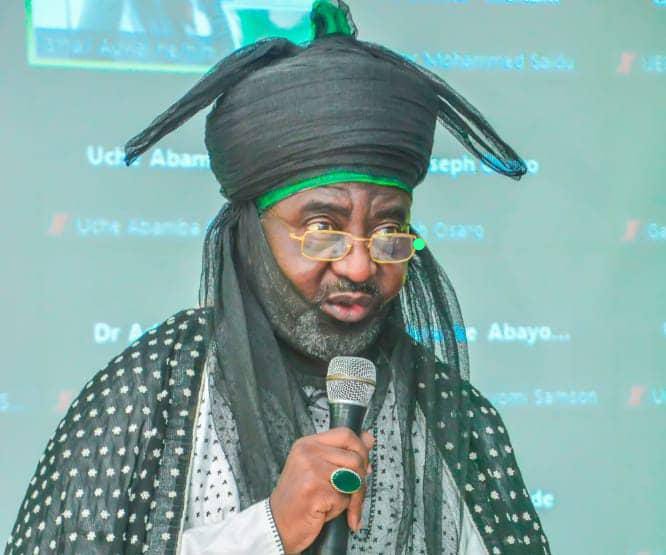
The Emir of Kano, His Royal Highness Alhaji Aminu Ado Bayero has called on women to follow in the footsteps of Prof. Umma Ahmad Jalingo, the president of the Nigerian Economic Society (NES).

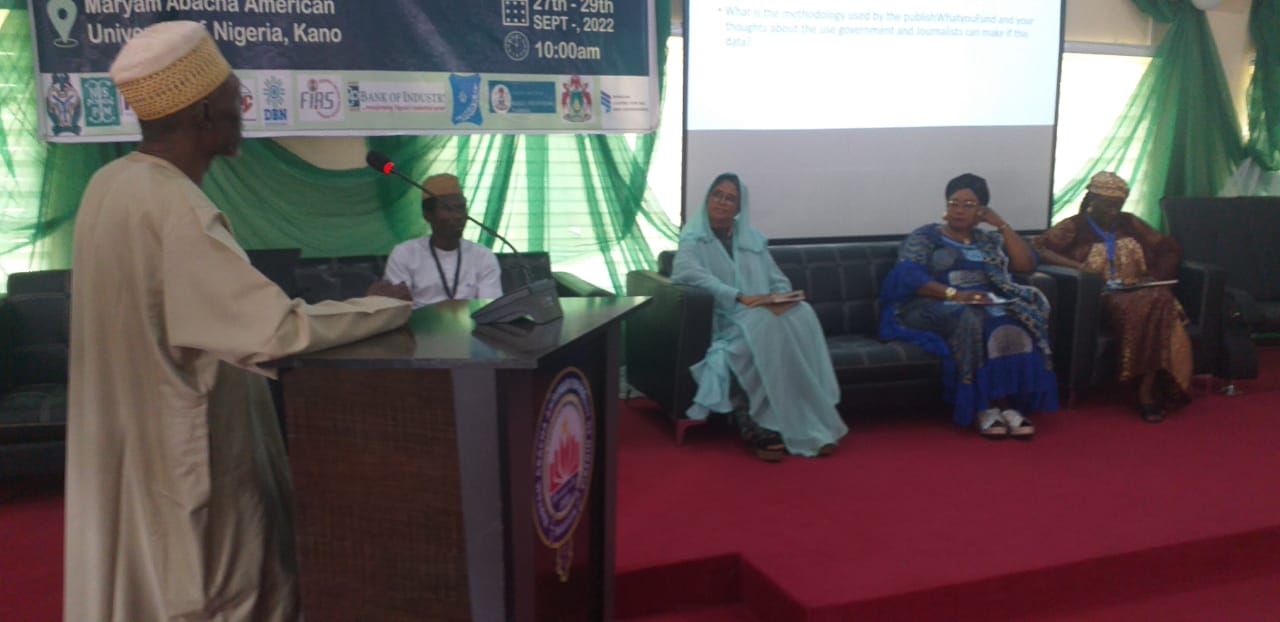
He made the call Thursday at the closing ceremony of a 3-day conference on Fiscal Sustainability and Policy Response for Economic Recovery in Nigeria held in Maryam Abacha American University of Nigeria (MAAUN), Kano.

The Emir commended her efforts and tasked her to work to the best of her ability to ensure success and to also be the subject of example in the history of NES and Nigeria as a whole.

He added that the conference and the papers presented were very relevant to current Nigeria’s economic situation.

High debt will burden future generations – Dr Hassan Mahmud

By Uzair Adam Imam

The Director, Monetary Policy Development, Central Bank of Nigeria, Dr Hassan Mahmud, said the high debt would be a burden on future generations in the country.

Dr Hassan Mahmud disclosed this on Wednesday at the 63rd National Conference of the Nigerian Economic Society (NES). 

The 3-day conference, which started on Tuesday at the Maryam Abacha American University of Nigeria, Kano, was themed “Fiscal Sustainability and Policy Response for Economic Recovery in Nigeria”.

It was gathered that the country’s public debt in the first quarter of 2022 had risen to N41.6 trillion from N39.56 trillion recorded in December 2021.

However, the debt by the Federal Government has continued to throw a big threat to future generations as it may impinge on the country’s economic growth.

He said, “When debt is high, it becomes a burden on future generations as it leaves no room for borrowing when there is a shock.

“High debt can increase the cost of private sector borrowing, crowding out viable private sector investment and high servicing requirements.” 

Mahmud said despite the challenges, the public debt is an important instrument for the economy, adding that the country’s borrowing plan is guided by debt sustainability.

He added, “Nigerian borrowing plan is guided by the debt sustainability threshold to ensure debt carrying capacity does not impinge on growth.”

The event hosted many academicians and politicians from all over the country, many of whom also commended the conference and its organisers.

Nigeria’s economy in chain since the start of Ukraine war – Minister

By Uzair Adam Imam

The Federal Government has said that the adverse effects of the war in Ukraine and the ongoing security challenge in Nigeria have contributed to the aggravation of the fragile economic situation in the country.

At the start of the war, the Organisation for Economic Cooperation and Development (OECD) warned that the world economy would pay a “hefty price” for the war in Ukraine, encompassing weaker growth, stronger inflation and potentially long-lasting damage to supply chains.

In Nigeria, inflation is already hitting living standards and reducing consumer spending as business owners become less optimistic about production.

The Minister of State, Budget and National Planning, Prince Clem Ikande Agba, disclosed this Tuesday at the 63rd National Conference of Nigerian Economic Society. 

The 3-day conference, which started Tuesday at the Maryam Abacha American University of Nigeria, Kano, was themed “Fiscal Sustainability and Policy Response for Economic Recovery in Nigeria”.

The Minister, represented by the Director Macro Economic, Mr Felix Okonkwo, said fiscal discipline is what Nigeria needs to build a stable and inclusive economy.

Agba stated that the Federal Government is focused on addressing the revenue issues, which it considers essential to the economic and financial health of the country.

He added that insufficient revenue was why Nigeria could not contain its fiscal deficit after the recession, meaning that the country’s capacity to continue to support and raise capital expenditure has not been improved.

He said, “The adverse effect of the War in Ukraine, insecurity, global food crisis, oil theft in the Niger Delta, rising energy prices, massive depreciation of the naira exchange rate, high fuel subsidy and increasing inflation as well as insufficient fiscal buffer aggravated the fragile economic situation in the country.”

The chairman of the occasion, Shamsuddeen Usman, said the conference aimed at providing possible ways to restore the country’s economic stability through enhancing fiscal policies.

The President of the Nigerian Economic Society, Prof. Umma Jalingo, who organized the event, said the association was founded three years before Nigeria’s independence and was aimed at enhancing the country’s economy.

Several flights rescheduled as Nigerian students protest against ASUU strike

By Uzair Adam Imam

Murtala Muhammad International Airport (MMIA), Lagos, has rescheduled several flights as students stormed the airport to protest against the incessant strike by the Academic Staff Union of Universities (ASUU).

The angry students threatened to shut down the airport if the conflict between the Federal Government and ASUU had not been resolved.

Our reporters gathered that the students were members of the National Association of Nigerian Students (NANS) and had blocked the international airport as early as 07:00 am.

The decision of the protesting students was said to have caused gridlock on both ends of the airport, thereby leaving several passengers stranded.

However, they later moved to a domestic airport, causing traffic jams in the airport and Mobolaji Bank Anthony road leading to the local airport.

the protesting students were joined by a former Students Union Government President of the University of Lagos and Presidential candidate of the African Action Congress (AAC), Omoyele Sowore.

Many students have blamed both the federal government and ASUU over the ongoing dispute, which they said has ruined the dream of many promising Nigerian students.

ASUU has been on strike since February 14, 2022, making it over seven months now. However, the federal government has reportedly dragged the union before the court to end its strike that lingers.

eNaira: Changing the narrative of financial transactions in Nigeria

By Abbas Badmus

The idea of eNaira comes from the ever-expanding developments in digitalization and the need for a secured means of effecting transactions across borders. 

eNaira is a central bank digital currency issued and regulated by the Central Bank of Nigeria (CBN). As a compliment to the existing forms of CBN-issued legal tender currency, the eNaira serves as both a store of value and a medium of exchange, offering efficiency in Nigeria’s payment ecosystem.

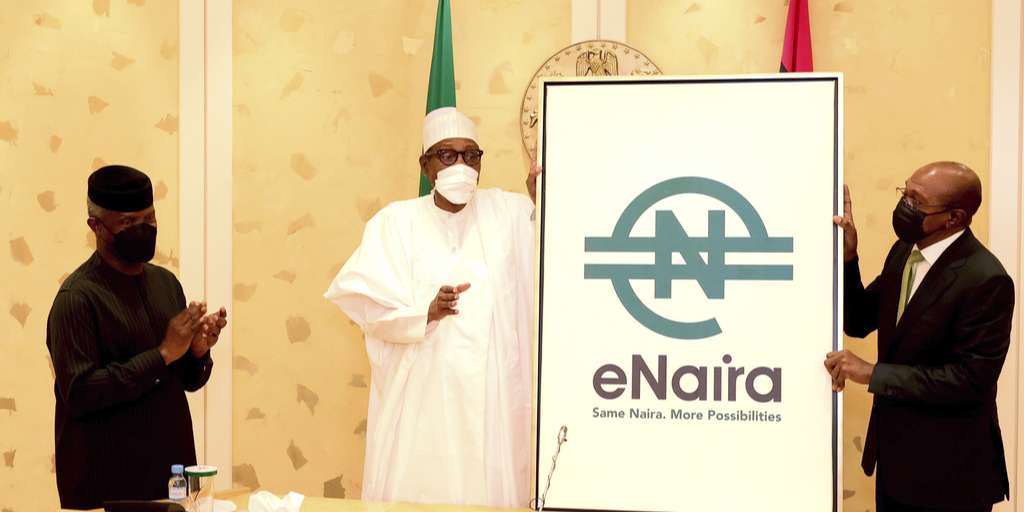
President Muhammad Buhari launched the eNaira on 25 October 2021, under the slogan: “Same Naira, More Possibilities”.

The introduction of the eNaira by the CBN immediately put Nigeria in the global spotlight as the first African country to launch the Central Bank Digital Currency (CBDC).

If fully embraced, there are several benefits for Nigerians and the business community, thereby eradicating many issues surrounding cash transactions.

Some benefits include speedy delivery, safe, simple trading and transactional opportunities for customers and end-users.

More specifically, the benefits to the merchants and business owners include reduced cash handling cost, elimination of failed transactions, instant settlement, increased speed of transactions, improvement in records keeping and elimination of Challenges associated with giving change to customers, amongst others.

Recently, CBN Deputy Governor, Economy Policy, Dr Kingsley Obiora, made it known in the just-concluded Abuja eNaira Merchants Mega Events held at Abuja Chambers of Commerce and industry that there is a reward scheme for merchants and business owners using the eNaira platform.

“I am pleased to inform you that the central bank of Nigeria approved a reward scheme for merchants and other users of the eNaira.

“This reward scheme includes providing merchants with the required scheme includes providing merchants with the required promotional (marketing) materials, subsidizing the current merchant service charge by 50% and activation of a nationwide sensitization which early business adopters of eNaira can leverage on to market its wider adoption “.

It is also important to note that the eNaira platform can now facilitate payments using QR codes, USSD, Wallet ID and eNaira wallet tag. Value-added services on the platform include branch or sub-wallets, employee management, and interoperability with other enterprise applications. Furthermore, these services are provided in a secure environment as the eNaira platform was built using a secure security protocol.

Ample opportunities for increasing business income abound through the adoption of eNaira. For instance, the availability of the eNaira payment option on e-commerce merchant platforms such as Remita is expected to complement the existing digital payment system, translating to about 50% increments in e-commerce transactions at a lower cost.

Going by the innovations and advantages of the eNaira, and the greater understanding that the relaunch is expected to build, it is most likely that the eNaira will, in no distance time, be embraced to enhance financial inclusion further.

Abbas Badmus is with TechDigest Abuja and can be reached via abbasbadamasi946@gmail.com.

Shell CEO resigns after nine years in office

By: Ibrahiym A. El-Caleel

British multinational oil corporation, Shell is set to wear a new face of leadership effective 1st January, 2023.This was highlighted by the corporation’s Chief Executive Officer (CEO), Ben van Beurden.

Beurden, a Chemical Engineer and Dutch national announced the development through his LinkedIn page earlier today.

“After a great 39-year career at Shell, I’ll step down as Chief Executive Officer at the end of 2022. Wael Sawan, currently Integrated Gas, Renewables & Energy Solutions Director, will take over from 1 January 2023.”, he said.

While wishing the incoming CEO the best term in office, Beurden remarked that he has great confidence in Wael as his successor. “He is a principled and dynamic leader, who I know will continue to help deliver our #PoweringProgress strategy purposefully and profitably.”, he said in the statement.

Shell is one of the oil multinational corporations involved in the exploration of oil in Nigeria. The company has been working in Nigeria since 1937, and currently has the largest footprint of all the international oil and gas companies in Nigeria.

Ponzi scheme: An ugly race for easy money (II)

By Bilyamin Abdulmumin

In the first part of this article, Ponzi alias pyramid schemes were discussed in detail, including their cunning modus operandi. If you come to these schemes with suspicion and scepticism, the chance is that you would notice some funny or dubious traits associated with them. The second part wishes to discuss these traits.

An obsession to prove originality

When someone is not truthful, he knows. So, he will assume the suspect mode consciously or unconsciously. He will always show the urge to convince others that he is a saint. This phenomenon is a funny trademark of Ponzi schemes.

These vague platforms float all kinds of certificates at any given opportunity to prove they are real. The more one becomes obsessed, the easier it becomes to detect his flaws. For instance, how could a firm claiming to be a global investment but floating a CAC with business name registration (which even a market woman can get) as evidence of originality? Many Ponzi agents woo potential subscribers with certificates as evidence of legitimacy, “mai kaza a aljihu ba ya jimirin” as” loosely means “he who has a skeleton in the cupboard live in fear.”

Unprofessional communication

 In this 21st century, communication has become a fundamental part and parcel of any firm, especially the one claiming to be a global player. Any renowned firms there will seek to prove to be professionals in their platforms and customer service delivery. For instance, if you visit any Nigerian telecommunications or bank platforms or engage their customer service agency, you will find them very professional. Likewise, their command of the English language is standard. But that is not the case with many Ponzi schemes. One will find their platform full of average written English, their responses sometimes as good as any street English user.  I have observed one costly mistake from these platforms; they kept replying “transaction successced (sic)” instead of “transaction succeeded” This is an embarrassing mistake no firm would afford. 

Definite and stable gains

Market forces dictate that there is always a level of uncertainty for the return of any investment, but not in the world of seemingly Ponzi schemes. Most legitimate investments are based on “gain and loss”. Sometimes the investment return will be much, small, or even deficit depending on the market forces. Still, as mysterious as it is, this basis of ‘gain and loss’ does not exist in the realm of Ponzi schemes. The song is always the same in these fraudulent platforms: gain and gain, invest x naira and recoup 2x naira.

 Some market forces not long ago that caught the global economy unaware were Covid-19 and Ukraine inversion by Russia. The only market immune from the shocks was the Ponzi scheme. So, dear investors looking for easy money, wake up and smell the coffee.

Camouflage 

Of course, anyone who wants to play a shady game will woo others into believing him by camouflaging a well-known establishment. The Ponzi schemers are masters of camouflage. They float a famous brand as their own. But a simple way to discern this trait is by noting the difference in name between the platform and its website address; let me emphasize this point by riding on the back of the white paper issued on Sunpower.

Sunpower is an acclaimed online investment but was found untrustworthy by “nogofallmaga”, an NGO dealing with scam practices.  The pseudo-Ponzi scheme is known everywhere as Sunpower, but their website name is www.sunsolar.one. This appears to be camouflage because there is a genuine global brand with the name Sunpower and has www.sunpower.com as its website address. So, dear Sunpower, why is the vagueness (brand name different from the website address)?

The dubious and funny traits of fraudulent platforms are many. Control your desire for windfalls, and it becomes difficult to sell you a dummy.

Bilyamin Abdulmumin wrote via bilal4riid13@gmail.com.

Atiku donates N50m to Kwari market flood victims

By Muhammad Aminu

The presidential candidate of the People’s Democratic Party (PDP), Atiku Abubakar, has donated N50 million to Kantin Kwari textile market in Kano following a flood that affected the market.

The Star earlier reported that Kano has been witnessing torrential rainfall in the last few days that has led to floods in many parts of the metropolis, including the Kwari textile market.

The presidential candidate announced the donation Monday while welcoming former Kano State Governor Ibrahim Shekarau to the PDP.

He sympathized with the businessmen and women who were already suffering from an unfriendly business environment with economic hardship.

According to him, Shekarau’s defection is a win for the people of Kano State, the PDP and the country.

The former Kano State governor argued that Atiku was the most qualified candidate to get Nigeria working again come 2023.

Atiku was in Kano since Sunday alongside his running mate Governor Ifeanyi Okowa, Governor Aminu Waziri Tambuwal of Sokoto State, former Governor of Jigawa State, Sule Lamido, former Minister of Transportation, Senator Abdullahi Umar Idris, among other party chieftains.