Business

You can add some category description here.

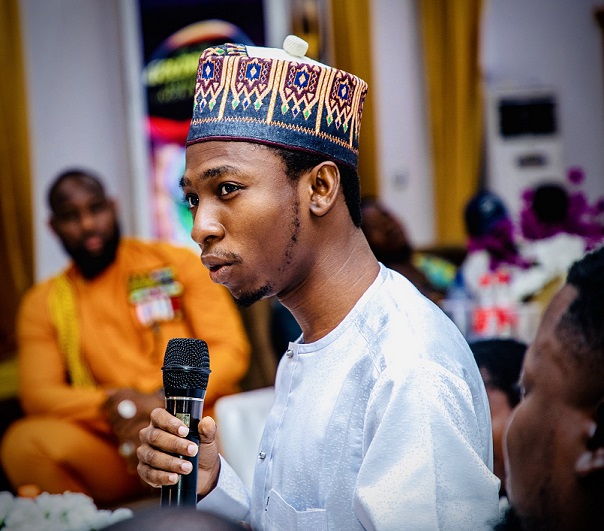
Questions on Naira redesign

By Abdulhalim Ishaq Ringim

Yes, there’s about N2.73 trillion outside bank vaults. This figure represents 85% of the N3.23 trillion in circulation. However, it only represents 6.5% of more than N49 trillion that is in circulation.

Now, let’s consider Nigeria’s unbanked population which stands at 64 million according to World Bank’s “The Global Findex Database 2021: Financial Inclusion, Digital Payments, and Resilience in the Age of COVID-19” report.

What financial intelligence, as a matter of specificity, does the CBN have regarding the magnitude of the money circulating within this highly populous unbanked system. If we were to assume all the N2.73 trillion is in the hands of these unbanked population, then the amount of money on a per capita basis would be about N42,000. Is that too much?

But we all know this assumption is far from reality because the banked population also hold cash for transactionary and precautionary purposes(as in the case of emergencies). So let’s extend our assumption by adding 50% of the banked population to the unbanked population and let the final figure be the number of people who hold cash either because they are unbanked or because of other purposes as transactions and precautions. The per capita cash amount would reduce to N28,000. Is that also too much?

For the hoarding claims, economically speaking, what is the incentive of hoarding cash in Naira considering the continuous devaluation and inflationary trend that has been wiping the value of the Naira against the dollar when there are various hedging options available? Does the CBN have any tentative intelligence that suggest massive hoarding or is this just another trial and error policy?

But let’s also assume there’s indeed hoarding and some people are holding suspicious money. Have the CBN thought of the possibility that the hoarders might now be forced to consider hedging options by flooding the market with money in exchange for hedging-compatible commodities? Have they considered the inflationary tendencies of such an eventuality? Check Dr. Adamu Tilde’s most recent post to appreciate the happening in real world markets. Is the recent sharp rise of the dollar value also a consequence of such tendencies?

The risk of counterfeiting has always been present. The CBN confiscated N64.7 million and N56.8 million in 2019 and 2022 respectively. Compared to the money in circulation, are these figures significant enough to evoke the need for a currency redesign?

If it is for the purpose of managing inflation and ensuring the CBN contractionary monetary policies become more effective, then let’s assume they succeed in mopping up most of the cash outside banking vaults. Is it increased money circulation that actually causes inflation or increased money supply? Isn’t the CBN culpable in the expansion of money supply through their unhealthy tendencies of printing money for government spending via ways and means? What are they doing about the money supply? What is the government also doing about deficit spending and the projected budgetary deficit for the coming year?

Is our inflation strictly a consequence of the Demand-pull Effect(caused by an increase in money supply or credit with commensurate increase in demand for goods and services and resultant price increases) or is it a consequence of a combination with the Cost-push Effect as a result of increase in Oil prices and other commodities(mostly as a result of global events plus local events e.g insecurity, oil theft, floods etc) that is gradually rippling and causing increase in the prices of production process inputs? Does the CBN also not think that the hike in the prices of commodities as a result of the consequence of hedging(possibility of which has been painted by Adamu Tilde in his recent post) would also contribute in aggravating the Cost-push as a result of hikes in production process inputs?

What is the CBN tackling exactly?

Abdulhaleem Ishaq Ringim writes from Zaria.

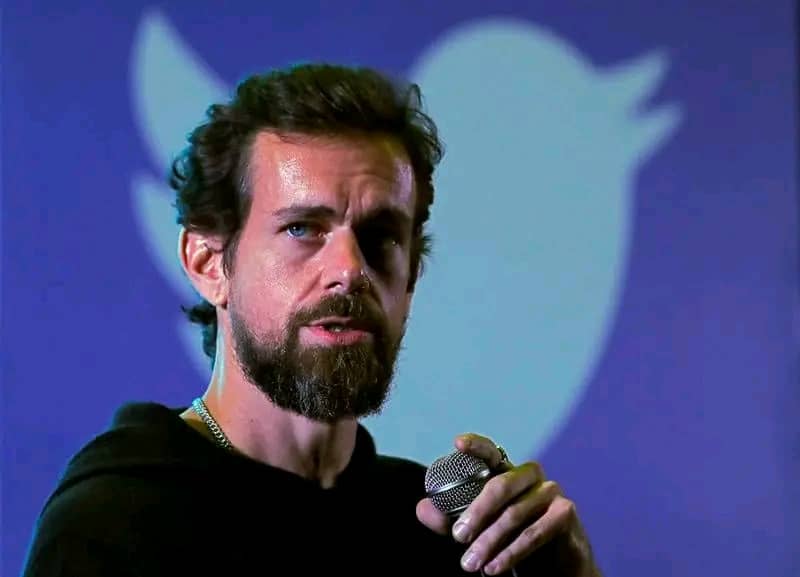
Jack Dorsey, ex-Twitter founder, invents another SM platform

By Muhammadu Sabiu

Jack Dorsey, the creator of Twitter and former CEO, has introduced a brand-new social networking platform called “Bluesky.”

This is only a week or so after business tycoon and investor Elon Musk bought Twitter.

Within two days of the announcement, over 30,000 individuals had already signed up for the new app’s beta testing, which is still in its testing phase.

According to reports, Bluesky allows designers the opportunity to build independently from platforms and developers while also giving users authority over their algorithms, allowing them to choose the experience they want.

On April 14, 2022, Musk started the acquisition of Twitter and completed the deal on October 27, 2022.

MURIC to CBN: Make sure you inscribe Ajami text on Naira notes

By Uzair Adam Imam

The Muslim Rights Concern (MURIC) made a passionate plea to the Central Bank of Nigeria (CBN) to inscribe the Arabic text, Ajami, on all naira denominations just as they had been.

The MURIC Director, Prof. Ishaq Akintola, made this disclosure in a statement he made available to journalists.

Professor Akintola said the Muslim body supports the move by the Central Bank of Nigeria to redesign the naira notes.

However, he said, “the Arabic inscription, known as Ajami, must be inscribed on all the naira denominations.

“With the proviso that all the denominations must contain Arabic inscriptions just as they had been before, Arabic Ajami was conspiratorially and unjustly removed from some denominations. “The removal provoked Muslims and caused division within the country. Only its return to all denominations can heal the wound,” Akintola said.

Twitter plans to charge $20 per month for verification badge

By Ahmad Deedat Zakari

The social media app, Twitter, plans to start charging $20 dollars per month for users whose Twitter accounts are verified.

According to reports by The Verge, verified users would have 90 days to subscribe or lose their blue tick badge.

This is coming after Elon Musk completed the acquisition of Twitter. It is believed to be amongst the many policies expected from Twitter’s new owner.

Musk has been critical of Twitter’s verification process before acquisition. He announced in a tweet on Sunday, October 30, 2022, that the the entire verification process is currently being revamped.

“The whole verification process is being revamped right now ” He tweeted

Employees working on the new features were reportedly given a deadline of November 7 to complete their task or get fired by Musk.

Naira Redesign: CBN, Minister of Finance trade words 

By Uzair Adam Imam

There have been up and downs concerning the re-design of the Naira note in Nigeria as the Central Bank of Nigeria (CBN) and Ministry of Finance, Budget and National Planning continue to trade words over the development. 

The minister of Finance, Budget, and National Planning, Zainab Ahmed argued that the CBN’s proposal to redesign the Naira might not yield any good result. Ahmed stated that the redesign would have serious negative effects on the country’s crippling economic growth. 

However, the Spokesman of the CBN, Osita Nwanisobi, challenged Ahmed, who said her ministry was not carried along.

Nwanisobi reiterated that CBN duly sought for the approval of President Muhammadu Buhari which he granted immediately. 

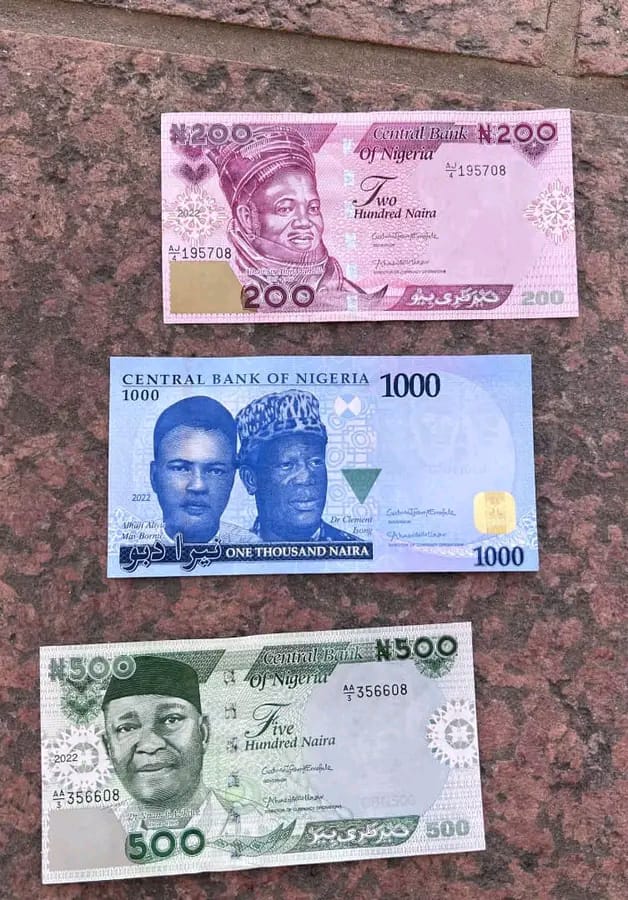
The Daily Reality recalls that the CBN Governor, Godwin Emefiele announced the intention of the CBN to redesign, produce, release and circulate new series of N200, N500, and N1,000 banknotes.

Re-designation of Naira portends serious consequences – Ahmed

“Distinguished senators, we were not consulted at the Ministry of Finance by CBN on the planned Naira redesigning and cannot comment on it as regards merits or otherwise.

“However as a Nigerian privileged to be at the top of Nigeria’s fiscal management, the policy as rolled out at this time portends serious consequences on [the] value of Naira to other foreign currencies.

“I will however appeal to this committee to invite the CBN governor for required explanations as regards merits of the planned policy and rightness or otherwise of its implementation now,” she stated. 

CBN was surprised by what Ahmed said 

However, the CBN spokesperson,  Nwanisobi expressed surprise at the minister’s claim, stressing that the CBN remains a very thorough institution.

He said the decision of the CBN management is in line with provisions of section 2(b), section 18(a), and section 19(a)(b) of the CBN Act 2007.

He also urged Nigerians to support the currency redesign project.
Unlocking Nigeria’s innovation potential for economic growth and prosperity 

By Salisu Uba, FCIPS

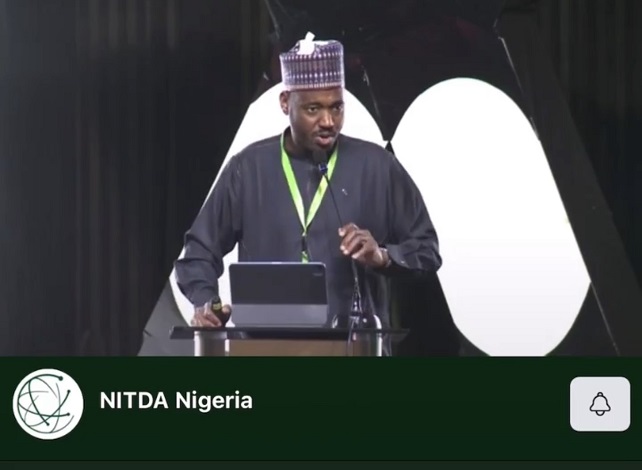
I spoke on unlocking Nigeria’s innovation potential for economic growth and prosperity at the Digital Nigeria International Conference #DigitalNigeria2022 Innovation and Ecosystem Day in Abuja, held on the 28th of October, 2022. 

I focused on what innovation is in Tech and examined the top ten innovative countries; the difference is that they prioritise human capital development, infrastructure, and knowledge-based approaches to innovation. 

I emphasised Nigeria’s competitive landscape, which includes a youthful population, ICT-savvy people, low labour costs, the recent Startup Act, digital economy leadership, and internet access, as key drivers that can transform Nigeria into an innovative nation. 

I also stressed the importance of understanding how to diffuse innovation using the well-known Roger’s diffusion of innovation model. Surprisingly, despite technological advancements, the model remains applicable. 

I also discussed what young people could do to get to the point of developing and commercialising their ideas, emphasising the importance of equipping themselves with skills, networking, and openness. I consider these as factors that will propel one to success. 

More than 1000 people from all over the world attended the conference, which featured speakers from Europe, Asia, America, and the Middle East.

The full presentation and panel session can be found on the websites of Digital Nigeria and NITDA.

Salisu Uba, FCIPS, is a blockchain expert and supply chain and commercial leader from Glasgow, United Kingdom. He can be reached via salisuuba@ymail.com.

We’ve completed selling Polaris Bank to SCIL—CBN

By Muhammadu Sabiu

A new core investor, Strategic Capital Investment Limited (SCIL), has finished the processes involved in purchasing or acquiring Polaris Bank from the Central Bank of Nigeria (CBN).

In a statement, Osita Nwanisobi, the CBN’s director of corporate communications, said that the investment business received 100% stock holdings in Polaris Bank.

SCIL reportedly paid N50 billion upfront to purchase the shares, according to the statement released on Thursday. 

Since the apex bank intervened to suspend the former Skye Bank Plc’s licence in 2018 and established a bridge bank to take over its assets and some of its liabilities, the bank has been operating as a bridge bank.

CBN Governor Mr Godwin Emefiele was quoted as saying, “This sale marks the completion of a landmark intervention in a strategic institution in the Nigerian banking sector by the CBN and AMCON. We commend the outgoing board and management for their vital role since the bridge bank was established; in stabilising the Bank’s operations and its balance sheet and implementing strong governance structures to address the issues that led to the intervention.

“This process has provided the CBN with an unprecedented opportunity to recover its intervention funds in full and promote financial stability and inclusive growth. We wish SCIL well as they implement growth plans to build the bank from the strong foundations that have been established.”

Meanwhile, it can be recalled that Polaris Bank was recently enmeshed in a controversial drama characterised by a viral screenshot of an email allegedly from a supervisor of the bank, in which some Muslim employees were queried for attending a Juma’at service.

The email provoked an uproar from the Muslim faithful and forced a number of them to withdraw their money from the bank.

FG denies plan to privatize TCN 

By Uzair Adam Imam

The Ministry of Power on Wednesday disclosed that there is no plan on the ground to sell the Transmission Company of Nigeria (TCN).

The ministry disclosed this in a statement signed and issued to journalists today, October 12, 2022.

The statement urged the general public to dismiss the statement making the round regarding a non-existing plan to privatize the TCN. 

The Daily Reality gathered that the ministry stated this a response to media reports and statements claiming that there is a plan to privatize TCN next month. 

The statement read: “These reports are untrue and are only mere misinformation aimed at spreading panic in the power sector, which is making progress towards ensuring that Nigerians enjoy uninterrupted power supply.”

“The Federal Government of Nigeria has no intent to sell or privatize the Transmission Company of Nigeria, and no one in the FGN has made a statement of an intent to sell TCN.

“The Transmission Company of Nigeria (TCN) is a centrepiece in the Federal Government of Nigeria’s efforts to rejuvenate the power sector. Therefore, the Ministry of Power working with key stakeholders is continuing to evaluate, assesses and upgrade TCN to make it more efficient and transparent.

“As part of the repositioning of TCN, job opportunities are being created, as with the recently concluded ramp up of employment, contrary to claims that there is a plan for a mass disengagement of staff at TCN. The organization has also been carrying out sustained capacity building by training and retraining of staff across all cadre for efficiency and service delivery.

“Transmission is a vital segment of the electricity value chain that constantly needs significant investment. As is the best practice across the world, the government of Nigeria maintains the transmission segment of the power value chain even when other segments have been privatized. Currently, the federal government is investing and supporting efforts to make TCN a world-class transmission service provider.

“The federal government under the leadership of President Muhammadu Buhari focuses on upgrading, stabilizing and modernizing Nigeria’s power industry through various interventions, including the Nigeria-Siemens partnership under the Presidential Power Initiative (PPI),” the statement added. 

Obajana (Dangote) plant invasion: Implications for public-private partnerships in Nigeria (II)

By Tordue Simon Targema

At a time like this, Public-Private Partnership is undoubtedly the surest blueprint for economic prosperity in Nigeria. This explains why Prince Abubakar Audu, the visionary Executive Governor of Kogi State in 2002 invited the Dangote Industries Ltd. to the State to partner on cement production, a venture that has been so far productive and economically rewarding to both the State and Dangote Industries Ltd., and indeed, Nigerians at large.

It thus smacks of apparent permittivity for the State Government to wake up today, over 20years after the deal was struck with Dangote Industries Ltd. and shut down the Company on the grounds of alleged illegal acquisition.

Apart from the physical damage that this dastardly act will incur the Company, it is also important to consider the bad signal it sends to prospective investors preparing to go into public-private partnerships with governments at all levels.

At the moment, calls are rife for governments in Nigeria to privatize moribund ventures and hands-off their operations in the interest of productivity. NNPC has just been privatised with the registration of the NNPCL, so also are calls for privatization of other assets that gulp billions in annual budgets without tangible results.

Yet, it is at a time like this that Governor Yahaya Bello and the Kogi State House of Assembly consider it most appropriate to wield their sledge hammer on Obajana Cement Company and shut it down in the most primitive manner possible.

A statement by the company’s management indicates that the invasion by armed vigilante groups has caused enormous damage on the plant ranging from physical destruction of the Company’s assets to wounding about 26 staff among other scores of incurred damages.

The report of death of a staff that was shot during the invasion cannot be substantiated at the moment, and appears as an exaggeration to attract public sympathy to the Company. It must be noted at this point that Dangote Industries Ltd. cannot be absolved completely of sharp practices in the course of its operations.

Just recently, the Benue State Internal Revenue Service shut down Dangote Cement Plant in Gboko due to the unwillingness of the Company to remit due taxes to Benue State. Like the current saga at Obajana, a war of words trended between State officials and the Company’s management over claims and counter claims regarding remittance of taxes.

Prior to the incident and until recently, the road around the plant was a terrible nightmare to commuters plying the busy Katsina Ala – Makurdi federal highway which leaves many wondering how serious Dangote Industries Ltd. is with its corporate social responsibility.

The road around Savannah Sugar Company in Numan, Adamawa State is equally a nightmare, so much such that commuters would always ask whether it is customary to Dangote companies to live roads around their plants terribly devastated.

A visit to Obajana where the cement factory is situated leaves one wondering if at all it hosts a company of that magnitude, as no meaningful development project commensurate to the company’s prestige can be spotted around.

One would have expected critical interventions of the Company in basic infrastructures of the town such as educational institutions, healthcare facilities, road networks, water and other critical infrastructure as part of the company’s compensation to the host community for the concomitant environmental effects occasioned by its operations.

This is not the case at Obajana which is but a glorified village remitting billions into Dangote’s coffers, even as Dangote Industries Ltd. is among the most renowned donors doing what one would regard as “Father Christmas” to places that it has no investments!

Another critical question worthy to ask pertains to who owns the remaining 10% of the Company’s shares due to Kogi State as provided in the agreement transferring ownership of the Company to Dangote Industries Ltd.

This question is crucial as the Company in its reaction to the invasion claimed 100% ownership of the plant, even as existing laws stipulate that a State is entitled to 10% equity shares of such investments within its domain, 5% of which belong to the indigenes while the remaining 5% to the State Government.

One must also be curious to ask if all taxes rightfully due to the Kogi State Government are being remitted as at when du. Recall the incident at the Gboko cement factory! These are critical questions that must be carefully interrogated as one wraps his head around the current crisis at Obajana.

Notwithstanding all these, however, given the strategic position of the Obajana cement factory in Nigeria’s economic sphere especially with regards to cement production, distribution and consumption, the consequences of shutting it down at the moment can best be imagined.

Consequently, it behoves on the State Government and management of the Company to shelve their swords and immediately return to the discussion table to resolve the crisis within the shortest possible time in the interest of all and sundry. It is worthy to note that Public-Private Partnership benefits all parties wherever it exists.

Kogi State Government and the Dangote Industries Ltd. should have known this better. In this regard, efforts must be made to strengthen existing partnerships and encourage new ones to emerge exponentially.

Individuals and groups going into such agreements with governments must, as a matter of necessity, exhibit the highest sense of responsibility by constantly dialoguing with government agents towards addressing all grey areas that might arise on a regular basis to ensure peace and tranquillity in the course of their operations.

In doing this, impunity and arrogance must be avoided and business operations must thrive purely based on mutual understanding and corporate best practices in line with existing legal frameworks.

In a similar way, governments going into agreements with private investors must be prepared to respect their fundamental rights and privileges, and must desist from all primitive and draconian acts that are capable of causing untold damage to such investments.

This is necessary if industrial harmony must be attained in jointly owned ventures for greater economic prosperity of Nigeria and her component states.

Tordue Simon Targema writes from the department of Journalism and Media Studies, Taraba State University, Jalingo. Email: torduesimon@gmail.com