Business

You can add some category description here.

Cashless policy is too early for corrupt nations

By Lawan Bukar Maigana

I keep telling people that it is too early for us in Nigeria as a whole to adopt a cashless policy. It is just obviously too early. Yesterday, I read a post by Prof. Abdelghaffar Amoka of the Ahmadu Bello University, Zaria, in Kaduna State, about his experience with a Point of Sale, PoS, agent.

He had gone to refill his gas cylinders at the cost of 19k+ and he used a PoS machine to pay for it. Though he was debited, the money wasn’t credited to the PoS agent’s account. Rather than waste his time there, he transferred another money to someone’s account to pay for refilling. He would have become helpless if he was moneyless.

Some weeks back, I experienced a similar thing in Abuja. I went to withdraw 5k using a PoS from a woman at the NYSC parade ground. I was debited but she didn’t receive the money. She then told me that she won’t give me the money until she receives an alert. Luckily, I had a paltry sum left in my account. I then withdrew the money using a different PoS. It took my bank nearly ten days to refund me.

Before then, and about three years ago, I had the same experience with UBA. I used my father’s card to withdraw N100,000. I tried six times, but all of the transactions didn’t dispense cash, and he was debited five times. My dad only knew it after a week. He complained to the bank but they denied it, without carefully checking whether the transactions were successful or not.

They had to call me to come from school. I quickly got to the bank because it involved my father. I had to help them understand that the transactions failed. Only then they rechecked and discovered that I was right. That was indeed an issue bordering on unprofessionalism.

If not because of my father I would have sued the bank, because they threatened me with a police arrest, saying it was a criminal case. My father asked me to accept their apology else I would have sought compensation for making me look like a criminal, while they were at fault.

Before going ahead with its cashless policy, another factual and excusable factor the Apex Bank should consider is the fact that most of our businesses are done in cash, especially those trading in rural communities and towns and other remote areas where there are no banks, no network, no internet, no electricity, no education, and these people form a large portion of the Nigerian populace.

The questions I keep asking myself regarding this policy are: Did the Central Bank of Nigeria build banks in those areas? Would the people be traveling from their various villages to cities to transfer, withdraw or deposit money? What did the government do in place of these challenges? Does CBN have enough manpower to do this job even if they have built banks? Did CBN mistake Abuja, Kano, Lagos, Port Harcourt, and a few cities for Nigeria?

These, among other reasons, are the factors I want the CBN Governor to consider. Before they present this policy, they need to put all these things in place and educate people about it so that people will evaluate its strengths and weaknesses, and decide to either oppose or support it. The CBN didn’t do that. It just woke up from its slumber and served it to the Nigerians a la carte. Time will however tell if Nigerians will embrace it, warts and all.

Lawan Bukar Maigana is a social analyst. He writes from Abuja and can be reached via email: lawanbukarmaigana@gmail.com

Waqf Foundation upgrades lives of Nigerians

By Abdulhamid Muhammad

Sunday, 25th December 2022, was a day of revelations and feedback from the Waqf Ambassadors of the Zakah and Waqf Foundation, Gombe, Nigeria. It happened during the Uncovering Potentials Workshop (UPW) organized by the Foundation for the 1st and 2nd sets of its Waqf Ambassadors, which was facilitated by Dr Najeeb A.A. Gambo, a researcher with the Microsoft Company and Nigeria’s 2nd Google Certified Trainer.

It was conducted a day after a 2-day intensive induction training for the 2022/23 Waqf Ambassadors at the Foundation’s Training Room. As usual, of all the year-long life-changing training that the Foundation organizes monthly for its 80 enrolled Waqf Ambassadors annually, the UPW was highly impactful, thought-provoking and action-triggering.

In the closing session of the workshop, scores of youth voluntarily gave their testimonies on how the sessions of the workshops they have gone through in the last 12 months have completely revolutionized the way they look at the world financially and intellectually.

One of the ambassadors narrated how excited she was after starting a business and discovering that she could now do a lot of things with her earned income without asking or waiting for someone to give her. It was a great discovery because she grew up in a society that programmed her to think that she could not make money for herself.

Another person said that it was a workshop in ZAWFOG on reading culture that ignited in him the habit of reading books, and that has completely transformed his life, making him more creative and more confident, and hopeful about life.

Another Ambassador, whose parents hitherto paid all his bills, revealed how as a result of the motivation he got from these series of lectures is now able to earn more than the national minimum wage every month despite being still a student. And many of the participants went on and on.

These are a few of the testimonies, and I wished the Chairman of the Foundation, Ameer Abdullahi Abubakar, was there at the closing session to hear how the Foundation is making an impact and transforming lives. It is clear that his model is working; the Waqf Ambassadors are fast moving from poverty (p) to prosperity (p) and soon to philanthropy (p) in sha Allah. As envisioned by the founders of the Foundation, we will soon have a generation of youth who are rich enough and committed seriously to building our society through Waqf.

May Allah accept this from all the people who have contributed in one way or the other in moulding the next generation to be a productive one, amin. May He continue to bless the Foundation and take it to greater heights.

Abdulhamid Muhammad is a 2021 Waqf Ambassador and wrote from Gombe State, Nigeria.

Currency redesign and its attendant expectations

By Muhammed Umar-Hong

Changing the appearance of a country’s currency is widely practised worldwide by various methods and for different reasons. It could portray a nation’s rich cultural heritage, a change in regime to symbolise a ruler or celebrate national heroes with portraits of them attached to these currencies. However, the most cited reason has been to combat threats of counterfeiting. Threats which may lead to inaccurate figures of the total amount of money in circulation, for example. 

The Naira is certainly not a stranger to the redesign concept, which has seen various denominations change over the last few decades. Chief among the changes had been the transition to more durable currency notes which began with the N5, N10, N20 and N50 denominations all upgraded to polymer substrates in 2007. While 2014 saw the birth of the N100 commemorative note marking the nation’s centenary celebration. 

It should thus not be a contentious issue if the CBN decides, as it has, to make further modifications to the country’s currency. After all, it is within the apex bank’s constitutional powers as stated in the CBN Act, 2017 (Section 19, subsection 1b). This time, its primary aim will be to address our security challenges by reducing the hoarding of certain denominations whilst ensuring proper monitoring of monies in circulation. 

But before the release of the new bank notes, however, interactions on social media had clearly shown that not many Nigerians understood the difference between currency redesign and currency redenomination (which involves removing/adding more zeros to the currency), and some were highly expectant of the policy to have some technical outcome. Opinions and suggestions are illogical or don’t seem to rest on sound economic principles. But I took the trouble to note a few, and to explain my views on them below. Feel free to make your contributions.

Q: Why wouldn’t the government set our highest currency denomination to N20 to end money laundering? 

V: The reason for raising our highest denomination to N1000 is because our Naira has a fallen value. The change in exchange rates between two countries is usually determined by the constant demand for one currency by the other. If a country produces goods and services in commercially exportable quantities, the demand for those goods by foreign customers would automatically lead to foreign currencies being converted to local currency to enable these purchases, which ultimately drives the value of the local currency up. Foreign currencies would have to chase more Naira, thereby bolstering its value. 

On the other hand, for products such as petroleum, where the purchases are made in US dollars, the additional dollars can be used by the apex bank to purchase the Naira, thus creating a sort of artificial demand for the Naira that usually raises its value. 

I don’t think any money launderer (assuming I know how this is being done) would be deterred just because he now has to carry/stash away more currency in N20 denominations.

Q: Why wouldn’t the government choose an interval of four years to redesign its currency? 

V: The international standard for countries to redevelop their currencies is between a 6 – 8 year interval. This is not, however, a strict rule, as some countries do it more frequently than others. In the US, for example, the practice is to focus more on widely used denominations (prone to more wear-and-tear) or are frequently targeted for currency fraud (counterfeiting) for a redesign. For instance, a currency like the two-dollar bill has a much longer lifespan due to its near-absence in daily transactions compared to a dollar bill. 

Additionally, not every need for currency changes can be accurately foreseeable. And it may only sometimes be financially viable to make wholesale changes if it coincides with financial or economic shocks. Both of which our mono-economy is particularly susceptible to.

Q: Will the unaffected currency notes (i.e. N5, N10, N20, N50 and N100) remain in circulation after this redesign? Would their value fall?

V: The other currency notes that haven’t been affected by the current redesign will still maintain their legal tender status, fortunately, until the CBN says otherwise. They will also retain value as market forces dictate and are expected to remain in wide circulation. Elsewhere though, lower denomination currencies have been the most exchanged and most subjected to redesign, mainly due to their frequent use.

Q: Why not grant amnesty to hoarders of cash instead of embarking on the expensive redesign?

V: Well, I believe you can’t exert leverage over hoarders of cash if you were never going to carry out your threat (the redesign). 

But Abdullahi Imam has another angle to it: The question of amnesty is straightforward. Amnesties are mostly for criminal activities. It’s not a crime to have cash or to store it. So the topic of amnesty is a non-starter. Except if an amnesty is for those that need to exchange their old notes before the agreed deadline. 

Q: The government should introduce the use of coins if it hopes to increase its purchasing power.

V: Purchasing power is simply the value of a unit of currency in terms of the goods/services it can buy, which is effectively how strong/weak your currency is. The higher the purchasing (buying) power of a unit of your currency,  the greater the number of goods/services it can purchase, and vice versa.

Does the N5 note come to mind? It’s okay to say the note has become worthless these days. I can’t remember when I walked into a shop for an item priced in the multiple of 5. Most of our goods have now been (deliberately, I think) rounded up to the power of 10.

Although they play little or no role in our daily transactions, coins are currently the oldest form of money available to us. They used to have intrinsic value based on the valuable metals (gold, silver) they were made with until it became less expensive to produce using materials like Copper. In more notable climes, they have been used for commemorative purposes. 

Just recently, Britain had to redesign its fifty pence (50p) coin to feature the portrait of its new king, Charles III, following the death of Elizabeth II. And in many other countries, coin usage has practically been resigned to handling smaller transactions, often serving as ‘change’ from paper currency payments. This is more evident in countries assigning lower denominations to coins, effectively making the highest value of the coin in circulation worth less than the lowest-value note. 

Even in our case, Prof. Soludo, then CBN governor, in his 2007 paper titled ‘Strategic Agenda for the Naira’ had proposed the reintroduction of coins in the following denominations: 1 kobo, 2 kobos, 5 kobos, 10 and 20 kobos in his bid to make the Naira a currency of reference in Africa. 

Paper currency has become the preferred medium of exchange for higher denominations worldwide due to their convenient nature and the fiat status conferred on them by governments. To the best of my knowledge, no relationship EXISTS between using coins and increasing the purchasing power of a nation’s currency. But that’s not to say coins are wholly valueless and lack significance in the overall dealings of a country because, who knows, “the most important decisions you will ever make in your life may be decided with the toss of a coin.”

Muhammed Umar-Hong wrote via muhammedu.hong@gmail.com.
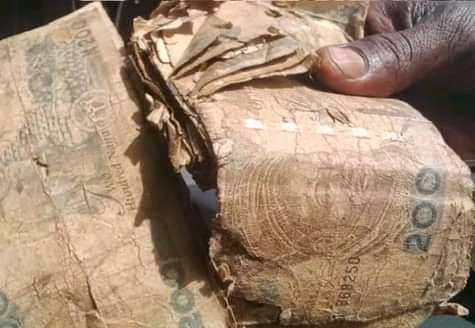
Confusion as CBN does not know quantities of new naira notes

By Uzair Adam Imam

The Central Bank of Nigeria (CBN) says it does not know the quantities of the new naira notes it printed and released for circulation in the country.

The CBN Deputy Governor, Aisha Ahmad, made this disclosure when she appeared before the House of Representative on Thursday.

Ahmad, who represented the CBN Governor, Godwin Emefiele, was before the lawmakers to brief them on the apex bank’s cashless policy and cash withdrawal limits.

The Daily Reality gathered that the lawmakers had on Wednesday requested that Ahmad should appear before the House since Emefiele was outside the country for health issues.

Ahmad was asked by a lawmaker, Sada Soli, about the quantities of the new notes printed due reason to non-availability of the notes days after they were released to the public.

But Ahmad, while responding to his question, said she does not know the quantities of notes printed by the apex bank.

Agitations against cashless policy insincere – Sanusi

By Uzair Adam Imam

A former Central Bank (CBN) governor, Sanusi Lamido Sanusi ll, said the new cashless policy by the Central Bank of Nigeria will help mitigate the lingering issue of corruption by some politicians during elections.

Sunusi also urged the general public to ignore the rain of complaints against the policy, reiterating that the policy would discourage rigging.

He disclosed this Sunday in a short video that went viral, adding that the policy dates back to 2012 when he was the CBN governor.

He said: “The cashless policy started in 2012 when I was governor of the CBN with Lagos and later spread to five states.

“The explanation we gave that time is that the world is evolving and people shouldn’t be carrying cash around, as such the introduction of cashless policy to ease transactions.

“At first people protested against it but they later accepted the policy and started using the different payment channels at restaurants, shops and other places.

“I want to advise people to be careful with what politicians are saying about the cashless policy because it does not favour them.

“They spend four years without delivering on their mandates and later return with huge sums of money thinking they can bribe the security agencies and the electoral body.

“What the policy entails now is that a politician who wants to bribe the security agencies or the electoral body, he/she must pay it in the persons’ bank account where the transaction can be traced.

“Therefore I urge people to embrace the policy as part of efforts to entrench democracy and also make rigging difficult for politicians,” he added.

Women miners decry molestation and abuse at mining sites, seek government intervention

By Ahmad Deedat Zakari

Women miners in Nigeria under the auspices of Women in Mining in Nigeria (WIMIN), decry molestation and abuse by male colleagues at mining sites in the country.

The Founder and National president of WIMIN, Janet Adeyemi made the disclosure at Lokoja on Sunday, December 11, 2022 and sought the intervention of the federal government to tackle the menace.

Ms Adeyemi while speaking at a capacity building workshop for artisans and small-scale miners in Lokoja, said the abuse of women at mining sites have become rampant.

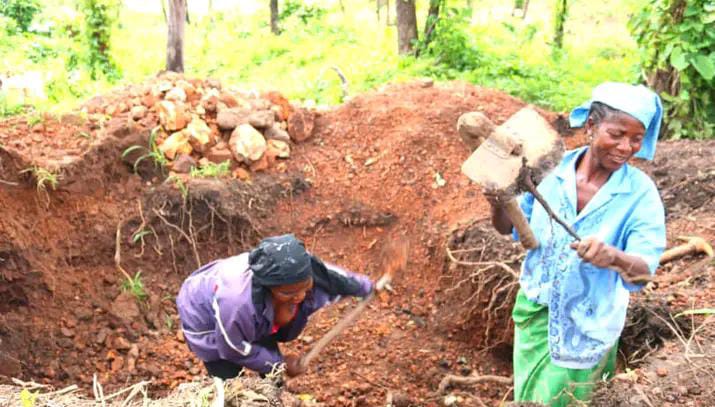
She noted that women in mining have become subjects of constant molestation, are often cheated, over-laboured, underpaid, and even raped by male colleagues and staff of the mining industries.

Adeyemi who was represented by the Programme Coordinator of WIMIN, Ms Dolaraine Dennis, said that the opportunities for women in mining are enormous and they include: operators, engineers and quarry fields etc.

Adeyemi claimed that research findings have shown that 73 per cent of assault against women are verbal.

“73 per cent of assaults against women are verbal.”she said

In the remark of the Kogi State Commissioner For Women Affairs, Hajia Fatima Buba, she applauded the organisers for their support in building the capacity of women in the mining sector in the state.

CBN reduces cash withdrawal to N100,000 weekly, introduces new charges 

By Muhammadu Sabiu

As a step toward implementing the naira redesign strategy, the Central Bank of Nigeria, CBN, has released a new cash withdrawal policy that states withdrawals over N100,000 and N500,000 will now be subject to 5% and 10% fees, respectively.

The apex bank also said that going forward, only denominations of N200 and lower will be accepted at ATMs.

All Deposit Money Banks, other financial institutions, primary mortgage banks, and microfinance banks received a letter on Monday from the director of banking supervision at the Central Bank of Nigeria (CBN), Haruna Mustafa.

A third-party check for more than N50,000 would not be accepted for payment, per the letter cited with the BSD/DIR/PUB/LAB/015/069. The daily cap for over-the-counter, OTC, and ATM withdrawals is N20,000.

The letter reads, “The maximum cash withdrawal over the counter (OTC) by individuals and corporate organizations per week shall henceforth be N100,000 and N500,000, respectively.

“Withdrawals above these limits shall attract processing fees of 5% and 10%, respectively; third-party cheques above N50,000 shall not be eligible for payment over the counter, while extant limits of N10,000,000 on clearing cheques still subsist; the maximum cash withdrawal per week via Automated Teller Machine (ATM) shall be N100,000 subject to a maximum of N20,000 cash withdrawal per day; Only denominations of N200 and below shall be loaded into the ATMs; The maximum cash withdrawal via point of sale (PoS) terminal shall be N20,000 daily and in compelling circumstances, not exceeding once a month, where cash withdrawals above the prescribed limits are required for legitimate purposes, such cash withdrawals shall not exceed N5,000,000 and 10,000,000 for individuals and corporate organizations.”

When humans turn animals: a cruel, evil treatment of animals at ‘Yanshanu abattoir, Jos

By AbduIlslam, Abdulsalam, Rukaiyah, & Rabiatu

This year, Sentient Media reveals that every 60 seconds, one animal suffers abuse. One afternoon, I counted 483 drops of blood on the ground and lost counting to empathy of, what blood is it? But what really transpired?

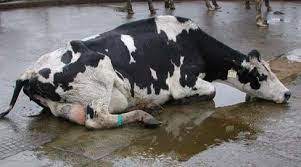
A wounded cow (with blood flowclose to the eye) was being paraded to the slaughtering ground which is about a mile and half (sometimes farther) from the livestock’s market of ‘Yanshanu in Jos. Added to the feeble state of this animal was respiratory mucosa effect, yet a reckless herder (sometimes a guy/boy) hit the cow with a goad on the eye wound because at some point, the cow didn’t move or moved slowly (its front legs were tied together) –immediately the cow fell to the ground due to the brutal and merciless hitting. This was repeated until the destination was reached. Such oppression is irrefutably done daily. This is simply because it is an animal! What a pity.

This scenario conforms to the argument of Peter Singer, author of Animal Liberation that “it would first be necessary to transform people’s attitude towards animal” Over 40 years ago, animal abuse was referred to as intentional act which causes pain to the animals. It sometimes brings too much suffering and even death. It comes in behaviors like beating, starving, choking etc., however, these maltreatments are rationalized in the ill and senseless feeling of ‘they’re animals’. But those acts beat conscience.

Yanshanu Livestock Market is a place where buying/selling of livestock are made daily. However due to its commercial string, most of the activities of dealers inflict severe suffering on the animals. Malam Suleiman Ahmad, Chairman Conflict Resolution ‘Yanshanu Market defended tucking livestock in a crevice space all in the name of transportation from villages to the market or from market to some destinations “we’re here for profits, [so] creating such fantasized comfort for animals will cost much [and] I know people don’t want meat costly.”

And on the issue of market herders inflicting unnecessary pain on the livestock while parading them out to eat or when marching them to the slaughtering ground, Malam Suleiman agreed that the herders sometimes overdo-it “let me be clear on something, due to unrest in our villages, they [Fulanis] protect their animals with several traditional methods and these sometimes remain even after sale – that’s why we use leather [plastic] to choke them when they refuse to stand up. However, we caution our boys on mishandling the animals as it is even un-Islamic and we put them in check with sanctions, but don’t forget, animals don’t understand you, to the good ones, it is the only language they understand, plus there are stubborn ones amongst them.”   

Admittedly, the African methods of animal husbandry values the goad, but the question here is, is it the most effective means of communication to animals? The answer is a capital No! This powerful oppression surely affects the health conditions of the livestock, so Malam Alkasim Ishaq, a vetinary outside the ‘Yanshanu Market condemned the recklessness reflecting that those keeping pets starve, let them stray and the cruel soul even beat, not to even mention some of the heartless dealers. He opined; “these people [dealers] are just here for business and time is money for them. Often, we vets around condemn their cruelty towards animals but you know our society [you become a black sheep for trying to better the system]. However, those hard beating and unreasonable tying affect the overall psyche and health of the animals.”

Whilst the vet expressing his concern, an individual who identified himself as member of Nigeria Livestock Association, Plateau State branch, lamented about his plight on unreasonable tying of animals and torture, because it stops the blood flow which explains the animals’ awkward behaviors sometimes.

It’s expected that such vast cruelty by humans should’ve been curbed by the government, but Malam Suleiman lamented that bad practices should’ve checked with government and Non-governmental organizations’ intervention. “We have written letters to the government but no response, so we can only do what is within our reach. In serious nations, they have abattiors and pay workers, no reckless beating and rush to make much money as we do.” He lamented.

However, going by the global animal husbandry, the vet and his friend pointed out that reforms need to start from the ordinary (not learned) members that made up of the animals’ bodies and organizations. And Mustapha Suleiman, a Vetinary Medicine student of Usman Danfodio University said; denial to understand the psychological condition of these guys [as he preferred to call animals] is what brought about abuses in our localities. He believed that if we pay good attention, we wouldn’t need to inflict pain on the animals with our traditional techniques.

But, it’s worrisome what the harshness of the herders on the animals is costing the host community – ‘Yanshanu. The livestock market is located in full residential area. Often, the maltreatment gets the animals wild – they end up going chaotic for about for over half an hour, smashing and aiming at everyone.

This discriminating treatment persists because humans fail to realize other living things’ response to stimuli – sometimes they’re feeble, they like, dislike; they feel hunger, anger, sick, even want to rest, but only when all these are understood. We should know that it is wrong to inflict suffering on other beings, even if not our own species. But attractive legislation on the subject matter is a priority.

AbduIlslam Kamaldeen Muhammad writes from Bayero University, Kano, together with

Abdulsalam Zikirullahi (SS3 Class) Alhaqq Comprehensive Private School Jos,

Rukaiyah Muhammad (SS2 Class) Alhaqq Comprehensive Private School Jos,Rabiatu Abubakar (SS2 Class) Alhaqq Comprehensive Private School Jos.

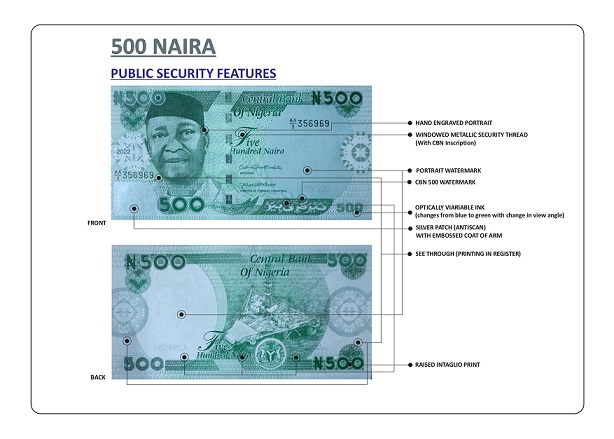
Buhari unveils new naira notes

By Ahmad Deedat Zakari

President Muhammadu Buhari has unveiled the redesigned naira notes in Abuja.

The President unveiled the new naira notes on Wednesday morning at the meeting of the Federal Executive Council (FEC ) at the state house, Abuja.

The Governor of the Central Bank of Nigeria (CBN), Godwin Emefiele was also in attendance during the unveiling ceremony.

While addressing the FEC members after the unveiling ceremony, the CBN governor debunked the rumours that the early unveiling of new notes is a means to target any Nigerian.

He therefore appealed to the public to refrain from perpetuating such rumours.

He added that the CBN will intensify the monitoring process and interrogate the process of withdrawals.

He stated that there will be strict restriction on the volume of cash that people can withdraw over the counter, as it works with the EFCC to monitor the purpose of any heavy transactions.

Naira redesign: CBN orders banks to work on Saturdays

By Muhammadu Sabiu

In order to allow customers to return old naira notes, the Central Bank of Nigeria has ordered commercial banks around the nation to open on Saturdays through January 31, 2023.

The N200, N500, and N1,000 banknotes will be redesigned by the Central Bank of Nigeria (CBN) and released by December 15, 2022.

The present notes will continue to be legal money until January 31, 2023, when they will no longer be, according to CBN Director of Corporate Communications Osita Nwasinobi, who was speaking at the CBN exhibition on Thursday in Ilorin, the capital of Kwara State.

Represented by the acting Director of Corporate Communications, CBN, Akpama Uket, the director said, “They [the banks] have also been instructed to receive the existing banknotes beyond the threshold stipulated by the Cashless Policy without charges to customers.

“Consequently, you must return all the current N200, N500, and N1,000 banknotes to your bank before the expiration of the deadline.”