Admin

Kano has the best market for rams

I entered the market today to sample ram prices. The big one we bought for N70,000 last year is now N250,000 to N300,000. A medium ram is now N80,000 to N150,000. And a small one is around N60,000 to N70,000. These prices are all depending on the city and the market.

One interesting point that I want to make here is, I am presently in Kano and everything looks cheaper in Kano than in other states in the North and probably in Nigeria at large.

Therefore, what makes ram so expensive giving the fact that it has near 100% local content? First, it has to do with human greed and wickedness. Prices in Nigeria are influenced by approaching festive seasons not and not only the natural and conventional law of demand and supply. There was never a sallah with shortages of rams.

Second, it very clear that there has been food inflation in Nigeria. Rams feed on the by-products of local food staples like wheat, maize, rice, millet, Guinea corn and rice. If they are expensive, their by-products, the offal and chaps will definitely be expensive.

Third, is the devaluation of Naira. With the nation’s currency losing value and the government also officially devaluing it, the purchasing power of Naira will naturally drop, and it is drastically dropping everyday. Naira doesn’t hold much value today compared to last year. Take N20,000 to the market today and you will get 40% value of what it used to be last year.

Then last but not the least is the corruption components added to transportation of rams. The police, VIOs, state traffic agents and other security agencies are all out to make a kill by collecting bribes from all vehicles conveying livestock. There are also middlemen in all markets that impose tolls and illegal taxes on every head of ram.

So what to do?

The best way to go around it is either to buy an alternative to ram like sheep or goat that are cheaper or wait for the purchase a day after sallah when the market is becoming a buyer’s market. There are three days grace for layya. That way you can get ram 30% cheaper.

It is indeed obvious that life is generally not easy in Nigeria! If you are alive and healthy give glory to Allah and do what you can afford. Layya is only compulsory for those that have the means. If you can’t afford ram use your money and face other issues and pray for Allah’s blessings. Don’t overspend because after sallah you will still pay school fees. Those of us with children in universities should also brace up for increase in tuition fees. There is going to be increase in prices of petrol and electricity. The government is just bidding it’s time but mark my words, with crude oil price going up, the government will surely increase petrol price.

I wish all of us a very warm and wonderdul Barka da sallah.

Aliyu Nuhu

Abuja, Nigeria

Sunday Igboho arrested in Benin Republic

Reports have indicated that security operatives have successfully apprehended the self-styled Yoruba nation activist, Sunday Adeyemo (aka Sunday Igboho) and his wife.

SaharaReporters, an online newspaper, has reported that Igboho was nabbed Monday night after fleeing Nigeria to circumvent arrest by the secret police in Nigeria.

A source in the know of the matter told SaharaReporters that, “Sunday Igboho has been arrested in Cotonou. He was arrested about an hour ago.

“He was supposed to travel to Germany through Cotonou this night. He wanted to leave Africa through Cotonou. He was arrested by security operatives in Cotonou.

“They are planning to bring him back to Nigeria.”

Recently, Nigeria’s secret police had declared Sunday Igboho wanted and was advised to turn himself in after a raid on his home in Ibadan, Oyo State.

The self-styled activist is known for his secessionist agenda and his agitation for the creation of a Yoruba nation, a move the federal government warned against.

This is coming weeks after another separatist, Nnamdi Kanu, was arrested and repatriated to Nigeria after he jumped bail in 2017 on treason charges.

Eid al-Kabir: Prices of rams skyrocket in Bauchi

By Muhammadu Sabiu

Slaughtering of animals on the tenth day of Zul-hijja is one of the core forms of worship for that day. Those animals include rams, sheep, goats, cows, camels. However, the ram is always preferable to the other animals, especially with respect to the tradition of the Holy Prophet Muhammad (SAW).

In Islam, this tradition of slaughtering originated since Prophet Abraham (AS), when Allahu (SWT) commanded him to slaughter his son as a form of sacrifice. However, on laying him to the ground to slaughter him, the divine command changed. Then the Almighty sent him a ram to slaughter instead of his beloved son.

With the coming of Prophet Muhammad (SAW), the final Messenger sent by Allah to preach to humankind, the tradition of slaughtering got attached a full-fledged form of worship.

As part of “ibadat”, it’s highly recommended for every sane, financially capable Muslim to get any of the animals mentioned above—preferably a ram—to slaughter on the tenth day of Zul-hijja.

Looking at how the nation has plunged into an economic quagmire that bites harder, ram buyers are groaning over the high prices of ram in Bauchi. We, therefore, tried to survey the cost of rams and a comparison as to how they were sold in 2020 and how they are sold this year.

A buyer of ram, who bought a ram from Durun market in Bauchi State alongside his other two friends and who pleaded anonymity said, “Rams that ranged from ₦30,000 to ₦31,000 now cost from ₦48,000 to ₦50,000 thereby amounting to an increment to the tune of ₦20,000 each. Each of us bought rams, whose prices were ₦48,000, ₦49,000 and ₦50,000.”

Also, a seller of rams, who also wanted his name not to be mentioned, said, “First of all, I am engaged in the business of selling animals, and Eid el-Kabir is just around the corner. But there is one problem.”

When asked what the problem was, he added, “The animals have become untouchable because their prices are too high. Money is not circulating among people. Only those that are financially strong come to buy. Common people no longer come; they can only buy a goat worth like ₦12,000 or ₦13,000 and get back home. Last year, people had money, unlike this year.”

He confirmed that there had been an increase of about ₦20,000 when compared to last year. “And again, a ram that was worth ₦30,000 last year would now cost up to ₦50,000,” he added.

Tuesday, July 20, was declared Eid Day and, thus, a public holiday in Nigeria.

Railway Projects: Buhari praises minister of transport Amaechi

By Muhammad Sabiu

President Muhammadu Buhari has on Monday patted his Minister of Transportation, Rotimi Amaechi, on the back over what he described as a “task of transforming and modernising every aspect of Nigeria’s national transport infrastructure.”

This is coming four days after the president visited Kano and performed the ground-breaking ceremony of the segment of the Kano-Kaduna railway modernisation project.

Commending the minister via his verified Facebook handle, the president said, “I commend the Minister of Transportation, Rotimi Chibuike Amaechi, the Ministry, and all the project implementation partners contributing to this national effort of railway infrastructure development.”

Recall that on June 10, the president was also in Lagos to commission the Lagos-Ibadan Standard Guage Rail Line. He also inaugurated its “full commercial operations.”

Eid-el-Kabir: Kaduna ram sellers decry low patronage

Ram sellers in Kaduna famous Zango Cattle Market on Monday decried low patronage barely 24 hours to the 2021 Eid-el-Kabir celebration. The ram sellers said that customers were not forthcoming, and their hope for a brisk business this year seems to have been dashed due to the poor state of the nation’s economy. According to some ram sellers, the situation has forced many of them to sell on credit.

A livestock dealer at the market, Malam Samaila, said that the ram business was not flourishing as before due to the economic and insecurity situations in the country.

Investigation reveals that a medium-size ram is sold at N40000 against its previous price of N25000, while a well-bred ram is sold for between N90000 and N150000. The prices of sheep and goats also indicate similar hikes as they are sold at N20,000 and N25000 against their previous prices of N15,000 and N10,000, respectively. 

The Electoral Act: Where is APC’s Progressivism?

I wonder why the APC senators mostly stood against the clause that sought to operationalize the electronic transmission of election results.

I thought APC as a party was supposed to embody the ideals of political progressivism and was not created and sold to the people as a mere alternative political party with almost the same modus operandi as the others. I thought it was supposed to be a positive paradigm shifter and a status quo disrupter. But they have proven us wrong. 


Debates over this issue took a very heated dimension on the floors of both chambers of the National Assembly, and I wonder why. I understand there are certain concerns around issues like the devices to be used in the transmission of the results; how the results would be authenticated digitally before transmission; how the relevant stakeholders(e.g. party agents, observers) would be able to access the original results as transmitted; how accountability and transparency will be entrenched especially regarding public access to results and of course the issue of internet connectivity and inadequate digital infrastructure.


But if we are really determined, are there no answers and solutions to all these questions and concerns? Where is the APC’s commitment to innovation and “change”? 


This is how I visualize the entire process in the simplest terms:

 
Firstly, on registration of party agents (and independent observers, both local and international) for each polling unit by INEC. The commission would take all necessary details, including biometrics and create a profile for each of them on the INEC system. As such, all agents and observers would have access to their profiles on an app developed specifically for the elections. Of course, rigorous training of agents would be done to this effect. All political parties would also have accounts on the platform(perhaps to be operated by the Chairmen of the Parties). 


Secondly, after the elections, the transmission of results can only be done after validation and authentication by all party agents registered(and official observers) in the polling units. This can be done in many ways. One way is by barcode scanning. This way, the agents’(and observers’) mobile application would allow the scanning of the barcodes of the digital results as compiled so that immediately the barcode is scanned, the agents would be sent the result sheet on their mobile app as tabulated for verification(just as we use our XENDER app). On verification, the agents would accept or decline(in cases that warrant such). If accepted, the agents would still, after accepting their devices, go further to verify their acceptance with a biometric scan(thumbprint) on the device of INEC. Only then will the result be transmitted. 


Thirdly, immediately after transmission, INEC will send originally certified and legally admissible copies of the verified and authenticated result to the accounts(profiles) of the party agents and the central party account(profile). The result will also be immediately published on the elections website and projected at the polling unit for public consumption. 


On connectivity, INEC might choose to use the networks of the local service providers operating in Nigeria or partner with reputable international service providers. I prefer the latter because of the argument that almost 50% of the polling units we have do not have internet coverage. The government might partner with companies like SpaceX that provide satellite internet services with the capacity of delivering 150mbps internet speed to any place on the planet via satellite. All that is needed is a small kit at every polling station. There are also many other companies the country can partner with to optimize the device with satellite internet functionality that will guarantee internet connectivity almost anywhere in the world with appreciable speed, for example, companies like Thuraya, Iridium, Inmarsat etc. Of course, under the supervision and protection of the nation’s digital firewall. In this case, all polling units would have the digital infrastructure necessary for this purpose. 


Are these things possible, or they are just too fictional and unrealistic? 


If they are possible, then what is all this noise around e-transmission of election results? Or are we just not yet ready for such a revolutionary change towards more transparency and accountability in our election processes? 


Why is APC hell-bent on amplifying a limitation that they have done nothing to improve as justification for their scepticism towards e-transmission of the election result? Why are they not talking solutions and alternative routes towards achieving e-transmission just as they did vehemently when the PDP postponed elections in 2015 because of the insecurity in the North East? I wonder how they would have reacted if they were still in the opposition, but given their reaction to the issue of card readers while they were, I strongly believe they would have supported e-transmission. 


Some of them argue that even the United States, by virtue of the Protecting American Votes and Elections Act of 2019, use conventional ballot papers for voting. And I ask, is electronic voting the same thing as the electronic transmission of results? Have they ever wondered how they get live election result updates on channels like CBN, ABC, FOX etc.? Don’t they know of the National Election Pool in the US and Edison Research which provide real-time election results? 


Some are sceptical because such a network is susceptible to cyber intrusion. And I ask why the pessimism? Can we not trust the same cybersecurity infrastructure that protects our national security data(in DIA, NIA, DSS etc.) to offer befitting protection to a network that will be used just for electronic transmission of election results? 


So many questions for the APC! 


And here is the subtlety, the initial clause in section 52(3), as presented, already had the practicability condition; “The Commission may transmit results of elections by electronic means where and when practicable.” So this was the original clause. 


Then it was amended to this by both chambers of NASS; “The commission may consider electronic transmission provided the national network coverage is adjudged to be adequate and secure by the Nigerian Communications Commission and approved by the National Assembly.” 


In the amendment, the National Assembly subtly gave itself the exclusive power for approval subject to the NCC assessment and network coverage report. This is in absolute contravention with section 78 and Third Schedule Part 1, F, S.15 of the Constitution of the Federal Republic of Nigeria as amended. Per these extant provisions, the constitution has given exclusive rights and powers to INEC in the matters of the conduct, supervision, undertaking and organization of elections in Nigeria. Hence, the unconstitutionality of subjecting INEC’s powers to the approval of the NCC and the NASS. 


We are ashamed by the actions of the APC towards this issue because we believed that any initiative that holds the potential of improving transparency in election proceedings in this country ought to be unconditionally supported, especially by the APC. But, sadly, that is not the case. 


Abdulhaleem Ishaq Ringim is a political and public affairs analyst. He writes from Zaria and can be reached through haleemabdul1999@gmail.com.

Zamfara: Matawalle expresses “shock” over killing of MOPOL officers

By Muhammadu Sabiu

An unspecified number of mobile police officers have on Sunday been gruesomely killed by suspected bandits at Ƙurar Mota frontline base in Zamfara State.

Confirming the death of the officers via his Facebook account, Governor Matawalle’s Senior Special Assistant, SSA (New Media), Ibrahim Bello Zauma, said the governor had to cancel a meeting he scheduled to have with some political figures in the state.

His statement reads, “Governor Bello Matawalle has just cancelled his scheduled political meeting in commiseration of the death of our gallant MOPOL officers at Kurar Mota frontline base. He visits the injured at the Yariman Bakura Hospital. The Governor is shocked over the bandits’ incursion, which claimed the lives of the police officers. May the souls of those who fell rest in peace.”

However, details of how the police officers got killed have not emerged.

In recent years, Zamfara State, alongside other northwestern states, has been hit hard and ravaged by the gruesome activities of bandits and kidnappers, as so far, a large number of people have been violently killed and kidnapped.

Designate Bauchi as oil-producing state — Rep. Wakilin Birni

By Adamu Bello Mai-Bodi


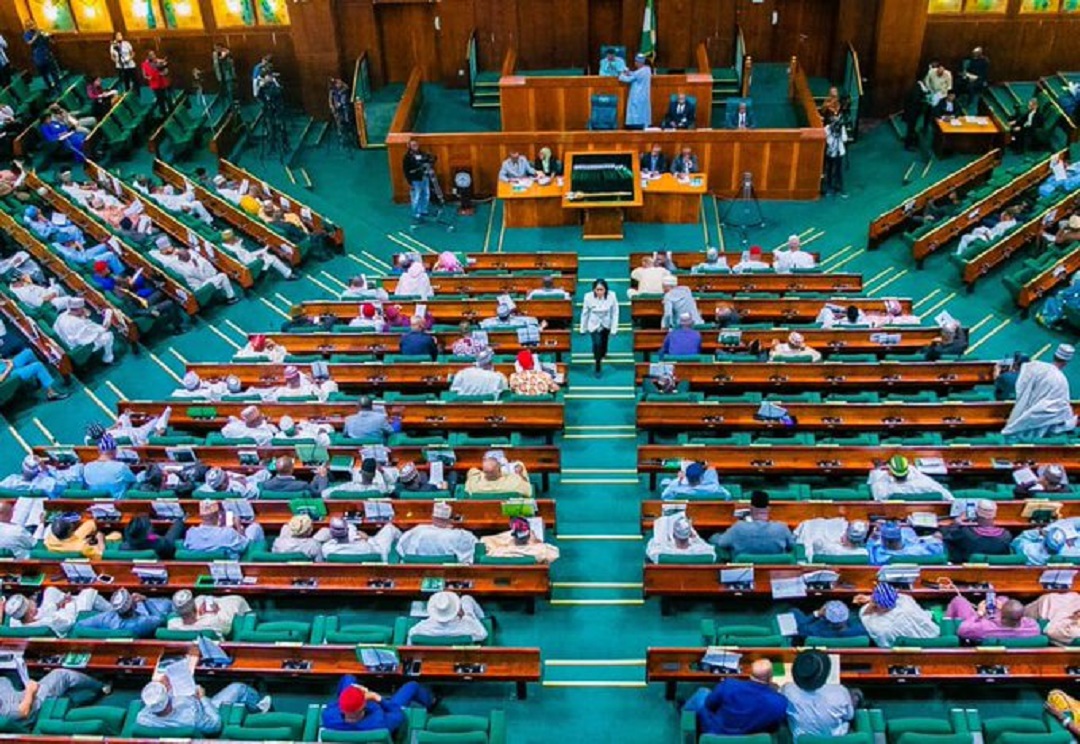
The member representing Bauchi Federal constituency, Hon. Yakubu Shehu (Wakilin Birni) pulled up his trousers and went into the gutters to ensure Bauchi State is rightly apportioned what it deserves from the Federal Government. Furthermore, the lawmaker moved a motion during the plenary on Thursday 15, July 2021, seeking to declare Bauchi State an oil-producing state given that oil exploration started in 2018 in Alkaleri LGA of the state. This is nothing short of bravery; it depicts Yakubu’s sheer love and concern for the development of his state.


Yakubu boldly puts it bare on the floor that it has become imperative to ascertain the fortunes at the disposal of the Federal Government in Alkaleri LGA so as to hasten the process of giving effect to the provisions of the new Petroleum Industry Bill, 2021, in terms of the economic benefit the host community stands to gain.


As a Bauchi citizen, I couldn’t hold back my applause when Yakubu asserted that any community from whose location oil is discovered and or produced is entitled to some extra monetary packages for the upkeep of its environment, infrastructure and health impact. He went further and bolder to make a case for the people of Bauchi to start benefiting from the 13% derivation being the constitutional right in the form of an incentive to the host community.


As expected, the motion, which Hon. Mansur Manu Soro seconded nearly divided the House for obvious reasons, one of which is that there are no reports of production from the Kolmani Well. Notwithstanding, the Ayes have it after a third submission by the Speaker of the lower chamber. It is a crying shame that most of southern Nigeria’s media houses hypocritically reported that the House overwhelmingly rejected the motion despite the fact that the Speaker ruled in favour of the Ayes.


By sponsoring such a critical motion, Wakilin Birni has won a bravery medal for himself and some degree of prestige and assurances for the Pearl of Tourism. Moreover, the motion gives Bauchi people a sense of victory, for it puts Gombe’s unfounded contest over the oil field to a permanent rest. It also serves as a groundbreaking argument for declaring Bauchi an oil-producing state in the country, which shall come to pass God willing.


However, the most crucial component of the brave Yakubu’s motion was his prayer to mandate the committee on petroleum resources (upstream) to invite the Nigeria National Petroleum Corporation (NNPC) to give a comprehensive presentation on the level of work in the oil exploration currently undertaken in Alkaleri and the successes recorded. This is because we don’t want to be taken for a ride or fall into the same ditch as the Mambila hydropower project that was nearly completed on paper. Bauchi people and Nigerians need to know what is going on in the Kolmani River.


As I applaud Hon. Yakubu, I want to assure him that all well-meaning Bauchi citizens are solidly behind him on this. He must not relent, especially on mandating the committee on petroleum resources (upstream) to invite the NNPC to give a progress report on their undertaking of oil exploration in our state.


Adamu Bello Mai-Bodi writes from Gidado Bombiyo residenceK/Kaji Azare. He can be reached via 08067481928.

The Day of Arafat

This year’s Hajj and the preceding one are unique and unprecedented because they gather the lowest number of participating pilgrims since the creation of the Saudi Kingdom in 1932, thanks to coronavirus. Earlier, authorities in the kingdom had asked the international Islamic community not to participate in this year’s ritual for the fear that the pandemic might get a breeding ground among the pilgrims. So, only a few Saudis and fewer foreigners are participating.

As such, pilgrims arrive at Mount Arafat to observe the biggest of the Hajj ritual; we, outside Saudi Arabia, too share those moments, appreciate the day, and in awe supplicate to the Almighty Allah (SWT).

Mount Arafat is a sacred place where Prophet Muhammad (SAW) delivered the famous farewell sermon in which he, among other things, warned Muslims to guard as sacred: people’s property, their blood, women’s right, including their security, food and dignity. On that day, it was said, the last portion of revelation was sealed: “On this day, I’ve perfected for you your religion”, says Quran. Thus, the Arafat vigil offers the pilgrims some opportunities to stand, sit and bow in a contemplative, solemn mood to the Almighty. On this day, Allah forgives more people and liberates them from hellfire to paradise.

Arafat signifies diversity and pluralism, hence, the subtle directive for tolerance. The word ‘Arafat’ derives from the word ‘Arafah, or he learned/knew. Arafat is a place where people get to know each other. The place is known as Jabal al-Rahma or the Mountain of Mercy. Assembling such diverse people in one place, under one umbrella of universal brotherhood, is God’s subtle command: tolerate each other. I am yet to understand from which religious sects such as Bokoharam, Taliban, etc., emanate.

Moreover, Hajj, Aràfat in particular, is symbolic; it signifies peace and social inclusion as Muhrim/pilgrim is asked not to kill even an insect, including mosquitoes, flies, bees, etc. So when a pilgrim returns home, he’s at least taught to respect other God’s creatures as part of the ecosystem. Therefore, their lives are spared because they’re as sacred as human souls. In other words, Arafat teaches Muslims not to kill! 

Arafat signifies tolerance, as Muslims converge from different continents, countries, races, colours and languages in one place, same time, wearing the same garments, and performing the same rites. As a result, bodies come closer, faces meet, hands are shaken, pleasantries exchanged, tongues converse, and hearts reconcile.

Arafat symbolises utmost humility as people share sameness: bareheaded, with simple white clothes or Ihram, rich and poor, the rulers and the ruled, men and women, Arabs and non-Arabs, whites and blacks come together for a shared purpose. In this togetherness, unity penetrates the hearts as physical beauty is ignored: “The believers are but single brotherhood,” says Quran (49:10). 

Arafat is an adaptation of the day of judgement as people submit to the will of Allah in an open, vast ground. It, therefore, replicates and reminds the faithful that a day would come when only the kingdom of God reigns; only He can arbiter!

May the Lord in His infinite mercy restore peace to the world.

Salisu Yusuf teaches at the Department of English, Federal College of Education, Katsina.

Kwara State: Arewa, Middlebelt or Oduduwa Republic?

By Ahmed Zakaria

With the recent agitations for “Yoruba Nation” and “Middlebelt”, it is pertinent for Kwara State indigenes to review their relationships with other groups, narrate their stories by themselves and resist all efforts at manipulations of the narratives.

Some raucous voices have always taken it upon themselves to categorise Kwara State where it suits their tribal, political, religious and sentimental inclinations without considering the choice of the state’s indigenes.

Just because the Yoruba language is the Lingua Franca in Kwara doesn’t separate Kwara from the northern states. But, that does not also mean only Yorubas reside in Kwara, or only they “own” Kwara, as there are many other tribes, like Nupes, Barubas, Kanuri, Fulani,

Some people wrongfully assume the scale to be a Northern State is being above River Niger, which is absurd and wholly superficial and unwarranted.

Others use Hausa or Fulfulde language as a yardstick for grouping northern and southern states, which is also fallacious. A lot of people in northern Nigeria do not speak Hausa or Fulfulde.

Others use religion as a criterion, which is also untrue. For example, many communities in northern Nigeria have large populations of Muslims, Christians, and worshippers of traditional religions. Most recently, agitators of the “Middlebelt” have used religion as a basis for dividing northern Nigeria. 

With the recent agitations in the South West for “Oduduwa Republic”, many people encourage Kwara Yorubas and even Kogi Yorubas to join the struggle. They claim they will regret being part of the North or be oppressed by the “Northerners” or that they won’t gain anything from the North. Many other things they enjoy saying without knowing the repercussions of what they are saying or putting into consideration the emotions of others while saying it.

It is all due to utter historical ignorance. It is highly offensive to assume Kwarans are Northerners by chance or are “Northerners” for the benefit of what they “gain” from the “North”. 

Kwarans are unfortunately projected as “power-hungry” folks, making them seem all their decisions are guided by the love of money, power or recognition, which is wrong, untrue, and humiliating. 

Adding more salt to injury is to assume that other “Northerners” will “oppress” Kwarans or take away their “rights” or “resources”. It is more painful and mischievous. Nothing as such exists in the dictionary of the good people of Kwara State. It is a lack of understanding of the historical relevance of the current nomenclature of Kwara State that leads to all these unfortunate and insincere utterances and views.

No one can take away the “rights” of Kwarans or “resources”. We are focused on what “we” can sincerely offer this nation and region and not what this nation or the North can offer us. We do not discuss our “rights” when we haven’t discharged the “obligations” upon us.

The people in Kwara State have a strong ideological and religious association with  Northern Nigeria, which is stronger than mere tribal and geographical relationships.

Those who wish to project Kwarans as unclear of where they belong or are lost, looking for an identity, or seeking acceptance are deceiving themselves, not Kwarans. They deny the obvious. 

Many Kwarans welcomed the news of the raid on Sunday Igboho’s house and the arrest of his criminal associates for their effrontery towards Kwara State heroes and monuments.

They employed their propaganda machines to tarnish the good image of Kwara as well as to portray them in a negative light. They rubbished our traditional institutions and had the audacity to instruct their foot soldiers to be insulting Our Royal Father, the Emir of Ilorin.  

He thought the hooliganism and thuggish behaviour he exhibited in Oyo State could be condoned and replicated in Kwara State. He does not know the bonds that bind the people of Kwara are more robust than what people like him could ever break. Many sacrifices were made to build, foster, and develop these bonds and brotherhood, but his followers kept praising him till he met his Waterloo.

No true son of Kwara will support the criminal attitudes of Igboho. That is why some people believe that most people causing trouble and tribalism today in Kwara State are not true sons of Kwara. No true son of Kwara will support the disrespect meted on the state by Igboho and his propaganda machines.

It is harrowing and highly disappointing to paint Kwarans as people without an identity, just like it is a blatant lie to assume Kwarans don’t know their identity; that was what Igboho worked extremely hard at achieving.

It is unfortunate to assume Kwarans don’t know where they belong to or are looking for love and affection from any people or group of people. But, on the contrary, Kwarans respect everybody and bear no grudge towards anyone.

The mere thought of what Igboho represents is distasteful, extremely humiliating, and deeply heartbreaking. Kwarans are not troublesome; they are warm-blooded, unlike their counterparts in other parts of the country. 

That is the opportunity Igboho seized and the reason he dared to insult, belittle, humiliate, and threaten Kwarans. Yet, he dared not threaten Kano, Sokoto, or Borno in the same fashion he threatened Kwara.

Those supporting Igboho’s antics, methods, styles, and methodology do not and will never represent Kwarans. The attacks on our Emir and traditional institutions even made us more united behind our Emir despite all our differences.

Igboho consistently portrays hatred for those he terms the “Fulanis”, but we all in Kwara State fall under that category. He has been blinded by deep-seated tribalism and hatred that he views all of us in Kwara State as Fulanis and “Eru Fulanis” to the extent that it is absolutely impossible to convince his myopic mind that not all people in Kwara are Fulani and that Yorubas, Nupes, Barubas, and Fulanis live side by side, peacefully since the time of Shehu Alimi, that’s two centuries ago.

We thank the swift intervention of the DSS in tackling the menace and criminal activities of Igboho and his cohorts, for if the government hadn’t intervened, other non-state actors would definitely spring into action to counter his illegal activities and unguarded utterances against Kwara State. He and tribalists like him are not welcome in Kwara State. 

May ALLAH bless Kwara State and the whole of Nigeria, amin.

Ahmad Zakariyah writes from Kwara State. He can be reached via ahmadzakariyah@gmail.com.