Admin

Sultan Rejects ‘Islamisation’ Claims, Calls for Religious Unity


By Uzair Adam

The Sultan of Sokoto and President-General of the Nigerian Supreme Council for Islamic Affairs (NSCIA), Muhammad Sa’ad Abubakar III, has dismissed claims that there is a plan to Islamise Nigeria, describing such narratives as divisive and unrealistic.

Speaking on Wednesday at the meeting of the Nigeria Inter-Religious Council in Abuja, the monarch said Muslims have no agenda to undermine Christians, stressing that both religions coexist for a divine purpose.

He reaffirmed the importance of dialogue, noting that NIREC remains a critical platform for fostering understanding between faiths.

According to him, engagement rather than conflict is the only path to national peace.

“We believe talking is better than fighting. Let us understand our differences rather than trying to ignore them. I am a Muslim, you are a Christian, and we must live together with mutual respect,” he said.

The Sultan, who also serves as Co-Chairman of NIREC, highlighted his long-standing commitment to interfaith dialogue, noting that he has consistently attended council meetings over the past two decades.

On religious literacy, he warned against the growing influence of unqualified clerics, cautioning that fluency in Arabic does not automatically confer Islamic scholarship, just as some Christian preachers in the Middle East also use the language.

He urged religious leaders to deepen their knowledge in order to guide followers responsibly and prevent the misuse of religion for personal or political purposes.

Addressing insecurity, the Sultan rejected the profiling of criminals along religious lines, insisting that bandits and terrorists should not be associated with Islam.

He maintained that anyone who kills in the name of religion acts against its teachings.

He further lamented that many victims of banditry and terrorism in northern Nigeria are Muslims, underscoring the need to confront the issue without religious bias.

Looking ahead to the 2027 general elections, he called for stronger trust between religious leaders and their followers, warning that national development would remain difficult without it.

He also commended NIREC’s collaboration with international partners, referencing recent interfaith engagements in London involving the Archbishop of Canterbury and Islamic scholars aimed at addressing Nigeria’s challenges.

The Sultan expressed appreciation to the Federal Government for its support and encouraged council members to remain committed to promoting unity and peace across the country.

FG Bans Honorary Degree Holders from Using ‘Dr’ Title

By Hadiza Abdulkadir

The Federal Government of Nigeria has barred recipients of honorary degrees from using the “Dr.” prefix in official and professional settings, warning that violations could amount to academic fraud.

Announcing the decision after a meeting of the Federal Executive Council, Education Minister Tunji Alausa said the move is aimed at curbing the abuse and politicisation of academic titles.

Mr Alausa further clarified that only holders of earned doctorates or qualified medical professionals may use the title, while honorary awardees must instead adopt post-nominal forms such as D.Sc. (Honoris Causa).

The National Universities Commission has also introduced stricter rules, limiting institutions to three honorary awards per convocation, requiring prior approval, and banning awards to serving public officials.

The reforms follow an investigation that uncovered 32 illegal “degree mills” selling fake titles, as authorities seek to restore credibility to Nigeria’s academic system.

Kwankwaso Meets Kano NDC Chairman Over Party Crisis


By Uzair Adam

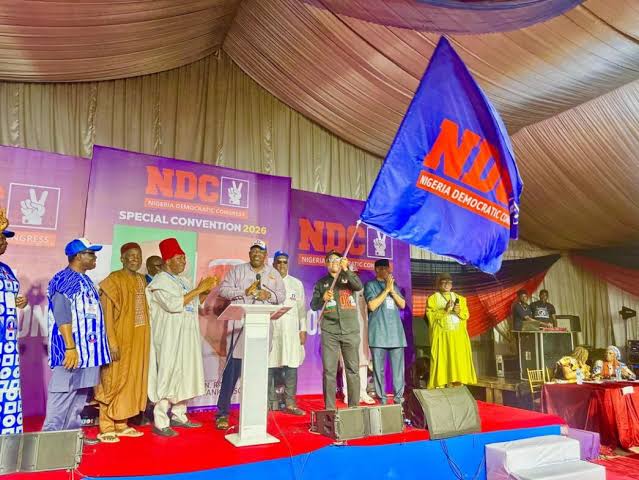
A former Kano State Governor, Rabiu Musa Kwankwaso, on Tuesday held a crucial meeting with the Kano State Chairman of the Nigeria Democratic Congress, Hussaini Mairiga, to resolve the lingering crisis within the party.

The Daily Reality reports that Mairiga confirmed the meeting in an interview with journalists on Tuesday, explaining that it brought together key party stakeholders at the state level.

He said the engagement focused on addressing disagreements surrounding the party’s structure and leadership in Kano State.

Following the meeting, Mairiga announced that the crisis had been resolved and pledged support for Kwankwaso’s leadership.

He said, “We had a fruitful discussion with Sen. Kwankwaso and other critical stakeholders of our great party. All lingering issues have been amicably resolved in the interest of unity and progress.

“As a party, we have agreed to move forward together, and we recognise Sen. Rabiu Musa Kwankwaso as our leader in Kano State.”

Mairiga further urged party members to remain calm and committed to the party’s ideals, stressing that unity would be crucial for future electoral success.

“I call on all our members to remain steadfast and work collectively for the growth of the party. This resolution marks a new beginning for the NDC in Kano,” he added.

The development followed days of tension within the Kano chapter of the party after Kwankwaso’s defection to the NDC alongside Peter Obi, a move that raised concerns over control of the party structure.

The crisis had deepened earlier after the state chairman rejected alleged moves to hand over the party’s leadership to the former governor, insisting that the existing executives would not relinquish control.

He also disclosed that initial attempts to integrate Kwankwaso into the party stalled due to disagreements over leadership arrangements, with both sides holding separate meetings that failed to produce a consensus.

Tensions escalated further amid claims that the party’s planned state congress was suspended, fuelling suspicions among some members over possible moves to restructure the party leadership in Kano.

Examining BUK’s 59th Inaugural Lecture: Lessons from “One World, Different Nations…”

By Ibrahim Aliyu Gurin

There are lectures you attend and forget, and there are those that stay with you and encourage you to rethink familiar ideas. The 59th Inaugural Lecture at Bayero University Kano belonged firmly to the latter.

The BUK’s 59th Inaugural lecture delivered by Adamu Idris Tanko, FRGS, FANG, a Professor of Geography at Bayero University Kano, titled: “One World, Different Nations… and the Many Lessons to Learn,” offered a simple but powerful message: development is more than economic growth.

From the beginning, Professor Tanko explained that development is not a fixed goal. Instead, it is a continuous process that changes over time and across places. What progress looks like in one country may be very different from what it looks like in another.

In the past, development was mostly about economic growth, meaning how much a country produced and earned. However, over time, this idea expanded. Attention shifted to education, healthcare, housing, and later to environmental sustainability and quality of life.

Today, we can agree that growth alone is not enough. This is clearly shown in global tools such as the Human Development Index (HDI), developed by the United Nations Development Programme, which assesses health, education, and living standards. In the same way, economist Amartya Sen argues that development should be about improving people’s freedom and opportunities.

However, the lecture also showed that even these measures do not always tell the full story. A country can grow economically while many people remain poor. In other words, growth does not always improve everyday life.

This is why geography matters. Development is not the same everywhere. In richer countries, people may focus on better living conditions and environmental quality. But in poorer regions, the main concerns are still basic needs like food, shelter, and healthcare.

While the difference is visible in Sub-Saharan Africa, the region, including Nigeria, has great potential, especially because of its young population. At the same time, it faces serious challenges, including weak infrastructure, inequality, and climate-related problems.

Additionally, even where progress is visible, it does not reach everyone equally. Improvements in health or education can easily be affected by economic problems or conflict. As a result, development is often slow and uncertain.

One of the most important parts of the lecture focused on youth. As the lecturer noted, “our estimates suggest that over 60 per cent of the population in Nigeria is youth and under the age of 35.” This, in itself, should be a major advantage. However, many young people still struggle to find jobs after school, and their skills and energy are often underutilised. This creates a bigger problem because they must eat, and when legitimate means are unavailable, they find their own ways. In most cases, their formal and non-formal ways may not be legitimate and often lead to criminality, and this is not just about unemployment—it is about wasted potential.

To address this, the lecture called for new approaches. These include improving technical education, supporting entrepreneurship, and expanding digital skills. It also stressed the importance of the service sector in creating opportunities.

Interestingly, Professor Tanko also spoke about the role of sports. At first, it may sound a bit unusual, but when you think about it, it actually makes sense. In places like Kano, you see young people every day on open fields and street corners, playing football and other games. They show real passion and raw talent. The problem is that this energy often goes unnoticed and unsupported, leaving so much potential untapped.

If properly developed, sports can create jobs and opportunities. It can involve many areas such as coaching, healthcare, media, and event management. It also helps build discipline, teamwork, and confidence. In this way, sports can become part of a broader development strategy.

Overall, the lecture reminds us that development must reflect real life. It must focus on people, not just numbers. It must also take into account local realities and provide practical solutions. For Nigeria, this message is important. The country’s future depends on how well it supports its people, especially its youth, and, most importantly, on how it turns ideas into action.

It is a clear reminder to policymakers, scholars, and society that progress should be measured by how much it improves the lives of ordinary people. The real challenge is not just to grow, but to ensure that growth is meaningful, inclusive, and sustainable.

Ibrahim Aliyu writes from Baba Ahmed University, Kano. He can be reached via ibrahimaliyu5023@gmail.com.

Iran Foreign Minister Meets Chinese Counterpart In Beijing Amid Hormuz Tensions

By Sabiu Abdullahi

Iran’s Foreign Minister, Abbas Araghchi, on Wednesday held talks with China’s top diplomat, Wang Yi, in Beijing as tensions continue to rise over the Strait of Hormuz.

The visit comes just one week before United States President Donald Trump is expected in Beijing for a summit with Chinese President Xi Jinping scheduled for May 14 and 15.

China’s state news agency, Xinhua, confirmed that the meeting between both officials had commenced, although it did not disclose details of the discussions.

This trip marks Araghchi’s first visit to China, a key ally of Tehran, since the US-Israel war on Iran began on February 28. Since the outbreak of the conflict, both ministers have maintained contact through several phone conversations.

In Washington, DC, US Secretary of State Marco Rubio said he hopes China will urge Iran to ease its grip on the Strait of Hormuz, a crucial route for global oil and gas shipments.

Iran shut the strait shortly after the conflict started, a move that triggered a sharp rise in fuel and fertiliser prices and unsettled the global economy.

Although a ceasefire was reached in April, the United States later imposed a blockade on Iranian ports in an effort to pressure Tehran into accepting its conditions for peace.

Reporting from Beijing, Al Jazeera’s Katrina Yu said the meeting is expected to focus mainly on sustaining the ceasefire and reopening the Strait of Hormuz.

“We know that China has been very critical of the US’s naval blockade on Iranian ports, calling it dangerous. But increasingly, Beijing has also been critical of Iran’s decision to continually close that vital chokepoint,” Yu said.

She added that China may seek clarity from Iran on its future actions, while Tehran is also looking for assurances of continued Chinese support.

“Iran will need Chinese backing, for example, at the United Nations, to continue to block any action that would put any additional sanctions on Iran because of its closure of the strait,” Yu said.

“Reportedly, the Iranian foreign minister is looking for clarity from Beijing as to what it will put on the table when Xi meets with Trump, and whether Beijing will be making any concessions to Washington that could make Tehran nervous.”

China, on its part, is said to be seeking guarantees from Iran that it will avoid any escalation ahead of the high-level meeting between Xi and Trump.

Meanwhile, President Trump has announced a temporary halt to a US military mission aimed at escorting stranded vessels through the Strait of Hormuz.

The operation, which started earlier in the week, had heightened tensions after the US military claimed it destroyed several Iranian boats that allegedly tried to disrupt the effort. The United Arab Emirates also accused Iran of launching missile and drone attacks, including one that caused a fire at an oil facility. Tehran has denied involvement.

Trump wrote on Truth Social that the pause followed appeals “on the request of Pakistan and other Countries” and because “Great Progress has been made toward a Complete and Final Agreement with Representatives of Iran”.

Pakistan has been playing a leading role in mediating between Washington and Tehran. Direct talks were held in Islamabad on April 11 and 12, but both sides failed to reach an agreement.

Key disagreements remain, including US demands for Iran to stop all nuclear enrichment activities, while Tehran insists on maintaining control over the Strait of Hormuz.

Alleged Coup Plot: Cleric Says N10m Transfers Were for Prayers as Court Reviews Evidence


By Uzair Adam

An Islamic cleric, Bukar Kashim Goni, accused of complicity in an alleged plot to overthrow the administration of Bola Tinubu, has told investigators that over N10 million paid into his bank account was meant for prayers.

Sheikh Goni is among six defendants standing trial before the Federal High Court in Abuja over the alleged coup attempt.

Others listed in the charge marked FHC/ABJ/CR/206/2026, filed by the Office of the Attorney-General of the Federation, include retired Major General Mohammed Ibrahim Gana; retired Naval Captain Erasmus Ochegobia Victor; serving Police Inspector Ahmed Ibrahim; and two civilians, Zekeri Umoru and Abdulkadir Sani.

At Tuesday’s resumed hearing, Justice Joyce Abdulmalik admitted and viewed video evidence showing the cleric’s interaction with security operatives.

During questioning, investigators confronted Goni with financial records linking him to multiple transfers allegedly from the principal suspect, Colonel Mohammed Ma’aji.

He denied any involvement in a plot against the president, maintaining that the funds were for “prayers and charitable purposes.”

Goni explained that he relocated to Karu, Abuja, after fleeing insurgency in Maiduguri, adding that his relationship with Ma’aji was purely religious.

According to him, the officer sought spiritual support over delayed promotions and personal challenges.

However, investigators challenged his claims, pointing to transactions dating back to March 2023—before the alleged promotion issues—as well as a N10 million transfer in October 2024.

They also queried conversations referencing “access” and “work tools,” suggesting a broader operation.

Despite this, the cleric maintained he had no knowledge of any illegal plan and denied involvement in political or military activities.

In a separate video played in court, Umoru, a staff member of Julius Berger Nigeria attached to the Presidential Villa’s maintenance department, said he was “misled” into associating with Ma’aji and denied knowingly participating in any coup plot.

He, however, admitted receiving cash payments, including a “Ghana Must Go” bag said to contain N8.8 million, which he claimed were tied to business dealings.

Earlier evidence presented by the prosecution showed some defendants allegedly engaged in coded communications, meetings and reconnaissance around the Presidential Villa, though they denied any concrete attempt to overthrow the government.

The Federal Government alleged that the defendants, in September 2025, conspired to wage war against the state to overawe President Tinubu—an offence under Section 37(2) of the Criminal Code.

Prosecutors further claimed the defendants had prior knowledge of a planned treasonable act involving Ma’aji but failed to inform authorities, and instead assisted by withholding information and not taking steps to prevent the act.

Additional charges include terrorism-related offences under the Terrorism (Prevention and Prohibition) Act, 2022, with allegations that the defendants conspired to commit acts of terrorism.

The defendants, who pleaded not guilty upon arraignment on April 22, remain in the custody of the Department of State Services pending the determination of the case.

Former Bayelsa State governor, Timipre Sylva, was also named in the charge and is reportedly at large after leaving the country before the alleged plot was uncovered.

The charges against the defendants include treason, terrorism, failure to disclose security intelligence, and money laundering linked to terrorist activities.

Ganduje Publicly Acknowledges Sanusi as Kano Emir After Years of Rift

By Uzair Adam

Former Kano State Governor, Abdullahi Umar Ganduje, on Tuesday publicly recognised Muhammadu Sanusi II as the Emir of Kano and Chairman of the Kano State Council of Chiefs, marking a significant shift after years of strained relations.

Ganduje made the acknowledgment during the swearing-in ceremony of the new Deputy Governor of Kano, Murtala Sule Garo, held at the Government House in Kano.

While delivering his remarks, the former governor greeted Sanusi using his full traditional title, a move that drew loud applause from dignitaries and attendees present at the event.

The moment is notable as it represents the first time Ganduje has openly recognised Sanusi in that capacity since their widely reported fallout.

In 2020, during his tenure as governor, Ganduje had deposed Sanusi as Emir.

Sanusi was later reinstated by the current governor, Abba Kabir Yusuf, who removed Aminu Ado Bayero, the monarch installed after Sanusi’s removal.

Despite this, Ado Bayero declined to step aside, amid claims that he had the backing of Ganduje and the Federal Government at the time.

The situation evolved further following Yusuf’s defection to the All Progressives Congress (APC) months ago.

In a notable development, Sanusi was allowed to hold the Sallah Durbar, unlike previous occasions when security concerns led to restrictions and police intervention over violence linked to the event.

ADC ‘on the Brink of Collapse’ — Akpabio Reacts to Wave of Defections


By Uzair Adam

The President of the Senate, Godswill Akpabio, has declared that the African Democratic Congress appears to be losing relevance following a series of defections by its members.

Akpabio made this known on Tuesday during plenary, amid continued movement of lawmakers from the party to others, particularly the National Democratic Congress and the Labour Party.

The Senate President, who presided over the session, spoke after the announcement of fresh defections, including that of Victor Umeh to the NDC.

He expressed frustration over the frequency of such announcements, suggesting that defecting lawmakers should submit their notices collectively rather than individually.

He said it was becoming repetitive for the Senate to keep announcing defections, adding that the trend gives the impression of a daily routine.

According to him, the situation reflects poorly on the ADC, which he described as practically “dead.”

Akpabio further questioned the rate at which some lawmakers switch parties, noting that while defection is expected occasionally, repeated movements within a short period raise concerns about political stability.

In a lighter tone, he referenced the movement of Enyinnaya Abaribe, who recently transitioned from the All Progressives Grand Alliance to ADC and later moved again to the Labour Party.

Meanwhile, the House of Representatives also recorded a significant shift on Tuesday, as at least 17 lawmakers announced their exit from ADC to the NDC during plenary.

The lawmakers, drawn from states including Kano, Anambra, Lagos, Edo, and Rivers, cited persistent internal crises within the party as the reason for their decision.

In separate letters read on the floor, the defectors pointed to unresolved issues spanning from the national leadership to ward levels, indicating deep-rooted challenges within the party structure.

US Warns Of ‘Devastating’ Response If Iran Attacks Ships In Strait Of Hormuz

By Sabiu Abdullahi

The United States has said it is not seeking a confrontation with Iran over tensions in the Strait of Hormuz, but made it clear it would respond forcefully if provoked.

Speaking on Tuesday, Pentagon chief Pete Hegseth stated that any attack by Iran on vessels operating in the strategic waterway would attract a “devastating” reaction from the US.

“We’re not looking for a fight. But Iran also cannot be allowed to block innocent countries and their goods from an international waterway,” Hegseth told reporters.

He added, “If you attack American troops or innocent commercial shipping, you will face overwhelming and devastating American firepower.”

In a related development, General Dan Caine, a top US military official, said American forces are fully prepared to return to large-scale combat operations if directed.

Caine, who spoke with journalists, stressed that Washington’s current posture should not be interpreted as weakness.

According to him, US Central Command and other military units remain on standby for possible action.

“No adversary should mistake our current restraint with a lack of resolve,” he said.

The Strait of Hormuz remains a critical global shipping route, and rising tensions in the area have continued to draw international attention.

Court Orders SERAP To Pay DSS Officials N100m For Defamation

By Sabiu Abdullahi


A High Court of the Federal Capital Territory (FCT) sitting in Maitama has directed the Socio-Economic Rights and Accountability Project (SERAP) to pay N100 million in damages to two officials of the Department of State Services (DSS) over a defamatory post on X.

Justice Yusuf Halilu delivered the ruling on Tuesday in a case marked FCT/HC/CV/4547/24. He held that the claimants, Sarah John and Gabriel Ogundele, proved that SERAP published defamatory content about them on its official X account.

The dispute stems from a September 2024 post in which SERAP alleged that DSS operatives were “unlawfully occupying” its Abuja office and requested to see its directors. The claim surfaced less than a day after the organisation asked President Bola Tinubu to instruct the Nigerian National Petroleum Company (NNPC) Limited to reverse an increase in petrol prices.

SERAP also called on the president to direct the DSS to end the “harassment, intimidation, and attack” on Nigerians’ rights.

The DSS confirmed that its personnel visited the organisation’s office but explained that the visit formed part of a routine investigation. It rejected the allegations and described them as “malicious”, while affirming its professionalism.

In a suit filed on October 17, 2024, the DSS argued that SERAP’s claims harmed its image and that of the two officials. The claimants maintained that the publication portrayed them as acting unlawfully and damaged their standing as security operatives. They sought N5.5 billion in compensation and demanded a public apology across multiple platforms.

In his judgment, Halilu stressed that SERAP, “a prominent reputable non governmental Organisation who pushes for Transparency, accountability, and protection of economic and social rights should also take cognisance of other peoples rights”.

He noted that the organisation must exercise caution in its public statements.

“It is most necessary for care and due diligence to be taken by SERAP before tweeting or releasing any particular information with respect to the action of agency of government for public consumption,” Halilu held.

“In the exercise of their right, SERAP must equally beware of other people’s rights. The right to be able to tweet and then put information out there must correspondingly take into account the fact that other agencies, i.e. even government, have a right to be given fair hearing as it relates to any such information.

“It is not in doubt that the said publication, which has gone viral, clearly affected the claimants mentally and psychologically.”

The court also found that the officers were suspended during the period of investigation.

“…The defendants who had all the time to have retracted the said write-up failed to do so,” the judge held.

“Claimants clearly are entitled to be assuaged in damages from the antecedents of what had played out, having established that the publication by the defendant is unjustifiably labellous.

“The law will not stand still whilst the rest of the world goes on, and that will be bad for good. The law is an equal disperser of justice, and leaves none without a remedy for his right. It is a basic and elementary principle of common law, that wherever there is a wrong, legal or injurious, that is, there ought to be a remedy to redress the wrong.

“It is my assessment that N100 million is a paltry sum that this court hereby awards against the defendants in favour of the claimants as damages.”

The court further ordered SERAP to issue a public apology through its website, X account, two national newspapers, and two television stations for the publication.

Justice Halilu also awarded a 10 percent annual interest on the judgment sum until full payment, along with N1 million as the cost of the suit.