Admin

One Year After Promise, Kano Foreign Scholars Still Await Jobs

By Uzair Adam

One year after Kano State Governor Abba Kabir Yusuf announced automatic employment for 54 postgraduate students trained in India, the beneficiaries say the promise remains unfulfilled, raising concerns about accountability and policy follow-through.

The graduates, who studied at Symbiosis International University under the Kano State Government’s foreign scholarship programme, returned to the state on March 22, 2025. 

The Daily Reality recalls that during an official reception and Iftar held in their honour, the governor declared that the students would be absorbed into the state civil service.

“I was pleased to have Iftar with another set of our students who returned from India after completion of their studies,” the governor said at the time, adding that the 54 beneficiaries would be given automatic employment.

He also urged them to justify the investment made in them by contributing meaningfully to the development of the state, stressing that they should “repay the state by working assiduously.”

However, despite the governor’s public promise of automatic employment, the graduates remain without jobs one year later. 

The delay has created uncertainty and hardship for the scholars, who had planned their careers around the assurance, while no formal communication or timeline has been provided by the authorities.

Speaking on behalf of the affected graduates, a student’s representative who pledged anonymity said the commitment has not been implemented despite repeated follow-ups through appropriate channels.

“During the reception, His Excellency publicly announced automatic employment for all 54 returning scholars,” he said.

He explained that many of the graduates had structured their professional plans around the governor’s promise, but the delay has left them facing uncertainty and hardship. 

According to him, there has been no formal communication or clear timeline from the authorities regarding when the employment will take effect.

He said the situation has persisted for a year despite the group’s efforts to seek clarification.

“We believe this is a matter of public accountability and policy follow-through,” he added, calling for attention to the issue.

The Director General, Media and Publicity to the governor, Sunusi Bature Dawakin Tofa, did not respond to several calls seeking comment. 

Efforts to reach the governor’s Chief Press Secretary, Mustapha Muhammad, were also unsuccessful due to network constraints at his location.

The development comes amid ongoing state government investments in foreign education programmes to build skilled manpower, particularly in critical sectors such as health and education.

Many people believe that delays in implementing such commitments could weaken public confidence in government policies and affect future beneficiaries of similar programmes, even as the affected scholars remain hopeful that the promise will eventually be fulfilled.

IGP Disu Disbands All Police Tactical Units, Orders Immediate Restructuring Nationwide

By Sabiu Abdullahi

There is growing unrest within the Nigeria Police Force following a directive from Inspector-General of Police (IGP) Tunji Disu, ordering the immediate dissolution of multiple tactical units across the country.

Units reportedly affected include the Rapid Response Squad (RRS), Anti-Cultism, Anti-Kidnapping, Scorpion Squad, Tactical Intelligence Response Squad (TIRS), Special Weapons and Tactics (SWAT), Monitoring Units, Tiger Squad, Gender Units, and Anti-Robbery squads, among others.

The directive, obtained from an internal wireless message by SaharaReporters, followed a recent virtual meeting between the IGP and senior police officers. According to the message, “all existing tactical teams at commands are being reformed into two, with operational names to be provided by the Deputy Inspector-General of Police in charge of Operations.”

The signal further specified that units such as “Lion, Tiger, Scorpion squads and others by whatever names called” will no longer operate in their current form. Under the new arrangement, only area commands and divisional surveillance units are allowed to function temporarily, pending further instructions.

Personnel from the disbanded units are to be redeployed into conventional policing structures, including patrol and guard duties, the Divisional Crime Branch (DCB), Juvenile and Women Centre (JWC), and general beat assignments. “The dissolved teams are to be subsumed into patrol and guard, DCB, JWC and beat with immediate effect,” the directive added.

Further details on the restructuring are expected to be revealed during the Officers’ Conference scheduled for March 26, 2026. While the rationale for the sweeping reforms was not explicitly stated, the move comes amid longstanding public concerns over misconduct by some tactical units, many of which have faced accusations of human rights abuses, extortion, and extrajudicial operations.

The restructuring follows closely on the heels of a special resit promotion examination for senior officers reportedly overlooked in previous cycles. A confidential police message dated March 16, 2026, shows that the Police Service Commission (PSC) has rescheduled the exercise for Deputy Commissioners of Police (DCPs), Assistant Commissioners of Police (ACPs), Chief Superintendents of Police (CSPs), and Superintendents of Police (SPs) who were “not successful” in the December 2025 and March 2026 promotion cycles.

Sources say that some officers were allegedly sidelined by a bribery scheme orchestrated during former IGP Kayode Egbetokun’s tenure. The current IGP is reportedly moving to “reconsider and rectify” these injustices by providing a transparent opportunity for affected officers to earn their next ranks.

The wireless signal directs all commands to release the affected officers to attend the interviews as scheduled and advises them to refresh their knowledge in professional studies, law, and local acts. Security arrangements include twelve armed men provided by AIGPOL MOPOL and two Hilux vans from the transport wing (TRANSFOR), to be ready at the FHQ Parade Ground by 06:00 HRS.

This move marks one of the most significant structural overhauls in the Nigeria Police Force in recent years.

Over 150 Suspected Bandits Reportedly Drown After Boat Accident in Sokoto

By Sabiu Abdullahi

At least 150 suspected bandits reportedly drowned after a boat carrying them capsized in Sabon Gida, Sokoto State.

Zagazola Makama, a counter-insurgency and security expert in the Lake Chad region, revealed the incident in a post on X. He said the tragedy occurred on Saturday evening when the vessel, loaded with a large number of armed men, overturned while crossing a water body in the area.

According to Makama, the bandits were traveling in large numbers when the boat suddenly capsized, throwing everyone on board into the water.

“Preliminary information suggests that many of them could not swim, leading to heavy casualties,” he said.

He added that early reports indicate that none of the occupants survived the incident.

As of the time of this report, security agencies have not issued an official statement confirming the event.

The incident has caused alarm in the area as authorities continue to monitor the situation closely.

Putin Wants a Long War – Zelenskyy Highlights How Iran Conflict Benefits Russia

Ukrainian President Volodymyr Zelenskyy has said that Russia is the main beneficiary of the ongoing conflict between the United States, Israel, and Iran.

Reports say the Donald Trump administration recently gave countries a 30-day window to purchase Russian oil and petroleum products that had been stuck at sea due to sanctions. This move aimed to help reduce rising oil prices caused by the ongoing Middle East conflict.

Since Russia launched its full-scale invasion of Ukraine in February 2022, it has faced sanctions from the US and European nations. Analysts, however, have said that easing these sanctions could provide Moscow with significant funds, which it could use to continue its war in Ukraine.

When asked whether Russian President Vladimir Putin is benefiting from the sanctions relief, which has drawn criticism from many European countries, Zelenskyy told the BBC:

“Putin wants a long war. For Putin, the Iranian campaign is a plus. Besides high energy prices, it also means the US is running out of resources and the companies that make air defence systems are also facing shortages – so there’s a lack of resources overall.

“So, it’s good for Putin that the resources aren’t being used against Ukraine, which is where he’s sending his army and fighting. He needs to weaken US and this is a long process. One way to do that is the Middle East.”

Zelenskyy added that the situation shows how the Middle East conflict diverts US attention and resources away from the war in Ukraine, giving Russia a chance to prolong the conflict.

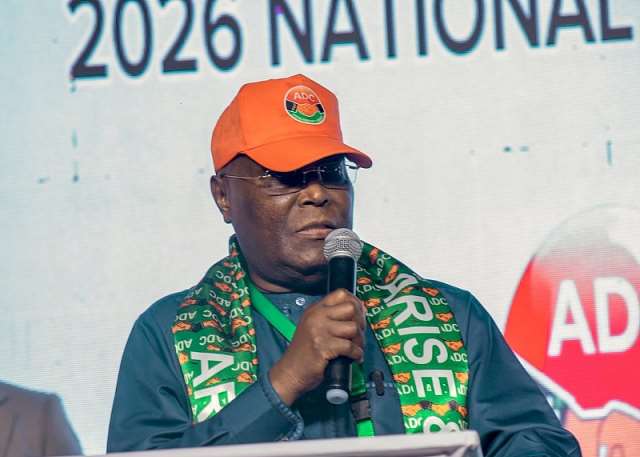
Pantami, Power and the Burden of Moral Clarity

By Abdulhamid Abdullahi Aliyu

A Hausa proverb warns that you cannot run at full speed while scratching an itch. The saying captures, with striking simplicity, the dilemma now surrounding Sheikh Isa Ali Pantami as conversations about his political ambitions gain momentum.

Public life demands clarity of role and consistency of purpose. When an individual seeks to occupy two morally and structurally conflicting spaces simultaneously, momentum is lost, and credibility is strained. This is the core tension in Pantami’s current trajectory: the attempt to remain a preacher with clerical authority while simultaneously stepping into partisan politics.

The problem is not ambition itself. It is role conflict. Clerical authority depends on moral certainty and spiritual distance from power, while politics thrives on negotiation, compromise, and moral ambiguity. Attempting to inhabit both worlds simultaneously risks weakening the integrity of each.

This tension becomes even more consequential in a plural society like Nigeria, where religion carries deep emotional authority and political power must remain anchored in constitutional legitimacy. Once religious influence is injected into partisan competition, power risks acquiring a sacred character. Political disagreement can then be reframed, subtly or overtly, as moral failure or spiritual deviation rather than a contest of ideas and interests.

Some have argued, including respected commentators like Jaafar Jaafar, that religious clerics should avoid politics altogether because political space is inherently compromised by bargaining, corruption and ethical trade-offs. Others counter with a seemingly reasonable question: if the aim is to sanitise politics, why not allow upright clerics like Pantami to participate?

That question, however, misunderstands the core concern. The issue is not whether a cleric is personally virtuous. It is about the separation of religion and the state. Democracy relies on pluralism, persuasion and accountability. When religious authority enters partisan politics, votes may be influenced not by policy debate, but by guilt, fear, or claims of divine sanction. That is a dangerous precedent in any diverse society.

The concern deepens when the individual seeking political office has, in the past, described politics itself as immoral or ungodly. Such a record invites legitimate questions of coherence. Has politics suddenly become virtuous, or has it merely become useful? Citizens are entitled to ask not out of prejudice, but out of democratic caution.

More troubling still are historical associations with ideological currents that have openly viewed democratic participation not as a means of strengthening institutions, but as a strategy to hollow them out from within — the well-known shiga daga ciki a gyara argument. In societies that have suffered from extremism and institutional fragility, such histories cannot be brushed aside or dismissed as irrelevant.

None of this is about excluding religion from public life. Faith has always shaped values, ethics and social responsibility in Nigeria. But there is a difference between moral inspiration and political authority. When religion becomes a substitute for constitutional legitimacy, the democratic project itself is weakened.

Politics, by its nature, is a flawed human enterprise. It requires compromise, negotiation and accountability to citizens, not to spiritual hierarchies. Clerical authority, on the other hand, rests on moral clarity and trust. Mixing the two without a clear break risks eroding both.

If Professor Pantami intends to pursue politics, the burden before him is not merely electoral. It is moral and institutional. He must offer clarity, openly reckon with past positions, and demonstrate consistency over time. Nigerians are not asking for perfection. They are asking for coherence.

In the end, democracy survives not on sacred claims, but on transparent choices, accountable leadership and the acceptance that political authority derives from citizens, not sanctity. That distinction must remain clear — for the sake of both faith and the republic.

Abdulhamid Abdullahi Aliyu is a journalist and syndicate writer based in Abuja.

The Evil in Peddling Pastor Ibiyeomie’s $2m Wristwatch Sans Subtext

By Ugochukwu Ugwuanyi

The agenda-setting theory of mass communication seems to have gone the way of good old traditional journalism, as its distortions and corruption are writ large in this present age.  Content creators and curators in the digital space have been busy setting the agenda without regard for the module’s original intent. In pursuit of virality, they limit shorts and reels to the salacious and outlandish, deliberately precluding elements that would contextualise and add meaning for audiences. The need to empower audiences with inspiring information is secondary. This is one evil I’ve seen under the sun!

The (mal)practice is not in keeping with the gatekeeping theory either, since they are not acting in the interest of the social fabric but opportunistically farming for views and engagements or even chasing clout. If taken to task, they will readily say, “Bad (scandalous/controversial) news always sells.” Admittedly, bloggers have been quite successful in attracting attention and sparking conversations online with abridged and abrupt content. However, the jury is still out on whether these citizen journalists’ brand of agenda setting is guided by their prejudices, the attention span of audiences, mischief, or sheer misinformation. In a milieu where users run with the caption/headline, one can imagine the impact of half-information on them, nay, what it robs them of.

A fortnight ago, the Nigerian blogosphere buzzed with reports that Pastor David Ibiyeomie bragged about being gifted a $2 million wristwatch, stressing that Nigerians on social media would faint if they saw his collection of exotic wristwatches. The sensational spin of the story on social media makes the unsuspecting assume that the man of God climbed the pulpit just to promote grifting prowess. But that couldn’t have been the preacher’s mission. What trended online was an aside or anecdote used to drive home his point. But bloggers opted to set the agenda with a clickable straw rather than the didactic core. Now that they must have got the online traction they craved, let’s bring to the surface the vital aspect of the sermon that was buried. This is because the unsung aspect of the preacher’s message can be of great benefit to whoever subscribes to it. 

After disclosing the following: “someone gave me a watch worth $2 million. I have not even worn half of my watches. The one they show on social media is just small, I have many watches. If they see all my watches, they’d just faint,” the Port Harcourt-based pastor asserted that “I’m getting watches because I’m solving problems.” This last line is the crux that would do viewers a world of good if they caught the revelation. It is a given that the one who diligently solves problems will stand before kings and shall not stand before mean men.

That was the story of Joseph. The ability to solve problems took him straight from prison to the palace. By the time he solved Pharaoh’s problem, the falsely accused felon became the prime minister of the world’s superpower at the time, despite being an immigrant. If solving problems can be this rewarding, then it shouldn’t be surprising that a problem solver like Ibiyeomie is receiving mouthwatering gifts. No one should faint upon seeing his wristwatches or come with the vanity-upon-vanity moral posturing! If you look around, you’d find that many of his peers have been stupendously rewarded by those who consult them for spiritual guidance and prayers. There are instances where people struggle to give to these men of God.

Yet, these cherished pastors are only vessels through which the actual problem solver expresses Himself. I’m talking about the Holy Spirit, who inhabits whoever believes in the resurrected Christ and confesses Jesus as their Lord and personal saviour. He is the one about whom John 16:13 says, “He will guide them into all truth, speak only what He hears from the Father, and declare things to come.” With this spiritual insight, you would be able to solve quandaries and mysteries. It is this same Spirit who enabled the mighty works of Jesus’ earthly ministry. He is all the believer needs. Nothing is too big or small for Him to provide direction.

There was a community where livestock breeding was the locals’ prime preoccupation. A stray sheep was found and taken to the king’s palace. In time, two men came forward to claim ownership of the animal. Each of them was quite assertive and unyielding in demanding that they be handed the sheep as the rightful owner. None of the palace courtiers could rightly divide the dispute. Thankfully, the king is a born-again Christian, so he opted to pray for wisdom over the situation. He gave both parties a date to hear his verdict. The night prior, the king prayed intensely, and the Lord ministered John 10:4-5 in his heart. He immediately knew that his prayer had been answered and was no longer troubled.

By the next morning, the claimant came with some members of the community. The sheep was tethered with a long rope right before everyone who gathered to witness how the contention would be resolved. The king challenged each of the contenders to do all they could to attract the sheep’s attention. The one it responds to and follows will be allowed to return home with the animal. To make the test even harder, the sheep was distracted with fodder. The first tried all the communication cues he could devise to no avail. The sheep continued feeding, barely looking up to acknowledge the stranger. When the stipulated time elapsed, the second claimant was given the floor. Soon enough, the sheep abandoned the fodder and followed him, leaving everyone convinced about the actual owner! 

That’s one way God inspires His people to solve problems. But you must know the Word. With Scripture containing solutions to every problem and need, God wells up in your heart a bespoke Word for each situation. When diligently implemented, everyone will be awed by the efficacy. As you do this for yourself, you’ll soon be able to apply the tried and tested formula to what troubles others – thereby becoming a problem solver. It takes the Word with a heart yielded to God for this to happen. Train your spiritual antenna to clearly hear God. You’ve got to do this every so often. But when you start hearing, be sure that what you hear aligns with the Word of God! 

Indeed, the sons of God are prized and given bounties because they solve problems. Romans 8:19, “For the earnest expectation of the creation eagerly waits for the revealing of the sons of God.” Although the grace is available, not many anointed ones have primed themselves to the level where they can call forth answers from Heaven. The child of God can have the unction of Moses, whom God taught His ways, so that he could manifest His acts by solving the problems of the children of Israel. 

However, the avaricious who are easily lured by lucre must be wary not to go the way of Gehazi (1 Kings 5:19-27). The Master’s charge in Matthew 10:8 is “Give as freely as you have received”. If you operate that way, God can, as in Pastor Ibiyeomi’s case, inspire you with the solution to someone’s problem and prod the same person to bless you with choicest gifts money can buy. I’m referring to cheerful givers who would insist that God sent them to be a blessing to you, even when psyched that the gifts they are bearing must be meant for God.

VIS Ugochukwu is a Sage, Storyteller and Brand Strategist who engages with readers via Twitter (now X) @sylvesugwuanyi

Ozoro Festival: Female Students Flee Delta University Amid Fear of Further Attacks


By Sabiu Abdullahi

Ozoro, headquarters of Isoko North Local Government Area in Delta State, is gripped by panic as female students of Delta State University reportedly leave the community over safety concerns. The exodus follows violent incidents during the controversial ‘Alue-Do’ festival, which have sparked nationwide outrage.

Videos circulating on social media showed young women being chased, stripped, and assaulted by groups of youths, prompting fear among residents and students.

Sources say that many female students, traumatized by the attacks and uncertain about their safety, have begun fleeing the area.

A student leader, speaking on condition of anonymity, described the atmosphere as tense. He told The PUNCH:
“Most of the female students in the community are scared, especially when they were told that the festival is meant to last for seven days. Many left early this morning, and others were still seen leaving up to this evening.”

He added that anxiety remains high among residents and students due to uncertainty over the festival’s duration and the potential for more violence.

The source also alleged that some university students were involved in the assaults:
“It is not only the indigenes who participated in the molestation. Some students also took part in it, and that is the most painful part. It speaks to the level of decadence in our society, the education system and human behaviour as a whole.”

He called for justice, stressing:
“Sexual assault is a serious offence, and it desecrates the dignity of our women. We will not condone that.”

In response, the Delta State Police Command intensified its operations, arresting 11 additional suspects, bringing the total in custody to 15. Earlier arrests included a community leader, Omorede Sunday, and four others.

Police Public Relations Officer Bright Edafe confirmed the arrests and noted that intelligence work and analysis of viral videos helped identify suspects, including Samson Atukpodo, Steven Ovie, Ugbevo Samson, Afoke Akporobaro, and Evidence Oguname. He said preliminary findings suggest that criminal elements exploited the festival to commit violence.

“The Commissioner of Police condemns these acts in totality and reassures the public that the command remains resolute in its determination to ensure that all those involved are identified, arrested, and prosecuted in accordance with the law,” Edafe said.

The incident has drawn condemnation nationwide. The Nigerian Bar Association described the attacks as “a national disgrace.” In a joint statement signed by President Afam Osigwe and Chairperson of the NBA Women Forum Huwaila Muhammad, the association said:
“A society reveals its true character in how it treats its women. Where women are chased, stripped, violated and publicly humiliated under the guise of celebration, what is on display is not culture but barbarity.”

The NBA urged the Delta State Government to ensure all perpetrators face justice, emphasizing that no cultural practice can justify violence against women.

Meanwhile, the Nigeria Federation of Business and Professional Women petitioned Governor Sheriff Oborevwori, demanding the suspension of traditional rulers in Ozoro for allegedly failing to prevent the violence. The group also called for an independent inquiry to investigate the incident and determine the role of community leaders.

As fear spreads across the university community, many students remain hesitant to return. Calls are growing for stronger security measures and accountability for those responsible.

One Year Without Pay: Governor AKY Neglects Kano Security Corps

By Sabiu Abdullahi

Political analyst and lecturer at Bayero University Kano, Saidu Ahmad Dukawa, has expressed serious concern over the welfare of the recently commissioned Neighborhood Security Corps in Kano State.

In a Facebook post, the don laments that the recruits have yet to receive their promised monthly allowances, despite being screened for the job nearly a year ago.

Dukawa wrote: “I just learnt that the recently commissioned Neighborhood Security Corps of Kano State are yet to receive the monthly stipend promised to them. When considered from the period of screening them for the job, one is talking of a duration of one year!”

He warned that such delays could undermine the effectiveness of the security initiative. He added that it lends credence to arguments against the creation of State Police. Dukawa urged those close to Governor Abba Kabir to inform him that the situation requires urgent and compassionate attention.

The warning comes amid growing security concerns in Kano State. In a recent development, gunmen reportedly abducted the Secretary of Kibiya Local Government Area during a late-night attack at his residence in Dinya town.

According to Hon. Sabo Yusuf Usman, Chairman of the Councillors in Kibiya, the attackers woke the secretary’s son under the pretext of illness, forcing him to alert his father, before seizing both father and son.

The boy was later released, but the secretary was taken away before security operatives could respond.

While Kibiya has not historically been linked to significant security threats, neighboring areas such as Tsanyawa and Shanono, which share a border with Katsina State, have recently experienced a spate of bandit attacks.

The abduction manifests the fragile security situation and raises questions about the readiness and motivation of local security personnel.

Experts say that ensuring timely payment of allowances and proper welfare for Neighborhood Security Corps staff is crucial for maintaining their effectiveness.

As debates around state-level policing powers continue nationwide, the Kano situation exemplifies the challenges of implementing local security structures without adequate funding and support, with the recent Kibiya incident serving as a stark reminder of the stakes involved.

Midnight Attack: How Gunmen Kidnap Kano LG Secretary

By Uzair Adam

Gunmen have abducted the Secretary of Kibiya Local Government Area in Kano State after storming his residence in a late-night attack.

Chairman of the Councillors in the area, Hon. Sabo Yusuf Usman, confirmed the incident to the BBC, saying it occurred in the early hours of Friday in Dinya town.

According to him, the attackers struck at about 1:00 a.m. while the secretary was asleep.

He explained that the gunmen first woke the secretary’s son, who was sleeping in the outer compound, and forced him to knock on the door under the pretense of being unwell.

He said the boy told his father he had a stomach ache when asked what was wrong, prompting the secretary to open the door.

The gunmen then immediately carted away both the father and the son.

Usman added that the attackers later released the son and fled with the secretary before security operatives arrived at the scene.

Kibiya Local Government Area has not been widely associated with security threats in the past.

However, areas such as Tsanyawa and Shanono, which share a border with Katsina State, have experienced a series of bandit attacks in recent times.

Christiana and Shamwil: The Love that Death Could not Kill

By Shamwil (Justice)

It all began in Sabon Gari Market, Kano, inside our small but busy pharmaceutical shop, Kuka Medicals. That afternoon was bright and dusty, filled with the usual noise of traders calling out prices and customers bargaining for goods. 

I was behind the counter, arranging boxes of medicines, when she walked in, Christiana. I never imagined that moment would change the rest of my life. She was dressed simply, yet there was something about her that captured attention instantly. Her presence was calm, graceful, and confident. 

When our manager called me to write her sales invoice, I didn’t think much of it. But as I wrote her name on the receipt and looked up, our eyes met for the first time. A strange spark passed between us, silent yet powerful, one that words could never describe.

“What’s your name?” she asked softly. “Shamwil”, I answered. Her voice was clear and warm, the kind that stays in your mind long after you’ve heard it. I told her, and she repeated it slowly, as if she wanted to remember it forever. Then I asked for hers, and she said, “Christiana.” The name itself felt like poetry when she said it.

We spoke briefly about medicines, antibiotics, syrups, and how counterfeit drugs were becoming a problem in the market. I was amazed by how much she knew. She talked with the precision of a trained pharmacist, mentioning drug names, compositions, and even the companies that produced them. Our manager watched her with admiration, nodding in respect. That day, I realised she was not only beautiful but also incredibly brilliant.

When she finished shopping, she smiled, waved at me, and left. That simple wave stayed with me for days. Her scent lingered in the air, soft, pure, and unforgettable. That night, I found myself thinking about her voice and the calm expression in her eyes. I didn’t realise then, but a new chapter of my life had just begun.

Weeks passed before I heard from her again. One evening, my phone rang with an unknown number. I picked it up, and there it was, that same gentle voice. “You didn’t expect me to call, did you?” she said, laughing softly. That first call lasted for hours. From that day on, Christiana became a part of my daily life. We talked every day, laughed together, and shared stories that slowly tied our hearts closer. What began as a friendship soon turned into real, deep, and pure love.

Christiana was unlike anyone I had ever known. She had a beauty that didn’t depend on makeup and a confidence that didn’t need pride. Her skin was smooth and glowing, her height perfect, her movements graceful like flowing water. Her voice was calm and musical, and her pointed nose gave her face an angelic glow. Everything about her was elegant and natural. She was the kind of woman who didn’t need to try to be special; she simply was.

Our love grew stronger with each passing day. We called each other every morning and night, exchanged sweet messages, and dreamed about the future. Sometimes she visited me at the shop, bringing food or simply sitting beside me while we talked about life. Time always flew whenever she was around. She made everything around me feel peaceful and alive.

But love, as beautiful as it was, came with its battles. When her parents found out about us, their reaction was harsh and painful. To them, I was not good enough. I was a poor Hausa Muslim boy, and she was their only daughter, an Igbo Christian from a wealthy family. They couldn’t accept our love. They called her names, scolded her, and forbade her from seeing me again. Yet Christiana refused to give up. She told them love has no tribe, no religion, and no boundary. Her father stopped speaking to her for months, but she remained strong, fearless, and loyal.

Christiana’s love was the purest I’d ever known. She cared for me when I was sick, worried whenever I didn’t answer her calls, and even risked sneaking out at night just to see me for a few minutes. We would stroll quietly under the streetlights of Sabon Gari, talking about our dreams, the home we’d build, the children we’d raise, and the life we’d live together. I believed we had forever. I believed nothing could come between us. But life has a way of breaking even the strongest hearts. 

I never thought Christiana could die for my love. The news came like thunder in a clear sky. Death took her suddenly, without warning, without mercy. The moment I heard it, I felt something inside me collapse. The world went silent. My hands went cold. I couldn’t breathe. The love of my life was gone, just like that.

Even now, I can still hear her laughter in my mind, smell her perfume in the air, and see her smile in my dreams. Sometimes, I wake up in the middle of the night thinking she’s still alive, that she’ll call, that she’ll visit, that I’ll see her walk through the shop door again. But every morning reminds me that she is gone, forever.

Christiana didn’t just leave me; she took a part of me with her. She left behind love, memories, and silence, the kind of silence that breaks a man from the inside. Love can be the sweetest thing on earth, but it can also be the most painful. Christiana was both my blessing and my heartbreak. She was the light that entered my life, and the darkness that refused to leave when she passed away! 

I will never stop speaking and penning about you, Christiana. History will be so kind to you!  

Shamwil (Justice) wrote via ibrahimshamawilu@gmail.com.