Month: May 2026

Bandits Abduct 42 Schoolchildren in Borno


By Uzair Adam

Nigeria’s worsening security situation took a troubling turn over the weekend following the reported abduction of 42 schoolchildren in Borno State, even as the military announced the killing of a top Islamic State commander during a joint operation with United States forces.

The incident has heightened concerns across the country, with experts warning of possible retaliatory attacks by extremist groups and growing anxiety over the persistence of violence.

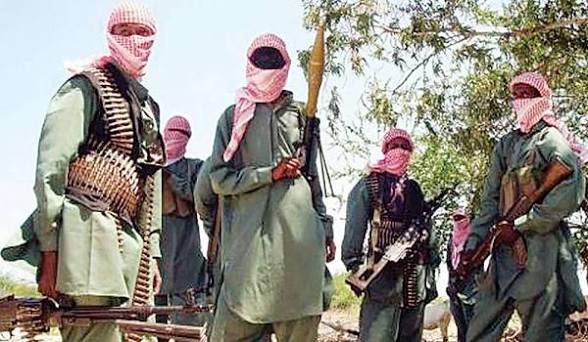
The abduction occurred in Askira-Uba Local Government Area, where suspected Boko Haram and ISWAP fighters stormed a primary school and a junior secondary school during early morning lessons.

Ali Ndume, who represents Borno South, confirmed that the attackers took dozens of pupils and students, alongside other children from nearby homes.

According to him, 28 pupils were taken from the primary school, four students from the secondary section, and an additional 10 children from surrounding residences, bringing the total number of abducted victims to 42.

He described the attack as deeply traumatic for the community and urged security agencies to intensify efforts to rescue the victims.

The latest abduction has revived painful memories of past mass kidnappings in the North-East, including the 2014 Chibok schoolgirls incident, and underscored the continued vulnerability of schools in remote areas.

While residents grappled with the attack, the military disclosed details of a separate counter-terrorism operation in the Lake Chad region.

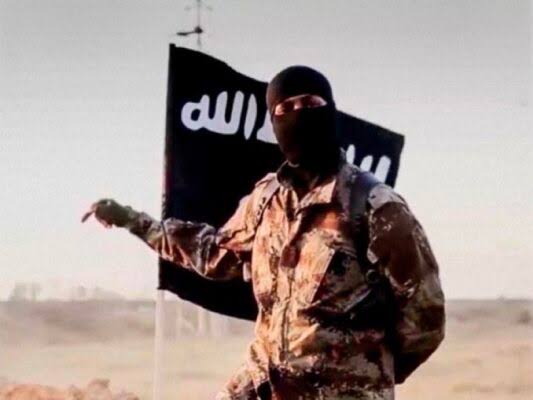
The operation, carried out overnight, reportedly led to the killing of Abu-Bilal al-Minuki, described by US authorities as a senior ISIS figure and a key ISWAP commander.

Military sources said the mission followed months of intelligence gathering involving Nigerian forces and the United States Africa Command.

Air and ground forces were deployed simultaneously, targeting insurgent enclaves and blocking escape routes. Officials described the operation as highly coordinated and executed without casualties on the part of allied forces.

The development drew international attention, with former US President Donald Trump praising the operation and hinting at the possibility of further strikes against terrorist targets in Nigeria.

President Bola Tinubu also welcomed the development, describing it as a significant step in dismantling terrorist networks operating in the region.

However, controversy emerged over claims surrounding the killing of al-Minuki, with some reports suggesting he had previously been eliminated in an earlier operation.

Human rights lawyer Femi Falana urged the government to rely on verified military intelligence rather than external statements.

Security analysts cautioned against celebrating too soon, noting that the death of a high-ranking insurgent leader does not automatically translate into improved security.

They warned that such developments are often followed by retaliatory attacks, especially in vulnerable rural communities.

Meanwhile, former President Goodluck Jonathan expressed concern over what he described as a growing desensitisation to violence among Nigerians.

Speaking in Abuja, he lamented that killings and destruction no longer provoke the level of national outrage they once did, calling for moral renewal and responsible leadership.

Experts and civil society groups also stressed that military action alone cannot resolve the crisis.

They pointed to underlying issues such as poverty, unemployment, weak governance and lack of education as key drivers of extremism, urging the government to adopt a more comprehensive approach.

As insecurity persists across multiple regions, religious groups have also responded.

The Pentecostal Fellowship of Nigeria announced a nationwide three-day fasting and prayer programme, citing concerns over rising violence and economic hardship.

The latest developments highlight the complexity of Nigeria’s security challenges, as the country continues to battle insurgency, kidnapping and other forms of organised violence, with citizens increasingly uncertain about the future.
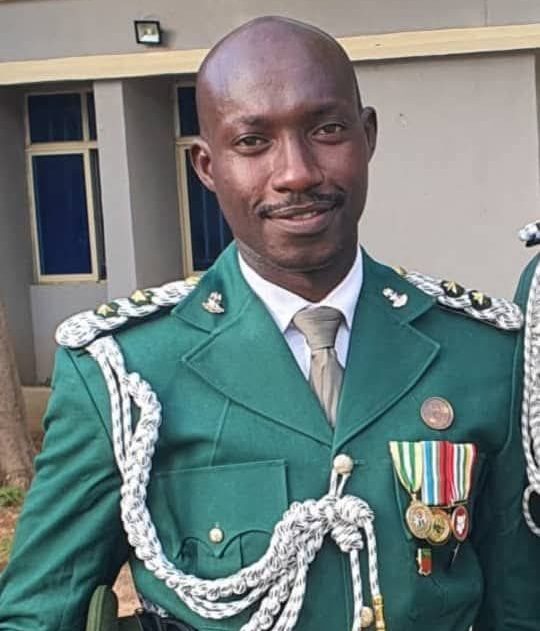

This is Captain Hamza Ibrahim from Kano State

By Misbahu El-Hamza

A few weeks ago, the HQ Nigerian Army announced the recovery of the remains of two officers, Master Warrant Officer Linus Musa Audu and Private Gloria Mathew, who were “brutally abducted and murdered by IPOB/ESN terrorists in May 2022 while travelling for their traditional wedding.”

I felt some relief for their families. At least they can now properly bury their loved ones and finally let go of the painful uncertainty of whether they were still alive.

But the report also reopened my grief for our lost friend, Hamza Ibrahim.

Hamza was my university coursemate and a very close friend. He and I often confided in each other. After university, he joined the Nigerian Army and later rose to the rank of Lieutenant. He was serving with a unit in Ogoja, Cross River State.

On July 2, 2023, Hamza disappeared while travelling from Abia to Anambra State.

Since then, we have not heard from him. Not by the Nigerian Army. Not by his grieving wife. Not by his father, who died last year, carrying the pain of not knowing what happened to his son. And not by any of us, his friends.

A few months after Hamza went missing, I led a group of our classmates to visit his wife at her family home in Kano. At the time, she was nursing their second child, just a few months old.

Her last memory of Hamza was a phone call on the day he disappeared.

He told her he suspected he was being followed. During the call, he asked whether their daughters were awake and told her to pray for him. She said he sounded unusually tense. That was the last time she heard his voice.

Then, on March 22, 2025, she was invited to his unit in Cross River State and handed a condolence letter and a death certificate.

“That was the worst day of my life,” she recalled.

Yet she still does not believe her husband is dead.

“I have spoken to many of his friends in the Army, and no one can clearly say what happened to Hamza,” she told me.

I once asked whether she or anyone around the family suspected IPOB/ESN involvement. She replied that if such groups had killed him, at least there would have been a body.

She referenced the killing of their family doctor, an Igbo military officer whose body, according to her, was left behind after IPOB/ESN shot him dead.

But in Hamza’s case, she said there was no trace. No confirmed scene. Nobody. Nothing.

To this day, she said many of his military friends still describe his disappearance as a mystery.

It has now been more than two years since we lost Captain Hamza Ibrahim. Ten days after he disappeared, he was promoted in absentia.

And although his wife officially received his death certificate nearly 20 months after that final phone call, she still hopes that one day she and her two daughters will wake up and see their husband and father return home. 

“Allah Ya bayyana mana gaskiya, Ya tona asirin duk wanda yake da hannu a cikin ɓatan shi,” (May Allah reveal the truth and expose whoever had a hand in his disappearance), she said in a broken voice as we were about to leave their house.

For me, it is painful to finally write about Hamza.

One thing I will always remember about him was his compassion toward me. Whenever I ran out of food at the university, Hamza would take me to his room and cook for us. I still remember when he handed me a crisp ₦500 note to buy food and kerosene. That kindness is something I can never forget.

I wanted to write about him shortly after he disappeared, but his wife asked me not to because she had been instructed not to speak to the media, and I respected that. But after reading the Nigerian Army’s report on the recovery of two missing officers, I could no longer keep this painful story to myself.

NPF Mourns 17 Officers Killed in Yobe Terror Attack

By Uzair Adam

The Nigeria Police Force (NPF) has announced the death of 17 of its personnel following a terrorist attack on the Nigerian Army Special Forces School in Buni Yadi, Gujba Local Government Area of Yobe State.

The attack, which occurred in the early hours of May 8, 2026, claimed the lives of the officers who were undergoing specialised operational training at the facility.

The statement was signed by DCP Anthony Okon Placid, the Force Public Relations Officer at the Force Headquarters in Abuja, who conveyed the official position of the police on the tragic incident.

According to the statement, the terrorists launched a coordinated assault on the training institution from multiple directions at about 1:15 a.m., overwhelming the facility.

Several personnel of the Nigerian Army were also reported killed while bravely repelling the attack.

Reacting to the incident, the Inspector-General of Police, Olatunji Rilwan Disu, described the fallen officers as courageous and dedicated, noting that they demonstrated exceptional patriotism through their participation in advanced counter-terrorism and tactical training programmes.

He said the Force deeply mourns their loss and stands in solidarity with their families.

“Their sacrifices will never be forgotten,” the IGP said, while extending heartfelt condolences to the bereaved families on behalf of the entire police force.

In a show of support, the Commissioner of Police in Yobe State, Usman Kanfani Jibrin, visited the training school on behalf of the IGP.

During the visit, he commiserated with the Commandant of the institution, A. C. Enuagu, as well as officers of the Nigerian Army and surviving police personnel.

Jibrin praised the resilience of the surviving officers and urged them to remain resolute in completing their training programme in honour of their fallen colleagues, noting that their commitment would serve as a tribute to those who lost their lives.

The police further assured Nigerians that it is working closely with the Armed Forces and other security agencies to bring those responsible for the attack to justice.

The Force reiterated its commitment to national security, pledging that the courage and service of the fallen officers would continue to be honoured.

Five Confirmed Dead As Abuja Construction Site Collapse


By Uzair Adam

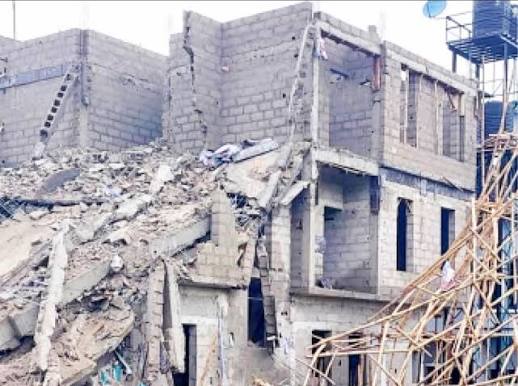
At least five people have been confirmed dead and 11 others are receiving treatment after a three-storey building under construction collapsed in the Gudu area of Abuja in the early hours of Saturday.

Emergency officials said a total of 16 persons were rescued from the rubble, while search and rescue operations were still ongoing as responders continued to comb through the debris for possible survivors.

The structure, located behind Gudu Market near Gaduwa Estate in Durumi 3, reportedly gave way around 3:30am while workers, mostly labourers, were still on site.

The sudden collapse left several people trapped beneath the wreckage.

Victims who survived the incident were rushed to different medical facilities, including the Federal Medical Centre, Asokoro District Hospital, and Maitama District Hospital, where they are currently receiving treatment. Authorities confirmed that five others were brought out dead.

Multiple emergency response agencies were deployed to the scene, including the FCT Emergency Management Department (FEMD), the National Emergency Management Agency (NEMA), the Federal and FCT Fire Services, as well as the FCT Police Command.

They were supported by medical personnel and volunteers, while anxious residents gathered near the cordoned-off area.

The FCT Mandate Secretary for Health Services and Environment, Dr. Adedolapo Fasawe, who visited the site, said the FCT Minister, Nyesom Wike, had directed that all injured persons be treated free of charge.

Confirming the development, the Head of Public Affairs at FEMD, Nkechi Isa, said rescue efforts were still underway.

“Search and rescue operations are ongoing as teams work tirelessly to ensure that anyone still trapped is reached in time,” she said.

Authorities have not yet disclosed the cause of the collapse as investigations are expected to commence after the rescue operation is concluded.

Presidency Says Earlier Report On ISIS Commander’s Death Was Mistaken Identity

By Sabiu Abdullahi

The presidency has said reports circulated in 2024 about the death of Abu-Bilal Al-Manuki, the second-in-command of ISIS, were based on mistaken identity.

The clarification followed Saturday’s announcement by United States President Donald Trump that Al-Manuki had been killed during a joint military operation involving Nigerian and American troops. President Bola Tinubu also confirmed the operation.

After the announcement, several online users revisited claims that the insurgent leader had already been declared dead by the Nigerian military in 2024.

In response, Bayo Onanuga, special adviser to the president on information and strategy, said security agencies explained that the earlier report connected to a military operation in Kaduna State was inaccurate.

According to Onanuga, Al-Manuki, who is also known as Abu-Mainok or Abu-Bilal Al-Minuki, had appeared on a list of suspected ISWAP commanders reportedly killed during military operations around the Birnin Gwari forest area.

“It is acknowledged within military and intelligence circles that Al-Manuki’s name had appeared among lists of suspected ISWAP/Boko Haram commanders reportedly killed in 2024 during operations around the Birnin Gwari forest axis in Kaduna State,” the statement reads.

“However, security officials now clarify that the earlier listing was a case of mistaken identity or misattribution in the fog of sustained counterinsurgency operations.”

The presidential aide said intelligence findings later showed that Birnin Gwari was not part of Al-Manuki’s area of operation. He said that discovery raised questions about the earlier claim.

Onanuga also stated that the latest mission against the ISIS commander came after several months of intelligence work carried out by Nigerian and American operatives. He said the operation involved surveillance, phone interceptions, and human intelligence tracking.

He added that intelligence agencies began monitoring Al-Manuki in December 2025 and tracked his movements across different locations in northern Nigeria, including Abuja and Maiduguri.

“Security officials said efforts were initially aimed at capturing him alive before the final operation was carried out,” he said.

“Unlike the previous report, security authorities insist that the latest strike was executed with a significantly higher degree of precision, target validation, and multi-source intelligence confirmation.”

Onanuga said security agencies carried out several layers of verification before approving the final operation.

“In their assessment, ‘this time, there is no ambiguity,’” he said.

The presidential spokesperson also defended public communication about counterterrorism operations. He noted that similar mistaken reports had occurred in international campaigns against terrorism, including cases involving former Boko Haram leader Abubakar Shekau and ex-ISIS leader Abu Bakr al-Baghdadi.

“Such cases highlight not failure but rather the evolving, often imperfect nature of intelligence gathering in asymmetric warfare,” he added.

He warned that dismissing joint counterterrorism efforts involving Nigerian authorities and foreign partners could affect public confidence and military morale.

“While public scrutiny remains an essential part of democratic accountability, security experts caution that premature dismissal of military claims can inadvertently undermine operational morale and strategic messaging,” the presidential spokesperson said.

“For now, military authorities remain firm in their position: The latest operation that targeted Abu-Bilal Al-Manuki represents a validated, intelligence-driven success against a senior figure of the Islamic State network. And in their words, this time, they are “100 per cent certain.”

Nigerians Among West Africans Set For Deportation From US To Sierra Leone

By Sabiu Abdullahi

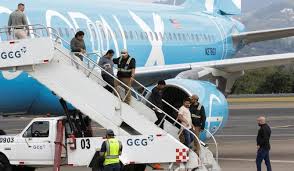
Sierra Leone has agreed to receive hundreds of West African migrants deported from the United States as President Donald Trump’s administration steps up actions against undocumented migrants.

According to Reuters, the first batch of deportees is expected to arrive in Sierra Leone on May 20. The group will reportedly include 25 citizens from Nigeria, Senegal, Ghana and Guinea.

Sierra Leone’s Minister of Foreign Affairs, Timothy Kabba, confirmed the arrangement in an interview with Reuters.

“Sierra Leone signed a Third Country National Agreement with the U.S. to accept 300 ECOWAS citizens from the U.S. per year with a ⁠maximum of 25 a month,” Kabba said.

However, the minister did not disclose what Sierra Leone would gain from the agreement. There is also uncertainty over whether the deportees will be permitted to remain in the country after arrival.

The United States reached a similar agreement with Ghana last year. Under that arrangement, only West African nationals could be transferred to the country.

Some deportees sent to Ghana, including four Nigerians, later filed complaints. They accused authorities of unlawful detention and human rights abuses.

In recent years, the US has deported third-country migrants to several African nations, including the Democratic Republic of Congo, Cameroon, Equatorial Guinea and Eswatini. The policy has attracted criticism from rights groups and legal experts, who questioned the legality of the transfers and raised concerns about the treatment of deportees sent to countries where they are not citizens.

Nigeria was previously approached over the issue. Yusuf Tuggar, who was then Nigeria’s minister of foreign affairs, said the federal government would not accept third-country deportees because of security and economic concerns.

APC Aspirant Mahmud Buba Withdraws From House Of Reps Race Amid Age Controversy


By Sabiu Abdullahi

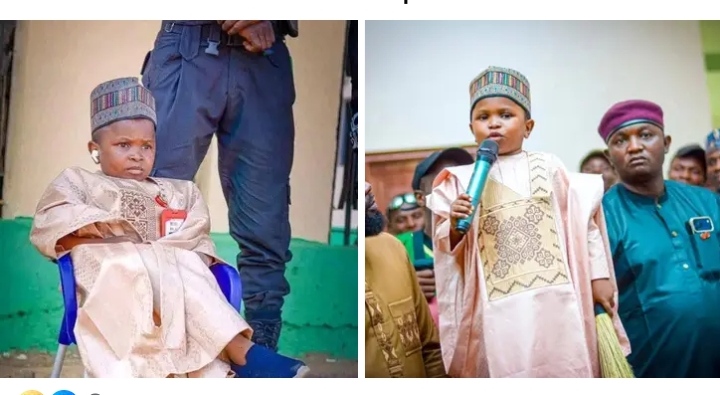
Mahmud Sadis Buba, widely known as Al-Ajabin Zazzau, has stepped down from the contest to represent Sabon Gari Federal Constituency in the House of Representatives under the platform of the All Progressives Congress (APC).

His withdrawal followed weeks of controversy over allegations of age falsification and inconsistencies in documents linked to his candidacy.

Buba disclosed his decision in a letter addressed to the Kaduna State APC chairman. He also shared the letter on his verified Facebook page on Saturday.

“Please accept this letter as formal notification that I am withdrawing from the race for Sabon Gari Federal Constituency, House of Representatives, effective immediately,” he wrote.

He explained that the decision came after consultations with party leaders, family members and political associates. According to him, ongoing reconciliation efforts within the APC also influenced his action.

“This was not an easy decision. But it was hastened by the reconciliation efforts initiated by stakeholders and leaders of our party. Consequently, after extensive consultations with my family, political associates, and stakeholders within our great party, I have decided that this decision is in the best interest of the All Progressives Congress (APC),” he added.

Buba said party unity remained important ahead of the general elections. He noted that supporting a consensus candidate would strengthen the APC’s chances in the constituency.

“I believe that uniting behind a single candidate is paramount to our victory in the general election and for the continued progress of our constituency and state,” he stated.

The former aspirant also thanked Kaduna State Governor Uba Sani and the APC leadership for giving him the opportunity to participate in the party’s primaries. He described the experience as valuable and rewarding.

He maintained that his withdrawal should not be interpreted as a sign of weakness. He said the move reflected his commitment to unity within the party. Buba also pledged support for whoever eventually emerges as the APC candidate for the constituency.

He further appealed to his supporters to remain peaceful and support the party’s flagbearer.

Before his withdrawal, Buba had faced criticism over claims that he altered his age to satisfy the constitutional requirement for election into the House of Representatives.

The issue gained attention after his appearance before the APC screening committee in Abuja. Several social media users circulated documents that questioned his age and identity details.

Buba had earlier stated in interviews that he was born on August 2, 1995, and was qualified to contest the election. However, critics continued to challenge the claim, alleging discrepancies in some of his records.

Although he did not address the allegations directly in his withdrawal letter, political observers linked his exit to the controversy that surrounded his ambition.

As of the time of filing this report, APC stakeholders in Kaduna State had not issued an official statement on whether the withdrawal was connected to the allegations or part of wider reconciliation efforts within the party.

Tinubu Returns to Lagos After Three-Nation Diplomatic Tour

By Abdullahi Mukhtar Algasgaini

President Bola Ahmed Tinubu arrived in Lagos on Friday evening, wrapping up a three-nation trip that took him to France, Kenya, and Rwanda.

His aircraft landed at the Presidential Wing of Murtala Muhammed International Airport, Ikeja, at approximately 7:12 pm. He was received by Lagos State Governor Babajide Sanwo-Olu, Deputy Governor Femi Hamzat, Chief of Staff to the President Femi Gbajabiamila, and Lagos House of Assembly Speaker Mudashiru Obasa, among other officials.

During the visit to France, President Tinubu met with global investors, emphasizing transparency and fiscal discipline while defending his administration’s swift economic reforms.

In Nairobi, Kenya, he attended the Africa Forward Summit, co-hosted by French President Emmanuel Macron and Kenyan President William Ruto. There, he called for reform of the global financial system, stronger economic integration for Africa, and highlighted Nigeria’s potential in the blue economy. He also pledged to share Nigeria’s maritime intelligence infrastructure with willing Gulf of Guinea states and held bilateral talks with Madagascan President Michael Randrianirina.

In Kigali, Rwanda, the President joined the Africa CEO Forum alongside other African leaders and global executives to discuss accelerating economic transformation through regional integration and cross-border investment. He met with Rwandan President Paul Kagame and held talks with delegations from the International Finance Corporation (IFC), APM Terminals, and Winme Group, reporting favorable outcomes.

President Tinubu is expected to remain in Lagos to participate in the All Progressives Congress primary elections scheduled for Saturday. In a prior statement to party faithful, he urged participants to “keep the peace and be ready to play as sportsmen and women in the overall interest of the party and our country.”

‘Lack Of Cleaner Energy Kills 100,000 Nigerians Every Year’

By Sabiu Abdullahi

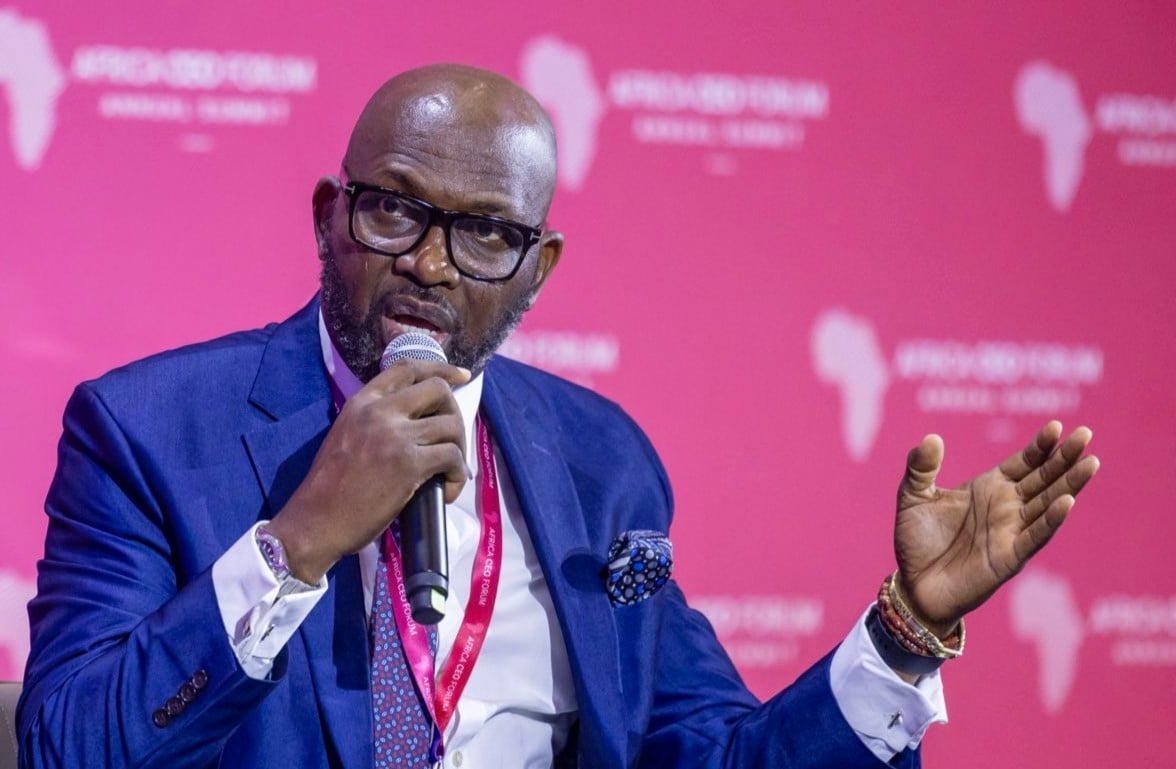
Tony Attah, the Chief Executive Officer and Managing Director of Renaissance Africa Energy Company, has said about 100,000 Nigerians die every year because they do not have access to cleaner energy sources.

Attah spoke on Thursday at the Africa CEO Forum held in Kigali, Rwanda. He said the situation extends across the continent, where more than 400,000 deaths are linked to poor access to cleaner energy.

He stressed the importance of natural gas to Africa’s electricity sector and described cleaner energy as critical to improving living conditions across the continent.

“When you look in Nigeria, 100,000 people die every year from lack of access to cleaner energy. Just look at that poor woman who is trying to put food on the table, and she has to cook through the smoke, using poor quality fuels, walking in and out of that every day,” he said.

“Think about it. One child on the left, one on her right, one on her back. They go in day in (and) day out. That is where your 100,000 people come from. The overall number for Africa is more than 400,000.”

Attah said Africa should not accept such statistics despite its huge gas reserves.

“That’s not the narrative that you should feel proud of as an African, that’s not the narrative that you should feel proud of as somebody in the industry that says we have 620 tcf of gas that can provide life,” he said.

“Essentially, gas is life, and that’s how Africa has to see gas. And if we as producers see it that way, we now need to get that same logic to the minds of the leadership, because integration is what has to happen in Nigeria.”

The energy executive also urged African countries to invest in their own natural resources instead of relying heavily on foreign financiers.

According to him, Nigeria’s electricity supply remains inadequate for its population of more than 200 million people.

“If you look at Nigeria, we have over 200 million people. The total spinning reserves of electricity is under 20 gigawatt. And what is available for the population is about five. So 5,000 megawatt for 200 million people,” he said.

“Of course, there are millions of generators all over the place. But no economy can take off on the back of diesel generators. In the same vein, no economy should expect to take off on the balance sheet of others.”

Attah argued that Africa must reclaim financial resources tied up abroad if the continent hopes to fund its own development.

“So those $4-$5 trillion that Amaodu referenced, that is sitting elsewhere but belongs to Africa, has to come back, and that is how Africa will start to take centre stage in financing itself,” he said.

“You can’t keep expecting people to want to finance you and then you want to lead them or you want to stand up to them — you must be subservient if someone is financing you. As they say, who pays the piper dictates the tune.”

He further called for a shift from exporting raw gas to using the resource to create economic value within Africa.

Also speaking at the forum, Chairman of McKinsey Africa, Acha Leke, said Africa possesses about 10 per cent of the world’s proven gas reserves and could sustain production at current levels for another 70 years.

Despite this, he noted that only three per cent of gas produced on the continent is traded within Africa.

Leke said 34 per cent of African gas is exported outside the continent, while most of the gas consumed within Africa is concentrated in Algeria, Nigeria, Egypt and Libya.

According to him, the continent’s gas infrastructure was designed mainly for exports rather than for regional distribution and trade.

Court Jails Nursing Mother For 20 Years Over Possession Of AK-47 Ammunition

By Sabiu Abdullahi

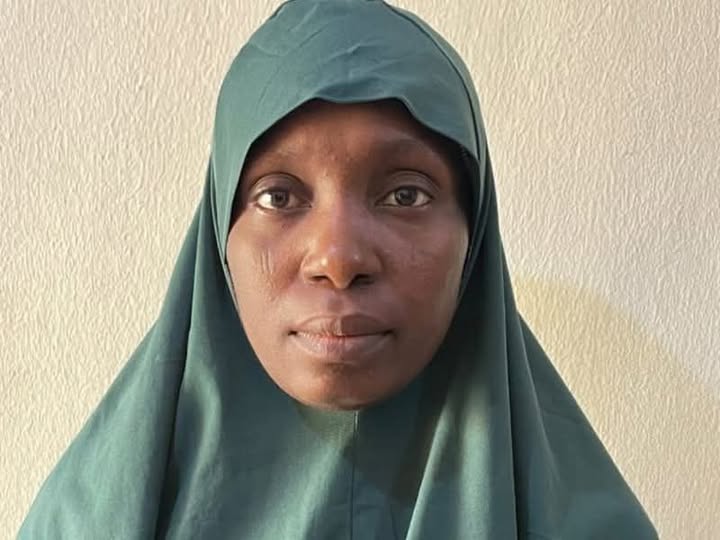
A Federal High Court in Abuja has sentenced a nursing mother, Halima Haliru Umar, to 20 years in prison after she pleaded guilty to charges linked to terrorism and unlawful possession of ammunition.

Halima was arraigned by the Department of State Services (DSS) on a four-count charge. The court convicted her on two of the charges after she admitted guilt during proceedings.

Justice Hauwa Yilwa, who delivered the judgement on Friday, said the court was satisfied with the prosecution’s evidence and the defendant’s admission.

“The defendant, having admitted the facts of the offence as presented by the prosecution, the court is satisfied,” the judge said.

“She is accordingly convicted on counts three and four.”

The court handed Halima a 20-year jail term on count three and another one-year sentence on count four.

The judge fixed July 9 for continuation of trial on the remaining two charges, which the defendant denied.

Earlier, defence counsel Hamza Dantani appealed to the court for leniency. He described the convict as a first-time offender who had shown remorse.

Dantani also informed the court that Halima is a nursing mother and that her one-year-old child was arrested with her.

Counsel to the DSS, Caliatus Eze, told the court that the agency found no previous criminal record against the defendant.

Court documents identified Halima as a resident of Unguwan Boka in Faskari Local Government Area of Katsina State. She was accused of attempting to aid terrorism by transporting 302 rounds of AK-47 ammunition between Barkin Ladi and Jos North local government areas of Plateau State.

While presenting evidence before the court, DSS operative Fahad Tahir explained that Halima was arrested in Plateau State on July 7, 2025, before she was moved to the DSS headquarters in Abuja for further investigation on August 11, 2025.

According to Tahir, investigators recovered ammunition, statements and other exhibits from the suspect.

“We received the defendant with the following items: 302 live rounds of ammunition; her voluntary confessional statement, written in Hausa and English; the statement of the arresting officer; the compact disc containing the audio-visual recording of her interview session, investigation report from the Plateau state command and the sum of N57,100,” Tahir told the court while giving evidence.

“After receiving the defendant and the items mentioned, we proceeded to conduct further investigation into the case by examining the items earlier mentioned and also interviewed the defendant, which was audio/visually recorded and in the presence of an official of the Legal Aid Council of Nigeria.”

The DSS operative further told the court that the suspect confessed that a man identified as Sani directed her movements before the arrest.

“In the course of the interview, she narrated how, on the 6th of July, 2025, one Sani instructed her to go to Zaria in Kaduna state to help him collect a message from someone,” he said.

“She said Sani gave her the sum of N50,000 for her travel expenses.”

Tahir said the defendant later travelled to Jos after receiving further instructions.

“She stated that, upon her arrival in Zaria, Sani further instructed her to proceed to Jos in Plateau state,” he added.

“On getting to Jos, Sani directed her to one Alhaji, who later handed over a waste bag containing 302 live ammunitions.”

According to him, security operatives arrested the suspect while she was returning with the ammunition.

“She stated that on her way back to Jos, she was arrested while being in possession of the 302 rounds of live ammunition,” Tahir said.

He also informed the court that the defendant gave her statement in Hausa because she could not speak English fluently.

“She volunteered her statement in the Hausa language, and it was interpreted by my colleague into the English language since she is illiterate in the English language,” he said.

“At the conclusion of our investigation, we wrote our investigation report and submitted it to the director.”