
By Misbahu El-Hamza
A few weeks ago, the HQ Nigerian Army announced the recovery of the remains of two officers, Master Warrant Officer Linus Musa Audu and Private Gloria Mathew, who were “brutally abducted and murdered by IPOB/ESN terrorists in May 2022 while travelling for their traditional wedding.”
I felt some relief for their families. At least they can now properly bury their loved ones and finally let go of the painful uncertainty of whether they were still alive.
But the report also reopened my grief for our lost friend, Hamza Ibrahim.
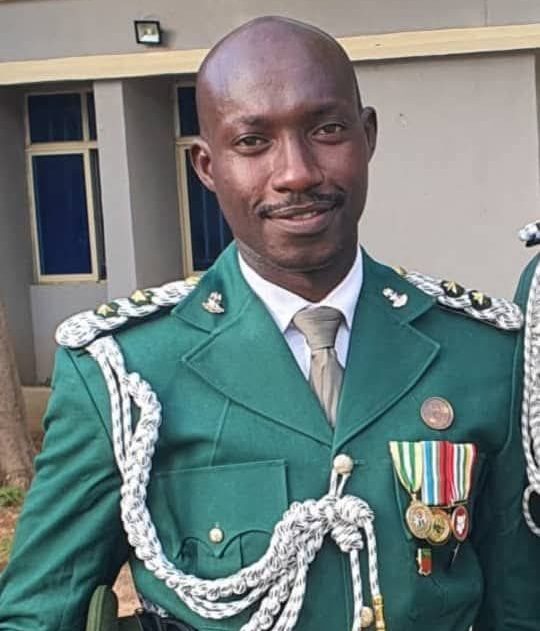
Hamza was my university coursemate and a very close friend. He and I often confided in each other. After university, he joined the Nigerian Army and later rose to the rank of Lieutenant. He was serving with a unit in Ogoja, Cross River State.
On July 2, 2023, Hamza disappeared while travelling from Abia to Anambra State.
Since then, we have not heard from him. Not by the Nigerian Army. Not by his grieving wife. Not by his father, who died last year, carrying the pain of not knowing what happened to his son. And not by any of us, his friends.
A few months after Hamza went missing, I led a group of our classmates to visit his wife at her family home in Kano. At the time, she was nursing their second child, just a few months old.
Her last memory of Hamza was a phone call on the day he disappeared.
He told her he suspected he was being followed. During the call, he asked whether their daughters were awake and told her to pray for him. She said he sounded unusually tense. That was the last time she heard his voice.
Then, on March 22, 2025, she was invited to his unit in Cross River State and handed a condolence letter and a death certificate.
“That was the worst day of my life,” she recalled.
Yet she still does not believe her husband is dead.
“I have spoken to many of his friends in the Army, and no one can clearly say what happened to Hamza,” she told me.
I once asked whether she or anyone around the family suspected IPOB/ESN involvement. She replied that if such groups had killed him, at least there would have been a body.
She referenced the killing of their family doctor, an Igbo military officer whose body, according to her, was left behind after IPOB/ESN shot him dead.
But in Hamza’s case, she said there was no trace. No confirmed scene. Nobody. Nothing.
To this day, she said many of his military friends still describe his disappearance as a mystery.
It has now been more than two years since we lost Captain Hamza Ibrahim. Ten days after he disappeared, he was promoted in absentia.
And although his wife officially received his death certificate nearly 20 months after that final phone call, she still hopes that one day she and her two daughters will wake up and see their husband and father return home.
“Allah Ya bayyana mana gaskiya, Ya tona asirin duk wanda yake da hannu a cikin ɓatan shi,” (May Allah reveal the truth and expose whoever had a hand in his disappearance), she said in a broken voice as we were about to leave their house.
For me, it is painful to finally write about Hamza.
One thing I will always remember about him was his compassion toward me. Whenever I ran out of food at the university, Hamza would take me to his room and cook for us. I still remember when he handed me a crisp ₦500 note to buy food and kerosene. That kindness is something I can never forget.
I wanted to write about him shortly after he disappeared, but his wife asked me not to because she had been instructed not to speak to the media, and I respected that. But after reading the Nigerian Army’s report on the recovery of two missing officers, I could no longer keep this painful story to myself.