Youth

Use your certificate and creativity

By Salihi Adamu Takai 

Creativity pays with much income, so don’t be misled as you’re acquiring knowledge in any field of study, whether scientific or artistic. Refrain from relying on the Government to enumerate your study; the onus is on you to use your knowledge to help your humble self and the Government.

Be curious about Creativity, and don’t think that you will have a certificate in some field of study so that Government will give you what you may rely on to quench your hunger. As you study at the University, college or secondary school, think of your future and learn to get money from the little you grasp in your study.

People should have learned that already as they started feeling discouraged by Government policy; success in life is attached to curiosity, innovation, creativity and courage. If people had been curious about innovation, they would have become creative and courageous about their interests.

Let’s look at the sources of development of the developed countries, such as China, America, England and others. We will say that they all developed because of curiosity in innovation. In China, we can see an infant exhibiting a sense of invention, producing phones and what have you; he doesn’t rely on the Government to give him jobs; the Government receives from his creativity.

In Nigeria, conversely, even a professor still relies on Government to boost his salary. That is a typical example of backwardness in Africa. Our Government also doesn’t encourage the youths to be curious about Creativity only bars them with a lack of encouragement. 

Therefore, as the youth who starts thinking of this idea, I engage myself in creativity. I did, and I got the value of it; I became curious about it; and will keep evolving curious about it forever. I exhibited my input on Earth, and it was accepted. Alhamdulillah!

Salihi Adamu Takai wrote from Kano via salihiadamu5555@gmail.com.

Leadership potential: Master these 6 essential skills

By Yakubu Sani Wudil, PhD

1. Leading by example and upholding integrity: An effective manager walks the talk and leads by example. They are seen as a role model for the team and instil trust and confidence in their employees by being honest, transparent, and fair in their actions. By being a person of integrity, managers can gain the respect and loyalty of their team, which is essential for creating a positive and productive work environment.

2. Building a diverse and inclusive team: Managers must recognise the importance of diversity and inclusivity in the workplace. They should strive to create a team representative of the community and customers they serve. This includes selecting people for the job based on their skills and qualifications, regardless of gender, ethnicity, or other differences. A good leader can build an inclusive workforce where everyone feels valued and respected.

3. Being a positive and supportive advocate for the organisation: A manager should be a positive and enthusiastic advocate for their company. They should believe in the company’s mission and follow its direction. They should also be able to communicate this enthusiasm and support to their team, which helps to create a sense of purpose and belonging among employees.

4. Communicating effectively and setting clear goals and expectations: Clear communication is essential for a manager to get the most out of their team. They should be able to clearly communicate their goals and expectations for the team’s performance and what is expected of each employee. Setting clear goals and expectations helps to keep employees engaged and motivated to achieve them.

5. Active listening and understanding the needs of employees: Managers need to be good listeners and actively seek feedback from their employees. They should be open to new ideas and suggestions and be willing to make changes in response to the needs of their team. By listening and understanding the needs of their employees, managers can create an environment that fosters collaboration and creativity.

6. Being emotionally intelligent, taking responsibility and learning from mistakes, and effectively delegating tasks: Emotional intelligence is an essential skill for managers. They should be able to recognise and manage their own emotions and those of their team. They should also be able to take responsibility for their actions and learn from their mistakes. Effective delegation is also essential for managers, as it allows them to focus on their key responsibilities and trust their team members to handle their tasks effectively.

FRSC admonishes motorists to drive at regulated speed

By Ukasha Rabiu Magama

Motorists have been admonished to drive at a regulated speed limit and observe the road and driving rules and regulations to prevent road traffic crashes along the major highways to save the lives and properties of the commuters.

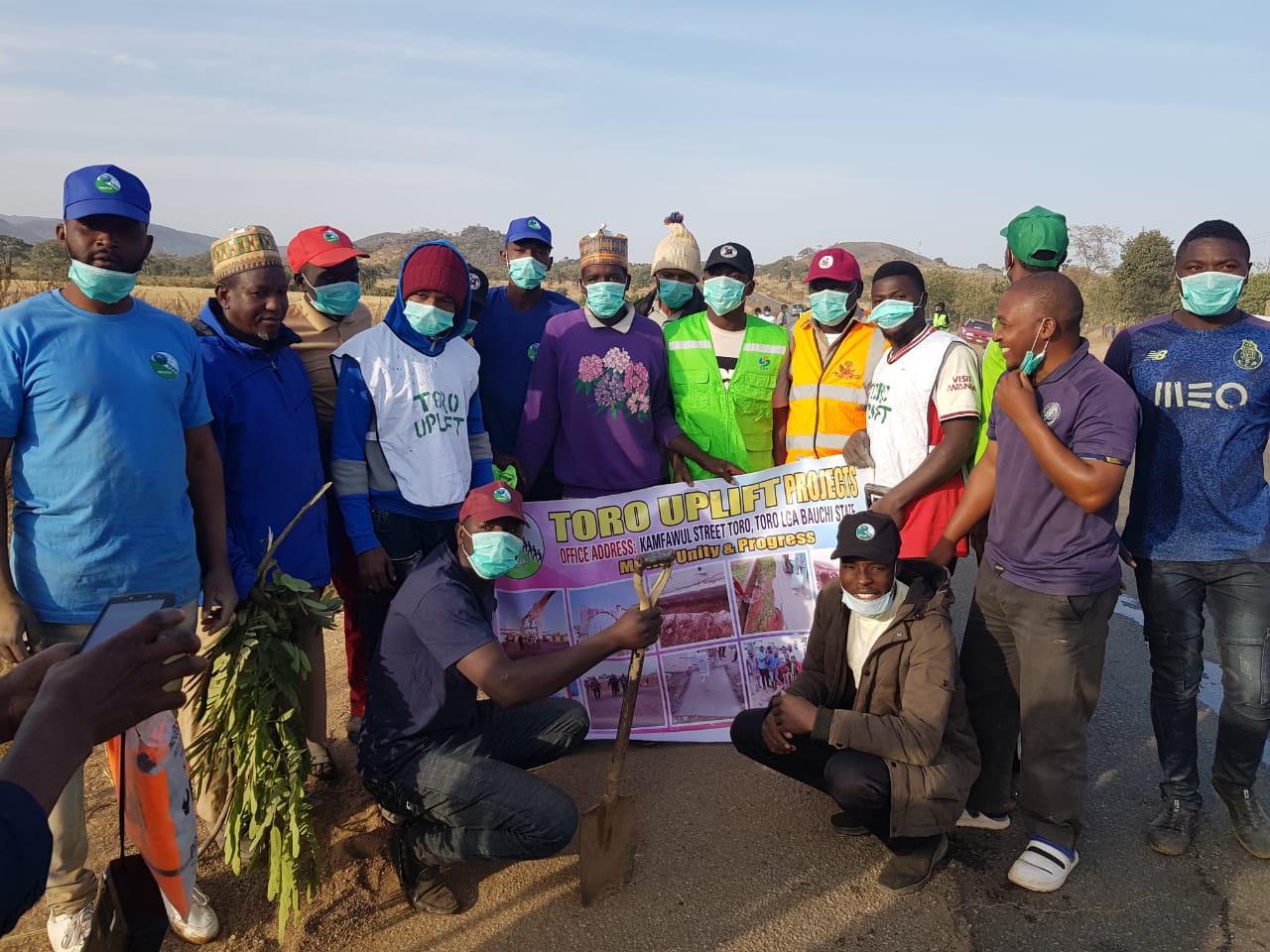
Officer Gibson Ogbeinama, the unit head of operations, acting for Toro Unit commander of the Federal Road Safety Corps FRSC, made the charge while supervising the potholes filling along Bauchi Jos road embarked by the Toro Uplift Association in Goljarendi Magama Gumau Toro local government Bauchi state.

Ogbeinama said three major factors contribute to road traffic crashes, among which are the environmental factor, the mechanical factor and the human factor. Therefore motorists should notice and adhere to driving guidelines by giving extra care to dangerous potholes to prevent frequent occurrences of road traffic crashes.

Toro Uplift Association youth at work

In his remark, the chairman of Toro Uplift Association, Abdulfath Mu’azu, expressed delight and appreciated the Road Safety Corps members’ support during the exercise. Added that Toro Uplift will continue working hand in hand with FRSC members when the need arises; hence the need is to save the lives and properties of the citizens.

Similarly, the chairman of Magama Youth Forum, Haruna Dan Maigoro, whom Jamilu Musa represented, the association secretary, thanked Toro Uplift for the gesture, adding that the fill-up exercise will go a long way in mitigating the risk of accidents along the road. He, however, relished youths for coming out in numbers to support the exercise.

Why ‘The Atiku Plan’ is better for youth empowerment and job creation

By Abdulhaleem Ishaq Ringim

As rightly identified by policy documents of both Atiku Abubakar and Bola Ahmed Tinubu, young people remain the country’s most valuable assets. However, this tremendous resource base is severely underutilized, as evidenced by unemployment and underemployment numbers. This makes job creation and youth empowerment significant points of policy focus and concern for both candidates. 

Tinubu, to start with, in the 3-paged “Youth Empowerment and Entrepreneurship” section of his policy document titled “Renewed Hope 2023”, outlined a number of strategies his administration would implement if elected into office to ensure enhanced job creation, youth entrepreneurship development and empowerment. 

Identifying the lack of access to credit at the fore of the challenges impeding youth entrepreneurial development, Tinubu plans to ensure easy access to low-cost credit for youth-led enterprises and simplification of loan application processes. He plans to leverage the instrumentality of the CBN to develop suitable incentives for commercial banks in this regard and mandate federally owned and affiliated financial institutions to develop similar schemes. 

He also plans to bolster intergenerational business mentoring and cooperation with 2 million volunteer entrepreneurs and professionals across the nation committed to working with youth to find employment, hone job skills and create businesses. Per the plan, a Youth Advisory Council would be inaugurated to the Employment Action Plan the administration would develop if elected. 

In his bid to reform the National Youth Service Corps(NYSC), Tinubu intends to develop and strengthen a job-matching programme for graduates to enable more corps members to enter the private sector during their service years. Employers would also be incentivized to retain corps members at the end of their service.

Additionally, he intends to expand business incubation centres to support youth innovators to acquire and protect through patent and trademark registration, intellectual property and other proprietary rights over inventions and innovations. 

As far as governance and political appointments are concerned, his administration intends to preserve at least 3 cabinet positions for persons under 40, 6 more positions for persons under 50 and 20 per cent of political appointments to MDAs to persons under 40. A Presidential Fellowship Scheme would also be established to train future leaders. 

On the other hand, Atiku dedicated 10 pages to discussing his plans on “Job Creation”, where he outlined four pathways(to jobs ) his administration would create if elected President come 2023. 

The first pathway is the Informal Sector Pathway to Jobs. It starts with relaunching the National Open Apprenticeship Programme(NOAP). The programme would recruit 100,000 Master Crafts Persons(MCPs) annually who would, in turn, train 1,000,000 apprentices(especially those who have lost the opportunity to attend or complete basic education) on various trades and skills. 

The MCPS and apprentices(upon graduation) would be beneficiaries of 21st-century standard business advisory services, and their training clusters would serve as robust ecosystems that would guarantee ease of access to finance and other ancillary services. 

National Board for Technical Education(NBTE) would be mandated to create a credible, recognized and verified skills/competencies certification system for the beneficiaries of the programme. The certificates would serve as credentials for employment purposes in the “new-collar” or informal skills-based sector. The Programme, of course, would be operationalized in close collaboration with the private sector and relevant trade associations. 

The second pathway is the Entrepreneurship Pathway. It starts with working towards the speedy passage of the National Research and Innovation Fund(NRIF) Bill. When passed, the Fund would receive funding from the CBN’s MSME Fund, Development Bank of Nigeria, Bank of Industry and other private sector institutions and donor agencies. It is expected that at least 100,000 budding entrepreneurs will be added annually. 

Support from the NRIF will be in the form of grants, loans or equity investments in small enterprises. It shall be provided either as start-up capital or to scale up innovations that have already demonstrated a strong track record of impact and effectiveness. 

Atiku also seeks to introduce and actively promote a Graduate Trainee Internship Programme (GTI), which would target National Youth Corps members. The GTI will transfer useful employability skills to Corps members to increase their chances of finding sustainable employment. While they undergo entrepreneurship training, the NYSC will be matched with potential employers for internship/traineeship in the private sector. 

The technical and financial capacity of the Industrial Training Fund (ITF) would be grossly improved to operate its internship and apprenticeship programmes at a much higher scale to cover a minimum of 2 million workers per year.

The Schools to Jobs Pathway is the third pathway identified by Atiku. Here, a formal Technical and Vocational Education and Training (TVET) system will be supported and technical colleges and vocational skills acquisition centres will be re-positioned to produce skills and competencies for innovation and the creation of new ideas and products inside enterprises from where future jobs and future prosperity will derive. 

This would be followed by training of a low-level workforce, such as operatives, artisans, craftsmen and master craftsmen for commerce, industry, agriculture, and ancillary services. The absorptive capacity of the formal post-basic TVET and Vocational Centres will be increased from the current total enrolment and completion of fewer than 200,000 students to 500,000 in 2025 and 1,000,000 by 2030. 

Additionally, selected vocational training institutions would be remodelled into a one-stop shop to provide vocational training, entrepreneurship (accounting, management training expertise), life-skills programmes, etc. 

Enterprise start-up training programmes to be delivered by SMEDAN would be provided to the graduates of technical and vocational training centres who opt for self-employment. Upon completion of the training, participants will submit business plans to Micro Finance Banks and apply for loans from the Bank of Industry, which will be supported by a start-up grant from the National Innovation Fund. 

Graduates of the technical colleges will receive loans and Business Development Service coaching and support from SMEDAN/ Business Development Service Providers. On successful repayment of loans, graduates will receive a final grant (matched to the value of the original loan value) to boost their businesses.

The fourth and final pathway, as outlined by Atiku, is the MSME /ICT Special Entrepreneurship Pathway. This shall start with the facilitation of the establishment of the SME Venture Capital Fund by the private sector to provide longer-term capital for targeted small firms. The administration shall aim to attract a minimum of $250 million in private-sector funding for Nigerian small businesses. 

The administration would create a platform for de-risking SME lending, increase the MSMEs funding window from N200 billion to N500 billion, and set aside the same for the new platform. Awareness of the National Collateral Registry of Nigeria will be rigorously promoted, and the collateral registration process will be further simplified, especially for places without internet access. Enhanced registration access will help unlock much-needed finance for MSMEs. 

The administration would also establish the Financial Innovation Fund((FIF) to incentivize commercial and Microfinance banks to develop innovative solutions for providing credit facilities to the MSMEs sector. The Small-scale Industries and Graduate Loan Guarantee and the Small -Scale Industrial Credit Scheme shall be reformed and reintroduced. 

Special focus on the ICT sector will be provided by Atiku’s administration, and Nigeria shall be aggressively marketed as an outsourcing destination. With a robust IT infrastructure in place and more than 150 million mobile phones, opportunities abound in Business Process Outsourcing with the potential to create 2 million direct and indirect jobs. Nollywood, a great labour employer, would be actively promoted to make it the 3rd largest film industry in the world. 

And on political appointments, 40 per cent of the cabinet would be reserved for youth and women. 

On comparison, one would notice certain points of convergence from the above excerpts as directly culled from both policy documents. For example, both documents identified a lack of access to credit and finance as a major impediment to youth entrepreneurial development. 

However, while the Tinubu plan heavily stresses easing access to commercial loans and simplification of loan application processes, Atiku’s planned interventions seem more specific, overarching and diverse (with adequate involvement of the private sector). They also seem more sustainable as most of them would be backed by legislations and institutional pillars like the NRIF, SME Venture Capital Fund, Financial Innovation Fund etc. 

Another point of convergence is the identification of the imperative of intergenerational business mentorship as a veritable avenue for job creation, youth empowerment, and entrepreneurial development. However, with ease of access to funding interventions, the Atiku plan seems more practical considering specific policy prescriptions like the establishment of the NOAP under the Informal Sector Pathway to Jobs. It also seems more sustainable as it seeks to create a new labour market and standard for employment to be legitimized by the new NBTE skills/competency certification system. 

Additionally, while Tinubu’s NYSC reform focuses heavily on ensuring more corps members join the private sector mainly by simply incentivizing employers to retain them, the Atiku plan approaches the problem more prudently as it seeks to equip corps members with high-value employability and entrepreneurial skills through the Graduate Trainee Internship(GTI) programme before matching them with potential employers. No incentive matches the availability of employees with enhanced employability and entrepreneurial skills for private sector employers as it means enhanced productivity. 

The same goes for other interventions that both policy documents commit to pursuing. One intervention, however, that is important but seems missing in the Atiku plan is the Presidential Fellowship Scheme proposed by Tinubu to serve as a platform that gives young people the opportunity to experience and participate in public service and governance as with Kaduna State’s Kashim Ibrahim Fellowship and Lagos State’s Lateef Jakande Leadership Academy. 

Notwithstanding, the Atiku plan clearly provides more specificity and seems more practical and sustainable(backed by legislation and institutions). It is also more diverse in scope and solutions pathways for identified impediments towards enhanced job creation and youth entrepreneurial development. The Atiku plan is better for job creation and sustainable youth empowerment.

Abdulhaleem Ishaq Ringim is a political/public affairs analyst. He writes from Zaria and can be reached via haleemabdul1999@gmail.com and @pragmatist_AIR on Twitter.

Fighting illicit drugs: YADAF is doing the right thing

By Lawi Auwal Yusuf

Drug addiction suffers a death blow occasioned by the outstanding performance put up by the Youth Against Drug Abuse Foundation (YADAF). It is sure that this name now rings a bell in the Nigerian anti-drug crusade by breaking new ground and marking a turning point without historical precedent. Moreover, it has distinguished itself as the leading figure among its peer NGOs.

This voluntary organization was first set up in Lagos in 2017 and in Kano in 2019. It is propelled by its leading force Hajiya Fatima Bature Jikan-Danuwa, its founder and CEO. This great heroine dedicated her life, wealth and everything in her arsenal to realize her dearest wish of extirpating drug abuse. This real gem has an old hand in this national service and carried off multiple awards coupled with eulogies from different quarters.

YADAF is always motivated by its firm conviction that our youth means everything to us. They are the firmament upon which the development of society rest and its future custodians. This makes the team have a penchant for empowering the young to become enterprising, industrious and productive. They derive pleasure from this community service and are always in high spirits to improve the youngsters’ lives. They are so ecstatic to see them living a good everyday life.

It depresses us to see our lads doing drugs, which consequently deals a blow to our society. We are dead scared to see them engaged in this outrageous behaviour which is so detrimental to their health, badly denting their future and lest becoming a nonentity. In 2021, National Drugs Law Enforcement Agency (NDLEA) reported that 40% of Nigerian youths between 18-35 were heavy drug users. This is an awful statistic.

Thus, YADAF felt duty-bound to swing into action and band together with the relevant stakeholders to face the problem squarely. It fights tooth and nail to contain this social upheaval. The problem’s exacerbation never dampens its enthusiasm, nor does the challenges dash its hopes. On the contrary, it remains impulsively committed to its cause. Indeed, its devotion to this job is commendable.

The management presents mass awareness campaigns through TV and radio programmes, public lectures, dissemination of helpful information across different social media platforms, leaflets etc., aimed to dissuade adolescents from engaging in this criminogenic behaviour or ditching it entirely. Furthermore, they expose the evils of this act and extol the virtues of abstaining from it altogether.

Lack of sound education and professional training is a leading cause of this devilish act. Although skills are increasingly becoming more valuable in the labour market, their absence necessitates the young to either remain redundant or wander the street to make ends meet.

This explains why YADAF introduced its Back To School Programme to sponsor drug-addicted juveniles, dropouts and the rehabilitated back to school. Under the scheme, hundreds of such teenagers, including those considered vulnerable to drug abuse, have been registered in both primary and secondary schools. For instance, 347 children benefited from this programme last week, while preparations are underway for the next set.

Furthermore, providing full employment with prospects helps the young develop a worthy stake in the social order. Also, it makes them preoccupied with a legitimate way of earning a decent living, hopeful of a secured future. This motivates them to work harder, become righteous and avoid anything distracting the realization of their dreams.

This speaks to the establishment of the YADAF Skills Acquisition Center to make youths dexterous artisans become self-reliant. It is a costly mistake to leave the young to their own devices or keep them at a distance. Therefore, this centre is furnished with state–of–the–art facilities to help them learn useful skills to realize their potential.

Moreover, we encourage the young to participate in sports activities which enhance community cohesion and a sense of belonging. We promote a sports culture that keeps them away from doing drugs and leads to fitness. The effectiveness of sports is so absolute in promoting peace, unity and curbing crime.

Our strategic approach is to improve the sporting career, enticing more demand for sports industry athletes. This will facilitate the development of our local players to become competitive champions globally.

As the evils of drug abuse are obvious, all hope is not lost for our most resilient youths. On the contrary, the coming of YADAF makes us feel so good that we are on the right track to securing their long-lost potential.

Lawi Auwal Yusuf Maikanawa is a fellow of YADAF, Kano State Chapter.

World Teachers Day: English hinders learning progress in northern Nigeria – Engr. Ringim

By Uzair Adam Imam

Over two thousand people, including university lecturers and students, graduated from the Engausa Global Technology Hub.

The graduates were trained in various skills ranging from science and technology.

The founder and chairman of the technology hub, Engr. Mustapha Habu Ringim, disclosed this in an interview with journalists on Wednesday to mark this year’s United Nations World Teachers Day.

Engausa was founded in 2019 and registered in 2022 and recorded numerous successes in teaching people various scientific and technological skills to depend on themselves and become employers of labour.

Engineer Habu said English and other languages inhibit learning progress, especially in northern Nigeria.

He stated, “It doesn’t mean that we are not developed when we teach in our mother tongue. Knowledge can be taught using any language.

“Later, one can learn any other language he feels interested in, like English, Arabic or French.

“But it is not wrong to learn in your mother tongue, as many people perceive. For this reason, we, among others, admit even almajiri, who have no background in western education and are school dropouts, into Engausa Global Technology Hub and teach them in Hausa.

“Today, many such dropouts and almajiri have become teachers in Engausa. They even teach university graduates, MSc and PhD holders as well.”

We give emphasis on the practical aspect

Unlike in tertiary schools and other institutions of learning, the Engausa Global Technology Hub gives emphasis on practical aspects than theories.

This, however, enables the students to fully understand the subject matter rather than mastering theories and definitions of concepts.

Ringim added, “More than 90 per cent of what we do in Engausa is practical. The theoretical aspects do not exceed 10 per cent.”

Unemployment worsens insecurity in Nigeria

Ringim also argued that the rising insecurity in Nigeria is not unconnected with the high unemployment rate in the country.

Insecurity has been one of the ongoing challenges facing Nigeria, especially in the northern part, over the years.

He stated, “We need to know that teaching our youths some skills is one of the panaceas to the lingering security challenge in Nigeria. Therefore, society needs to welcome inventions of this sort.

Engausa is gaining global recognition and support from Federal Government and academics like Prof. Abdallah Uba Adamu, Prof. Hafizu Miko Yakasai, and Engr. Isa Musa Gumel, Prof. Idris Muhammad Bugaje, Dr Binta Usman, Dr Hauwa Muhammad Bagaje, among others.

Arewa digital literacy centre, Engausa, commences classes next week

By Muhammadu Sabiu

A Northern Nigerian digital skills learning centre, Engausa Global Tech Hub, will admit students and commence its September classes next week Monday.

This is contained in a short announcement posted on its official Facebook page Sunday.

“New Engausa Global Tech Hub classes will begin on Monday 12th November 2022 Insha Allah,” the post reads.

The classes, largely delivered in the Hausa language, focus on teaching skills like video editing, blogging, graphics design, web design and Android dev., social media literacy, and digital marketing.

Others are installations (CCTV, solar panels, electric fencing, and Intercom) and smartphone repair skills.

The training costs twenty-five thousand naira (N25,000) and lasts for a period of five weeks.

In order to register, interested applicants are advised to click www.EngausaHub.com or call any their phone numbers.

Nigeria’s future in hands of youths – Obasanjo

By Uzair Adam Imam 

Former Nigerian President, Olusegun Obasanjo, said the country’s future is in the hands of youths.

The ex-president, who put all hopes in youths, stated that the solution to the country’s challenges was in their hands.

Obasanjo charged the youths to do the needful and change Nigeria into a better country in a chat with a famous singer, Charly Boy.

He said in parts, “I am the father of frustrated youths in Nigeria. That we are poor and frustrated is not the fault of God. 

“It is the choice of our leaders, and if we are going to change that situation, the youths have to change leadership. Pure and simple. There is nobody who will do it other than the youths.”

Many people in Nigeria share this belief that the solution to the country’s challenges is in the hands of the youths.

However, still few people, on the other hand, argue that the youths are not even ready to shoulder this responsibility.

On International Youth Day

By Tajuddeen Ahmad Tijjani

International days and weeks are occasions to educate the public on issues of concern, mobilize political will and resources to address global problems, and celebrate and reinforce the achievements of humanity. The existence of international days predates the establishment of the United Nations, but the UN has embraced them as a powerful advocacy tool. 

August 12 of every year marks International Youth Day. This year 2022, is to amplify the message that action is needed across all generations to achieve sustainable development Goals, especially for youth, without leaving anyone behind. It’s expected that youth should champion participation in developmental programs across all facets of human development.

As Nigeria approaches the 2023 elections, it’s a clarion call to all our youth not to allow politicians to use their brains to promote violence. Instead, they should champion the cause for a better country that we will all be proud of. Get involved and define your priorities through meaningful debate. Bargain for better welfare, and promote peace, growth and stability.  

Nigeria’s youth make up a substantial portion of the population, and if they can fully realize their potential, Nigeria and the rest of the globe will thrive. Undoubtedly, the youth are behind in every aspect of human life. Therefore, they must have ‘a fair shake’ in the Nigerian context. They should take up the challenges and use their God-given talents to advance the nation.

Perhaps, you can ask yourself, why are the youth left behind, even though they are the majority? There is no enabling environment to showcase their potential, but should we continue like this? No, we have to wake up in the sense that we should pursue education. Indeed, with education, we can fight poverty, know our rights, stand firm and fight for the future of the living and the unborn generations.

Reports show that half of the people on our planet are 30 or younger, which is expected to reach 57% by the end of 2030. However, this indicates that youth can take control of their future and provide solutions to the problems bedevilling society. For instance, Nigeria is battling insecurity from all corners of its existence. Boko Haram in the Northeast; banditry; kidnapping in the Northwest and some parts of the North Central; IPOB in the South-east; etc. Unfortunately, the youth are the ones who not only encourage but partake in a vicious cycle of violence.

Perhaps we need reorientation to be reasonable ambassadors of society. Let’s teach the habit of productivity through education and change the world to make it a better place to live. Research and development can make us innovative with new ideas and creative in health care reform, Engineering etc. 

Therefore, at this juncture, I make a humble appeal for our youth to rise and take their rightful position. I’m optimistic that when the youth unite and pursue positive goals, it’s achievable to change the narratives to develop the country.

Tajuddeen Ahmad Tijjani writes from Galadima Mahmoud Street, Kasuwar-Kaji Azare, Bauchi State.

Should the Northern youth “Japa” too?

By Hassan Ahmad

The term “Japa” is slang used by Nigerians to refer to the continuous exodus of young Nigerians to the developed countries in search of greener pastures with the intent of not returning home. Japa is widely accepted in southern Nigeria, with many youths leaving Nigeria in the last decade. The justification for this mass departure is not farfetched. They include unemployment, insecurities, incessant strike actions by university teachers enabled by the government and other social problems cumulatively, among others. But on the other hand, the direct opposites of these push factors are the pull factors that also encourage it.  

The southern region of Nigeria housed the larger percentage of industries available in this country, with a better literacy rate and a better standard of living. 

However, in the North, the story is by far worse. Topping the list is insecurities from the Boko Haram ravaged northeast to the bandits’ taking over of northwestern villages and the ethno-religious conflicts in the north-central states. Don’t forget farmer-herders’ conflicts, too. 

Aside from insecurity, the poverty rate in the North is alarming – constituting 86 per cent as of 2021. In addition, illiteracy is prevalent, and there is high existence of unemployment as well as under-employment.  

From the above, we’ll understand that northern youths have more reasons to Japa and never look back, but that has not been the case. This can be understood to play out this way for obvious reasons: deep kinship relationship, lack of understanding of the evolving nature of the 21st century, fear of the unknown, ill contentment and others. 

The underlying issue is that it’ll no longer take long before the northern youths follow the footsteps of their southern counterparts and get fed up with Nigeria, and look beyond the seas and deserts to better their lives. Oh!  It has started already. Thousands of youths are already risking their lives through the Sahara desert with the hope of reaching Europe or the Middle East. Many others who were chanced to have acquired scholarships overseas ended up staying in those countries to pursue a living. This creates two scenarios.

While the educated northern youths get out of the country legally through scholarships and fellowship, the less educated and uneducated look for their ways illegally and, in most cases, lose their lives or ending as sex slaves. We lose our best brains to the developed world while losing our uneducated ones who can alternatively be a source of labour to the graves.  This means that the youths who are supposed to carry the northern and Nigerian dream (if there is any) are giving up already.

Where is the Northern Governors Forum? Have they provided a roadmap for the development of the North, how to tackle insecurity, unemployment, poverty or even improve education? 

Or the Forum is meant for negotiating power between the ruling elites? So why must it be far away Lagos that’ll have the foresight to partner with Kebbi in producing Lake-rice? Why not Kaduna, Kano or Nasarawa?  

Why is the same Forum quiet while their young people are out of school for an avoidable strike?  North is the most hit by the ASUU strike because 90% or more of her students depend on public universities for their education. Is this too hard for the governors to understand? Have they ever intervened? 

Northern leaders should rise to their responsibilities before it’s too late. The outside world is open to all but cannot afford to embrace us all. So it is either they make the North a home for the younger ones, or we look for another home. There is no sense in sticking to the parents that humiliate you all your life. 

As things are, if there is an opportunity, let’s Japa too, legally. 

Hassan Ahmad Usman writes from Lafia, Nasarawa State, Nigeria. He can be reached via basree177@gmail.com.