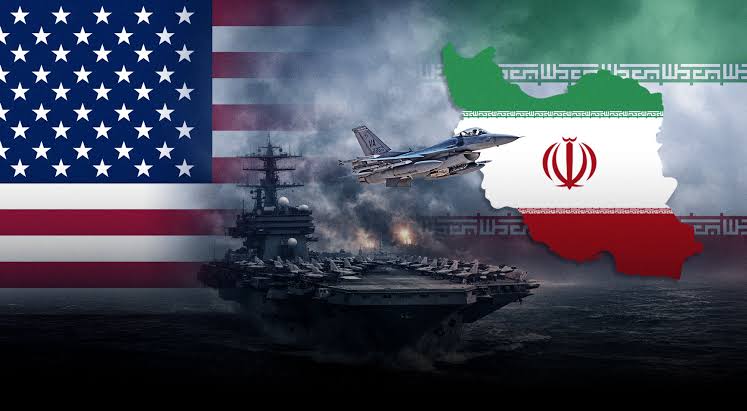
USA

Jeffries challenges Trump over Iran strikes, urges focus on domestic priorities

By Sabiu Abdullahi

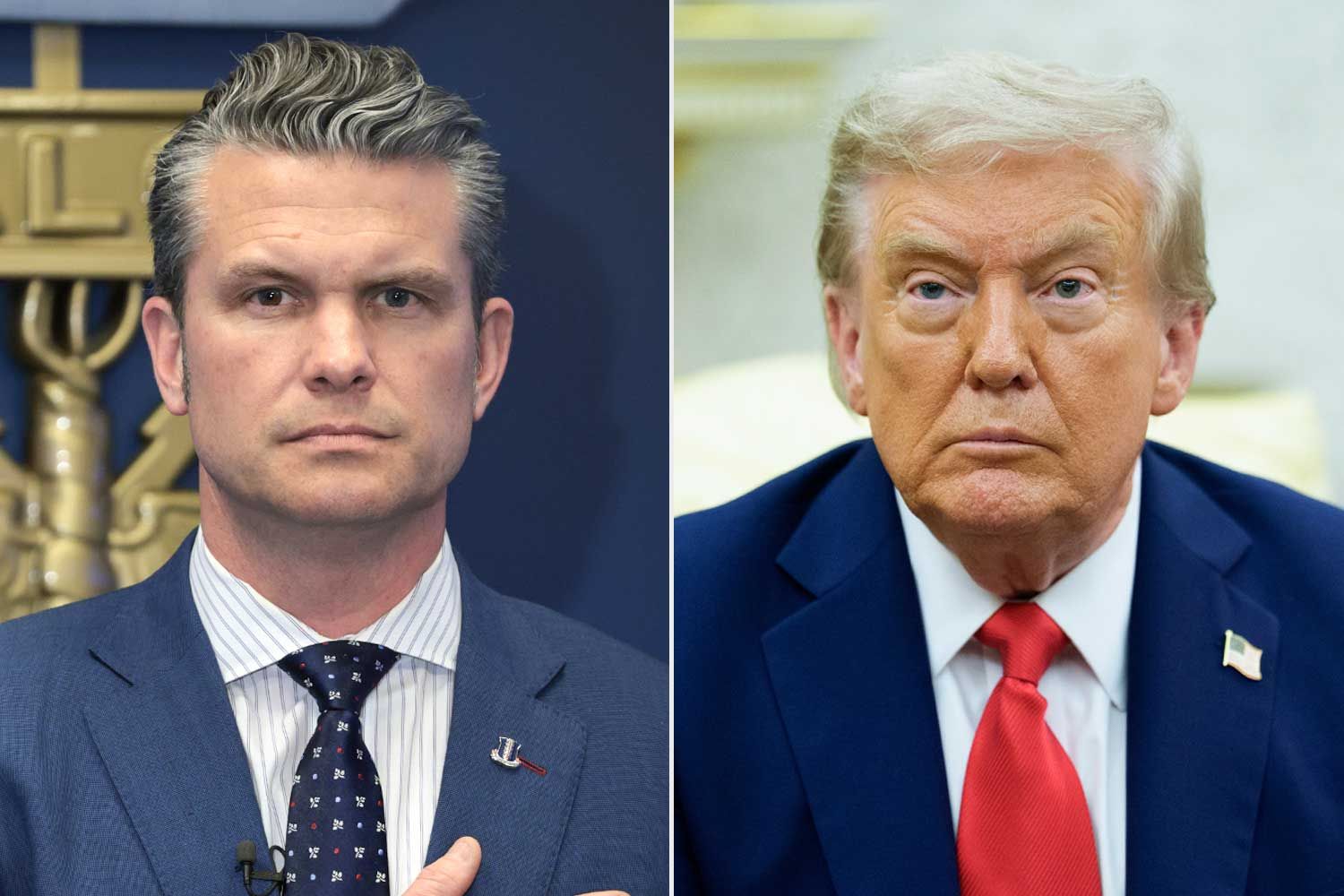
United States President Donald Trump is facing mounting criticism over Washington’s recent military action against Iran, as senior lawmakers question the basis and legality of the operation.

U.S. House Minority Leader Hakeem Jeffries said the administration has yet to provide proof that Iran posed an imminent danger that required military intervention. His remarks have intensified debate in Congress about both the constitutional authority for the strikes and the broader strategy behind them.

During a television interview before attending a classified congressional briefing, Jeffries stated that he would continue to review intelligence to determine whether the action was warranted. According to CNN, he expressed concern that lawmakers had not been shown evidence to support the decision.

“I will continue to look for information … to suggest that there was intelligence indicating that Iran was prepared to strike the United States. Nothing has been presented to justify what’s taking place up until this point,” Jeffries was quoted as saying.

He maintained that many Americans expect their leaders to address economic pressures at home instead of committing the country to another prolonged conflict abroad.

“Americans want the government to focus on making their life better, making their life more affordable, not getting involved in another endless war in the Middle East that is going to end in failure,” he added.

Jeffries also raised questions about the President’s authority to launch extensive military operations without prior approval from Congress. He pointed to Article I of the U.S. Constitution, which assigns the power to declare war to the legislative branch.

Reports indicate that lawmakers are seeking a vote on a war powers resolution in response to the strikes. Concerns have grown in Washington following briefings that reportedly did not show Iran was preparing an immediate attack before the joint U.S.-Israeli operation. The situation has drawn criticism from members of both major parties, who are asking for clarity on the objectives and long-term plan.

International reaction has also intensified. The United Nations Educational, Scientific and Cultural Organization (UNESCO) condemned the bombing of a girls’ primary school in southern Iran. The agency described the attack as a serious breach of international humanitarian law.

According to CNN, missiles struck a school in Minab during ongoing military operations. About 150 people were killed. Many of them were believed to be students. Nearly 100 others sustained injuries.

“The killing of pupils in a place dedicated to learning constitutes a grave violation of the protection afforded to schools under international humanitarian law,” UNESCO said, according to CNN.

The organisation warned that assaults on schools place students at grave risk and weaken the right to education. The incident ranks among the deadliest civilian casualties reported since tensions escalated.

While the strike occurred within the context of wider military action against Iranian targets, investigations into responsibility are still underway.

Humanitarian groups have renewed appeals for the protection of civilians and public infrastructure. Save the Children stressed that children often suffer most during armed conflicts.

“Every war is a war on children, and the world cannot stand by and watch children be killed or injured,” said Inger Ashing, the organisation’s chief executive, in a statement.

As tensions rise across the Middle East, lawmakers, diplomats and international bodies have warned that the crisis could spread across the region. In Washington, debate continues over the legality, purpose and human cost of the military campaign.

JUST IN: Iran vows ‘crushing’ retaliation after US, Israel strikes

By Sabiu Abdullahi

Iran has threatened to launch a strong response following recent military strikes carried out by the United States and Israel, warning that any retaliation would be “crushing”.

Explosions were reported on Saturday in several Iranian cities, including Kermanshah, Lorestan, Tabriz, Isfahan and Karaj, raising fears of a widening conflict in the region.

Israel’s Defence Minister, Israel Katz, defended the operation. He said: “The State of Israel launched a pre-emptive attack against Iran to remove threats to the State of Israel.”

The latest strikes come months after a 12-day aerial confrontation between Iran and Israel in June. The development also follows repeated warnings from Washington and Tel Aviv over Iran’s nuclear and ballistic missile activities.

An Iranian official told Reuters that authorities in Tehran are preparing a counteroffensive that would be severe in scale.

Reports indicate that Iran’s Supreme Leader, Ali Khamenei, was not in Tehran at the time of the attack. He has since been moved to a secure location.

Reacting to the strikes, the head of the National Security Commission of Iran’s parliament, Ebrahim Azizi, issued a warning to both countries. “We warned you! Now you have started down a path which end is no longer in your control,” he said.

Meanwhile, United States President Donald Trump said the action was taken to safeguard American interests.

“A short time ago, the United States military began major combat operations in Iran. Our objective is to defend the American people by eliminating imminent threats from the Iranian regime, a vicious group of very hard, terrible people. Its menacing activities directly endanger the United States, our troops, our bases overseas, and our allies throughout the world,” he posted.

The situation has heightened global concern, as tensions continue to rise with both sides signalling further military action.

Sheikh Gumi backs Shariah law in Nigeria, faults US lawmakers’ report

By Sabiu Abdullahi

Popular Islamic cleric, Ahmad Gumi, has defended the practice of Shariah law in Nigeria.

He said it is the right of Muslims to be governed by their religious principles, similar to how the United States safeguards Christian interests.

Gumi made the remarks in response to reports that some members of the U.S. Congress submitted a request to President Donald Trump, urging the abolition of Shariah and blasphemy laws in Nigeria.

In a post shared on his verified social media page, the cleric maintained that Muslims have the freedom to follow their religious injunctions. “Shariah Law is the Muslims’ prerogative just as the US found it only necessary to protect the Christians,” he said.

He also stated that Muslims face threats which he described as hidden and externally driven. “At the same time, Muslims are more victims of this occult terror imported into the country by hidden forces they very well know,” Gumi stated.

In a separate post, he criticised what he called inconsistency in global discussions on religion and governance. “It’s ok for US evangelical Christians administration for Israel to live by biblical stories yet Haram for Muslims to live by the Quranic injunctions,” he wrote.

Shariah law operates alongside Nigeria’s conventional legal system in several northern states, especially in matters related to personal and family issues among Muslims.

FG dismisses US congressmen’s claims on religious persecution in Nigeria

By Sabiu Abdullahi

The Federal Government has rejected claims by United States lawmakers that Nigeria is witnessing religious persecution, insisting that no such policy exists in the country.

The Minister of Information, Mohammed Idris, stated this while reacting to a report submitted to US President Donald Trump by members of the US Congress.

The report was presented by lawmakers from the House Committees on Appropriations and Foreign Affairs after months of investigations and field assessments.

It highlighted allegations of persecution against Christians as well as concerns over extremist violence.

The development followed the decision by the US government to redesignate Nigeria as a Country of Particular Concern and to mandate Congressman Riley Moore and Appropriations Committee Chairman Tom Cole to lead an inquiry into the matter.

Moore, in a statement shared on his official X account, said the submission marked the end of extensive bipartisan efforts. He added that the engagements offered a clearer picture of insecurity and the situation facing Christian communities in some parts of Nigeria.

In response, the Federal Government reiterated that insecurity in the country is not driven by religious bias or government policy. Mohammed Idris stressed that there is no official backing for religious persecution and that all citizens are protected under the law regardless of their beliefs.

“The Federal Government of Nigeria has taken note of recent statements and recommendations emerging from engagements within the United States Congress, contained in a joint report on Christian persecution in Nigeria submitted to the White House on Monday by the House Foreign Affairs Committee and the House Appropriations Committee, concerning security developments in Nigeria.”

“Nigeria acknowledges that parts of the country continue to face serious security challenges, including terrorism, banditry, and communal conflicts that have tragically affected many communities. The Federal Government remains deeply concerned about the loss of lives and destruction of property resulting from these criminal acts, and we extend our sympathies to all victims and their families, regardless of faith, ethnicity, or region.

“It is important to state clearly that Nigeria does not have, and has never had, a state policy of religious persecution. The violence being confronted by our security agencies is not driven by government policy or religious bias, but by complex security threats, including terrorism, organised criminality, and longstanding communal tensions.”

The minister also noted that the Nigerian Constitution guarantees freedom of religion and worship. He said the government remains committed to protecting these rights and ensuring equal treatment for all citizens.

“Nigeria values its longstanding and strategic partnership with the United States. Our two countries share common interests in promoting security, economic development, and regional stability. We remain open to constructive dialogue and cooperation rooted in mutual respect, shared responsibility, and recognition of Nigeria’s constitutional framework and sovereignty.

“The Federal Government will continue to engage international partners through appropriate diplomatic channels while remaining focused on its primary duty, the protection of all Nigerians.”

Nigerian fashion designer in US shot dead during nightclub

By Sabiu Abdullahi

A Nigerian fashion designer living in the United States, Sheriff Shittu, has lost his life after a shooting incident at a nightclub in Brooklyn, New York.

The 30-year-old was killed in the early hours of February 14 during a birthday gathering at the Quilox Restaurant and Lounge, located in the East Flatbush area.

Reports from local authorities indicate that the incident happened around 4:25 a.m. A man who was reportedly intoxicated had been asked to leave the club by security personnel. While being escorted out, he allegedly pulled out a gun and opened fire.

Witness accounts suggest that the situation began after the suspect caused a disturbance inside the venue. He was said to have acted inappropriately toward some female guests, including Shittu’s girlfriend. This behaviour led to a confrontation that later escalated.

Shittu had attended the celebration with his younger brother, Fawaz Shittu, as they joined others to mark a friend’s birthday.

Fawaz later described the moment of the tragedy in an emotional account. “I was screaming his name. I was trying to wake him up,” he said.

Further reports stated that the suspect had been behaving in a disorderly manner before the argument broke out, which eventually led to the shooting.

Family members of the deceased have raised concerns over the security measures at the nightclub. They questioned how a firearm was brought into the venue without detection.

“We don’t know how the security did not do the job and search properly before somebody could bring a gun into the club,” Salem Shittu said.

“He was being kicked out, and he was being escorted out when he did it,” he added.

Police confirmed that the suspect escaped immediately after the attack and has not yet been apprehended.

Shittu was rushed to One Brooklyn Health–Brookdale University Hospital Medical Centre, where doctors later confirmed his death.

Relatives described him as a young designer who had been working hard to build a career in the United States before his life was cut short.

Authorities have begun investigations into the incident and are currently searching for the gunman.

One dead, several injured as gunmen in US invade high school hockey match

By Sabiu Abdullahi

A shooting disrupted a high school hockey game in Pawtucket, United States, leaving one person dead and several others injured.

The incident occurred on Monday afternoon at Lynch Arena, an ice rink known as the home venue of the hockey team of Johnson & Wales University, according to NYPost.

Authorities confirmed that the suspect involved in the daytime attack died at the scene. Officials, however, did not immediately provide a confirmed figure for the number of injured victims as emergency responders transported the wounded to nearby hospitals.

Eyewitnesses recounted moments of panic inside the arena. Students, parents, and other spectators ran for safety after gunshots suddenly echoed during a match between rival schools, Coventry and Blackstone Valley.

An employee of a nearby Walgreens store told local media that terrified individuals rushed into the shop in search of protection shortly after the shooting started. Staff members were asked to close the store and evacuate, while some people remained hidden inside as emergency services were alerted.

Branden Mello, a local sports editor who followed the situation, said the shooting started from the spectator stands behind the Blackstone Valley team’s bench. The development sparked fear across the facility.

He added that a parent at the venue reportedly confronted the attacker and succeeded in wrestling a firearm away from him. Reports indicated that the suspect possessed another weapon at the time, which heightened the danger before order was eventually restored.

The shooting has again raised concerns about gun violence in public places across the United States, particularly at school-related events where families and students usually gather.

Law enforcement authorities have opened an investigation into the incident. Officials are also monitoring the medical condition of those who sustained injuries.

Courts rule thousands of times against ICE detentions despite ongoing crackdown

By Sabiu Abdullahi

A review of court records has shown that judges across the United States have repeatedly ruled against the detention practices of immigration authorities under President Donald Trump’s administration.

According to Reuters, findings indicate that since October, courts have issued more than 4,400 rulings that deemed the detention of immigrants by U.S. Immigration and Customs Enforcement (ICE) unlawful. The decisions represent a major legal setback for the administration’s aggressive immigration enforcement policy. Despite this, detentions have continued in many instances.

U.S. District Judge Thomas Johnston of West Virginia criticised the government’s position in one of the cases. He wrote, “It is appalling that the Government insists that this Court should redefine or completely disregard the current law as it is clearly written,” while ordering the release of a Venezuelan detainee.

Many of the rulings stem from the administration’s shift away from a long-standing interpretation of federal law. For nearly three decades, immigrants already residing in the United States could seek release on bond while pursuing their cases in immigration courts. The policy change has triggered widespread legal challenges.

In response, White House spokeswoman Abigail Jackson said the administration is “working to lawfully deliver on President Trump’s mandate to enforce federal immigration law.”

Data shows that the number of people held in ICE custody has surged to about 68,000 this month. That figure represents an increase of roughly 75 percent since Trump assumed office last year.

However, the administration recorded a legal victory at an appeals court in New Orleans. U.S. Circuit Judge Edith Jones ruled that earlier administrations’ limited use of detention powers did not eliminate the authority to expand their application. She stated that prior restraint “does not mean they lacked the authority to do more.”

Government officials argue that the spike in lawsuits was expected. Department of Homeland Security spokesperson Tricia McLaughlin said the trend came as “no surprise” and added, “especially after many activist judges have attempted to thwart President Trump from fulfilling the American people’s mandate for mass deportations.”

Court filings show that detained immigrants have submitted more than 20,200 federal lawsuits seeking release since Trump took office. Judges have ruled in at least 4,421 of those cases that ICE held detainees unlawfully.

One example involved Joseph Thomas, an 18-year-old Venezuelan student arrested during a traffic stop in Wisconsin alongside his father. Both men were asylum seekers with legal work authorisation. Their lawyer, Carrie Peltier, argued they were targeted for “driving while brown.” Judges later ordered their release.

Chief U.S. District Judge Patrick Schiltz ruled that Joseph’s detention was illegal. He cited a lack of proof that ICE possessed a warrant at the time of arrest. In a separate decision, U.S. District Judge Eric Tostrud affirmed that the teenager’s father qualified for a bond hearing. He wrote, “This raises an issue of statutory interpretation that courts in this District have repeatedly considered and rejected, and it will be rejected here as well.”

Legal experts say habeas corpus petitions have become the primary legal route for detainees seeking freedom. The constitutional mechanism allows individuals to challenge unlawful detention in court.

The wave of litigation has placed pressure on the justice system. More than 700 Justice Department attorneys are now assigned to immigration detention cases. Some have appeared in over 1,000 lawsuits each.

Judges have also faulted authorities for failing to comply with release orders. In Minnesota, Schiltz said the government violated 96 court orders across 76 cases. A federal prosecutor in the district later described the caseload as an “enormous burden” on government lawyers.

In New York, U.S. District Judge Nusrat Choudhury ruled that ICE violated two “clear and unambiguous orders” after transferring a detainee while misrepresenting his location to the court.

The Justice Department has defended its actions. Spokesperson Natalie Baldassarre said the administration “is complying with court orders and fully enforcing federal immigration law.” She added, “If rogue judges followed the law in adjudicating cases and respected the government’s obligation to properly prepare cases, there wouldn’t be an ‘overwhelming’ habeas caseload or concern over DHS following orders.”

Advocacy groups continue to assist detainees. Lawyers often wait outside immigration courts to file emergency petitions that prevent transfers to distant detention centres.

Still, many immigrants struggle to access legal relief due to cost or lack of awareness. Judy Rall, the U.S. citizen wife of a Venezuelan detainee, said she could not afford the legal fees required to file a habeas petition. Her husband remains in detention despite having no criminal record. Reflecting on their situation, she said, “Our home burnt down, and I had told them I needed him to come help,” adding, “I assume that is the reason.”

The growing number of lawsuits continues to test the capacity of the courts as legal battles over immigration detention intensify nationwide.

Miyetti-Allah rejects terrorism allegation, faults reported US sanctions move

By Sabiu Abdullahi

The Miyetti Allah Cattle Breeders Association of Nigeria (MACBAN) has dismissed reports suggesting that lawmakers in the United States are considering sanctions against the group, insisting that it remains a peaceful and law-abiding body.

National President of the association, Baba Othman Ngelzarma, made the position known during an interview with Trust TV. He said there was no basis for the U.S. Congress to contemplate branding the umbrella body of herders as a terrorist organisation.

Ngelzarma expressed surprise over the development. He disclosed that leaders of the association had previously held engagements with officials of the U.S. Embassy in Nigeria.

“We received the news with the greatest shock because we don’t know what the association has done to deserve such a sanction,” he said.

He explained that MACBAN was founded 42 years ago as a trade association. According to him, the body was established as a non-violent and non-religious platform to defend the interests of cattle breeders nationwide, regardless of ethnic or religious identity.

“It is a producer association created to protect the interests of cattle breeders. It is the only democratic pastoralist group we have in the country because its leadership emerges through elections,” he said.

The MACBAN president insisted that the association does not bear arms and has no link with criminal activities.

“This is an association that has never taken responsibility for any crime, has never supported criminality and is not cooperating with any group of criminals,” he stated.

He added that the organisation has maintained collaboration with security agencies in efforts to tackle crime. He noted that the partnership has come at a cost, as some of its leaders lost their lives in the process.

“As a result of this cooperation, many leaders of the association have lost their lives. So, we are really surprised that this association is still being considered for sanction,” he said.

Ngelzarma further stressed that MACBAN operates openly. He said the association runs offices across the 36 states and in local government areas, functioning within legal frameworks.

“We work with the Nigerian government at the state, local and federal levels. We also collaborate with all security agencies,” he added.

He called on President Bola Ahmed Tinubu to safeguard members of the association from what he described as an existential threat.

US lawmakers seek visa bans, asset freezes for Kwankwaso, three others

By Uzair Adam

Five members of the United States Congress have introduced a bill requiring the US Secretary of State to submit a comprehensive report on efforts to address ongoing religious persecution and mass atrocities in Nigeria.

If passed into law, the proposed legislation would mandate the Departments of State and Treasury to impose sanctions, including visa bans and asset freezes, on individuals or entities found responsible for severe violations of religious freedom in Nigeria.

Among those named in the bill for possible sanctions are a former Kano State Governor and national leader of the New Nigeria People’s Party (NNPP), Rabiu Musa Kwankwaso; Miyetti Allah Cattle Breeders Association of Nigeria (MACBAN); Miyetti Allah Kautal Hore; and groups described as “Fulani-ethnic nomad militias in Nigeria.”

The bill, titled Nigeria Religious Freedom and Accountability Act of 2026, was introduced on Tuesday in the US House of Representatives.

Its sponsors include Chris Smith, Riley Moore (the bill’s author), Brian Mast, Mario Diaz-Balart, and Bill Huizenga.

The lawmakers said President Donald Trump “acted justly” by redesignating Nigeria as a Country of Particular Concern (CPC), a classification that enables the US government to apply diplomatic and economic measures.

According to the sponsors, the United States should deploy “all available diplomatic, humanitarian, economic, and security tools to pressure the Government of Nigeria to end impunity for perpetrators of mass atrocities and religious persecution and protect Christian communities, clergy, and other targeted religious minorities.”

The bill also directs the Secretary of State to determine whether certain Fulani-ethnic militias in Nigeria meet the criteria for designation as a Foreign Terrorist Organisation.

Part of the proposed legislation states that the US should provide humanitarian assistance — co-funded by the Nigerian government — through trusted civil society and faith-based organisations operating in Nigeria’s Middle Belt states.

It further urges the Departments of State and Treasury to impose targeted sanctions under the Global Magnitsky Human Rights Accountability Act on those responsible for serious religious freedom violations or report to Congress why such measures have not been applied.

Representative Moore, who authored the bill, has consistently maintained that Christians in Nigeria face systemic persecution. He visited Nigeria in November 2025 in connection with the issue.

In November 2025, President Trump redesignated Nigeria as a Country of Particular Concern, a move that paved the way for possible diplomatic and economic actions.

He also authorised coordinated strikes with the Nigerian government against suspected militants on Christmas Day 2025.

We’ll do ‘something very tough’ if US demands are mot met, Trump threatens Iran

By Sabiu Abdullahi

Tensions between the United States and Iran have escalated after US President Donald Trump warned that Washington could resort to military action if Tehran fails to comply with its demands on key security issues.

In remarks made to Israeli broadcaster Channel 12 and published on Tuesday, Trump suggested that the United States was prepared to act forcefully if ongoing efforts to reach an agreement with Iran collapse.

“Either we reach a deal, or we’ll have to do something very tough,” Trump told the news outlet.

His warning came at a time when Iran’s security chief, Ali Larijani, held talks with Oman’s Sultan, Haitham bin Tariq Al Said. Their meeting focused on the outcome of recent discussions between American and Iranian officials.

In the past few weeks, Trump has highlighted the expansion of US military deployments around the region. He disclosed that a “massive armada” had been dispatched to nearby waters. The deployment includes the aircraft carrier USS Abraham Lincoln. Reports by Channel 12 and Axios also indicated that Washington is weighing the option of sending a second aircraft carrier to the Middle East.

The growing military presence has raised fears of a possible US strike on Iran. Critics argue that such action could further destabilise an already fragile region. Earlier on Monday, the United States issued fresh guidance to commercial vessels flying its flag. The advisory urged them to remain “as far as possible” from Iranian territorial waters.

‘With Speed And Violence’

Since January, Trump has intensified pressure on Tehran. He warned that the US military is “locked and loaded and ready to go”.

He drew parallels between Iran and Venezuela, where a US military mission on January 3 led to the removal of former President Nicolas Maduro.

“Like with Venezuela, [the US military] is ready, willing, and able to rapidly fulfill its mission, with speed and violence, if necessary. Hopefully Iran will quickly ‘Come to the Table’ and negotiate a fair and equitable deal,” Trump wrote on social media on January 28.

Toward the end of last month, the Trump administration outlined three broad conditions for Iran. These include halting uranium enrichment, cutting ties with regional proxy groups, and restricting its ballistic missile arsenal. Israel has long pushed for such limits.

During his first presidency, Trump withdrew the United States from the 2015 nuclear agreement that imposed strict limits on Iran’s nuclear programme in exchange for sanctions relief.

After returning to office for a second term in January 2025, he reinstated his “maximum pressure” strategy against Tehran. The campaign features sweeping sanctions and demands to dismantle Iran’s nuclear programme, which Iranian authorities insist is strictly for civilian energy use.

Last June, Trump approved military strikes on three Iranian nuclear facilities during a 12-day conflict involving Iran and Israel.

Focus On Anti-Government Protests

Trump’s renewed threats have coincided with a fresh wave of anti-government protests inside Iran.

Authorities in Tehran responded with a violent crackdown that reportedly left thousands dead. The development drew condemnation from international human rights organisations.

Reports indicated that security forces fired live rounds at demonstrators during an internet blackout.

On January 2, one day before the Venezuela operation, Trump threatened to intervene in support of the protesters and “come to their rescue”, though no such action was eventually taken.

Some analysts believe that proposed US strikes on Iran would do little to assist protesters. They argue that military action would instead align with long-standing US and Israeli objectives of weakening Iran’s military strength.

Iranian officials maintain that armed groups infiltrated the protests and attacked security personnel, leading to the deaths of hundreds of officers. Tehran has also accused foreign powers, including the United States and Israel, of backing the unrest.

While many aspects of the protests remain difficult to independently verify, Iranian authorities have acknowledged that thousands were killed during the government response.