USA

US lawmakers seek visa bans, asset freezes for Kwankwaso, three others

By Uzair Adam

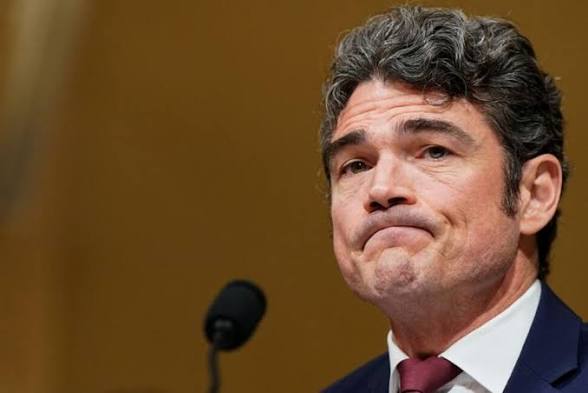
Five members of the United States Congress have introduced a bill requiring the US Secretary of State to submit a comprehensive report on efforts to address ongoing religious persecution and mass atrocities in Nigeria.

If passed into law, the proposed legislation would mandate the Departments of State and Treasury to impose sanctions, including visa bans and asset freezes, on individuals or entities found responsible for severe violations of religious freedom in Nigeria.

Among those named in the bill for possible sanctions are a former Kano State Governor and national leader of the New Nigeria People’s Party (NNPP), Rabiu Musa Kwankwaso; Miyetti Allah Cattle Breeders Association of Nigeria (MACBAN); Miyetti Allah Kautal Hore; and groups described as “Fulani-ethnic nomad militias in Nigeria.”

The bill, titled Nigeria Religious Freedom and Accountability Act of 2026, was introduced on Tuesday in the US House of Representatives.

Its sponsors include Chris Smith, Riley Moore (the bill’s author), Brian Mast, Mario Diaz-Balart, and Bill Huizenga.

The lawmakers said President Donald Trump “acted justly” by redesignating Nigeria as a Country of Particular Concern (CPC), a classification that enables the US government to apply diplomatic and economic measures.

According to the sponsors, the United States should deploy “all available diplomatic, humanitarian, economic, and security tools to pressure the Government of Nigeria to end impunity for perpetrators of mass atrocities and religious persecution and protect Christian communities, clergy, and other targeted religious minorities.”

The bill also directs the Secretary of State to determine whether certain Fulani-ethnic militias in Nigeria meet the criteria for designation as a Foreign Terrorist Organisation.

Part of the proposed legislation states that the US should provide humanitarian assistance — co-funded by the Nigerian government — through trusted civil society and faith-based organisations operating in Nigeria’s Middle Belt states.

It further urges the Departments of State and Treasury to impose targeted sanctions under the Global Magnitsky Human Rights Accountability Act on those responsible for serious religious freedom violations or report to Congress why such measures have not been applied.

Representative Moore, who authored the bill, has consistently maintained that Christians in Nigeria face systemic persecution. He visited Nigeria in November 2025 in connection with the issue.

In November 2025, President Trump redesignated Nigeria as a Country of Particular Concern, a move that paved the way for possible diplomatic and economic actions.

He also authorised coordinated strikes with the Nigerian government against suspected militants on Christmas Day 2025.

We’ll do ‘something very tough’ if US demands are mot met, Trump threatens Iran

By Sabiu Abdullahi

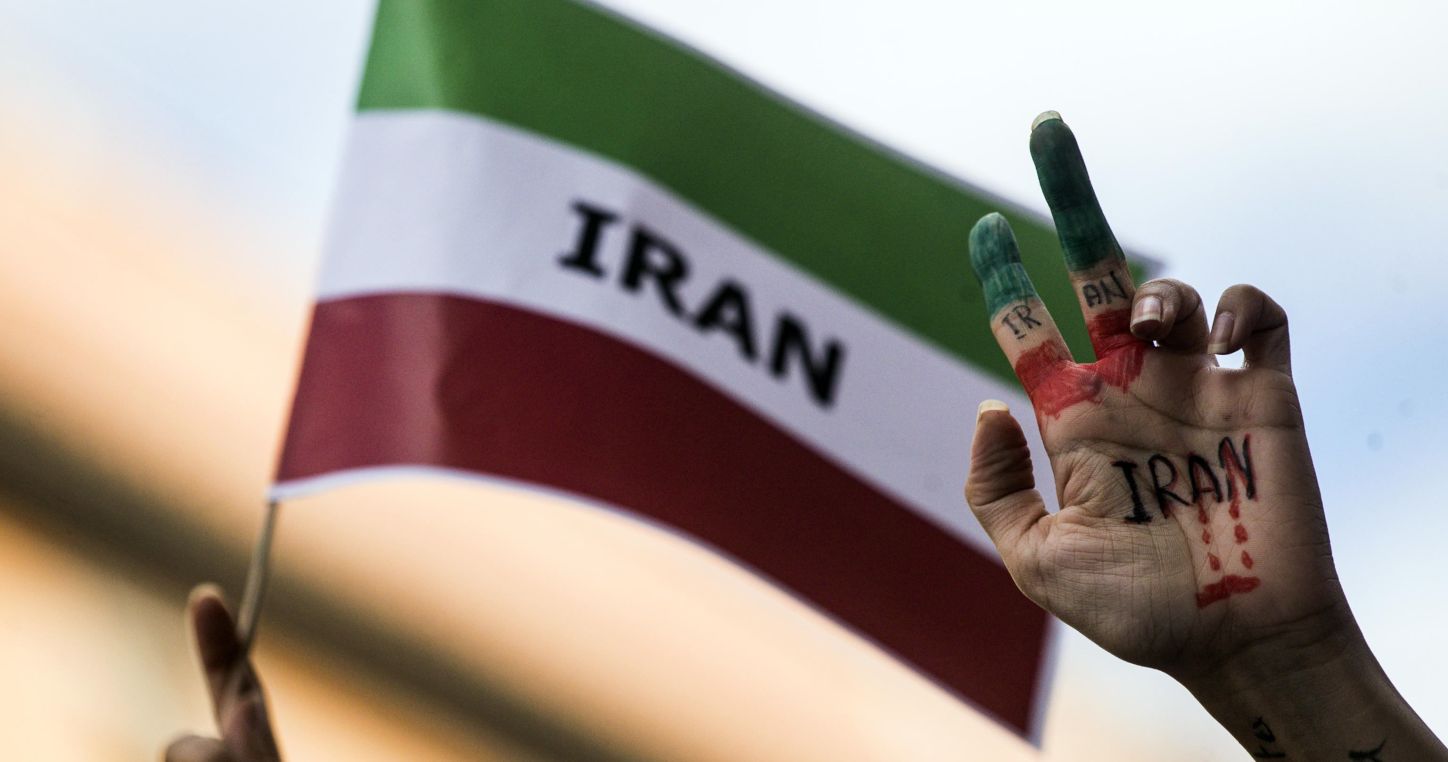
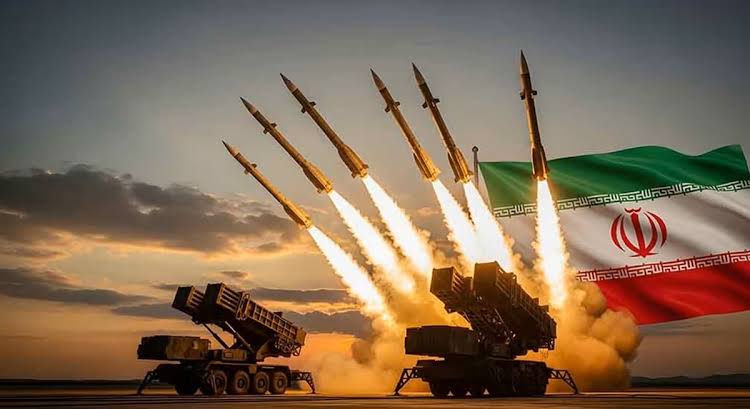
Tensions between the United States and Iran have escalated after US President Donald Trump warned that Washington could resort to military action if Tehran fails to comply with its demands on key security issues.

In remarks made to Israeli broadcaster Channel 12 and published on Tuesday, Trump suggested that the United States was prepared to act forcefully if ongoing efforts to reach an agreement with Iran collapse.

“Either we reach a deal, or we’ll have to do something very tough,” Trump told the news outlet.

His warning came at a time when Iran’s security chief, Ali Larijani, held talks with Oman’s Sultan, Haitham bin Tariq Al Said. Their meeting focused on the outcome of recent discussions between American and Iranian officials.

In the past few weeks, Trump has highlighted the expansion of US military deployments around the region. He disclosed that a “massive armada” had been dispatched to nearby waters. The deployment includes the aircraft carrier USS Abraham Lincoln. Reports by Channel 12 and Axios also indicated that Washington is weighing the option of sending a second aircraft carrier to the Middle East.

The growing military presence has raised fears of a possible US strike on Iran. Critics argue that such action could further destabilise an already fragile region. Earlier on Monday, the United States issued fresh guidance to commercial vessels flying its flag. The advisory urged them to remain “as far as possible” from Iranian territorial waters.

‘With Speed And Violence’

Since January, Trump has intensified pressure on Tehran. He warned that the US military is “locked and loaded and ready to go”.

He drew parallels between Iran and Venezuela, where a US military mission on January 3 led to the removal of former President Nicolas Maduro.

“Like with Venezuela, [the US military] is ready, willing, and able to rapidly fulfill its mission, with speed and violence, if necessary. Hopefully Iran will quickly ‘Come to the Table’ and negotiate a fair and equitable deal,” Trump wrote on social media on January 28.

Toward the end of last month, the Trump administration outlined three broad conditions for Iran. These include halting uranium enrichment, cutting ties with regional proxy groups, and restricting its ballistic missile arsenal. Israel has long pushed for such limits.

During his first presidency, Trump withdrew the United States from the 2015 nuclear agreement that imposed strict limits on Iran’s nuclear programme in exchange for sanctions relief.

After returning to office for a second term in January 2025, he reinstated his “maximum pressure” strategy against Tehran. The campaign features sweeping sanctions and demands to dismantle Iran’s nuclear programme, which Iranian authorities insist is strictly for civilian energy use.

Last June, Trump approved military strikes on three Iranian nuclear facilities during a 12-day conflict involving Iran and Israel.

Focus On Anti-Government Protests

Trump’s renewed threats have coincided with a fresh wave of anti-government protests inside Iran.

Authorities in Tehran responded with a violent crackdown that reportedly left thousands dead. The development drew condemnation from international human rights organisations.

Reports indicated that security forces fired live rounds at demonstrators during an internet blackout.

On January 2, one day before the Venezuela operation, Trump threatened to intervene in support of the protesters and “come to their rescue”, though no such action was eventually taken.

Some analysts believe that proposed US strikes on Iran would do little to assist protesters. They argue that military action would instead align with long-standing US and Israeli objectives of weakening Iran’s military strength.

Iranian officials maintain that armed groups infiltrated the protests and attacked security personnel, leading to the deaths of hundreds of officers. Tehran has also accused foreign powers, including the United States and Israel, of backing the unrest.

While many aspects of the protests remain difficult to independently verify, Iranian authorities have acknowledged that thousands were killed during the government response.

IPOB rejects U.S. lawmaker’s claim that Nigeria’s unity ensures Christians’ safety

By Sabiu Abdullahi

The Indigenous People of Biafra (IPOB) has criticised comments attributed to U.S. Representative Riley Moore concerning Nigeria’s unity, religious persecution, and the movement for Biafran self-determination.

In a statement released on Sunday, Comrade Emma Powerful, IPOB’s Spokesperson and Media/Publicity Secretary, challenged Moore’s view that maintaining Nigeria’s territorial integrity guarantees the protection of Christians.

Moore, who recently concluded a fact-finding visit across Nigeria, warned against the country’s potential balkanisation, arguing that supporting separatist movements could endanger Christians, particularly in the North and Middle Belt regions. According to Moore, his visit included meetings with government officials, church leaders, aid organisations, and Internally Displaced Persons (IDPs) to examine what he described as the “rampant persecution of Christians” in the country.

IPOB, however, described Moore’s position as flawed. “With utmost respect, the position attributed to Rep. Riley Moore reflects a familiar but deeply flawed assumption: that preserving the territorial integrity of Nigeria is synonymous with protecting Christians. History proves the opposite,” the statement said. Powerful highlighted that, over the past six decades, Christians in Northern Nigeria, the Middle Belt, and parts of Yorubaland have faced “cyclical massacres, mass displacement, church burnings, and a culture of impunity enabled by the state itself.”

The group also dismissed Moore’s claim that self-determination “emboldens terrorists,” calling it “a line of reasoning born out of 9 million dollars lobbying enterprise in Washington not reason.” Powerful argued, “terror movements are not triggered by oppressed peoples seeking safety; they flourish where centralized states suppress identity, deny autonomy, and reward violence with appeasement.” He cited Afghanistan as an example where decades of military cooperation and aid collapsed while radical ideology resurged.

Referring to history, IPOB’s statement noted that persecuted religious minorities often survived because independent states provided refuge. “The religiously persecuted Huguenots did not survive Catholic France because France became tolerant. They survived because an independent Protestant England already existed — a sovereign refuge with the political will, military capacity, and moral clarity to protect them. Without Protestant England, there would have been no sanctuary for European Protestants fleeing annihilation,” it read.

Powerful linked this historical context to the current Biafran movement led by Mazi Nnamdi Kanu, describing it as “not a call to violence, nor a scheme to destabilize West Africa as British/Nigerian lobbyists in Europe and USA would have us believe. It is a demand for a democratic referendum, the most peaceful conflict-resolution mechanism recognized in international law.”

The statement added that a restored Biafra “would function as a safe civilizational anchor — a homeland where Christians and people of other faiths from across Nigeria can live without fear, and from which persecuted Christians elsewhere could find refuge and protection.” IPOB also claimed that its emergence has helped reduce attacks on Igbos in Northern Nigeria, stating, “Since the emergence of the IPOB, the once-routine mass killings of Igbos in Northern Nigeria abruptly ceased. That outcome was not accidental. Collective self-assertion created deterrence where decades of appeasement failed.”

While acknowledging the value of security cooperation with the United States, IPOB argued that it addresses symptoms rather than the root causes. “Security cooperation between the United States and Nigeria may manage symptoms, but it has never cured the disease. Repeating a strategy that has failed for generations — while dismissing self-determination as dangerous — is not realism; it is historical amnesia,” the statement said.

Powerful concluded that advocacy for self-determination does not conflict with peace or countering violent extremism. “No serious advocate of peace opposes cooperation against violent extremism. But refusing to acknowledge peaceful constitutional exits, while insisting on the permanence of a demonstrably broken state, guarantees the continuation of persecution rather than its end,” he said.

The spokesperson further argued that an independent Biafra would enhance, not threaten, regional stability. “An independent Biafra, like an independent Protestant England or the State of Israel, would not threaten regional stability. It would create it — by giving persecuted peoples something they have never had within Nigeria: a sovereign place of safety.”

“True concern for Christians — and for all Nigerians — begins with intellectual honesty: forced unity has failed. Safety, dignity, and peace have always followed self-rule, not its denial,” Powerful concluded.

President Trump deletes racist video of Obamas after backlash

By Sabiu Abdullahi

President Donald Trump shared a video clip on social media that portrayed former President Barack Obama and former First Lady Michelle Obama as apes. He later removed the post after strong criticism from the public and members of his own Republican Party.

The clip appeared near the end of a 62-second video that pushed conspiracy claims about irregularities in the 2020 presidential election. It featured the song “The Lion Sleeps Tonight.” The post formed part of a pattern critics say reflects Mr. Trump’s history of promoting offensive imagery and language about Black Americans and other groups.

The White House initially defended the video. Press secretary Karoline Leavitt dismissed the outrage in an earlier statement before the post was taken down.

“This is from an internet meme video depicting President Trump as the King of the Jungle and Democrats as characters from the Lion King,” she said. “Please stop the fake outrage and report on something today that actually matters to the American public.”

Despite that defense, the video disappeared from the president’s social media feed hours later. Observers described the deletion as a rare reversal from Mr. Trump, who often stands by controversial online posts.

Civil rights advocates and historians noted that portraying Black people as apes draws from racist imagery used during slavery and segregation to dehumanize Black communities and justify violence.

Condemnation also came from Republican lawmakers. Senator Tim Scott of South Carolina, the only Black Republican in the Senate and a political ally of Mr. Trump, reacted on social media.

He wrote that he hoped the post was fake “because it’s the most racist thing I’ve seen out of this White House. The President should remove it.”

Representative Mike Lawler, a Republican from New York, also criticized the video. He said the president’s post “is wrong and incredibly offensive.” He added that it “should be deleted immediately with an apology offered.”

Mr. Trump has clashed with Mr. Obama for years. He previously promoted the false “birther” claim that Mr. Obama was born in Kenya and therefore was not a legitimate U.S. president.

The latest controversy has renewed debate over rhetoric, race and political conduct as the United States approaches another election cycle.

Gumi warns against U.S. troops in Nigeria

By Abdullahi Mukhtar Algasgaini

Prominent Nigerian Islamic scholar and critical thinker, Sheikh Ahmad Gumi, has raised strong objections to the potential presence of U.S. military forces in Nigeria, calling it a dangerous move that could threaten the nation’s independence.

In a recent statement, Sheikh Gumi cautioned that powerful foreign forces often play a role in creating or fueling conflicts, only to later intervene under the guise of providing assistance. This pattern, he argued, can eventually lead to a loss of national sovereignty and control.

Gumi emphasized that Nigeria must prioritize protecting its sovereignty. He expressed confidence that, if properly equipped and supported, the Nigerian military is capable of addressing the country’s security challenges without foreign military intervention.

The warning comes amid ongoing debates over international security cooperation in Nigeria’s fight against insurgency and banditry. While some advocate for foreign support, Gumi’s remarks highlight a growing concern among certain circles about the long-term implications of external military presence on Nigeria’s self-determination.

US sends military team to Nigeria as attacks by insurgent groups escalate

By Anas Abbas

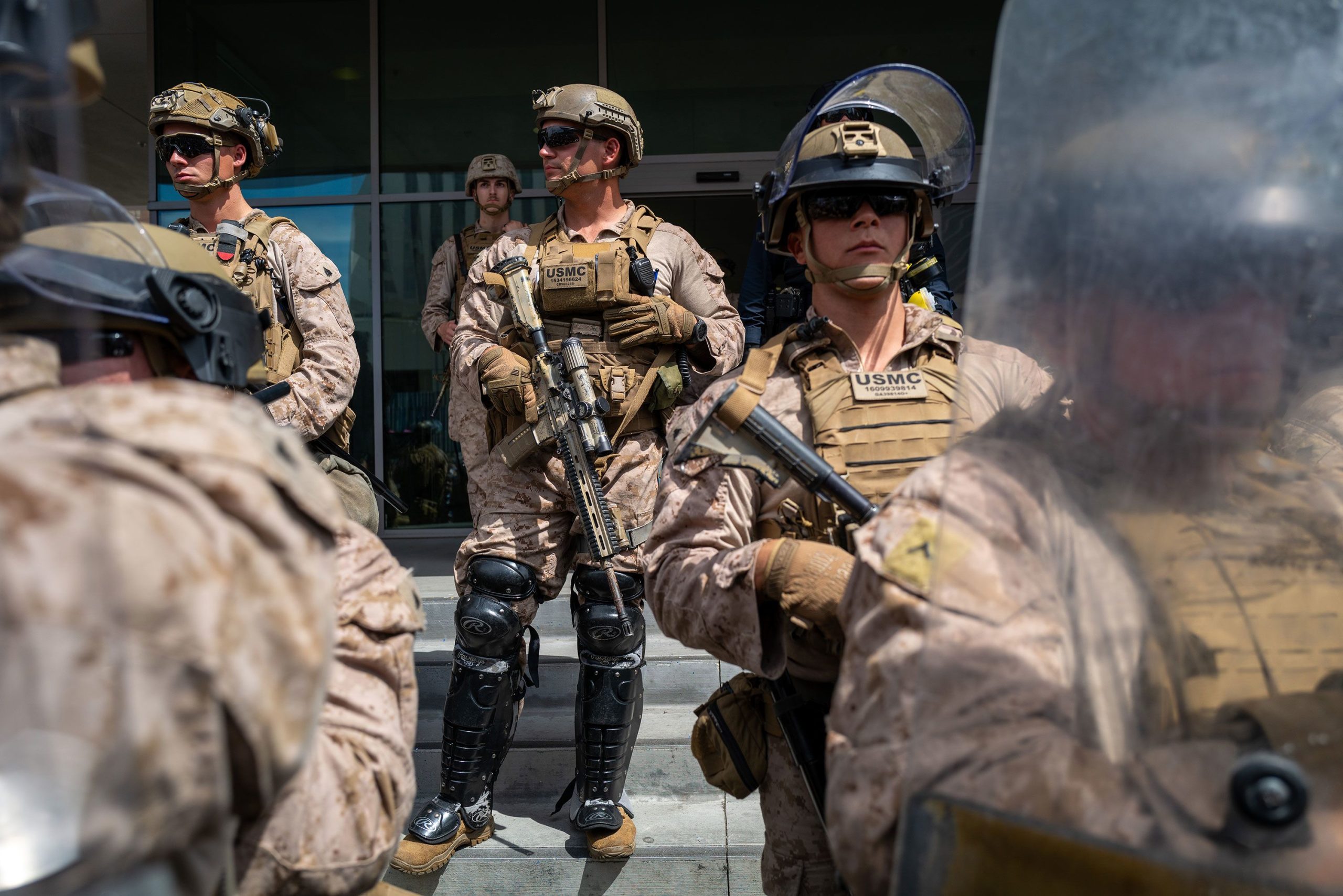
The United States has deployed a small contingent of military personnel to Nigeria in a move officials say is intended to strengthen cooperation against extremist violence in the West African country.

Gen. Dagvin R.M. Anderson, commander of the U.S. Africa Command (AFRICOM), confirmed the deployment on Tuesday, saying the team arrived after discussions between U.S. and Nigerian authorities on intensifying efforts to counter threats from Boko Haram, the Islamic State West Africa Province (ISWAP) and other armed groups.

The deployment is the first acknowledgment of U.S. forces on the ground in Nigeria since America carried out airstrikes there on Christmas Day, targeting fighters linked to the Islamic State. While details about the size, exact mission and location of the U.S. team have not been released, military officials describe their role as focused on intelligence support, coordination and enhancing Nigerian capabilities rather than leading combat operations.

Nigeria faces persistent insecurity across its north and northwest, where Boko Haram and ISWAP factions have intensified attacks on military convoys and civilian communities. These groups have waged an insurgency for nearly two decades, displacing millions and forcing the government to seek varied forms of assistance to suppress the violence.

The move follows growing diplomatic engagement between Abuja and Washington. In recent months, U.S. officials have reportedly urged Nigeria to take stronger action against extremist violence, even as the Nigerian government rejects accusations that it is failing to protect vulnerable populations. Nigerian authorities emphasize that operations target all armed groups that threaten security, irrespective of the victims’ religious identities.

The U.S. has also conducted surveillance flights over Nigeria from bases in neighboring countries, a precursor to the December airstrikes. Those strikes reportedly killed multiple militants in Sokoto State, conducted in coordination with Nigerian forces.

While the current deployment is limited in scope, it marks a notable shift toward deeper military cooperation between the two countries at a time when Nigeria’s security challenges remain acute.

Epstein considered Nigerian oil deal but raised concerns over possible fraud

Newly released documents have revealed email exchanges between late financier Jeffrey Epstein and an associate, David Stern, over a possible business venture involving Nigeria’s crude oil.

The materials are reportedly part of a broader set of records made public by the United States Federal Bureau of Investigation under the Epstein Files Transparency Act.

According to Premium Times in Nigeria, an email dated 20 September 2010 showed Mr Stern informing Mr Epstein of what he described as a lucrative opportunity in brokering or flipping Nigerian crude oil.

The correspondence said a contact identified as “PA” suggested meetings with individuals who had access to buy the oil and resell it to China, with projected profits running into millions of dollars.

“PA has asked me to see a guy who has access to Nigerian oil, and when selling it to China (or somebody else), F. can make around $6m.”

Despite the promise of high returns, doubts were clearly expressed in the exchange.

“This seems very fishy (as my boss JEE would say),” Mr Stern wrote.

Nigeria, which remains Africa’s largest oil producer, has long battled problems of opacity in its oil sector. Illegal trading on the black market has persisted for decades, while attempts by successive governments to enforce transparency have recorded limited success. The Nigerian National Petroleum Company Limited only began publishing audited accounts in recent years.

The email conversation between Mr Epstein and Mr Stern was among several communications uncovered in the newly released files. Before his death in July 2019, Mr Epstein exchanged messages with members of his wealthy and influential circle on business interests, investment prospects, and planned visits. Nigeria featured in several of these discussions.

In another exchange from 2010, Mr Epstein received a message from George Reenstra, founder of Aircraft Service Group, an American aircraft servicing firm. Mr Reenstra informed him of an urgent trip to Nigeria to meet then-President Goodluck Jonathan.

“I unexpectedly must leave this evening for Nigeria. I have tried hard to delay this trip but it is with the the country President and I have no alternative,” Mr Reenstra wrote on 27 September 2010, about four months after Mr Jonathan assumed office. There is no confirmation that the meeting with the Nigerian president eventually took place.

Mr Reenstra also assured Mr Epstein that arrangements for their ongoing business discussions had been delegated.

“I have passed all the documentation to my partner, Jon Parker, and he will be able to assist you in completing the transaction. I will have email access but not the ability to open attachments. Hopefully we can resolve the contract issues and get the funds into deposit early this week per our telephone and e-mail exchanges of last week,” he added.

Mr Epstein was awaiting trial on sex trafficking and conspiracy charges, to which he pleaded not guilty, when he died in custody in 2019. His death, ruled a suicide, intensified public pressure for the release of records detailing his activities and associations.

The calls grew louder after President Donald Trump returned to office, as many believed the public deserved a full account of the financier’s network. The latest documents indicate that several figures linked to Mr Trump had interacted with Mr Epstein over the years. Mr Trump has acknowledged knowing Mr Epstein but insists he severed ties long before the financier’s arrest.

The files also reference prominent global figures, including former US President Bill Clinton, technology billionaire Elon Musk, and Britain’s Prince Andrew, Andrew Mountbatten-Windsor. Mr Epstein maintained close ties with many wealthy and powerful individuals.

Among the documents is correspondence showing an invitation for Mr Epstein to dine at Buckingham Palace. In another exchange, he offered to introduce Prince Andrew to a 26-year-old Russian woman. Photographs in the files appear to show the prince kneeling over an unidentified woman lying on the floor.

Prince Andrew previously claimed he had no contact with Mr Epstein after a visit to the financier’s New York residence in December 2010. However, the documents indicate emails were exchanged in February 2011.

Mr Musk’s name also appeared multiple times, including messages from 2012 to 2013 in which he discussed the possibility of visiting Mr Epstein’s Caribbean island. In 2019, the Tesla chief publicly distanced himself from Mr Epstein, describing him as “obviously a creep” who “tried repeatedly to get me to visit his island.” He said he declined the invitations.

The records further revealed that the current US Secretary of Commerce, Howard Lutnick, arranged a visit to Mr Epstein’s island in 2012. They also showed cordial exchanges between Mr Epstein and Steve Bannon, a former adviser to Mr Trump.

In a January 2019 email, Mr Epstein asked Mr Bannon if he had received an Apple Watch sent as a Christmas gift. Days later, he invited him to “come join” him in New York.

The latest disclosures have renewed scrutiny of Mr Epstein’s far-reaching connections and the extent of his dealings across business, politics, and international networks.

Clintons agree to testify as House moves toward contempt in Epstein probe

By Sabiu Abdullahi

Former U.S. President Bill Clinton and former Secretary of State Hillary Clinton have agreed to testify before the House Oversight Committee as part of its investigation into convicted sex offender Jeffrey Epstein, after lawmakers initiated steps to hold them in criminal contempt of Congress.

The development followed mounting pressure from the committee, which accused the Clintons of attempting to avoid accountability. In a post on X, the committee said the pair were “trying to dodge contempt by requesting special treatment,” while stressing that “The Clintons are not above the law.”

Confirmation of their appearance came from Angel Ureña, deputy chief of staff to Bill Clinton, who also posted on X.

“They negotiated in good faith. You did not,” Ureña wrote. “But the former president and former Secretary of State will be there and look forward to setting a precedent that applies to everyone.”

The House Oversight Committee is examining what the Clintons may have known about Epstein and his longtime associate, Ghislaine Maxwell. The inquiry also focuses on Hillary Clinton’s role in supervising U.S. efforts against international sex trafficking during her tenure as secretary of state.

According to a source familiar with the matter, the Clintons’ legal team sent an email to the committee confirming their willingness to testify under conditions outlined by Chairman James Comer of Kentucky.

“Please be advised, and please advise the Chairman, that my clients accept the terms of your letter and will appear for depositions on mutually agreeable dates,” the message stated. “As has been the Committee’s practice, please confirm the House will not move forward with contempt proceedings, as the Chairman stated in his letter this morning.”

Rep. Robert Garcia, the committee’s ranking Democrat, said the communication showed full compliance with the panel’s demands.

“I mean, they sent us and the Republicans affirmation that they’ve accepted every single term that James Comer has asked for, and that they’re willing to come in and testify,” Garcia said.

Chairman Comer, however, disagreed with that assessment. He told Fox News Digital that the response lacked clear details.

“The Clintons’ counsel has said they agree to terms, but those terms lack clarity yet again, and they have provided no dates for their depositions,” Comer said. “The only reason they have said they agree to terms is because the House has moved forward with contempt. I will clarify the terms they are agreeing to and then discuss next steps with my committee members.”

Following the Clintons’ decision, the House temporarily paused efforts to hold them in contempt. The House Rules Committee had been preparing to advance contempt resolutions but reversed course late Monday night. It remains uncertain when, or if, those proceedings will resume.

Democratic members of the committee have also criticized Comer, noting that he has not pursued contempt actions against other witnesses who failed to appear. They further pointed out that no similar threats were made against the Department of Justice, despite its failure to deliver all Epstein-related documents by a congressional deadline. So far, only a portion of the expected records has been released.

The investigation continues as the committee weighs its next steps in the high-profile case.

Iran’s Supreme Leader Ayatollah Khamenei issues stern warning to US amid tension

By Sabiu Abdullahi

Iran’s Supreme Leader, Ayatollah Ali Khamenei, has warned that any military attack by the United States would lead to a “regional war” in the Middle East, as tensions continue to rise between Tehran and Washington.

Khamenei issued the warning on Sunday amid the presence of the US aircraft carrier USS Abraham Lincoln and other American warships in the Arabian Sea. The deployment followed President Donald Trump’s decision to send the vessels after Iran’s violent crackdown on nationwide protests.

Iranian state television reported Khamenei’s remarks online before broadcasting any video of his speech.

“The Americans should know that if they start a war, this time it will be a regional war,” Khamenei was quoted as saying.

He also insisted that Iran had no intention of attacking other countries but would respond forcefully to any provocation. “We are not the instigators and we do not seek to attack any country. But the Iranian nation will deliver a firm blow to anyone who attacks or harasses it,” he said.

Khamenei further described the ongoing protests across Iran as an attempted coup, adopting a tougher stance after earlier acknowledging that economic hardship had contributed to public anger. The protests began on December 28 after the collapse of Iran’s currency and later turned into a direct challenge to his leadership.

“The recent sedition was similar to a coup. Of course, the coup was suppressed,” he said. “Their goal was to destroy sensitive and effective centers involved in running the country, and for this reason they attacked the police, government centers, (Revolutionary Guard) facilities, banks and mosques — and burned copies of the Quran. They targeted centers that run the country.”

Reports indicate that tens of thousands of people have been detained since the demonstrations began. In Iran, charges related to sedition can carry the death penalty, a development that has drawn concern from the United States. Trump has previously described the killing of peaceful protesters or mass executions as red lines for possible military action.

Meanwhile, Iran also scheduled live-fire military drills for Sunday and Monday in the Strait of Hormuz, a key oil shipping route through which about one-fifth of the world’s traded oil passes. The US military’s Central Command warned against any threat to American forces or disruption of commercial shipping during the exercise.

In a related development, the Speaker of Iran’s Parliament, Mohammad Bagher Qalibaf, announced that Tehran now considers all European Union militaries to be terrorist groups. The statement followed the EU’s decision to designate Iran’s Revolutionary Guard as a terrorist organization over its role in the crackdown on protests.

Qalibaf, a former Revolutionary Guard commander, made the declaration as lawmakers appeared in Guard uniforms in parliament.

“By seeking to strike at the (Guard), which itself has been the greatest barrier to the spread of terrorism to Europe, Europeans have in fact shot themselves in the foot and, once again, through blind obedience to the Americans, decided against the interests of their own people,” Qalibaf said.

Lawmakers later chanted “Death to America!” and “Death to Israel!” during the session.

Trump, for his part, has said Iran is engaged in talks with the United States, even as he declined to confirm whether he had decided on military action.

“I don’t know that they will. But they are talking to us. Seriously talking to us,” Trump said, while stressing the need for a “satisfactory” deal to prevent Iran from acquiring nuclear weapons.

However, Iran’s Supreme Leader has repeatedly ruled out direct negotiations with Washington. Despite that, Ali Larijani, a senior Iranian security official, wrote on social media that “structural arrangements for negotiations are progressing,” although no public evidence of direct talks has emerged.

Nigerians in US go into hiding amid intensified ICE raids, killings

By Sabiu Abdullahi

Anxiety has reportedly gripped Nigerian communities across the United States as Immigration and Customs Enforcement (ICE) ramps up its enforcement drive under President Donald Trump’s administration.

The aggressive campaign has pushed some Nigerians off the streets, caused many to lose jobs, and in some cases, prompted quiet, self-arranged returns to Nigeria. Others have gone into hiding to avoid arrest.

Heightened ICE raids, including door-to-door operations, have disrupted daily life for numerous immigrants. Reports indicate that many Nigerians are avoiding work, limiting their movement, and relying on informal or home-based businesses to make ends meet, according to PUNCH.

President Trump launched a renewed effort to arrest and deport undocumented immigrants shortly after his inauguration in January 2025. The policy, which he has consistently defended, has drawn strong criticism from civil rights groups and immigrant advocates. Critics accuse ICE of using excessive force and mistreating detainees.

The enforcement actions have led to deadly incidents. Official figures show that at least 32 people died in ICE custody in 2025, marking the deadliest year for immigration detention deaths in more than twenty years. In 2026 alone, The Guardian of the UK reported that at least eight people have died during encounters with ICE officers.

Recent shootings in Minneapolis, Minnesota, have further escalated fear. Public outrage followed the death of 37-year-old Renée Good, who was shot by an ICE agent on January 7 during an operation. A medical examiner later ruled her death a homicide caused by multiple gunshot wounds. Weeks later, 37-year-old Alex Pretti was also killed during a federal immigration operation in the same city.

Since the crackdown began, about 70,000 people have reportedly been detained by ICE, while roughly 540,000 immigrants have been deported. Sources across the U.S. indicate that the climate of fear has led some Nigerians to abandon regular jobs and make discreet plans to return home.

Social media has captured the human toll of the raids. A Nigerian woman described the panic and grief among immigrants, saying she was traumatised by Pretti’s death, an intensive care nurse at the Minneapolis VA Medical Center. She said ICE agents often ignored legal status during operations.

“It is very traumatising the way these (ICE) people are treating immigrants,” PUNCH quoted her as saying. “President Trump, if you want the immigrants to leave America, tell us. Just come out and say, ‘All immigrants, we want you out, whether you are criminal or not.’”

She added, “These (ICE) people don’t even care. There are a lot of immigrants who are treated like animals, and these people will be telling them, ‘we are citizens’, but they don’t care.”

The woman, who requested to be identified as senior Immigrant, said fear of arrest has driven many Nigerians into online trading and home-based work. She recounted a shop assistant who stopped coming to work in mid-December and a family who left factory jobs after ICE activity in their area.

“My girl, who was working with me in my shop, stopped coming in mid-December. The reason was that she was scared for her life because ICE came to my area,” she said. “The most unfortunate thing was that they came to her area in New Jersey. Since then, she has had anxiety and fear.”

She added, “People are staying indoors because of the fear of ICE. They get family support from those who work. Two weeks ago, someone called me to say that they were donating to support some families, and they requested that I contribute, which I did.”

She said some families now sell goods from home or prepare meals for online orders that customers pick up privately. “There are many people with other serious experiences,” she noted.

Mrs Chris Ademiluyi, President of the Nigerian community in Maryland, confirmed that many Nigerians have chosen to go into hiding rather than return home.

“They are in hiding instead. Nigeria is not any better,” Ademiluyi said. “Some people affected may want to talk anonymously, but they are not talking because of fear.” She added that Nigerian-Americans are largely shielded and that community organisations are providing support where possible.

The situation has also sparked online debate. The Lead Pastor of Lighthouse/Rejuvenation Church in Rosenberg, Texas, Shola Adeoye, cautioned Nigerians against fear-driven decisions in a Facebook post.

“Some Nigerians are moving back home due to fear of this administration. It’s not wise to bury yourself before death,” Adeoye wrote.

Ben Ijeh, a Facebook user, commented, “Whoever that leaves involuntarily by ICE is not psychologically likely to want to come back in the future. The trauma will be too much to bear. God will always make a way for His own.” Another user, Olukunle Durodolu, wrote, “The way ICE agents capture people could be scary; they may not have the opportunity to get themselves together. So, it is preferred to time their return home when they can control themselves.”

Policy changes have compounded the pressure. Mr Gbenga Ogunjimi, Executive Director of the Nigerian Center, a non-profit immigration and cultural organisation in Washington, DC, said the organisation has seen a surge in Nigerians seeking help.

“The problem we are facing is multi-layered. There is a visa ban,” Ogunjimi said. “Before the visa ban, Nigeria was designated as a Country of Particular Concern. That was last year.”

He explained that in December 2025, a partial ban suspended most visa categories, including non-immigrant visas. “What they did not tell those of us in America or Nigerians in America is that the ban will also stop their ability to file for citizenship, green cards, work authorisation, asylum, and things like that,” he said.

Ogunjimi said the Nigerian Center has focused on public education and guidance. “If you go to our website and social media, we put out a policy memo, educating people on the parameters of this ban. We’re just giving information to folks.”

An increasing number of immigrants are considering voluntary departure, Ogunjimi noted. “We’ve seen cases where a lot of people are self-deporting right now,” he said. “Some of them asked if they would be able to come back to the US if they leave.”

In some cases, his organisation advises immigrants not to leave hastily. “They probably came here on a visiting visa… maybe they have overstayed for a couple of days,” he said, adding that waivers may still be possible.

On exact figures, Ogunjimi said, “Do I have numbers of those who have actually gone back, and who have taken the advice? The answer is: I don’t know. I don’t have those numbers.”

As ICE enforcement continues, uncertainty remains the defining reality for many Nigerians in the U.S., caught between fear of arrest abroad and harsh economic and security conditions at home.