USA

Trump threatens to cut off all trade with Spain over refusal to approve using its military bases to strike Iran

By Sabiu Abdullahi

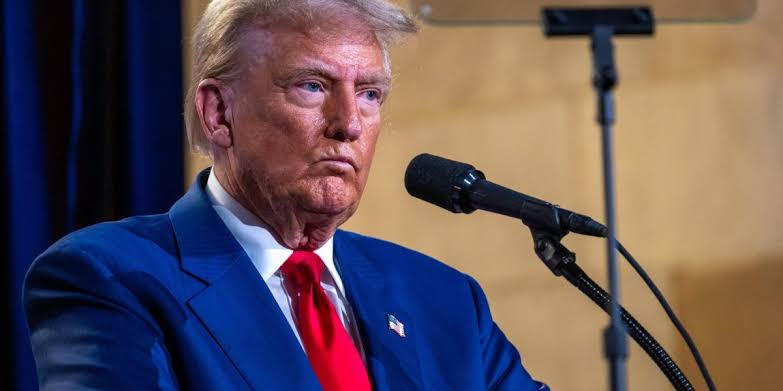
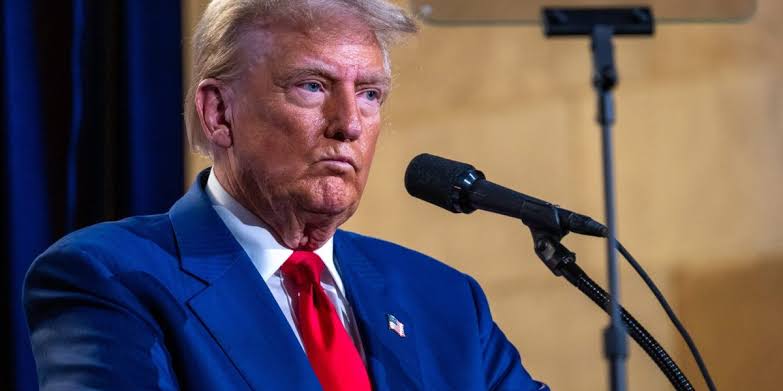
U.S. President Donald Trump has announced plans to halt all trade relations with Spain after Madrid declined to permit American forces to use its military bases for operations connected to strikes on Iran.

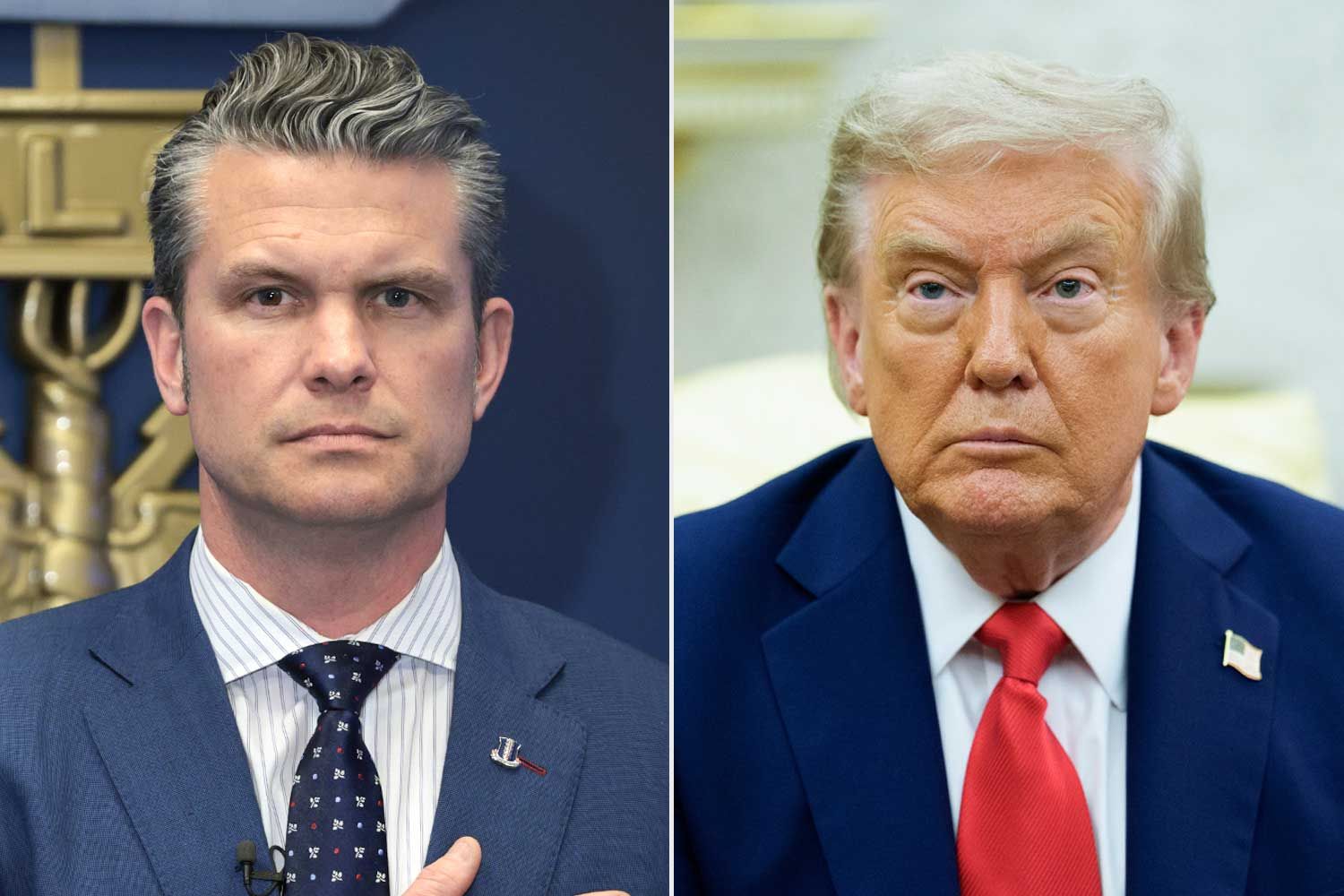
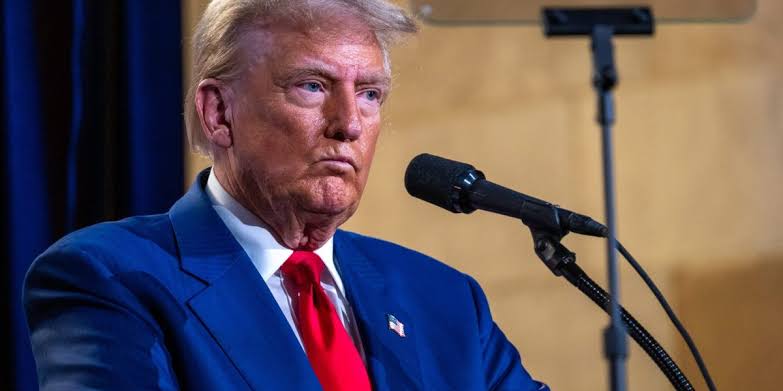
Trump made the remarks on Tuesday during a meeting at the White House with German Chancellor Friedrich Merz. He criticised Spain’s position and disclosed that he had directed Treasury Secretary Scott Bessent to take action.

“Spain ‌has been terrible,” Trump said. He added that he had instructed Bessent to “cut off all dealings” with Spain.

“We’re going to cut off all trade with Spain. We don’t want anything to do with Spain,” the president stated.

Following Spain’s refusal, the United States moved 15 aircraft, among them refuelling tankers, away from the Rota and Moron air bases in southern Spain. The Spanish Socialist-led government had declined permission for the facilities to support operations targeting Iran.

Trump also revisited his long-standing demand that NATO members allocate 5% of their gross domestic product to defence. Spain has resisted that target. The president argued that Washington holds broad authority over trade matters.

“Spain has absolutely nothing that we need,” he said.

“All business having to do with Spain, I have the right to stop it. Embargoes – do anything I want with it – and we may do that with Spain,” Trump added.

Bessent, who stood beside the president, confirmed that steps would be taken to examine possible penalties. He said the United States Trade Representative and the Commerce Department would begin inquiries into measures against Spain.

Although the U.S. Supreme Court recently limited Trump’s ability to impose sweeping global tariffs under the International Emergency Economic Powers Act (IEEPA), the president insisted the ruling strengthened his powers in other respects. He said the decision “totally reaffirmed” his authority to impose a comprehensive trade embargo under the same law.

IEEPA, enacted in 1977, has served as a legal basis for sanctions against countries such as Iran, Russia and North Korea. It has also enabled restrictions on exports of sensitive technologies.

Bessent backed Trump’s interpretation of the ruling. “The Supreme Court reaffirmed your ability to implement an embargo,” he told the president.

Spain Reacts

The Spanish government responded with a statement stressing that the United States must respect the independence of private enterprises, international legal frameworks and trade agreements between Washington and the European Union.

Madrid said it possesses the tools required to cushion any economic impact and assist industries that might suffer losses. Officials also affirmed their commitment to open markets and continued economic collaboration with partners.

Spain ranks as the world’s leading exporter of olive oil. It also supplies the United States with auto components, steel and chemicals. However, analysts note that Spain may be less exposed to American trade pressure than some other European economies.

Data from the U.S. Census Bureau show that the United States recorded a $4.8 billion trade surplus with Spain in 2025. American exports to Spain reached $26.1 billion, while imports stood at $21.3 billion. This marked the fourth consecutive year of surplus for Washington.

Chancellor Merz indicated that European partners are urging Spain to increase defence expenditure. “We are trying to ⁠convince Spain to catch up with the 3% or 3.5% which we agreed on in NATO,” he said.

“And as the president said, it’s correct: Spain is the only one who is not willing to accept that and we are trying to convince them that this is part of our common security that ⁠we all have to comply with these numbers,” Merz added.

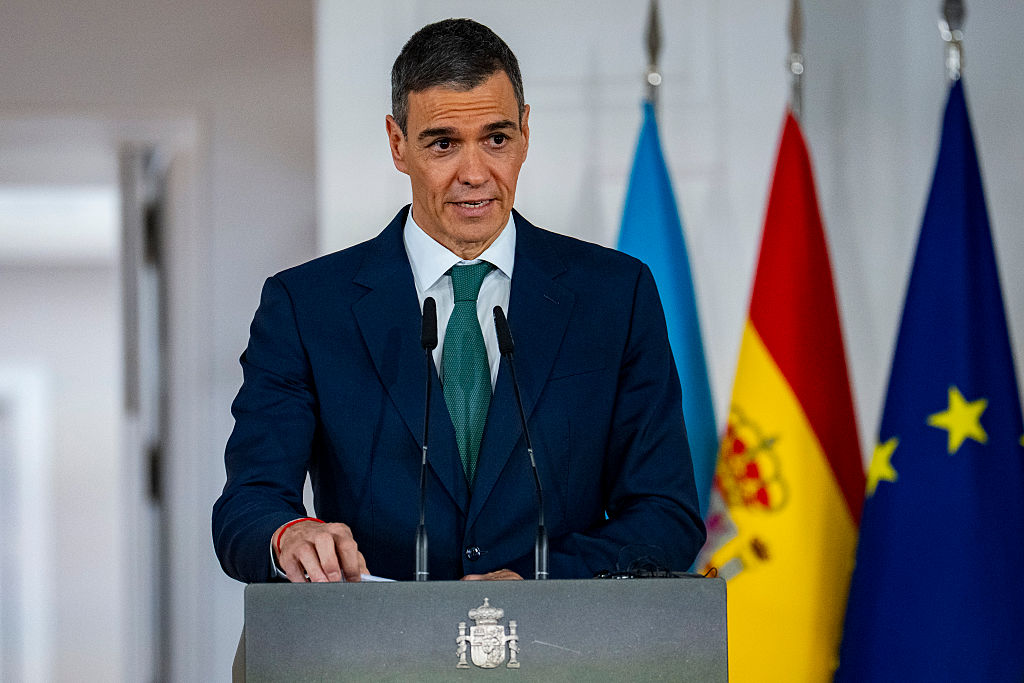
Spain’s Prime Minister Pedro Sanchez has previously taken positions that have drawn criticism from Trump. Among them was a decision to deny docking access to vessels transporting weapons to Israel.

The latest dispute signals rising tension between Washington and Madrid. The situation may have wider implications for transatlantic trade and security cooperation if concrete measures follow the president’s warning.

Time for negotiations is over, Iran’s new leader Arafa tells Trump

By Sabiu Abdullahi

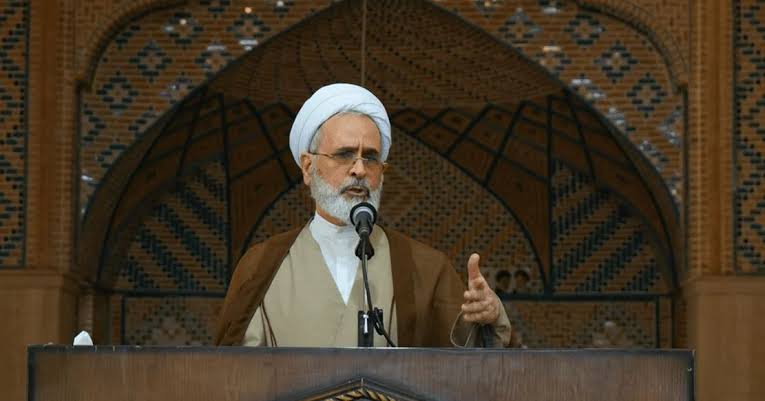
Iran’s newly declared Supreme Leader, Alireza Arafa, has threatened retaliation against the United States and Israel after Tehran accused both countries of carrying out military attacks on its territory.

In a statement released on Tuesday morning across several social media platforms, Arafa said diplomatic efforts had come to an end. He accused Washington of crossing a “red line.”

“The time for negotiations is over. The United States has chosen to cross the red line, the line of irreparable harm,” he said.

“By launching this war, they have signed their own death warrant: they don’t know when or how the axe will fall, but we hold the reins.”

His remarks followed reports of coordinated airstrikes by US and Israeli forces on Iranian military sites and key infrastructure. The operation marked a sharp deterioration in relations among Tehran, Washington and Tel Aviv.

Tensions between the countries have grown in recent months over Iran’s missile programme, its regional activities and allegations linked to nuclear development. The United States has repeatedly accused Iran of supporting armed groups in the Middle East and fuelling instability in the region. Iranian officials have denied those allegations.

Tehran described the recent strikes as “unprovoked.” Authorities insisted that Iran did not initiate hostilities.

Arafa rejected Western claims that the attacks were preventive steps against a nuclear threat.

“They brandish the nuclear specter like a scarecrow, blinded by their arrogance,” he said.

“They have no idea of the true extent of our power or what we are prepared to unleash.”

He directed some of his strongest remarks at Israel and warned of continued retaliation.

“As for Israel, its fate is sealed. Every strike, every crime, every act of suffering they have inflicted will come back to haunt them,” Arafa declared.

“They will remain in our sights, exposed, vulnerable, hunted.”

The exchange of threats has heightened concerns about a wider regional conflict. Armed groups aligned with Tehran in Lebanon, Syria, Iraq and Yemen could become involved if hostilities expand.

Security analysts say a prolonged confrontation could disrupt global energy supplies and deepen sectarian divisions across the Middle East.

In his concluding remarks, Arafa described the crisis as a defining struggle for Iran.

“We walk in the shadow of the Leader, and every step is a lightning bolt,” he said, before ending with the slogan: “Iran does not bend. Iran wins. Always.”

As tensions rise and military activities continue, international actors face growing calls to intervene and prevent a broader conflict that could reshape the region for years.

US calls on citizens to immediately leave over dozen Middle East countries

By Sabiu Abdullahi

The United States has urged its citizens to leave more than a dozen countries across the Middle East as fighting between US-Israeli forces and Iran intensifies.

In a notice issued on Monday, the US Department of State advised Americans to depart several countries in the region, which include Saudi Arabia and Qatar. The advisory follows recent updates to travel guidance that cautioned against travel to parts of the Middle East.

According to Aljazeera, the directive applies to Bahrain, Egypt, Iran, Iraq, Israel, the occupied West Bank and Gaza, Jordan, Kuwait, Lebanon, Oman, Qatar, Saudi Arabia, Syria, the United Arab Emirates and Yemen.

Mora Namdar, the State Department’s assistant secretary for consular affairs, announced the guidance on social media. She instructed US citizens to “DEPART NOW” from the listed countries using available commercial transport “due to serious safety risks”.

Earlier on Monday, the US Embassy in Amman said its staff had left the diplomatic compound “due to a threat”.

Al Jazeera’s correspondent in Washington, Patty Culhane, described the method of the announcement as unusual. She noted that the message came through a post by a senior official rather than through a traditional formal channel.

“The fact that the State Department is referring us to a tweet from an assistant secretary of state, and this isn’t necessarily official policy – but perhaps they are saying it is official policy – this is not at all how it is usually done,” Culhane said.

“This is really, truly bizarre. I can’t say that I have seen anything like this in my very long time covering Washington,” she said.

“This is not how this is done. The State Department has very complex processes to notify Americans in these places that they need to leave. That hasn’t happened. It’s not official government policy, at least it doesn’t appear to be yet, because this isn’t how they announce official government policy,” she added.

Culhane also questioned how Americans would be able to leave, given the security situation. “It’s not quite clear what this means, and exactly how Americans could leave the entire Middle East since commercial traffic has been interrupted so much because of all of the missiles,” she said.

“This is going to be a very big question, especially for all of the Americans in the Middle East”.

The advisory comes after US and Israeli forces launched heavy strikes on Iran on Saturday. Iranian authorities confirmed the deaths of several senior figures, including Supreme Leader Ayatollah Ali Khamenei. Tehran responded with attacks across the region.

President Donald Trump said on Monday that the military campaign was expected to continue for four to five weeks, although he indicated that it could extend beyond that timeframe.

Spain declines US request to use military bases for Iran strikes

By Sabiu Abdullahi

Spain has announced that the United States is neither using nor expected to use joint military facilities on Spanish soil for operations linked to the ongoing conflict with Iran.

Foreign Minister Jose Manuel Albares made the position clear during an interview with Spanish public television on Monday. “Based on all the information I have, the bases are not being used for this military operation,” he said.

The statement follows criticism from Spanish Prime Minister Pedro Sanchez, who denounced the US and Israeli strikes on Iran that began on Saturday. He described the action as an “unjustified” and “dangerous military intervention” that falls outside international law.

Albares stressed that Madrid would not permit any activity beyond the scope of existing agreements. “The Spanish government will not authorise the use of the bases for anything beyond the agreement or inconsistent with the United Nations,” he stated. He referred specifically to the Rota naval base and the Moron airbase, facilities operated jointly by Spain and the US but which remain under Spanish sovereignty.

Defence Minister Margarita Robles also addressed the issue. She said the bases “will not provide support, except if, in a given case, it were necessary from a humanitarian perspective”.

Spain further criticised Iran’s retaliatory strikes on Gulf states, even as it maintained opposition to the initial US and Israeli attacks.

Flight data published on Monday by tracking service FlightRadar24 indicated that 15 US aircraft departed from bases in southern Spain after the launch of military operations against Iran. At least seven of the planes later arrived at Ramstein airbase in Germany, according to the same source.

Madrid’s stance differs from that of several other leading European nations. The United Kingdom had earlier declined to allow the use of its bases for strikes on Iran. However, Prime Minister Keir Starmer reversed that decision on Sunday. He authorised their use for “collective self-defence” following Iranian counterattacks aimed at US assets in the Middle East and energy facilities in the Gulf.

France and Germany have signalled readiness to take a similar approach.

In a joint statement issued on Sunday, the leaders of the three countries said they were “appalled by the indiscriminate and disproportionate missile attacks launched by Iran against countries in the region, including those who were not involved in initial US and Israeli military operations”.

They added, “We have agreed to work together with the US and allies in the region on this matter.”

U.S. imposes sanctions on Rwandan military over alleged support for M23 rebels in Eastern Congo

By Sabiu Abdullahi

The United States has announced new sanctions against the Rwandan Defense Force (RDF) and four of its top officers over claims that they provided assistance to the March 23 Movement (M23) operating in eastern Democratic Republic of the Congo (DRC).

The decision was made public on Monday in a statement from the U.S. State Department. Principal Deputy Spokesperson Thomas “Tommy” Pigott said the action followed allegations that Rwanda offered “direct operational support” to the rebel group. He linked the move to the recent takeover of the Congolese city of Uvira by M23 fighters.

The statement noted that the fall of Uvira came “just days after President Trump presided over the December 4, 2025 signing of the historic Joint Declaration of the Washington Accords for Peace and Prosperity” together with DRC President Felix Tshisekedi and Rwandan President Paul Kagame.

Washington described the rebel offensive as a “clear violation of the Washington Accords,” which were introduced as a peace framework for the troubled Great Lakes region.

U.S. officials stressed that M23 is already under sanctions from both the United States and the United Nations. The group faces accusations of carrying out serious abuses in eastern Congo.

“M23, a U.S.- and UN-sanctioned entity, is responsible for horrific human rights abuses, including summary executions and violence against civilians, including women and children,” the statement said.

The State Department also alleged that backing from the RDF and its senior commanders made it possible for M23 to take control of territory in the DRC and maintain its campaign.

“The continued backing from the RDF and its senior leadership has enabled M23 to capture DRC sovereign territory and continue these grave abuses,” the statement added.

The sanctions were issued under Executive Order 13413, as amended. The order authorises the U.S. government to penalise individuals and organisations accused of contributing to unrest in the DRC.

Pigott said the United States remains committed to the peace agreement and regional stability.

“The United States stands firm in its support for peace and stability in eastern DRC and the wider region,” he said.

“The Washington Accords mark a decisive turning point for the Great Lakes region, setting a new course for peace, cooperation, and prosperity among neighbors.”

The statement said the latest measures reflect Washington’s determination to see that the agreement is respected.

“As President Trump has made clear, the United States is prepared to use all available tools to ensure the DRC and Rwanda deliver on the promises of this historic agreement,” it said.

Eastern Congo has experienced prolonged conflict involving several armed groups. Rwanda has repeatedly faced accusations of backing M23. Kigali has denied those claims in the past.

Jeffries challenges Trump over Iran strikes, urges focus on domestic priorities

By Sabiu Abdullahi

United States President Donald Trump is facing mounting criticism over Washington’s recent military action against Iran, as senior lawmakers question the basis and legality of the operation.

U.S. House Minority Leader Hakeem Jeffries said the administration has yet to provide proof that Iran posed an imminent danger that required military intervention. His remarks have intensified debate in Congress about both the constitutional authority for the strikes and the broader strategy behind them.

During a television interview before attending a classified congressional briefing, Jeffries stated that he would continue to review intelligence to determine whether the action was warranted. According to CNN, he expressed concern that lawmakers had not been shown evidence to support the decision.

“I will continue to look for information … to suggest that there was intelligence indicating that Iran was prepared to strike the United States. Nothing has been presented to justify what’s taking place up until this point,” Jeffries was quoted as saying.

He maintained that many Americans expect their leaders to address economic pressures at home instead of committing the country to another prolonged conflict abroad.

“Americans want the government to focus on making their life better, making their life more affordable, not getting involved in another endless war in the Middle East that is going to end in failure,” he added.

Jeffries also raised questions about the President’s authority to launch extensive military operations without prior approval from Congress. He pointed to Article I of the U.S. Constitution, which assigns the power to declare war to the legislative branch.

Reports indicate that lawmakers are seeking a vote on a war powers resolution in response to the strikes. Concerns have grown in Washington following briefings that reportedly did not show Iran was preparing an immediate attack before the joint U.S.-Israeli operation. The situation has drawn criticism from members of both major parties, who are asking for clarity on the objectives and long-term plan.

International reaction has also intensified. The United Nations Educational, Scientific and Cultural Organization (UNESCO) condemned the bombing of a girls’ primary school in southern Iran. The agency described the attack as a serious breach of international humanitarian law.

According to CNN, missiles struck a school in Minab during ongoing military operations. About 150 people were killed. Many of them were believed to be students. Nearly 100 others sustained injuries.

“The killing of pupils in a place dedicated to learning constitutes a grave violation of the protection afforded to schools under international humanitarian law,” UNESCO said, according to CNN.

The organisation warned that assaults on schools place students at grave risk and weaken the right to education. The incident ranks among the deadliest civilian casualties reported since tensions escalated.

While the strike occurred within the context of wider military action against Iranian targets, investigations into responsibility are still underway.

Humanitarian groups have renewed appeals for the protection of civilians and public infrastructure. Save the Children stressed that children often suffer most during armed conflicts.

“Every war is a war on children, and the world cannot stand by and watch children be killed or injured,” said Inger Ashing, the organisation’s chief executive, in a statement.

As tensions rise across the Middle East, lawmakers, diplomats and international bodies have warned that the crisis could spread across the region. In Washington, debate continues over the legality, purpose and human cost of the military campaign.

JUST IN: Iran vows ‘crushing’ retaliation after US, Israel strikes

By Sabiu Abdullahi

Iran has threatened to launch a strong response following recent military strikes carried out by the United States and Israel, warning that any retaliation would be “crushing”.

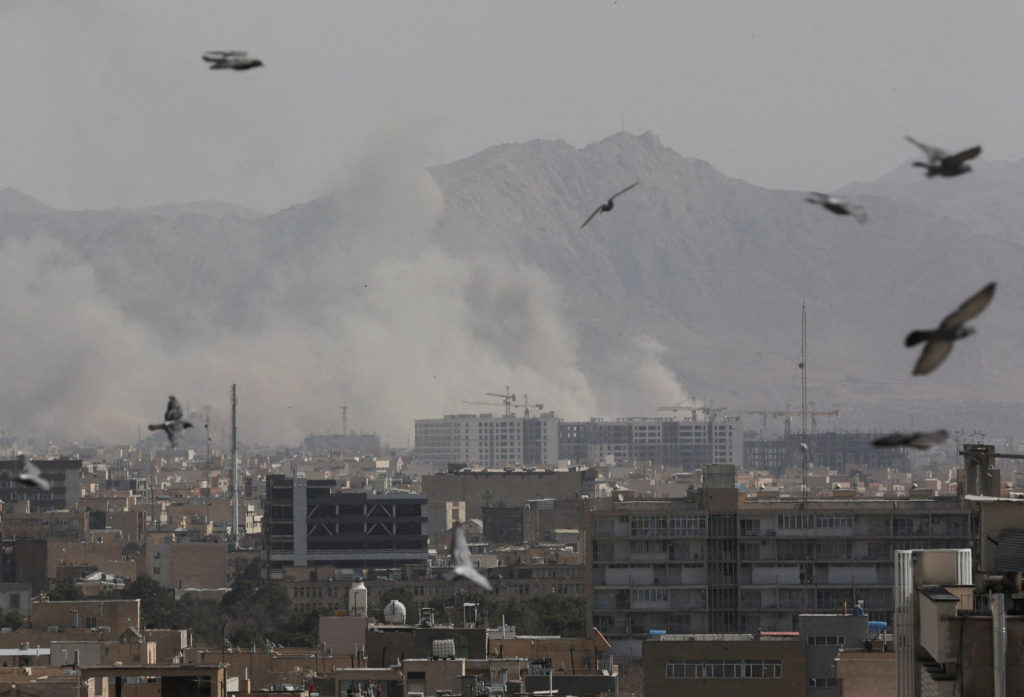
Explosions were reported on Saturday in several Iranian cities, including Kermanshah, Lorestan, Tabriz, Isfahan and Karaj, raising fears of a widening conflict in the region.

Israel’s Defence Minister, Israel Katz, defended the operation. He said: “The State of Israel launched a pre-emptive attack against Iran to remove threats to the State of Israel.”

The latest strikes come months after a 12-day aerial confrontation between Iran and Israel in June. The development also follows repeated warnings from Washington and Tel Aviv over Iran’s nuclear and ballistic missile activities.

An Iranian official told Reuters that authorities in Tehran are preparing a counteroffensive that would be severe in scale.

Reports indicate that Iran’s Supreme Leader, Ali Khamenei, was not in Tehran at the time of the attack. He has since been moved to a secure location.

Reacting to the strikes, the head of the National Security Commission of Iran’s parliament, Ebrahim Azizi, issued a warning to both countries. “We warned you! Now you have started down a path which end is no longer in your control,” he said.

Meanwhile, United States President Donald Trump said the action was taken to safeguard American interests.

“A short time ago, the United States military began major combat operations in Iran. Our objective is to defend the American people by eliminating imminent threats from the Iranian regime, a vicious group of very hard, terrible people. Its menacing activities directly endanger the United States, our troops, our bases overseas, and our allies throughout the world,” he posted.

The situation has heightened global concern, as tensions continue to rise with both sides signalling further military action.

Sheikh Gumi backs Shariah law in Nigeria, faults US lawmakers’ report

By Sabiu Abdullahi

Popular Islamic cleric, Ahmad Gumi, has defended the practice of Shariah law in Nigeria.

He said it is the right of Muslims to be governed by their religious principles, similar to how the United States safeguards Christian interests.

Gumi made the remarks in response to reports that some members of the U.S. Congress submitted a request to President Donald Trump, urging the abolition of Shariah and blasphemy laws in Nigeria.

In a post shared on his verified social media page, the cleric maintained that Muslims have the freedom to follow their religious injunctions. “Shariah Law is the Muslims’ prerogative just as the US found it only necessary to protect the Christians,” he said.

He also stated that Muslims face threats which he described as hidden and externally driven. “At the same time, Muslims are more victims of this occult terror imported into the country by hidden forces they very well know,” Gumi stated.

In a separate post, he criticised what he called inconsistency in global discussions on religion and governance. “It’s ok for US evangelical Christians administration for Israel to live by biblical stories yet Haram for Muslims to live by the Quranic injunctions,” he wrote.

Shariah law operates alongside Nigeria’s conventional legal system in several northern states, especially in matters related to personal and family issues among Muslims.

FG dismisses US congressmen’s claims on religious persecution in Nigeria

By Sabiu Abdullahi

The Federal Government has rejected claims by United States lawmakers that Nigeria is witnessing religious persecution, insisting that no such policy exists in the country.

The Minister of Information, Mohammed Idris, stated this while reacting to a report submitted to US President Donald Trump by members of the US Congress.

The report was presented by lawmakers from the House Committees on Appropriations and Foreign Affairs after months of investigations and field assessments.

It highlighted allegations of persecution against Christians as well as concerns over extremist violence.

The development followed the decision by the US government to redesignate Nigeria as a Country of Particular Concern and to mandate Congressman Riley Moore and Appropriations Committee Chairman Tom Cole to lead an inquiry into the matter.

Moore, in a statement shared on his official X account, said the submission marked the end of extensive bipartisan efforts. He added that the engagements offered a clearer picture of insecurity and the situation facing Christian communities in some parts of Nigeria.

In response, the Federal Government reiterated that insecurity in the country is not driven by religious bias or government policy. Mohammed Idris stressed that there is no official backing for religious persecution and that all citizens are protected under the law regardless of their beliefs.

“The Federal Government of Nigeria has taken note of recent statements and recommendations emerging from engagements within the United States Congress, contained in a joint report on Christian persecution in Nigeria submitted to the White House on Monday by the House Foreign Affairs Committee and the House Appropriations Committee, concerning security developments in Nigeria.”

“Nigeria acknowledges that parts of the country continue to face serious security challenges, including terrorism, banditry, and communal conflicts that have tragically affected many communities. The Federal Government remains deeply concerned about the loss of lives and destruction of property resulting from these criminal acts, and we extend our sympathies to all victims and their families, regardless of faith, ethnicity, or region.

“It is important to state clearly that Nigeria does not have, and has never had, a state policy of religious persecution. The violence being confronted by our security agencies is not driven by government policy or religious bias, but by complex security threats, including terrorism, organised criminality, and longstanding communal tensions.”

The minister also noted that the Nigerian Constitution guarantees freedom of religion and worship. He said the government remains committed to protecting these rights and ensuring equal treatment for all citizens.

“Nigeria values its longstanding and strategic partnership with the United States. Our two countries share common interests in promoting security, economic development, and regional stability. We remain open to constructive dialogue and cooperation rooted in mutual respect, shared responsibility, and recognition of Nigeria’s constitutional framework and sovereignty.

“The Federal Government will continue to engage international partners through appropriate diplomatic channels while remaining focused on its primary duty, the protection of all Nigerians.”

Nigerian fashion designer in US shot dead during nightclub

By Sabiu Abdullahi

A Nigerian fashion designer living in the United States, Sheriff Shittu, has lost his life after a shooting incident at a nightclub in Brooklyn, New York.

The 30-year-old was killed in the early hours of February 14 during a birthday gathering at the Quilox Restaurant and Lounge, located in the East Flatbush area.

Reports from local authorities indicate that the incident happened around 4:25 a.m. A man who was reportedly intoxicated had been asked to leave the club by security personnel. While being escorted out, he allegedly pulled out a gun and opened fire.

Witness accounts suggest that the situation began after the suspect caused a disturbance inside the venue. He was said to have acted inappropriately toward some female guests, including Shittu’s girlfriend. This behaviour led to a confrontation that later escalated.

Shittu had attended the celebration with his younger brother, Fawaz Shittu, as they joined others to mark a friend’s birthday.

Fawaz later described the moment of the tragedy in an emotional account. “I was screaming his name. I was trying to wake him up,” he said.

Further reports stated that the suspect had been behaving in a disorderly manner before the argument broke out, which eventually led to the shooting.

Family members of the deceased have raised concerns over the security measures at the nightclub. They questioned how a firearm was brought into the venue without detection.

“We don’t know how the security did not do the job and search properly before somebody could bring a gun into the club,” Salem Shittu said.

“He was being kicked out, and he was being escorted out when he did it,” he added.

Police confirmed that the suspect escaped immediately after the attack and has not yet been apprehended.

Shittu was rushed to One Brooklyn Health–Brookdale University Hospital Medical Centre, where doctors later confirmed his death.

Relatives described him as a young designer who had been working hard to build a career in the United States before his life was cut short.

Authorities have begun investigations into the incident and are currently searching for the gunman.