UK

UK unveils five-point plan to curb immigration

By Sabiu Abdullahi

The UK government has unveiled a comprehensive five-point plan to curb immigration, drawing mixed reactions from various sectors.

The plan aims to address concerns over rising immigration levels and implement stricter measures for those seeking to enter the country. 

The plan for the policy 

1. Overseas care workers will no longer be able to bring their dependents to the UK. This measure aims to prevent the exploitation of care workers by employers and ensure that they are adequately compensated for their work. 

2. The minimum salary requirement for skilled worker visas will be raised from £26,000 to £38,700. This move aims to attract highly skilled workers and ensure they receive fair wages. 

3. The 20% minimum wage reduction previously offered to those applying for visas in shortage occupations will be eliminated. This decision aligns with the government’s efforts to ensure fair pay for all workers, regardless of their nationality. 

4. The minimum income requirement for family visas will be increased from £18,600 to £38,700. This measure aims to ensure that sponsors can financially support their dependents. 

5. The government has requested that the Migration Advisory Committee review the graduate route to prevent abuse. Changes to the student visa are expected to be announced soon. 

Expected outcome 

The government estimates that the five-point plan will reduce immigration by around 300,000 people annually.

However, critics argue that the plan could hinder the UK’s ability to attract and retain skilled workers, particularly in critical sectors such as healthcare and technology. 

Response from the Home Secretary 

Home Secretary James Cleverly defended the plan, stating that it is necessary to ensure a “fair, legal, and sustainable” immigration system.

He emphasised the need to address concerns over immigration levels and protect the rights of British citizens.

UK to assist Jigawa gov’t curb shortage of teachers

By Sabiu Abdullahi 

The UK Government, in collaboration with the British High Commission in Nigeria, has pledged unwavering support to the Jigawa State Government to improve education in the state. 

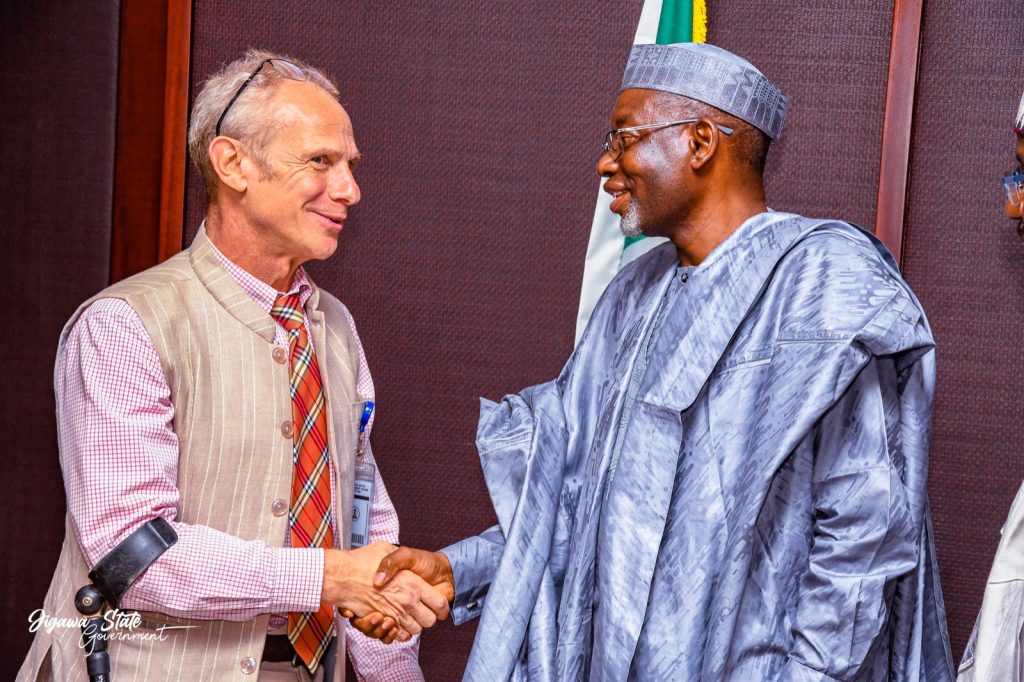
Mr. Ian Attfield, FCDO’s Senior Education Adviser, reiterated this commitment during his recent visit to the state, where he engaged in constructive discussions with Governor Namadi and his State Cabinet. 

Attfield’s visit focused on evaluating the impact of the UK government’s initiatives in improving foundational skills and ensuring quality learning opportunities in Jigawa State.

He expressed contentment with the state’s proactive approach to addressing challenges, particularly in education and healthcare. 

“We are pleased with your dedication, and we are prepared to fortify our partnership to attain our shared objectives,” Mr. Attfield affirmed, acknowledging the state’s efforts in tackling these issues. 

Governor Namadi expressed heartfelt gratitude to the Foreign and Commonwealth Development Office (FCDO) for their continued support.

He emphasised the strides made in various sectors, including education, health, and good governance, with the aid of FCDO’s Partnership for Learning for All in Nigeria (PLANE) and Partnership for Reform and Learning (PERL-ARC) programmes. Governor Namadi also disclosed the allocation of over 2.6 billion naira to recruit, train, and integrate 6,000 new teachers.

This initiative aims to alleviate the acute shortage of teachers in the state, a deficit estimated at around 30,000 educators. 

The collaborative efforts between the UK Government and the Jigawa State Government represent a significant advancement in bolstering the educational landscape.

COVID-19 variant surfaces in UK

By Muhammadu Sabiu 

The first COVID-19 variant BA.2.86 case was found in the UK on Friday, according to the United Kingdom Health Security Agency (UKHSA). 

UKHSA said in a statement on its website that the new COVID-19 strain was found in a person who had no recent travel history. 

“We are aware of a confirmed case in the UK. We will provide further information in due course after undertaking detailed assessment,” Dr. Meera Chand, Deputy Director of UKHSA, stated.

US health authorities and the World Health Organisation (WHO) reported that they were closely observing a new COVID-19 variant. 

Despite the fact that WHO classified the virus as a “variant under monitoring,” its potential impact is presently unknown.

UK rolls out plans to deny entry for students’ dependents

By Muhammadu Sabiu 

The United Kingdom is planning to ban foreign postgraduate students from coming to the country with their relatives except under certain circumstances. 

This is part of the government’s effort to reduce the number of immigrants entering the country. Last year, 135,788 visas were issued under the sponsorship of foreign students, almost nine times the number issued in 2019. 

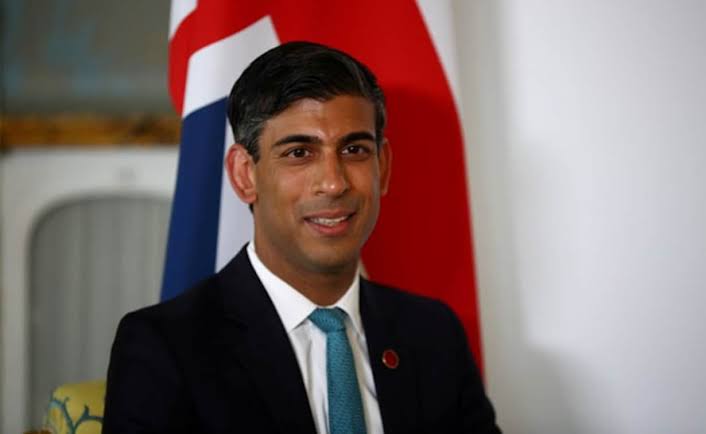
Prime Minister Rishi Sunak told UK ministers that the move would help reduce the number of migrants trooping into the country. He told the ministers that the policy, which will come into effect in January 2024, will help reduce the number of people entering the country.

In the past, the Conservative Party promised to reduce the number of people migrating to the UK to less than 100,000 in total. However, this plan was abandoned before the 2019 election.

Buhari returns to Nigeria after check-up in London

By Ahmad Deedat Zakari

President Muhammadu Buhari has returned to Nigeria after his routine medical check-up in London, United Kingdom.

Special Assistant on Digital Communication to the President, Bashir Ahmad, announced the President’s return in a Facebook post on Sunday.

He said, 

“President Muhammadu Buhari has returned to Abuja from London, the United Kingdom.” 

Amidst criticism of medical tourism, Buhari departed the country for the UK on October 31, 2022, for what the presidency described as a routine medical check-up.

The trip will be one of several medical trips the President has embarked on since assuming office in 2015, spending at least seven months abroad.

Queen Elizabeth II under close medical supervision – Buckingham Palace

By Ahmad Deedat Zakari

The Queen of England, Elizabeth II is under a close medical supervision owing to concerns of her deteriorating health. A statement from Buckingham palace disclosed on Thursday.

The statement reads: “Following further evaluation this morning, the Queen’s doctors are concerned for Her Majesty’s health and have recommended she remain under medical supervision.

“The Queen remains comfortable and at Balmoral.”

This is coming after the Queen met UK new Prime Minister, Liz Truss on Tuesday at Balmoral Castle in Scotland. The Prime Minister has joined the rest of the country to express concern over the Queen’s health

“The whole country will be deeply concerned by the news from Buckingham Palace this lunchtime.

My thoughts – and the thoughts of people across our United Kingdom – are with Her Majesty, The Queen and her family at this time.” She wrote on Facebook.

Oh Britain! Why not Rishi Sunak?

By Aliyu Nuhu

Rishi Sunak should have been British prime minister, arguably seen as most qualified candidate to Liz Truss. Born in Southampton to parents of Indian descent who migrated to Britain from East Africa in the 1960s,he would have been British version of Barack Obama. But then Obama himself once said” my story is only possible in the United States of America”.

Subtle British racism played a role to deny Sunak the office of prime minister. No matter your struggles the system has a cap to your dream. There is nothing like the British dream.

But then the British even tried. At least the system allowed him to be Chancellor of the Exchequer, Chief Secretary to the Treasury, member of the Conservative Party, and Member of Parliament (MP) for Richmond (Yorks). The only important position he missed is the prime minister.

In Arab world the system will not even allow a non citizen into the mainstream politics in those that practise democracy. The monarchies deny non citizens university education even if they are born and raised there. Nigerians in Saudi Arabia decried being denied university enrollment except if they are going to read Islamic studies.

Malam Aliyu is a renowned social analyst. He writes from Abuja, Nigeria.

UN condemns 34-year imprisonment of Saudi woman for tweeting politics 

By Uzair Adam Imam 

The UN human rights office, OHCHR, has expressed grievance over the 34-year prison sentence of one Saudi woman, Ms Salma Al-Shehab, 34.

Al-Shehab, a doctoral student, was sentenced to 34-year imprisonment for following and retweeting so-called dissidents and activists.

She was arrested in Saudi Arabia in 2021 while on holiday from her studies at Leeds University in the UK.

The woman, who has two small kids, was sentenced to jail, followed by a 34-year travel ban in connection with a series of tweets and retweets on political and human rights issues in Saudi Arabia,

OHCHR expressed concern in a statement by its spokesperson, Liz Throssell, urging the Saudi authorities to quash her conviction and release her immediately and unconditionally.

The statement read, in part, reads, “She should never have been arrested and charged in the first place for such conduct.”

“Saudi Arabia must not only release Al-Shehab so that she can re-join her family but also review all convictions stemming from free expression against human rights defenders.

“The government should release those jailed, including women who were jailed after they legitimately demanded reforms of discriminatory policies, as well as religious leaders and journalists,” Throssell said.

Nigeria Civil War: Conspiracies and interest of the World Powers

By Tijjani Hassan

War is a business of interest. Like the Russian invasion of Ukraine over the fear of western domination of the geopolitics of the defunct Soviet Union, Nigeria had her fair share of international politicking of how the superpowers wrestle for relevance in the post-World War II era, climaxing into the Nigerian-Biafran Civil war of secession.

As Chinua Achebe summarily spelt out in his book There was a Country, Harold Wilson, the PM of Britain, maintained a firm stance about one of the Queen’s priced colonies. The UK would not support the breaking away of Nigeria in the guise of secession. That would mean challenging their preplanned neocolonialism programme.

The BBC’s Rick fountain, in a story on Monday, January 3, 2000, titled “Secret papers reveals Biafra intrigue,” shows how Britain would and currently was more interested in her oil holding than a “united Nigeria”. The Cold War would see Britain and the Soviet Union wrestling for supplying the largest cache of ammunition to General Yakubu Gowon-led Federal government.

Russia, part of the former USSR, took a step further by sending MiG fighters and technical assistance to Nigeria. Moscow later expanded her bilateral relation with Nigeria with an eye on the Ajaokuta Steel Company. As a result, a $120 million contract was signed in 1969. However, the Steel Company, situated in present-day Kogi State, North Central Nigeria, remained a testament to the elephant project without producing steel for the manufacturing needs of Nigeria to date. 

The UK was, however, much concerned about France’s secret antics.

France, the other big player in the dark colonial days in Africa, was secretly shipping weapons and ammunition to the Biafran enclave through their former colony of Ivory Coast and Gabon. Moreover, France has always been sceptical of Nigeria’s growing domination and influence over the Paris Francophone clients in the West Africa Subregion. The Size of Nigeria is intimidating to her French neighbours of Cameroon, Niger, Chad, Benin Republic, and others in the geography of the West Africa sub-region.

The Caribbean Island of Haiti was the first to make a rush in granting full diplomatic relations with the breakaway Biafra Republic in 1969. That means a little to Nigeria anyways. It was, however, a moment of celebration in Biafra as it rekindled the hope for the sovereign Biafra Republic. 

France, who openly claimed to be neutral in her initial response to the crisis, issued a statement from the Council of Ministers in July 1968 sympathizing over the heart-trembling development in the heartland of Biafra. It was orchestrated by Charles de Gaulle, the French President who led Paris’s resistance against the Nazis in World War II.

Like the UK, it was about resource control. Paris has already hatched a plan for her multinational corporation, Elf Aquitaine, to become later the primary explorer of the crude oil deposit in West Africa. Nigeria’s oil in the old Eastern region would be the spoil of war.

While the war ragged, the United States of America openly looked elsewhere, neither supporting Nigeria nor Biafra. Instead, they advocated for a united “One Nigeria”. President Lyndon Johnson toed the line of Britain until Richard Nixon. Upon his assumption of office, President Nixon called on the Nigerian Military Forces to cease hostility to ease the suffering in Biafra.

The Portuguese were much more clever as they paved the way for Lt. Col. Emeka Odumegwu Ojukwu to land Biafran planes in Sao Tome, a Portuguese colony. The agreement was, however, shrouded in secrecy.

The Chinese were not left out of the Civil war politics in Nigeria. Although Biafra got most of her weapons from the black market and produced a few locally, China later provided military equipment to the breaking away part of Nigeria.

African leaders were not left out too. Despite the organization of Africa Unity (OAU)’s efforts to reconcile Gowon and Ojukwu, Julius Nyerere of Tanzania, on April 13, 1968, openly declared Dar-es-Salaam’s recognition of the Republic of Biafra. Tanzania was the first African country to take this overt stance. Gabon, Ivory Coast and Zambia would later follow the footsteps of Tanzania.

In sum, it was more about international politics and the desire to have a share of Nigeria’s resources in colossal oil deposits. As a result, western powers contributed less towards ending the Civil War, which ended in 1970.

Tijani Hassan A. wrote from Kano, Nigeria. He can be reached via tijanihassan2020@gmail.com.

Man in tears after walking from UK to Makkah for Hajj

By Ahmad Deedat Zakari

Adam Muhammad, who lives in the UK, said he cried when he first arrived at Makkah for the 2022 pilgrimage. 

“I cried when I first arrived,” He told reporters. 

According to a report by Islamic Channel, the 53-year-old electrical engineer from the UK travelled around 4000 miles on foot to reach Saudi Arabia. 

He thanked the Saudi government for granting him and his family Hajj permits.

“The Saudi government granted my family and me Hajj permits when it knew I was travelling from the UK to Makkah on foot. I met with my family in Madinah after they arrived from the UK and walked together to Makkah. I feel grateful to them,” Adam said. 

While commenting on the journey, Adam said it was difficult, and he made it solely for Allah’s sake. 

“I would feel mentally exhausted, unable to eat or drink too. But then something inside me would tell me that what are you afraid of? You have Allah by your side, and you can make it. I have lived for 52 or 53 years for myself. Why can’t I dedicate 10 or 11 months to Allah?” He said. 

According to reports, Adam reached Ayesha Mosque in Makkah on June 26, where a huge crowd received him. 

Adam had documented the progress of his journey on TikTok, where he is very active with over 2.8 million likes.