Spain

Lionel Andrés Messi: the end of an era

By Abdulrazak Iliyasu Sansani

As the most followed game in the world, football has moments that its fans don’t envision. Sometimes they do but keenly wish it never comes to pass. For Football Club Barcelona fanatics, that day came three days ago. 

For quite some years, Messi has been embroiled in a crisis with the Bartomeu led board. So naturally, this has affected the Argentine, who has come to identify and be identified with everything Barcelona. For someone who came as a child with growth deficiency, signed on a napkin, only to defy all odds, and cement his status as one of the greatest players of all time, arguably, the greatest player of all time. 

I first got to watch Messi play in FIFA under 20 World Cup, Netherland 2005, where he went on to score two penalties in the final and win the Cup against my dear country, Nigeria. From there, I knew a generational talent had emerged. Still, little did I know that that young man from Rosario would go on to win all competitions he has contested, except the FIFA World Cup, which he could still win in a trophy-laden career that has made only the great Brazilian utility player, Dani Alves to have won more titles in the history of the round leather game. 

There is every reason not to doubt this phenomenal player. If I ever had any doubts about the magical Messi, all were quelled when on March 10th 2007, aged just 19-years-old, the youngster was the star of the show in El Clasico, outshining his illustrious teammates Samuel Eto’o and Ronaldinho, to win a vital point for his team by scoring a hat-trick in club football most prominent feature, against the greatest football club in history, Real Madrid. On that day, for me, Messi proved beyond any iota of doubt that he would be one of the greats. 

With everything going on well from that point: with all his abundant talent, the right atmosphere, and everything in place. Still, Lionel Messi’s transformation from football prodigy to become one of the few players that deserve a place in the debate of the greatest players of all time, with so many claiming he is the outright GOAT, is impressive. Irrespective of your opinion in this debate: there are so many facts that concur with such views. 

Rarely has the world seen a better all-round football player who could function as a midfielder as well as a striker flawlessly. A player who often competes with the most clinical strikers for golden boots while struggling it out with the best midfield maestros for the most assists in so many seasons. Lionel Messi is out of this world. 

While you might not support him, you cannot deny the fact that what Messi does on the pitch, season in season out, for more than a decade, at the highest level, is the dream of every young footballer from my remote village of Sansani, to Jalingo, Bali, Arochukwu,  Ogbomosho, Freetown, Lome, London, Paris, New Jersey, and to all the nooks and crannies of the world. 

The home training I got abhor hatred. It absolutely doesn’t permit it. This has influenced all my activities. This is why some would be astonished to know that I am a Real Madrid football fan and writing all this for the greatest player of our biggest rivals, FC Barcelona. But I cannot hate greatness. If any player has made the difference for Barcelona in El Clasico, it is Leo. This had often been the difference between success and failure for Barcelona and Real Madrid too. 

To some, it should be a significant factor in making me antagonistic towards anything Messi. But I don’t think so. Of course, I cannot hate the defence-splitting passes, the vision, the offensive nous of bringing something out of nothing, the breathtaking dribbling, which once produced a physics-defying goal. No, I don’t do my things this way. 

I cherish greatness; I bow before the best in awe; I celebrate the mercurial Messi knowing this genius has entertained the football world to stupor. Wherever he goes, I wish him the very best. All things being equal, whichever club he goes will naturally have the edge to achieve their lofty ambitions. 

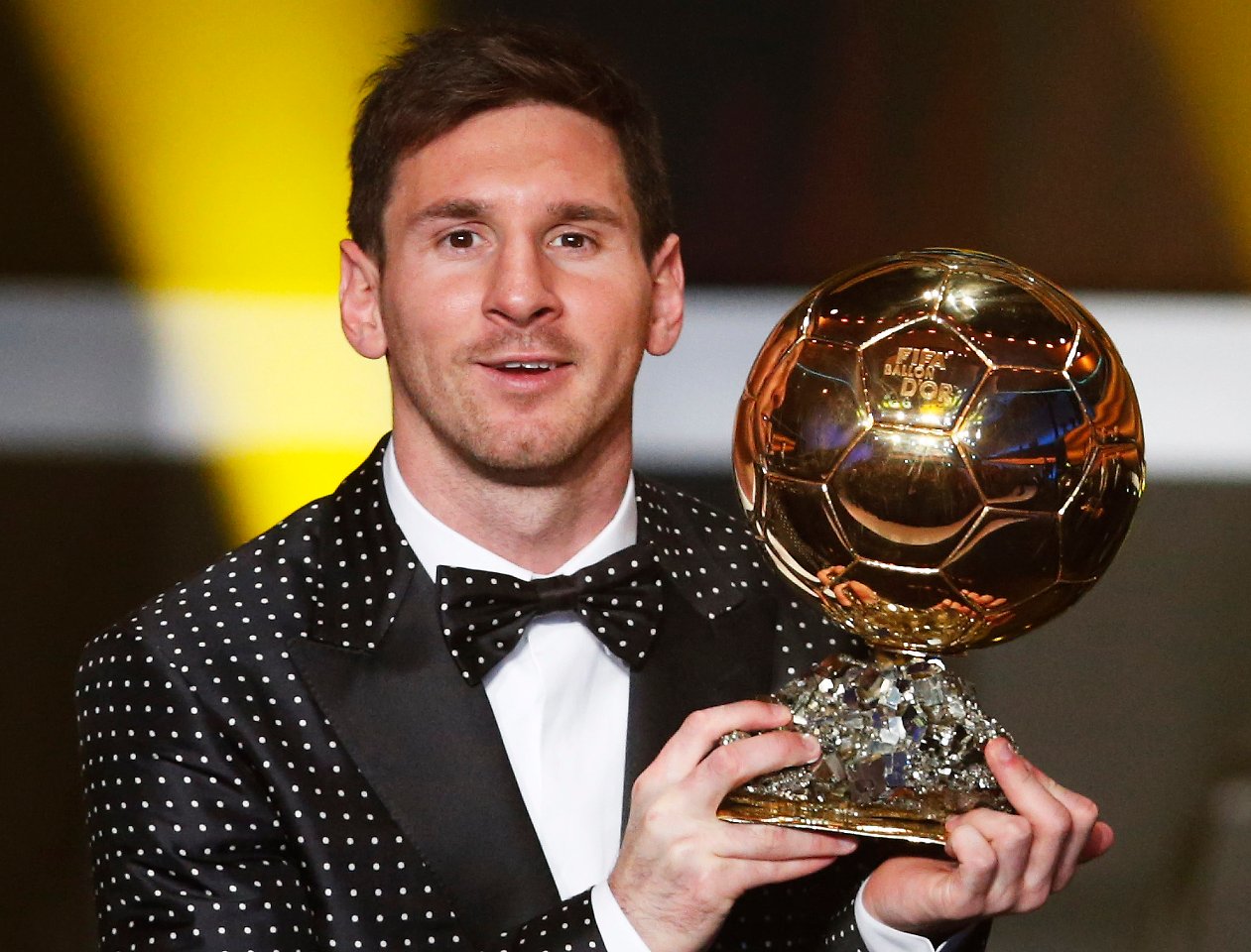
For those who will always view Messi’s greatness through warped lenses, I say to them don’t waste your precious time, the six-time Ballon d’Or winner has nothing to prove in this beautiful game that he has already broken almost every record breakable and set new ones, which for want of space I won’t list them here. However, they are well known by football supporters worldwide. 

Yes, he can’t break all the records; none can. But, of course, you are allowed to continue to raise the bar for him, and this football living legend will have a little problem proving you wrong while effortlessly doing what he loves best, playing football and winning trophies. 

Abdulrazak Iliyasu Sansani, a Real Madrid fan, wrote from Jalingo, Taraba State. He can be reached via abdulrazaksansani93@gmail.com.

Tokyo 2020 Olympics: 5 lessons from the Men’s Football Tournament

By Aliyu Yakubu Yusuf


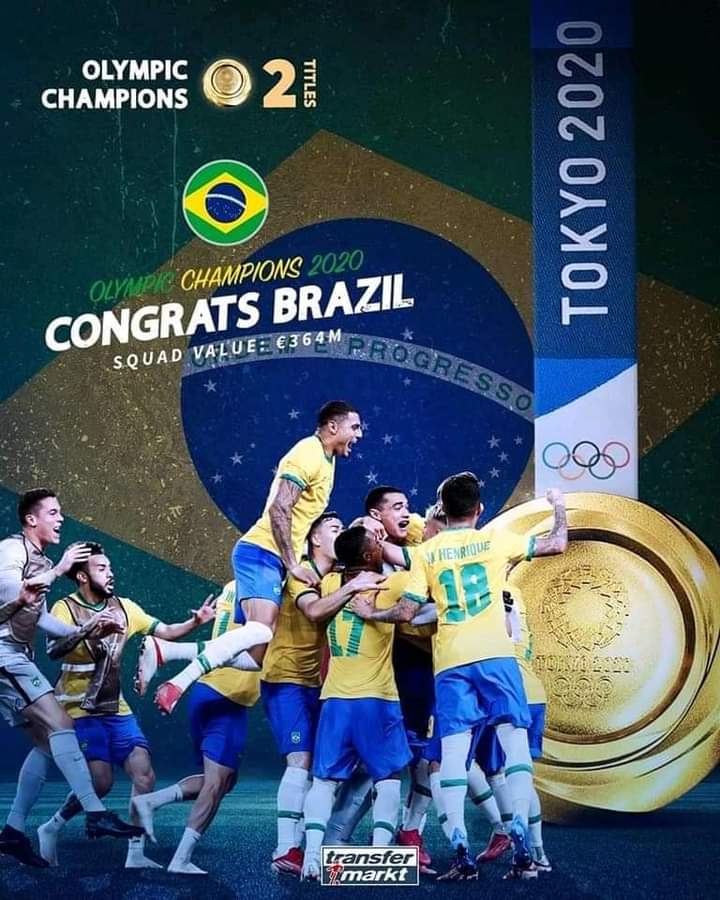
The curtains have fallen following yet another gripping edition of Olympic football games. Brazil has successfully defended the crown they won at home four years previously. The vanquished Spanish team fought back valiantly in the second half after going behind in the first. But with the game teetering towards a dreaded penalty shootout, Brazil’s substitute, Malcolm, delivered the decisive knockout blow that put paid to Spain’s quest for the gold medal. Here are the five things I learned from the tournament:

  • Brazil are worthy winners

Ever since the first ball was kicked about two weeks or so ago, it was apparent that barring any surprises that are characteristics of football games, the team that’s going all the way is either Brazil or anyone that overcomes them. Unlike most of the other big guns, Brazil takes this tournament seriously. After a disappointing ending at the Copa America, Brazil was keen to win this tournament to restore some sort of pride as the undisputed biggest footballing superpower. Brazil was, at times, irresistible in the group stages. Their triumphs over Germany and Saudi Arabia, which were sandwiched by a scoreless draw with plucky Ivory Coast, saw them play some scintillating football, with Everton striker Richarlison scoring five goals. Although the goals somewhat dried up in the knockout stages, the Selecao were never really troubled by any of their opponents en route to clinching the trophy.

  • The evergreen Daniel Alves still has it

It would be a crying shame to talk about Brazil without talking about the mercurial Dani Alves. Alves is the best right-back I have ever seen. And that’s a massive compliment because even Brazil alone had had the likes of Cafu and Maicon. The sight of Alves terrorising hapless opponents alongside Lionel Messi at Barcelona was a joy to behold for most football aficionados. So I wasn’t surprised at all when Brazil named him as one of their three overaged players. After all, this is a man who can do whatever it takes—fair or not—to win. Little wonder he’s the most decorated footballer in the whole history of football. This trophy is just another feather to his impressive cap. Even at the ripe age of 38, Alves is still one of the best players in his position. Brazil’s captain fantastic still has it.

  • Traditional heavyweights failed at the first hurdle

While Brazil sailed through the tournament, other traditional big countries badly underperformed. Argentina, Germany and France all failed to get past the group stages. For Argentina, it was just business as usual. For a country that won this very tournament consecutively at both 2004 and 2008 editions, it was a colossal failure not to have qualified for the knockouts for the second Olympics tournament running. The fact that they couldn’t qualify from a pool that contains Spain, Egypt and Australia tells you all you need to know about how bad this team had been. Like Argentina, France and Germany also failed to give a good account of themselves. Ever since a diabolical first half that saw them went 3-0 down in the first game against Brazil—and eventually lost the game 4-0—Germany never recovered. Although they defeated Saudi Arabia 3-2 in the next match, they huffed and puffed in their final group game but failed to see off the sturdy Ivory Coast. And that was their tournament done. As for France, the little said about them, the better.

  • The host country has so much to cheer about

Japan performed quite admirably in this tournament. Despite being drawn in a scary-looking group including France, Mexico, and South Africa, Japan qualified with maximum points. They scraped past New Zealand via penalty shootout in the quarter-finals before succumbing to Spain and Marco Asensio in the second half of the extra time in the semis. Although they went out in a cruel fashion, Japan can take courage from their outstanding performance. Despite being the host country, no one expected them to be the fourth-best team before the kick-off. However, in Takefuso Kubo, who is already at Real Madrid, Japan has a gem for whom they can dare to dream.

  • African countries flatter to deceive… again

For African countries, it was a case of one step forward, two steps backwards. Apart from South Africa that conspired to lose all their group games, Africa’s other two representatives began the tournament on positive notes. Egypt’s defeat is somewhat understandable as they went out to the eventual winners Brazil by the narrowest of margins. That’s after qualifying from a pool featuring both Spain and Argentina. The ouster of Ivory Coast, however, is pretty much frustrating for any fan of African football. After qualifying from the group that contains both Brazil and Germany, they were within a hair’s breadth of knocking out Spain before they inexplicably bottled it. They scored what looked like a winning goal in the 91st minute of the quarter-finals only to manage somehow to give up an equaliser in the 93rd minute before shipping three further goals in the extra time. That was some way of going out of a tournament. For Africa, Nigeria’s 1996 and Cameroon’s 2000 victories are but fading memories.

Aliyu Yakubu Yusuf is a lecturer at the Department of English and Literary Studies, Bayero University, Kano. He can be reached via aliyuyy@gmail.com.

2020 Tokyo Olympic: Brazil wins men’s soccer

By Muhammad Adamu

Brazil have the Olympic men’s soccer gold medal after a 2-1 victory over Spain in extra time. Brazil’s medal comes on the same pitch that it won the 2002 World Cup.

Brazil are now the second nation after Argentina to have won back-to-back Olympic gold medals after building on their 2016 success at these Tokyo Games.

Mikel Oyarzabal cancelled out Matheus Cunha’s opener after Richarlison missed a penalty, but Malcom ensured Brazil took home the gold medal with his goal in the 108th minute.

Messi: He came, he saw and he conquered

When former Barcelona Director of Football, Carles Rexach, signed Lionel Messi on a napkin paper at the turn of the current millennium, little did he know that he had just unearthed possibly the greatest ever footballer. Barcelona have just announced the departure of their boy wonder, the messiah and the plea, after 17 years of joy and anguish, highs and lows, successes and failures. Countless goalscoring records have tumbled at the majestic feet of the boy from Rosario in Argentina. He holds the records for playing more games for Barça in La Liga, UCL and El Clasico.

To even attempt to list Messi’s accomplishments in this short thread would be foolhardy. Nevertheless, many accomplished pundits, coaches and players mesmerised and enchanted by his magic wand have showered plaudits to the little genius. After trouncing Arsenal in 2010, the then Arsenal coach famously remarked that “Messi is a PlayStation player”, effectively testifying to the impossibility of being Lionel Messi. Similarly, Pep Guardiola, who is the coach that helped nurture the talents of Messi, once said that “To compare Lionel Messi with any other player is unfair… on them”. Jorge Valdano, a Maradona teammate in the victorious 1986 World Cup-winning Argentina side, added that “Messi is Maradona every day and even Maradona wasn’t Maradona every day”.

Rodrigo De Paul, Messi’s teammate in the Argentina national team, said, “If Messi is your captain, you would want to go to war for him”. The recently departed ex-Real Madrid captain Sergio Ramos also confessed that “Messi will always have a place in my team”. This is just off the top of my head. The list of current and retired players who idolise Messi contains the creme-de-la-creme of the footballing world.

A longstanding mantra has it that ‘records are meant to be broken.’ If these Messi’s records are ever to be broken, it will take an exceptional player.

1. Winning four consecutive Ballon Dors.

2. Winning 6 European golden shoes.

3. Scoring 91 goals in a calendar year.

4. Scoring 75 goals in a league season.

5. Scoring in 21 consecutive league games.

6. Scoring 50 league goals in a single season.

7. Winning three player of the tournaments in international tournaments.

8. Scoring 40 or more goals for nine consecutive seasons.

9. Scoring/Assisting 50 or more goals for 13 consecutive seasons.

10. Winning four man of the match awards in a single World Cup.

As for Barcelona fans all over the world, the dreaded day has finally come. Most of them can still remember the scrawny, shy 17-year old Messi who scored his first-ever professional goal against Albacete via Ronaldinho’s assist. Very few people thought that that watershed moment was passing the baton from one generational talent to another. However, the future isn’t that bleak for Barça. For one, young, exciting talents are emerging from the academy. The likes of Fati, Collado, Trincao, Gavi, Pedri, Puig, Mingueza, Araujo and Dest have shown great promise. Together with the old guards such as Pique, Griezmann, Alba, Busquets and Aguero, they may just paper the gaping cracks that Messi’s sudden departure will inevitably leave.

Messi alone is capable of covering a multitude of sins for coaches and fellow players. Good luck trying to replace such a player.

As for the man himself, this is a perfect opportunity to silence his diminishing number of detractors that he can cut it away from his comfort zone — whatever that means. Of course, Messi isn’t getting any younger, but I would bet my bottom kobo for him to fare well at any league in the world.

Aliyu Yakubu Yusuf is a lecturer at the English and Literary Studies Department, Bayero University, Kano. He can be reached via aliyuyy@gmail.com.

Messi leaving Camp Nou — Barcelona

By Muhammadu Sabiu

In what has been widely tagged as “the end of an era,” Argentina forward Lionel Messi will leave FC Barcelona after a near two-decade stay at the club due to “financial and structural obstacles.”

This was confirmed by the La Liga giant in a statement.

The statement said, “Despite FC Barcelona and Lionel Messi having reached an agreement and the clear intention of both parties to sign a new contract today, this cannot happen because of financial and structural obstacles (Spanish Liga regulations).

“As a result of this situation, Messi shall not be staying on at FC Barcelona. Both parties deeply regret that the wishes of the player and the club will ultimately not be fulfilled.”

The club also expressed their gratefulness to the 4-time Ballon d’Or winner and wished him well in his future professional career.

“FC Barcelona wholeheartedly expresses its gratitude to the player for his contribution to the aggrandisement of the club and wishes him all the very best for the future in his personal and professional life,” Barça said in the statement.

At the age of 13, Messi joined Barcelona’s youth set-up and he is now the club’s all-time top scorer with 672 goals in 778 appearances.

Recall that he had in 2020 made an attempt to vacate Camp Nou after Barcelona’s humiliating 8-2 loss to Bayern Munich in the Champions League quarter-finals, but an agreement was later reached, which led to his continued stay at the club.

Messi’s Trophies at Barcelona

Champions Leagues – 4

La Liga titles – 10

Spanish Cups – 7

European Super Cups – 3

Spanish Super Cups – 8

Club World Cups – 3