Spain

Morocco Disputes Spain’s Death Toll in Ceuta Migrant Crossing

By Sabiu Abdullahi

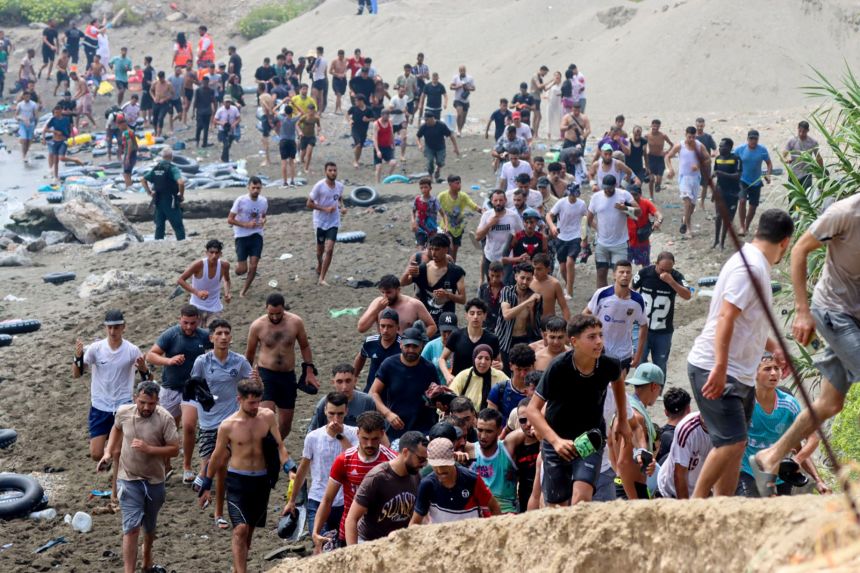
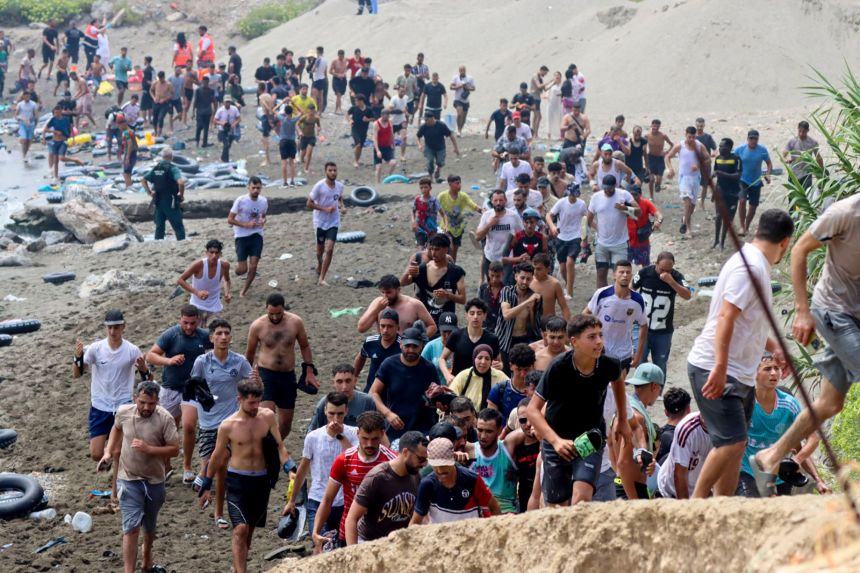
Morocco has rejected Spain’s account of the number of people who died during the recent mass migrant crossings into the Spanish enclave of Ceuta, insisting that the fatalities were far lower than Madrid’s estimate.

Spanish authorities said at least 72 migrants lost their lives during the crossing. Miguel Angel Pérez, the Spanish government’s representative in Ceuta, announced the latest figure on Sunday. His statement came a day after Spain’s Interior Minister, Fernando Grande-Marlaska, reported that at least 67 people had died while attempting to enter the enclave.

Morocco, however, maintained that only 11 people died in the incident. The country’s Interior Ministry said 10 victims drowned, while another person died after falling from a rocky area near the border.

Spanish officials also disclosed that more than 1,000 people had received medical treatment since Thursday as a result of the crisis.

Pérez said conditions in Ceuta had improved significantly, although he noted that authorities still faced challenges before normalcy could fully return.

According to Spain, about 60,000 migrants crossed from Morocco into Ceuta during the influx. The figure exceeds half of the enclave’s population.

Reports attributed the mass movement to worsening economic conditions and rumours that spread across social media platforms.

Spanish authorities said on Saturday that almost all of the migrants had returned to Morocco.

Ceuta is one of the European Union’s only two land borders with Africa. The large-scale migration has raised concerns across Europe and prompted several EU member states to tighten security along their borders.

Spain Returns Over 48,000 Migrants to Morocco After Mass Ceuta Border Crossings

By Sabiu Abdullahi


More than 48,000 migrants have returned to Morocco after entering Spain’s North African enclave of Ceuta during a large-scale border crossing that unfolded over the past few days.

Spain’s Interior Ministry told AFP on Friday that 48,300 migrants had crossed back into Moroccan territory after authorities began efforts to reverse the influx.

The development followed an earlier wave of arrivals. Juan Jesus Vivas, the president of Ceuta, had disclosed that about 60,000 migrants entered the Spanish enclave from Morocco by land and sea. Many reportedly swam around a border fence that extends into the Mediterranean.

The number of fatalities linked to the incident has also increased. Authorities initially confirmed 18 deaths. The death toll has now risen to 57.

Ceuta is a Spanish autonomous city on the North African coast. Alongside Melilla, another Spanish enclave in North Africa, it represents the European Union’s only land border with Africa. Both territories have experienced repeated attempts by migrants seeking entry into Europe.

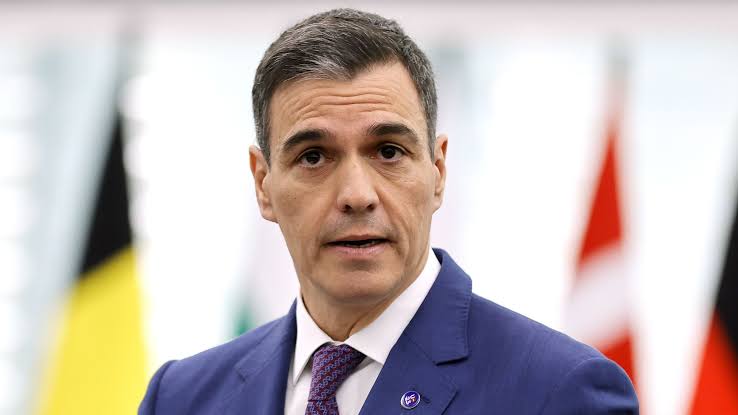
Spanish Prime Minister Pedro Sanchez visited Ceuta after the mass crossings and said his administration had activated all available resources to manage the situation.

Sanchez described the crossings as a “violation” of Span’s territorial sovereignty, adding that authorities are speeding up the repatriation of migrants who arrived this week.

The Spanish government later deployed soldiers to patrol the enclave and “maintain security” as officials worked to restore order.

Meanwhile, Italy has temporarily suspended its participation in the Schengen agreement with Spain in response to the mass border crossings.

Spain Seal FIFA World Cup Glory

By Agabi Charis 

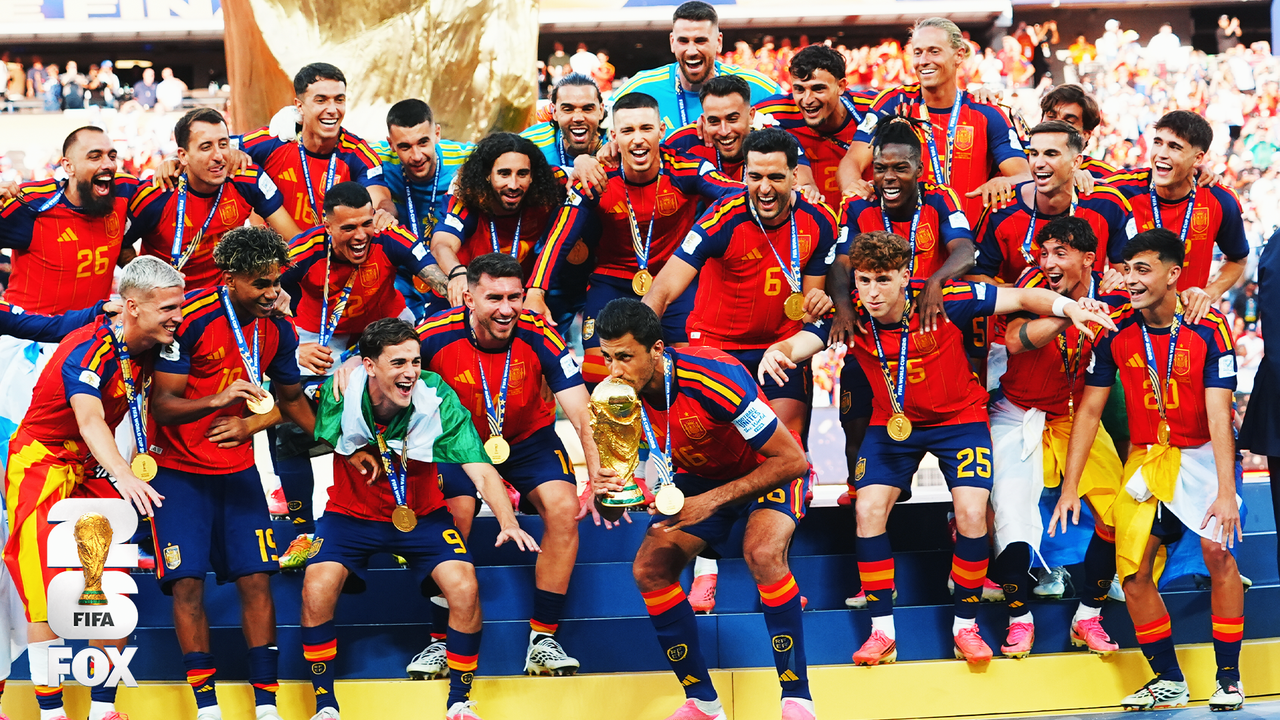
Spain were crowned 2026 FIFA World Cup champions after edging Argentina 1-0 after extra time in a captivating final at New York New Jersey Stadium. Ferran Torres’ decisive strike in the 106th minute settled a tactical battle that showcased Spain’s discipline, defensive resilience and control, handing La Roja their second World Cup title. 

From the opening whistle, Spain looked the more complete side. They dominated possession, limited Argentina’s attacking opportunities and remained composed under pressure. While Lionel Messi and his teammates fought until the very end, Spain’s organisation and patience ultimately proved too much. Simply put, the better team on the night emerged victorious. 

Despite the heartbreak, Lionel Messi’s final World Cup campaign deserves enormous praise. The Argentine captain delivered one of the finest tournaments of his illustrious career, finishing with eight goals and four assists, inspiring Argentina to another World Cup final and reminding the football world why he remains one of the greatest players ever to grace the game. Though the trophy slipped away, his performances will be remembered for years to come. 

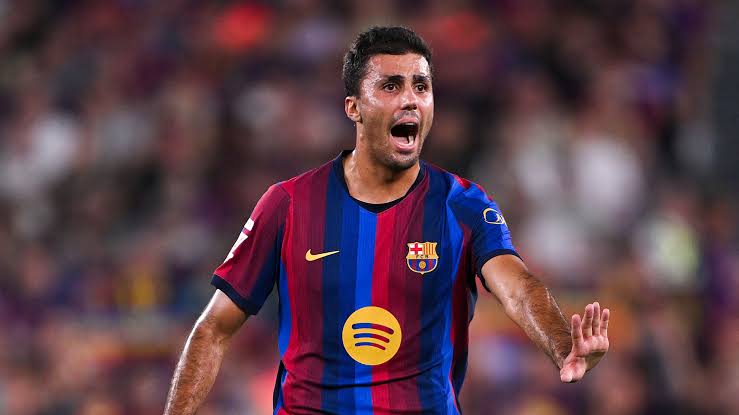
Spain’s triumph was reflected in the post-tournament awards. Midfield maestro Rodri was deservedly named the Player of the Tournament (Golden Ball) after orchestrating Spain’s midfield throughout the competition with intelligence, composure and leadership. At the other end of the age spectrum, teenage defender Pau Cubarsí claimed the Young Player of the Tournament award following a sensational campaign that saw Spain concede just one goal throughout the tournament. 

The final was also a celebration of football’s global appeal, with cameras frequently cutting to a host of celebrities in attendance. Among those spotted were Beyoncé and Jay-Z, Tom Cruise, Matt Damon and Luciana Damon, Tom Brady, Timothée Chalamet, Dwyane Wade and Gabrielle Union, James Harden, Draymond Green, Rob Gronkowski, Odell Beckham Jr., Lindsey Vonn, Kevin Hart, Julia Garner, Winnie Harlow and tennis star Carlos Alcaraz, while the historic halftime show featured performances from Shakira, Madonna, Justin Bieber, BTS, Burna Boy and Jennifer Hudson. 

The 2026 FIFA World Cup delivered unforgettable moments from start to finish. Spain leave North America as worthy champions, Rodri leaves as the tournament’s outstanding player, Cubarsí announces himself as football’s brightest young defensive talent, and Lionel Messi bows out of World Cup football having once again produced a campaign worthy of his legendary status.

Agabi Chubiyojo Charis is a 300-Level student in Information and Media Studies at Yakubu Gowon University and is currently interning at IMPR. He can be reached via chubicharis@gmail.com.
Spanish PM Defends Barcelona Star Yamal Over Palestinian Flag Display

By Sabiu Abdullahi

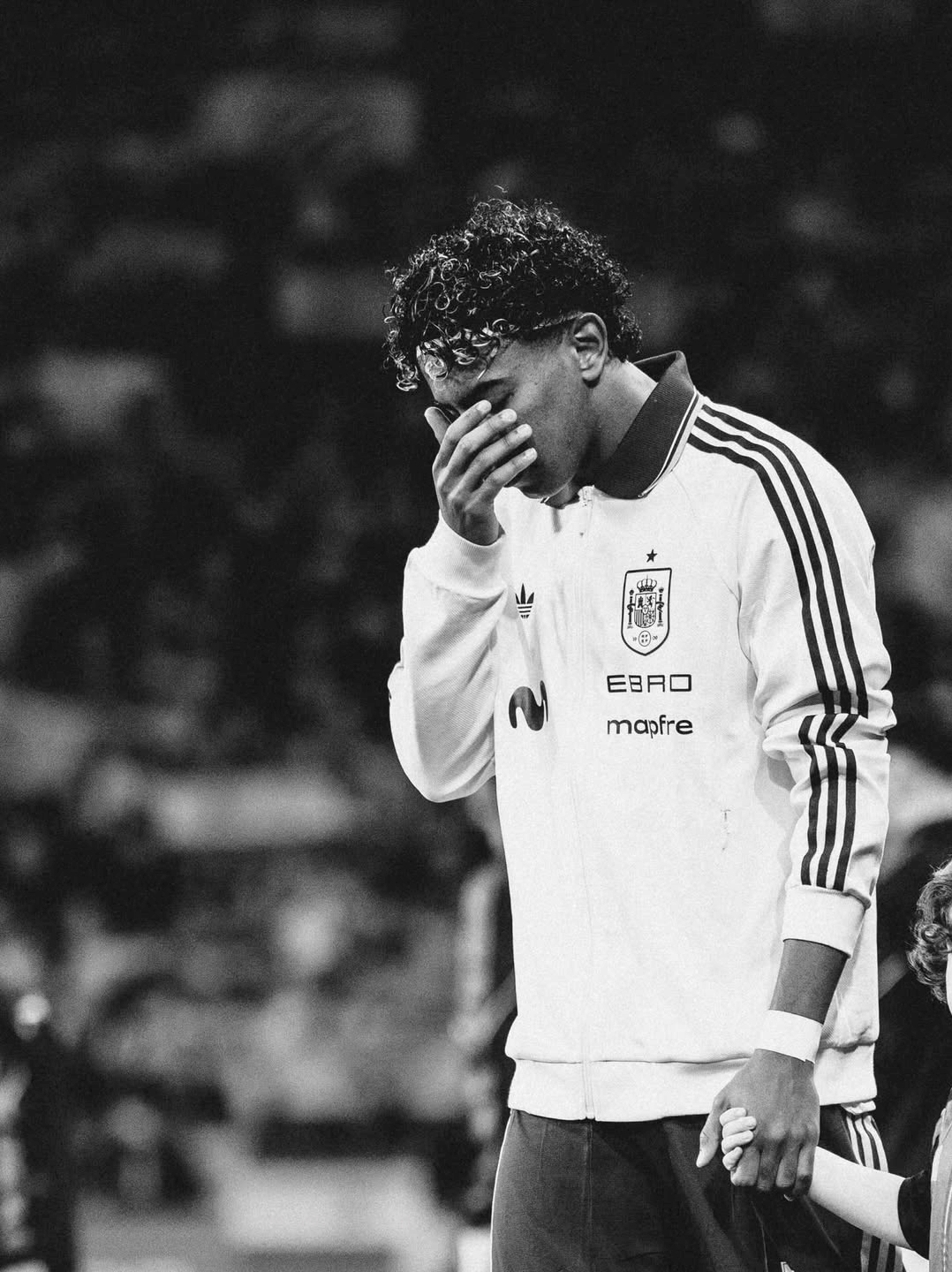
Spanish Prime Minister Pedro Sánchez has defended Barcelona youngster Lamine Yamal after the footballer displayed a Palestinian flag during the club’s La Liga title celebrations.

Sánchez addressed the issue while speaking to journalists at a press conference. He explained Spain’s official position on the Israeli-Palestinian conflict and pointed out that the country had already recognised Palestine as a state.

“Spain has recognised the state of Palestine,” Sánchez stated. “From the very beginning, Spain condemned the attacks by Hamas, and later condemned the war being waged by the Israeli authorities in the Gaza Strip.”

The Prime Minister made the remarks amid growing public debate surrounding athletes and celebrities who openly express political opinions about the conflict in Gaza.

Sánchez maintained that Spain’s position remains focused on peace and diplomacy. He said the country continues to oppose violence from all sides while supporting efforts aimed at achieving a peaceful solution.

The comments followed criticism from some Israeli media outlets after Yamal waved the Palestinian flag during Barcelona’s celebrations for winning the Spanish league title.

Sánchez spoke during a joint appearance in Madrid alongside World Health Organization Director-General Tedros Adhanom Ghebreyesus, where they also discussed the hantavirus situation in Spain.

Kano Police Seek Family Of 16-Year-Old Boy Found Wandering In Doguwa

By Sabiu Abdullahi

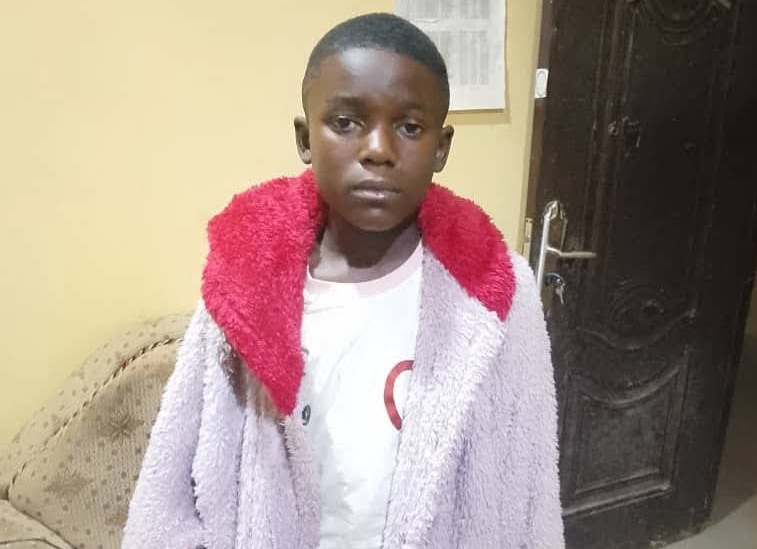
The Kano State Police Command has announced the discovery of a 16-year-old boy identified as Alex Ansol, who was found wandering in Dadin Kowa Village in Doguwa Local Government Area of the state.

In a statement issued by the command, the police said the teenager was located after a report was received concerning his situation.

According to the account provided by the boy, he arrived in Nigeria from Spain on March 30, 2026, alongside four relatives through the Nnamdi Azikiwe International Airport in Abuja. He explained that they were on their way to Kano to visit his father, Ansol Fan, when he became separated from them along the Jos to Saminaka road.

Police described Alex as a thin, dark-complexioned boy who speaks English and has no tribal marks. He reportedly gave his address as Barsa Rub, Opposite 46 Stadium, Spain.

The command stated that efforts are ongoing to trace his relatives and reunite him with his family.

Authorities have urged members of the public with useful information to reach out to the Office of the Police Public Relations Officer, Kano State Command, or contact the Divisional Police Officer of Doguwa Division via 07038363421.

Yamal Slams “Racist” Chant After Spain–Egypt Stalemate

By Muhammad Abubakar

Lamine Yamal has condemned what he described as a “racist” and “intolerable” chant heard during a 0–0 draw between Spain and Egypt, warning that discrimination remains entrenched in football culture.

The teenager took to social media shortly after the match, identifying himself as a Muslim and criticising supporters who chanted “the one who doesn’t boo is Muslim” inside the stadium. While noting the chant may have been aimed at opposing fans, Yamal said intent did not lessen its impact.

“As a Muslim, it doesn’t stop being a lack of respect and something intolerable,” he wrote, adding that using religion as a joke “makes you look ignorant and racist.”

The remarks quickly drew attention across the football world, with anti-discrimination advocates pointing to the incident as further evidence of the persistence of abuse in the game. Despite repeated campaigns led by FIFA and UEFA, discriminatory chanting—whether based on race, religion, or nationality—continues to surface in stadiums.

Analysts say religion-based taunts are often trivialised as fan rivalry but can reinforce exclusion and hostility, particularly toward minority players. Yamal’s intervention reflects a growing willingness among high-profile footballers to publicly challenge such behaviour.

He ended his message by thanking fans who supported the team and looking ahead to future competitions, including the FIFA World Cup.

The incident adds to mounting pressure on football authorities to strengthen enforcement measures and ensure stadiums are safe and respectful spaces for all players and supporters.

Spain Closes Airspace To US Warplanes As Iran Conflict Deepens

By Sabiu Abdullahi


Spain has barred United States military aircraft involved in the ongoing Iran war from using its airspace, a move that signals rising tension between Washington and several European capitals.

The decision was announced by Spain’s Defence Minister, Margarita Robles, who made it clear that the country would not support any military activity linked to the conflict. She stated: “Neither [of] the bases are authorised, nor, of course, is the use of Spanish airspace authorised for any actions related to the war in Iran.”

She also criticised the conflict itself, describing it as “profoundly illegal and profoundly unjust”.

The development marks a firm stance by Madrid, which has been one of the most outspoken European critics of the war launched by the United States and Israel more than a month ago. The decision is expected to further strain relations with the administration of former US President Donald Trump, who had earlier warned of possible trade measures against Spain over its position.

Spain had previously indicated that jointly operated military bases within its territory would not be made available for operations connected to the war.

Foreign Minister José Manuel Albares said the restriction on US aircraft is aimed at preventing further escalation. He explained that the move is intended to “not do anything that could encourage an escalation in this war”.

Meanwhile, the White House has suggested that the conflict could end within weeks, although it warned that Iran must agree to negotiations or face serious consequences. Press Secretary Karoline Leavitt said the administration remains focused on its objectives, adding that failure to reach a deal would mean Iran would “pay a grave price”.

She also noted that discussions behind the scenes appear more encouraging, stating that Iranian signals are “more reasonable”, even though Tehran has publicly denied any ongoing negotiations.

As fighting continues across the Middle East, casualties have risen sharply. Thousands of people have reportedly been killed in Iran, Lebanon, Israel, and parts of the Gulf, although exact figures remain uncertain.

Tensions have also spread beyond the immediate conflict zone. Nato confirmed that it intercepted another Iranian missile over Turkey, the fourth such incident since the war began. The alliance reiterated its readiness to defend member states against emerging threats.

Despite growing international concern, uncertainty remains over how and when the conflict will end, with diplomatic efforts continuing alongside military operations.

BREAKING: Spain recalls ambassador from Israel over Iran war, genocide in Gaza

By Sabiu Abdullahi

The Spanish government has withdrawn its ambassador to Israel amid growing diplomatic tension linked to the war in Gaza and the ongoing conflict involving Iran.

An announcement published in Spain’s official state gazette confirmed that the decision took effect on Wednesday. The move reflects Madrid’s strong criticism of Israel’s military actions in Gaza as well as the conflict involving the United States and Israel against Iran.

Spain has emerged as one of the European Union countries that openly condemn Israel’s conduct in Gaza. The government has also opposed the military campaign launched by Washington and Tel Aviv against Iran.

The gazette explained the decision regarding Spain’s diplomatic representation in Israel. It stated: “At the proposal of the Minister for Foreign Affairs, the European Union and Cooperation, and following deliberation by the Council of Ministers at its meeting on 10 March 2026, I hereby order the termination of Ms Ana María Sálomon Pérez’s appointment as Ambassador of Spain to the State of Israel.”

Following the ambassador’s removal, Spain’s embassy in Tel Aviv will now operate under a charge d’affaires, according to a source from the country’s Foreign Ministry cited by Reuters.

Spain’s Prime Minister Pedro Sanchez has been among the few left-wing European leaders who openly criticize the attacks carried out by the United States and Israel against Iran. He described the assault as “unjustifiable” and stressed that Madrid’s position remains “no to the war”.

The Spanish government has also maintained a strong stance against Israel’s operations in Gaza. In October, Spain’s parliament approved legislation that imposed a complete arms embargo on Israel. The law permanently blocks the sale of weapons, military equipment and dual-use technology to the country in response to the genocide.

Spain rejects U.S. pressure as Trump threatens trade cut

By Sabiu Abdullahi

Spain has pushed back against pressure from the United States after President Donald Trump warned that Washington could halt trade ties over Madrid’s refusal to support American military strikes on Iran.

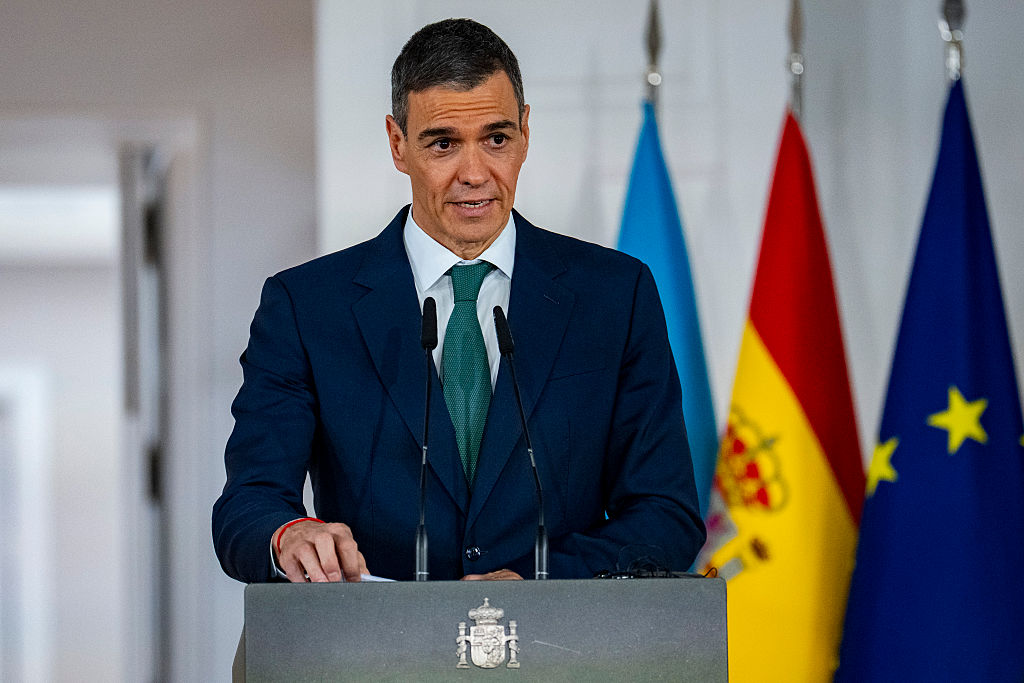
In a national broadcast from the Moncloa Palace, Prime Minister Pedro Sánchez set out his government’s position in clear terms. He told citizens that Spain’s stance could be reduced to three words: no to war. He also stressed that one “illegality” could not be met with another, framing the issue as a matter of principle and international law rather than political rivalry.

Tensions escalated when Spain declined to grant the United States permission to use the shared military bases at Morón and Rota for operations targeting Iran. Spanish authorities described the strikes as unjustified and risky. In response, Trump labelled Spain a “terrible” partner and threatened to cut off all trade between the two countries.

The warning has raised concerns about a key economic partnership. The United States ranks among the top destinations for Spanish exports and remains a major source of investment. Although no formal sanctions or tariffs have been announced, the prospect of trade restrictions has unsettled investors and business leaders.

Spain’s approach aligns with its recent foreign policy record. The government has adopted firm positions on conflicts it believes may violate international law. It has criticised Israel’s actions in Gaza and recognised a Palestinian state ahead of several European Union members. At the same time, Madrid has backed Ukraine in resisting Russia’s invasion, while urging restraint to avoid broader escalation elsewhere.

Spanish officials have also invoked the memory of the 2003 Iraq invasion. That conflict, which Spain supported under a previous administration, sparked widespread protests at home. Many citizens still regard that decision as an error that increased insecurity and carried lasting costs. Leaders now argue that military action can produce consequences that endure well beyond the battlefield.

The dispute unfolds at a delicate time for Spain’s coalition government. It faces political pressure in parliament and allegations of corruption involving individuals close to the leadership. However, recent opinion polls indicate that a significant number of Spaniards hold unfavourable views of Trump. Analysts say this could reduce the domestic fallout from the diplomatic clash.

For Madrid, the confrontation extends beyond Iran or access to military facilities. It touches on Spain’s broader role in global affairs. The government maintains that adherence to peace and international legality reflects national values and long-term interests. Critics counter that challenging the United States may expose the country to economic strain that could affect ordinary citizens.

The next phase depends largely on Washington’s response. If the White House moves from rhetoric to concrete measures, trade relations could face serious disruption. Until then, Spain remains in a tense standoff that tests both its diplomatic principles and its economic stability.

Trump threatens to cut off all trade with Spain over refusal to approve using its military bases to strike Iran

By Sabiu Abdullahi

U.S. President Donald Trump has announced plans to halt all trade relations with Spain after Madrid declined to permit American forces to use its military bases for operations connected to strikes on Iran.

Trump made the remarks on Tuesday during a meeting at the White House with German Chancellor Friedrich Merz. He criticised Spain’s position and disclosed that he had directed Treasury Secretary Scott Bessent to take action.

“Spain ‌has been terrible,” Trump said. He added that he had instructed Bessent to “cut off all dealings” with Spain.

“We’re going to cut off all trade with Spain. We don’t want anything to do with Spain,” the president stated.

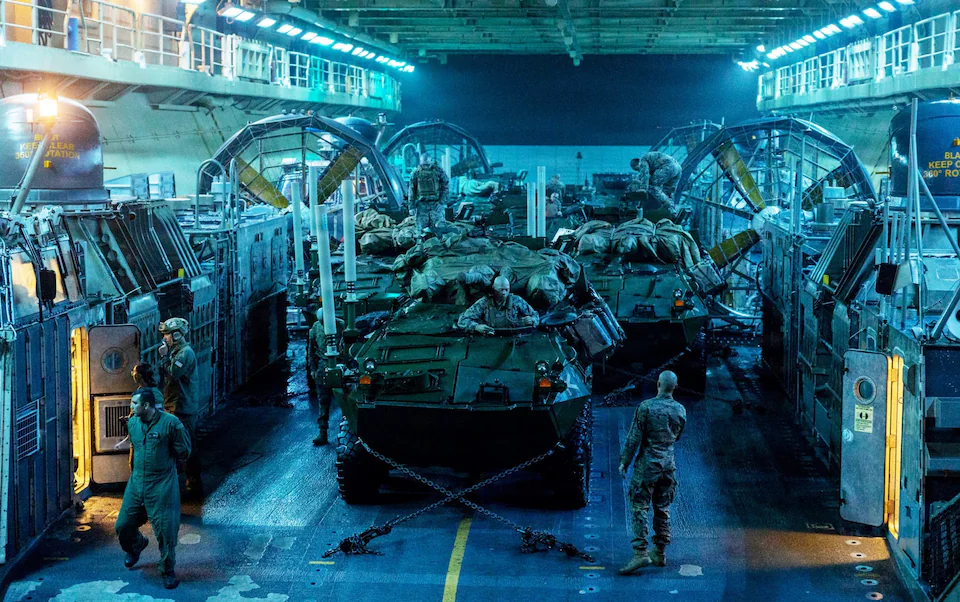
Following Spain’s refusal, the United States moved 15 aircraft, among them refuelling tankers, away from the Rota and Moron air bases in southern Spain. The Spanish Socialist-led government had declined permission for the facilities to support operations targeting Iran.

Trump also revisited his long-standing demand that NATO members allocate 5% of their gross domestic product to defence. Spain has resisted that target. The president argued that Washington holds broad authority over trade matters.

“Spain has absolutely nothing that we need,” he said.

“All business having to do with Spain, I have the right to stop it. Embargoes – do anything I want with it – and we may do that with Spain,” Trump added.

Bessent, who stood beside the president, confirmed that steps would be taken to examine possible penalties. He said the United States Trade Representative and the Commerce Department would begin inquiries into measures against Spain.

Although the U.S. Supreme Court recently limited Trump’s ability to impose sweeping global tariffs under the International Emergency Economic Powers Act (IEEPA), the president insisted the ruling strengthened his powers in other respects. He said the decision “totally reaffirmed” his authority to impose a comprehensive trade embargo under the same law.

IEEPA, enacted in 1977, has served as a legal basis for sanctions against countries such as Iran, Russia and North Korea. It has also enabled restrictions on exports of sensitive technologies.

Bessent backed Trump’s interpretation of the ruling. “The Supreme Court reaffirmed your ability to implement an embargo,” he told the president.

Spain Reacts

The Spanish government responded with a statement stressing that the United States must respect the independence of private enterprises, international legal frameworks and trade agreements between Washington and the European Union.

Madrid said it possesses the tools required to cushion any economic impact and assist industries that might suffer losses. Officials also affirmed their commitment to open markets and continued economic collaboration with partners.

Spain ranks as the world’s leading exporter of olive oil. It also supplies the United States with auto components, steel and chemicals. However, analysts note that Spain may be less exposed to American trade pressure than some other European economies.

Data from the U.S. Census Bureau show that the United States recorded a $4.8 billion trade surplus with Spain in 2025. American exports to Spain reached $26.1 billion, while imports stood at $21.3 billion. This marked the fourth consecutive year of surplus for Washington.

Chancellor Merz indicated that European partners are urging Spain to increase defence expenditure. “We are trying to ⁠convince Spain to catch up with the 3% or 3.5% which we agreed on in NATO,” he said.

“And as the president said, it’s correct: Spain is the only one who is not willing to accept that and we are trying to convince them that this is part of our common security that ⁠we all have to comply with these numbers,” Merz added.

Spain’s Prime Minister Pedro Sanchez has previously taken positions that have drawn criticism from Trump. Among them was a decision to deny docking access to vessels transporting weapons to Israel.

The latest dispute signals rising tension between Washington and Madrid. The situation may have wider implications for transatlantic trade and security cooperation if concrete measures follow the president’s warning.