Southern Nigeria

Is the Southern Nigerian press scared of Kwankwaso?

By Muhammad Sulaiman Abdullahi, PhD

Dr Rabiu Musa Kwankwaso’s NNPP has seemingly become the nightmare of many politicians in the Northern and Southern parts of Nigeria. This is simply because many Nigerians are not truly yearning for a better country.

Some Southern press, especially those who used to set the agenda for the country years ago, downplay Kwankwaso’s candidature and deliberately omit, ignore and replace Kwankwaso’s more prominent and more formidable party with someone who is not known beyond Twitter in their coverage.

The Southern press may be scared of Kwankwaso due to several reasons. These could be myopia, tribalism, regionalism, and religious mischief. Yes! I agree that Atiku Abubakar of the PDP and Asiwaju Bola Tinunbu of the APC may be considered as forefront candidates in some contexts. Thus, they may be regarded to be above Kwankwaso in terms of age, venturing into national politics, and political spread but nothing more.

Kwankwaso is naturally ahead of them in terms of integrity, health, foresight, political sagacity and shrewdness, and above all, the love and commitment towards the development of Nigeria. Moreover, his academic credentials are higher than all those who are contesting.

Furthermore, the Southern press thought they could do as they wished without being noticed. So, they cunningly choose to propagate one Yoruba (Tinubu), one Hausa (Atiku) and Peter Obi (Igbo). The latter cannot even publicly and unambiguously condemn the IPOB secessionists’ evil atrocities. Does he even believe in one indivisible Nigeria himself?

The Southern press is not alone in this mischief and tribalism. Some Northern writers who are, to some extent, their puppies and puppets downgrade Kwankwaso and fail to point out a single reason. They even tag him as a local champion. What is bad in being a local champion? All champions should be local, otherwise they don’t have any base.

If you check newspapers, both print and online, such as Vanguard, the Guardian, Punch, Premium Times and the likes, they are at the forefront of this amateur journalism. How can someone be so glaringly subjective in their journalism to the extent that even a blind can see? What kind of a country is this? Are they not aware of Kwankwaso’s credentials and positive antecedents? Are they unaware of how Kwankwaso transformed and developed Kano rapidly? How on earth can you compare Kwankwaso to all those contesting if someone is sensible and objective in his assessment? Most of them are either tribalistic or looking for big brown envelops filled with foreign currency.

These Southern press are not helping matters and are not objective. They are so divisive and tribalistic. To borrow from Orubebe’s outrage when he intended to save the nation from the ongoing catastrophe this Buhari-led government brought, while referring to Jega, he said: You are tribalistic. You are myopic, and we can’t take it!

Finally, the Southern media has achieved much in their agenda-setting warfare. Even some international media outlets borrow a leaf from them and mention Atiku, Tinubu and the other Igbo guy and, conspicuously, leave out Kwankwaso.

However, suppose we are to be sincerely and patriotically fair, let us put all the leading contenders on a scale of preference which is based on capacity and capability and see what happens. In that case, Kwankwaso is the best, followed by the Igbo man, and then Atiku while Tinunbu comes last. At least if they are to be objective, we have four leading contenders and not three, as they are falsely portraying.

Our votes are for Kwankwaso. And he will surely get more than many corrupt contenders and will win the presidential elections.

Muhammad Sulaiman Abdullahi, PhD, wrote from Kano. He can be reached via muhammadunfagge@yahoo.com. @muhammadunfagge.

The film industry in Nigeria: A two-left-legged maiden

By Zailani Bappa

I read a post by someone who expressed his worry about the lack of unity of purpose (in fact, he said, unity of everything) among the Nigerian people. He was writing about the movie industry. He said Hollywood had been a household name for a country as vast as America. So also Bollywood for a country as big as India. Both countries are bigger and more economically prosperous than Nigeria.

However, despite the existence of Nollywood, we still have the Kannywood in Nigeria. He believes the existence and progression of Kannywood are retrogressive to the Unity of purpose in the industry in Nigeria. I reason with him. However, that is only when the matter is viewed from the surface. Scratch the surface a little, and you’ll see the bigger picture.

Both Nollywood and Kannywood emerged in prominence in the 1990s. Nollywood comes in English, pidgin, Igbo and Yoruba. The Kannywood comes mainly in Hausa and a few times in English. Looking at the Hollywood and Bollywood industries as both business and national projects, both Industries tend to project National Unity, National Pride and National dignity of their respective countries. And the business does not discriminate in the selection of protagonists.

However, in Nigeria, tribal, sectional and religious stereotypes continue to influence the industry, which makes it even more difficult to have a unified industry. To date, egg-heads of the Nollywood industry find it difficult to accept the fact that the industry needed to diversify and be all-inclusive in sourcing for their resource. For instance, African-Americans in the US are arguably the lowliest rated race in the US. However, the Hollywood industry does not believe so. The Industry became all-inclusive and explored for talents instead of being led by stereotypes. Now the negros are almost the best actors in the industry. That is how it grew to excellence.

In Nigeria, however, Nollywood, with the advantage of producing in English first, metamorphosed most of the vernacular protagonists into English productions but unwittingly limited the train to those from the South-East of the Country who saw themselves as the owners of the industry. For instance, the far Northern Nigerian does not deserve more than the role of a gateman in Nollywood films. If at all you hear the name Musa, Usman, or  Bala, then, it’s the guy employed to look after the gate or wash the cars of Obinna, Ifeanyi or Chibuzo. The Lagos-based Industry is not making any genuine efforts to integrate with the Kannywood industry, even as the latter continues to grow in influence and affluence in the North and elsewhere.

However, the Kannywood, with its vast audience across the Hausa-speaking communities across the globe, also failed to grow in its intellectual capacity. It instead gets stuck to its money-making trash productions in the name of soyayya themes, which, apart from the sheer entertainment it provides, literally promotes empty value to the morale, capacity and quality of lives of the audience, not to even talk of national value, pride and dignity.

In Nigeria, the film industry has no idea or focus on National project but purely exist for business reasons. Hollywood has developed over time to become an agenda setter for the United States policymakers and implementors. It has now become a platform and potent avenue for increasing the influence of the United States over other nations and peoples worldwide. The Indian Industry also helps that country placate the outside world with its numerous internal crises and contradictions by promoting a clean, prosperous and happy India.

In Nigeria, Nollywood promotes less national dignity and unity but corruption, indecency, cultism and disunity. It exposes more of the weak and bad sides of the country, its institutions, leaders and people instead of strengthening their good sides more. Why? Because they make better money doing that since their productions appeal more to the wrong side of humanity in us. The Kannywood, with its empty intellectual value, is simply vain. So, as the two continue to grow side by side like that, we may have to do with the fast growth of a two-left-legged maiden of an industry.

Zailani Bappa wrote from Bauchi State via zailanbappa@gmail.com.

On the unity of the elites and the disunity of the masses in Nigeria

By Hassan Ahmad

Isn’t it surprising that despite the widespread public outcry, there is no real effort by any arm of government, traditional rulers or influential individuals to resolve lingering strike action by university teachers? This is just one of numerous simple but logical questions we should ask ourselves. 

As diverse as Nigeria is culturally, religiously, regionally, and even developmentally, her elites are the most united people you can find. But this unity managed to be sustained with a price: making sure the masses were united in hunger, unemployment, insecurity, lack of good education, access to poor amenities and others too numerous to mention. 

For instance, only ignorance would make Christians in Plateau revolt against Ja’iz bank’s reconstruction of the Terminus market based on a PPP agreement with the state government. While a Christian-dominated government sees its benefits, the common Christian masses wouldn’t see it that way. 

Isn’t it poverty that makes the northern Muslim send his child to the city to be fed by the public under the façade of pursuing Islamic knowledge? This same man would use all his energy to defend a politician from his region because he doesn’t want another man from another area to be his president.

Then you’ll have another set of educated and informed masses. The elites use this set as defenders. They are the intermediaries between the elites and the ordinary people and serve as their social media warlords. They defend their misdoings and praise their good acts no matter how unsatisfying. These people are stuck on a narrow path. They are not meant to be offered jobs in “juicy” government organizations and parastatals according to the design made by the elites. 

President Buhari, in his Sallah message, mentioned, “We don’t have jobs in government anymore. With technology, governments are becoming smaller, nimble and efficient”. He did not lie, but the truth remains that there will always be jobs for the children of the elites. 

What is more frightening is that you’ll find even the educated folks among the masses fighting the shackles of poverty not to better themselves and show a pathway to others but to belong to the elite class and continue with the abysmal state of dualism. 

In making sure they create a small world for themselves and their progeny, the elites put aside their differences – religion, region or political affiliation. This, in no small measure, makes them comfortable. They know that no matter who is at the helm of affairs, their businesses, investments, properties and status remain intact and unchallenged. 

Hence, a business mogul from Kano can go to Lagos to establish a refinery without being uneasy about it. Likewise, another owner of a travelling company from the east can have his vehicles go round the country to fetch him money. Again, a Northern governor can give out his daughter in marriage to the son of a South-Western governor. 

But then, when you come down to the masses, the tomato seller from the North is the number one victim of regional tension in the South. So also, the Igbo trader who finds his way to the remotest village in the North becomes the victim of religious tension—forgetting that they are all victims of misrule and deliberate segregation from the elites. 

As the situation grows further, it becomes more dangerous from the masses killing their relatives in the northeast in the name of establishing an Islamic caliphate to those killing their brothers in the southeast as separatists and bandits from the northwest terrorizing the poverty-ridden villagers.  

In all these, while the masses are the perpetrators, the masses are also the victims. But things have already gone so bad. The elites, too, are not guaranteed safety if the advancing motorcade of the C-in-C can be attacked. 

At this stage, the elites are under necessary, if not compulsory, reciprocity to make Nigeria stable again. The country has done so much for them in the past. The chickens are back home to roost. There is no need to point fingers at each other. 

To do this, the government must make sure that social justice prevails over any sentimental arrangements that have been in place. The government must understand that there is too much illiteracy and poverty in the land, and since they are the primary tools that lead to criminality, efforts must be made to curb them. 

The next administration can be said to be the most important in the history of our country. It mustn’t get it wrong. 

To the masses, we should understand that we are at a crossroads. As we can see in our country’s situation, we need not be begged not to sell our votes. You can sell your votes at the expense of your safety. If things go south, the elites have places to go around the globe in their private jets. You and I will be left to face our deaths in the hands of exciting gun-wielding criminals. Some of us were already asked to take arms and defend ourselves in Zamfara and Katsina states. The handwriting is already written on the wall. 

So please, don’t sell your votes and vote wisely. 

Hassan Ahmad Usman is a student of economics at the Federal University of Lafia. He can be reached on basree177@gmail.com or 77hassan.a.u@gmail.com.

FACT-CHECK: How true is the claim that 90% of Northerners are not on social media? 

By Muhammed-Bello Buhari

Claim: Atiku, Nigeria’s former Vice President and the Peoples Democratic Party presidential candidate, Atiku Abubakar, claimed that 90 per cent of northerners are not on social media while responding to a question in an exclusive pre-recorded interview on Arise TV aired on Friday, July 22.

Atiku made the claim, suggesting that the Labour Party cannot make inroads in northern Nigeria. He played down the possibility of Labour Party’s presidential candidate, Peter Obi, causing an upset to his presidential ambition during the next year’s general elections.

His words:

“It is very difficult to expect a miracle to happen simply because Peter Obi is in the Labour Party. After all, they were saying through social media [that] they had more than one million votes in Osun state.

“But how many voters turned for the Labour Party? And then again, mark you; you’re talking about social media. In the north, 90 per cent of our people are not tuned to social media.”

With this claim, social media was awash with all sorts of counterclaims. Nigerians on Facebook and Twitter knocked the former vice president out for his comment, alleging that such a claim is untrue.

Verification:

According to the Digital Report 2021 by Datareportal—one of the world’s most trusted sources of social media data, insights and trends—the number of social media users in Nigeria was equivalent to 15.8% of the total population (208.8 million) in January 2021. This means there were 33.00 million social media users in Nigeria in January 2021.

This same report recorded the total population of the northern region to be 128.17 million. This is also in line with the National Bureau of Statistics figures on Nigeria’s demographics, using data from the National Population Commission.

So assuming that the divide of the social media users in Nigeria between the south and the north is 50-50. i.e. of the 33 million users, 16.5 million are northerners. This means that of the 128.17 northerners, only 12.9 per cent are on social media, representing 87.1 per cent are not on social media.

And given the apparent disparities in internet usage between the north and south due to market size, urbanization, economic development, income, telephone density and employment, which are the major contributory factors to the divide as reported in the research conducted on the digital divide in Nigeria, there’s at least a 60-40 percentage divide between the south and north in terms of internet and social media usage.

As such, 40 per cent of Nigeria’s 33 million social media users is 13.2 million. This means that of the 128.17 northerners, only 10 per cent are on social media, which also means that 90 per cent are not on social media.

Verdict: Atiku’s claim that 90 per cent of northerners are not on social media is backed up by data. Findings have shown that only 10 per cent of northerners are on social media. Therefore, the claim is valid.

Muhammed-Bello Buhari is a freelance fact-checker based in Kaduna and can be reached via embbuhari@gmail.com.

Should the Northern youth “Japa” too?

By Hassan Ahmad

The term “Japa” is slang used by Nigerians to refer to the continuous exodus of young Nigerians to the developed countries in search of greener pastures with the intent of not returning home. Japa is widely accepted in southern Nigeria, with many youths leaving Nigeria in the last decade. The justification for this mass departure is not farfetched. They include unemployment, insecurities, incessant strike actions by university teachers enabled by the government and other social problems cumulatively, among others. But on the other hand, the direct opposites of these push factors are the pull factors that also encourage it.  

The southern region of Nigeria housed the larger percentage of industries available in this country, with a better literacy rate and a better standard of living. 

However, in the North, the story is by far worse. Topping the list is insecurities from the Boko Haram ravaged northeast to the bandits’ taking over of northwestern villages and the ethno-religious conflicts in the north-central states. Don’t forget farmer-herders’ conflicts, too. 

Aside from insecurity, the poverty rate in the North is alarming – constituting 86 per cent as of 2021. In addition, illiteracy is prevalent, and there is high existence of unemployment as well as under-employment.  

From the above, we’ll understand that northern youths have more reasons to Japa and never look back, but that has not been the case. This can be understood to play out this way for obvious reasons: deep kinship relationship, lack of understanding of the evolving nature of the 21st century, fear of the unknown, ill contentment and others. 

The underlying issue is that it’ll no longer take long before the northern youths follow the footsteps of their southern counterparts and get fed up with Nigeria, and look beyond the seas and deserts to better their lives. Oh!  It has started already. Thousands of youths are already risking their lives through the Sahara desert with the hope of reaching Europe or the Middle East. Many others who were chanced to have acquired scholarships overseas ended up staying in those countries to pursue a living. This creates two scenarios.

While the educated northern youths get out of the country legally through scholarships and fellowship, the less educated and uneducated look for their ways illegally and, in most cases, lose their lives or ending as sex slaves. We lose our best brains to the developed world while losing our uneducated ones who can alternatively be a source of labour to the graves.  This means that the youths who are supposed to carry the northern and Nigerian dream (if there is any) are giving up already.

Where is the Northern Governors Forum? Have they provided a roadmap for the development of the North, how to tackle insecurity, unemployment, poverty or even improve education? 

Or the Forum is meant for negotiating power between the ruling elites? So why must it be far away Lagos that’ll have the foresight to partner with Kebbi in producing Lake-rice? Why not Kaduna, Kano or Nasarawa?  

Why is the same Forum quiet while their young people are out of school for an avoidable strike?  North is the most hit by the ASUU strike because 90% or more of her students depend on public universities for their education. Is this too hard for the governors to understand? Have they ever intervened? 

Northern leaders should rise to their responsibilities before it’s too late. The outside world is open to all but cannot afford to embrace us all. So it is either they make the North a home for the younger ones, or we look for another home. There is no sense in sticking to the parents that humiliate you all your life. 

As things are, if there is an opportunity, let’s Japa too, legally. 

Hassan Ahmad Usman writes from Lafia, Nasarawa State, Nigeria. He can be reached via basree177@gmail.com.

OBIDIENTS: A thinly veiled ethnic entrepreneurs

By Mubarak Shu’aib

Ask most people why countries break apart, and many will say that different groups sharing a single country naturally dislike and distrust one another. For example, Yugoslavia fragmented because the Serbs and Croats and then the Bosnian Muslims started to fight each other after the collapse of the Soviet Union. Ethiopia recently descended into civil war because its various ethnic groups – the Tigrayans, Amharans, and those from the Sidama region- each wanted government control. So fundamental ethnic and religious differences must be the cause of all these conflicts.

Nigerians have a lot at stake in answer to this question. Our country has become increasingly divided, with ethnicity now playing a central role in debates over where the presidency should go come 2023. Could the country travail through these adversaries and polarisations?

It turns out that the differences themselves do not lead to violence. This is the finding of political scientists who have studied hundreds of ethnic conflicts worldwide. Almost all countries are multi-ethnic and religious, yet few experience crises.

For a society to fracture along identity lines, you need mouthpieces – influential people willing to make discriminatory appeals and pursue discriminatory policies in the name of a particular group. They provoke and harness feelings of fear as a way to lock in an ethnic constituency that will support their scramble power. These mouthpieces are often politicians seeking to gain or maintain control. Still, they can also include business elites (seeking brand loyalty), religious leaders (seeking to expand their followers), and media figures (seeking to grow their audience). 

Separate and hostile ethnic identities don’t exist in a vacuum; they need to be crafted, and these individuals rise to do just that. They’re often at a high risk of losing power or have recently lost it. Seeing another route to securing their futures, they cynically exploit divisions to try to reassert control. We see such figures on our social media platforms (Twitter, Facebook etc.). And they’re more dangerous than what we’ve been led to believe.  Experts have a term for these instigators of conflict: ethnic entrepreneurs.

The term was first used in the 1990s in Yugoslavia, but ethnic entrepreneurs have emerged many times over in all parts of the world. Though the catalyst for conflict is often ostensibly something else – the economy, freedom of religion – ethnic entrepreneurs make the fight expressly about their position and status in society. Harnessing the power of media, they work to convince citizens that they are under threat from an out-group and must band together under the entrepreneur to counter the threat. They also try to persuade those in their group, often with incendiary language, that they are superior and “deserve” to dominate. They (ethnic entrepreneurs), at rallies, symposia, places of worship and town hall meetings, cast aspersions on some ethnic and religious groups.

So why do average Nigerians let themselves be swept along this rhetoric? Perhaps surprisingly, they are often clear-eyed about ethnic entrepreneurs. They know these individuals have their agenda and are not telling the whole truth. Many Igbos did not trust, let alone love, Peter Obi, who was a running mate to Atiku Abubakar a few years earlier (2019). But they’re now willing to show support after a mounting threat to their lives, livelihoods, families, or futures. Over time, the OBidients’ rhetorics and increasing ethnic biases steadily sowed doubts. After silencing the disloyal journalists and media outlets, they plied their audiences with unrelenting messages of fear and suspicion.

These ethnic entrepreneurs are now thriving. But they emerged out of nowhere. In fact,  from the #EndSARS protesters, some of these ethnic entrepreneurs have metamorphosis into #OBIdients. Unfortunately, Mr Obi is relying on their appeals to win the presidency. Albeit with a coded language.

Religion is next. To secure the support of Evangelical leaders and their increasingly mobilised voters, the ObIdients stake more and more pro-life positions. Moral imperatives and cultural identities are now, more than ever, driving voting patterns. 

From appealing to core policy concerns and stoking anxiety where it’s not required, these ethnic entrepreneurs are using different tools to upset the country’s political atmosphere. 

They rightly do so by exacerbating issues on social media. Deborah’s murder is a case study. Twitter exploded, Facebook went mainstream, and social media became an ever-present part of our lives.

Critically, a network of these gleeful ethnic entrepreneurs realised that they could gain ratings and influence by emphasising online tension. As a result, media titans such as SAHARA Reporters, who rely on ratings and clicks, feed us increasingly polarised content.

Into this political morass stepped in Peter Obi. In his bid for power, he realised that appeals to identity could galvanise his political base.  So now, he embraced identity politics explicitly and with gusto.

Obi intuitively understood that the deep feeling of alienation among many Igbo voters could carry him to power.  Although he’s too clever to factor much into the division like other ethnic entrepreneurs, he resorted to radicalising the previous administrations he’s part of as a two-time governor of Anambra State.

Although he remained an underdog in the race, his movement is a future incentive for other ethnic entrepreneurs who are now studying his playbook and will, without a doubt, use it to try to catapult themselves into the Villa in the nearest future. They will build on the momentum, and they will do so by manufacturing threats, fomenting even more ethnic fear, and convincing Igbos that they genuinely are in the midst of an existential fight. How far will these ethnic entrepreneurs go? How far will we let them?

Mubarak Shu’aib writes from Hardawa, Misau LGA, Bauchi State, via naisabur83@gmail.com.

Muslim-Muslim ticket in APC: North, ethno-religious manipulations and the way forward

By Abdulhaleem Ishaq Ringim

It is the realization that Nigeria’s presidency cannot be won by the sole or combined agencies of personal fame, resources or regional influence that informed the ideation of a merger of political parties that eventually birthed the APC. 

And the essence of this merger, as it were, was the pursuit of a formidable confluence between Nigeria’s most politically active blocs – northern and south-western regional voting blocs. This resulted in the officiation of an alliance through the instrumentality of a transnational political platform capable of displacing the political hegemony of the PDP. And the central representative figures of the two voting blocs were unarguably Muhammadu Buhari and Bola Ahmed Tinubu. 

Evidently, the merger would not have been successful without the uncompromising commitment and consensus of these central figures. Lack of such a consensus was the sole reason why attempts at the merger failed in 2011. And the eventual consensus was what translated into a successful merger that ousted PDP in 2015. One could say both of them are indispensable for as far as the merger is concerned. 

In both instances, the dynamics of running mate selection constituted a major challenge; one that stalled the entire merger process in 2011 and almost jeopardized the efforts again in 2015 if not for last minute compromises. And for the purpose of this article, our referential premise would be the events that characterized the selection of a running mate for Buhari in 2015. 

The resumption of merger talks was principally premised on the assurances of improved mutual understanding and primacy of deliberation and mutual agreement on all issues before implementation. Resultantly, the issue of VP selection was agreeably deferred to the ACN side of the merger. And being the leader of the ACN and a southerner, Bola Tinubu was the first point of call. 

However, such a supposition was put to test by the concern of certain stakeholders largely from the non-ACN merging parties over the feasibility of flying a Muslim-Muslim ticket to victory against the PDP. And based on this singularity of a justification defined strictly on the bases of religious [in]compatibility questions, Tinubu was dropped for Osinbajo whose credentialed affiliation to the leadership of Nigeria’s Christian establishment was seen as a suitable match to Buhari’s perceived religious fanaticism. 

7 years later, the same political platform faces same dilemma. Tinubu, the initial choice of Buhari’s running mate in 2015 and flag-bearer of the APC for 2023 presidential elections is faced with the daunting task of choosing a running mate. The dynamics that defined his emergence was largely characterized by ethnic considerations and the process of choosing his running mate seems to be greatly saturated by the influence of the overbearing conflict of ethno-religious interests. 

Ironically, the hypocritical ultimacy of political convenience as against principle has never been this blatant. Scores of politicians who vehemently opposed the idea of a Muslim-Muslim ticket in 2015 are seen today to be championing the cause. Even more perplexing is the dismissal by some of these supporters of issues of religious affiliation(of the running mate) as irrelevant. This group’s advocacy centers around the supposed primacy of merit and capacity to deliver without deference to ethno-religious considerations. The contradiction here is that same group agitated for a Tinubu presidency in fulfillment of a zoning agreement strictly based on an ethno-regional arrangement. 

As the elite slug it out, they keep deliberately torrenting the conflict down to the level of the masses whose minds have over time fallen victim of manipulative conditioning by the elite. As a result, the Christian establishment and followership, especially in the North demand uncompromisingly that the VP be picked amongst their brethren. While the Northern Muslim establishment and followership in the usual feeling of mutual insecurity and distrust have threatened to actively oppose a ticket with a Northern Christian as VP. 

It sadly almost seems as though whoever clinches the VP slot officially and institutionally enhances the presence and validity of the religion he belongs to. But is that accurate? How is a peasant Muslim farmer going to be better off with a Muslim as VP? And how’s the Christian peasant farmer in the opposite situation? What of security? Buhari is president yet the North suffer from insecurity the most. What of Justice? 

This conflict is largely an in-house Northern conflict. And we’ve consistently been falling victim to these manipulative tendencies because we’ve failed to understand certain political and social realities. But the most important among such realities is the glaring yet often forgotten fact that the allegiance of almost every elite in Nigeria is more to the power superstructure than it is to religion.

“This game of masks!”, as Yusufu Bala Usman, of blessed memory, described it only adopts religion as a manipulative enabler and agency for continued relevance within the power cycle. That is all! Religion should not be a manipulative tool. And it is high time we understand that it is never about religion but about power and the spoils that accompany its acquisition. The Muslim community should also be able to distinguish between manipulation and genuine allegiance to religious interest. 

In his seminal work ‘Leadership and Governance in Nigeria: The Relevance of Values’ whose content is drilled in philosophical and ethical theorization of Sokoto Caliphate’s breed of leadership and public policy with an exposition of the imperative of pillaring contemporary political and social value systems on the pristine belief systems and culture of our people; Mahmud Tukur, of blessed memory, explained that affiliation and allegiance to the Islamic belief system and values formed the foundational basis of community identity during the caliphal era. He puts “working hard in co-operation with fellow members to achieve the higher values of society or service in the interest of the community’s raison d’etre” as the archetypal basis of communal belonging. 

Muhammadu Sanusi II in his review of Tukur’s work deduced Islam – as a corpus of teachings(and values) rather than of actions of persons – to be the definitive basis for identity of the Northern Muslims. To quote his deconstruction of this principle, “… the fact that a “northerner” or a “Muslim” or a “Fulani” is the subject of a political issue is not sufficient to make that issue a “northern”, “Islamic” or “Fulani” one. The bottom line is how consistent is the issue at stake with the teachings of Islam as incorporated in the value-systems underlying the caliphate. In effect, every other identity is subsumed under our Islamic identity, and the Islamic values are the ones worthy of defending. These are not to be sacrificed in the name of “nationalism” or “northern politics” or even “Muslims”.

I find these delineations very instructive for it exposes religious manipulative systems and presents us with the philosophical framework for subjecting our political actions as Northern Muslims to intellectual scrutiny. It provides the basis for validation(or not) and examination of the consistency of our collective actions with the pristine Islamic value-systems. In the context of this article, it affords us the opportunity of examining the consistency of our agitation for VP slot(supposedly in the interest of religion) to our foundational Islamic values; is having a Northern Muslim Vice President fundamentally an Islamic interest? And are the Muslim northerners considered for the slot worthy of supporting strictly based on Islamic affiliations and considerations? Will fielding them in anyway lead to achieving the higher values of the Islamic community? 

These are the fundamental questions that require our dispassionate attention. By answering them, we’d be able to realize whether or not we are yet again falling for religious manipulative machinations. It will also reveal to us those social and political realities of ours that render us susceptible to this manipulative tendencies. However, one thing is clear, that the divarication and fragmentation of the formerly United North (into Muslim and Christian North) is our greatest source of susceptibility to manipulation and even marginalization. Even as the Union was not devoid of internal skirmishes, we were presentable as a United, influential front externally. This dichotomization only weakens our influence and negotiating position of advantage. 

Our collective problems as the North do not respect such bifurcations same way the results of incompetence of both Muslim and Christian political leaders of Northern extraction do not too. And good and ethical leadership are not exclusive preserves of any of the two religions. In fact, there’s a strong convergence of both religions on issues of political values, leadership ethics and principles of good governance. Insecurity; poverty; economic underdevelopment; inefficient educational and healthcare systems; infrastructural inadequacies; etc are our collective challenges and our collective resolve should be of getting competent leaders to reverse the situation. Ours should be geared towards sustaining and consolidating the unmatched northern political negotiating base and influence and leverage that to ensure we force the leadership to stick to their side of the social contract. 

To these manipulative elites, religion is only but an agency for the sustenance of relevance and power for self-aggrandizement. We must rise above such manipulative machinations and focus on building a formidable consensus capable of enforcing on the leadership a Northern agenda for development regardless of who becomes VP. 

Abdulhaleem Ishaq Ringim is a political/public affairs analyst, he writes from Zaria and can be reached via haleemabdul1999@gmail.com.

Corps member empowers widows with sewing machines, donates books to school in Yobe

By Tijani Hassan

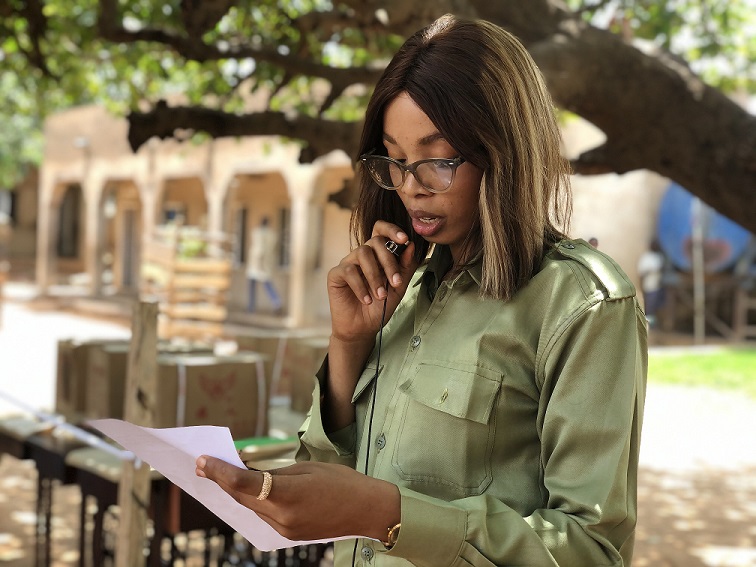
A corps member serving at Al-Furqan Learners’ Academy, Potiskum, Yobe State, has trained and empowered twenty widows on fashion design and tailoring skills in an effort to eliminate poverty and unemployment amongst women in the society.

The corps member, Chidimma Atuchukwu Obiageliaku, who hails from Anambra State, said the gesture was born out of her passion and desire to assist the vulnerable and less privileged in society.

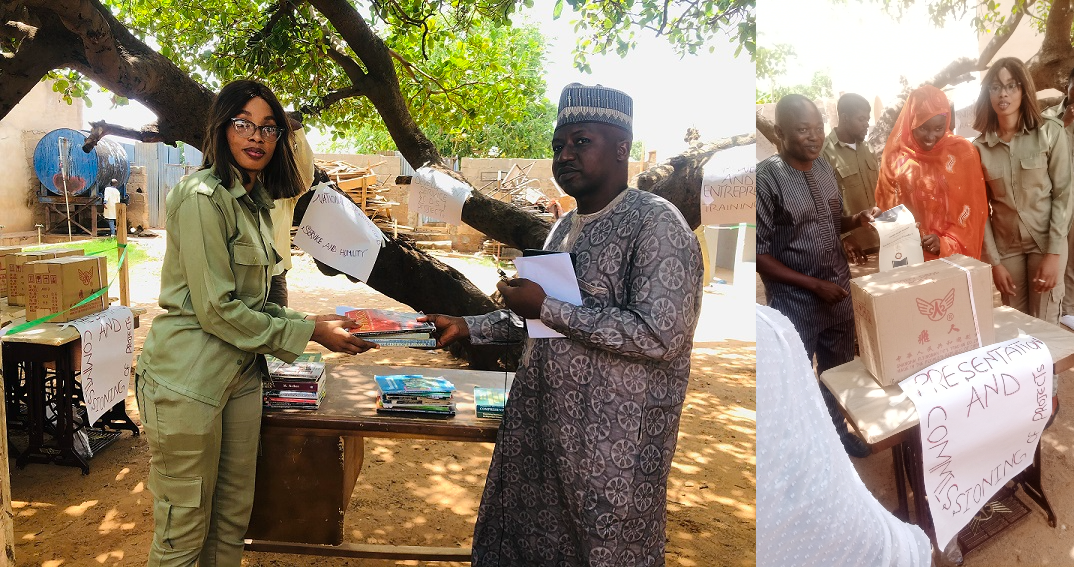
The Commissioning and Presentation Ceremony held on Thursday, 30 June 2022, at the school premises,  witnessed the presentation of certificates, wrappers, sewing materials and seven new sewing machines to the trainee widows. This came after 6 six weeks of intensive dress-making training and other entrepreneurial skills.

Other projects initiated by the Corps member included renovating and stocking a 40-seater school library to boost students’ learning capacity. She said, “whenever you read a book, it equips you with the knowledge and power to become whoever you aspire to be”, hence, donating the library to the school to equip the students to become great in the future.

In his welcome address, the School Director, Alhaji Ibrahim Mohammed, represented by Alhaji Suleiman Dauda, commended all the Corps members serving under his watch and specifically the project initiator Chidimma. He added that she was the first of her kind to execute a project of this considerable repute.

The state Coordinator of NYSC Yobe State, Hajiya Hafsat Yerima, represented by the Head of Community Development Service, CDS, Mr Abimbola Akin, expressed her satisfaction with the project carried out by the Corps member and hinted that the state would never forget her in a hurry while urging other Corp members to emulate her good gesture.

In his contribution, the Provost, Federal College of Education (Technical), Potiskum, represented by the Head of Digital and Visual Library of the College, Mallam Abubakar Hassan, explained that education is the bedrock of every meaningful society which deserves the contribution of all stakeholders.

Hassan, on behalf of FCE (T), Potiskum donated a reasonable number of textbooks to the school as part of their contribution to the project.

The benefiting widows, who were highly pleased, thanked the Corps member for the humanitarian support. The leader of the widows, Mrs Ladi, said the training is a lifetime investment that has transformed their lives beyond imagination. She prayed to Almighty God to grant their benefactor success in her future endeavours.

Other attendees included the Commissioner, Basic and Secondary Education, Yobe State, Dr Muhammad Sani Idris, representative of the Emir of Fika, His Royal Highness (Dr.) Muhammadu Idrissa Ibn Abbali, Humanitarian organisations, parents and students.

In his closing remarks, the School Director thanked the initiator of the projects and the sponsors and offered her automatic and pensionable employment with accommodation and other benefits after her National Service.

The Community Development Service is one of the key components of the NYSC, designed to have a beneficial influence on the lives of the host community.

2023 elections and religio-regional struggle

By Ali Tijjani Hassan

One would be amazed while looking at the similarities between the words “Religion and Region.” One will be even more amazed by how these twin factors play an unimaginable role in Nigerian politics.

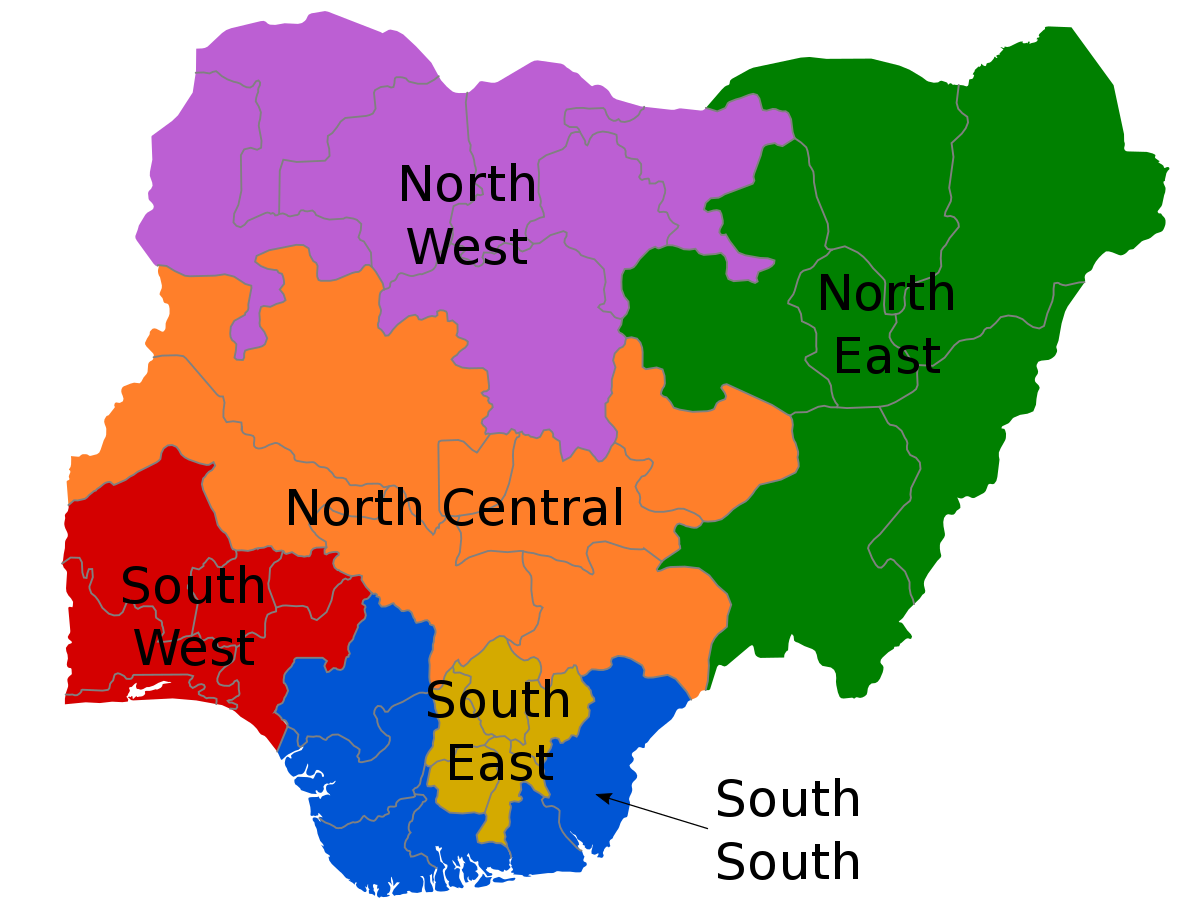
Nigeria is divided into six geopolitical zones; North-central, Northwest, Northeast, Southeast, Southwest and South-South. In a nutshell, South and North. In terms of Religious diversity, we have only two major religions: Christianity and Islam. Subsequently, Christianity and Islam dominate South and North, respectively.

As the main opposition party, the People’s Democratic Party, PDP, elected Alhaji Atiku Abubakar as its flag-bearer in the forthcoming polls of 2023. On the other hand, the ruling party, the All Progressive Congress, has yet to choose their flag-bearer capable of winning the election against Atiku.

The APC has zoned their presidential quota to the South-West and Vice President to the Northeast. Their front-line aspirants (Tinubu, Osinbajo) are already from the Southwest. Alhaji Ahmad Bola Tinubu was a former governor of Lagos state. Prof. Yemi Osinbajo is currently on the echelon of his second-cum-two terms as Vice President of Nigeria.

Religion is another factor we have seen since the birth of Democracy in Nigeria in 1999. How religion plays a role in who would be President or Vice President, the candle of Muslim-Christian or Christian-Muslim tickets is still flaming. We witnessed Obasanjo/Atiku, Yar Adu’a/Jonathan, Jonathan/Namadi, and Buhari/Osinbajo.

The nightmare to the APC is how to relate their zoned system with the emergence of their candidates. Both Tinubu and Osinbajo are competent, but Tinubu, like his counterpart of PDP, is a gigantic gorilla that wouldn’t allow any candidate to win over them.

If Tinubu emerges as a flag-bearer, he has no option but to pick the former speaker of the house of representatives, Rt. Hon. Yakubu Dogara, since he is the only influential Christian of the party from the Northeast. Sequel of this, both North and South wouldn’t produce a candidate that is not condign to their religious interest.

Professor Yemi Osinbajo

Prof. Yemi Osinbajo is an influential Christian Southerner that was once seen as ready to serve in the eyes of Nigerians. Still, the disregard of the present Buhari-led administration tarnishes his striking image with red.

If Osinbajo gets the ticket, he must pick his running-mate from Northeast. Then Osinbajo’s running-mate must be an influential Muslim and northerner with integrity, accountability and competency. The qualities mentioned above would win the hearts of Northerners to revive the fallen hope that they put into the APC earlier.

It has been in the tradition of Northern politics since 2003, when president Muhammad Buhari stepped his foot into the presidential race arena. There is a constant twelve million votes that were captives in his favour. Therefore, whosoever would be Osinbajo’s running-mate must have the passkeys to open or conquer the twelve million vote bank.

Who will be Osinbajo’s running-mate?

Here in the Northeast, we have only two politically influential actors capable of running with Osinbajo and likely to conquer: The first is Prof. Babagana Umara Zulum, the governor of Borno State.

Prof. Zulum was a legend of fortune. Although he became the governor of Borno when the state was in the sorrow of insurgency, his braveness, doggedness, and justice with fairness made him the messiah of the Borno people then. That fortunate promotion paved Zulum’s way to be loved by many Nigerians.

The second influential Muslim northeasterner that could win the hearts of northerners and retain or succeed the Buhari’s twelve million votes is the minister of communication and digital economy, Prof. Isa Ali Ibrahim Pantami. Due to his Islamic religious sacerdotalism, the Sunnis sect fanatic would vote for him. Mainly, northern Muslims are Sunni. Therefore, a Pastor/Sheikh ticket is also possible.

Ipso-facto, we should say that the upcoming 2023 will be a “religion and region” war.

Ali Tijjani Hassan writes from Potiskum, Yobe state.

Northern APC governors support power shift to Southern Nigeria

By Ahmad Deedat Zakari

Northern governors of the All Progressives Congress, APC, have backed the transfer of power to Southern Nigeria.

The governors made this known in Abuja on Saturday, June 4, 2022, after a meeting.

The eleven governors who voted in favour of the decision include: Aminu Bello Masari of Katsina, Abubakar Sani Bello of Niger, Abdullahi A. Sule of Nasarawa, Prof B.G Umara Zulum of Borno, Mal. Nasir Elrufai of Kaduna, Muhammad Inuwa Yahya of Gombe, Bello B. Matawalle of Zamfara State, Simon Bako Lalong of Plateau, Dr A.U Ganduje of Kano, Senator Abubakar Atiku Baguda of Kebi State and the former Sokoto State Governor, Senator Aliyu Wammako.

The governors believed the decision was taken in the best interest of the country.

“APC governors and political leaders from the northern states of Nigeria today met to review the political situation and to further support our party in providing progressive leadership amidst our national challenges.

“During our discussions, we welcomed President Muhammadu Buhari’s invitation to governors and other stakeholders to contribute to the emergence of a strong presidential candidate for the APC.

“After careful deliberation, we wish to state our firm conviction that after eight years in office of President Muhammadu Buhari, the presidential candidate of the APC for the 2023 elections should be one of our teeming members from the southern states of Nigeria.

“It is a question of honour for the APC, an obligation that is not in anyway affected by the decisions taken by another political party. We affirm that upholding this principle is in the best interest of building a stronger, more united and more progressive country,” the communique reads in part.

They also urged presidential aspirants from North to withdraw from the race on the ruling party’s platform. Consequent of their decision, Jigawa State Governor, Abubakar Badaru has withdrawn from the race.