Southern Nigeria

Bridging linguistic worlds

By Abdussamad Yahya Sufi

My Literature teacher cautioned me in secondary school to avoid using Pidgin English during communication. Mr. Ibrahim Bello would always tell me that using pidgin in the infancy of learning English would affect my budding standard English. Since then, I have never used it and always try to avoid it in writing and speaking.

Now that I’m at university, I have met different people from southern Nigeria who always use pidgin. At first, I feared what would happen to my infant English. However, later, I realised that I could still maintain the standard since they all understood standard English; they just chose not to use it.

During my first days at university, the pidgin speakers in my hostel irritated me the most. Everyone used the language, and I didn’t understand 80% of it. When someone talked to me, especially my roommates, I would ask them to translate what they said.

After a few days, many of the guys in the hostel noticed me and began teasing me, thinking I simply chose not to speak the language until they understood that I didn’t understand it. They started calling me ‘English Man,’ which didn’t bother me as I had heard such names before.

Some invited me to their rooms to tell me stories, and I never rejected that opportunity. I knew it would help me improve my English skills. When I told them stories, they paid attention and asked questions in good English, not bad pidgin. 

Honestly, that helped me build my public speaking skills, and I appreciate the guys for understanding me then, unlike before. Even when I meet any of them on campus now, they introduce me as the ‘English Man.’ to their friends, and they all speak good English while exchanging greetings.

I don’t mind being silly while learning; I don’t hide myself when interacting with my schoolmates and friends. They are my laboratory, where I practise what I have learned. Even if they laugh at me or call me names, I use those experiences to practise my learning skills.

Abdussamad Yahya Sufi wrote via abdussamadsufi744@gmail.com.

APC’s ineptitude, Nigerians’ suffering: Who is to blame?

By Salisu Uba Kofar Wambai

Atiku Abubakar made campaign promises about tackling border closure which seriously ushered hardships, especially in the North. He equally rolled out plans to liberate Nigeria from the shackles of foreign loans President Muhammadu Buhari immersed it into.

PDP is the party that has formidable and unnerving politicians who fought tooth and nail for democracy to thrive in this country. The party people know the long walk to freedom they walked, and their 16-year dispensation spoke for them. 

PDP mastered campaigns for the creditors to give us waivers, which prevented the country from such loan spells. They ensured Nigeria hadn’t been submitted to total external control like we see today with APC’s inexperienced and heartless dispensation.

PDP has think tanks that guide their foreign relations which made sure we did not accept in toto any development strategy which could undermine the welfare of citizens in the long run. Thanks to their inclusion of technocrats both from home and outside in their socioeconomic and political decision makings 

Atiku was an integral part of all these goodies mentioned; that’s why we suggested northern voters vote for him during the 2023 presidential campaigns. As a northerner who willingly gave power to the South from 1999 to 2015, I thought it was economically stagnant due to the selfish allocation of federal government projects under OBJ and GEJ. The North had expected Buhari to compensate the region for even development of the country.

However, Buhari seemed to have failed and was ignorant of why power was being rotated at the centre. He favoured the South in many aspects of development project allocations like railways, good roads, bridges and electricity. 

Most of the projects Northerners have been clamouring for, like Mumbila Power Plants, Baro Port, Ajakuota Steel Company, KKK gas pipeline projects, and roads linking states of the region, have not seen the lights of the day. And how could North continue to support power-sharing and shift these injustices, shabbiness and iniquity?

The southern PDP governors under Nyesom Wike led a mischievous campaign against their party candidate PDP to work for the southern presidency. They were not a bunch of idiots like some undesirable elements of the northern politicians who selfishly sold out the region for their egocentric notions.

Now that Nigerians are paying the price of what they had bought by bringing APC to power again, we must remind our people how to become politically smart next election season. And many folks from this part of the country cannot still see things as they are. Sad.

Salisu Uba Kofar Wambai writes from Kano State and can be reached via salisunews@gmail.com.

Nigeria: Prognosis and challenges against the incoming government

By Iranloye Safiu Taiye

Nigeria became an independent State on 1st October 1960 from her former British colonial masters, which ushered Nigeria to the comity of a sovereign state and membership of the United Nations (UN) after decades of British colonial administration officially came to an end (1900 – 1960). On the eve of independence, our nationalists and politicians were mandated to administer Nigeria after rigorous agitations, struggles, and movements by our nationalists, who fought passionately to attain self-rule and independence. It was a memorable period when millions of Nigerian citizens, at home and in the diaspora, troops out with Nigerian flags to celebrate and jubilate the end of the British colonial rule on our father’s land. 

Nigeria is a heterogeneous and multiethnic state with multifaceted socio-economic and political backgrounds. These invariably made Nigeria a unique pluralistic State with more than 450 ethnic nationalities. Despite the diverse culture, religions, customs, languages, social beliefs, and norms within Nigeria’s setting, we’ve managed to dwell together even in the face of our glaring diversities, and this is one of our greatest achievements decades after the independence, notwithstanding the several events that have posed challenges to our national unity. Our country is one of the most blessed states globally, occasioned by the abundant natural endowments deposited across the States of the federation, which had positioned Nigeria better in the comity of nations. Not just that, we’re also blessed with adequate human resources capable of culminating our development. Hence, these human and abundant natural resources can better stimulate sustainable growth in Nigeria than we are currently experiencing.

Paradoxically, the Nigerian quest and cruise to greatness were aborted and short-circuited by the military intervention in Nigeria politics on 15th January 1966 led by Gen. Chukwuma  Kaduna Nzeogwu, who later installed Gen. J. T. U Aguyi Ironsi as the first military head of state, according to the prominent argument of many scholars. The 1966 bloody coup de tact and the subsequent counter-coup de tact had been pointed out by many as the rationality behind Nigeria’s development stagnation.  Because the military regime that lasted for three decades was driven by a mere parochial desire  to rule devoid of prior political training or orientation about governance

Like every other country, Nigeria had hills and challenges that required mechanisation to provoke development and fulfil its obligation to its citizens. However, six decades plus after Nigerian independence, there are some questions critically requiring answers; 

A.) Is this the envisioned Nigeria by our nationalists and founding fathers? 

B.) Have we been utilising our cultural plurality and resources to catalyse the State of our dream? 

C.) Despite these enormous endorsements, can Nigeria even compete with the countries aboard with little endowment compared to Nigeria? 

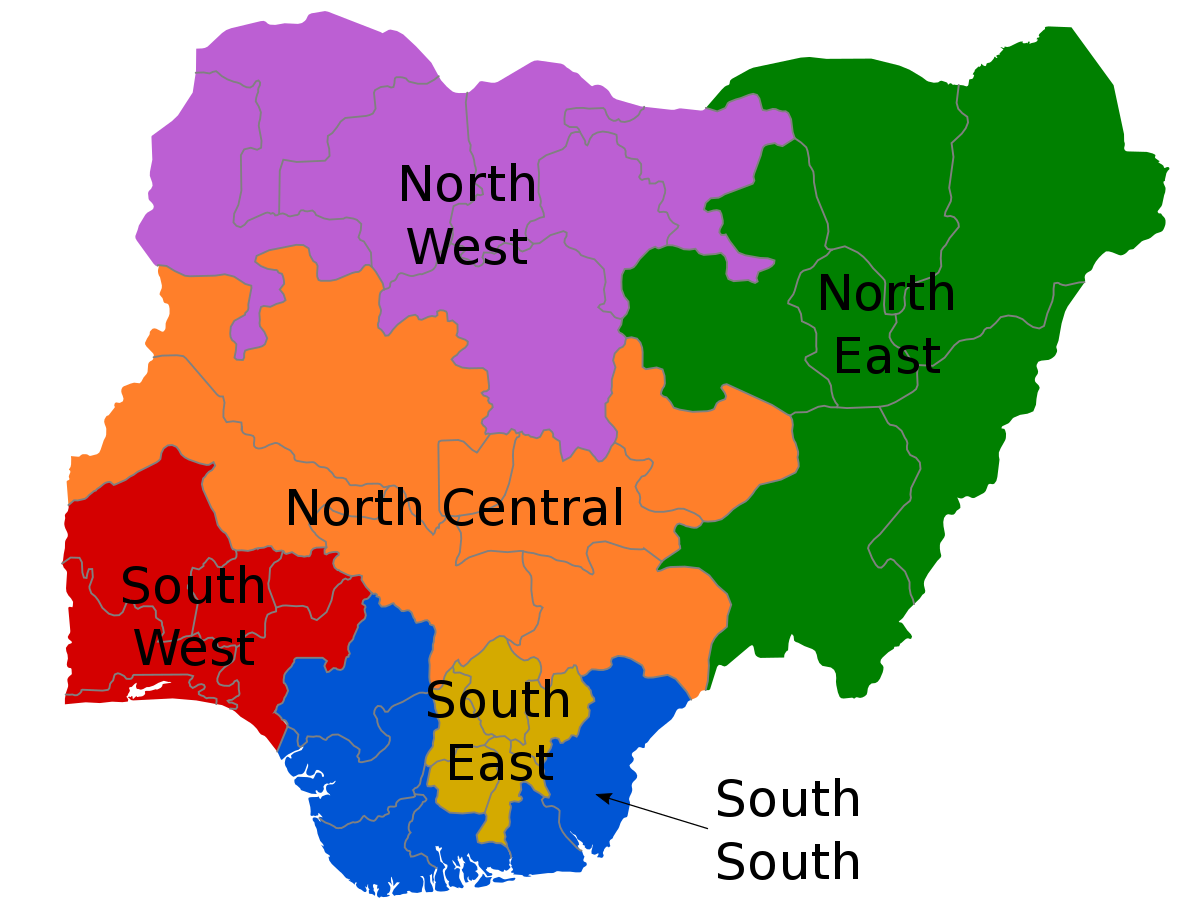
Nay! The Nigerian vision and enormous resources had been ill-managed, and we’ve scrapped our national interest to the hand of corruption, nepotism, favouritism, and chauvinism. It’s saddened these challenges have become a phenomenon, very terrifying, cumbersome, and complex because we have failed to implore a holistic approach to proffer an answer to our societal challenges. Hence we pursue individualistic and least regional interests against national interests, which have ejected the spirit of one Nigeria from most citizens. Sadly, this has also metamorphosed and Jingerd the swagger of many separatist movements and self-rule agitations across the Northern and Southern pole of the country. i.e. IPOB in the Southeastern region, Middle-belt in the Northcentral region, and Yoruba Nation in the Southwestern region.  

Security which has to be the first duty of every government, has been compromised by the action of terrorists, bandits,  kidnappers, armed robbers, ethnic militias, and other criminals everywhere. This horrible event threatened the safety of life and properties of every citizen, regardless of their position or calibre in the state. Therefore, though the actions of our gallant military men, Nigeria police, and other law enforcement agencies cannot be overemphasised, they will be better off if they can empower the service men with better-sophisticated weapons and machinery to curb the insecurity across the nooks and crannies of our country. Therefore, more advanced weapons and ammunition with technical military training are germane now than ever.

The Nigerian economy was known to be enormous and giant before, but currently, the buoyancy of our economy is now a past glory; even Naira is now at the bottom of the global currency index. Diversification of our economy from crude oil dependency must move from a mere paper presentation to reality. The agricultural and manufacturing sector needs serious attention. Recharging this sector is the only remedy to witness a balance of trade, open the door for more investors and open Nigeria’s market to the international community, and change our status of a perpetual importer, if we want our economy to get back on track and compete favourably with other developing and developed countries of the world. Significantly, both the education and health sector needs critical attention and consideration because this is the brain and blood of every state, and the sorry situation of these two sectors is currently condemnable. 

Glaringly, Nigeria has been ravaged with internal problems ranging from separatist movements, clamouring for restructuring, intimidations, domination, and masterminding of regional agenda despite the constitution forbidding that. However, the pluralistic situation that has polarised us must be considered when deciding to affect the entire country if we don’t want unnecessary agitation that can further divide us. 

In conclusion, I will opine the new regime because of National unity and to curb rising agitation for self-government from different parts of the country. The political parties that won the national election should establish a federal government, not the usual winner-take-all, and douse the growing tension. Optimistically, realising Nigeria’s better tomorrow is achievable and redeemable only if we are ready to admit our differences and substitute our regional, ethnic, religious, and personal agenda for national interests. 

Notwithstanding, we must all be ready to partake in national affairs, challenge our leader for accountability, and embrace our national culture devoid of unholy ethnic jingoism when debating national issues.  

Iranloye Safiu Taiye (Optimism Mirror) can be reached via iranloye100@gmail.com

Behind every negative human tendency is an enabler

By Dr Raji Bello

Last Tuesday, I listened to a panel on AIT’s morning programme discussing the increasing weaponization of ethnic and religious identity in Nigeria, particularly during the current election cycle. The discussants were particularly alarmed by the developments surrounding the governorship election in Lagos state, which has witnessed threats, intimidation and violence against voters of a particular ethnic group. The politicisation of ethnic and religious identity in this election cycle is, of course, not limited to Lagos.

Religious identity was a major issue for the APC presidential ticket and some governorship tickets like that of Kaduna state. Religion was a major issue in the Taraba governorship contest, and the issue of indigene vs settler reared its head during the Kano governorship election. There is even a Facebook group which is committed to getting candidates with pure Hausa blood elected into the governorship posts in the Northwest states. Nigeria may be on a slippery slope towards eventual implosion. 

What I have noticed about the AIT discussion is the same thing that I have observed about other similar discussions – they are limited to expressions of sadness followed by appeals to Nigerians to change their behaviour. There is very little discussion on why Nigerians do what they do and if there are any enablers for those tendencies. In my personal reflections, I have tried to answer these questions.

Most negative human tendencies have things which enable them, and rooting out the enablers is an important part of the measures for suppressing these tendencies. Anyone who is familiar with Islamic theology, for example, knows that there is little tolerance for things which are deemed to be enablers of vices. The prohibition of the consumption of alcohol is an example; alcohol intoxication is regarded as an enabler for many vices, which has necessitated a full prohibition of it.

Likewise, the encounter, in isolation, of two eligible and unmarried members of the opposite sex is regarded as an enabler for sexual vices. In the secular world as well, drinking and driving are prohibited in many countries because it is an enabler of fatal road accidents. Relationships between academic instructors and students are prohibited or restricted in many American institutions because they could be enablers for abusive relationships and conflicts of interest.

If Nigerians have come to the conclusion that toxic identity politics is harmful to the corporate well-being of the country, they must find the enablers for such politics and uproot them. Issuing passionate appeals is bound to be ineffective because human beings do not always respond to reason or appeals to stop a negative behaviour, especially when there are things which incentivise such behaviour. In my view, there are two enablers for the weaponization of identity in Nigeria:

1. There is no punishment for it. There are either no laws against toxic identity politics and incitement against ethnic and religious groups in Nigeria or they are never enforced. The result is that offenders almost always get away with their actions. This lack of accountability is a powerful enabler for similar behaviour by the same individuals or others.

2. There is a reward for it under our federal system. Our current constitution provides for semi-autonomous federating units (states) which are loosely coterminous with ethnic and religious identities – for example, Imo State is Igbo and Christian, Katsina is Muslim and Hausa-Fulani, Niger is Nupe, Gbagyi and Hausa, Ogun is Yoruba etc. The federal system has also granted these federating units the power to elect their own leaders (governors and LGA chairmen), unlike in unitary states where these leaders are often appointed by the central government.

Since elections are competitive and every state is identified with certain ethnic and religious identities, the possession of these identities by any individual becomes an advantage towards winning elections. This is why Nigerians have learnt to hold on to these identities and even to flaunt them. Being a Tiv is a huge advantage in Benue state, just like being a Kanuri is in Borno state. It’s not hard to imagine that when electoral competition becomes very stiff, these identities will be weaponised. There is no way to stop Nigerians from engaging in toxic identity politics as long as these two enablers are in place.

Our country was founded on the basis that it has diverse and irreconcilable ethnic and religious communities. Our founding fathers wanted it that way, and they chose a federal system which they thought was best suited to manage our diversity (although most of the major federal states in the world are not so diverse internally). While countries like Ghana took off with the mantra of unity in diversity and did everything to build a united nation, our founding fathers did not even pretend that the country was united. Each of them had regional priorities higher than Nigeria’s unity.

We started with three federating units and have now grown to thirty-six plus the FCT, and the more we created states and LGAs, the more identity fault lines we created. The country is now balkanised into 37 identity enclaves (states), and 774 LGAs and each citizen is marooned inside their own enclave and is entitled to few formal privileges in others – even neighbouring ones.

In the First Republic, this divisive effect of federalism wasn’t up to what we have now because the federating units were much bigger, and they functioned as unitary states internally. The former Northern Region, for example, had thirteen or so provinces whose administrators were appointed rather than elected, and a northerner from one province could be posted to work in any of the other provinces. The provincial boundaries did not keep northerners away from each other, and as a result, the people of the region saw themselves as one because they were indeed one in practice. 

The Northern Region alone has now evolved into 19 federal states and hundreds of LGAs, each with a rigid boundary which separates it physically and functionally from other federating units. This has made intercommunal relations to be worse than they were in the old Northern Region. The late former SGF Alhaji Gidado Idris, who was from Zaria, was once a divisional officer in Benue, Adamawa and Sardauna Provinces, but his grandchildren cannot work for the Benue State Government in today’s Nigeria. They may even struggle to gain admission into state-owned schools in Benue State.

Mr Selcan Miner, a former secretary to the government of Benue-Plateau State, was once an administrative officer in Sokoto Province, and he still has fond memories of his stay there, particularly his close relationship with Sultan Abubakar III. But in the present day, the government of Sokoto State may not grant privileges to Mr Miner’s grandchildren because they are not “indigenes” of the state.

The late chief of the Mbula people in Adamawa state Joram Fwa, who was a US-trained educationist, was the pioneer principal of Ramat Technical College in Maiduguri under the then Northeastern State. He was entrusted with the assignment of establishing the college and was made its pioneer head. The college has since grown to become Ramat Polytechnic and belongs to the Borno State Government. I will not be surprised if, in the present day, the application of Mr Fwa’s grandchildren for entry into the polytechnic is turned down on the grounds that they are not from Borno state. I have used the examples of these three Northern elders to illustrate what we have done to ourselves over the years through our so-called federal system.

Not too long ago in the 1990s, the governor of Lagos state was a military officer named Buba Marwa, a native of Adamawa State. He was appointed under the military government’s unitary style, and he was well-received in the state because the people knew that that was the system in operation then. At a different time before that, a native of Lagos State, Bode George, was appointed the governor of Ondo State. From all indications, Marwa had performed well in Lagos in terms of infrastructure and crime fighting.

If we do a cost-benefit analysis of the process of appointing Marwa as governor and that of the re-election of Governor Sanwo-Olu in 2023, we would see that the former didn’t cost any significant amount of money and didn’t involve any fracture in relations between major ethnic communities in Lagos while the latter had cost the federal government a lot of money in election expenses and has led to flaring of inter-ethnic animosity, intimidation and violence. In the end, both governors are capable of doing a lot of good for Lagos, the difference in the nature of their appointment notwithstanding. This is why we need to ask ourselves if we really need to have elected governors and LGA chairmen as provided in our current federal constitution or we could simply have them appointed and monitored by the central government.

In the late 1960s and 70s, the governor of Kano State was Audu Bako, a police commissioner and native of present-day Kebbi State. He was appointed by the government of General Yakubu Gowon, and from all historical indications, Kano State has had it so good under him. His appointment didn’t cause any inter-communal upheaval in Kano, and there was no violence. Compare that to the re-election of Governor Abdullahi Umar Ganduje in 2019 or the election of Abba Kabir Yusuf in 2023, which were both marked by communal tension and violence. Why should we keep using this costly option of election and risk so much when Kano can have good appointed governors just like Audu Bako and Sani Bello? Only a small number of democracies around the world have elected sub-national chief executives as we have, and countries which don’t have them are not deemed to be less democratic than us.

Sometimes Nigerians view unitary systems negatively because they equate them with military governments, but there is nothing that stops us from having a unitary democracy like many countries in the world. The appointed governors and LGA chairmen under this system are going to be civilians, maybe even members of the ruling party at the centre, just like in the system in Ghana, whose 16 regions are all governed by appointed regional ministers who, at the same time, are elected members of the national parliament.

The other fear that Nigerians have about a unitary president becoming too powerful is also misplaced. Ghana’s presidents are not regarded as dictators, and opposition presidential candidates have even won elections there. In any case, parliament is always there as a check on the powers of the president. Unitary systems are cheap, can minimise toxic identity politics, guarantee harmony in the pursuit of developmental priorities and provide better coordination in fighting insecurity. It’s a better system to have than our current federal system, with its unaccountable and politically autonomous governors whose elections are now driving our ethnic and religious communities further apart and threatening the stability of our country.

Whoever brought this American-style federal constitution and gave it to our African tribal groups to implement has not served us well. It’s time we found the courage to abandon the farce. What Nigeria requires is a unitary democratic system with an element of rotational leadership at the centre to ensure its various groups of inclusion.

Dr Raji Bello wrote from Yola, Adamawa State.

The working of Nigerian federalism

By Abubakar Muhammad Tukur

In Nigeria, true federalism means different things to different people. The newfound phrase could be better understood using a geo-political lens. Let us begin with the southwest, which the Yoruba dominates.

The agitation for true federalism started in the southwest immediately after the annulment of the 1993 presidential election, believed to have been won by a Yoruba man. The Yoruba elite argued that the election was annulled simply because their northern counterparts were unwilling to concede political power to the south. Hence, their vigorous campaign for a ‘power shift’ to the south. By power shift, they meant an end to the northern elites’ stranglehold on political power and, by extension, economic control.

However, with a Yoruba man, Olusegun Obasanjo, emerging as the president in 1999, the clamour for a power shift became moribund and was replaced with that of ‘true federalism’. By true federalism, the Yoruba elite means a federal system with a weak centre, a system in which the constituent units are independent of the centre, especially in the fiscal sphere.

The cry of marginalisation has been loud in the southeast, home to the Igbo ethnic group. The Igbo’s position regarding Nigeria’s federal system is that the system is characterised by lopsidedness, particularly in allocating national resources.

Another ground of Igbo agitation for true federalism is their perception of non-integration into mainstream politics since the end of the civil war in 1970, citing a lack of federal presence in the region. This sense of lack of belonging informs the views of some pro-self-determination groups like the Movement for the Actualisation of the Sovereign State of Biafra (MASSOB) and Indigenous People of Biafra (IPOB) that the Igbo people are no longer interested in being part of Nigeria and should be allowed to secede and form an independent state of Biafra.

It is, however, doubtful if the campaign for the resurgence of Biafra is popular among the elite of the southeast whose political and business interests cut across the country. By true federalism, therefore, the Igbos of the southeast mean a federal practice that accommodates every ethnic group in the multinational federation.

Similarly, a sense of political and economic marginalisation forms the basis upon which the minorities in the Niger Delta (or the south-south geo-political zone), where the bulk of Nigeria’s oil is located, persistently demand their own exclusive political space using the euphemism of ‘resource control’ and true federalism.

In the Nigerian context, the term resource control means the right of a federating unit to have absolute control over the mineral resources found within its jurisdiction and contribute to the central government to fund federal responsibilities.

The perceived injustice in resource distribution is the main driving force for the struggle for resource control. The oil-producing states have repeatedly argued that Nigeria’s fiscal federalism, which encourages lopsided distributive politics, has been unfair to them. For the people of the Niger Delta, therefore, resource control is a solution to marginalisation. Thus, for the people of this region, true federalism means a federal practice whereby the federating units are allowed to own and manage their resources as they desire.

Seemingly, the northern elite wants the status quo to remain based on the belief that the present system favours its interest in some quarters. These include the federal character principle, majority representation at the federal level and quota system.

We have been able to demonstrate in this article that central to the agitations for true federalism in Nigeria is the struggle for access to national resources. Oil rents and their distribution have shaped the operation of Nigeria’s federal system and have also contributed largely to the failure of federalism in Nigeria. Nigeria’s history of revenue distribution is about each ethnic group or geo-political region seeking to maximise its share of national resources. One reason for the acrimonious revenue allocation system is that Nigeria’s component units lack viable sources of revenue of their own.

Also, the economic disparity that has given rise to unequal development among them is another source of contention. Therefore, any future political reform must ensure the accommodation of the country’s ethnic diversity because this is one of the many ways national unity could be achieved.

As a way out of the over-centralisation of the system, the country’s fiscal federalism should emphasise revenue generation rather than revenue distribution, as this would ensure the fiscal viability of the states. Any future reform should be tailored towards the states generating their own revenue, and those not endowed with resources should devise strategies to generate revenue from other sources. Internally-generated revenue should only complement a state’s share of federally collected revenue. Moreover, with the decentralisation of economic resources, the states would be in relative control of their resources and be less dependent on the centre.

A weakening of the federal centre may not be a bad idea, but Nigeria needs a federal system that would ensure the relative supremacy of the central government vis-à-vis the state governments. The size of the federation, as well as its ethnic diversity and economic disparity, requires a relatively strong federal government that would be able to regulate the competition for national resources.

It may be concluded at this juncture that Nigerian federalism is defective, and reforms are inescapable. The unending quest for true federalism, political restructuring, and self-determination within the context of the ethnically heterogeneous Nigerian federation will disappear until the political leaders reform the institutions and structures of the federal system to give a semblance of genuine federalism.

Abubakar Muhammad Tukur, LLB (in view), can be contacted via abubakartukur00396@gmail.com.

On Southern Nigeria’s selective outrage

By Suleiman Ahmed

In Nigeria, an election period is like watching a classic Series for the umpteenth time. You know how it’s going to play out, but it doesn’t make it any less fascinating. The most entertaining episode, of this Series, after the presidential election, of course, is the debate leading up to the Lagos gubernatorial election.

Firstly, the Yorubas must perform a ritual of agonisingly re-iterating the exact same thing: that Lagos is not a “no man’s land.” This is quickly followed by an outcry from the non-Yoruba, Lagos-based (mostly southern) Nigerians. They argue that, as Nigerians, every inch of land in the country, belongs to all Nigerians. That any attempt to deprive them of this right is ethnic bigotry. But how true is this? And do they practise what they preach? Let’s go down memory lane.

A few years ago, when the federal government suggested to some (southern) state governors to provide grazing lands to cattle farmers (who’re predominantly Fulanis) to grow their herds; to control herder-farmer clashes in parts of the country, many of the governors rejected this proposal. (Mostly) Southern Nigerians also took to social media to applaud the governors for refusing fellow Nigerians access to Nigerian lands.

Dangerous words like “invaders” and “take over” were recklessly deployed to stoke ethnic tension. No one cared to remember that these people, too, were Nigerians and therefore were entitled to own land and do business anywhere in Nigeria.

Now, in 2023, it’s election time again, and this same divisive rhetoric is being deployed, albeit in different circumstances. The same people who once championed an anti-Fulani campaign that ensured their fellow countrymen from the north couldn’t get lands in their own country are now complaining of being othered by Yorubas in Lagos. So, I’m asking: why is it ok for them to own lands and freely do businesses, have some influence on who becomes governor in “another man’s land,” but at the same time, see no contradiction in telling northern Muslim cattle farmers to return to the north, to look for land, because “the south does not belong to them?” Why are you concerned that the Fulanis “will take over your land” but are now getting triggered because the Yoruba people feel the same way towards you?

They wanted the land for free

When I first shared my thoughts on this topic on my Facebook Page, some interlocutors argued that the reason for the southern governor’s pushback was that the federal government wanted the land free of charge.

“Free,” in this context, is debatable. When an industry such as cattle farming wants the land for its activities, it’s not usually a mere hectare or two. A reasonable size would be hundreds to thousands of hectares. The size and complexity of such a project is not something private individuals can execute without support from the government.

Therefore, it was not out of order for the federal government to step in to help with things like making the land available and then building the infrastructure needed for the place to function properly. After which interested parties can be invited to come in and rent/buy spaces to set up shop. These farmers were clearly going to pay taxes to local authorities and generally operate the same way market stall owners do in places like Kano, Lagos or Aba.

Having said that, let’s say, for the sake of argument, I agree that the federal government wanted the state government to give “free” land to the cattle farmers; why was the response not: “bring more money!” Or “let’s have a better financial agreement?” We didn’t hear of any such request — of a better (financial) offer, from the southern governors. Instead, what we got from them, and many southern Nigerians, were: “the Fulanis should go back to the north and ask for land there,” “this is a plan by the Fulani government to take over our land and hand it over to their people,” and many other unpleasant, divisive comments. The protest from the south was a clear message to those cattle farmers from the north. It was made known, loud and clear, that their land was in the north and not in the south. What happened to being a Nigerian citizen with full rights anywhere in Nigeria?

We can’t be comfortable with othering and divisive languages when it involves the Fulanis and then suddenly become appalled when they’re deployed against a different group of people. It doesn’t work that way. We cannot, on the one hand, say things like Idoma land, Ijaw land, Tiv land, Igbo land, or Niger Delta land (or Niger Delta oil) and then throw tantrums when Yoruba people say Lagos is Yoruba land. You’re clearly not appalled at any injustice. You’re only now concerned because you are at the receiving end of it. What you’re practising is Selective Outrage (apologies to Chris Rock), and it is hypocritical.

Suleiman Ahmed is a writer and the author of the socio-political novel, Trouble in Valhalla. He tweets from @sule365.

Is the Southern Nigerian press scared of Kwankwaso?

By Muhammad Sulaiman Abdullahi, PhD

Dr Rabiu Musa Kwankwaso’s NNPP has seemingly become the nightmare of many politicians in the Northern and Southern parts of Nigeria. This is simply because many Nigerians are not truly yearning for a better country.

Some Southern press, especially those who used to set the agenda for the country years ago, downplay Kwankwaso’s candidature and deliberately omit, ignore and replace Kwankwaso’s more prominent and more formidable party with someone who is not known beyond Twitter in their coverage.

The Southern press may be scared of Kwankwaso due to several reasons. These could be myopia, tribalism, regionalism, and religious mischief. Yes! I agree that Atiku Abubakar of the PDP and Asiwaju Bola Tinunbu of the APC may be considered as forefront candidates in some contexts. Thus, they may be regarded to be above Kwankwaso in terms of age, venturing into national politics, and political spread but nothing more.

Kwankwaso is naturally ahead of them in terms of integrity, health, foresight, political sagacity and shrewdness, and above all, the love and commitment towards the development of Nigeria. Moreover, his academic credentials are higher than all those who are contesting.

Furthermore, the Southern press thought they could do as they wished without being noticed. So, they cunningly choose to propagate one Yoruba (Tinubu), one Hausa (Atiku) and Peter Obi (Igbo). The latter cannot even publicly and unambiguously condemn the IPOB secessionists’ evil atrocities. Does he even believe in one indivisible Nigeria himself?

The Southern press is not alone in this mischief and tribalism. Some Northern writers who are, to some extent, their puppies and puppets downgrade Kwankwaso and fail to point out a single reason. They even tag him as a local champion. What is bad in being a local champion? All champions should be local, otherwise they don’t have any base.

If you check newspapers, both print and online, such as Vanguard, the Guardian, Punch, Premium Times and the likes, they are at the forefront of this amateur journalism. How can someone be so glaringly subjective in their journalism to the extent that even a blind can see? What kind of a country is this? Are they not aware of Kwankwaso’s credentials and positive antecedents? Are they unaware of how Kwankwaso transformed and developed Kano rapidly? How on earth can you compare Kwankwaso to all those contesting if someone is sensible and objective in his assessment? Most of them are either tribalistic or looking for big brown envelops filled with foreign currency.

These Southern press are not helping matters and are not objective. They are so divisive and tribalistic. To borrow from Orubebe’s outrage when he intended to save the nation from the ongoing catastrophe this Buhari-led government brought, while referring to Jega, he said: You are tribalistic. You are myopic, and we can’t take it!

Finally, the Southern media has achieved much in their agenda-setting warfare. Even some international media outlets borrow a leaf from them and mention Atiku, Tinubu and the other Igbo guy and, conspicuously, leave out Kwankwaso.

However, suppose we are to be sincerely and patriotically fair, let us put all the leading contenders on a scale of preference which is based on capacity and capability and see what happens. In that case, Kwankwaso is the best, followed by the Igbo man, and then Atiku while Tinunbu comes last. At least if they are to be objective, we have four leading contenders and not three, as they are falsely portraying.

Our votes are for Kwankwaso. And he will surely get more than many corrupt contenders and will win the presidential elections.

Muhammad Sulaiman Abdullahi, PhD, wrote from Kano. He can be reached via muhammadunfagge@yahoo.com. @muhammadunfagge.

The film industry in Nigeria: A two-left-legged maiden

By Zailani Bappa

I read a post by someone who expressed his worry about the lack of unity of purpose (in fact, he said, unity of everything) among the Nigerian people. He was writing about the movie industry. He said Hollywood had been a household name for a country as vast as America. So also Bollywood for a country as big as India. Both countries are bigger and more economically prosperous than Nigeria.

However, despite the existence of Nollywood, we still have the Kannywood in Nigeria. He believes the existence and progression of Kannywood are retrogressive to the Unity of purpose in the industry in Nigeria. I reason with him. However, that is only when the matter is viewed from the surface. Scratch the surface a little, and you’ll see the bigger picture.

Both Nollywood and Kannywood emerged in prominence in the 1990s. Nollywood comes in English, pidgin, Igbo and Yoruba. The Kannywood comes mainly in Hausa and a few times in English. Looking at the Hollywood and Bollywood industries as both business and national projects, both Industries tend to project National Unity, National Pride and National dignity of their respective countries. And the business does not discriminate in the selection of protagonists.

However, in Nigeria, tribal, sectional and religious stereotypes continue to influence the industry, which makes it even more difficult to have a unified industry. To date, egg-heads of the Nollywood industry find it difficult to accept the fact that the industry needed to diversify and be all-inclusive in sourcing for their resource. For instance, African-Americans in the US are arguably the lowliest rated race in the US. However, the Hollywood industry does not believe so. The Industry became all-inclusive and explored for talents instead of being led by stereotypes. Now the negros are almost the best actors in the industry. That is how it grew to excellence.

In Nigeria, however, Nollywood, with the advantage of producing in English first, metamorphosed most of the vernacular protagonists into English productions but unwittingly limited the train to those from the South-East of the Country who saw themselves as the owners of the industry. For instance, the far Northern Nigerian does not deserve more than the role of a gateman in Nollywood films. If at all you hear the name Musa, Usman, or  Bala, then, it’s the guy employed to look after the gate or wash the cars of Obinna, Ifeanyi or Chibuzo. The Lagos-based Industry is not making any genuine efforts to integrate with the Kannywood industry, even as the latter continues to grow in influence and affluence in the North and elsewhere.

However, the Kannywood, with its vast audience across the Hausa-speaking communities across the globe, also failed to grow in its intellectual capacity. It instead gets stuck to its money-making trash productions in the name of soyayya themes, which, apart from the sheer entertainment it provides, literally promotes empty value to the morale, capacity and quality of lives of the audience, not to even talk of national value, pride and dignity.

In Nigeria, the film industry has no idea or focus on National project but purely exist for business reasons. Hollywood has developed over time to become an agenda setter for the United States policymakers and implementors. It has now become a platform and potent avenue for increasing the influence of the United States over other nations and peoples worldwide. The Indian Industry also helps that country placate the outside world with its numerous internal crises and contradictions by promoting a clean, prosperous and happy India.

In Nigeria, Nollywood promotes less national dignity and unity but corruption, indecency, cultism and disunity. It exposes more of the weak and bad sides of the country, its institutions, leaders and people instead of strengthening their good sides more. Why? Because they make better money doing that since their productions appeal more to the wrong side of humanity in us. The Kannywood, with its empty intellectual value, is simply vain. So, as the two continue to grow side by side like that, we may have to do with the fast growth of a two-left-legged maiden of an industry.

Zailani Bappa wrote from Bauchi State via zailanbappa@gmail.com.

On the unity of the elites and the disunity of the masses in Nigeria

By Hassan Ahmad

Isn’t it surprising that despite the widespread public outcry, there is no real effort by any arm of government, traditional rulers or influential individuals to resolve lingering strike action by university teachers? This is just one of numerous simple but logical questions we should ask ourselves. 

As diverse as Nigeria is culturally, religiously, regionally, and even developmentally, her elites are the most united people you can find. But this unity managed to be sustained with a price: making sure the masses were united in hunger, unemployment, insecurity, lack of good education, access to poor amenities and others too numerous to mention. 

For instance, only ignorance would make Christians in Plateau revolt against Ja’iz bank’s reconstruction of the Terminus market based on a PPP agreement with the state government. While a Christian-dominated government sees its benefits, the common Christian masses wouldn’t see it that way. 

Isn’t it poverty that makes the northern Muslim send his child to the city to be fed by the public under the façade of pursuing Islamic knowledge? This same man would use all his energy to defend a politician from his region because he doesn’t want another man from another area to be his president.

Then you’ll have another set of educated and informed masses. The elites use this set as defenders. They are the intermediaries between the elites and the ordinary people and serve as their social media warlords. They defend their misdoings and praise their good acts no matter how unsatisfying. These people are stuck on a narrow path. They are not meant to be offered jobs in “juicy” government organizations and parastatals according to the design made by the elites. 

President Buhari, in his Sallah message, mentioned, “We don’t have jobs in government anymore. With technology, governments are becoming smaller, nimble and efficient”. He did not lie, but the truth remains that there will always be jobs for the children of the elites. 

What is more frightening is that you’ll find even the educated folks among the masses fighting the shackles of poverty not to better themselves and show a pathway to others but to belong to the elite class and continue with the abysmal state of dualism. 

In making sure they create a small world for themselves and their progeny, the elites put aside their differences – religion, region or political affiliation. This, in no small measure, makes them comfortable. They know that no matter who is at the helm of affairs, their businesses, investments, properties and status remain intact and unchallenged. 

Hence, a business mogul from Kano can go to Lagos to establish a refinery without being uneasy about it. Likewise, another owner of a travelling company from the east can have his vehicles go round the country to fetch him money. Again, a Northern governor can give out his daughter in marriage to the son of a South-Western governor. 

But then, when you come down to the masses, the tomato seller from the North is the number one victim of regional tension in the South. So also, the Igbo trader who finds his way to the remotest village in the North becomes the victim of religious tension—forgetting that they are all victims of misrule and deliberate segregation from the elites. 

As the situation grows further, it becomes more dangerous from the masses killing their relatives in the northeast in the name of establishing an Islamic caliphate to those killing their brothers in the southeast as separatists and bandits from the northwest terrorizing the poverty-ridden villagers.  

In all these, while the masses are the perpetrators, the masses are also the victims. But things have already gone so bad. The elites, too, are not guaranteed safety if the advancing motorcade of the C-in-C can be attacked. 

At this stage, the elites are under necessary, if not compulsory, reciprocity to make Nigeria stable again. The country has done so much for them in the past. The chickens are back home to roost. There is no need to point fingers at each other. 

To do this, the government must make sure that social justice prevails over any sentimental arrangements that have been in place. The government must understand that there is too much illiteracy and poverty in the land, and since they are the primary tools that lead to criminality, efforts must be made to curb them. 

The next administration can be said to be the most important in the history of our country. It mustn’t get it wrong. 

To the masses, we should understand that we are at a crossroads. As we can see in our country’s situation, we need not be begged not to sell our votes. You can sell your votes at the expense of your safety. If things go south, the elites have places to go around the globe in their private jets. You and I will be left to face our deaths in the hands of exciting gun-wielding criminals. Some of us were already asked to take arms and defend ourselves in Zamfara and Katsina states. The handwriting is already written on the wall. 

So please, don’t sell your votes and vote wisely. 

Hassan Ahmad Usman is a student of economics at the Federal University of Lafia. He can be reached on basree177@gmail.com or 77hassan.a.u@gmail.com.

FACT-CHECK: How true is the claim that 90% of Northerners are not on social media? 

By Muhammed-Bello Buhari

Claim: Atiku, Nigeria’s former Vice President and the Peoples Democratic Party presidential candidate, Atiku Abubakar, claimed that 90 per cent of northerners are not on social media while responding to a question in an exclusive pre-recorded interview on Arise TV aired on Friday, July 22.

Atiku made the claim, suggesting that the Labour Party cannot make inroads in northern Nigeria. He played down the possibility of Labour Party’s presidential candidate, Peter Obi, causing an upset to his presidential ambition during the next year’s general elections.

His words:

“It is very difficult to expect a miracle to happen simply because Peter Obi is in the Labour Party. After all, they were saying through social media [that] they had more than one million votes in Osun state.

“But how many voters turned for the Labour Party? And then again, mark you; you’re talking about social media. In the north, 90 per cent of our people are not tuned to social media.”

With this claim, social media was awash with all sorts of counterclaims. Nigerians on Facebook and Twitter knocked the former vice president out for his comment, alleging that such a claim is untrue.

Verification:

According to the Digital Report 2021 by Datareportal—one of the world’s most trusted sources of social media data, insights and trends—the number of social media users in Nigeria was equivalent to 15.8% of the total population (208.8 million) in January 2021. This means there were 33.00 million social media users in Nigeria in January 2021.

This same report recorded the total population of the northern region to be 128.17 million. This is also in line with the National Bureau of Statistics figures on Nigeria’s demographics, using data from the National Population Commission.

So assuming that the divide of the social media users in Nigeria between the south and the north is 50-50. i.e. of the 33 million users, 16.5 million are northerners. This means that of the 128.17 northerners, only 12.9 per cent are on social media, representing 87.1 per cent are not on social media.

And given the apparent disparities in internet usage between the north and south due to market size, urbanization, economic development, income, telephone density and employment, which are the major contributory factors to the divide as reported in the research conducted on the digital divide in Nigeria, there’s at least a 60-40 percentage divide between the south and north in terms of internet and social media usage.

As such, 40 per cent of Nigeria’s 33 million social media users is 13.2 million. This means that of the 128.17 northerners, only 10 per cent are on social media, which also means that 90 per cent are not on social media.

Verdict: Atiku’s claim that 90 per cent of northerners are not on social media is backed up by data. Findings have shown that only 10 per cent of northerners are on social media. Therefore, the claim is valid.

Muhammed-Bello Buhari is a freelance fact-checker based in Kaduna and can be reached via embbuhari@gmail.com.