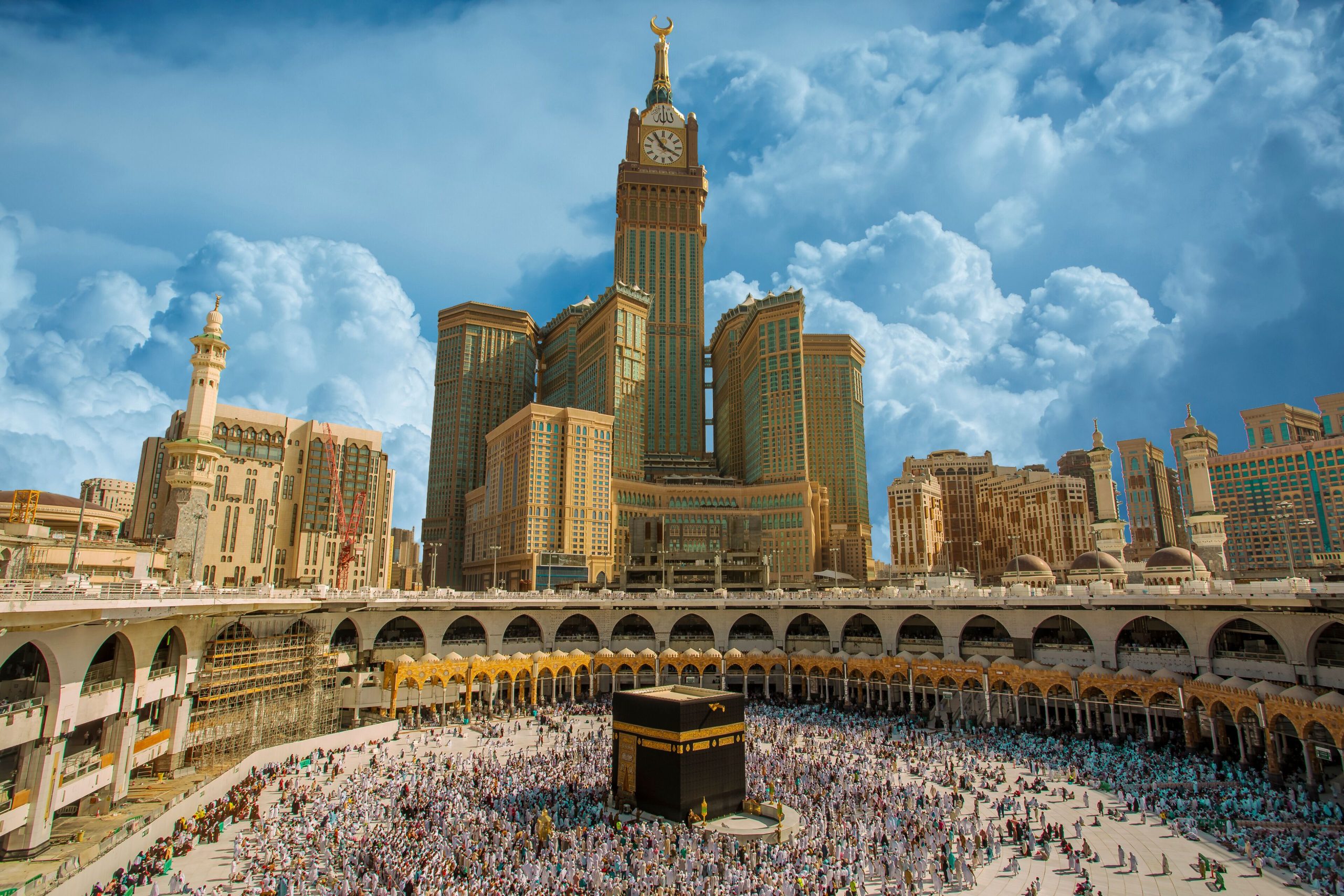
Saudi Arabia

Bauchi Pilgrim Reportedly Dies After Leaving Arafat


By Uzair Adam

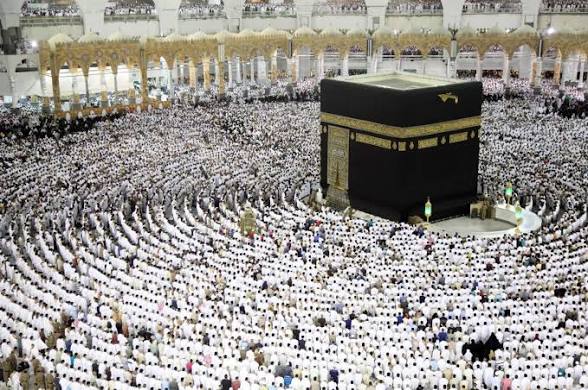
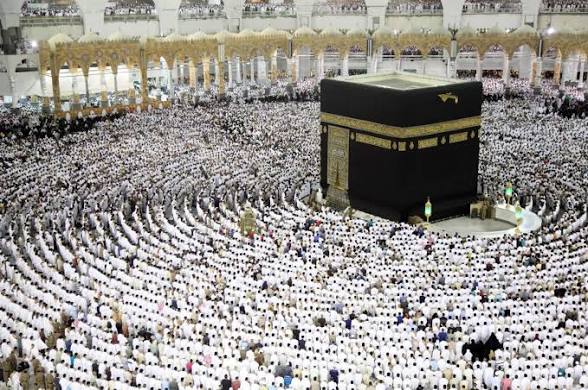
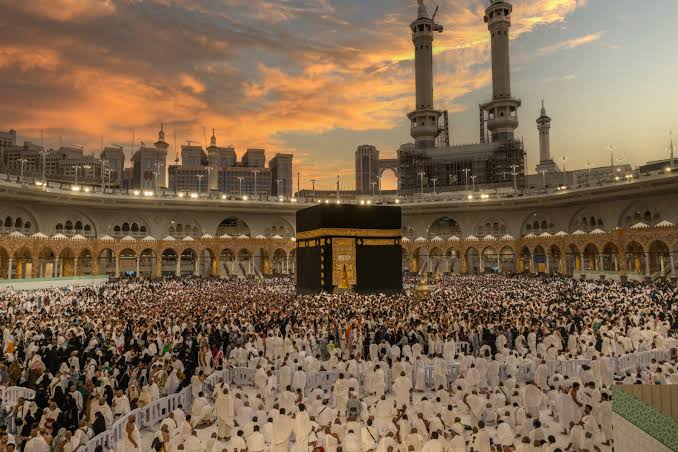
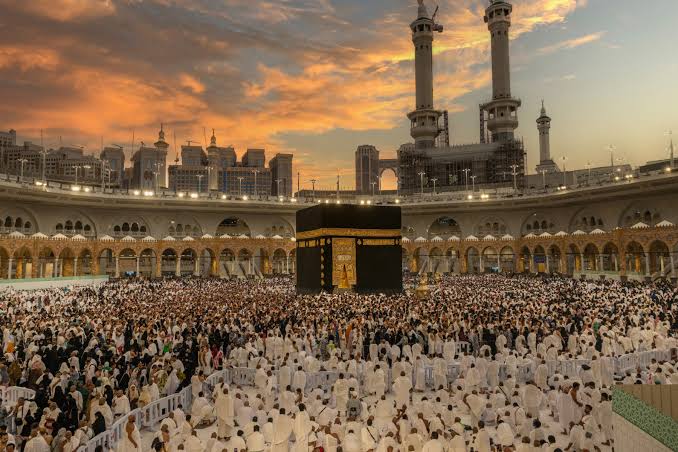
A Nigerian pilgrim participating in the 2026 Hajj exercise has died in Muzdalifah shortly after arriving from Arafat during the early hours of Wednesday.

The deceased, believed to be from Bauchi State, reportedly collapsed during the overnight movement of pilgrims between the two holy sites.

Witnesses said Saudi security personnel and emergency medical officials swiftly evacuated the pilgrim from the area after the incident.

He was seen being wheeled away by security officers alongside members of the emergency response team.

Two officials attached to the Bauchi State pilgrims contingent were also present during the evacuation.

As of the time of filing this report, authorities had not officially confirmed the identity of the deceased, while the cause of death remained unknown pending an official statement.

The incident occurred during one of the most physically demanding stages of the Hajj pilgrimage, as millions of pilgrims move between holy sites amid large crowds and intense weather conditions.

Thousands of Nigerian pilgrims had earlier arrived in Muzdalifah after observing the Day of Arafat, regarded as the spiritual climax of the annual pilgrimage.

Saudi Arabia Approves Hausa, Yoruba for 2026 Arafah Sermon Live Translation


By Uzair Adam

Saudi Arabian authorities have approved Hausa and Yoruba among 35 international languages selected for the live translation of the 2026 Arafah sermon during Hajj, a move aimed at widening global access to one of Islam’s most important annual sermons.

The initiative, coordinated by the General Presidency for the Affairs of the Grand Mosque and the Prophet’s Mosque, is part of ongoing efforts to utilise digital technology and media platforms to reach millions of Muslims worldwide in languages they understand.

The selected languages include English, French, Urdu, Indonesian, Turkish, Persian, Chinese, Russian, Hindi and Swahili, alongside Hausa and Yoruba, which are widely spoken in Nigeria and parts of West Africa.

Saudi authorities said the project was designed to ensure that the spiritual teachings, guidance and messages contained in the Arafah sermon are accessible to Muslims across different linguistic backgrounds without barriers.

Speaking on the initiative, Abdulrahman Al-Sudais described the translation programme as one of the major projects developed through years of experience in serving pilgrims and promoting Islamic teachings globally.

He noted that the live translations would help non-Arabic-speaking Muslims better understand the sermon’s messages of faith, morality, compassion and spirituality while also conveying Islam’s message of peace and coexistence to the wider international community.

The Arafah sermon, delivered annually at Mount Arafat during the Hajj pilgrimage, is regarded as one of the most significant sermons in Islam and attracts millions of listeners and viewers across the world each year.

Saudi authorities also urged participating countries to continue educating pilgrims on compliance with Hajj rules and regulations to ensure a safe and successful pilgrimage exercise.

Meanwhile, the National Hajj Commission of Nigeria (NAHCON) said it was aligning its operations with evolving digital standards, noting that its information technology department was developing comprehensive technological systems to improve Hajj operations in line with Saudi Arabia’s Vision 2030 reforms.

Observers of Hajj affairs described the inclusion of Hausa and Yoruba among the official translation languages as a major recognition of Nigeria’s large Muslim population, noting that it would enable millions of speakers of both languages to follow the sermon more directly and benefit from its teachings.

Three Jigawa Pilgrims Lose Money, Valuables To Theft During Hajj In Saudi Arabia

By Sabiu Abdullahi

Three pilgrims from Jigawa State taking part in the 2026 Hajj in Saudi Arabia have reportedly fallen victim to theft in separate incidents involving cash and personal belongings.

One of the affected pilgrims, an elderly Fulani man identified as Baba Katanga from Katanga village in Kiyawa Local Government Area, said he lost 400 US dollars after boarding a taxi from Masjidil Haram to Mahabbat Al Akhawin Hotel in Makkah.

The pilgrim alleged that the taxi driver stole the money while he was checking his Nusuk card during the journey.

“I was surprised when I later checked and discovered that my 400 dollars had disappeared. I became confused because that was the money I intended to use throughout my stay,” he said.

In another incident, a Fulani pilgrim from Jahun Local Government Area reportedly lost all his dollar notes to a suspected taxi driver. His identity was not made public.

A female pilgrim popularly called Hajiya also reportedly lost a handbag that contained two mobile phones and cash meant for her upkeep during the pilgrimage.

The incident happened at Miqat in Madinah, where pilgrims usually prepare for Umrah by performing ablution, wearing Ihram and making Niyyah before travelling to Makkah.

Sources said the woman left the bag unattended briefly before she discovered that it had disappeared.

The incidents have reportedly generated sympathy among other pilgrims from Jigawa State, with some of them contributing money to assist the victims while awaiting possible intervention from relevant authorities.

The Director-General of the Jigawa State Pilgrims Welfare Board, Alhaji Ahmad Umar Labbo, expressed concern over the incidents and assured the affected pilgrims of support from the board.

He said the board had earlier warned pilgrims before their departure from Nigeria to remain alert and protect their money and valuables from criminals who target crowded places.

Labbo also advised pilgrims not to hand over their belongings to strangers or leave valuables unattended, especially around holy sites and transport locations.

He further prayed for the safety and protection of all pilgrims throughout the Hajj exercise.

Nigerian Pilgrim Passes Away in Saudi Arabia During Hajj Trip


By Sabiu Abdullahi

A 73-year-old Nigerian pilgrim, Mallama Aishatu Muhammadu from Gombi Local Government Area of Adamawa State, has died in Saudi Arabia after arriving for the 2026 Hajj exercise.

Reports indicated that the elderly pilgrim suffered a cardiac arrest on Saturday while on her way from Jeddah to Madinah.

The National Hajj Commission of Nigeria (NAHCON) confirmed the incident and said its Chairman, Ismail Abba Yusuf, had contacted the family of the deceased to express condolences on behalf of the Federal Government.

During a telephone conversation with her brother, Umaru Jauro Koko, Ambassador Yusuf prayed for Allah to forgive the deceased and grant her eternal rest.

“He also prayed for Allah to grant the family the strength to bear the irreparable loss,” the commission stated.

The NAHCON chairman also assured the family that the government would support efforts to return the deceased’s belongings safely through the Adamawa State Pilgrims Welfare Commission.

The items include her Basic Travel Allowance (BTA) and death certificate.

Mallama Aishatu is survived by children, grandchildren and a great-grandchild. Among her relatives is Abdullahi Bello, a Divisional Officer with the Nigeria Security and Civil Defence Corps (NSCDC) in Ganye Division.

Trump Faults Israel Over Iran Gas Field Strike, Issues Warning After Retaliation

United States President Donald Trump has criticised Israel’s recent strike on Iran’s South Pars gas field, as tensions escalate across the Middle East with retaliatory attacks hitting key energy facilities in several countries.

In a message shared by the White House on X early Thursday, Mr Trump stated that the United States had no involvement in the Israeli operation. He said, “Israel, out of anger for what has taken place in the Middle East has violently lashed out at a major facility known as South Pars Gas Field in Iran.”

He added that further attacks on the facility would not occur under certain conditions. According to him, “NO MORE ATTACKS WILL BE MADE BY ISRAEL pertaining to this extremely important and valuable South Pars Field…” unless Iran continues its strikes on Qatar.

The US president also condemned Iran’s response, which targeted gas infrastructure in Qatar. He warned that any additional assault on Qatar’s facilities would trigger severe consequences, including the destruction of “the entirety of the South Pars Gas Field.”

The developments follow reports that Iran launched missiles at the Ras Laffan Industrial City in Qatar. QatarEnergy confirmed that the strike caused fires and “extensive damage.” The company later disclosed that multiple liquefied natural gas facilities were hit, leading to “sizeable fires and extensive further damage.”

Authorities had evacuated the site earlier after Iran announced plans to strike several locations in the region. The move was described as retaliation for earlier attacks on the South Pars gas field, which Iran attributes to Israel and the United States. Washington has since denied any role in that incident.

Beyond Qatar, Iran extended its response to other parts of the region. Two refineries in Saudi Arabia were struck, while the Habshan gas facility in Abu Dhabi was also targeted. The United Arab Emirates subsequently shut down the affected facility.

There has been no official response from Iran regarding Mr Trump’s warning as of the time of filing this report.

Analysts say the latest attacks on critical energy infrastructure could deepen the global gas supply crisis. Prices of gas and other petroleum products have already climbed sharply since late February, when the United States and Israel launched strikes on Iran.

The ongoing conflict has claimed more than 1,500 lives, with most of the casualties reported in Iran.

Ronaldo did not leave Saudi Arabia, report dismisses Madrid return claims amid heightened tension in Middle East

By Sabiu Abdullahi

Fresh reports suggesting that Cristiano Ronaldo has left Saudi Arabia for Madrid with his family have been dismissed as false.

Renowned football journalist Fabrizio Romano debunked the claim in a Facebook post on Tuesday. According to him, the story circulating in sections of the international media is untrue.

Romano stated that Ronaldo remains in Saudi Arabia and was present at Al Nassr’s training ground today. The clarification comes amid widespread speculation that the Portuguese star had travelled back to Spain.

The journalist described the report as fake news and insisted that the forward has not departed the country.

He added that Ronaldo is currently undergoing assessment and treatment following issues he experienced in his last match. The five-time Ballon d’Or winner was substituted during that game due to the problem.

Ronaldo continues to train with Al Nassr as he works toward full fitness, putting to rest rumours of an immediate return to Madrid.

Saudi Arabia intercepts Iranian missiles allegedly targeting Riyadh, eastern region

By Uzair Adam

Saudi Arabia has condemned what it described as direct military aggression by Iran, confirming that Iranian forces targeted Riyadh and the Kingdom’s eastern region in a sharp escalation of tensions across the Gulf.

In a statement issued by the Saudi Foreign Ministry and carried by Al Jazeera, the Kingdom said its air defence systems successfully intercepted the incoming missiles and drones.

“These attacks cannot be justified under any pretext or in any way,” the statement said, adding that Tehran had been aware that Saudi Arabia would not allow its airspace or territory to be used for operations against it.

The acknowledgement represents a significant shift in Riyadh’s posture, moving from expressions of solidarity with Gulf allies to confirming that it was itself a direct target.

The escalation followed coordinated strikes by the United States and Israel on multiple locations inside Iran. Washington and Tel Aviv described the operation as aimed at weakening Iran’s military capacity and countering perceived threats.

Tehran, however, denounced the attacks as violations of its sovereignty and pledged a decisive response.

Within hours, Iran launched missiles and drones toward Israeli and American assets across the region.

Air defence systems were activated in several Gulf capitals amid reports of explosions and intercepted projectiles.

Iran had earlier warned that any assault on its territory would result in American bases in the region being treated as legitimate targets.

Despite calls for restraint from some Middle Eastern states, the United States proceeded with its military operation.

Confirmation that Riyadh and the eastern region were also targeted has intensified fears of a wider regional conflict.

Saudi Arabia now finds itself navigating a delicate strategic balance. As a longstanding security partner of Washington, the Kingdom remains aligned with the United States’ defence framework.

At the same time, it has in recent years sought to ease tensions with Tehran after decades of rivalry.

The confrontation builds on deep-rooted disputes over Iran’s nuclear ambitions and proxy conflicts in Yemen, Syria, and Iraq, alongside recurring flare-ups between Israel and Iran.

Diplomatic efforts to calm tensions have repeatedly faltered, leaving the region exposed to sudden escalation.

Analysts warn that continued hostilities could disrupt energy supplies, unsettle global markets, and strain an already fragile regional security environment.

Several air routes to and from parts of the Middle East have already been suspended amid the rising tensions.

With military exchanges intensifying and rhetoric hardening, the region faces a defining moment, as uncertainty grows over whether diplomacy can regain momentum and prevent a broader conflict.

Saudi Arabia confirms Ramadan crescent, first fast holds February 18


By Sabiu Abdullahi

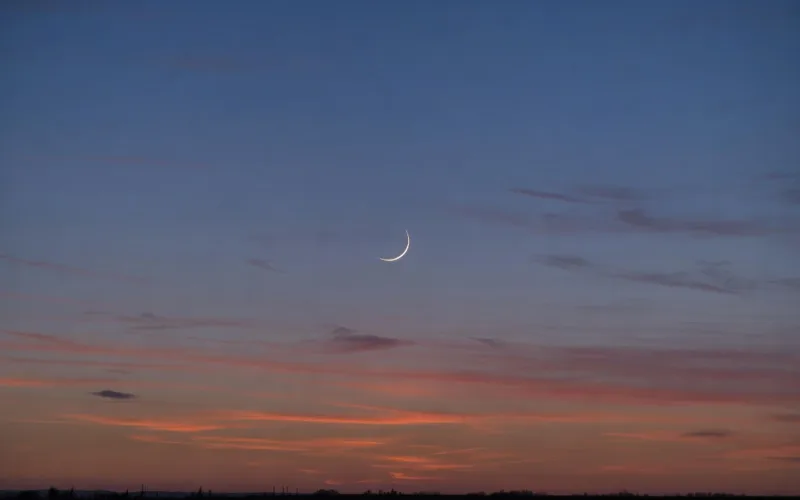
Saudi Arabia’s Supreme Court has announced the sighting of the crescent that signals the start of Ramadan for the year 1447 AH.

The confirmation came on Tuesday evening, 29 Sha’ban 1447 AH, corresponding to February 17, 2026. With this development, Wednesday, February 18, 2026, has been fixed as the first day of fasting in the Kingdom.

Following the declaration, Muslims across Saudi Arabia will observe the first Taraweeh prayers on Tuesday night shortly after the Isha prayer. The special prayers will take place in mosques nationwide, including the Grand Mosque in Makkah and the Prophet’s Mosque in Madinah.

The court’s announcement emerged despite earlier projections by major astronomical institutions such as the International Astronomy Center (IAC), which had argued that sighting the moon that evening would be impossible across the Arab and Islamic world. The body explained that the crescent would set before sunset or only minutes after, making it difficult to observe either with the naked eye or telescopes.

Saudi authorities, however, acted in line with the Kingdom’s established practice, which gives precedence to verified physical sighting once credible witnesses present testimony. Reports submitted to the moon-sighting committee were reviewed and authenticated before the ruling was issued.

Based on the confirmed commencement date, Eid al-Fitr, which marks the end of Ramadan, is projected to fall on either Thursday, March 19, or Friday, March 20, 2026. The exact date will depend on the sighting of the Shawwal crescent.

Muslims in Saudi Arabia and several countries that follow the Kingdom’s moon-sighting decision will now begin the sacred month devoted to fasting, prayer, and spiritual devotion. Ramadan this year falls within the winter period, with fasting expected to last about 13 hours daily.

Saudi Arabia moves to issue passports for millions of camels


By Sabiu Abdullahi

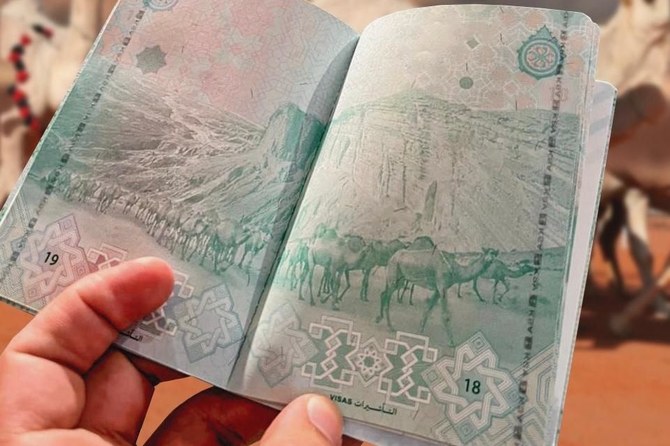
Saudi Arabia has announced plans to introduce official passports for millions of camels across the kingdom as part of efforts to improve oversight and management of its prized livestock.

The Ministry of Environment, Water and Agriculture said the move would help raise standards in the sector and create a dependable national record, noting that the initiative would increase “productivity and efficiency in the sector and build a reliable reference database for camels.”

A social media post released by the ministry on Tuesday showed the proposed document, which appears as a green passport bearing the Saudi coat of arms and a golden image of a camel.

According to state-owned broadcaster Al Ekhbariya, the passport will “contribute to organizing sales and trading operations by regulating trade and transportation, providing official documentation, protecting the rights of owners, and facilitating proof of ownership.”

Government estimates in 2024 placed the camel population at about 2.2 million, underscoring the importance of the animals, which have served as transport, symbols of status and key drivers of a lucrative breeding industry in the kingdom for centuries.

MAKIA: Route to the Saudi sword

Mohammad Qaddam Sidq Isa (Daddy) 

The recent revelation that three Nigerians, recently detained by Saudi authorities on allegations of drug trafficking, had been framed by an international drug trafficking syndicate operating at Malam Aminu Kano International Airport (MAKIA) further confirms the persistence of such nefarious activities, bringing to mind a similar scandal in 2019 that nearly cost an innocent woman her life in the Kingdom. 

The syndicate’s modus operandi begins by targeting unsuspecting travellers at MAKIA who appear to have little or no experience in international air travel protocols. 

Exploiting the fact that such travellers rarely turn up at the airport check-in counter with enough luggage to take up their full luggage allowance, if they are even aware of it, the syndicate members covertly tag and check in drug-containing luggage under the travellers’ names.

On arrival in Jeddah or Madinah, the syndicate’s Saudi-based Nigerian accomplices monitor the luggage processing. If the bags make it through undetected, they somehow manage to claim them, sometimes with, and other times without, the traveller’s knowledge or involvement.

However, if the bags are flagged, the accomplices vanish, leaving the unsuspecting travellers to be apprehended and subjected to the Kingdom’s strict judicial system, where drug trafficking can carry the ultimate punishment: public beheading.

Despite Nigerian authorities’ assurances since the 2019 scandal that all structural and operational loopholes exploited by the syndicate had been addressed, the latest incident demonstrates that these measures were insufficient. It also underscores the growing notoriety of the otherwise reputable MAKIA as a hub for international drug trafficking syndicates specialising in framing unsuspecting travellers. 

If organised crime of this sophistication can occur at the relatively less corruption-prone MAKIA, one can only imagine what might be happening at Murtala Muhammed International Airport in Lagos or Nnamdi Azikiwe International Airport in Abuja. 

Only Allah knows how many innocent people, framed in this way and too unlucky for their ordeals to be publicised or their innocence to be proven, ended up publicly beheaded in Saudi Arabia. 

Although the Nigerian government has assured that it will leave no stone unturned to secure the exoneration of these innocent Nigerians currently facing drug trafficking charges in Saudi Arabia, it should not take the situation for granted. 

Meanwhile, it should also take decisive action to address this menace at MAKIA and other airports across the country. After all, the few individuals apprehended may represent only a fraction of the culprits, with many others likely still out there.

Mohammad Qaddam Sidq Isa (Daddy) wrote via mohammadsidq@gmail.com.