Parenthood

I Hated Sharing a Hospital Room… Until It Saved My Baby

By Aisha Musa Auyo, PhD 

I first learned about a tongue-tie when my third son, Anwar, was admitted to the hospital due to a high fever. I was to share a room with another patient, and I was furious. I told the nurses I would prefer to stay in the corridor rather than share a room. I hate sharing rooms, especially in a hospital.

“The amenity room is fully booked. A patient will soon leave, and you’ll be transferred there,” a nurse told me.

I kept whining and complaining. My husband kept saying I should be patient…..“it’s just for a few days.” In my mind, I was like, you’ll never understand what it means to share a hospital room, because you’ve never experienced it. It’s easier said than done.

I accepted defeat and entered the room. Anwar was crying so loudly that he drew the other patient’s attention. In my mind, I thought, you see why I avoid sharing rooms…. I dislike inconveniencing others. I didn’t think the patient would be able to sleep with that noise.

One of the women attending to the other patient asked me, “Do you know that your son has a tongue-tie?”

I said no. What’s a tongue-tie? I had never heard of it.

She told me to look at his tongue while he was crying and said I would see a tissue-like thread holding it, meaning the tongue isn’t free. When I checked, I saw it was very visible.

I asked her more about it, and she explained that it’s natural for some babies to be born with it. Usually, doctors notice it and remove it shortly after birth. But if it isn’t addressed early, it may require a minor surgery to remove it. Anwar was about six months old then.

I thanked her and asked for the way forward. She recommended a paediatrician.

Before the procedure, I read about tongue-tie from over a hundred sites, and spoke to more than ten doctors… lol. It turned out to be a minor surgical procedure that didn’t take more than a minute, since he was still a baby. It gets more complicated with age.

From my research, I also learned that Anwar’s feeding difficulty was likely caused by a tongue-tie.

Many children with tongue-tie may also experience:

– Speech difficulties, especially with sounds like “t”, “d”, “l”, “r”, “s”, and “th”

– Unclear or slightly slurred speech

– (Though not every child with tongue-tie has speech issues, it can contribute)

Other possible effects include:

– Oral hygiene challenges (difficulty clearing food, increased risk of tooth decay)

– Eating difficulties (trouble licking, swallowing, or moving food around the mouth)

– Dental or jaw development issues (such as gaps or bite alignment problems)

– Social or psychological effects, like reduced confidence due to speech or tongue movement limitations

Anwar’s procedure (frenotomy) was done seamlessly, and everything returned to normal. Alhamdulillah.

After that experience, I made it a point to pay closer attention to babies. I realised it’s quite common, yet not widely known. I’ve made it a personal responsibility to educate parents about it before it becomes complicated.

There’s also a lesson here:

1. Not everything we dislike is bad. Sometimes, what we resist is exactly what we need….or what will benefit us the most.

2. I hate sharing rooms with strangers because I don’t want to inconvenience anyone or feel like a burden. But from that experience, I learned something valuable…. and now I’m sharing it with others. So maybe it’s not so bad after all. Hausa people say, “mutane rahama ne” (people are a blessing).

3. No matter your position, knowledge, number of children, or experience, there’s always something you don’t know. And there’s always something you can learn from others—their experiences, exposure, and expertise.

Anyway, when I gave birth to Azrah, my fourth child, I was subconsciously checking for tongue-tie—and I saw one! Hausa people, again, say: “Mai nema na tare da samu”… Bature yace: “He who seeketh… findeth.”

That was after a full check-up by nurses, doctors, and even a paediatrician. I brought it to their attention, and they confirmed it. The minor surgical procedure (frenotomy) was done four days after birth.

I hated the sight of blood on her tiny mouth, but what could I do? The earlier, the better. Alhamdulillah.

If you’ve learned something from this write-up, kindly share it so others can benefit too.

If you’d like to read more stories and reflections like this, drawn from real-life experiences, you can get my book Between Hearts and Homes for deeper, relatable insights into everyday life.

Aisha Musa Auyo, PhD, is an Educational Psychologist, author, and media professional passionate about translating research into practical impact. She writes on parenting, family, and education, drawing from expertise and personal experience. Aisha is also a parenting and relationship coach and founder of Eesher Auyo’s Empire in Abuja, Nigeria.

Tribute to my father

By Sulaiman Maijama’a

My elder brother’s call – Bello, requesting that I show up at our family house on Sunday morning, August 10th, 2025 – is the most difficult phone call I have ever answered in my life. Immediately, I overheard crying in chorus from the background; I knew what it meant and told my wife that the inevitable we have all been waiting for is here: Baba is no more.

Our father, Alhaji Maijama’a Iliyasu, first fell sick on August 5th, 2023, but later recovered and was taken to go about his business by us (his children). His illness resurfaced on November 24th, 2024; he was bedridden for some weeks at ATBUTH, later discharged and has remained home since then. Seeing his body was not recuperating, yet he was discharged from the hospital, we understood the doctors’ body language and got to a point where we believed that it was terminal. Consequently, whenever I received a phone call from any of my siblings, I picked up with a nervous disposition, fearing what they had to tell me.

On the fateful day, I went home. I found the dead body of our dear father surrounded by my brothers and sisters, uttering “Inna Lillahi Wa Inna Ilaihi Raji’un,” submitting to the will of Allah and crying profusely. I felt that my imagination of how it feels when one loses a father failed me, as I never thought the magnitude of the pain and sense of despair it creates is to that extent. The feeling defies expression. But the crowd of sympathisers trooping to the house and visitors making speeches of eulogy and testimonies of the person our father was were what consoled us the most.

Testimonies of people on earth about the good reputation of a deceased can be a means of his entry into Jannah, as reported in an authentic Hadith, where our beloved Prophet says, “…the believers are the witnesses of Allah on the earth…” That is why it is Islamically encouraged to amplify the virtues of a dead person, but judgment belongs to the Merciful.

An old man who came to sympathise with us stated and emphasised our father’s respect for his parents and elders. The man said he was a living witness that when our father was in active business in Central Market before he relocated his mother to our house, he used to go and check on her three times every single day: in the morning before he went to the market, in the afternoon after Zuhr prayer, and in the evening when he closed. I’m not surprised because my mother always tells me that, in the years he had lived with his mother Innah, his goodness for her could fill the earth.

I personally did not grow up seeing his mother, but I mistook his elder sister for his mother because of the respect he had for her. Even his granddaughters, named after his mother, and his daughters-in-law bearing the name were called “Innah” or “Mamana” and enjoyed special treatment from him.

His closest childhood friend, Alhaji Sule Sarkin Kasuwa, told us that one day in the 1980s, Innah directed our father to go to Kaduna and apprehend a relative who ran away and refused to return home. There was no intelligence report of the man’s whereabouts, no telephone to call, and the man was of no fixed location. However, Baba, out of obedience to his late mother, requested Alhaji Sule to escort him to Kaduna, and they searched all over but could not find him. Our father became deeply concerned that his mother would not be comfortable, but Alhaji Sule assured him that God knows he had complied.

I grew up seeing my father as a very disciplined man with a strict daily schedule. After the dawn prayer, he recited his Warsh copy of the Glorious Qur’an until around 8 a.m., took breakfast, and went shopping in Central Market. Returned home around 6 p.m., went to Bauchi Central Mosque to pray Magrib and waited for Isha, returned home, ate dinner, and listened to the radio before he slept. His philosophy on the education of his children is “Qur’an first.” All of his eighteen children were never enrolled in a Western school until we learned to read the Qur’an alphabetically and possessed reasonable proficiency in reciting the Qur’an when we were around seven years old. I can still see in my mind’s eye the day I was enrolled in primary school in 2004, when I was 8 years old, meeting Malama Safiya and Mrs. Roda as my first primary female teachers.

By Allah, I cannot remember a day that passed without him reciting his Warsh copy of the Qur’an. I never saw him sitting by the roadside, talking ill of others. As strict as his schedule was, he ensured that his children followed suit, never allowing us to enjoy leisure time since childhood. We would be woken up at dawn, sent to “Makarantar Allo“, and returned around 7 a.m. We would then be sent to primary school, returned in the afternoon, and sent to Ismiyya until around Magrib. By the time we finished primary school, we would be sent to learn different skills, and that is why we realised the realities of life early and were relieved of many responsibilities.

Our father exemplified a firm belief in the power of the Qur’an and Dua. Whenever he or any of his children had something profound to pursue, he would sit on his mat, spread out in a slight angle in his room, and spend hours reciting and praying for us. Any act of goodness we did, he prayed for us, all the goodness of this world and the hereafter, until you got tired of answering “ameen”. Until he fell sick, when any of his daughters was about to deliver in her matrimonial home, he would personally inscribe Qur’an verses and send them to wash and consume the water. Regardless of our age, if he gave any of us a certain Qur’an verse or dua as a “lakani” and then asked us to recite it back the next time, and we failed, we would be scolded accordingly. I still have small papers containing his inscriptions.

Now that the crowd of sympathisers has dispersed, my recollection of his prayerful and caring nature sparks a sense of nostalgia in my subconscious mind. I remember that whenever I was late at work, Baba would call to ask why, and whenever I was on the road at night, he would call several times to check on my safety and would never retire to bed until I was home. We will forever miss this. Standing on truthfulness and imposing strict rules on his family were some of the qualities Allah blessed him with. In the house, none of us could dare tell lies on phone calls in his presence, gossip, or insult. If you talked ill of others, he would ask, “Can you say the same if the other person were here?” His family setting was highly regimented and fully localised.

Our father departed this world without owing anybody a Kobo on earth. To us, it is no surprise because we know his philosophy of living within one’s means and never taking credit, no matter how little. When he fell sick, he sent someone to the market to buy him something. When I told the man of his illness, he said, “Allah sarki, baban nan da ba ya cin bashi.” No matter how close to him you were or how many years he spent buying from you, he would never agree to take credit for a single penny. A certain government official once approached him with a form for a loan scheme the government had designed to disburse funds to support businesses. Still, Baba rejected it, saying he preferred to live and die well without a burden. When the news reached us, we tried our best to convince him, telling him, “Irin bashin gwamnati ne da su ke yafewa,” but he insisted on his stance.

Indeed, Allah fulfilled his wish: he lived well, built a solid foundation of discipline for his family, mentored his children to understand life early, stood for righteousness, and, in fervent service to his Creator, eschewed taking any burden of his fellow human beings. Baba passed away peacefully, leaving us full of nostalgia. May Allah be merciful to our beloved father, forgive his shortcomings, shower illumination into his grave, accept his good deeds, and admit him into Jannatul-Firdaus. I’m grateful to all the people who prayed for him, visited us, sent a text message, or called to sympathise with us. I acknowledge and thank you gratefully, once again.

Sulaiman Maijama’a

Manager, Admin & Commercials

Eagle Radio Bauchi.
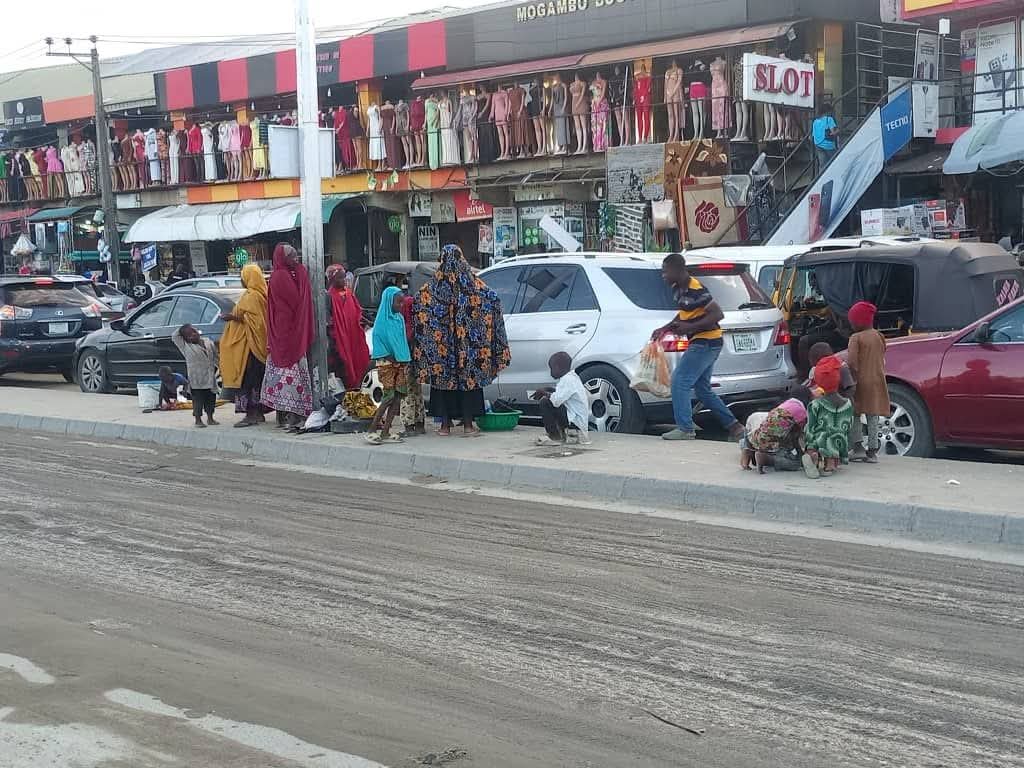
Parental neglect is worsening Nigeria’s crisis

By Muhammad Umar Shehu

Parental care is slowly disappearing in today’s Nigeria, and the consequences of this are evident. The family used to be the first point of training where values were shaped and morals were taught. Now, many homes are broken by the absence of emotional, physical or financial support. 

Parents are either too busy chasing survival or have surrendered their roles to the internet, peer groups and street culture. And the result is right in front of us. Young people with no sense of direction, crime becoming a normal path, and a country overwhelmed by insecurity.

A child not guided at home is more likely to find purpose in the wrong places. We are now dealing with the consequences of that neglect. From cultism to kidnapping, cyber fraud to political thuggery, we are raising a generation that is desperate, angry and emotionally abandoned. You cannot discuss national security without addressing family failure. Every bandit and every drug addict started as someone’s child.

At the same time, some parents do too much of the wrong kind of parenting. They shelter their kids from reality, provide for everything but discipline nothing and expect the schools to build what they have not started. Some parents no longer listen to their children. They demand excellence without showing concern for mental or emotional well-being. That is why depression is rising among young people. That is why suicide, addiction and social vices keep growing silently.

It is true that we no longer have the strong community system that once helped raise children. But there are still ways to rebuild. The society needs to encourage good parenting by example, not just by words or scolding. We need honest conversations between parents and children. We need schools to include real-life education, not just grades, but responsibility, empathy and values. We need religious and traditional leaders to focus less on miracles and more on morality and family life.

It is easy to blame the government, but even if they build roads and power, we will still collapse as a nation if we do not raise humans with a conscience. No law can replace the love and discipline of a present parent. And no society can grow when its children are lost.

If we want to fix this country, we must go back to our roots. Parents need to be present, not just physically, but also emotionally and morally. Being a parent is not just about giving birth or paying school fees. It is about being a guide, a mentor and a strong emotional backbone. Let us not expect society to raise the children we refused to raise. If the home fails, everything else will.

This country needs healing, and it starts in the family.

Muhammad Umar Shehu wrote from Gombe via umarmuhammadshehu2@gmail.com.

The fathers we forgot to thank

By Lawal Dahiru Mamman

A senior colleague once shared a thought that has stayed with me for years. While discussing the burdens of parenthood, he described how fathers would go to great lengths to provide for their children, often at the expense of their own comfort. 

He explained that for every penny earned, the first question in a father’s mind is, “What do the children need?” That struck a chord. With each passing day, as I grow older, I find myself reflecting on how my father silently sacrificed to ensure our needs were met. 

These memories linger like a background hum in my consciousness. What becomes clearer with time is that we often miss what is right in front of us. We benefit from the comfort, the food, the shelter, the school fees, and the security,without giving much thought to the man behind it all. 

It is the classic case of not seeing the elephant in the room or, as the saying goes, not seeing the wood for the trees. It is no surprise, then, that some people have questioned why there seem to be more songs, poems, and films celebrating mothers than those appreciating fathers. 

While we may lack precise statistics to prove this imbalance, popular culture seems to confirm the observation. From the nursery rhyme “Who sat and watched my infant head…” titled “My Mother,” many of us were introduced to the emotional pull of maternal devotion. 

Over time, several explanations have emerged for this artistic focus. Mothers are often perceived as more emotionally accessible. The mother-child bond, portrayed as warm, nurturing, and unconditional, lends itself easily to emotional expression in music, film, and poetry.

Cultural symbolism also plays a role. Across different societies, mothers are often regarded as the emotional anchors of the family. This perception makes them natural muses for stories about love, sacrifice, and resilience. 

Moreover, many creatives draw from personal experience, with some having been raised primarily by their mothers. And then there is the reality of audience connection — people often relate more universally to stories about mothers. 

All of that said, as we commemorate Father’s Day, it is crucial — now more than ever — to reflect on and appreciate the often-unnoticed contributions that fathers make. While mothers are frequently, and rightly, celebrated for their warmth and care, many fathers quietly go about their roles with little attention or applause.

Providing for the family remains one of the most visible expressions of a father’s love. Fathers work tirelessly to ensure there is food on the table, school fees are paid, and their children live comfortably. As children, we may take these things for granted. 

It is only with maturity that we begin to realise the depth of their commitment. Fathers often do all this without asking for recognition. Their sacrifices are quiet and enduring — a form of love that speaks less and does more. 

This year’s Father’s Day, like those before it, may have come and gone without noise or public fanfare. But even in the silence, we must recognise the strength of men who daily put their families ahead of themselves. They go without, just so we never lack. 

They deny themselves small luxuries so their children can feel seen, equal, and included. That is not just love — it is selflessness in its purest form. Many of us, growing up, may have perceived our fathers as distant or overly strict. 

But now, we realise that those long hours spent away from home, the constant budgeting, the unspoken worries — they were all signs of a love that often hid behind responsibility. Fathers may not always wear their emotions on their sleeves, but their love is steadfast and deep.

Times have changed, and we now see more women contributing financially to their homes, a development that deserves celebration. Still, it is important not to diminish the sacrifices and emotional labour of fathers. This is not a contest about who does more. 

Instead, it is a moment to reflect on all that fathers do — without complaint, without applause, and often without being asked. If there is such a thing as an unsung hero, the average father fits that description. They show up. 

They stay. They build. And they keep going. So, to every father, stepfather, guardian, and father figure — thank you. Thank you for your sacrifices. Thank you for the quiet strength you bring into our lives. 

Thank you for the roads you walk, so that we can dream. You are the solid foundations upon which we rise. May your love, sacrifice, and strength never go unnoticed again.

Lawal Dahiru Mamman writes from Abuja and can be reached via: dahirulawal90@gmail.com.