NLC

FG to meet labour again as yesterday’s meeting ended in deadlock

By Uzair Adam Imam 

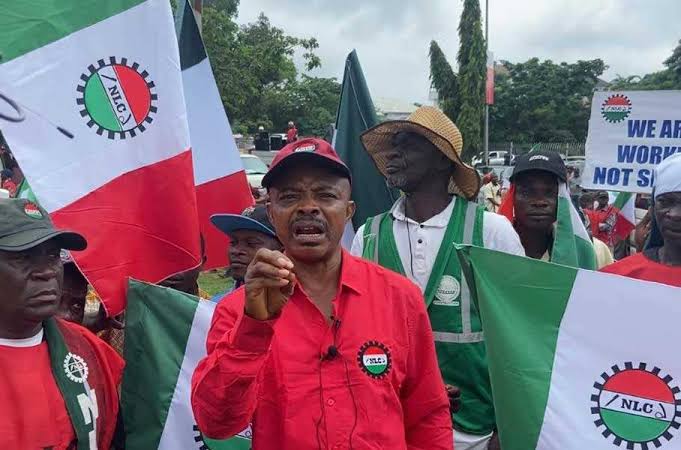
The Federal Government will meet with the leadership of the organised labour movement today, as yesterday’s meeting to prevent the planned nationwide strike did not yield any fruitful results. 

It was gathered that the Nigeria Labour Congress (NLC) and the Trade Union Congress of Nigeria (TUC) rejected the federal government’s offers. 

They said they had also rejected the N25,000 provisional wage award for low-grade workers to cushion the effect of the removal of the petrol subsidy. 

Recall that President Tinubu, in his nationwide broadcast on the occasion of Nigeria’s 63rd Independence Anniversary, said the provisional wage was a result of talks with labour and other stakeholders in the country. 

He stated, “Based on our talks with labour, business and other stakeholders, we are introducing a provisional wage increment to enhance the federal minimum wage without causing undue inflation. ‘

’For the next six months, the average low-grade worker shall receive an additional Twenty-Five Thousand naira per month. 

“Commencing this month, the social safety net is being extended through the expansion of cash transfer programmes to an additional 15 million vulnerable households,” he added. 

However, labour insisted that the provisional wage increase should be for all workers, pending the enactment of a new Minimum Wage Act next year, and must not be limited to only six months. 

The labour leaders equally insisted that the conditional cash transfer for the poorest and most vulnerable people should be increased to N25,000 for 15 million vulnerable Nigerians, against the N5,000 the previous administration was paying. 

After many hours of horse-trading, the Chief of Staff, Femi Gbajabiamila, who is leading the government’s delegation, broke the meeting for the government team to consult with the President on the new demands. 

Other issues raised by the NLC and TUC leaders included tax rebates for low-income earners, the removal of value-added tax (VAT) on diesel for the next six months, and the provision of compressed natural gas (CNG) and buses within the next two months.

President Tinubu, please listen to labour demands

By Dr. Ibrahim Siraj

I don’t know whether to pity President Tinubu or not. The man has asked not to be pitied because he asked for the job and got it. But looking at the enormity of the challenges and how he became almost overwhelmed few months into his four-year term, I feel like going against his “don’t pity me” admonition. The President really deserves pity whether he likes it or not.

On the day of his inauguration, barely an hour after taking oath, Mr. President announced his decision to end the fuel subsidy regime to the delight and applause of anti-subsidy elements in the West and their Nigerian cohort. From that point, he started moving around with some chest-beating gusto claiming credit for this massive decision. He did everything to prove wrong many anti-Buhari elements who wanted to wrongly “credit” the former President with the bold move. He owned up to it firmly in words and actions. He told an audience in France that though his speech writers did not include the announcement of subsidy removal in his inaugural speech, that didn’t stop him from making that emphatic yet infamous proclamation: “fuel subsidy is gone!” He was possessed by courage, he boasted.

In July, The Economist penned a beautiful piece hailing the impressive first moves of “Baba Go Fast” which include bringing to an end the age-old fuel subsidy and floating the Naira, among other things, something all past presidents, his predecessors, have failed to do over the years. According to the magazine, the subsidy has “for decades drained the treasury of revenues from the country’s most valuable natural resource”, a line of argument most often regurgitated by all pro-subsidy removal propagandists. What these subsidy removal protagonists have refused to acknowledge, however, was how it helped to keep prices of essential commodities and services relatively low and affordable to the poorly remunerated Nigerians whose purchasing capacity had been seriously weakened following years of unchecked inflation.

Now, the subsidy is gone or so they say. One would expect the President to be as swift in rolling out relief measures aimed at mitigating its negative effect as he was in removing it. The Labour has ever since been engaging the Federal Government on this critical issue considering how the new fuel price has worsened an already bad situation. Nigerian workers and the masses are suffering greatly. In Abuja as well as in many other states, workers could only go to office two or three times a week. There are reports of workers who sleep in their offices or inside their cars in order to save fuel cost. The resultant high transport fares have pushed food prices to the roof thereby rendering many families hungry due to inability to buy food.

The situation is getting worse by the day and NLC and TUC (the two major Labour organizations in the country) are demanding for action which seems not to be forthcoming. The Labour leaders deserve commendation for their doggedness and attachment to peaceful resolution of the problem.Their kind gesture as well as positive disposition towards negotiation have not been graciously reciprocated by the Federal Government team resulting in several deadlocked meetings. The world is witness to how the government has been footdragging and merely making promises. It keeps asking for time to make pronouncement on the new minimum wage and other issues. Neither the series of meetings held nor the warning strike has been able to yield any positive outcome. It’s safe to assume that the government is taking Nigerians for granted and the Labour for a ride by constantly paying lip service to their demands and playing them around.

Things have reached a tipping point and the situation is no longer sustainable. If the Federal Government is carefully analysing current trends and could rightly predict their consequences, it should be able to know that the struggle is not only in Labour’s interest but in the government’s interest too. Nigerians have been pushed to the wall and the time to pull the brakes to stop their further descent into the penury is now. Let them not allow Nigerians push back because no one knows what will happen.

President Tinubu must expedite action on his plans for the citizens post-fuel subsidy removal. As a mark of goodwill, he should be able to match words with actions especially regarding short-term programmes and policies. Let him make known the new minimum wage and its effective date. Let him convince the Labour unions and, by the extension Nigerians, about how he’s going to meet their demands and tackle a cost of living crisis that appears to be the worst in Nigeria’s recent history. He must do everything to avert the upcoming shutdown so as not further hurt the economy or worsen the hardship.

Strike or no strike, the time to act is now!

Dr. Siraj is a Senior Lecturer in the Department of Mass Communication, Bayero University, Kano.

Nigerian nurses, midwives begin indefinite nationwide strike

By Sabiu Abdullahi 

The Nigerian healthcare system faces a severe blow as the National Association of Nigeria Nurses and Midwives (NANNM) will officially commence their indefinite nationwide strike today, in solidarity with the Nigerian Labour Congress (NLC) and Trade Union Congress (TUC). 

The strike, initiated to protest the removal of fuel subsidies and the government’s anti-labour policies, has left the nation’s hospitals in a state of uncertainty. 

NANNM President Nnachi Michael Ekuma emphasised the necessity of the strike, citing the government’s failure to address issues crucial to healthcare workers, such as stagnant salaries, staff shortages, and subpar working conditions.

Ekuma’s letter to association members outlined the dire situation created by the removal of the fuel subsidy, leading to increased living costs for Nigerians without corresponding wage hikes for workers. 

Despite the government’s attempt to mitigate the situation by deploying military personnel to hospitals and clinics, the adequacy of these measures remains uncertain.

Patients are advised to proactively liaise with their healthcare providers to determine the status of their appointments and procedures.

Where possible, rescheduling appointments after the strike concludes is recommended to minimise disruptions to their healthcare services.

The unity of the Nigerian labour movement underscores the depth of dissatisfaction with the government’s economic policies, creating a challenging environment for negotiations and resolution.

NLC, TUC declare strike amidst economic hardship 

By Sabiu Abdullahi 

The Nigeria Labour Congress (NLC) and the Trade Union Congress (TUC) jointly declared a nationwide strike scheduled to commence on Tuesday, October 3.

This announcement comes as negotiations continue between the unions and the government, with both parties striving to find common ground. 

In a press conference held in the capital city of Abuja on Tuesday evening, the NLC and TUC called on their state branches to mobilise workers and the public for a series of demonstrations and marches across the nation.

The unions have expressed their concerns regarding the economic hardships faced by Nigerians, particularly workers, following the removal of fuel subsidies. 

It’s worth noting that the NLC had previously initiated a two-day warning strike on September 5th and 6th, seeking to exert pressure on the government to address these pressing issues.

This move sparked ongoing discussions and negotiations aimed at resolving the issues. 

Emmanuel Ugboaja, the Secretary of the NLC, confirmed that the unions are currently conducting their meetings online, demonstrating their commitment to dialogue even as they announce the strike action. 

In response to the strike notice, Mr. Simon Lalong, the Minister of Labour, appealed to the NLC to reconsider their plans.

He reassured the unions that the government is dedicated to addressing their concerns.

Mr. Lalong also highlighted one recent achievement in their negotiations, where the government ordered the release of the head of the Transport Workers Union in the country.

NLC begins strike today after boycotting meeting with FG

By Muhammadu Sabiu

The Nigeria Labour Congress (NLC) chose to boycott a crucial meeting convened by the Minister of Labour and Employment, Simon Lalong, in an attempt to avert the two-day warning strike set in motion by organized labor.

The strike notice, issued last Friday by the NLC, was in response to the ongoing hardships faced by Nigerians due to the removal of the petrol subsidy.

Affiliate unions of the NLC, including the National Union of Air Transport Employees, the Association of Nigeria Aviation Professionals, and the National Association of Aircraft Pilots and Engineers, have jointly directed all stakeholders within the aviation sector to comply with the NLC’s directive to participate in the strike.

Phone calls and text messages made to NLC President Joe Ajaero and General Secretary Emmanuel Ugboaja, seeking clarification on their boycott of the meeting, remained unanswered.

However, only the leadership of the Trade Union Congress (TUC), led by its President Festus Osifo, attended the meeting with government officials.

Osifo emphasized the TUC’s commitment to engaging with the federal government to ensure that the demands of workers are met, particularly with regards to wage awards and palliatives.

Osifo expressed disappointment in the government’s current palliatives, stating that they do not sufficiently address the challenges faced by federal workers.

He called for an increase in the allocated funds for palliatives, which he described as “grossly inadequate.”

In a communique issued by the TUC at the conclusion of its National Executive Council meeting on Sunday, the organization welcomed some of the government’s efforts to alleviate the impact of subsidy removal on workers.

However, it emphasized the need for long-term solutions beyond palliatives.Minister Lalong, during the meeting, outlined the government’s commitment to addressing workers’ concerns.

He set a two-week timeline for wage awards, tax exemptions, and allowances for public sector workers to mitigate the hardships arising from subsidy removal.

Lalong pleaded with the labor unions to convince their affiliate unions to suspend the impending strike.

He reassured workers that the government values their support and understanding, emphasizing the importance of industrial peace for the nation’s progress.

The situation remains tense as the NLC’s boycott and the involvement of affiliate unions in the strike bring the nation to the brink of a major labor dispute.

Negotiations between the TUC and the government will play a pivotal role in determining the outcome and the impact on the labor force and the Nigerian economy.

NLC declares nationwide warning strike amid mass suffering

By Muhammadu Sabiu 

The Nigeria Labour Congress (NLC) has declared a two-day nationwide warning strike set to take place on September 5th and 6th, with an ultimatum for the Federal Government to address the dire plight of the masses. 

This announcement was made by NLC President Joe Ajaero during a press conference held at the conclusion of the National Executive Council (NEC) meeting on Friday in Abuja. 

Ajaero, while delivering the communiqué jointly signed by Mr. Emmanuel Ugboaja, General Secretary of the Congress, emphasized that these decisions were the result of extensive deliberations within the NEC. 

The NLC has put the government on notice, stating that if no action is taken, a total and indefinite shutdown of the nation may occur within the next 14 to 21 working days. 

The primary objective of this strike action, Ajaero stated, is to compel the government to address the excruciating mass suffering and impoverishment experienced across the country.

NLC to new labour minister Lalong: Empathise with Nigerian workers

By Muhammadu Sabiu 

Nigeria Labour Congress leaders on Sunday argued that the next minister of labour needed to understand the plight of the workforce, particularly at a time when the economy is experiencing difficulties that directly affect them. 

Before Monday’s swearing-in of new ministries by President Bola Tinubu, the leaders participated in interviews with the News Agency of Nigeria in Lagos. 

The Chairman of the Lagos Chapter of the Nigeria Labour Congress, Funmi Sessi, expressed confidence in Simon Lalong’s ability to carry out his duties as Minister of Labour and Employment considering his background. 

Mrs. Sessi advised Lalong to deal with labour concerns using the expertise he had gained from serving as the former governor of Plateau State. 

“The future is bright with labour and Lalong as the minister, all things being equal, if he will not change, and with the good industrial relationship that he maintained with the labour unions in his state. 

“I hope he will extend it to the labour centres in Nigeria, including Nigeria Labour Congress, all workers, not only in the public sector, but private as well; both formal and informal. 

“This is necessary so that we can have the working people in Nigeria partake in the same wealth that they create; it will be a commonwealth, and that is our hope,” she said.

FG begs NLC to shelve planned strike over fuel subsidy

By Uzair Adam Imam

The Federal Government has appealed to the Nigerian Labour Congress (NLC) to shelve its planned strike over fuel subsidy removal.

The FG said it was doing everything possible to address issues raised by the congress, which threatened to embark on a nationwide strike in August.

The Daily Reality reports that the Congress Spokesperson, Ben Upah, made this disclosure on Wednesday, adding that they give seven days to the federal government to address the demand.

Speaking after the Steering Committee meeting on Palliatives, Olu Verheijen, the leader of the government team and Special Adviser to the President on Energy, pleaded with labour to give the federal government more time to look into its grievances rather than embark on industrial action.

She explained that the government was yet to roll out palliatives because it didn’t want to make mistakes, adding that the meeting with organised labour was productive and would continue tomorrow.

Asked about the agenda of the meeting, she said: “It involves labour and some parts of government; it’s a steering committee. it’s a wide group of people, a wide group of stakeholders representing the interests of Nigerians. And we’ve agreed to continue to make progress.

“It was a very productive meeting, the focus was really around how we fast-track a lot of the interventions that will bring relief, particularly around CNG, mass transportation, cleaner energy, transportation, and reduce the impact of the cost of transportation, the increased cost of transportation. So we’ve made good progress. And we’re going to continue to do so and so that we can start rolling out these opportunities and these relief measures as quickly as possible.”

Asked if Labour will not embark on strike as threatened, she said: “The labour unions will speak to that. But we are making progress; we’re trying to address the issues that will prevent a strike. So that is essentially why I feel we made very good progress today and will continue to do so.”

NLC to embark on nationwide strike over fuel subsidy removal

By Uzair Adam Imam

The Nigeria Labour Congress (NLC) has reportedly threatened to embark on a nationwide strike next month over the bitting economic hardship caused by the fuel subsidy removal in the country.

The Congress Spokesperson, Ben Upah, made this disclosure on Wednesday, adding that the they give seven days to the federal government go address the demand.

The Daily Reality recalls that President Bola Tinubu had, during his inauguration on 29 May, announced the removal of fuel subsidy.

The action had suddenly pushed up the price of the product, making life more difficult for the poor.According to Upah, the congress gave a nationwide strike notice beginning on 2 August to protest the removal of fuel subsidy by the federal government.

“Yes, the nationwide strike will commence on 2 August 2023. We will soon issue a communique to that effect,” Upah said.

This is coming a few hours after the National Association of Resident Doctors (NARD) began an indefinite strike in the country.

The doctors are demanding the implementation of a one-for-one replacement policy for healthcare workers, immediate payment of all salary arrears, implementation of a Consolidated Medical Salary Structure, and a new hazard allowance, among others.

Salary Review: The insatiable quest

By Musa Abdullahi Kaga

As an employee, salary is one of the most, if not the most, important factors in applying for or staying in a job. It is, however, a known phenomenon that salaries, no matter how handsome, hardly cater to one’s wants and needs. Hence, the regular quest for the insatiable: salary review.

Salary review is often misunderstood or confused with annual assessment or appraisal. Salary review is mostly deeper than annual or biannual appraisals. It is a comprehensive analysis/evaluation of whether a specific pay package is a fair reflection of what an employee should earn in line with factors such as external market forces, experience, career progression, company culture, job performance, etc.

Reviews are an essential HR and management strategy/tool for attracting and retaining good hands in a company.

Several factors may necessitate reviews, ranging from competitors’ pay trends, employee opportunities, or employers’ fear of losing employees for whom they invested so much.

It is only fair that as your employee’s career progresses, so do their emoluments. This should, of course, depend on milestones, achievements, performances, etc. Should there be a positive progression, the salary should grow accordingly. Unfortunately, this is not obtainable in our clime, especially in the public sector.

According to data from ALLSTARTSIT – a tech company specializing in software development services and talent acquisition in CEE regions – there has been a massive median salary increase of 106% for software developers in the CEE regions over the last decade. For example, a system architect that earned $3000 a month in 2012 makes about $6200 in 2022. That is massive, even for an IT specialist.

Graph showing ten years salary trend of software developers

In Nigeria, however, the last time the federal government conducted an upward review of workers’ salaries was in 2009 – 13 years ago – with an increase of about 53%. The dwindling economic situation in the country has rendered the purchasing power of workers feeble. Different civil, trade and labour unions have tabled several demands to the government over the years on the review of salaries and other welfare packages; unfortunately, this is yet to achieve any positive outcome.

Recently, the Nigerian Labor Congress, through its President, Comrade Ayuba Waba, lamented the sorry state of Nigerian civil servants and reiterated their demands to the government.

According to Waba, economic challenges had eroded the purchasing power of ordinary workers so much that the minimum wage could no longer take a worker home and could barely serve as transport fare.

Speaking to NAN earlier this year, he said; “We want to make a formal demand on behalf of the Joint Service Negotiation Council for the review of wages in the entire public sector because it is due,’’

Looking inwards, it recently dawned on me the economic hardships endured by civil servants and other citizens; this is due to the rising cost of essential items and, of course, the occasion of the Eid celebrations. A friend who is an employee of a non-governmental organization has a compensation significantly higher than what his colleagues in the public sector receive, yet, he had to dig deep into his savings to afford a ram. It is nearly a miracle that he has the luxury of savings; public sector employees could only admire his status, even though he is still among the ‘masses.’

It is, therefore, a no-brainer for civil servants to work towards achieving an alternative source of income, especially in this digital era.

Unsurprisingly, it is not uncommon to see civil servants perpetually discussing issues like salary reviews and ‘welfarism’ in Nigeria. Even though successive governments in the past have not done enough to ensure a proper salary structure and compensation system among civil servants in various tiers of government, this is primarily because of the insatiable nature of salary.

The craving for more is intrinsically part of human nature, although some experts argue that insatiable desire is unhealthy (greed). Nonetheless, the motivation to work harder and earn a decent salary is our typical trait.

Musa Abdullahi Kaga sent this article via musaakaga@gmail.com.