By Abdulsalam Alkali
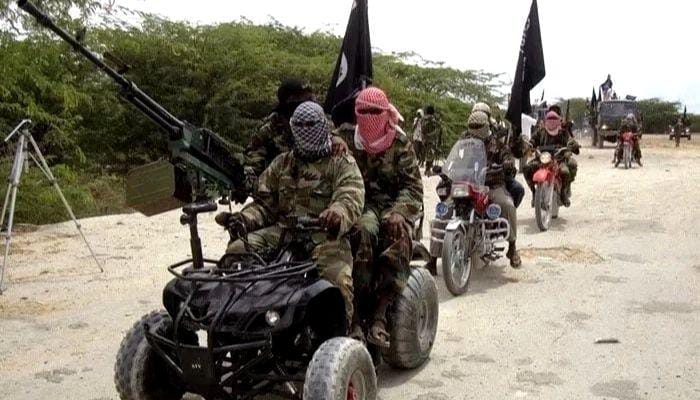
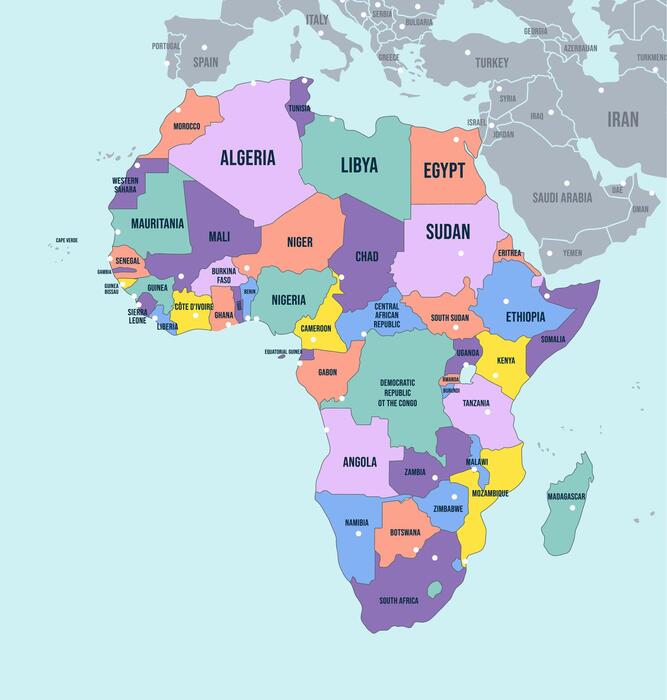
In the scarred landscape of Northeast Nigeria, where Boko Haram’s insurgency has claimed thousands of lives and displaced millions since 2009, the quest for peace remains a daily struggle. As military campaigns degraded the group’s territorial hold, a more complex and contentious challenge emerged. What to do with the thousands of fighters and their associates who surrendered or were captured?
The Federal Government’s answer was Operation Safe Corridor, a deradicalization program run from a military-controlled camp in Gombe State. But for the epicentre of the conflict, Borno State, this felt distant and disconnected from the realities of its ravaged communities.
In response, the Borno State Government, under Governor Babagana Zulum, began crafting its own approach, which later became known as “The Borno Model.”
The model is a non-kinetic approach that handles former Boko Haram/ISWAP fighters through disarmament, demobilization, deradicalization, rehabilitation, reconciliation, and reintegration known as the (Triple D, Triple R).
Unlike the military-run, camp-based system, the Borno Model is fundamentally community-centric. According to the document, “The Borno Model’s philosophy is rooted in an audacious blend of practicality and traditional norms. The model argues that sustainable peace cannot be achieved by isolating ex-combatants in distant camps, only to return them as strangers. Instead, it advocates for a localized process of rehabilitation and reintegration directly into communities, heavily mediated by local organizations, traditional rulers, religious leaders, and victims.
“The model operates on the premise that a significant portion of those in Boko Haram/ISWAP were either forcefully recruited, coerced, or driven by poverty rather than ideology, and that the path to peace requires a form of conditional forgiveness”.
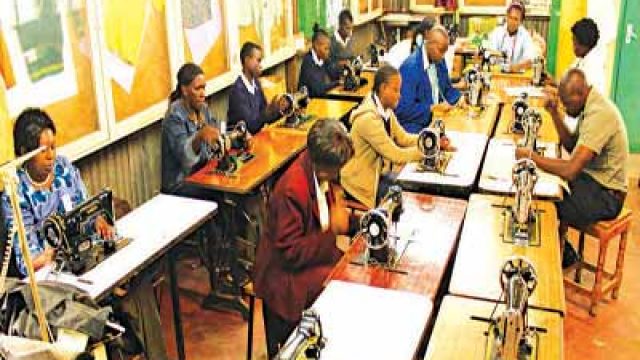
This model has translated into a bold and visible policy as thousands of “repentant Boko Haram” members and their families have been received, housed in temporary “transition camps,” and then resettled in their (or new) communities, often with vocational training and start-up kits.
According to an Institute for Security Studies research document, over 160,000 people had left Boko Haram/ISWAP, with over 100,000 fighters and their families, and an additional 6,900 minors surrendering unconditionally since the program commenced.
Nevertheless, this bold program unfolds against a background of profound pain and frustration, especially for the victims of Boko Haram.
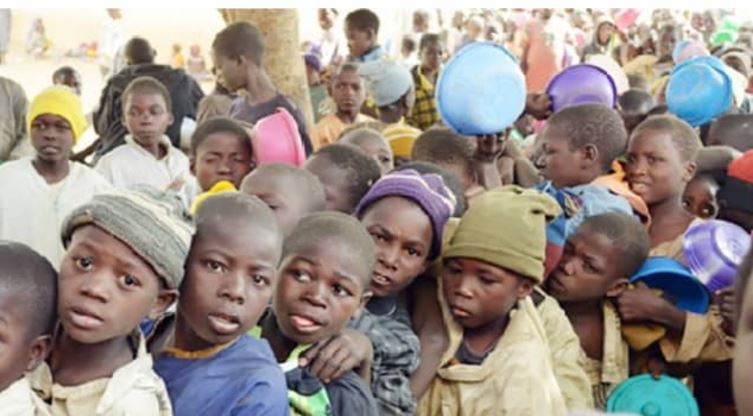
For communities that have endured massacres, abductions, and arson, the sight of former perpetrators receiving housing and support is a bitter pill to swallow.
Many survivors ask: where is our own rehabilitation? The fears of recidivism, accusations of injustice, and deep-seated trauma that no government program has adequately addressed persist. In the streets of Maiduguri, there is a blend of emotions and concerns among its residents. While some people view this program as a viable way of achieving peace, others see it as something forced upon them by the government.
WHAT VICTIMS SAY
For Bakura Modu, who lost his parents to the insurgents, “Only God will reward us for what we have gone through,” he said with mixed emotions. Bakura Modu lost his entire family, three of his brothers and his parents were killed during the 2014 Bama attack. Bakura escaped the attack and came to Maiduguri, later took shelter with his uncle. Now he struggles to live in Maiduguri with no support from the government. Bakura has not heard or felt carried along in the rehabilitation program.
Like Bakura Modu, Ya Kaltum Bukar, 58, lost her husband and six of her children to Boko Haram insurgents. During the peak of Boko Haram insurgency in Maiduguri, “They came during Ramadan in 2012 and killed my husband and three of my biological children, and after two weeks, they returned and shot three again,” she said.
YaKaltum only became familiar with the rehabilitation and reintegration program on Radio Programs. Now she struggles to survive in this economy, coupled with health complications.
On returning ex-Boko Haram fighters, Bakura Modu was skeptical, having had no previous knowledge or involvement: “The government has done a lot in resettling people and building homes, but not all victims of the insurgency were carried along,” he said.
According to Barrister Abba Kyari Muhammad, the Borno Model does not strictly adhere to the standard model of transitional justice. He stated that the model largely focuses on disarming insurgents, rehabilitating and reintegrating them back into society, while neglecting other core components of transitional justice, including prosecution, truth-seeking, reparation, and institutional reforms. “These obvious lapses in the implementation of the Borno Model render it something other than transitional justice,” Barr. Kyari stated.
Barr. Kyari lost his mother to the insurgents in 2013, skipped classes while at school, lost his livelihood, and was displaced multiple times within Maiduguri as a result of the insurgency. He said, “Upon all that happened, I am still yet to receive an apology from the government or other authority, let alone compensation.” He further stated that it is evident there is no meaningful victim compensation within the current transitional justice framework.
LACK OF COMMUNITY PARTICIPATION IN THE PROGRAM
Research by the Institute for Security Studies (ISS) clearly outlined the lack of community participation in the rehabilitation and reintegration program, stating that “Communities are not involved enough in reintegration even though they facilitated disengagement and are the first point of contact for ex-Boko Haram associates.”
Speaking as both a victim of the insurgency and a professional, Barr. Abba Kyari stated that “I cannot recall encountering any form of victim compensation, reparation, or even apology to those who lost their loved ones. Available evidence suggests that internally displaced persons who are the true victims are largely abandoned, while repentant Boko Haram members are housed, clothed, and well taken care of in government-owned facilities.”
PROSPECTS AND CHALLENGES OF THE PROGRAM.
Moreover, a source from the Ministry of Rehabilitation, Reconstruction, and Resettlement (RRR) stated that the program has had both its prospects and challenges, but the government is doing everything within its powers to carry all people along. He noted that victims are also supported with skills and are resettled in their communities as peace gradually returns.
The anonymous source also noted that the Reintegration Committee was constituted by Governor Babagana Umara Zulum, and it is working round the clock to return refugees from neighbouring countries like Niger, Cameroon, and Chad.
He also clarified that not only ex-fighters undergo rehabilitation it also includes victims, abductees, and communities ravaged by Boko Haram. “All are being rebuilt and resettled, apart from Abadam Local Government that was recently opened after more than a decade of desertion, and it has improved peace in the state,” he noted.
Similarly, Samuel Orahii, reintegration coordinator at Allamin Foundation for Peace and Development, a. leading organisation working with the government on community engagement and reintegration, noted that some of their work is confidential and sensitive, however, a lot of success has been achieved, and normalcy has almost been sustained. On the Borno Model, Mr. Samuel stated that “the Borno Model is more of a traditional justice, as communities are involved,” noting that ex-Boko Haram fighters are remorseful, recently, one ex-Boko Haram fighter sought forgiveness on a live radio program on transitional justice sponsored by Allamin Foundation”.
The ISS findings, however, show a lack of adequate funding for the program, stating that “The Borno Model faces persistent challenges, especially in providing sufficient economic support to deserters once they leave the camp. Many former Boko Haram members interviewed in March and June 2025 said they left the group with few employable skills, little start-up capital, and no tools to begin a livelihood. The state has introduced vocational training in the camps, teaching skills such as carpentry, tailoring, welding, and mechanics. It also provides a one-off payment of ₦100,000 (about US $67), but this isn’t enough to restart a life after years in the bush.”
On issues around sustainability of the program, Barr. Kyari noted that the sustainability of the program lies in its economic implications, which largely remain unaddressed. “These people are accustomed to a lavish lifestyle and unrestricted control over territories and resources, yet they are now expected to survive on minimal support. This arrangement is neither realistic nor sustainable and represents a ticking time bomb if left unsolved.”
DOES THE REHABILITATION PROGRAM LEAD TO PEACE?
Moreover, despite the sustained rehabilitation and reintegration program, communities resettled, and livelihoods restored, it remains debatable whether the rehabilitation and reintegration of ex-Boko Haram combatants have brought peace or otherwise. Many experts agree that since the collapse of leadership upon the death of Abubakar Shekau, many ex-fighters have retreated and laid down their arms, surrendering to Nigerian authorities. Subsequently, with intensified military aggression by Nigerian forces and the loss of many territorials holds by the insurgents, the group has systematically shifted its focus from ransacking communities to abductions, collecting ransom, and taxing in some areas within the Lake Chad region.
A HumAngle tracker from the last quarter of 2025 indicated that Borno State experienced the highest number of abductions, with over 161 people in a total of 31 kidnapping incidents. “A total of 116 incidents with fatalities were experienced,” the report stated. According to sources interviewed by HumAngle, the group has raked in over ₦1 billion through these random operations.
This report is corroborated by Yerwa Express News’s recent report of the abduction of seven fishermen from Doron Baga in Kukawa Local Government Area in Borno State by suspected Boko Haram insurgents, with a ransom demand of ₦30 million.
This report is supported by HumAngle Foundation under ‘Fellowship on Strengthening Community Journalism and Human Right Advocacy In Northern Nigeria (SCOJA)’.