Nigeria

Nigeria’s future in hands of youths – Obasanjo

By Uzair Adam Imam 

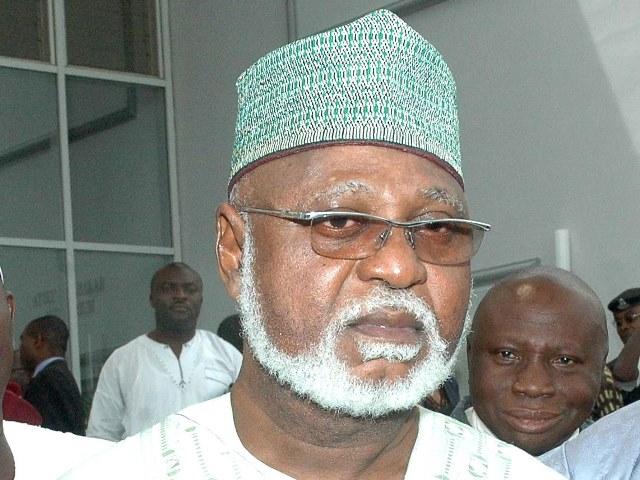
Former Nigerian President, Olusegun Obasanjo, said the country’s future is in the hands of youths.

The ex-president, who put all hopes in youths, stated that the solution to the country’s challenges was in their hands.

Obasanjo charged the youths to do the needful and change Nigeria into a better country in a chat with a famous singer, Charly Boy.

He said in parts, “I am the father of frustrated youths in Nigeria. That we are poor and frustrated is not the fault of God. 

“It is the choice of our leaders, and if we are going to change that situation, the youths have to change leadership. Pure and simple. There is nobody who will do it other than the youths.”

Many people in Nigeria share this belief that the solution to the country’s challenges is in the hands of the youths.

However, still few people, on the other hand, argue that the youths are not even ready to shoulder this responsibility.

FG mulls ending fuel subsidy after 2023 general election

By Muhammad Aminu 

The Federal Government (FG)has proposed June 2023 after the general election to eliminate subsidising fuel in Nigeria.

Minister of Finance, Budget and National Planning, Zainab Shamsuna Ahmed, disclosed this at the hearing of the House of Representatives Ad Hoc Committee Investigating the Petroleum Products Subsidy paid between 2013 to 2022 on Thursday.

Ahmed, who disclosed that the FG is planning a new date to end payments on under-recovery between the landing cost and regulated pump price of PMS, stated that the subsidy regime was not sustainable and may force more borrowing in 2023.

She said that the government, in the 2023-2025 Medium Term Expenditure Framework and Fiscal Strategy Paper planned for payment of the subsidy for only the first six months of 2023. 

Ahmed further disclosed that President Buhari transmitted the MTEF/FSP to the Senate and the House of Representatives as approved by the National Economic Council and the Federal Executive Council.

“One thing that stands out in the Medium Term Expenditure Framework was that if the nation holds on to fuel subsidy as it is designed now, we will be incurring from January to December a subsidy cost of N6.4tn. But we suggested to the Federal Executive Council, and the council approved that maybe, we could look at the option of exiting the subsidy (regime) for half a year. So, if we did that, then the cost would be N3.35tn, which is half of the N6.7tn.

 “The Federal Executive Council approved the second option. That is the option that was conveyed by His Excellency, the President, to the National Assembly. But Let me also say that even though this is a reduced option, it would mean that we are borrowing more than we would have borrowed if we did not have fuel subsidies.  In 2022 we are carrying the cost of subsidy throughout the whole year.

“Recall that the initial MTEF and approval by the parliament was for us to exit the subsidy by June of this year. But during the course of the year, making assessment of the difficult fiscal challenges in the economy and the hardship that our citizens are bearing due to high inflation and other challenges, we were asked to re-submit our plans and review them to include provision for fuel subsidy throughout the year 2022. That was how we came back to parliament with an incremental expense from N443bn which we had planned to up to N4tn subsidy expense in 2022,” the minister said.

She added that“This situation is not desirable and it is not sustainable. It is putting the country in a very serious, dire financial situation and we do hope that we will be able to exit this subsidy regime in the shortest possible time.

“The N3.35tn in the approved MTEF that is now before the National Assembly for consideration could have been funds that would apply to other vital sectors of the economy such as health, education and social protection. So, we are carrying a burden and we must sit back as citizens and really assess whether it is beneficial for us to continue to do so.”

The minister also presented a breakdown of withdrawals from the Consolidated Revenue Fund and the Excess Crude Account for payments to oil marketers under the subsidy regime.

She said, “Deduction of PMS under recovery shortfall by NNPC for the period 2013 to 2022: We are reporting that there is a total sum of N4.436 trillion which was deducted as PMS under-recovery by NNPC for the period January 2013 to December 2021.

“In this report, we are reporting the sum of N1.774 trillion has been paid to independent oil marketers as subsidies from 2013 to 2016.

“I will like to call the attention of the committee to note that the total sum of N6.210tn – that is the N4.4tn plus the N1.774tn – was expended on PMS under-recovery by NNPC as well as payment of subsidy to independent oil marketers from 2013 to 2021.

“I want to report on the funding of subsidy payments to independent oil marketers for 2013 to 2016. Payments that have been made to them were directly from the domestic Excess Crude Account through the reduction of Sovereign Debts Instruments that we call the SDIs.

“The SDIs are negotiable short-term instruments that were issued by the government at that time to give marketers comfort and enable them access financial support from their bankers for the importation of PMS. The instrument was approved by the then President in 2010.”

 She added, “It is also important to note that there were instances where funds were transferred from the Consolidated Revenue Fund to the domestic Excess Crude Account for subsidy payments.

 “For 2015, there are two instances: N31bn from the FGN’s excess domestic account, transferred from the CRF. Again in 2015, N156.1bn transferred from the CRF in another instance to the domestic Excess Crude Account.”

The minister, however, told the committee to request the statement of account of the NNPC from the company directly.

The committee resolved to request documentary evidence of the beneficiaries of the N500bn after some members expressed their reservations about the payments, especially without knowing the actual volume of PMS consumed daily.

In defence of ASUU strike (I)

By Nura Jibo

During my university days in one of Nigeria’s best and leading universities, I was a victim of the Academic Staff Union of Universities (ASUU) strike. As a result, we were stricken academically and made to stay at home for an entire year.

The ASUU-Federal Government face-off continued to linger. We were affected by another two-year strike at different times. Then I wrote a full page in the Daily Trust opinion column of 2 May 2003 titled, “ASUU/FGN Face-Off: Point Blank”.

I don’t really blame ASUU for all the strike actions. Because I know even then, the moribund status of the Nigerian education system had reached its comatose stage. We were given lectures in two of the biggest lecture theatres at my university. And the mammoth student crowd was so overwhelming that one had to sit on the floor to listen to lectures. There was a lack of seats and spaces to patch on and receive lessons. That was nineteen (19) years ago!

Now I don’t want to be lengthy today. Anybody that wants to know the solutions I proffered then could search Google or take time to read my book chapter on Nigeria. It is there on Amazon

To cut the story short, I listened to the haggard-looking and frustrated ASUU President with a sympathetic mind. I saw how Seun of Channels Television tried to balance his reporting with Festus Keyamo’s verbal diarrhoea.

First, anybody watching Keyamo’s take on ASUU knows he is lying! He sounded a pathological one, for that matter. But I don’t blame him because that’s what some Nigerian politicians do to make ends meet! However, as a lawyer and former human rights activist, Keyamo ought to have been careful by minding his language as a custodian of justice.

I am happy the ASUU President debunked and dismissed Keyamo as one of those ‘chop-chop’ guys that rants on government, but after having a lucrative position, they eat and dine from it. And their so-called activism ends there!

Second, Adamu Adamu’s Nigeria’s Federal Ministry of Education is one of the most corrupt ministries in the world. A verifiable proof and evidence of this is vivid when one wants attestation of their academic documents. The entire people in charge of attestation of university documents are all fantastically corrupt. They charge and collect kick-backs from left, right, back, front and centre! And they would tell you there is no actual price for attestation of one’s academic documents.

Very recently, a very shocking incident happened. Someone was kept aside, probably a former staff of the Ministry, that specialises in being a money liaison negotiator between one of the women directors that work in that attestation section in the Ministry and anybody that comes for attestation of documents. That guy (name withheld for now but will be released in my subsequent analysis) is extraordinarily corrupt and charges a considerable amount of money in the name attestation!

I wanted to expose these ills and terrible ineptitudes to Adamu Adamu by intending to painstakingly go and meet him personally at his office the way we used to meet at late Dr Mamud’s Tukur house in Kaduna at Raba Road. But I decided not to because he may ask his secretaries not to usher me in. The rest of this story is a menu for another day. Now let’s come back to ASUU Strike.

As it is, Adamu Adamu has lost respect and the so-called radical reformer he thinks he was. Because for him to preside over an education ministry that is the biggest in Africa and allow corruptible ministerial staff to keep reigning and painting a terrible image of Nigeria in the name of attestation of documents shows a lack of concern and total negligence of holding public office on Adamu’s part!

Therefore, little wonder when he ignores ASUU’s demands because during his struggle days to make both ends meet, he was an ardent ASUU supporter. But now, he has joined the bandwagon of Keyamo’s “Kiya Kiya” in the name of public service!

Third, I respect my university teachers very well. They earn my respect any day. Because despite all odds, they made me who I am educationally (academically), politically, socially, realistically, genuinely, “temeritically”, hopefully, audaciously, respectfully, fearlessly, confrontationally, and above all analytically and scientifically savvy.

Ditto Adamu Adamu and the Keyamo’s of this world!

They were well trained and educated by those university lecturers that they betray today in the name of public office.

To be continued!

Nura Jibo is a Lifetime Member of the West African Research Association (WARA), African Studies Centre, Boston University, United States. He can be reached via jibonura@yahoo.com.

Opponents spread fake news, attribute them to me – Peter Obi

By Uzair Adam Imam

The Labour Party Presidential Candidate, Peter Obi, has accused the way his opponents adopted a negative strategy of trolling and insinuating fake news and misinformation against him and his party.

Obi said this Thursday in his verified Tweeter handle, adding that his opponents create misinformation on social media and deliberately attribute them to him and his party.

The Daily Reality recalls that Obi and the APC Presidential Candidate, Bola Ahmed Tinubu, were engaged in a serious war of words last week.

Obi tweeted, “As we approach the official kick off of the 2023 election campaign, it has become evident that the opposition have adopted a negative strategy of trolling and insinuating fake news and misinformation in the social media space and blaming the Labour Party, its presidential candidate and their supporters of same.

“We remain resolute in our commitment to an issue-based and clean campaign. We will also rebuff all such ploys of deceit and calumny meant to create disaffection among Nigeria’s voting population, who desire credible leadership change. – PO,” he said.

On his part, Tinubu also blamed Obi supporters for mudslinging and spreading fake news against him and other candidates ahead the 2023 general election.

A Generational Discontent: A tribute to Mallam Ali Garba

By Adamu Tilde, PhD

This tribute should have come earlier. I have tried to write something about Mallam Ali Garba several times, but it always ended in a stalemate. Not that I can capture the essence of Mallam in a few paragraphs, but I, nevertheless, will share what Mallam meant to me.

It is trite to discuss the mutual distrust between the few Western-educated elites and the remaining populace of the Muslim North. The condescending looks the former harbour for the latter has inadvertently led to animosity, disdain, estrangement, and suspicion. This mutual distrust has stalemated the needed cultural and social changes and transformation for growth and development. 

For long, the ordinary populace cannot find reasons to associate with the educated elites; the elites, on the other hand, cannot understand why the public views them with utter cynicism. In my view, the effortless meandering of this contradiction tells the essence of Mallam.

Mallam was educated in Kent up to PhD level, published books and articles in reputable journals, worked in some elite organizations and finally settled in Bayero University Kano (BUK), Department of Business Administration, until his demise. This impressive resumé only made Mallam more courteous, down-to-earth, and humble. So, how did he surmount what appears to be an insurmountable challenge? I will come back to that later.

I first met Mallam in 2014 at Kano Central Hotel. I was selected for a workshop on entrepreneurship by Hajiya Amina Ado Kurawa. Mallam was one of the resource persons. Given how Hajiya Amina praised Mallam Ali, we waited with bated breath for this all-important resource person. We were not disappointed. Mallam delivered a flawless presentation. I could not wait to engage him after the presentation, only for Mallam to excuse himself for another engagement. I later searched for his name on Facebook. 

Mallam interspersed his discussions, teachings and writings with ‘barkwanci’ (humour). This invited a lot of traffic to his wall; it also made his students and followers feel at ease in his presence which thus facilitated two-way communication. You would feel confident asking Mallam anything.

Another charming trait that won Mallam many hearts was the extent to which he would reach to correct you without belittling you or making you look/sound foolish. This all the more made him endearing and welcoming. 

Mallam knew he had a lot to share, and we were not making better use of his knowledge and experience. He looked at us (Tijjani, Marzuq, and I) in one instance and said: “Use me.” In another instance, during our first visit to his house, he invited us upstairs, introduced us to his wives, and finally said to us: “This is your house. Come whenever you want.” We were not alone. He did this to many. This unassuming and welcoming personality made Mallam a darling to many and led to the birth and polishing of innovative business ideas. Maryam Gatawa’s Gatmeals is one example. 

Muslim North has no shortage of brilliant minds bristling with excellent ideas that can transform its economic prospects into reality. However, I suspect that the knowledge of how to harness and translate these innovative, transformative ideas into reality is in short supply.

One way of achieving this is to bridge the gap of access between the two aforementioned mutually distrusting classes. This is the essence of Mallam Ali Garba. And this was what Dr Waziri Junaidu cautioned us against in 1971: “Let not your degrees, research and publications be an excuse to feel haughty amongst your own people. Knowledge is at best when it is universally useful, and the best scholars are those whom the ordinary man fears neither to encounter nor to address.”

Adieu, Professor Ali Muhammad Garba.

The imperatives of Nigeria’s war against poverty (I)

By Lawi Auwal Yusuf

Some say that all poverty alleviation programmes would be a failure. Unfortunately, given the dispositions of our politicians, this is to a significant extent true because it suggests that they are not genuinely committed to dispelling all forms of deprivation. And this severe material lacking happens to reach its pinnacle that the idea of affluence is a contrived mirage, compromising the economic firmament upon which everything else must rest.

Poverty is the scarcity of material resources or the meagerness of the money needed to acquire those commodities believed to be required to maintain an acceptable living standard. Its a condition of severe deprivation of the basic human needs that include food, safe drinking water, healthcare, education, housing and sanitation facilities. It depends not only on income but also on access to services.

Poverty is deeply entrenched in Nigeria and ravages people’s lives devastatingly. It must be conquered because it leads to cycles of deprivation, whereas poverty is bequeathed from one generation to the other. However, any government that is not making genuine efforts to fight poverty is consciously pushing people deeper into it. This is because government policies significantly influence the extent of poverty. Therefore, impoverished Nigerians and the socially excluded must be helped to alleviate their plight.

Though welfare institutions have been designed to deal with the situations, at least on paper, the attempt to change the conditions of the poor fails because they are but dismal efforts, if not baseless paperwork. Inadequacy of the welfare state and the structure of society are responsible for poverty amid prosperity.

The welfare state is seen as the best remedy for overcoming poverty. Some social workers postulated that it helps tremendously in extirpating poverty and social exclusion and contended that it’s essential in solving many social problems. Therefore, full employment with prospects and increased welfare benefits would soon eradicate these intractable problems through redistributing wealth from the rich to the poor and significantly raising working-class living standards. However, critics argue that it does little to wipe it and even suggest it as a cause. 

Asa Briggs said that “the welfare state exists where governments decide that the private enterprise is failing to meet the needs of its citizens. The welfare state might intervene to meet such needs by providing services such as health care, education, social housing, transport and social services; or by redistributing resources to those in need through benefits system.” This means that money can be redistributed to the poor through the benefits system, and welfare services can be used to minimise poverty. 

The main problem with poverty eradication policies in this country is that they reduce the amount of poverty that truly exists. Hence, authorities attempt to deal with it through unfounded poverty alleviation programmes, frivolous economic empowerment schemes or even minor reforms. But, contrarily, its widespread are ruining Nigerians’ lives leading to social disorganisation, while deft changes are necessary to extricate it. Therefore, Nigerian policymakers must examine the problems in defining and measuring poverty and social exclusion, their causes and most importantly, the possible solutions.

Poverty is measured either in an absolute or relative term. Absolute poverty is usually based upon the notion of subsistence. This means that individuals are said to be poor if they lack the wherewithal to live decent lives. It is a judgment of basic human needs and is measured in terms of the resources needed for such living. Hence, it is much more concerned with establishing the quality and amount of food, shelter, clothing etc., deemed necessary to maintain physical, material, social and psychological wellbeing.  On the other hand, when measuring poverty in relative terms, the prosperity of that society at a particular time must be considered before fixing its threshold. 

The money needed for the subsistence level of existence must cover food, clothing, rent, schooling, fuel and light, and household and personal items. This must be adjusted according to family size.

Another contentious issue is whether poverty should be seen purely in material terms or must go beyond that. Supporters of the former view assume that poverty consists of insufficient material resources considered necessary to maintain a good everyday life. But, followers of the latter view believe it involves much more than material dearth. They see it as multiple deprivations with different dimensions.

For instance, there is a lack of educational opportunities, professional training or adverse working conditions. None of these conditions is directly related to an individual’s material possessions. It signifies radical societal changes rather than simply raising the income of the worst-off members. Tackling poverty in this sense would require a fairer redistribution of income, but also, it would require fundamental changes in the social structure.

Lawi Auwal Yusuf

Kano, Nigeria.

ASUU strike continues as meeting with FG ends in deadlock

By MMuhammad Sabiu

The Federal Government and the Academic Staff Union of Universities (ASUU) meeting on Tuesday came to an end once more without a resolution.This indicates that the six-month-old lecturers’ strike at public universities will continue.

The Professor Nimi Briggs Committee and the striking academics met on Tuesday at the National University Commission in Abuja in the hope of breaking the deadlock.

Members of the Briggs renegotiation committee did not present any new offers to the table, according to a top member of ASUU who requested anonymity.

Instead, the committee begged the professors to cease their strike, the ASUU source claimed, assuring them that their issues would be addressed in the 2023 budget.

The discussion, which began at noon, reportedly lasted for about three hours without producing a resolution.

Scotland becomes first nation to offer free pads and tampons

By Ahmad Deedat Zakari

Scotland has passed a law pronouncing period products free for all its citizens. The landmark legislation is the first of its kind in the world. 

The Members of Scottish Parliament, MSPs, have unanimously approved the Bill in November 2020 to combat period poverty

According to a report by BBC, local authorities now have a legal duty to provide free items such as tampons and sanitary pads to “anyone who needs them”.

 The bill, now known as the Period Products Act, was introduced by Labour MSP Monica Lennon, who has advocated to end period poverty since 2016. 

Lennon said: “Local authorities and partner organisations have worked hard to make the legal right to access free period products a reality.

“This is another big milestone for period dignity campaigners and grassroots movements which shows the difference that progressive and bold political choices can make.

“As the cost-of-living crisis takes hold, the Period Products Act is a beacon of hope which shows what can be achieved when politicians come together for the good of the people we serve.”

It is an “S-A-N” not a “SAN”

By Hussaini Hussaini

A few days ago, after witnessing the interment of a late Senior Advocate of Nigeria (SAN), I made a grieving post on my social media handles as follows:

“It looks beautiful to witness the admission of an SAN into the inner bar; and it is so direful to witness the laying of a late SAN into the inner earth. The name, the prestige, gone! Bottom line is to watch the end as we watch the goal.”

I received several direct messages seeking to correct my perceived grammatical error in using the indefinite article “an” to “SAN” in the first line of the above post. But in the true sense, there is no error in it, based on the popular usage of the term within the legal circle in Nigeria. An average lawyer uses the term as an abbreviation like “etc” not as an acronym such as NATO or CITAD. So forgive us for not using the dots like “S.A.N.”, which is typical of some abbreviations.

Therefore, an average lawyer pronounces the term to sound like “es-ey-en” and not sound like “-san” as in “Sani”, “san yoghurt”, or “San Francisco”. The contrary is the usual way of pronouncing the term by an average non-lawyer in Nigeria.

It is known that “a” as an indefinite article is attached to a word whose pronunciation starts with a consonant sound, while “an” is attached to a word which starts with a vowel sound. Therefore, since an indefinite article is attached to a word based on the sound of its preceding letter(s) of the alphabet, such as saying “an hour” or “a unanimous”, I believe a lawyer will be correct to say “an SAN”( es-ey-en).

I also said “a late SAN” in my post quoted above. However, I think that is not an issue because the article “a” serves the adjective “late” and not the SAN that succeeded it.

I am not a grammarian, but I hope this little explanation explains the tradition, most especially to people outside the bar.

I can’t imagine how funny it will sound after one works day and night to achieve the silk and a colleague look at him in the eye and call him “-san”.

I sincerely appreciate the efforts of those who attempted to correct my mistakes, and I will always welcome the same at any time. Thank you so much.

Hussaini Hussaini sent this article via hussaini4good@gmail.com.

_____

The views expressed in this article are the author’s own and do not necessarily reflect The Daily Reality’s editorial stance.

NBA in crisis, suspends General Secretary

By Ahmad Deedat Zakari

The Nigerian Bar Association (NBA) has suspended its General Secretary, Joyce Oduah, over what it called “gross misconduct”.

This is coming after an emergency meeting of the National Executive Committee (NEC) of the association held on Monday, August 15, 2022.

The NEC meeting was presided by the 1st Vice President of the association, Mr John Aikpokpo-Martins, after the president , Mr Olumide AKpata, had voluntarily withdrawn from the meeting.

The major allegation levelled against Mrs Oduah was her solitary withdrawal of notices for the amendment of the NBA constitution, an action which has thrown the members of the association into pandemonium.

Troubles started for Mrs Oduah on Friday when the NBA President, Mr AKpata, issued a disclaimer annulling the withdrawal of the notices for the NBA constitution amendment .