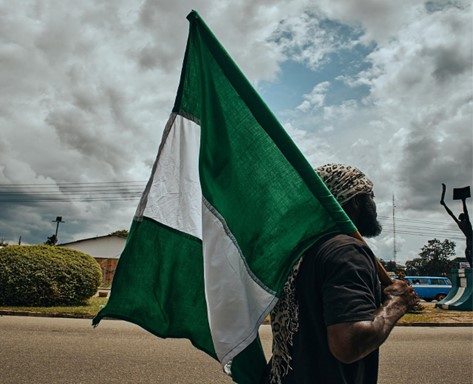
Nigeria

THE LAND

The world is liveable

But this land is terrible

Releasing orders without sympathy

Where’s your instinct of empathy?

Abrupt removal of subsidy

Things loose out of custody

Prices go rocket higher

Traders nap having no buyer

We can’t secure aliments

Nor can we cure ailments

Schools have been deserted

After the increment exerted

Compatriots hover without refuge

Nobody can afford a mortgage

Even the fittest can’t survive

We’re not but corpses alive!

Vanguards of liberation

Become gladiators of domination

Not only a rare golden opportunity,

Seat is heavy responsibility!

– By Hashimu M Bala

Nigerian economy and the Washington package

By Mohammad Qaddam Sidq Isa (Daddy)

Now that Nigeria has finally embarked on the total implementation of the Washington Consensus package of neoliberal economic policies, what becomes of the country’s economy, in the long run, remains to be seen. 

As a product of consensus among the Washington-based World Bank, the International Monetary Fund (IMF) and the United States Department of the Treasury, the package was purportedly designed to guide developing countries bedevilled by protracted economic crises to recovery and achieve sustainable economic development. 

Also, as a capitalist template with inherent and unmistakable lopsidedness in favour of the rich and those with access to public resources, the package encourages governments to literally but gradually wash their hands of the critical economic sectors in favour of profit-oriented local and foreign investors.

Under pressure from neoliberal international financial institutions, successive Nigerian governments have gone to various extents in selective and partial implementation of the package, triggering rounds of controversy. 

However, now with the country going fully and irreversibly capitalist, there is no more time to waste in criticising capitalism and romanticising some obsolete socialist and populist ideas that are no longer realistic. After all, the reform policies can still work out if the federal government pursues requisite measures, which include, among other things, total transparency in governance, governance cost-cutting and prioritisation of the strategic sectors of the economy that have a direct bearing on people’s lives. 

In other words, for the reform to be effective, governance at all levels must be too transparent to accommodate any act of corruption; and anti-corruption measures, including appropriate punishments, must be in force and deterrent enough to deter any would-be perpetrator. 

Likewise, appropriate governance cost-cutting measures must be implemented judiciously to save resources without prejudice to productivity and efficacy.   

Equally, public spending must strictly follow the public’s priorities that entail appropriate investments in strategic sectors with clear short, medium and long-term goals measured not by mere figures but by their real effect on people’s living conditions. 

With these and other requisite measures in place, the investment atmosphere in the country will be transparent and competitive enough to attract local and foreign investors with appropriate job-creating investments that would facilitate real and sustainable economic development. 

That way, and with time, the local and foreign rent-seeking opportunists and profiteers, who have dominated the business sphere in the country, making hugely disproportionate returns compared to their real investments, will have to follow suit to remain relevant or simply lose out. 

Unless the Tinubu administration pursues these measures with appropriate commitment, the reform will end up counterproductive, thus making life even more unbearable to most Nigerians. At the same time, a tiny politico-business clique continue to wallow in abundance.

Interestingly, there has been conspicuous silence on the part of our local West-admiring Washington Consensus apologists, who have advocated total capitalist reform as the only panacea to the country’s persistent underdevelopment. Ordinarily, having passionately advocated it, they should now feel morally obliged to show some understanding, or at least fake it, over the ensuing escalating hardship in the country. 

Besides, though supposedly experts in economics and other related fields, none have developed a viable alternative economic recovery package or even introduced viable inputs to the Washington Consensus package to make it relevant to our peculiar circumstances and other underlying challenges.

Mohammad Qaddam Sidq Isa (Daddy) wrote from Dubai, UAE. He can be reached via mohammadsidq@gmail.com.

₦‎8000 palliatives: Tinubu should not repeat Buhari’s mistakes

By Kasim Isa Muhammad

I was quite gobsmacked when I came across the news that President Bola Ahmed Tinubu plans to compassionately alleviate the burden of subsidy removal on 12 million impoverished households by providing them with a meagre sum of N8000 for a period of six months. Initially, I had to rub my eyes in scepticism, questioning the authenticity of what I had just read. However, to my surprise, it appears that numerous media outlets have indeed reported this astonishing news.

Struggling to recover from what I scanned earlier, I stumbled upon a startling piece of news that left me exceedingly in complete disbelief. The gravity of the situation rendered me speechless for several minutes as I pondered the implications for the future of our country. Now, dear reader, I sense your anticipation to learn what I read. Brace yourself, for I came across an incredibly disturbing article in The Sun newspaper last Saturday.

In the midst of the unprecedented sufferings experienced by our nation, it was reported that the Senate and House of Representatives are planning to allocate a staggering N40 billion for the purchase of vehicles intended solely for the lawmakers inhabiting the Red and Green Chambers of the National Assembly.

The report further disclosed that a mind-boggling number of vehicles would be procured: precisely 107 units of the 2023 model of the Toyota Landcruiser for the Senate and an astounding 358 units of the 2023 model of the Toyota Prado for the House of Representatives.

Of course, this disclosure left me contemplating the priorities of our elected representatives and the ostensibly vast disconnect between their actions and the dire needs of our nation. As our country wrestles with countless challenges and its citizens endure untold encumbrances, it is disheartening to witness such extravagant expenditures.

The immense amount of funds allotted for luxury vehicles raises valid concerns in my mind about the judicious utilization of our collective wealth and the overall commitment of our lawmakers to serve the people’s best interests.

It is at moments like these that one cannot help but question the future trajectory of our country. The glaring contrast between the exorbitant spending on lavish vehicles and the pressing issues that demand urgent attention sends a disconcerting message about the priorities of our leaders. As a concerned citizen, I cannot help but wonder if there are better ways to allocate these funds and address the genuine needs and aspirations of our nation.

However, let me not dwell excessively on the shenanigans of our lawmakers, for Nigeria is a country that never ceases to stun with its myriad shocks and surprises.

My dear reader, allow me to transport you back to the discussion surrounding Tinubu’s poverty alleviation scheme. It is frankly baffling to comprehend how a mere 8K could possibly ameliorate the devastating impact of fuel subsidy removal in a country where people are already burdened with exorbitant prices for essential food commodities.

The current petrol pump price alone stands at nothing less than N500, and the cost of education in our public universities has experienced a drastic surge. In light of these distressing circumstances, one cannot help but reflect upon the efficacy of allocating a slavish sum of 8K to 12 million poor Nigerians over a period of six months.

Perhaps it is necessary to remind our leaders, as it seems they may have forgotten, that according to the National Bureau of Statistics (NBS), an overwhelming 84 million Nigerians are currently trapped in the clutches of extreme poverty, surviving on less than $1.9 per day. Instead of actively seeking lasting solutions to the multitude of challenges that plague us, it appears that Tinubu’s administration is perilously poised to repeat the mistakes of previous administrations.

We are all aware that the last government under former President Muhammadu Buhari implemented innumerable poverty mitigation programs, such as N-power, Survival Funds, and the National Youth Investment Fund (NYIF). However, it is worth questioning whether these initiatives have really succeeded in alleviating the pervasive poverty that plagues our country.

Similarly, the Nigerian Economic Summit Group (NESG) has also projected a distressing tide in unemployment, estimating it to reach a startling breathtaking 37 per cent this year. Is the N500 Billion not truly sufficient to empower our youth with viable and veritable skills?

Regrettably, it seems that our leaders have lost their ability to listen and empathize with the very people who entrusted them with power. Instead of prioritizing the well-being of those who elected them into office, they have chosen to inflict unnecessary hardships, seemingly oblivious to the devastating impact of their policies.

To illustrate, allow me, my admirable readers, to outline what N500 Billion can potentially achieve for our country.

First and foremost, education must be prioritized as it is essential for any nation’s progress. In Nigeria, the situation regarding education is particularly concerning.

According to a UNESCO report in 2023, approximately 20 million Nigerians, which accounts for 20 per cent of the country’s population, are not enrolled in school. This figure exceeds the total population of several African countries. In my opinion, by utilizing N500 Billion to build and renovate schools in both rural and urban areas, we can significantly reduce the number of out-of-school children in the country.

Furthermore, agriculture, being a vital sector of our economy, faces insurmountable challenges. By allocating a substantial portion of these funds to the agricultural sector, we can provide our farmers with adequate and affordable fertilizers, thereby enhancing the agricultural industry.

To incredibly uplift Nigeria, it is vital to focus on promoting rural infrastructure. By wisely directing the funds towards initiatives such as improving rural roads, ensuring a reliable electricity supply, and establishing cold storage facilities, we can also address issues of poor management, facilitate transportation of agricultural produce, and foster overall economic development in rural areas.

Additionally, our public universities are currently battling with insufficient funding, making education increasingly unaffordable for children from economically disadvantaged backgrounds. Will N500 Billion be sufficient to revamp many of these universities and address the pressing needs of students?

Finally, I would like to take this opportunity to address our esteemed President, Bola Ahmed Tinubu. Nigerians have high expectations of you, Mr President, as we believe you possess valuable insights into the economy. We eagerly anticipate your visionary ideas and urge you to wear your thinking cap. It may be early to pass judgment, but please do not disappoint us.

Kasim Isa Muhammad is an investigative journalist who contributes as a full-time journalist at both Neptune Prime and The Citizen Reports newspapers.

NUC approves 10 new degree programmes for Al-Istiqama

By Uzair Adam Imam

The National Universities Commission (NUC) has approved ten new degree programmes for Al-Istiqama University, Sumaila, Kano.

Professor Salisu Shehu, the university Vice Chancellor, disclosed the news of the NUC’s approval to the press Wednesday.

“10 new degree programmes approved for Al-Istiqama University, Sumaila,” Processor Shehu announced in a message seen by The Daily Reality.

According to him, the ten new programmes include; B.A Arabic, B.A Shari’a, B.A English language, B.A International Relations and B.A Peace and Conflict Resolution.

Other programmes are B.A Sociology, B.A Criminology and Security Studies, B.A Biotechnology and B.A Environmental Health and Community Health.

It was gathered that admissions into these programmes would be made against the 2023/2024 academic session using the 2023 UTM Jamb results.

₦8000 palliative: who sold this wretched idea to President Tinubu?

By Aliyu Nuhu

Can ₦8000 given over a period of 4 months solve poverty or alleviate the sufferings of people imposed by withdrawal of petrol subsidy?

If 12million people are getting the money, what of the remaining 168 million poor Nigerians? What will be the selection criteria. Sometimes you wonder at the quality of the thinking of our leaders.

Who sold this idea to president Tinubu?

To solve poverty you have to create business opportunities and provide loans. That was how China created wealth among its people. Loans were given with defaults in mind on self recognition only. No penalty for delinquency or business failure. Definitely some businesses will fail but many will succeed. China gave tax holidays to business startups and subsidized electricity and wages.

Brazil reduced poverty by reduction of inequality through equitable wealth redistribution programs. It did not only focus on economic growth, but accompanied this growth with active social policies for redistribution. The end results, economic growth led to better living standards for much of the population, through better wages and social transfers. Brazil gave family scholarship, business loans and huge minimum wages.

Egypt has long had a cash transfer/social assistance programme (maash al-daman al-igtimai), a program of the Ministry of Social Solidarity that reaches approximately 1.5 million households unable to work and uncovered by any other social insurance scheme. This mainly includes widows raising children, the elderly and the disabled.

In addition, two new cash transfer programs were launched in 2015. Karama (dignity) which provides an individual monthly allowance of LE320 for the elderly and those with severe disabilities. Takaful (solidarity), a conditional cash transfer program disbursed quarterly, which offers poor families with children who are younger than 18 a monthly allowance of LE325 and additional sums of LE60, LE80 and LE100 per child in primary, secondary or high school respectively, on condition of regular attendance. These programs, launched in early 2015 in some of the poorest villages in Upper Egypt, now reach almost 160,000 beneficiaries, with plans for geographic and quantitative expansion. Unlike Nigeria, the monies were not diverted and it surely reached the intended targets because of government sincerity of purpose.

It is not just about announcing unimplementable programs with no results in sight. Government must think deep and look at what other countries are doing. We cannot reduce poverty while at the same time imposing 7.5% tax on petrol and increasing price of electricity. We cannot end hunger, the bigger factor in poverty while banning importation of food that we don’t produce enough or closing borders. We cannot address inflation when we unleash extortion gangs on the highways collecting bribes from trucks that distribute goods to our cities.

It is as if Tinubu did not understand Nigeria and did not prefer or intend to govern it.

The danger of eating Ponmo/Ganda

By Bala G. Abubakar 

Pre-historic people used to live by hunting. Clothes were necessary for protecting the body from cold and rain. It is very likely that for clothing, the pre-historic hunter utilised the skins of the animals he killed by converting them into leather. 

Why LEATHER?

The art of converting hides and skins into leather is called TANNING. Tanning is the art by means of which putrefiable animal hides and skins are preserved from decay and converted into an imputrescible substance known as leather. The main characteristic or attribute of leather is COMFORT. Comfort means the leather ‘breezes’; as such, when it is COLD, the leather keeps the body warm; at the same time, when it is HOT, the body is COOL. The skins of large animals are called hides, and small animals are called skins. Hides are large and thicker in substance and heavier in weight than skins.

Animal skin is composed of water, protein, minerals, fats, and carbohydrates. About 80 per cent of dry skin is made of protein. Collagen is the main structural protein that makes leather. Proteins are made up of organic compounds called Amino acids.

Your body needs about 20 different acids to function properly. While all 20 of these are important, only nine are essential. Collagen protein, the main constituent of hides and skins, has only three (3) essential amino acids out of the 20. Notably, the daily requirement of protein containing all the essential amino acids is 90 grams. As outlined, collagen has only three essential amino acids; the six non-essential amino acids, plus other proteins and carbohydrates in the bloodstream, are all converted into glucose. Thus, spiking blood sugar leads to insulin resistance. Insulin resistance happens when the body does not respond appropriately to insulin, leading to high blood sugar. Consequently, the following diseases or ailments are imminent: 

  1. Type 2 Diabetes: This is a debilitating disease everyone is conversant with.
  2. Metabolic Syndrome: this is the medical term for a combination of diabetes, high blood pressure, and obesity. It puts you at a greater risk of coronary heart disease, stroke and other conditions affecting the blood vessels. 
  3. Overweight and obesity are defined as abnormal or excessive fat accumulation that presents a health risk. 
  4. Non-alcoholic fatty liver disease is a term for a range of conditions caused by a buildup of fat in the liver.
  5. Cardiovascular disease is a general term for conditions affecting the heart or blood vessels.
  6. Polycystic ovarian syndrome (PCOS) is a hormone imbalance in women. This included insulin. People with PCOS are almost three times more likely to develop cancer.
  7. Alzheimer’s disease is the most common dementia. It involves brain parts that control thought, memory, and language.
  8. Insulin resistance has no symptoms but is reversible. 

Professor M.K. Yakubu of the Nigerian Institute of Leather and Science Technology (NILEST) disclosed that Nigeria loses about 855 billion Naira in revenue annually from importing cattle hides. The hides are imported from neighbouring countries, including Mali. Others are the Central African Republic, East Africa, and recently, Saudi Arabia. The estimate is about 3 million pieces of which are consumed by Ponmo eaters. Nigeria produces over 7 million cattle hides yearly; 90 per cent are used as a food delicacy, an alternative to proteins. Statistics show that most of the consumers are from the Southwest states of the country. Therefore, the Consumption of Ponmo ultimately has immense adverse effects on the country because of the following:

  1. Healthcare: Insulin Resistance may have been the cause of many killer diseases. 
  2. Loss of Revenue to the Nigerian government. 
  3. The closure of several tanneries processing hides into Side leather in Kano, Maiduguri, and Sokoto has some impact on the governments due to loss of revenue and to workers job-wise.
  4. Owing to Insufficient side leathers, many big shoe Companies have closed their plants and shops to relocate elsewhere. A big example is the Bata shoe company. Lennards has recently imported Completely Knocked Down (CKD) parts to assemble shoes.
  5. Shoemakers of Aba, Onitsha, Lagos, and Kano use mostly man-made materials, which has no comfort in making shoes.
  6. Only 10 per cent of the population of this country uses leather shoes, while the rest use ones with man-made material imported from  China and India. 

To SUM it up, hides and skins from time in memoriam have been used for making shoes and clothing, but not for EATING! 

Bala G. Abubakar is a livestock and leather consultant. He can be contacted via ibro240@yahoo.com.

Muslim domination of Nigerian politics, El-Rufai’s remarks and the quest for a just social order!

By Ibraheem A. Waziri

1. As against the postulations of some, who think Nigeria to be a fantastic, British-contrived social experiment. Many believe it to be purely a product of inevitable historical processes that ordinary mortals should only play along with. So, it is said that statesmen and cultural priests cum social philosophers must – by the spirit of the time, fair universal human values and exigencies of frequent unassailable moments – always create and promote a narrative of a reasonable sociocultural balance for the country to continue to thrive.

2. In this, since religion is adjudged, by scholars of identity in history, to be the strongest factor in social mobilisation. It is safe to assume that the crème de la crème of the Nigerian military, who ruled the nation between 1983-1998, although mostly Northerners and Muslims, had good intentions; to have worked hard to ensure the provision of religious balance, between mainly Muslims and Christians, in the general administration of the national and sub-national units of the country.

The Justification

3. A casual review of both the 1st and 2nd Republic is enough to show tendencies to Muslims’ domination of the Nigerian political space. Also, since Islam is consistently found to be deeply expressive in the discourses and practices of its adherents daily, especially in Northern Nigeria, non-Muslims may not help but feel threatened – even if only imagined, not real – with marginalisation when individual Muslims are in power. This, regardless of whether their predilections do not suggest inclinations to any assumed extremist tendencies. Because often politics and politicians ride on only prevailing narratives and popular sentiments as major currencies during elections and subsequently in forming finer details of general governance policy direction!

4. This may have been why people like the late Capt. Ben Gbulie would maintain this in his book, Nigeria’s Five Majors, and much later when he responded to questions by late Barrister Yahaya Mahmood SAN during a session at the Oputa Panel. That one of their reasons for staging the January 1966 coup d’état that killed mostly Northerners Muslims in power was intel, they got and rigorously verified to confirm, by some standard, that the then Nigerian government, led by mainly Northern People’s Congress (NPC), was clandestinely planning a Jihad with the hope of Islamising the country.

5. The measures of balancing taken by the military may not be favourably viewed by modern reviewers, depending on the angle of vision one takes. But it is unmistakably clear that had the prevailing rhetoric of the Nigerian Muslim communities of the late 80s and 90s – that were even celebrating as heroes on various pulpits, figures and ideals of contemporary Islamist movements in Egypt, Iran, Algeria, Afghanistan and Sudan – met with a popular narrative of Muslim majority populated Nigerian state, the results would have been better imagined now. 

6. Thus, during both the two aborted electioneering processes of 1992 and 1993, to usher in a democratic government, General Ibrahim Babangida (IBB), the Head of the Nigerian state, deliberately tried to ensure political parties presented bi-religious tickets for elections into offices of governors, everywhere there is a significant population of people of differing faith, and ultimately that of the Presidency.

7. Many scholars and pundits alike have concluded that it was the failure of the southern Muslim, Moshood Abioĺa, Social Democratic Party’s candidate, who is said to have won the election, to respect IBB’s wish to select Paschal Bapyau, a northern Christian, as Vice Presidential candidate that led to the annulment of June 12 1993 elections! The Quest for such religious balance was that important to IBB, as we can conveniently presume it to be part of his insight and blessed wisdom clinging to higher moral flanks, advancing the standard of a fair, indivisible Nigerian nation.

8. Fast forward to the events preparatory to ushering in the fourth republic in 1999. It was the same cream of former Northern Nigerian top military generals who insisted on a power shift to the South, particularly to a Christian president, who would, in turn, have a Muslim running mate from the North. Thus, Northerners or Muslims from the South were cajoled to stand down their ambitions in the name of peaceful, regional and religious balance!

To Every Action…

9. Yet, as the timeless law of physics stipulates, there is an equal and opposite reaction to every action taken. So also the decision to premise all the sociocultural discourses on Nigeria on the narrative of religious balancing. Religion as a determinant of who gets what, in the string of the political equation, and ultimately down the line on the food chain of the country’s rentier economy, also became the cheap tool providing the impetus for persistent conflicts and unending violence, particularly in some subnational units in Northern Nigeria.

10. In Kaduna, my state, there has been a wave of religiously motivated crises, coupled with agitation for territorialism and territorial expansion, more resource allocation and political representation, since 1987. After the ushering in of the fourth republic in 1999, it continued assuming an alarming direction, characterising every aspect of the policy discussion in the state. Every single appointment, political or otherwise, must factor in religion. Yet the wave of the crisis did not show any sign of going away. It kept consuming many lives and properties, casting a blight on every possible future of progress and development. Refugee camps became a distinct feature of satellite towns in the state.

11. Government, civil society and faith-based organisations became very busy and active daily on the issues of conflict resolution and rehabilitation and resettling of refugees more than any other thing. From 2013 to 2014, Reverend Joseph Hayeb, the present Kaduna State Christian Association of Nigeria’s Chairman and a Muslim cleric, Shaykh Haliru Maraya, served as Special Advisers to the then Kaduna State governor, Mal. Mukhtar Yero on Christianity and Islam, respectively. They partnered with an international peace promotion non-governmental organisation, Global Peace Foundation, in a state-wide campaign for peace and conflict resolution in the state. Malam Samuel Aruwan, who was to become the first Commissioner of Internal Security and Home Affairs in Kaduna 2019 – 2023, and I joined them on the invitation. We wrote essays and appeared with them at conferences, engaging in the discourses of why Muslims and Christians must find ways to live in peace!

2015!

12. the deployment of superior vigilance technology, by the Independent National Electoral Commission, in the conduct of the 2015 elections exposed the fallacy of the premise ascribed to the religious balancing narrative that has lasted for 30 years in Kaduna. Instead of the entrenched assumption that the religious demographic spread in the state is almost 50-50 between Christians and Muslims, it was realised that it was at most 30 – 70 in favour of Muslims!

13. This, unfailingly, was to give room to so much reflection, on the utility of the religious balancing narrative, in providing the needed peace and stability for the general administration of the state. In that, a fair and dispassionate assessment could be said that over the years, it has proven to be a burden to the state and is threatening the overall peace and stability of the Nigerian Nation! Even if it has once been useful in keeping peace and maintaining justice, providing stability and strengthening the foundation of the Nigerian Nation.

14. More so, the assumed justifiable reasons that made the northern military elite deploy it then can be said to be no longer there now. As Samuel Huntington projected in his 1993 seminal work, The Clash of Civilisations and the Remaking of World Order, the appeal of the universal call to Jihad among Muslims would lose its popularity in about 25-30 years. That Muslims world over would gradually appreciate and align with the values of democracy and its prescriptions in the rule of law and freedom of expression.

15. Global war on terror and the experience of the Muslims here, home to Boko Haram, has helped make Huntington’s prophecy real. It significantly changed the perspectives and disposition of the Muslim elites in the country. Many scholars and clerics have stopped identifying with Jihadi rhetoric and, in many cases, withdrawn or dissociated themselves from the earlier ones they once made. There has been a wide-ranging consensus among a larger section of them to work with the present multi-religious composition of Nigeria and support its established institutions!

16. Also, the era now is not a military era, where the earlier conceived balancing narrative can be sustained by fiat nationally and sub-nationally. Democracy is here, and its promises, based on the premise of popular participation and will, are bound to force the hands of society in a particular direction.

17 In 2019, the Pew Research Centre, an independent American think tank that specialises in social sciences, demographic research and analysis, published that, in 2015, Muslims in Nigeria constituted 50% of the population as against Christians who are less. And by 2050, Muslims will constitute about 60% of the people, while Christians will be less than 40%. 

18. When I wrote about this on the 11th of July 2022, in a message wishing fellow Muslims well during Sallah celebrations, I also called them out to reflect on what Nigeria they would want. Many experienced pundits and senior citizens in my list submitted that the 60% per cent figure is most likely the population of Nigerian Muslims now. We are only hindered from knowing that for a fact because the past Nigerian military leaders had struck out religion as a variable in all official national headcounts. They believe that by 2015, Nigeria’s Muslim population will likely be 70 – 75%. 

19. All these should point to the reality of the futility of struggle, for a just social order, in Nigeria while clinging to the religious balancing narrative. 

The El-Rufai Example of 2019!

20. Malam Nasiru El-Rufai was elected into the leadership of Kaduna State on top of events significant to unravelling the wave of fallacies that made operational in the state, the religious balancing narrative. He was equally confronted with the reality of the non-viability or even risks associated with any attempt to perpetuate it.

21. In 2019, he won the election after confronting the operational, religious balancing narrative and crushing it. Amid cheers by the Muslim community, who are excitedly displaying an air of triumphalism, some of us must have assumed that the winner takes all maxim will be deployed. Yet Malam Nasiru went ahead in his acceptance speech on the 11th March 2019 to state: _“Let us all see and value each other as human beings descended from Adam and Eve. Let us end the misuse, abuse and manipulation of religion for personal gains. Religion should be a private matter. Our identities should not become barriers to common humanity. Our doors are open to a new chapter of concord.”

22. Subsequently, appointments and responsibilities were allocated based on merit, trust, commitment, party loyalty, and clearly outlined cause. Thus, many so-called sensitive positions, like the Accountant General, Commissioner of Internal Security and Home Affairs, and many others, go to non-Muslims!

23. In this, as an independent observer not speaking for Mal. Nasiru, I will say that one can see that if the Muslim-Muslim ticket has any purpose, it is only for burying the religious balancing narrative, which has proven to be cancer, in the body of our journey of development, into a just and prosperous society. It is also to serve as a teachable moment, to Muslim leaders, politicians, and the teaming youthful population, on operationalising the new narrative of the Muslim majority Kaduna and Nigeria, which is soon to be the new order of the day.

The Controversial Speech of 28th May 2023!

24. Nigeria’s 2023 elections, which saw the much-maligned success of a Muslim-Muslim ticket at the national level, had reasons to give Nigerian Muslims a feeling of triumphalism again. It has confirmed their numerical superiority and harbours the tendency of permanently killing the religious balancing narrative in our national politics. It also came with the risk of making some elements among Muslim politicians, clerics, and scholars alike start using it, in future, in a manner that would be inimical to the interest of their fellow Muslims, non-Muslims and the idea of the Nigerian nation.

25. The farewell dinner, Imams, clerics and Islamic scholars organised for Mal. Nasiru Elrufai, the 28th of May, 2019, in my opinion, was the best place for him to kick start the conversation about what the victory of the Muslim‐Muslim ticket should mean to the Muslims and the country in general. Both mark the end of the religious balancing narrative, religious politics and what future clear Muslim dominance or leadership should mean. 

26. From the clips of the recordings circulating in social media and the translation of the entire speech by various news outlets. It is clear that though Elrufai spoke appealing to his audience’s sentiments and good feelings, he was also unequivocal that the Muslim leadership across history and his, in Kaduna, did not and shall not try to discriminate against non-Muslims. This is a call and a subtle cautionary appeal to those who may think otherwise to reflect and reconsider as an exemplary guide in future.

The Ways Forward

27. Nigeria has moved into a new era in its history and evolution. Not that it has only seen the futility and, ultimately, the end of the religious balancing narrative; it has also come to the era where the influence and wisdom of its retired military generals in its democracy is about to cease altogether. All hands must be on deck to help chart a new cause and craft a fresh narrative for its sustenance and maintenance on a just and equitable pedigree.

 28. The country’s new reality of a sociocultural composition needs the attention of scholars, pundits and policymakers to ensure that the nation moves with reasonable speed on the lane of development. And this is what that speech by El-Rufai on that day should be seen to have helped to transit the national conversation quickly!

Ibraheem A. Waziri wrote from Zaria, Kaduna State. He can be reached via iawaziri@gmail.com.

Police investigate shooting of two brothers by vigilante group in Abuja

By Uzair Adam Imam

The Federal Capital Territory Police Command has confirmed the commencement of investigations into the shooting of two brothers by some local vigilante group in Bobota/Dabi Kwali Area Council of the FCT on Sunday.

The two brothers were identified as Abdulmalik Abubakar, 27, and Ibrahim Abdullahi, 22.

It was gathered that Abdullahi sustained gunshot wounds to the lap and buttocks while Abubakar was hit in the leg.

The Daily Reality reports that the victims were rushed to the hospital, where surgery was performed on one of them.

Speaking with the journalists, their sister, Jemilah, said two of the victim’s toes were amputated following the injury sustained from the gunshot.

Josephine Adeh, the Police Public Relations Officer, FCT Command, confirmed in a statement that the investigation into the matter had commenced.

According to the statement, one of the suspects arrested on the day of the shooting was still in police custody despite moves by the local vigilantes to release him.

Emefiele’s case in court – DSS

By Uzair Adam Imam

The Department of State Services (DSS) Thursday said that it has charged the suspended governor of the Central Bank of Nigeria (CBN) to the court.

This was coming as a response to the order by a Federal High Court sitting at Maitama in Abuja which it ordered that Emefiele should either be released or charged to court.

Recall that in a judgement delivered by Justice Hamza Mu’azu, the court held that Emefiele’s continued detention without trial, amounted to a gross violation of his fundamental right.

Responding, Peter Afunanya, DSS spokesperson, said, “Sequel to an Abuja High Court Order of today, 13th July, 2023, the Department of State Services (DSS) hereby confirms that Mr Godwin Emefiele has been charged to court in compliance with the Order.

“The public may recall that the Service had, in 2022, applied for a Court Order to detain him in respect of a criminal investigation.

“Though he obtained a restraining order from an FCT High Court, the Service, however, arrested him in June, 2023, on the strength of suspected fresh criminal infractions/information, one of which forms the basis for his current prosecution.

“The Service assures the public of professionalism, justice and fairness in handling this matter and indeed the discharge of its duties within the confines of the law,” he added.

EFCC arrests 13 Chinese citizens over alleged illegal mining activities in Kwara

By Muhammadu Sabiu
 
Operatives of the Economic and Financial Crimes Commission (EFCC) in Ilorin have apprehended 13 Chinese nationals for illegal mining activities in Kwara State.
 
The EFCC revealed this via a statement on its social media handles on Friday evening.
 
According to the anti-graft body, “the offence is contrary to and punishable under Section 1(8) (b) of the Miscellaneous Offences Act Cap M17, 1983.”
 
This paper understands that the suspects, who include a female and 12 males, were detained on Wednesday, July 12, 2023, at the Government Reserved Area, G.R.A. Ilorin, after obtaining reliable information about their unlawful activities, which included illegal mining and failure to pay royalties to the Federal Government as required by law.
 
The EFFC’s statement further reads, “Prior to their arrest, discrete investigations on the activities of illegal mining operators in Kwara State revealed that the operators have different illegal mining sites in almost all the 16 Local Government Areas of the state.”