Nigeria

Nigeria: After protests, what next?

By Sulyman Pakoyi 

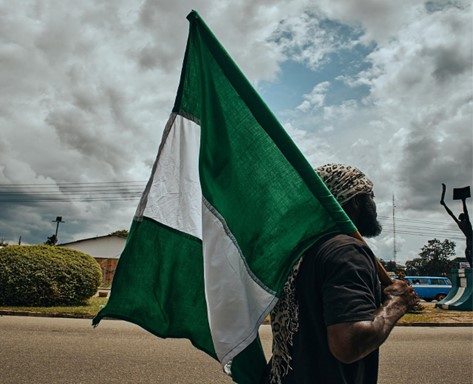
Nigerians protested across major cities against the prevailing economic hardship one year under President Tinubu. The country is witnessing its worst economic crisis in decades. 

According to the National Bureau of Statistics, inflation increased from 22.8 in June 2023 to 34.2 in June 2024. The government’s effort to cushion the effect isn’t yielding significant effort considering the removal of petroleum subsidies.

The unbearable cost of living has caused the protesters to demand that the government reduce inflation, provide job opportunities, and fight insecurity and corruption. 

However, if we look back in history, these demands are constantly recurring. Every successive government witnessed at least a protest highlighting these demands, but the demands remain unmet; the situation worsens yearly.

It asks whether the government listens to citizens’ frustration or whether the placard doesn’t state the demand clearly. 

As effective protest could be, it was never enough. After the protest, Nigeria needs to look inward to solve these challenges and alternatives that could proffer solutions after protests.

Advocacy is an important aspect of democracy. It plays a crucial role in holding government responsible. Advocacy on good governance would ensure that after demands are made, citizens can trace whether the government fulfills these demands. 

If advocacy were taken seriously, the government would take its responsibilities seriously and listen to people because there are different advocacy groups tracking government policies and actions.

It is pretty interesting to note that groups advocate good governance in Nigeria, but only a few Nigerians know them and their objectives. 

Also, most groups focus on the Federal government. Advocacy should include sensitizing the public on the responsibilities of other arms and tiers of government, especially the legislative. 

Elections occur every four years. Four to eight years of our lives are in the hands of people we decide to vote for at the polls. Their actions and policies affect our social-economic life.

Electing responsible leaders would save us from placards and fists on the streets expressing our frustration. Responsible leadership will discharge their duties as expected without the citizens on the streets with placards and fists to register their frustration.

While it is important to hold government accountable, citizens also have certain responsibilities. The change we clamor for needs to start with’ me and you.’

The responsibility of building a formidable society where the rule of law prevails does not lie solely on the shoulders of elected officials. Citizens need to take responsibility for their actions and remember that these actions have consequences. That way, a progressive society can be built.

It can’t be stressed enough that Nigerians must learn to hold grudges against the government. Government officials should pay for their inactions through elections, recall, or impeachment. 

The Constitution guarantees citizens the right to recall their representatives who do not serve their people. For instance, section 69 of the 1999 Constitution guarantees the right to recall a lawmaker if his/her constituents lose confidence in him/her.

We can’t continue to repay bad leaders with reelection every four years. Our lives depend on their actions. 

The government seems never to be bothered by the pressing issues and instead threatens with violence. It is audacious of a senate president to confidently tell Nigerians he would ‘eat while they are outside protesting.’ 

Protests should last more than a week in 365 days, and we should only engage when the peak of frustration is reached. Nigerians should be able to hold reasonable grudges at every opportunity. 

Protests should be more than placards on popular streets or in front of government offices.  It should teach lessons to the government and even the protesters on the streets.

Sulyman Pakoyi is a corp member serving at The Hope Newspaper.

Bodies of kidnapped marine hunters exhumed by police

By Sabiu Abdullahi

The Akwa Ibom State Police Command has exhumed the bodies of marine hunters who were kidnapped and brutally murdered by notorious criminals in Unyenghe, Mbo Local Government Area. 

According to the police, the victims were abducted on August 18 and buried in shallow graves with their heads dismembered.

Following a tip-off, the police launched a manhunt for the suspects, arresting five individuals, including the Village Head of Utit Antai, Chief Okon Asuquo Eteokpo, who was accused of aiding and abetting the criminals. 

The police also recovered 15 live cartridges from the suspects.

ASP Timfon John, the state’s Police Public Relations Officer, confirmed the incident, stating that the police are determined to rid the state of crime and criminal elements. 

The police are urging the public to report any suspicious activities or individuals to the nearest police station, as they continue to investigate the gruesome murders.

BUA Cement chairman blames dealers for frustrating ₦3,500-per-bag-price policy

By Sabiu Abdullahi 

AbdulSamad Rabiu, the Chairman of BUA Cement, has revealed that his company’s intention to sell cement at N3,500 per bag last year was thwarted by the actions of cement dealers. 

During the 8th Annual General Meeting held in Abuja, Rabiu stated that BUA Cement had sold over a million tons of cement to dealers at a price of N3,500 per bag, with the intention of passing the savings on to end-users.

However, he noted that dealers were selling each bag of cement to consumers for prices ranging from N7,000 to N8,000. 

Rabiu expressed frustration that the company’s policy was not being implemented as intended, saying, “So, a lot of the dealers took advantage of that policy. Rather than pass the low prices to the customers, they were selling at even double the price we sold to them.” 

He attributed the discontinuation of the policy to the company’s inability to regulate dealers, who were earning substantial profits due to high margins.

Rabiu also cited the challenges posed by the devaluation of the Naira and the removal of fuel subsidies last year, which made it difficult for the company to sustain the price policy. 

“We wanted that price to stay at that level, but dealers refused. So, we could not sustain that simply because we did not want to be in a situation where we are subsidizing dealers,” he said.

President Tinubu sympathizes with flood victims across Nigeria

By Abdullahi Mukhtar Algasgaini

President Bola Tinubu received the news of the devastation wreaked by floods on communities and farmlands nationwide with profound grief.

Recent data by the National Emergency Management Agency (NEMA) indicate that lives have been lost — with thousands of hectares of farmlands damaged and thousands of people displaced by floods across the country.

The President sympathizes with all victims of these ravages of nature, especially bereaved families, farmers, displaced communities, and those who have lost property.

President Tinubu re-emphasizes the need for a concerted effort to address existential environmental concerns and build a more climate-resilient and adaptive society.

The President prays for the repose of the deceased’s souls while assuring Nigerians that his administration, through the relevant agencies, will continue to provide the needed support for victims and timely warnings to mitigate the impact of environmental mishaps.

Tinubu sends condolences to Governor Zulum over passing of commissioner

By Abdullahi Mukhtar Algasgaini 

President Bola Tinubu extends his condolences to the Governor of Borno State, Professor Babagana Zulum, over the passing of his Commissioner of Finance, Honourable Ahmed Ali Ahmed. 

President Tinubu also condoles with the family of the late commissioner and describes his passing as a huge and painful loss. 

The President prays for the repose of the soul of the deceased and comfort for his family at this difficult time.

Reports showed that Ahmed Ali was mysteriously found dead yesterday in his room in Borno.

The cause of his death is still unknown as the state government hasn’t released any statements about the cause as of the time of filing this report.

Gombe: Government to pay ₦70,000 minimum wage

By Abdullahi Mukhtar Algasgaini

The Governor of Gombe State, Muhammadu Inuwa Yahaya, CON, has announced his intention to pay the ₦70,000 new national minimum wage to workers in the state.

The position of the governor was presented by the Deputy Governor, Manassah Daniel Jatau, PhD, who is also the Chairman of the Tripartite Committee on Minimum Wage Negotiation, Gombe State, during a press briefing at the conference hall of the Deputy Governor’s Office, Gombe.

Represented by the State Head of Civil Service, Alh. Ahmed Kasimu Abdullahi, during a Press briefing ,the Deputy Governor explained that the governor is highly committed to ensuring that civil servants in the state enjoy the 70, 000 new national minimum wage so that they can put in their best in serving the state.

He said, the governor has set a machinery in motion and the standing committee has been fine-tuning to see to the implementation of the new minimum wage.

“Government has set the machinery for the implementation of the new national minimum wage in Gombe State. Let me assure you that His Excellency the Governor is fully determined to pay the minimum wage. Unlike what you have been hearing in some quarters that the governor said he won’t pay. No, not at all. His Excellency is one of the governors in the fore front of payment of the new minimum wage”.

He said Governor Inuwa Yahaya has been magnanimous enough to willingly pay a 10,000 palliative in form of a wage award since September last year, across board to all civil servants in the state to cushion the effect of fuel subsidy removal which, automatically brought the minimum wage to 40,000 naira when other states couldn’t pay the 30,000 minimum wage.”

In the magnanimity of the Governor to alleviate the hardship occasioned by fuel subsidy removal, he approved the payment of 10,000 across board to all civil servants without anyone putting any pressure on him in order to make the civil servants feel better in the discharge of their duties. The additional 10,000 naira was because of his concern, feeling and regard to civil servants and it has made the minimum wage 40,000 instead of 30, 000 even when other states couldn’t pay the 30,000″.

He however pointed out that the negotiation committee has decided to separate the monthly salaries from the 10,000 palliative pending when conclusion is reached in order to prepare the Civil servants on knowing their exact salaries when the minimum wage is finally agreed upon.

“Effective from this month of August, the normal salary will be paid, then after two days the ten thousand naira palliative will be paid to help the worker know his actual salary and this will continue until the new minimum wage is agreed upon. We are now waiting for the salary table from the federal government before we commence the negotiation. Once we reach an agreement the implementation will begin and the 10,000 naira palliative will stop”.

The Nigeria Labour Congress Chairman, Mr. Yusuf Aish confirmed that this was the position reached at the tripartite committee meeting on the new minimum wage.” we had a brief discussion during our negotiation in the last 30,000 naira minimum wage due to some balance of some payment where we have agreed that this committee is a standing committee of minimum wage negotiation in the state. As a result this same committee met to begin negotiation on the new 70,000 naira national minimum wage. However,in our tripartite committee meeting we have agreed to wait for the time the new minimum wage table as approved by the federal government will be released. Whenever it is released we will start full negotiation with a view to reaching an agreement on what is to be paid in Gombe State”.

He also explained that civil servants will receive two alert messages beginning from this month of August, being the normal salary and that of 10,000 naira palliative urging the civil servants to be patient pending when the negotiations will be concluded.

The August protest has changed nothing!

By Musa Kalim Gambo

Whether you like it or not, populism is the giant stallion politicians ride to victory in every race. They strike at the cords of the utmost desires of the public, exaggerate the failures of the existing structure, and swear by the deities they worship that they possess the magical cure. They have the staff that can open up the Nigerian Red Sea of trouble to ‘let my people go.’

So, this upcoming August protest in Nigeria is another populist stage—dramatic personas will sing the chorus of what everyone already knows, what everyone already endures, and what everyone already believes is no longer humanly possible for the current crop of Nigerian politicians to address. 

#ENDSARS was a huge success (?), to a relative extent. Youths expressed their rage at an overtly abusive agent of the government, a special unit of the Nigerian police force, the Special Anti-Robbery Squad, or SARS, as it became notoriously known in 2020.

The protest was beyond police brutality and high-handedness. This was when the country was amid the coronavirus pandemic, economic recession, and poverty –you could perceive the pungent odor of poverty in the air. Life was becoming unaffordable and unpalatable. So if poverty provides the ground for hunger, then hunger was close relative to anger and frustration,  then it was clear that #ENDARS was bigger than the demand for an end to police brutality. 

It could be concluded that the frustration, hunger, and anger that hung in the air were the oxygen in the protesters’ blood. It was the crucial component of the energy that drove the protesters to the streets—although the activation energy came from the said ‘police brutality’ through the SARS.

Four years later, these youths moved on, and the country’s situation did not seem to display any sign of positive change. The only visible changes, obviously, must be said—there’s a proactive approach to leadership. Even if some government areas prove difficult and impossible, the leadership is resilient. 

It is now widely seen that the federal government has hastily increased the national minimum wage, granted autonomy to local government, launched a student loan scheme, and is vigorously engaging with stakeholders on the eve of this August protest.

The government is already taking important measures to prevent a protest from escalating into an ugly situation.

Here in the North, the Ulama have strong control over the youth, and they are already calling on youths to avoid violence or any action that could potentially undermine the nation’s fragile state. So, if the protest eventually occurs in parts of the North, it is expected to be peaceful. 

The Northerner respects leadership – good or bad, as long as such leadership does not directly conflict with his religious belief, especially the unity of God. But this calm doesn’t suggest silence! Neither does it imply agreement with the prevailing hardship. There will always be strong condemnation and damnation against the extravagant and ostentatious lifestyle of the political elite amidst hardship among the talakwa. This is sometimes expressed in rhetorics – with Allah ya isa.

This weekend, the Hausa political praise singer Dauda Kahutu Rarara, had his Facebook page deleted after users reported him over a song. In Rarara’s usual style, the song in question seeks to indicate that the life of talakawa has improved under the current Nigerian government. It can essentially be said that the song trivializes the grievances of the public against the government. 

Rarara is known to reduce the opposition to his benefactors to nothing, sometimes even mocking them using his rhythm and lyrics. So, this was undoubtedly one of those instances met with the appetizer of the upcoming protest.

Back to the protest—one thing is certain in this part of the world:  no matter how hard the poor fight, the elitist lifestyle that serves as a precursor to their pathetic condition cannot be changed. Protests do not improve the quality of life in this part of the world; they rather push the poor from frying pan to fire, leaving behind ashes of instability and unrest that go on long after the protest is over.

So it’s best to be wise and think twice – peaceful dialogue and engagement with the authorities. 

Musa Kalim Gambo writes from Kaduna via gmkalim.ng@gmail.com.

Nigerian polytechnic unveils Nigeria’s first electric tricycle, seeks support for mass production

By Sabiu Abdullahi 

The Federal Polytechnic, Ilaro, Ogun State, has made history by inventing Nigeria’s first electric automated tricycle.

The innovation, unveiled at the institution’s innovation centre, is a significant milestone in the country’s quest for sustainable transportation solutions. 

Rector Dr. Mukail Akinde stated the need for government and corporate support to commercialize the invention, stating, “Mass production of this tricycle will reduce importation, ease pressure on foreign exchange, and create job opportunities for youths.” 

The polytechnic’s Governing Council Chairman, Alhaji Garba Gashua, praised the innovation and promised to mobilize support for its commercialization.

The National Automotive Design and Development Council also commended the initiative, urging government assistance to expand the project. 

The innovation centre’s director, Jide Soyemi, highlighted the centre’s focus on cutting-edge technology, including Artificial Intelligence and robotics, with students contributing significantly to the projects. 

This groundbreaking invention has the potential to revolutionize Nigeria’s transportation sector, and with adequate support, it could become a reality.

President Tinubu: ‘Water don pass garri’

By Muhammad Danjuma Abubakar

In a democracy, citizens’ expression of choice for candidates is guided by factors such as hopes for peace, security, and welfare; better economic opportunities; effective and efficient management of resources; diversity and inclusion; practical respect for civil liberty and freedom; and regards for the constitution and constitutionalism, among others. This democratic choice is reflective of their collective aspirations for better well-being. 

From this expression of choice comes citizens justified high expectations from those they give mandates; this is why it is an indictment on the collective conscience of those elected to call for patience, prayers, and understanding from those who entrust them, as it undermines the initial trust and confidence placed on the elected by the electorates. 

Prayers, patience, and understanding are not required to run for office in Nigeria. Therefore, it is unreasonable for elected officials to demand these from the public to justify their failures.

Voters assess candidates based on their competence, experience, and fairness. Even during elections, voters are often impatient and look for leaders who will perform extraordinary feats and effectively meet their needs.

In this context, the expectations of Nigerians from President Tinubu, like those of Buhari, were high, spurred by his campaign promises and the political image and antecedents he portrayed to Nigerians.

This said, without fear of contradiction, President Tinubu was presented to innocent Nigerians with amplified messages like he is an architect of economic transformation, a builder of modern Lagos, a mentor of human resources, a top recruiter of quality talent, a bridge builder, a Nigerian with a broad national stature, and a kingmaker with little desire for power. Even the aftermath of his elections has shown a different picture. 

Even in the run-up to the election period, Tinubu stumbled and fumbled many times in words and deeds, either knowingly or unknowingly. 

First, he awed Nigerians by asserting that it was his turn to rule the country (Emi lokan) as if the elective office was an arranged turn-by-turn affair. Such a public statement, which appears to subordinate citizens’ interests, could be intolerable in more exposed democratic climes.

In addition to that controversy, he also went to the extreme by emotionally blackmailing his predecessor, Buhari, claiming he single-handedly made him president, as though he only constituted millions of voters.

As a politician, Tinubu’s political gamesmanship is second to none. This is why, knowing that large chunks of votes would come from the North, a Muslim-dominated region of the country, he decided to choose Shettima—a northern Muslim—as his running mate, despite criticisms from adherents of other faiths.

This move proved successful, as he was declared duly elected by the nation’s electoral umpire, INEC. But it is frustrating and worrisome that we are not better off as citizens and as a nation.

For the records, this is not suggesting that Tinubu’s predecessor left the power better than he met it, considering many shortcomings of his administration, including alleged high-scale corruption under his ‘nose’. Yet, the severity of this administration’s hardships and bad economic conditions surpasses’ Buhari’s.

Under Tinubu’s administration, life for the average Nigerian has taken a drastic turn. Poverty has deepened, and insecurity in the North has deteriorated much faster and worse than during Buhari’s tenure.

 This worsening condition is reflected in various negative indicators, including the soaring inflation rates in basic life necessities, such as food. 

An average Nigerian has not forgotten, not even at all, that during Buhari’s presidency, four good slices of meat were sold at N300 in the North. And a mudu of garri (cassava flour) was being sold for the same N300. The price of a mudu is now the price of a cup. 

Our situation today is akin to what a Nigerian street man would say: ‘Water don pass garri,’ which translates to ‘water has surpassed soaked cassava flour.’ This invariably means a terrible situation that has gone out of control, just as it appears to have gone out of the control of Tinubu’s presidency. 

The only way left for the suffering masses to voice their pains to a government that chooses to be tight-lipped is through peaceful protests legitimized under our constitution, which Tinubu himself led several times but is now not comfortable with and so perceived to be ruthlessly suppressing with state forces, harassments and intimidating the starving angry poor.

The DSS and police, expected to uphold professionalism, etiquette, justice, and respect for the rule of law, are focused on arresting and intimidating perceived ‘persons of interest.’ How on earth do the masses deserve such cruelty? The masses with whom lie the true powers in a democracy! 

As a matter of fact, why shouldn’t the common masses be outraged? Insecurity is at its worst. Inflation has soared to an unprecedented 33%. Amid pervasive hunger and widespread poverty, the government splurges on private jets and extravagant renovations for the VP’s residence. 

Meanwhile, educational institutions’ workers, including the NLC, are often treated dismissively, with no government-backed economic opportunities for the poor, the vulnerable, and even the educated youths. 

Having achieved his long-time ambition of becoming President, Tinubu only seems preoccupied with the temporary power of his office. His long arms of presidential powers reinforce the perception of vindictiveness against those perceived as either not in his good books or his predecessor’s appointees. 

Through the excesses of federal powers, it suffices to believe that federal powers subtly dabbled in issues outside its mandate, including the Kano Emirate saga, the Fubara vs. Wike conflict, and Ndume’s removal as Senate Chief Whip.

As for Sen. Ndume, are we to link his current travails to his choice in the run-up to the APC 2023 Presidential primaries?

 In the build-up to the APC Presidential primaries, Senator Ndume didn’t hide his mobilization and support for Tinubu’s co-contestant, Rotimi Amaechi. 

Talking about appointments, the current administration has also been accused of stripping northerners of their key positions and replacing them with Lagos men who had failed to deliver the same Lagos, which he was credited with its heights and development. 

One may rightly argue that the Buhari presidency, in a similar fashion, rewarded the region that gave him the highest votes through appointive positions. But it is worthy of note that Tinubu’s highest election votes also came from the northern region.

 Yet, this predominantly Muslim-dominated region is neglected. For instance, the Baro Port in Niger State, a significant project for the benefit of the entire North, is yet to receive any sincere attention, even with over 30 trillion Naira budget now in effect.

 For Tinubu’s presidency, water don pass garri since this is not what Nigerians voted for and hoped for. The administration is out of touch with people’s needs, and its actions are in sharp contrast with expectations.

Muhammad Danjuma Abubakar is a public affairs commentator and lives in Minna, Niger State. He wrote via muhammadcares4u@gmail.com.

Customs CG appoints new management members in acting capacity

By Sabiu Abdullahi

The Comptroller General of Customs, Bashir Adewale Adeniyi, has announced key management appointments and redeployments within the Nigeria Customs Service (NCS) following the statutory retirement of some management team members.

BM Jibo has been appointed as Acting Deputy Comptroller General of Finance Administration and Technical Services (FATS), while OA Alajogun takes on the role of Acting Deputy Comptroller General of Enforcement, Inspection and Investigation (EI&I).

IG Umar has been redeployed as Acting Assistant Comptroller General of Headquarters, OA Salefu as Acting Assistant Comptroller General of Training and Doctrine Command (TRADOC), BA Makinde as Acting Assistant Comptroller General of Human Resource Development (HRD), and T Bomodi as Acting Assistant Comptroller General of Enforcement, Inspection and Investigation (EI&I).

The appointments, made in acting capacity, aim to enhance strategic service delivery and are a testament to the officers’ exemplary services and dedication to the NCS.

Adeniyi congratulated the newly appointed officers, charging them to “redouble their efforts to ensure the Service achieves greater heights in its mandates of revenue generation, suppression of smuggling and trade facilitation.”

The Comptroller General also thanked the retired members of the management for their meritorious services.