Nigeria

Is prayer genuinely worthless? 

By Usama Abdullahi

I came across a post from a supposedly intelligent person in which he foolishly stated that prayer is worthless and doesn’t count. What surprises me more is that he’s a practising Sufi Muslim. It’s hard to believe that Sufism teaches people to utter things or act contrary to the teachings of Islam. Even though I’m neither a pro-Sufism nor share similar ideologies with any of them, I still don’t think Sufism teaches people to behave and write irrationally as that self-deluded person. 

He believes that being realistic or pragmatic is the only solution to the everyday security challenges troubling this country. While I agree with him that being practical is one of the surest ways that could help bring such age-long challenges into a state of discontinuity, yet, on the other hand, I disagree with him that our prayers are usually obsolete and worthless. Perhaps unknown to him, prayer is but a spiritual tool that fends, heals and grants the guided people some peace of mind.

Prayer is a beautiful and easiest way of expressing our deeply felt gratitude to God for his mercies upon our dear lives. It describes how thankful, devoted and religious we are towards our creator. The problem with that person is that he’s shifted his focus on God and thinks that his so-called realistic mind provides him with the answers to all the lingering security threats we are experiencing in this country. Well, that’s the biggest blunder one could ever make. 

When we stray or rather deviate from the right course, our minds often tell us things differently. Our minds would make us feel liberal and lure us into acting in the wrong way. Sometimes it makes us view things narrowly, which is not how they seem in reality. It simply corrupts and deceives us. The manner we reason speaks volumes about how we often tend to foresee the future.

As humans, we are capable of being wrong at any time. But it is funnily unrealistic to believe that your ideology is always appropriate and should be followed. Over the years, I have come to terms with the belief that one with higher academic qualifications doesn’t mean they are the most knowledgeable among people. I respect people’s opinions, but only when they appear rational. Abusive and persuasive views are sure to be avoided because they can instigate hostile disagreement among people like this.

I don’t see prayer as a worthless thing. Even if I feel it doesn’t count, I will keep on praying. Indeed, I believe in the miracle of prayers. I know God answers prayer. He has told us in the Holy book that we should supplicate and call on him whenever we get into trouble or need something. My or your prayers might be delayed but not rejected. When this happens, the Holy book always reminds us to be patient because patience pays. 

And prayer is also an act of worship. Moreover, it shows the level of one’s faith in God. I know we cannot pray all of our problems away without being pragmatic in confronting and dealing with them. Yet that shouldn’t give us the green light to decidedly underestimate the power of prayer, for it’s a natural remedy on its own. 

Prayer saved Prophet Isa (Jesus) from the brink of crucifixion. Prayer protected  Prophet Muhammad (S.A.W) and his companions against their ruthless foes. Prayer saved Prophet Abraham when thrown into the fire by his people and prayer attracted God’s sympathy and mercy over Prophet Yunusa (Jonah) when he got drown and swallowed by a whale. Despite going through hell, Yunusa still prayed to God and was happily rescued afterwards. So, how would you expect me to buy into your notion that prayer is worthless?

Usama Abdullahi wrote from Abuja, Nigeria. He can be reached via usamagayyi@gmail.com.

World Cup Qualifier: Federal civil servants close from work at 1 pm ahead of Nigeria vs Ghana clash

By MMuhammad Sabiu

Office of the Head of Service of the Federation has announced to civil servants that work would Tuesday be closed at 1:00 am so as “to mobilise support for the Nigerian Team [Super Eagles]” ahead of its World Cup Qualifier against Ghana.

This is contained in a circular signed by Dr. Ngozi Onwudiwe, Permanent Secretary (Service Welfare Office), on behalf of the Head of the Civil Service of the Federation.

The circular reads, “As you are aware, the Super Eagles of Nigeria will be meeting the Black Stars of Ghana in continuation of the 2022 FIFA World-Cup Qualifier, Playoff, (Return Leg).

“Consequently, I am directed to inform you that all offices will be closed at 1:00 pm on Tuesday, 29th March 2022.”

Dr. Ngozi also urged Permanent Secretaries to disseminate the information contained in the circular more widely.

Dear diasporans, stay where you are: Nigeria is at its worst

By Sadiya Abubakar Isa, PhD

It is precisely one year since we returned to Nigeria from Malaysia. My experience has been a roller-coaster ride since my return. I’ve seen the good, the bad and the ugly. 

Alhamdulillah for the gift of life and a loving family. The primary reason why we chose to return was that I missed my family so much. My son would always request to see his cousins – “I want to go to ‘Naijilia’, I want to see grandma”, he cried – until my neighbours once pled with us to take him to Nigeria. He has never been there. He just wants to meet his grandparents and cousins as he has only met them via video calls. I responded.

I thought about the consequences of extending my stay abroad; what if my parents also die (like my husband’s)? Does that mean my kids would never see any of their grannies? I pondered and discussed it with my husband. Maybe we should just return home after my viva. We thought it through thoroughly, and home it is. We finalised our decision.

Of course, there were other reasons. Our scholarship tenures ended towards the end of 2020, so if we had chosen to stay back, we would have to work extra hard to manage our finances. Additionally, the world was fighting a pandemic, a not-so-good time to job-hunt. So rather than being stranded abroad, we got additional reasons to fly back home. 

Many people, mainly family and close friends, tried hard to dissuade us from returning, but what do you do with homesickness? Or the fear of losing loved ones (again) without meeting them after seven years of being away? We overlooked all the negative news. We thought we could make a difference. We felt that we could directly contribute our quota to bettering our dear country by returning to Nigeria. We discussed, planned and strategised lots of projects to do when we return, but Nigerians aren’t ready – we realised. 

On that fateful day, we arrived in Nigeria on the 19th of March 2021. From the airport in Abuja down to Kano airport, the manners of the airport officials and the treatment of our luggage, we knew we were ‘home’. 

Sometimes I’m glad I’m home, but I often regret this decision. I have tried to settle down since, but I’m still in the process. Truth be told, if one is entrepreneurial, there are many business opportunities in Nigeria, but its challenges wouldn’t let you achieve the desired results in time. Even if you have a good-paying job, your salary is hardly enough this time, thanks to the inflation everywhere and the devaluation of the Naira. Moreover, with the overwhelming decline in Nigeria’s energy sector, things can only worsen over time. 

The vulnerability of an ordinary citizen in Nigeria is very discouraging, thanks to the exacerbating insecurity in our region. You can’t travel around peacefully. You can’t trust your neighbours, not to mention strangers. You can’t even take off your attention from the kids. So we are always living in fear – fear of the unknown. 

Basic amenities are still not basic in Nigeria. The first time my son experienced a light-out, he asked, “Mama, what happened? Please, put on the light, Mama I can’t see”. It was funny, and we all laughed, but it hit me very hard. 

Adopting has been quite tricky for my kids. We are all Nigerians, but my husband and I are more Nigerian than the kids are. Till today when writing this, they quickly have diarrhoea resulting from food poisoning and difficulties in eating local foods. The worst is when you don’t have good enough hospitals around, and It’s tiring. I can’t count how many times we have been down due to malaria or thyroid fever; watching your child suffer from illnesses that would have otherwise been avoided is appalling. It’s exhausting and sometimes frustrating.

We were mugged at Kofar Danagundi in Kano; we have escaped a series of phone snatching scenes. I have been duped and cheated by people I tried to help out of poverty. I still cannot explain the concept of almajiri to my son. He asked, “where is the ‘almadiri’s [almajiri] mother? Why does he have to beg for food?” I still haven’t answered his questions satisfactorily.

While travelling to Borno in mid-January, I experienced what it really means to be in a war zone after slightly escaping a Boko Haram attack. By the grace of God, we are surviving in this country. When we look back at life, we see how far Nigeria is from the developed and developing world. Even India, which is still struggling with all forms of corruption, offers a better life experience than Nigeria. 

I will not advise anyone to return to Nigeria if you ask me. Nigeria is currently at its worst. So don’t relocate to Nigeria if not for very tangible reasons. If you have a good job in your country of residence, please don’t come back. If you have a scholarship, do your best to prove your worth to be retained there. If you have a valid visa, look for a job; keep searching, make yourself useful in any way possible. If you can afford to stay there, don’t even think of returning. Yes, living abroad is expensive but also efficient.

It could also be exhaustive, but the basic necessities are available and accessible. You may pay too much tax but drive on good roads with cameras. You get to eat good food and sleep without battling mosquitoes. 

So if you choose to return, think about the future of your kids here, think about their safety and think about the opportunities they may be missing because of your decision. But then, Alhamdulillah for everything! 

Dr Sadiya Abubakar Isa can be reached via haleesad@gmail.com.

Yoruba land: The effects of discord among Muslims and the way forward

By Olorunkemi Barokah

The conflict between the southwest Islamic clerics has become something anomaly that needs to be addressed before it goes out of hand. I am on the ball on the clash of interest between those clerics that could be classified under ideological differences. 

The fact that one is practising Sufism or belongs to other Islamic religious denominations does not make them deserve being open to ridicule and other forms of abuse.

I’ve seen people ridiculing themselves on social media through verbal abuse and other forms of defamation. Well! I could assume that it’s not normal because it’s causing more harm to society than expected. 

From the logical point of view, I could assume that there is no saint among the religious folks causing confusion and distractions to the Islamic community in the Yoruba land. Instead, they are birds of a feather that flock together. They are not practising the so-called religious precepts they are preaching to society.

Islamic clerics are the ones who have brought misconceptions, confusion, and division into our midst by regressing the progress of Islam in the entire Yoruba territory. Their disagreement, ideological difference, lack of unity lack of maturity have brought nothing good to the progress of the Muslim community in the Western region. That threatens the future of the Muslim generations in the entire Yoruba race.

Typically, everyone has sects since diverse ideological views dominate the world.  Everyone cannot go in the same direction. Since our beliefs, aspirations, philosophies, and perceptions cannot be equal, we are all enhanced with different uniqueness. That’s why it is likely to have different schools of thought on the same course of studies. And the fact that there are different views does not make the notions of others irrelevant. Everyone will select their preferred theories based on their preference and the evidence that each theory assumes.

However, I guess morality should be the primary element of any sectarian credo since morality is the standard by which individuals are justified. That morality is based on kindness and the state of being responsible. 

It would have been better to promote Islamic consciousness to earn unity. Promoting moral duties would be better than promoting hate, superiority complex, and ideological difference, which will never help grow the progress of the so-called religious values and precepts preached.

Furthermore, in logic, there’s likely to have an argument raised to have a logical conclusion or fact about the subject involved. But, one sure thing is that there must be fact, an affirmative fact to conclude on, and if the truth is not within the premises, the conclusion would be probable. So, in this case, one cannot force the fact. Instead, the evidence on the hypotheses will make people accept the truth.

Nevertheless, I consider many of these religious sects and their self-acclaimed scholars irresponsible. They are only forcing their ideologies on people without setting a legacy, a pace, and values that will make people accept their claimed religious righteousness. Many scholars mentioned above and sects lack logical thinking, justice, beneficence, equity, finality, tolerance veracity, and even respect for persons. In their hands is where humanity is dying.

Nonetheless, in my opinion, it is a navel-gazing and anomaly act to terrorize others to accept one perception or belief. But on the contrary, those sects have seen crucifying and denouncing those who could not concur with their views as a diabolical enemy who should be subjected to verbal abuse and ridicule.

There are many ways of convincing others to believe or accept one’s standpoint without nagging on them. And it can be done without force or verbal abuse or exposing one another to ridicule. Dialogue remains the most veritable weapon in achieving that. Even if dialogue fails, visual/physical values would never fail. Since seeing is said to be believing.

Some of the notable scholars among the most populous ones doing better in promoting Islamic values are Imam Offa, the new Grand Mufti of Yoruba Land, Sheik Muheeden Bello, Mallam Yusuff Adepoju and others. I have never seen them abusing anyone or criticizing others.

The one I will ever respect is Imaam Offa for his contributions to the progress of Islam in the region. He’s the first acclaimed scholar to build a public library that will be available for anyone irrespective of their denominations and ideology. In addition, he’s currently building a top-notch Islamic hospital for Muslim benefit. This is what should always be promoted rather than fighting on General Islamic ethics obligations and particularistic obligations.

Moreover, if all these religious sects could demonstrate unity, I believe the various issues facing Islam today in western Nigeria will be reduced and deciphered! Issues like poverty, inequality in participation, and others.

These sects have all it takes to establish free Islamic schools, hospitals, libraries, a fort that could shelter the homeless Muslims. They could also set up law firms that will help get justice for vulnerable Muslims and even provide empowerment to the Young Muslims. 

Islam in this region needs more than fighting Sufists, Hamadiyyist, Salafiyyist, etc. Islam requires the collective efforts of all those scholars to help in all the areas above. So be united and stop your terroristic approach.  Enough of this quasi-intellectualism in a self-centred manner.

Olorunkemi Barokah wrote this article via olorunkemibarokah20@gmail.com.

Man commends FG for daughter’s safe return from Ukraine

By Ahmad Deedat Zakari

A parent simply identified as Amstel20111 on Twitter has commended the effort of the Federal Government of Nigeria, FGN, for the safe evacuation of his daughter from war-torn Ukraine.

He twitted a picture of himself backing his grown-up daughter on Saturday, March 19, 2022, while commending the Nigerian government.

“When my daughter got back home from Ukraine, I am grateful to God and the FGN, through all the agencies of government used for this reunion. None of you will mourn or sorrow over any of your children in Jesus name. Thank you. I am grateful, ” he twitted.

The post, initially made on Twitter, has been screenshot and shared on different social media platforms and has generated several pleasant reactions. Many people said amen and thanked God for his daughter’s safe return.

It’s not only our leaders’ fault

By Sadam Abubakar Soba

Bad government and the lack of good leadership have been a significant concern in Nigeria. Specifically, the rampant banditry cases, kidnapping and other social vices surge are primarily attributed to the leaders’ fault. However, when we ponder deeply, we will realize that in most cases, the said security threats and other aspects are due to our collective faults.

It’s a tradition of the uncreated creator of Allah (SWT) to bestow authority to a particular member of a large society. Meanwhile, no angel shall be sent from heaven to serve a position of power to humankind society. Therefore, we have to prepare the leaders who should serve us justly within ourselves.

Parents who condone and regard the triviality of their children’s wrongdoing should stop it.  In the old days, a neighbour could correct other neighbours’ children’s mistakes and receive commendation from the father of the disobeyed child. Unfortunately, the reverse is absolutely the case today. Children are allowed to be trained by the spoilt environment, the degenerate peer, and the western and local irresponsible media. Can we expect decent children from such an unorganized system??

Most youths of the present day but rare possessed the qualities of our forefathers. We lack courage, confidence, patience, venturesome to mention but few. Our excelled business tycoon did not wake up rich just a day; it takes a great deal of hard work and patience to amass wealth.

Up to date, our patriots get their reputations and continued prayers from living human beings because of their selfless service to humanity. Are we doing the same today?? Most bandits, kidnappers, and those who indulge in raping destroying the chastity of young girls and boys are not alien or transported from the outside world. They are the product of society, killing the same community.

Lawlessness, vandalism, and inappropriate usage of government infrastructure have been the day’s order. Of course, people would complain of the bad road causing accidents. But, as soon as good roads are constructed, overspeeding and reckless driving would cause more accidents.

People would complain of lack of Justice. Howbeit, they are not proponents of the reign of Justice in society. Go to villages and some urban areas and see how older people treat their young ones. This spread across every part of societal settings that make the whole day, weeks, months and even a year.

Let’s all go back to our senses, embrace our responsibility, practice the righteous deeds enshrined in our religion, do the needful, stop cursing leaders, and let’s all correct our mistakes.

Sadam Abubakar Soba wrote from Coventry, United Kingdom, via  sadamabubakarsoba@gmail.com.

Nigeria, NNPC and the oil windfall

By Kabir Fagge Ali
 
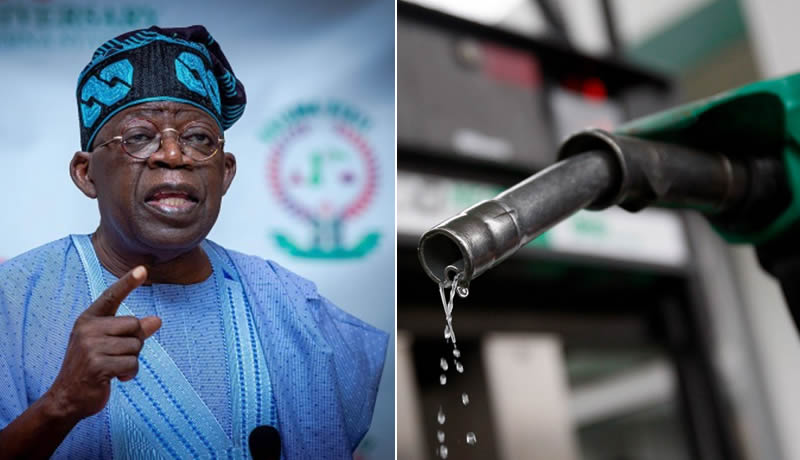
Presently, it is obvious that the time is ripe for the oil producing countries to smile due to the unprecedented increase in the oil price which eventually signalled an opportunity for a windfall. However, the situation is not the same for Nigeria as the country has plunged into deep fuel crises that has remained persistent for over a month. These crises border mostly on adulteration of the Premium Motor Spirits, PMS, also known as petrol, as well as its corresponding scarcity across the nation.

It can be recalled that, in the last three weeks, Russia has authorized a special military operation by invading the neighbouring Ukraine which caused the usually volatile crude oil prices to skyrocket beyond bookmakers. As a result, many countries are counting their fortunes in the windfall but unfortunately, Nigeria is counting its losses due to mismanagement of resources by the Nigerian National Petroleum Corporation (NNPC).

From the opening crude oil price of $76.03 per barrel at the beginning of 2022, prices have jumped to about $130 per barrel which is the highest price of the commodity for the last decade.

Just as noted in the Daily Trust Editorial of March 14, 2022, the gloom for Nigeria in the era of increased commodity prices was first forecasted by the world bank country director for Nigerian, Shubham Chaudhuri who said in January that Nigeria is at a point where rising oil prices might not be a good thing because although oil production might go up and crude oil revenue may increase, which in some point is a good thing.

The fiscal cost of petrol subsidy will also rise and while other countries may rejoice from the windfall, Nigeria will on the other hand be at the receiving end by reaping what it sows, courtesy of mismanagement of the oil sector over the past years by the NNPC. 

Truth be told, the consequences of the mismanagement of Nigeria’s four refineries is that the 440,000 barrels of crude oil supplied to NNPC daily for local refining is exported and never transparently accounted for. 

Meanwhile, the Group Managing Director, GMD, NNPC Mele Kyari claimed that N100 billion was sunk into the maintenance of the four refineries in Nigeria which is quite different from the N26bn already spent on supposed Turn Around Maintenance (TAM) on the maintenance of the refineries over the years which is an amount that will be sufficiently enough to build three new refineries as argued by many experts.

In addition, it is disheartening to learn that apart from being fleeced by NNPC and its collaborators in the name of oil subsidy or the strange term ‘under-recovery,’ Nigeria has failed to meet its oil production quota allocated by the Organisation of Petroleum Exporting Countries (OPEC). From an average of 2.1 million crude oil production quota per day, when the Buhari administration was voted into power in 2015, Nigeria is at present allocated 1.7 million per day, out of which it produces between 1.3 million and 1.4 million per day. This shortfall is a result of the lack of investment, as International Oil Companies (IOCs) have continued to exit Nigeria’s oil sector.

Despite the above scenario, the Ministry of Petroleum Resources, NNPC and its subsidiaries cannot convince Nigerians that there will be no gains from the current oil windfall. Such gains must not be frittered away under any guise.

The real question that is still begging for an answer is, can the NNPC convince Nigerians on how the country’s economy is not going to gain from this kind of oil windfall or how are Nigerian leaders being able to resolve this issue and what is NNPC’s decision on the lack of accountability to the people? 

Therefore, it is in the good interest of Nigerians that the National Assembly should investigate this issue thoroughly and ensures that money meant for the country indeed comes into the nation’s treasury unfailingly. The managers of Nigeria’s oil and gas sector must account for the gains that accrue to Nigeria from the current windfall.

Moreover, the NNPC in collaboration with the federal government and other stakeholders in the oil sector must as a matter of urgency expedite their efforts in fixing the moribund refineries in order to be functional enough to refine our petroleum products so as to meet the nation’s daily average consumption capacity of 62.5million litres of petrol. The time is long overdue to save the country’s ailing oil sector!

Fagge, is a student of Mass Communication Department, Skyline University Nigeria. He writes from Abuja, Nigerian and can be reached via faggekabir29@gmail.com

Minister Abubakar, epileptic power supply: the solution

By Zayyad I. Muhammad 

When ordinary Nigerians are faced with epileptic power supply, their first grumble is on Discos and the Minister of Power. They don’t bother where the problem is coming from because Discos and the Minister of Power are the two ‘entities’ who the common-man rely on electricity matters. Discos charge them for electricity bills, while they view the Minister as the overall head of the power sector in Nigeria, which is true. This is the dilemma every Nigerian minister of power and Disco faces.

Discos often blame poor supply from the transmission end. The Transmission Company of Nigeria (TCN) says the insufficient power supply experienced nationwide is due to low power generation by the generation companies (GenCos).- some of the problems are- Technical hitch in Egbin plant and poor gas supply etc

We must admit that the transmission sector has witnessed tremendous progress – Nigeria witnessed only four grid collapses in 2020 as against the 42 in 2010.

A total system collapse means a total blackout throughout the country, and this is one of the biggest challenges Minister for Power, Engr. Abubakar D. Aliyu has to get an alternative to- because once the country witnesses a total grid collapse, Nigerians will quickly forget the progress made in many years- thus, for example, a 24-hour failure will erase a one-year success.

What should the Minister and his team do to bring a shorter-term solution once the country witnesses a total system collapse? The answer – we need a reductionist approach. Our electricity sector operates on a holistic system  – for example, once the Egbin Thermal Power Station in Ijede / Egbin, in Ikorodu, Lagos witnessed a technical problem, a consumer in Jimeta, Adamawa state will feel the impact, thus blaming his Disco and the Minister of power

The best solution to tackle this issue is Neighborhood Solar Power and Wind-power model. Each neighbourhood in Nigeria that is connected to the national grid has an electricity-transformer site. Technicians and experts in the Ministry of Power, the Rural Electrification Agency (REA), and Discos, in collaboration with other private firms, should look into a model to build solar panel farms and mini wind turbines at these transformers sites or near it at each community. This will help connect the neighbourhoods with alternative power –this will allow members of a community to share the benefits of solar energy when the national grid collapses, even if they lack solar panels on their properties. This system is being operated globally; Nigeria should benchmark it.

Lightweight, flexible wind turbines and small solar panel farms within the neighbourhood can be used to power communities when the national grid collapse without the people feeling any impact- thus, the Minister of Power and Disco will be free from public criticisms. At the same time, Gencos will have ample time to rectify any technical glitch. 

Though Community solar panel farms and Community wind turbines are basically for the population in rural areas without access to the national grid, Nigeria’s electricity system should be a combination of a  ‘hybrid power system’- national grid, mini solar, and mini wind turbine at communities. A  decentralized electricity supply system that alternates between the national grid and renewable energy can be one of the best technical options available for Nigeria. 

We must admit that these two alternatives- neighbourhood solar and wind turbine are not new to the government – some reports say there are ten large-scale Solar Power Plants in Mega Watt in some locations in Nigeria. Nigeria has not put much interest in such a project because of the country’s capacity to generate enough power from its plants. However, transmission and distribution bottlenecks should be a big reason for the government to seriously look into utility-scale solar and mini wind turbine power generation in neighbourhoods to serve as an option when the country is faced it total or partial national grid failure, as the country is witnessing now 

Zayyad I. Muhammad writes from Abuja via zaymohd@yahoo.com.

Social media addiction and its adverse effects on youths

By Mukhtar Garba Kobi

Communication is one of the fundamental means people command, caution and interact with one another. It is as old as human beings because the first created beings (Adam and Eve) communicated. Primitive generations used so many ways in sending signals or messages to other people. They include beating metal gongs, lighting fires on hills, blowing flutes, beating local drums, firing Dane-guns, intense ululations, especially during marriage ceremonies, etc. Moreover, communication passed through generations. More advanced platforms and channels are created to enable people to interact with fellows in far and near places with ease from their comfort zones. 

Every day, sophisticated communication gadgets are invented and taken to markets. The more advanced features are added to social media platforms, the easier messages and information are conveyed to target audiences. According to Global Digital Overview, Facebook has 2.910 billion users, Instagram has 1.478 billion, Twitter has 436 million, TikTok has 1 billion, and WhatsApp has 2 billion active users.

With smartphones and data, people interact live through video calls, share pictures, upload movable images and audio messages, and get instant replies. Yet, despite these developments, youths in Africa and other parts of the world are so addicted to social media that some could not spend 30 minutes without logging in instead of studying for a better future, assisting parents with chores, learning skills to be independents, etc.

Regrettably, some users enjoy chatting in darkness by offing light, not knowing the brightness from phones screens harm their eyes. An eye doctor working with Makka Specialist Hospital in Bauchi, Abba Salisu Abba, explained that the pupil constricts when the light is more than what eyes can accommodate. But when the light is too low or in the darkness, the pupil dilates to search for available light. He further revealed that frequent staring at a light could result in itchy, watery, reddishness of eyes and, if nothing is done, could lead to blindness.

Some parents purchase phones, laptops, and tablets primarily to aid studies of their wards without regular supervision; it is unknown to them that most of their wards use such devices for irrelevant chatting or streaming pornographic content in late hours.

These days, young ladies in recent years shamelessly upload videos of them on TikTok dancing seductively in half-naked dressings; the act pushes some youths to rape teens, work sexually for sugar mummies or pay to satisfy themselves in brothels. Unfortunately, hours spent interacting with friends on social media platforms by students are high compared to the short time given for their studies or research; that has contributed hugely to mass failure during exams. A student from the State Polytechnic even told me that he often sacrifices his meal money to buy data primarily for chatting with friends. Sadly, many lost their lives after applying for jobs advertised on social media. They were pushed to early graves by their employers in unspecified locations. 

Shallow-minded adults and teenagers who heavily use social media platforms tend to believe whatever they come across and easily influence peers, thereby influencing them to snatch phones, kidnappings, or do other criminal acts to possess what celebrities have been bombarding them with on social media platforms. Consequently, most people in Nigeria believe that building crime-free societies is a collective responsibility, but only a few contribute in that direction. Parents no longer check the kind of postings, comments, pictures being uploaded or whatever their children are doing on social media platforms but are good at condemning others.

In summary, it is sacrosanct upon parents to be acting as watchdogs over the activities of their teenage sons and daughters on social media platforms. Parents should be collecting their devices and keeping them from them for days to know the messages coming in or people they are interacting with; this would help them determine the best decision.

Social media laws should work on all and sundry irrespective of positions, backgrounds or influences. The law should provide punishment for users sharing violent content, abuse, or false accusation to innocent individuals or groups to serve as a lesson to others. Furthermore, posting educational content on social media should be encouraged and youths doing that need to be rewarded by authorities; doing so would significantly improve students’ academic performances, thereby leading to good results.

Mukhtar Garba Kobi Wrote from Bauchi State.

Intellectuals

By MA Iliasu

More than seventy years ago, the American or rather the undeniably global economist for all that he has influenced with his precise textbook, Paul A. Samuelson, wrote an article titled “Intellectuals”. He uncovered the fallacies of the established Intellectuals of the American society. To him, how they author books that only their friends and students can read, venture discourses only they can engage in, and prescribe policies that have zero respect for emotions, feelings, cultural intelligence and any mortal touch that may agree with common decency epitomises their names: “The Intellectuals”.

In Nigeria, we’re not short of them. Currently, we’re in an international political menace in which Russia put efforts to decimate Ukraine. The moral, ethical, physical, metaphysical, philosophical, epistemological, and even the economic motives and justifications flow freely on the internet. I will not tell you my own, but I’m relaxed knowing about others’. However, “The Intellectuals” are only interested in prescribing books and journal articles, publishing eccentric articles with dense grammar to vividly show they’re not for public consumption but only produced to satisfy the demand of their inner circle. Meanwhile, they bastardise, thus urging the public to take every piece of information on the conflict they may get from the BBC, VOA or CNN with a pinch of salt like the tyrannical antisocials they’re, despite not giving the public any alternative. That’s “an intellectual” for you.

To be precise, this is not a musing on Russia and Ukraine. It’s about the nerve-racking fuel scarcity that has bamboozled the Nigerian federation over the previous month and current. The one started with the speculation of the economically controversial subsidy removal that triggered the ever wicked economic class into succumbing to their Animal Spirit through hoarding. After all, which non-God-fearing mogul would allow the chance to double his revenue off the oppressed lower class without any effort? There’s none!

Discussions on the Nigerian political economy, especially outside university classrooms, are more dominated by the fake, impractical ideal of national consciousness and patriotism. And it takes place even though at no point does the term “Nigeria” ever mean the same to everybody; the poor wanderers, the profit makers, capitalist exploiters and the political hoodwinkers. And still, the Intellectuals want to build our economic skeleton upon that nonexistent psychological pillar. Is it possible?

Nigerians are the brilliant species who have gained relevance by declaring “Economics nothing short of common sense”. And that’s why they despise efficiency and efficacy despite their horrible love for eccentricity. But, if that’s not the case, how do you justify persuading people to buy what’s expensive when what’s cheap and of superior quality is available?

Through patriotism, they say. After all, people should use their hard-earned money to fund the ego of the anti-logic system of governance. For in the future, they say, there’ll be wonders. Meanwhile, the only wonders we’ll ever see is the one that reflects on the ironic, unethical, inefficient and anti-liberal, unreasonably orthodox, the often mix of the two, logic of the Nigerian Intellectuals that I’ll disclose below:

“Let’s stop importing fuel till we achieve self-sufficiency. That should be our way. A country with the mineral muscles of Nigeria should not be importing fuel. Let that be our moral standard. Let’s endure all the suffering for now. Let’s be patriotic. We’ll be alright shortly afterwards.” – isn’t this a lovely musing?

Do you disagree? Yes, I know you do. You’re an economist! What I want to ask is, why do you agree with the same pattern of thinking and logic when it’s used on Rice? – One reason:

Fuel scarcity & inflation is pressing every aspect of my society, up to the bottom, thus the outrage. And mostly the rich, who have limousines and Corollas to drive home from work and to the wedding evenings at the city parks, to power gigantic generators for their freezers and air-conditioners, and to calm their nerves from the so-called working stress. Then the industrialists who power their workshops and trade zones. And the artisans who harness all the profits. And that’s why nobody wants to hear anything long English Language, solution or no!

But rice scarcity & inflation, that one only press the poor, the bottom tier. That’s why every time we speak, they quote the models of David Ricardo & Keynes. That’s the only time they remember Ricardo and his comparative advantage or Keynes and his misunderstood, poorly-implemented government intervention. That’s the only time they want to disagree with Audu Ogbeh. So maybe Economics is more than common sense, after all. Thus they even go deeper into the mathematical models of Euler and Nash.

Everybody is acknowledging the need for government to take off its hands from fuel because it’s unfriendly for the lords at the top and the intellectuals at the middle, which is a policy prescription that sanity has advocated forever. But nobody wants to acknowledge the need for government to take its hands off the food industry, perhaps because the top dogs eat what they want from wherever they want, while it’s the bottom tier servants of God that are dying of hunger and historical inflation.

But why the lack of consistency?

Confusion is the reason, which can also disclose the lack of coherence along with discussions of such relevance. In Nigeria today, you’ll see an acclaimed intellectual who’ll die for his liberal romanticism supporting the economics of border closure. It makes me curious how possible it’s for Friedrich Hayek and Paul Samuelson to eat at the same table without arguing? Well, I think that’s the probability of the logic being consistent & cogent. Likewise, the essential orthodox wondering around the idea of ‘unpolice-able’ modern technology despite every magnum opus of their scholarly background suggesting otherwise.

The problem of the American society we love to imitate when it suits us (to quote Chinua Achebe) is that they believe in economics too much. But, interestingly, in Nigeria, they don’t believe in economics at all. And that’s why both are paying the price of extremism while hiding behind Keynesianism. In their experience, greed has taken over everything. But in our own, the economy has become a prison. And the wardens holding the keys are the intellectuals who will rationalise anything.

MA Iliasu wrote from Kano via muhada102@gmail.com.