Nigeria

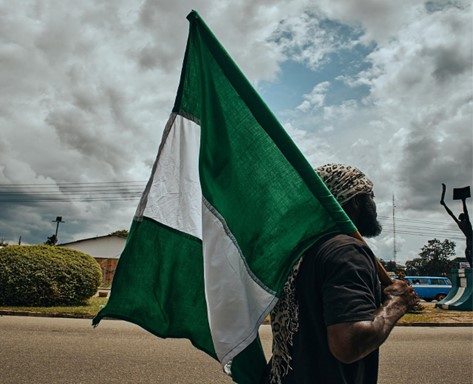
Neocolonized Nigeria

By Sunusi Abubakar

With a growing prime working-age population, considerable natural resources endowment, good economic potentials, large labour forces, highly motivated entrepreneurs, vast domestic market, strategic coastal locations, large and fragile agricultural land, and developing ICT sector, Nigeria has favourable economic potential which could lead her to be among the top 20 economies in the world. 

But problems like corruption, nepotism, political instability, inadequate infrastructures and poor economic management are failing its journey to greatness. Unfortunately, all the aforementioned regressive factors are not natural but a breed of artificial additive called colonialism.

Colonialism was first practised by empires such as Ancient Greece, Ancient Rome, Ancient Egypt, and Phoenicia. From about 1550 B.C. onward, these civilisations all extended their borders into surrounding and non-contiguous areas and established colonies that used the physical and population resources of the people they conquered to increase their own power. This resulted in capitalism and imperialism and metamorphosed into neo-colonialism. 

Ancient colonialism is seen worldwide as the origin of capitalism, which is said to be the source of the power and accumulation of Western countries. 

Capitalism is said to emanate from the Cambridge School, a group of economic philosophers. The group was led by the neoclassical economist Alfred Marshall, with Walras, Merger, and British economist John Maynard Keynes on the board. The system always accepts the market system as the best way to organise economic activities in society. They believed in allocating resources through the market forces of demand and supply. 

For them, the commodity is said to be a thing when it is produced to make money. They maintained that the source of their capital accumulation is through profit gained and plough back for future profit, but many people are against this idea. They were cautioned by German economist and human rights lawyer Karl Marx, who described the process as primitive. 

Marx argued that their capital is wherever in the world, made initially through the enclosure movement, dislocation of feudal agrarian productions, huge price inflation, monopolies of trade, acquisition of colonies, extortion enslavement, entombment in the mines of the aboriginal population, looting of indie and Africa as well as hunting of black skins. 

However, capitalism is seen worldwide as the maceration of the proletariat, a low class in society. Capitalism always favoured the bourgeoisie, the owners of the means of production. Moreover, the history of capitalism can only be completed by mentioning the name of the Italian philosopher Machiavelli. 

Machiavelli was the founder of the theory of Mercantilism and a major contributor to the development of capitalism. Mercantilism is an economic system which supports the development of capitalism and the exploitation of the proletariat through the accumulation of monetary reserves by positive balance using the import and export of finished goods. 

Shortly after some economic revolutions that emancipated some countries in Europe, Africa, and Asia, the colonial masters, who were the champions of capitalism, veered to continue their colonial agenda through imperialism. They came up with an idea that saw the integration of world financial institutions like the IMF and World Bank to recolonise former colonies through debt conditionalities. Many African countries fall into their trap. Some managed to escape while others were still bedevilled by it.  

As imperialism seemed ineffective, those colonial masters changed their sinister agenda to neocolonialism. Neocolonialism is also a system that is aimed at giving developed economies indirect control over their former colonies and access to their system of economy, politics, militarism, idealism and other policies to achieve two objectives:

1. Keeping those colonies within the world capitalism system.

2. Preserving the condition of exploitation and unequal exchange between developed and developing economies. 

Like other developing economies, Nigeria is also suffering from the problems of neo-colonialisation.

Neocolonialism paved the way for the developed economies to wage a silent war on Nigeria’s industrial sector indirectly through the development of manufacturing industries and technological advancement. They electrified, mechanised, and chemicalised our agricultural sector. Their dominance mandated our farmers to use pesticides, insecticides, and other agrochemicals mainly produced in their countries. 

Moreover, education is also a victim of neo-colonialisation in Nigeria. The educational sector in Nigeria is neocolonialized through privatization. The government has intentionally neglected our educational sector, leading citizens to enrol their children in private schools at home and abroad. 

Neocolonialisation has also victimised Nigeria’s political landscape. It also affects our system of administration, military,and foreign policy. Western countries have an indirect involvement in Nigeria’s electoral processes through this. They use observation to interfere cunningly in the choice of our leadership. 

However, the ongoing insecurity problems affecting Nigeria are another form of neocolonialism. It is through which Western countries exploit our economy and enjoy the remaining in the name of peacekeeping, intelligence assistance and arms procurement.

With these problems on trend, this is a healing time. It is a time for reflection on what can be done to help Nigeria cunningly harness its economic potential. It is a time to preach against government policies that align with a neocolonialist agenda through dialogue and moral suasion. 

If we fail to reflect as a nation, Nigeria is bound to go back into the decades of direct subjugation, economic exploitation and brutality.

Sunusi Abubakar wrote via muhammadsunusi29@gmail.com.

Bandit leader Bello Turji makes surprise call for peace 

By Sabiu Abdullahi

Notorious bandit leader Bello Turji has released a video message urging an end to the violence between Fulani and Hausa communities.

Turji, who has been linked to various criminal activities, including kidnapping and armed robbery, appealed to his fellow Fulani and Hausa people to lay down their arms and work towards peace. 

The video message, obtained and translated by PRNigeria, reveals Turji’s concerns about the ongoing conflict, which he believes is unwinnable and will only lead to further bloodshed.

He claims that the violence has resulted in the loss of many lives, including those of his own relatives, and that his group had taken up arms in self-defence. 

Turji also criticised the government and security forces for failing to protect Fulani people, alleging that they have been targeted and killed.

He warned that his group would continue to fight if the killing of Fulani people does not stop. 

Turji also called on community and religious leaders to facilitate peace talks, stating, “We need peace, and we need it now.”

This unexpected plea for peace comes amidst ongoing violence and insecurity in the region, with many calling for an end to the bloodshed and a peaceful resolution to the conflict.

Borno govt forms committee to implement N70,000 minimum wage

By Uzair Adam

The Borno State Government, under the leadership of Governor Babagana Zulum, has established a 12-member committee to oversee the implementation of the new N70,000 minimum wage.

This development was announced in a statement issued by the Secretary to the State Government, Mr. Bukar Tijani, on Wednesday in Maiduguri.

According to the statement, the committee will be chaired by the State Commissioner for Budget and Planning, Mr. Babagana Mallumbe, with the Head of Service, Mallam Fannami, serving as Co-chairman.

The Permanent Secretary of the Ministry of Establishment, Mr. Sadiq Mohammed, has been appointed as the committee’s Secretary.

The committee is tasked with analyzing the federal-level consequential salary adjustments to determine how they can be applied, either fully or partially, in Borno State.

It will also work on devising a sustainable salary adjustment plan that considers the unique circumstances of the state.

Other members of the committee include the state Attorney-General and Commissioner for Justice, the Accountant-General, the Auditor-General, and the chairmen of both the Nigeria Labour Congress (NLC) and the Trade Union Congress (TUC).

It was also gathered that the committee’s efforts will be crucial in ensuring a fair and realistic wage structure for civil servants in the state.

President Tinubu condoles with Yobe over killings, promises to bring perpetrators to justice

By Abdullahi Mukhtar Algasgaini

President Bola Ahmed Tinubu commiserates with the government and the people of Yobe over the tragic loss of lives at Mafa in Tarmuwa Local Government Area of the state.

President Tinubu also extends his condolences to bereaved families, and condemns the killings as an atrocious and cowardly act of terror by a degraded group of criminals.

He prays for the repose of the souls of the deceased, speedy recovery for the wounded, and assures the people of Yobe State that the perpetrators of this sinister act will have an inevitable encounter with justice.

Grade matters!

By Abdurrazak Muktar

Grades play a crucial role in determining academic and professional opportunities, particularly in Nigeria. The importance of graduating with high grades, such as a 2:1 or a First Class, cannot be overstated. These distinctions not only reflect a high level of academic achievement but also significantly influence career prospects and societal perceptions.

In Nigeria, a First Class degree is often seen as a mark of exceptional capability and dedication. Graduates with such distinctions frequently find themselves in advantageous positions, receiving more attention from employers and academic institutions. This respect is not merely symbolic; it often translates into tangible benefits, such as better job opportunities and career advancement.

The significance of high academic grades is underscored by how people’s attitudes shift upon learning of one’s academic achievements. A First Class graduate, for example, can command immediate respect and open doors that might otherwise remain closed. This is not just about the prestige associated with such grades but also about the perceived reliability and potential of the individual.

The connection between academic success and professional opportunities is evident in real-world scenarios. For instance, prominent individuals in various fields often inquire about a candidate’s degree classification during recruitment or networking conversations. This highlights the weight that academic performance carries in shaping career trajectories.

Moreover, discussing school grades has become a notable topic in the Arewa media space. This debate is one of the region’s most engaging and influential trends, reflecting how deeply academic success is intertwined with personal and professional development. 

The discussion around grades not only fosters a competitive academic environment but also serves as a catalyst for broader conversations about educational standards and career prospects.

In conclusion, while opportunities exist for all graduates, those with higher academic achievements often have enhanced prospects. The debate around school grades, especially within the Arewa media, underscores the critical role that academic performance plays in shaping futures. Thus, striving for excellence in one’s academic pursuits is a matter of personal pride and a strategic advantage in the competitive landscape of career opportunities.

Abdurrazak Muktar (Makarfi) wrote via prof4true1@gmail.com.

NNPCL raises petrol price to N904 per litre in Kano

By Uzair Adam

The Nigerian National Petroleum Company Limited (NNPCL) has increased the pump price of Premium Motor Spirit, commonly known as petrol, across the country.

In Kano, the price has risen to N904 per litre at NNPCL filling stations.

Contrary to some reports, the Federal Government has denied instructing NNPCL to sell petrol at ₦1,000 per litre.

This clarification was made in a statement issued by Nnemaka Okafor, the Special Adviser on Media and Communication to the Minister for Petroleum Resources (Oil), Heineken Lokpobiri, on Tuesday.

The statement dismissed the report as false and intended to cause confusion in the oil industry.

Despite this, an internal message circulating allegedly from NNPCL suggested a different price point.

The message indicated an upward review of the petrol pump price from N617 per litre to N897 per litre, effective September 3, 2024.

The Daily Reality on Tuesday gathered that NNPCL is now officially selling fuel at N904 per litre.

However, the correspondent noted that the station in Hotoro, Nasarawa local government area, was not dispensing fuel to the public, except to familiar individuals, resulting in long queues.

One motorist expressed frustration over the situation, stating, “This is unfortunate; even with the price hike to N904 per litre, only those they know are being allowed to buy fuel. We have been here for over two hours.”

An anonymous staff member at the station revealed that the directive to increase the pump price came from NNPCL on Tuesday.

JUST IN: Dangote refinery begins petrol production

By Uzair Adam

The Dangote Refinery, with a capacity of 650,000 barrels per day, has begun producing petrol.

The announcement was made on Tuesday by Alhaji Aliko Dangote, the refinery’s Chief Executive Officer, while addressing journalists about this significant milestone.

The $20 billion refinery, built by billionaire businessman Aliko Dangote, commenced operations in January, initially focusing on the production of diesel and aviation fuel.

Further details are expected shortly.

Resident doctors call off strike, demand release of abducted colleague

By Sabiu Abdullahi  

The Nigerian Association of Resident Doctors (NARD) has called off its seven-day warning strike, which started on August 26, following a virtual meeting of its national executive council (NEC) on August 30. 

The strike was prompted by the continued detention of Dr. Ganiyat Popoola-Olawale, a member of the association who was abducted on December 27, 2023, in Kaduna. 

In a statement, NARD said it had suspended the strike to allow for continued engagement with stakeholders and monitoring of developments in Dr. Popoola-Olawale’s case.

The association has vowed to reconvene in three weeks to reassess the situation. 

NARD expressed gratitude for the increased awareness and government intervention generated by media coverage of Dr. Popoola-Olawale’s abduction.

Her husband, Squadron Leader Nurudeen Popoola, was released on March 7, 2024, but Dr. Popoola-Olawale remains in captivity. 

Work is expected to resume at all healthcare centers nationwide on September 2, 2024, at 8:00 am.

We’ll soon tackle security challenges across Nigeria—COAS

By Abdullahi Mukhtar Algasgaini

Chief of Army Staff Taoreed Lagbaja has reassured Nigerians that the military will soon surmount the prevailing security challenges. 

Mr. Lagbaja stated this during the COAS combined second and third Quarters Conference 2024 closing ceremony on Thursday in Uyo. 

“The reassurance is based on the security briefings we received from different army formations and commands across the country. I must say that the feedback from the various commanders is encouraging.  

“They show that the prevailing security challenges facing our dear nation, though daunting, are surmountable and that we are indeed on the right path to victory,” Mr Lagbaja said. 

He also expressed the loyalty and commitment of the Nigerian Army to the country’s constitution as well as the promotion of national interests and values. 

“I assure Nigerians of our resolve to continue to collaborate with its sister services and other security agencies to ensure security of lives and properties across the country.

“I encourage the law-abiding Nigerians to continue to support the government and the security forces in the efforts to make our country safe and prosperous,” added the army chief. 

He thanked participants for their sincerity and passion throughout the deliberation, just as he stated that the secretariat had adequately captured the decisions made during the deliberations.

Bridging the education gap in Northern Nigeria: An approach through public-private partnership

By Fodio Ahmed 

The education crisis in Northern Nigeria has reached alarming proportions, with millions of children out of school and illiteracy rates soaring. We must take immediate action to address this crisis, and a private and public partnership led by the Federal Government is the way forward.

The federal government must lead the implementation of an ‘Emergency Education Liberalization of Northern Nigeria.’ This initiative should not only focus on reducing the number of out-of-school children and setting targets for illiteracy reduction but also on implementing a comprehensive strategy that leaves no stone unturned in achieving these goals.

To achieve this, a task force led by the President, with a prominent Northerner as Deputy 1 and a foreign expert as Deputy 2, should be established. This task force should collaborate with international organizations like UNESCO, the UN, the World Bank, and foreign governments like Saudi Arabia, UAE, and Morocco.

Furthermore, local and international philanthropists, Northern business leaders like Dangote and BUA, and UN Deputy General Secretary Amina Mohamed should be involved in this initiative. The private sector should manage funds to ensure transparency and efficiency.

In addition, Northern governors and LGA chairmen should submit lists of schools and enrollment figures. At the same time, traditional rulers, Imams, Pastors, celebrities, musicians, and social media influencers should be engaged to promote education. Skills acquisition centers should be established, and technical colleges should receive more equipment.

Finally, I firmly believe this approach can make significant strides in addressing the education crisis in Northern Nigeria. The time for action is now, and we must work together to ensure that every child in the region has access to quality education.

Fodio Ahmed wrote via penfodioahmed@gmail.com.