Niger

Nigerien army killed more than 100 ‘terrorists’ in deadly attack

By Abdullahi Mukhtar Algasgaini

Niger’s army said Thursday it had killed more than 100 “terrorists” during air and ground operations in response to a deadly attack against soldiers near the Burkina Faso border.

A coalition of armed groups killed 20 troops and one civilian in the region of Tera in jihadist-plagued western Niger on June 25, according to the army.

“More than 100 terrorists have been killed since,” the army said in its latest bulletin, adding that its operations were ongoing. The army had said in its previous bulletin that it had killed around 30 “terrorists” in the region the day after the Tera attack and had “destroyed their means of war” in an air raid.

Tera lies in the Tillaberi region bordering Mali and Burkina Faso where rebels linked to Al-Qaeda and the Islamic State group have waged a bloody insurgency for almost a decade.Civilians are frequently targeted in the area by jihadists, prompting many people to flee their homes.

Freight trucks from Niger also pass through Tera, arriving every month from the Togolese port of Lome, via northern Burkina Faso.

FG delegation meets with Benin Republic to reopen Tsamiya Border

By Sabiu Abdullahi 

A high-level delegation from the Federal Government of Nigeria met with counterparts from the Benin Republic on May 21, 2024, to discuss the reopening of the Segbana-Tsamiya border post in Kebbi State.

The meeting aimed to fast-track the operationalisation of the border post, which is expected to enhance regional integration and boost economic activities. 

The Nigerian delegation included the Honorable Minister of Foreign Affairs, Alhaji Yusuf Maitama Tuggar, Executive Governor of Kebbi State, Dr. Nasir Idris, Comptroller General of the Nigeria Customs Service, Adewale Adeniyi, and other dignitaries.

The Benin Republic delegation was led by the Director General of the Benin Customs Administration, Adidjatou Hassan. During the meeting, the delegations discussed comprehensive issues surrounding the border post’s opening, including logistics, security measures, and economic impact.

Feasibility studies were presented, outlining expected benefits such as increased trade and potential challenges that might arise.

The deliberation also included setting timelines and identifying necessary infrastructure to ensure a smooth operation. 

The Comptroller-General of Customs, Adewale Adeniyi, indicated the importance of engagement between the two countries to enhance the economy.

“To ensure closer working and economic relations between Nigeria and the Benin Republic, we have been working with our colleagues from the Beninese Customs Administration to ensure that we bring the economy together through easy border crossing with goods,” he said. 

The Director General of the Benin Customs Administration, Adidjatou Hassan, appreciated the move to reopen the border, which will strengthen trade activities and bilateral ties between the two nations.

“This development is expected to increase economic cooperation and strengthen bilateral ties between the two nations. We are committed to sustaining our seamless collaboration with the Nigeria Customs Service while enhancing security at our borders and trade activities,” she said. 

The meeting concluded with a summary of the key points discussed and a formal statement of commitment from both sides.

An agreement was reached to schedule a follow-up meeting in June 2024 to monitor progress and address any outstanding issues.

A bi-national committee meeting was also agreed upon, with a defined commitment for subcommittees to submit their reports within two weeks to streamline seamless efforts towards border reopening.

Iranian president praises African nations’ stand against ‘colonialism’

By Muhammadu Sabiu 

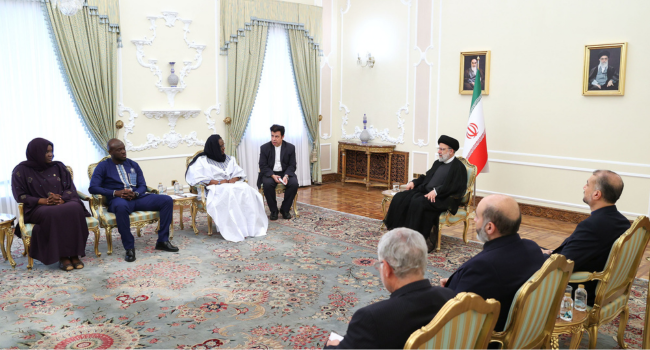
Iranian President Ebrahim Raisi applauded the steadfast resistance of African countries against colonialism and terrorism during a diplomatic meeting with Burkina Faso’s Foreign Minister Olivia Rouamba on Monday. 

While not explicitly naming France, President Raisi’s remarks were seen as a recognition of African nations’ efforts to assert their sovereignty. 

Burkina Faso and Mali, both currently under military junta rule, have notably severed military ties with France, their former colonial ruler, in favour of bolstering relations with Russia. 

Niger, which experienced a military junta takeover in July, has been marked by widespread protests demanding the withdrawal of French troops, harking back to its colonial history. 

In his meeting with Foreign Minister Rouamba, President Raisi commended the African countries for their resilience and resolve. He described their stance as a “sign of vigilance and awakening,” underscoring the importance of nations safeguarding their independence. 

The Iranian presidency’s official website published a statement quoting President Raisi’s words of appreciation for African countries’ principled stand against colonialism and terrorism. 

While diplomatic relations between Iran and the African nations were not the primary focus of the meeting, the implicit message of solidarity resonated with those advocating for self-determination and autonomy in the face of historical colonial ties. 

This meeting marks another instance of international relations being influenced by the evolving geopolitical landscape as African nations navigate their path towards sovereignty and redefine their partnerships on the global stage.

Man dies on pole while repairing cables in Niger

By Uzair Adam Imam

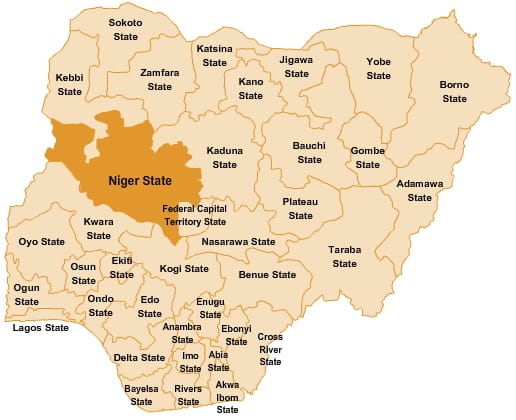
A young electrician identified as Alhaji died while repairing faulty cables on electric poles in Niger.

The incident happened on Thursday in Soje B. Area of Minna, Niger State, at around 3pm.

The man was said to have been specialised in preparing home electrical appliances and had died on the spot after being electrocuted.

The residents who spoke to the journalists in the state said that the efforts to save his life were not successful.

However, one of the witnesses, Aliyu Jibrin, stated that “No one knew he was electrocuted on the pole until his lifeless body fell from the top of the pole.”

Waiting for repentant bandits

By Ibrahim Mustapha

The war against Boko Haram is nearing an end. The news emerging daily that many members of the deadly group are surrendering is cheering. However, mixed reactions have continued to trail their repentance. Since the group appeared to wage war against Nigeria, Boko Haram is reported to have killed over 100,000 Nigerians in addition to displacing millions of others. However, our committed and gallant soldiers deserve a pat on their back for ensuring they sustained the onslaught against the insurgents.

At least, the northeastern states, especially Borno, which is ravaged by the group’s activities, are heaving a sigh of relief after many years of horrible experiences. For the group members believed to have a strong link with ISIS to backtrack, repented and embraced amnesty, this is an indication of victory over them. Also, in a country overwhelmed by many security problems, the news of their repentance is a welcome development.

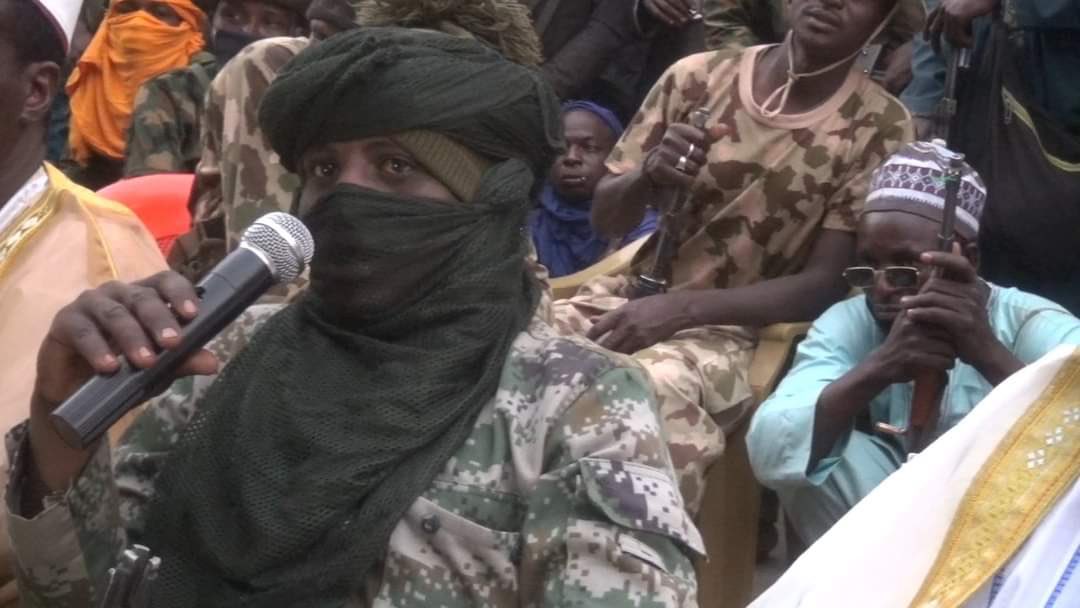
Ironically, while many Boko Haram members are surrendering and the government is rolling out programs to rehabilitate them, bandits in the northwestern states inflict more harm on the helpless, poor communities. In Kaduna, Katsina, Zamfara and Niger states, bandits have become kings. They impose taxes and only allow local farmers to harvest their crops if certain levies are paid.

In the last three months, there have been increasing cases of students’ abduction for ransom. The continued abduction of students has forced governments to close schools with dire consequences to the education development of the region. Sadly, these daredevil bandits have continued to rake billions of naira from the victims’ low-income families. Disturbed by the continued killings of his people, Governor Aminu Bello Masari of Katsina State recently directed his people to arm and protect themselves against the rapacious bandits. However, Governor Masari’s self-defence statement indicates the government’s failure or inability to protect the lives and property of Nigerians as guaranteed by the constitution.

The last straw that broke the camel’s back was the recent shameful invasion of the Nigerian Defence Academy (NDA) by bandits. Whether it was a security breach as alleged by the military or not, the audacity of those bandits proved the poor security network in our military formations. The unfortunate attack should serve as a wake-up call to the government that, like Boko Haram, the bandits are not only attacking soft targets but also highly secured places.

Ibrahim Mustapha writes from Pambegua, Kaduna State. He can be reached via imustapha650@gmail.com.