Niger

ECOWAS responds as alliance of Sahel States unveils new passport

By Sabiu Abdullahi

The Economic Community of West African States (ECOWAS) has announced that the exit of Burkina Faso, Mali, and Niger from the regional bloc officially took effect on Wednesday, January 29, 2025.

One year ago, the three Sahel nations declared their withdrawal from ECOWAS, and now they have taken a further step by introducing a common passport under the Alliance of Sahel States (ASS).

ECOWAS, however, noted that it remains open to dialogue “for the spirit of regional solidarity.”

Despite the introduction of the new passport, ECOWAS has urged authorities within and outside its member states to continue recognizing the ECOWAS-branded national passports and identity cards of citizens from Burkina Faso, Mali, and Niger.

The bloc also called for the continuation of visa-free movement, residency, and trade benefits for these countries “until further notice.”

The new Sahel passport is expected to become operational from January 29, replacing the ECOWAS passport for citizens of the three countries.

However, authorities in the Sahel states have assured that existing ECOWAS passports will remain valid until their expiration dates.On January 28, hundreds of pro-junta demonstrators in Burkina Faso, Mali, and Niger took to the streets to express support for their governments’ decision to leave ECOWAS.

In Niger, military officials led thousands of supporters to the capital, Niamey, where they chanted slogans critical of French President Emmanuel Macron and other regional leaders.

A similar demonstration occurred in Burkina Faso, where Prime Minister Rimtalba Jean-Emmanuel Ouedraogo and other government officials joined thousands of citizens in a rally in Ouagadougou.

Although no major protests were reported in Mali, observers expect further developments in the coming days.

The departure of these three countries from ECOWAS marks a significant shift in regional dynamics.

Experts warn that the move could disrupt regional integration, complicate trade, and increase travel restrictions.

“Now, the three countries will lose the duty-free trade benefits that ECOWAS members enjoy,” one analyst noted, adding that the landlocked nations of Mali, Burkina Faso, and Niger may face higher costs for accessing coastal ports in West African countries like Nigeria, Benin, and Ghana.

According to ECOWAS Trade Information Systems (ECOTIS), Mali recorded $3.91 billion in exports and $6.45 billion in imports in 2022, while Burkina Faso had $4.55 billion in exports and $5.63 billion in imports.

Niger, with a smaller economy, exported goods worth $446.14 million while importing $3.79 billion worth of goods.

With their departure from ECOWAS, these nations may face additional tariffs and trade barriers.ECOWAS introduced its regional passport in December 2000, allowing visa-free movement across member states and granting citizens the right to stay in another member country for up to three months.

With the withdrawal of Mali, Niger, and Burkina Faso, travel restrictions may now come into effect, especially for citizens of these countries and West Africans wishing to visit the Sahel region.

The bloc has given the three countries a six-month grace period, extending until July 2025, to reconsider their decision in case they wish to rejoin.

Meanwhile, ECOWAS has put structures in place to facilitate discussions with the departing nations to minimize disruptions to lives and businesses during the transition period.

Tinubu directs FRSC to curb recurring petrol tanker explosions

By Sabiu Abdullahi

President Bola Tinubu has instructed the Federal Road Safety Corps (FRSC) and other traffic enforcement agencies to implement measures aimed at preventing the frequent petrol tanker explosions occurring across Nigeria.

This directive, delivered in a statement on Sunday by his spokesperson, Bayo Onanuga, comes amidst a worrying rise in such incidents, which have led to significant loss of life and property.

“The president calls for caution and adherence to safety measures among road users, particularly fuel tanker operators,” the statement reads.

“Furthermore, he directs agencies in charge of enforcing traffic rules to implement measures to prevent recurring petrol tanker explosions nationwide,” it added.

The president expressed condolences to the families of victims and prayed for the souls of the deceased, while also wishing a speedy recovery to those injured in the explosions.

Recent incidents underscore the urgency of the president’s directive.

On Saturday, a tanker explosion at the Ugwu Onyeama section of the Enugu-Onitsha Expressway claimed 18 lives, according to FRSC reports.

Just a week prior, another explosion in Niger State’s Gurara Local Government Area resulted in over 70 fatalities.

Journalist Seyni Amadou arrested in Niger amid TV station suspension

By Abdullahi Mukhtar Algasgaini

Seyni Amadou, the chief editor of Canal 4 TV, has been arrested, according to the CAP-Medias-Niger union, which represents media workers in the country.

Last Friday, the Ministry of Communication in Niger announced the suspension of his TV station for one month.

The Daily Reality understands that the prominent journalist in the Republic of Niger was arrested on Saturday, just a day after the suspension of his independent TV station, following a report criticizing the government of the country’s military regime.

Last Friday, the Ministry of Communication in Niger announced the one-month suspension of his TV station.

The country’s national TV station, Tele Sahel, stated that the action against Canal 3 TV was taken “for violating operational standards.”

Canal 3 TV informed the French news agency AFP in a statement that the suspension was related to broadcasts that criticized ministers in the government of Prime Minister Ali Mahaman Lamine Zeine, a civilian appointed by the military regime.

The report listed Zeine as the leading minister, while many of his ministers were described as weak in the government.

In a statement released on Friday, CAP condemned the arrest and detention of Amadou, calling for the respect of journalists’ rights.

It added, “Never in the history of the executive body has such a media shutdown been disregarded, including in special circumstances.”

CAP urged the Minister of Communication, Sidi Raliou Mohamed, to review his decision.

Bazoum was a close ally of Western nations in the fight against jihadism in the Sahel region.

Since the coup, Niger’s military authorities have distanced themselves from France, which previously colonized them, and have sought closer ties with other military regimes in Burkina Faso, Mali, and Russia.

The military government has also shut down several international media outlets, including Radio France International (RFI), France 24, and the BBC.

Tragic Niger tanker explosion claims over 50 lives—Official

By Sabiu Abdullahi

A petrol tanker explosion on Saturday along the Dikko-Maje Road in Suleja Local Government Area of Niger State has left over 50 people dead and many others injured.

The victims were reportedly scooping fuel from the overturned tanker when the explosion occurred.

Kumar Tsukwam, the Federal Road Safety Commander in Niger State, confirmed the tragedy in Minna.

He explained that the tanker, laden with petrol, had toppled, spilling its contents onto the road.

“More than 50 people lost their lives in the tragic incident,” he stated, adding that several individuals who attempted to assist the victims were also caught in the inferno.

Abdullahi Baba-Arah, Director General of the Niger State Emergency Management Agency (NSEMA), said the incident happened at about 9 a.m. while efforts were underway to transfer the petrol to another tanker.

“In the process, the Premium Motor Spirit (PMS) came into contact with a generator used for the transfer, causing the explosion,” he explained.

The disaster destroyed properties worth millions of naira, in addition to the human casualties.

Emergency teams, including NSEMA, the National Emergency Management Agency (NEMA), and local volunteers, are currently conducting search, rescue, and recovery operations.

Baba-Arah said, “Those injured have been moved to the hospital for treatment while efforts are being made to recover the corpses of the deceased.”

He urged residents to remain calm and cooperate with responders.

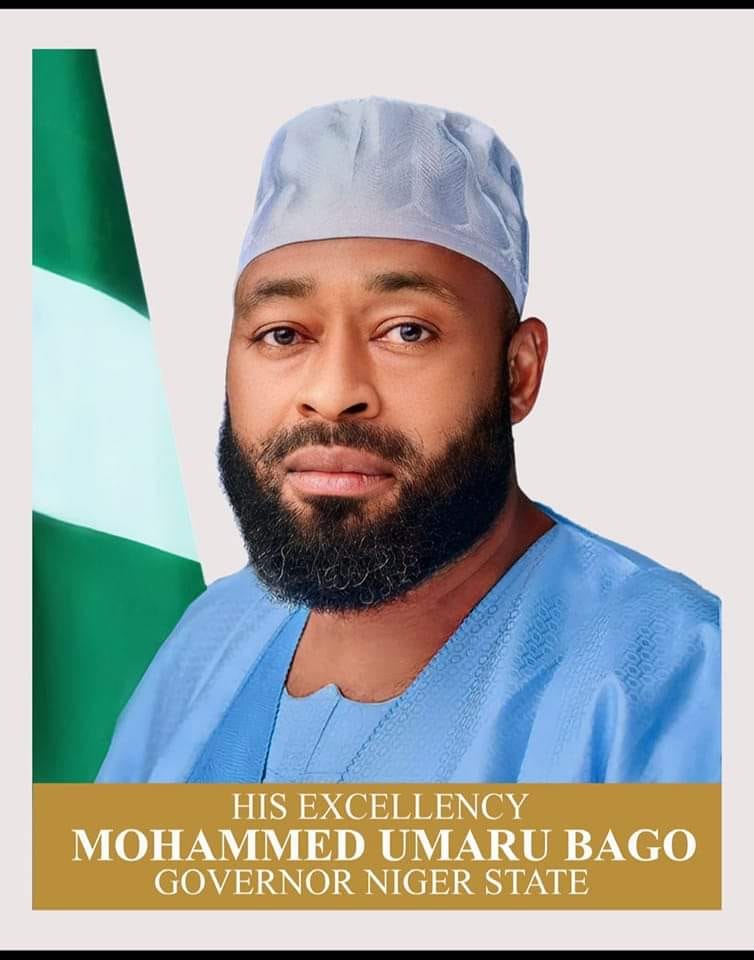
Bologi Ibrahim, Chief Press Secretary to Governor Mohammed Umaru Bago, confirmed the incident while accompanying the governor on a project inspection in Suleja and Tafa Local Government Areas.

“The governor describes the explosion as worrisome, heartbreaking, and unfortunate. He sympathizes with the families of the victims and prays for the recovery of the injured,” Ibrahim stated.

Governor Bago also called on residents to prioritize safety and avoid risky actions such as fuel scooping.

NSA Ribadu refutes Niger’s claims of collaboration with France

By Uzair Adam

Nigeria’s National Security Adviser (NSA), Malam Nuhu Ribadu, has dismissed allegations by Niger’s military leader, General Abdulrahman Tchiani, that Nigeria is aiding France in efforts to destabilize Niger.

General Tchiani alleged that Nigeria was establishing a military camp, codenamed “Canada,” in the Munguno-Baga area of Borno State near the Niger border, where French troops were reportedly stationed.

In an interview with BBC Hausa, Ribadu described the allegations as unfounded, pointing out Nigeria’s history of resisting foreign military presence.

“Even England, which colonized Nigeria, never stationed soldiers here. When France sought to bring troops, we declined. Why would we agree now?” he asked.

He called on Niger’s leadership to resolve its issues with France directly rather than involving Nigeria, emphasizing that Nigeria remains committed to regional unity and cooperation, free from external interference.

Tchiani further accused Nigeria of hosting French forces near Lake Chad and claimed Nigerian officials were training fighters in Sokoto, Zamfara, and Kebbi states to undermine Niger’s stability.

Ribadu vehemently denied these allegations, urging independent verification by journalists and the public.

“Our shared enemy is terrorism, not each other. We must unite to secure our communities and resist external interference,” Ribadu stated.

Tensions between Nigeria and Niger have escalated since the military government in Niamey accused Nigeria of sheltering officials from the former Bazoum administration and collaborating with foreign powers.

Despite repeated denials, the strained relationship between the two nations persists.

Niger governor reportedly orders arrest of journalist for reporting bandit attack on convoy

By Sabiu Abdullahi

A Niger State-based journalist, Mustapha Bina, was detained by the Department of State Services (DSS) after reporting an alleged bandit attack on Governor Umaru Bago’s motorcade during a project tour to Mashegu Local Government Area.

According to the report, the attackers opened fire on the governor’s convoy, prompting a swift response from his security team.

“Several bandits were neutralised, while others fled into the bush after being overpowered,” a source claimed.

Some vehicles in the convoy, including a Hilux and a bulletproof vehicle of the Counter-Terrorism Unit, were reportedly damaged.

However, the Niger State Government has since denied the incident, with the chief press secretary to the governor and the state commissioner for Information issuing a statement debunking the report.

Despite the denial, Bina was arrested and detained by the DSS, allegedly on the orders of Governor Bago. An insider source revealed that it took the intervention of the state NUJ chairman and other stakeholders to secure Bina’s bail.

“Mr Bina was invited to the SSS office in Minna for questioning. The governor really felt embarrassed that the issue was out,” the source said.

The incident has reignited concerns about the growing restrictions on press freedom in Niger State.

“It is very unfortunate that the civic space is becoming stifled, and the environment hasn’t been very conducive for journalists, especially under the current administration,” the source added.

How bandits force Niger locals into slave labour on their farms

By Uzair Adam  

Residents of Shiroro Local Government Area in Niger State, affected by ongoing security challenges, have reported that terrorists are compelling locals to work on their farms.  

In an interview with Daily Trust, the residents recounted how the bandits are forcing the locals into hard labour on their farms.  

It was gathered that a terrorist leader reportedly seized over 20 bags of soybeans from farms in Allawa and nearby communities this year. 

During an emergency media briefing in Minna, Saidu Salihu, the Secretary of the Coalition of Shiroro Associations, called for the re-deployment of military forces to Allawa and surrounding areas.  

This, he said, would allow displaced residents to return to their farms.  Salihu explained that various terrorist groups have controlled these communities since soldiers withdrew from the area three months ago.  

He urged both federal and state governments to support local vigilante groups to protect the affected residents. 

He also requested compensation for those displaced and who have lost homes and livelihoods due to the continued attacks. Salihu also revealed that bandits have initiated negotiations with the local communities to facilitate their return.  

However, both the federal and state governments have not responded to these developments.

Abdullah Suleiman Erena, another resident, noted that insecurity in the area extends beyond banditry, involving groups such as Boko Haram, ISWAP, and Ansaru.  

He warned that if the government does not act urgently, these groups could create a more entrenched terrorist presence in the region. 

He described the situation as a growing terrorist ecosystem, noting how these groups force locals to farm and sell their produce on their behalf.  

Erena also highlighted the proximity of Shiroro to the Federal Capital Territory (FCT), which puts the FCT at increased risk. 

Sani Abubakar Yusuf Kokki expressed disappointment with the state government’s response, stressing the need for more decisive action.  

Also, Babangida Kudodo of the Lakpma Youth Forum mentioned that previous reports to the state government had led to little or no action, allowing the situation to worsen. 

Both men called for immediate steps to be taken to dislodge the terrorists from Shiroro LGA and protect the affected communities.

Baby found dead in Niger farmland, police investigate

By Uzair Adam

The Niger State Police Command has reported the discovery of a deceased infant, estimated to be a day old, on a farmland in Tayi village, Minna.

According to SP Waisu Abiodun, the Police Public Relations Officer, the GRA Police Division received a report on August 9 about the lifeless baby found in the village.

Police personnel, accompanied by welfare officials from Chanchaga Local Government Area, responded to the scene.

The Daily Reality gathered that a medical examination confirmed that the baby was already deceased.

According to the police, an investigation is underway with community assistance to identify and apprehend those responsible.

A local resident, who preferred anonymity, suggested that the baby might have been abandoned by an unmarried woman.

The resident noted that the baby likely perished due to exposure, marking an unusual occurrence for the area.

Niger State governor denounces church burning, promises justice

By Sabiu Abdullahi

Governor Umaru Bago of Niger State has strongly condemned the burning of the Redeemed Christian Church of God in Kontagora town by suspected hoodlums, describing the act as “mindless and cowardly.” 

In a statement, Governor Bago stated that the attack was not only a violation of the Christian community but also a threat to the state’s harmony and unity. 

The governor assured citizens that the government prioritizes their safety, security, and freedom of religion, saying, “We will not condone this act of violence.” 

Governor Bago has ordered an immediate and thorough investigation into the incident, vowing to bring the perpetrators to justice. 

He urged the people of Kontagora to remain calm and avoid reprisal attacks, noting the importance of preserving peace and unity in the state.

Borno State eases curfew restrictions for Friday prayers

By Sabiu Abdullahi

In a move to accommodate Muslim worshipers, the Borno State Government and security agencies have announced a temporary relaxation of the curfew imposed in the state.

The curfew will be lifted from 12 pm to 3 pm on Friday to allow Muslims to attend Jumaat prayers at their local mosques.

According to Assistant Superintendent of Police Daso Nahun, the Police Public Relations Officer, the curfew will be reinstated from 3 pm on Friday to 6 am on Saturday.

Nahun urged residents to use the window of relaxation to attend prayers and go about their lawful activities, while avoiding any form of violence.

This temporary easing of restrictions is aimed at balancing security concerns with religious freedom, allowing Muslims in Borno State to observe their Friday prayers without hindrance.