Marriage

The Marital Mosaic: Beyond love – key elements that sustain marriage

By Aisha M Auyo

Rider: “In the intricate tapestry of marriage, love is but one thread”.

Marriage is not just the union of people who are genuinely in love with each other. It requires a whole lot of other factors to keep it going. I can confidently tell you a marriage can exist without love if the other factors exist. Our grandparents and generations before them have done it, and the divorce rate was very low compared with ours. Their marital relationship is stronger than ours, which capitalises on love.

Theirs is a relationship built on patience, understanding, selflessness, respect, belief in qadr, devotion, and peace. Not on lust. Not on love. Not on desire. Not on physical look. Not on avarice. It is almost the total opposite of marriage nowadays.

A strong marriage is determined by the sacrifices and struggles a husband and wife go through and their ability to stay strong and be patient with each other. There is no marriage without problems, issues, or tests. Even in the noble house of our Rasool, SAW, they had issues. From small ones that involve petty actions fuelled by jealousy within the wives to bigger problems that involve an accusation of adultery levied against Aisha, RA, also known as the “event of Ifk“, which can be traced to Surah An-Nur.

Couples should try not to give up when undergoing tests, DIVINE TESTS such as poverty, infertility, illness, polygamy, etc. Please understand that I am not saying we should condone HUMAN MADE CHALLENGES such as bad character, SERIAL infidelity (there may be exceptional cases of being victims or moments of weakness which should not be more than once), abuse of any kind, (mental, verbal, physical, or emotional), etc. We should be able to explore the fine line between Allah’s tests and man-made issues.

Allah says in the Qur’an, “We will test you with something of fear, and hunger and loss of wealth, and souls and vegetation. And give glad tidings to those who have patience. Those who, if in any difficulty or trial, or tribulation occurs to them or happens to them, they say: ‘Verily we are from Allah and to Allah we return.’ They are those who will receive prayers from their Lord and Mercy, and it is those who are guided.” Al baqarah.

The missed nuances in Northern Nigerian marriage customs, emphasising materialism over the essential attributes of lasting matrimony, have contributed immensely to the high divorce rate in our community. Parents neglect the core aspects of marriage and pay more attention to the superficial and materialistic aspects. Instead of counselling their kids on how to live with each other, the groom side will be busy making plans on ‘Kayan life‘ and ‘gida na gani na fada’. The bride side will be busy buying expensive furniture and ‘gara’, ‘kada a raina mu‘. The couples will be busy organising ‘Instagrammable’ wedding events that will trend for a week.

At least, the bride’s family does not joke with kayan mata and little Nasiha on ‘Yi, nayi, bari na bari’, ‘A yi haquri’. But on the groom’s side, no one says anything to him regarding how to live his life with the bride.

Then, after all the events, reality sets in. Expectations not met. The pretence energy is exhausted. Before you know it, ‘hide my ID’, parents’ intervention and divorce will happen. In less than five years, the marriage will be dissolved, with two or three innocent kids involved.

Many people would look at the marriages and successes of others and wish they were them, not knowing how much they struggled to get there or the sacrifices they made to succeed in their marriages.

In sum, I have delved into the enduring factors that fortify matrimonial bonds beyond love, drawing wisdom from the timeless legacy of our forebears. The essence of patience, understanding, selflessness, respect, belief in destiny, devotion, and peace is the age-old recipe for marital success. How strong unions are forged through trials and sacrifices. I hope this will guide parents and couples in nurturing resilient marriages by shedding light on the struggles behind seemingly idyllic unions.

May Allah make it easy for all those going through hardships in their marriages and protect us from such calamities, amin.

Always remember that, with divine guidance and patience, weathering marital storms can lead to stronger, more enduring love.

Aisha Musa Auyo is a Doctorate researcher in Educational Psychology. A wife, a mother, a homemaker, caterer, parenting, and relationship coach. She can be reached via aishamuauyo@live.co.uk.


Never marry one whom you don’t trust 

By Usama Abdullahi 

Lack of trust is a significant factor affecting marriages these days. I know a man who recently got engaged to his girlfriend. Everything was going fine for him and his fiancée until he caught her talking to another guy. When he saw her with the guy, he reported him to Market Management, where they both work. This may seem ridiculous, but I understand the pain of betrayal.

However, I’m unsure if the guy he caught talking to his fiancée is having an affair with her. Up to now, there’s no sufficient evidence to prove such claims. Yet, two things stand out in this story. One is that, as a prospective couple, you should never feel suspicious of each other. Suspicion always sets in when you don’t trust your partner. Before you decide to get engaged to your partner, make sure you trust them because trust significantly improves your relationship. 

Trust is crucial in every relationship, and its absence destroys the foundation upon which the relationship is built. Regarding marriage decisions, things should not be carried out in haste. By rushing things, you disregard every necessary step to make the marriage work. Like patience, trust is highly required in building successful relationships. Even though some people believe that “successful relationships” do not exist. Still, mistrust or suspicion destabilises relationships.

The story of the man I told is one of the apparent reasons that cause marriage failure in our modern society. Many people can agree with me that the people who are often suspicious of their romantic partners aren’t always found innocent of the things they suspect in those partners. They could be the ones who are guilty, while their partners could be free from guilt. Other times, the partners could both be guilty, which might ruin their long-term relationship. So, to avoid destroying your decade-long relationship by a lack of trust, ensure that you marry or fall in love with someone you can trust. 

If you suspect your partner is having an affair with someone other than you, confront them and talk the way out. Sometimes, your suspicions might be wrong. And it takes one to know one. Moreover, if you constantly get suspicious of your partner, you should always question yourself. Maybe you’re the one with such questionable characters. Or perhaps your instinct is misleading you into thinking otherwise. It’s also advisable not to marry the person you usually get suspicious of.

Usama Abdullahi writes from Abuja and can be reached at usamagayyi@gmail.com.

Our words have the power to build or break our marriages

By Aisha M. Auyo

In my last article, I wrote about how verbal appreciation affects marriage. In this episode, I will discuss how our words have the power to build or break our marriages. Words are not just for communication; they are for construction and destruction.

We are builders when we use our words wisely. With our words, we are creating a marriage that matters, a union that makes it through the good and bad, through thick and thin.

Here are a few things that you can build with your words in marriage

1. Intimacy

Intimacy is not just something physical. Share your heart with your spouse. Cultivating a marriage with meaningful communication will build deeper intimacy. 

Words move two hearts closer together and unite them as one. 

Dear wife, be patient with your husband – we all know men generally don’t talk as much… They are people of action.

Allah didn’t create marriage to be boring! Have fun for His sakes! From sending a naughty text during the day, a random phone call with words that will make your spouse want to finish whatever they are doing and come home to using words that will build anticipation.

Simple sentences like “I made your favourite dish” or “I’ll come home with your favourite smoothie” can do the trick. It is not the entity that matters. It’s about knowing that your Significant Other has thought about you and even tried to do what pleases you.

When you are together, set aside time for just the two of you to talk. Be intentional and selective with your words. Flirt with one another.

2. Build encouragement

Wives, one of the best things YOU can do for your relationship is to be an encourager. Encouragement can come naturally through sincere daily prayers. Through voicing delight in whatever is done or given to you, through words of gratitude. This will make him want to do more.

Men, women are highly receptive to words. Simple sentences could fuel her attitude for years. The phrase “Allah yai miki albarka” (We want this very badly), or “We can’t do without you”, is all she needs to hear to be her very best.

3. Build confidence

Life is hard, full of tough and sobering reminders that we live in a broken world. So, use your words to encourage and build hope in your spouse. 

Tell them you believe in them and trust their ability to excel. In a world full of competition, envy, and self-doubt, be the number one person who believes your spouse, uplift them, and make them trust themselves. From writing exams, presentations, business ideas, etc. Instil the seed of belief and confidence in them.

Men, please encourage your wife and boost her confidence in her looks and dreams. We need this like oxygen. With your support and trust, we can be the best version of ourselves.

Women, showing doubt in your man’s ability or dreams will kill his ego. His zeal to work hard, his zeal to excel. If there’s one thing that keeps men alive more than oxygen, it should be a massaged ego.

4. Heal

Words heal broken people, sick people, tired people, people who lost loved ones, even people in coma! I’m sure you’ve watched a movie where friends or families of a person in life support talk and say good things to them, and with time, the person in a coma comes back to life. This works not only in movies but also in real life. 

Soothing words for a broken person can help their physical and mental recovery immensely. Hearing someone say that they care about you, believe in your ability to heal, or that life will get better is often enough to improve someone’s mood in their lows.

Life-changing events, sickness, ailment, etc., can affect one spouse or the other. Be the person who brings harmony and healing to your spouse through words. Make it a point to say something positive to your significant other, even once a day.

However, let us always remember that our words can cripple, destroy and disrupt as much as they can build and construct. Verbal abuse is as powerful and destructive as physical abuse. It’s not every time we say what we feel. Most times (Not always woo), silence is better than some utterances. 

Avoid any word that will bring negativity, fear, or discouragement to your spouse. Never threaten or demean your spouse. If an issue needs to be resolved, choose your words wisely.

Know that words, once spoken out, can never be taken aback. The words ‘I’m sorry’, ‘I don’t mean it,’ and ‘it was a joke’ can never undo what you said. Some words create wounds that apology will never heal.

Aisha Musa Auyo is a Doctorate researcher in Educational Psychology, a wife, a mother of three, a homemaker, a caterer and a parenting/ relationship coach.

How does verbal appreciation affect marriage?

By Aisha Musa Auyo

A beautiful marriage comprises couples who see and know how to appreciate one another by verbalising their positive estimation of each other. Some couples don’t just internalise their appreciation of each other’s beauty but voice it out. 

Men, when you see your wife as she is dressing up, don’t keep quiet; it’s an opportunity to tell her how beautiful she looks, for you are her mirror. I started with men because they are the gender that is very stingy with words. It’s the same gender that was telling you how beautiful you were before marriage. Now they became mute; I wonder what happened.  

Men, you are the only ones who see the fabulous underwear your spouse is wearing, which others will never have an opportunity to see or compliment. If she does not have undies worth complimenting, get her one! Who is more qualified to tell a woman she is beautiful than her husband?

It is very encouraging for a spouse to know that their partner appreciates how they look and still thinks of them as handsome or beautiful, not minding the number of years they have been together as a couple. It does not matter how old you are or how long you have been married. Simple appreciation, no matter the form, is a beautiful way of adding colour to your marriage. The food is delicious, the home smells nice, the bathroom looks spotless, this hairstyle looks great on you, etc., will cost you nothing but earn you a lot.

As much as men enjoy verbal appreciation, they also crave respect and admiration. Admiration for their hard work, masculinity, sacrifices, and admiration for their ideals, deeds, and wins.

When a spouse knows they are highly appreciated or valued, the one who receives the love will always have an urge or a longing to give back what they have received. So it’s a win-win.

Even if you have been giving and not receiving compliments, don’t despair. You will agree that giving of appreciation has a package attached to it: the joy of giving. A gift which lightens your heart and sends waves of fulfilment to you whenever you show gratitude. It’s a win-win situation.

Remember, your spouse is an opportunity to show love, kindness and gratitude; the best expression of meekness and humility and, above all, the best person after God to lavish all the praise you can fathom.

Aisha Musa Auyo is a Doctorate researcher in Educational Psychology, a wife, a mother of three, a homemaker, a caterer and a parenting/ relationship coach.

Drama as man divorces wife for allowing male doctor to attend her during delivery

By Uzair Adam Imam

A frustrated husband in Katsina State has reportedly divorced his 14-year-old wife after realising that she was attended by the male medical practitioner while giving birth.

It was gathered that the woman was rushed to the hospital for medical care because of the complications she had during her labour.

However, as there was no female medical practioner on ground to attend to her, the woman was attended by the only male medical practioner available.

Dr. Fatima Adamu, the Executive Director of Nana Women and Girls Empowerment Initiative, disclosed this on Thursday while speaking as a keynote speaker at the Human Resources for Health Production Dialogue in Abuja.

She appealed to governments, especially state governments, to ensure there was equity in the recruitment and deployment of medical personnel to rural communities.

“A 14- year old Fulani girl in Katsina State,she delivered and had difficulty with delivery, so we had to take her to the hospital and after the delivery, the husband divorced her because she was attended by a man. This young girl was divorced all because she was attended by a man during delivery,”she lamented.

Married or marred?

By Abubakar Aliyu

I discussed with a friend about the woman that stabbed her husband to death, and this part of her opinion makes me ponder deeply about our society; “Living with the identity, “the woman that stabbed her husband” when she was just a woman who did not want to be in the marriage to start with.”

I can never trust the sanity of a man who forces himself on a woman that made it clear in the first place that she does not want to be with him. I think only delusional and toxic men—purported alpha men—will find it normal to subdue a woman into marriage despite being vivid that she is not into it.

And you wonder why the same woman you forced into a marriage lets loose of her survival instinct, ignoring all rational and objective views, therefore, prepared to perpetrate unbelievable atrocities to “escape”. At this juncture, nobody cares to come to her aid until what could have been averted—by peacefully ending the marriage—has happened, a society that incited it will be pointing fingers at her.

I understand that no amount of pressure can justify the action of a woman who stabbed her husband to death. But the fundamental driving forces of this preventable menace largely boil down to societal pressure. Society coerces women to accept that being in a marriage—no matter how abusive and toxic it gets—is the best thing that could ever happen to her as a woman.

Islamically, marriage affords a man to marry as many women as he is allowed—not beyond four. To a woman, marriage is a world she is allowed to live in for the rest of her life with one man only. So imagine living the rest of your life with someone you do not love or whom you once loved but turned out to be toxic and abusive! To have a simulation of a woman living in a toxic or forced marriage, picture yourself stuck in a pit latrine for the rest of your life.

Marriage is supposed to be a willing union of mutual love, tolerance, and respect between a man and a woman. Whenever any party insists on separating, it suggests that some or all of these three ingredients are short-changed beyond repair. That is why when couples are in crisis, one thing society needs to do is hear the concerns of both parties and intervene with no intention to subdue anyone to the detriment of the other.

Even when they do not reciprocate, chivalry toward women is a virtue of a gentleman. But it is good you know when a woman runs out of love for you and makes it clear that she wants to leave. Acknowledge and respect her feelings and yourself and let her go—unless you are not a gentleman. Humans fall in and out of love for several reasons, and it is normal because many of these reasons do not necessarily have to do with you in the first place—it is not your fault.

As a woman entangled in a forced or toxic marriage, know that you are faced with two evils—resorting to violence which you will live to regret, or leaving the marriage against all odds. Always choose the lesser evil, which is to, by any means, end the marriage. It is always better they describe you as a woman who refused to stay married than as a murderer.

To put it briefly, as long as the willingness to form a marriage union is not mutual, or the couple does not see any reason to stay in the marriage, the society—this includes parents, guardians, and religious and traditional leaders—has to respect their decision and let them go their separate way without trying to judge or bully any one of them into staying for the sake of their children. It is easier for children to live with the trauma of a broken home than with the unsettling fact that their mother killed their father.

Dear gentlemen and others (self-acclaimed alpha men), ask yourselves, do you want to get married or marred? A word is enough for the wise!

Abubakar Aliyu wrote via abubakaraliyu599@gmail.com.

What will people say?

By Hafsat Ja’afar

Whatever you do, no matter how, no matter what, the mouth that eats salt and pepper must speak ill or otherwise of you to your ears or behind your back. Chin up and do whatever you want anytime, anywhere, with any person of your choice, as long as it is in line with your religion and culture. Wherever you find yourself, your self-esteem and dignity come in handy.

“What will people say?” They won’t stop talking about what doesn’t matter to you anymore. Everybody should bear his father’s name; why take Panadol for someone’s headache?

Your choice of clothing is too modest for my liking. Look elegant, captivating and seductive to show them you’re single and ready to mingle. Wrapping yourself like Shawarma, sandwiching that voluptuous body you have with baggy clothes and a gigantic veil won’t get you a ‘civilised guy’. You’ll be mistaken for a married woman.

These are the dumbest pieces of advice of the century ever. Living life to the fullest mostly comes with a penalty. As social animals, it is evident that we must respect society. But living for the community can be a nightmare sometimes.

During a chat with colleagues, a woman in her mid-forties confessed that she keeps two sets of clothes for every occasion when going out. One is for neighbours, and people of her community (modest wears), and the other set is for the event she’s attending, covered and dazzling in Swarovski, a see-through veil, and expensive jewellery. She can’t get dressed at home, for what people will say.

As a classroom teacher, I was told to stop telling people what I do for a living. Instead, I should refer to myself as a businesswoman. I asked what am I selling then? Just tell them you’re into selling turaren wuta [incense business] and atampa online; that suits you better. You may be looked down upon, and people gossip about you being an ordinary teacher.

Minding your Business 001 should be part of a secondary and tertiary education curriculum. It should be made a core course, not an elective, for people to learn when and how to mingle into the affairs that suit them.

Stop peeping with a 1000-megapixel eye for the mistake of others as your topic of discussion. Sweetheart, keep your eyes off things that are out of your league. Channel your energy towards positivity, not negativity and negative thoughts.

Everybody is entitled to his opinion and the life they choose to live. Make yours a memorable one.

Hafsat Ja’afar wrote from Kano via jaafarhafsat@gmail.com

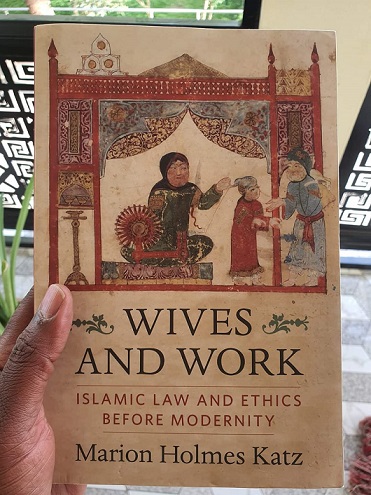
BOOK REVIEW: Wives and Work: Islamic Law and Ethics Before Modernity

Dr Shamsuddeen Sani

The modern discourse around housework for wives from the Islamic legal perspective has garnered beyond the adequate level of scholarly attention. It is as old as the marriage institution itself in the Islamic tradition.

The book, Wives and Work: Islamic Law and Ethics Before Modernity, published in 2022 by Columbia University Press, is a compelling and intellectually rigorous work that broadly contributes significantly to Islamic studies and gender studies.

Marion Holmes Katz’s meticulous research and refined analysis dismantle stereotypes and offer a fresh perspective on the complex realities of Muslim women’s lives. By engaging with Islamic legal and ethical traditions, the author not only deepens our understanding of the past but also provides a platform for critical reflections on the contemporary challenges and possibilities surrounding women’s roles as wives and their engagement in the workforce within Muslim-majority societies.

The book adopts a well-structured framework with an elaborate introduction followed by four body chapters and concludes with a thoughtful synthesis. Each chapter is dedicated to the diversity and development of fiqh discussion of domestic labour for the respective periods of the four Sunni schools of law.

The first chapter emphasises the formative period of Islamic law (8th-9th century CE) with a profound exploration of the Islamic literary corpus reflecting the social realities of the early Islamic community, then focusing heavily on wives’ domestic labour in the Maliki legal school. 

Moving into the 10th century CE, the second chapter of the book examined the issue of domestic labour through the lens of Shafii scholar Abul Hasan al-Mawardi using his legal manual, Al-hawi al-Kabir, as a paradigm for deconstruction but at the same provided a captivating contrast through his ethical manual Adab al dunya wal din.

Chapter three navigates into the intellectual realm of the Hanafi school of law, specifically focusing on the legal manual Al-Mabsut by the esteemed Hanafi scholar al-Sarakhsi. This comprehensive investigation illuminates al-Sarakhsi’s profound analysis and interpretations pertaining to domestic labour, offering an in-depth understanding of the Hanafi school’s intricate perspectives.

Geographically and temporally shifting to the post-classical period in Damascus, chapter four directs its attention to the Hanbali school of law. The focal point of analysis lies in a meticulous exploration of Ibn Qudama’s seminal work, which would later face extensive challenges from the visionary scholar Ibn Taymiyyah. Ibn Taymiyyah’s radical approach to the subject matter promotes a ground-breaking and transformative vision of the ethics of marriage, firmly rooted in the Qur’an and hadith traditions.

It’s better to wait long than to marry wrong

By Hafsat Ja’afar

When are you getting hitched? Are you still single? When are we meeting our in-law or the Mr Right? You’re just choosy, aren’t you? So hurry up and get married! All these questions are uncalled for. Seriously people!

Do you need to go that extreme in asking people unanswerable questions who do not know the unseen?  It’s driven people nuts, and it needs to stop. Believe it or not, delayed marriage is a trendy issue not only within our society but also a universal issue due to the changes in our modern times.

Marriage delays in Northern Nigeria may result from the following;

Nature: Some are destined to stay single up to old age, while some are afflicted with natural diseases, which, no matter how much they want or try to get married, they cannot.

Tradition: Every family has its norms, values,  and principles. Some think their children must reach a certain age or level of education before marrying them off.  The issue of trousseau is a major setback too. These principles sometimes hurt the life of the people involved.

Illiteracy: This is another side of the coin, as some of the established youths consider marriage a burden, so they prefer private/commercial affairs. To them, getting married is like inviting old age while the “I’m Still Young” slogan still rings in their heads.

Expectation: This plays a significant role as the backbone of the marriage delay, as both parties expect luxury and goodies before marriage. The gents are looking for capacitated in-laws, and the ladies are waiting to marry into an influential family. However, this might take years for some to achieve.

Financial Instability: Due to unemployment, underemployment, inflation, cashless policy and other financial crises we all know about, some people run away from marriage.

Societal pressure on why and when you’re getting married has led many into failed and toxic marriages, which they later regret. Due to such pressure, someone I know married a man who gave his terms and conditions on splitting the bills 50-50.

As a classroom teacher, she was to handle school fees, medication, and other things. In the end, the marriage broke down because, according to the husband, she’s not complying and not making ends meet. She’s now a divorcee with two kids.

A friend-turned-sister married a man she doesn’t love, but he loves her dearly. For years their matrimony was nothing to write home about with four kids. She made his life and family a living hell to escape the marriage. She finally succeeded, taking her kids along with her and denying him custody of them.

Someone also told me it’s better to bear the title of Mrs in an abusive marriage than to stay single while time is against us. I was shocked beyond words for her to say this. She desperately needs a husband, someone to call her own.

Another one got married to a tricycle driver out of desperation, though he’s an NCE holder with no job, and she’s a graduate with a job. The interference of friends and relatives in their marital life led to serious malice between the two families. The couple used to spend weeks on no-speaking terms. All the love and sacrifices made for each other vanished, and the blame game became the order of the day. Sessions of reconciliation took place with no positive results. Finally, they went their separate ways and found peace and tranquillity, as they say.

The hustle and bustle of life is an essential element that paves the way for critical and creative thinking, mainly if a person engages him /herself in business, studying, working, and what have you. No matter how small it is, it fades away. Whatever is bothering an individual gives room for greater achievements in life.

As the saying goes, ‘it’s better to wait long than to marry wrong’. To avoid jumping into an erroneous affair, you must pray and choose wisely to avoid unforeseen circumstances.

Hafsat Ja’afar read BA (Ed) English at Bayero University, Kano. She wrote from Kano via jaafarhafsat@gmail.com.

How to survive without a housemaid

By Aisha Musa Auyo 

The current trends of housemaids poisoning their employers are so sickening and scary. It happened countless times, and one can’t escape seeing one or two videos of such heinous acts. From sexual and physical to mental abuse, housemaids and their masters always have these issues in their relationship.

Whenever I encounter such an incident, I wonder why we continue to employ maids or why others leave their homes and work with people they hate. I had maids, and I grew up with maids in our house. But things are different now. People do not fear God. Humanity is lost. From the employee to employers, we are all at fault. 

As much as we agree, the maids are vulnerable and more likely to become victims. Unfortunately, these maids have upped their games, and the family employed them are becoming the victims. I’m not here to tell who is right or wrong, but I know that maids had abused us, taken advantage of our kindness, stolen from us, and deceived us to the extent that we decided we no longer have maids in our home.

Is it easy? No. Is it doable? Yes. We can bring an end to this problem. This issue is almost none existence in developed countries. Regardless of how educated or wealthy you are, cleaning your home is something one takes pride in doing, except for celebrities and rich people who employ the services of cleaning agencies who can hardly be cheated on and are less likely to betray too.

Another advantage of doing your house chore is that it helps you burn calories. Moving your body here and there, doing this and that makes you burn calories, makes you more energetic and more alert. As a result, you gain most of the advantages that come with doing exercise. Researchers have proven that active women around the home are healthier and less likely to be attacked with a certain illness than women who sit and do nothing all day.

As a homemaker, I’ve devised ways to survive without a maid, and with the help of Allah, I’m doing fine, if not great. I don’t have the constant apprehension of trying not to harm another person or be hurt by that person. The peace that comes with this feeling is priceless. 

1. Wake up earlier than others, or simply reduce your sleep hours. You will be surprised what an extra hour will do to make your work faster and your home cleaner. This can be an hour before everyone wakes up or an hour after everyone else sleeps. This will give you undivided attention to do whatever needs to be done.

2. Engage other family members. From your kids to whomever you are living with, allocate an age-appropriate chore to everyone, and ensure they do it. Even if it’s just cleaning up after their mess. A five-year-old can wash their plate and spoon. Can pick up toys, and older than/six years old can change the bedding, bathe themselves, and clean up after using the loo.

3. Clean as you go. From always picking up dirt and cleaning drops with wipes or napkins to washing dishes as you cook and immediately after eating, you will manage to have a clean space almost all the time.

4. Reduce the number of plates for dishing up. All those fancy food flasks, jugs, spoons, forks, saucers, knives, and big trays are not a must. Use only what you need except when you have visitors. I mostly dish up from the pot straight to the plate (there are elegant plating styles to please the eyes) or a plate and a bowl. Fruits could be served or arranged in a big bowl for everyone to eat together. Drinks can be served directly in used water bottles or paper cups, so you can just throw them away after use. 

5. Hire a one-day help at intervals. The point here is to get someone to help you with things you find hard and time-consuming. For example, laundry is my number one weakness, so we employed someone to do this, as the person doesn’t have to go and stay with us to achieve this. You can engage them weekly or bi-weekly, so they can help you with bulk cleaning, like removing the cobwebs, cleaning the compound, brushing sofas and rugs, and doing other deep cleanings that will help keep the house sane throughout the weeks. If this is not an option for you, you can just take the clothes to laundry services, as you will need all the help you can get.

6. The toilets. Depending on the number of people using it, a bathroom should be washed every other day. In between, ensure that every mess is cleaned after usage.

7. Fridges and freezers; the fridge can be cleaned and decluttered once a week, and the freezer can be cleaned once a month, depending on how you shop and cook.

8. Buy machines that will make your work easier. From a washing machine, a strong blender that can blend Tiger nuts and beans, a vacuum, a dishwasher, and many others, depending on your pocket size, you need all the help you can get. This is where your husband comes in. He should know that you made a sacrifice for the safety and sanity of the family, and you need his financial support and understanding.

9. Husbands, we need your support here. You see, all those allowances that should have been used to pay a maid, we need it, in two or three folds. We are the glorified house helps now. We keep the home set and safe. A token will motivate us to do better.

Verbal support is a must. Commend her efforts for taking good care of the homeland and everyone in the family. It’s not easy. I know it’s her duty, but one or two good words won’t hurt, you know?

Still, the husband should try to overlook when she sometimes errs in caring for the house. She is only human, with two hands. And if you can sometimes help with one or two things when you are less busy, that will be a plus for you and her, if you know what I mean.

If you can afford it, make water and electricity 2/47-thing. This is a necessity, not a luxury. She needs this to make work easier for her. Almost all the tasks at home need either electricity, water, or both.

10. Look for temporary help when you are sick or pregnant. Find someone reliable from your family or friends to help you before you get back on your feet.

11. If you can afford it, carve out a playroom or a play area for your kids so that they limit their playing objects to that place. Your living room should always be clean; a toy here and there will make that mission impossible.

12. Lastly, start the day with prayers and a potent stimulant. A hot black tea or coffee will do the trick. Trust me; you need it. If you are an addict like me, ensure you never run out of it. Also, habitually do the zikrSubhanallah, Alhamdulillah, and Wallahu Akbar – while you go around your daily routines. Our prophet taught Nana Fatima this when she asked him to give her a slave to help her with domestic chores. He said this would be best for her, here and hereafter. Listen to radio, podcasts, Quranic recitations, music, or audiobook. This will energise, entertain, educate and make housework less burdensome and easy for you.

My fellow woman, this piece is not for the sick, pregnant, lazy, or full-time working mom (9-5). If you are lucky with your maid, hold on to her, don’t come and kill yourself with work.

But if you are healthy, up and doing, have a flexible job, or not working at all, this is for you; congratulation. You will be rewarded immensely for this. You will have peace of mind, thus not constantly worrying about what’s happening in your house. You will raise a family who will learn to manage a home without depending on others. You won’t raise another person’s child at the expense of yours. And trust me, it won’t last forever. Once the kids are all grown, you can relax and do minor chores.

Whenever I feel overwhelmed and think of getting a maid, this idea will often cross my mind, especially if I can afford it. I ask myself, how will I cope if I live in a Western country? This resets me.

Aisha Musa Auyo is a Doctorate researcher in Educational Psychology, a mother of three, a Home Maker, a caterer and a parenting/ relationship coach.