Kuwait

Iranian Strike on Kuwait Airport Kills One as Gulf Tensions Escalate

By Sabiu Abdullahi

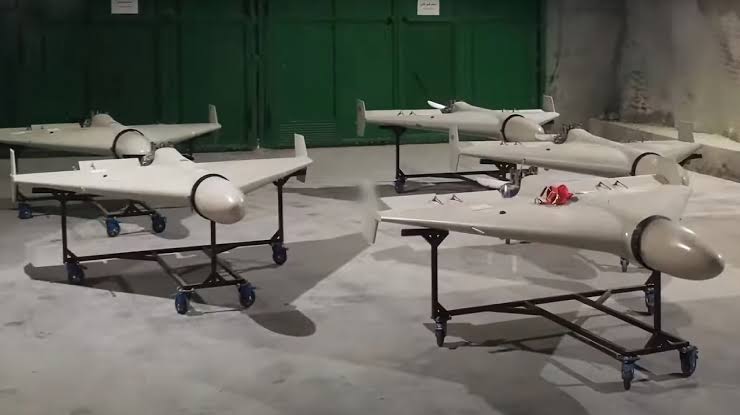
At least one person was killed and 63 others sustained injuries after an Iranian drone struck a passenger terminal at Kuwait International Airport on Wednesday, amid renewed hostilities involving Iran and US forces in the Gulf region.

Indian authorities confirmed that the victim was an Indian national, while several other citizens were among those injured in the attack.

Kuwait’s military strongly condemned the incident and described it as an act of “criminal Iranian aggression”. Iran’s Revolutionary Guards, however, blamed US actions for the escalation. The group alleged that American forces had targeted a tanker and a communications tower on Qeshm Island, prompting a response.

The latest violence has raised concerns about the stability of the April 8 ceasefire that halted more than a month of fighting triggered by US-Israeli airstrikes on Iran. Although the truce has largely remained in place, occasional exchanges of fire have continued.

Israeli Prime Minister Benjamin Netanyahu accused Tehran of “playing with fire”.

“Iran surely knows what the (US) president has said, that if necessary, there’ll be a full-scale return to military action,” Netanyahu warned in an interview with US channel CNBC, referring to threats made by Donald Trump.

Kuwaiti health ministry spokesman Abdullah al-Sanad said 63 people received medical treatment for injuries sustained in the attack. He noted that the casualties suffered “including head wounds, cerebral haemorrhages, amputations and injuries resulting from explosions”.

Following the strike, Kuwaiti authorities temporarily suspended air traffic and redirected incoming flights to alternative destinations. Flight operations later resumed through Kuwait Airways.

The airport has come under attack on several occasions during the conflict and had only returned to full operations earlier this week.

Kuwait said it detected 30 ballistic missiles and drones launched during what it described as “heinous Iranian aggression”. The country also rejected claims from Tehran that its territory and airspace had been used for attacks against Iran.

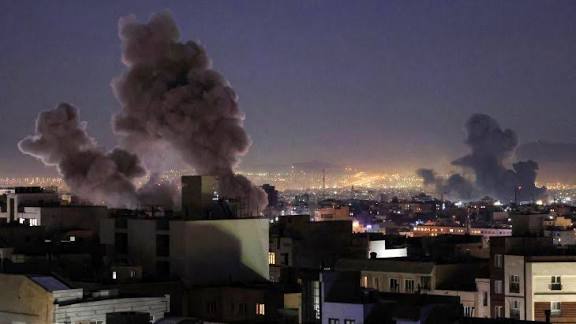
A resident living near the airport, Hassan Sheikh, recounted hearing multiple explosions overnight.

“For the first time, my children felt how serious the situation was,” he said.

Bahrain also reported overnight drone attacks, while the United Arab Emirates called for a “cohesive Gulf stance” among neighbouring states in response to Iran.

Although Iran’s Revolutionary Guards did not claim responsibility for the airport strike, they accused Kuwait and Bahrain of assisting US military operations. The group said it had targeted “the Ali Al Salem Air Base in Kuwait, which hosts helicopters”.

Iran’s chief negotiator in talks with the United States, Mohammad Bagher Ghalibaf, warned that any “aggression will be met with a decisive, regrettable, and proportionate response”.

Meanwhile, the US military said it had “successfully defeated” several Iranian missile and drone attacks directed at Kuwait and Bahrain. It also confirmed carrying out strikes on Iran’s Qeshm Island.

Bahraini authorities reported intercepting three Iranian missiles and several drones.

The escalation coincided with diplomatic efforts in Washington, where US, Israeli and Lebanese officials held discussions aimed at ending the parallel conflict between Israel and Hezbollah.

According to the Lebanese embassy in Washington, a proposed US-backed arrangement would initially cover Israeli attacks on Beirut and Hezbollah operations against Israeli territory.

Neither side has publicly endorsed the proposal. Senior Hezbollah official Mahmud Qomati said in a written statement that the group “will not accept a partial ceasefire”.

US Secretary of State Marco Rubio said Washington wanted the Lebanon talks to remain separate from negotiations involving Iran, although Tehran has repeatedly linked both conflicts.

Israeli forces have expanded ground operations in Lebanon, marking their deepest advance into the country in two decades.

Lebanese authorities said Israeli strikes on Wednesday killed at least nine people in southern Lebanon, including two paramedics. Another airstrike reportedly targeted a vehicle near Beirut.

Hezbollah claimed responsibility for a rocket attack against Israeli troops in northern Israel, stating that the action was a response to what it described as Israeli violations of an existing ceasefire.

A truce intended to halt fighting in Lebanon was scheduled to take effect on April 17, but both sides have continued military operations.

Israeli officials have maintained that attacks on northern Israeli communities by Hezbollah could trigger strikes on Beirut’s southern suburbs. They say the position is supported by Washington.

Netanyahu also said Trump shared his objective of disarming Hezbollah in order to “save Lebanon”.
Iranian drone strike in Kuwait kiIIs six US troops, dozens injured

By Sabiu Abdullahi

An Iranian drone strike on a United States military facility in Kuwait during the early stage of the war between Washington and Tehran has killed six American service members and left dozens of others seriously injured.

The attack targeted a tactical operations centre at Shuaiba port near Kuwait City on March 1, according to multiple sources cited by CBS News.

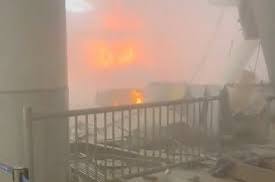
The strike occurred in the early hours of the conflict. It triggered a difficult rescue operation after thick smoke filled the building and trapped several personnel inside.

Sources said the situation at the scene was severe. Rescuers struggled to reach the wounded soldiers due to heavy smoke and scattered debris.

More than 30 American military personnel remained hospitalised as of Tuesday night after the attack.

One injured service member is receiving treatment at Brooke Army Medical Centre in San Antonio. Twelve others are being treated at Walter Reed National Military Medical Centre near Washington, D.C. About 25 additional troops are undergoing treatment at Landstuhl Regional Medical Centre in Germany.

Sources said about 20 wounded soldiers were transported to Germany on Tuesday aboard a C-17 military aircraft after their conditions were classified as urgent. Many of them reportedly suffered traumatic brain injuries, memory loss and severe concussions.

Military authorities also deployed over 100 additional medical personnel to the Landstuhl facility to support treatment for the wounded.

Two service members who were initially listed as missing after the strike were later discovered trapped under rubble, according to the sources.

The Pentagon earlier played down the scale of the casualties. On March 1, it stated that five troops had suffered serious injuries while several others sustained minor wounds such as shrapnel injuries and concussions.

Under United States military classification, a serious injury refers to a condition that requires medical attention where doctors believe death is possible but unlikely within 72 hours.

US Defence Secretary Pete Hegseth acknowledged the strike last week while speaking at the Pentagon. He said American air defence systems intercepted most of the incoming projectiles, although one drone managed to penetrate the defences.

“You have air defences, and a lot’s coming in, and you hit most of it. Every once in a while, you might have one, unfortunately, we call it a squirter, that makes its way through. And in that particular case, it happened to hit a tactical operations center that was fortified, but these are powerful weapons,” he said.

Hegseth noted that the drone struck a fortified tactical operations centre and emphasised the destructive power of the weapons used in the attack.

The Kuwait incident formed part of several Iranian strikes on American positions across the region after hostilities began.

At least one US service member was also killed in a separate attack in Saudi Arabia on the same day, although officials have not confirmed how many others were injured in that incident.

On Tuesday, Pentagon spokesman Sean Parnell said around 140 American troops had sustained injuries since the start of the conflict. He did not specify the locations where the injuries occurred.

Parnell said most of the casualties were minor and confirmed that 108 service members had already returned to duty.

However, the Pentagon reported that eight troops remain severely injured and are currently receiving intensive medical care.

The United States military said its bases across the region are protected by extensive air defence systems designed to intercept Iranian missiles and drones. The March 1 attack, however, showed that some projectiles can still evade those defences and cause significant casualties.

UPDATED: Kuwait confirms crash of several U.S. military aircraft

By Sabiu Abdullahi

The Kuwait Ministry of Defence has announced that several American military aircraft went down on Monday morning, as authorities continue to investigate the incidents.

In an official statement released through the ministry’s spokesperson, the government confirmed that every crew member on board the affected aircraft survived.

“In a statement issued by the ministry’s official spokesperson, authorities said all crew members aboard the affected aircraft were successfully rescued.”

The spokesperson stated that emergency teams moved swiftly after the crashes. He said search and rescue operations commenced without delay. Medical teams evacuated the crews to hospital facilities for examination and treatment. He added that their condition remains stable.

The ministry also disclosed that it established direct contact with United States forces over the matter. It confirmed that both sides initiated joint technical steps in response to the crashes. However, officials did not state the exact number of aircraft involved. They also withheld details about the crash sites and the missions underway at the time.

The spokesperson said the appropriate authorities are continuing investigations to establish the cause of the incidents. He urged the public to rely on verified official information.

The crashes occurred amid heightened military confrontation in the region. After the United States and Israel carried out airstrikes on Iran that struck Tehran and other cities and resulted in the deaths of senior leaders, including Supreme Leader Ayatollah Ali Khamenei, Tehran promised retaliation.

Iran responded within hours. It launched multiple missiles and drones at American military installations across the Gulf.

The United States maintains forces and equipment in several Gulf countries. These include Kuwait, Bahrain, Qatar, and the United Arab Emirates. Iranian forces targeted bases in those nations in a show of reach across the Middle East.

Explosions were reported near the U.S. Fifth Fleet headquarters in Manama, Bahrain. In Kuwait, Al Salem Air Base came under attack. In Qatar, Al Udeid Air Base, the largest American military facility in the region, was also struck. Missiles targeted Al Dhafra Air Base in the United Arab Emirates.

The strikes triggered alarm across the Gulf region. Smoke rose over parts of affected areas, and warning systems activated at U.S. facilities.

The escalation has intensified fears of a broader conflict. Gulf states that host American forces have found themselves drawn into the crisis, despite not taking part in the initial strikes on Iran.

Suspected US fighter jet crashes near Kuwait base during Iranian missile assault

By Sabiu Abdullahi

A fighter aircraft believed to be operated by the United States has crashed near a major American military installation in Kuwait amid Iranian missile attacks, deepening tensions across the Middle East.

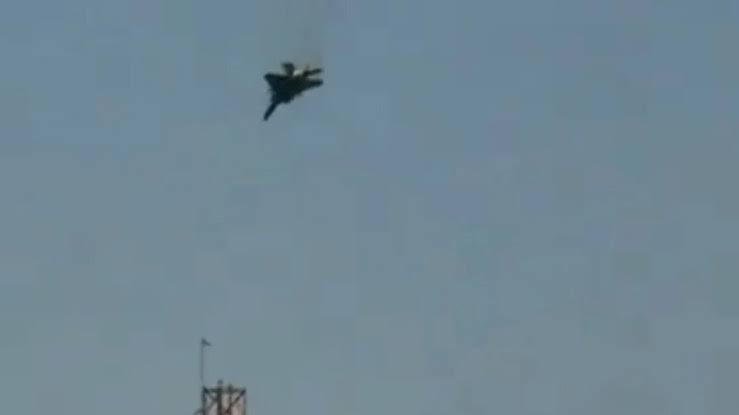
Online footage that surfaced on Monday shows a military jet on fire before it descended rapidly and crashed in a desert area near the U.S. Ali Al Salem Air Base. The images show flames trailing from the aircraft as it lost altitude.

The video, later geolocated by CNN, indicates the aircraft went down roughly 10 kilometres from the facility.

Clips recorded by witnesses appear to show the jet losing stability in the air. Fire trailed from one of its engines before it entered a tailspin and fell toward the ground.

Initial reviews suggest the aircraft looks like either an F-15E Strike Eagle or an F/A-18 fighter jet. Authorities have not confirmed the exact type or ownership of the aircraft, according to CNN and The Telegraph.

Reports state that the pilot ejected safely and later received help from civilians at the crash site. There has been no official information on the condition of the weapons systems officer, who usually occupies the second seat in such jets.

Military authorities have not established the cause of the crash. Sources indicate that the aircraft may have been struck by an Iranian missile. Other possibilities include accidental fire from allied air defence systems or mechanical failure during combat operations.

The crash occurred at a time when Iran launched missile strikes against U.S. military targets in the region. The attacks marked a sharp escalation after recent confrontations involving American and Israeli forces.

U.S. officials have confirmed the first American deaths connected to the conflict. Three service members lost their lives, while five others sustained injuries in operations that started over the weekend.

President Donald Trump reacted to the fatalities and promised a response. He also warned that more casualties could occur as hostilities intensify.

Tensions increased further after Israel carried out strikes in Lebanon. Israeli authorities said the action followed cross-border attacks by Hezbollah after reports of the killing of Iran’s Supreme Leader, Ali Khamenei.

Officials in Washington and Kuwait have not issued a detailed statement on the aircraft incident. Investigations into the crash are ongoing.