Breaking: Bandits release 10 more Bethel Baptist College students
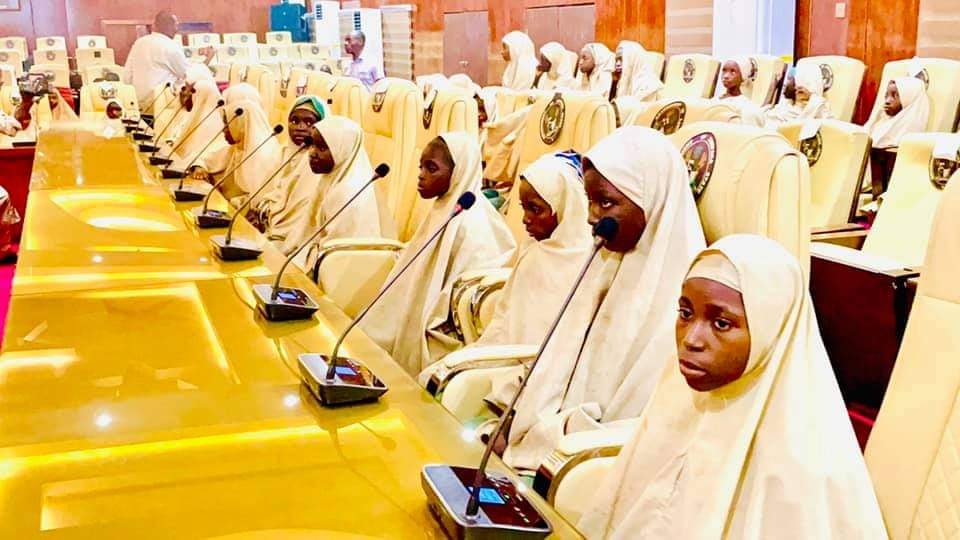
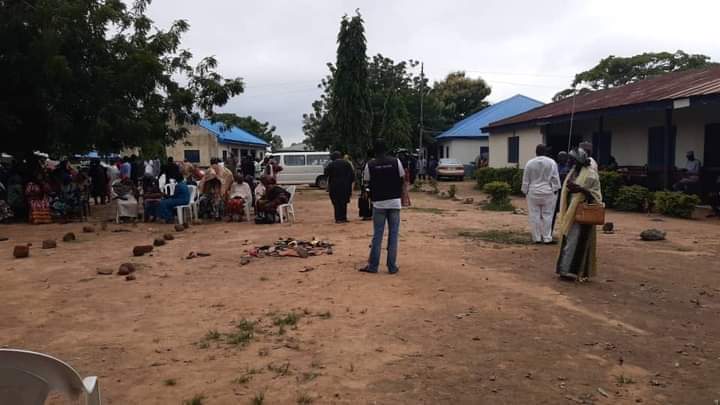
Ten students of Bethel Baptist College, Kaduna, were released this evening. Two were sick and eight let go on the magnanimity of their kidnappers.
Details later.
Ten students of Bethel Baptist College, Kaduna, were released this evening. Two were sick and eight let go on the magnanimity of their kidnappers.
Details later.
By AF Sessay
The data you don’t talk about comes back to haunt you! And when it does come, it comes violently. Many years of corruption, nepotism and neglect of the basic rights of citizens quickly metamorphose into all forms of crime. While government inaction is not and cannot always be the cause of citizen-on-citizen crime, yet research suggesting the correlation between corruption in public places and crimes on the streets should not be taken with a pinch of salt.
This is also true for the failings in high places and the ugly effect this has on battlefields. Because beyond artillery and manpower, there is a great need for strategy, intelligence, consistent supply of food, effective and top-notch communication and above all, sincerity of purpose. Unfortunately, in the situation where the cankerworms of embezzlement latch and sucks blood out of any of these in the security value, the figurative blood usually becomes pools of real blood. So, when it lingers, question the data. Who does what, and where are the numbers to say they are really doing it?
Nigeria currently stands on a tripod of corruption, injustice and hope (no matter the percentage of that hope).
Corruption keeps the corrupt healthy and well-nourished to perpetrate more acts of corruption with hands, heads, tongues and minds.
Injustice keeps the people blind to the truth. It is an essential spear in the hands of many African leaders and former leaders to strike and blind the advocates for truth, make deaf the masses, and cripple the nation.
As for Hope, it is always a ‘good’ magic wand, or opium, or weapon (depending on who is defining it) to mobilize the people for elections, discourage them from revolting and contain them till the next election.
On top of this tripod rotates the head of change. In every season, every decade, every century, there is always one head dressed with a different colour to match the epoch and circumstance. The change of this era is the change from a corruption-ridden nation to a corruption-free state.
Now, how many people are not corrupt so that they can serve as models of integrity for the corrupt? It seems this is a difficult question; let’s turn it the other way round. How many people are corrupt and ready to serve as models of corruption to others? The statistics here are too terrifying to betray the calculus of any optimist on the future of Nigeria and the African continent.
While the masses shy away from their responsibility to come out and spearhead this journey to a reformed Nigeria, the corrupt are on the other side of the divide, ever determined to embolden their fingerprint on the face of civilization! No wonder they get most of the honours, most of the honorary degrees, most of the titles, most of the praises, most youths ready to die for the “good cause”, most of the best universities for their children…
Are you surprised? Why should they not be determined and willing to sacrifice their wealth and might to fight for the continuation of corruption? See! Listen! They were born in it, bred and nourished in it, educated in it, employed in it, voted in it and possibly wish to die in it.
They are not scared of sitting on the corpses of millions of their brothers if that is the only throne they can find to sustain their Kingdom of Corruption. They are very okay with the fact that the millions awaiting their grave permit languish and die in scarcity, adversity, poverty, obscurity – you name it. This is nothing compared to losing a single day in their lives to integrity and probity.
They will fight, hire the best lawyers, get the cruellest thugs, sponsor many false reports to raise public ire and angst against the people who seek to “unjustly” drive them from their ‘paradise.’ They will make many human sacrifices. They will even invent new smart devices of iniquity. Don’t underestimate their ingenuity when it comes to protecting corruption. Never underestimate them.
Alas, how long will they fight before they run out of vim? How long will they endure against the harsh winds of change? How long will they live to eat the billions they have amassed over seasons and seasons of rot, corruption and cruelty in this farmland of the world. How long will they procure mass graves for hundreds of citizens so as to exercise their will to power? They call our youths to their graves while their duplexes and children and girlfriends enjoy the loots of Nigeria in Dubai and London.
They will fight, but the people will also fight back. And as far as I know, no Empire or force or fight is powerful enough to stop the might of the people when they are determined for reform.
Do you want to join this fight? In which army will you prefer to fight? If you must join the side of those who want reform in the polity, then you must do so while you are well armed with patience and firm belief in God then the leader’s ability to bring change. Don’t be carried away by the plots and ploys of the corrupt. Correct when mistakes are made, tell the truth where and when needed, be just and bold in your assessment but never be a recruit (though subconsciously) in the army of the corrupt!
AF Sessay writes from Lagos. He can be reached via amarasesay.amir@gmail.com.
By Garba Sidi
Attitudes are fundamental to understanding social perceptions because they strongly influence our perception of people we meet, the people we live with, the groups we join or avoid, and colleagues in our various communities. In addition, attitudes are essential in organising information about other people. Thus, as we interact with different individuals, objects or situations from time to time and in different environments, we tend to form specific attitudes just as others form attitudes about us.
As psychologists said, our attitudes are formed firstly from family, society and schools. These three places are where children shape their attitudes, either negative or positive. Children will not pass without family, so that means the family is the first chain for shaping a child’s attitude. Whatever role the family play is how their children will grow and develop cognitively.
Family combine parents, sisters and brothers in nuclear family and grandfather, grandmother and uncles are included in the extended family. Each one of those members has a role to play in shaping a child attitude positively and negatively. Family is like a tree; any branch and leaf have a role in contributing to the survival of that tree. Failure of one branch or leaf will cause damage to the entire tree. That’s how the wrong role of one member will cause an unwanted attitude to the children of that family.
Sadly, nowadays family ignore their responsibility and substitute it with hatred, showing concerns to only biological sons and daughters. Even some parents leave their sons and daughters to live like sheep without shepherds. This careless behaviour that emerges today is hazardous, and it’s the central foundation of the problems we indulged in today.
Unfortunately, frustration is what leads the majority of children to form all these kinds of undesirable attitudes. Some children find themselves in a family full of challenges like hatred toward the mother by one’s stepmother, father not taking responsibility for his children, etc.
All these will lead a child to form unwanted behaviour after indulged in frustration. No doubt, our society is ravaged by kidnappers, sexual immorality, drunkenness and armed robbery. Children lack a sense of duty with lofty aspirations of becoming rich overnight to fulfil their needs. They engage in cultism and occultism, a fastest ritual way of getting rich and are subjected to unbearable pains and suffering.
May Allah save us, amin.
Garba Sidi can be reached at sidihadejia@yahoo.com.
By Muhammad Sabiu
Reports coming from Zamfara State, in Nigeria’s northwest, have indicated that at least seventy-five students, who were kidnapped at Government Day Secondary School, Kaya, have finally regained their freedom after spending twelve days in captivity.
The released students were received by Governor Muhammed Bello Matawalle at the state’s Government House in Gusau.
Confirming the release, Nigeria’s national television, popularly known as NTA, posted on Facebook that, “The seventy-five students of Government Day Secondary School Kaya in Maradun Local Government Area of Zamfara State abducted about two weeks ago regained freedom.”
This is coming amidst a military onslaught against the terrorists operating in the region, who are notorious for killing and kidnapping.
The Matawalle-led Zamfara government had since taken measures to halt the violent activities of the terrorists by intercepting the supply of foodstuffs and petroleum products to their respective camps.
The military onslaught has reportedly forced a number of them to flee their camps amidst suffering heavy casualties.
By Muhammad Sabiu
A gun duel between suspected bandits and vigilantes in the Mayaki community in Lapai Local Government Area of Niger State has led to the death of two people.
According to the Daily Trust newspaper, the two victims were on the side of the vigilantes.
Confirming the death of his members, the Lapai division commander of vigilante corps, Muhammadu Ibrahim, said, “It is true that we lost two of our men during a patrol in an ambush by the bandits around Mayaki forest.”
He added that they had deployed their men to launch a manhunt for the suspected gunmen.
By Ishaka Mohammed
From temporarily closing schools and markets to imposing curfews and postponing elections, from paying ransom to shutting down telecommunications, name it — Nigerian authorities have been governing based on the dictates of terrorists.
Observing their supposed protectors dance to the tune of their tormentors, many innocent Nigerians live in fear and hunger. It’s unfortunate that despite submitting their powers to the state, poor Nigerians can’t boast of adequate security. Undeniably, our leaders have failed us.
Nonetheless, can we continue to blame only the authorities? No. In fact, sometimes, I feel it’s more suitable to refer to our plights as self-harm. There are times I can’t help but agree with those who call us potential criminals. Lack of opportunities is the reason why some of us can claim to be innocent of some vices. We clamour for the rule of law, but we allow petty sentiments to set our society ablaze daily.
Most of those who are terrorising our country have family members and friends who are law-abiding. A good citizen is expected to stand by the truth, regardless of who benefits or gets hurt. This is scarcely the case with our “law-abiding fellows”, who help their criminal children or relatives escape justice. When two men protect their respective criminal children today, each of the fathers might become a victim of the other’s child tomorrow. What goes around comes around.
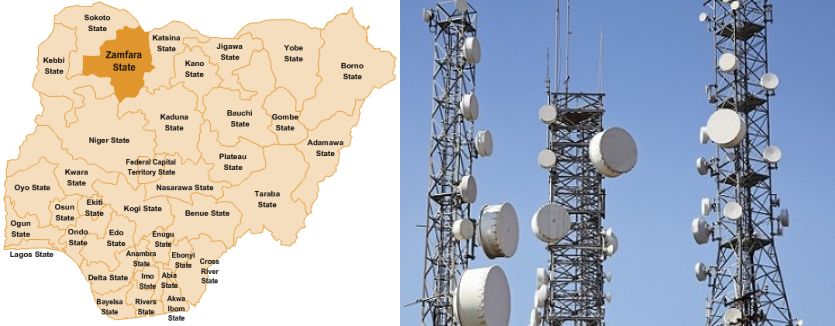
Imagine what the residents of Zamfara State are going through today! In 2013, habitants of Borno, Yobe, and Adamawa had the same bitter taste. We’re social beings; we must communicate to survive. However, we choose whom to communicate with. Since some (or most) of our target audience are physically far from us, we have developed various means to communicate with them, and one of these is telecommunications.
Our ways of life are influenced by the technologies of the moment or those at our disposal. Mobile phones have changed the way we communicate. Even if our livelihoods are entirely outside the telecoms industry, it is almost impossible for a chain of distribution to be successful without telecoms services. From the manufacturer to the middlemen to the consumer, one way or another, a phone call or text message or the Internet will be utilised. Our lives are intertwined with the telecoms sector, especially the mobile network. Despite the necessity of telecoms, residents of Zamfara will be deprived of their services for two weeks.
The above picture is just one of the countless ramifications of insecurity, yet we’re keen on maintaining these ugly consequences because of our selfishness and narrow-minded emotions. We stand with criminals based on religious affinities, regional linkages, ethnic identities or family ties. This is why Governor Simon Lalong recently ordered the arrest of those who rush to police stations to bail murder suspects. Let’s allow family members and friends to answer police questions before we discuss bail. Aside from bail, let’s refrain from blindly defending or accusing people. For instance, in the case of DCP Abba Kyari, a staggering number of northern Muslims keep praying that he be vindicated (without adding “if he’s innocent”). As for many people from the South, the suspended officer is already guilty. Aw, bigotry is undoubtedly our arch enemy.
Our craving for peace should be backed up with sincere actions, no matter how painful such could be. Our sense of optimism should never make us dwell in unrealistic expectations. Nor can we solve our problems without our involvement. Faith doesn’t mean leaving one’s door open and expecting God to close it; one has to initiate the process by using the body parts granted by God.
Sooner or later, the fire we refuse to quench in a neighbour’s compound will gut our houses, and others will look the other way. This isn’t pessimism; it’s reality. Our tribulations can only begin to ease the day we (at least the majority of us) become ready to treat everyone based on the contents of their character. Let’s report close criminals to the authorities if indeed we’re lovers of peace.
By the way, concerning the shutdown of telecoms sites in Zamfara, I think it’s better to narrow the geographic scope. Although the terrorists (euphemistically called bandits) might be everywhere, limiting the shutdown to selected areas like forests might produce the desired effects while minimising the suffering of the innocent residents at the same time.
Ishaka Mohammed writes from Kaduna. He can be contacted via ishakamohammed39@gmail.com.
By Mallam Musbahu Magayaki
The Federal Government of Nigeria has ordered Zamfara state’s communication lines to be disconnected, ostensibly to thwart bandits’ heinous crimes, following bandit attacks in Zamfara State that resulted in the abduction of school children in the state governor’s home town on Wednesday, September 1, 2021, and similarly in Niger and Kaduna states.
Simultaneously, the governments of Zamfara, Niger and Kaduna states have ordered the closure of all weekly markets in the state as part of measures to address the state’s deteriorating situation.
However, the federal and state governments should look into the possibility of providing palliatives for state citizens, as some, if not all of them, maybe unable to put food on their tables due to the closure of their occupational practices.
Furthermore, the government must make immediate efforts to re-energize intelligence gathering regarding terrorists’ plans and use all legal channels available to prevent and prosecute terrorist activities and private sources of support.
According to reports, one kidnap kingpin has threatened towns, stating that everyone who follows the government’s strategy of closing markets and prohibiting the sale of gasoline will be assaulted at any time. As a result, more troops should be deployed to these towns if the government wants the residents to follow official policy.
According to one expert, no one will disobey terrorists he knows will kill him without the government’s help.
Nevertheless, we expect that the measures taken will provide a lasting solution to the high rate of banditry and kidnapping in these states. And the government should be cautious about its choice because these hoodlums could go on to other lanes and cause further havoc in the impacted neighbourhood.
Moreover, to overcome the country’s dreadful condition, inhabitants should completely cooperate with security. If we work together, we can eliminate the country’s threat of instability. Thus, everyone has a part to play in the situation.
In conclusion, traditional rulers in all the affected states should work closely with security forces to combat the security situation in their states because these terrorists are branching out into some of their villages. Residents wouldn’t tell security organizations about them for fear of being attacked or killed by bandits.
Mallam Musbahu Magayaki writes from Sabon Fegi, Azare, Bauchi State.
Ahmadu Shehu, PhD.
Once upon a time, the Fulani were the aristocrats of West Africa – the wealthiest, most intellectual hegemony in the West African sub-region. They were and still are the traditional rulers, Islamic scholars, leaders of the black civilisation, a melting point of the Arabian and Western cultures assimilated into the river of African traditions. These are the most physically appealing, Caucasian-like Africans; skinny, silky-haired, relatively light-skinned and tall. These were the kings of Africa, founders of the Sokoto, Futa Jalo and the Masina empires.
Back in history, the Fulani conquered kingdoms, took over cities and established polities across the region, for those were the days of war and conquests. But, they have also found cities that are capitals of states and nations, which have become business enclaves of all kinds, and for all Nigerians, nay Africans. From a barracks, they founded Sokoto; from a valley, they created Gombe, and from a hill, they established Yola. They went across mountains, and on the rocks, they found Jalingo. In the deserts, they founded many other cities, talk of Niamey, the capital of Niger, Maroua, Garoua, Ngaundere, etc., in the southern end of the Fombina empire. In these urban centres lie the fortress of fortunes for the Igbo, employment for the Yoruba and civilisation for the Hausa. From these cities comes the livelihood of all Africans, education for everyone and sustenance for all folks. The Fulani provided beef, the manure on which most of the Nigerian crop production relies. These are the employers of millions of people, teachers for many and mentors for others.
The triumvirates and their disciples, such as Nana Asma’u, bequeath West Africans the richest traditions of scholarship, the most valued native literature and a civilisation that has been resilient for centuries. This academic scholarship bequeaths northern Nigeria a space on the world map, drawing global scholarly attention, indigenous metalanguage, indelible history and a proud place in the comity of nations. At inception, the Fulani were the key and lock of the sub-Saharan economy, providing, subsidising, protecting and developing Nigeria with all that was needed. Like other ethnic groups, the Fulani gave their lives for Nigeria – Premier Ahmadu Bello, who inspired Prime Minister Sir Abubakar Tafawa Balewa, Murtala Muhammed, the Yar’adu’as and Shehu Shagari, to mention a few of the Fulɓe folks who served this country with distinction.
They served as the first line of defence for cities, the defenders of our religions and traditions. Even today, they are the leaders of most local security outfits that lay their lives to protect Nigerians against Boko Haram, kidnappers, armed bobbers and other terrorists bred by the failed Nigerian justice system. They are found at most gates of the elites, protecting the lives and property of Nigerians from Sokoto to Port Harcourt and from Maiduguri to Lagos. They are trusted with arms and ammunition to defend their Christian Igbo, Hausa or Yoruba bosses and are brave enough to lay their lives for the unknown passersby.
But where are these people today? How did they become the villains in the lands, cultures, civilisations, nations and economies they helped build and sustain? The answers to these questions lie in the historical injustice, failure of leadership and sustained discrimination and demonisation of the most essential, most conservative section of the Fulani population. The travail of the herding Fulani began right at the peak of the Fulani empires. First, the hegemony created centuries ago recognised this category of its population for being good at military matters. Then, subsequent traditional administrations continued on the same lane, deploying the same people for warfare and nothing more. The results? They continued in the traditional ways of life and became even more sophisticated at combat.
The colonial rulers neglected this population, focusing only on the taxes, which they significantly contribute more than anyone else. Instead of the native authorities to reinvest these taxes in the integration, education and socioeconomic emancipation of this population, they squandered the resources. So, for our grandparents and parents, and indeed our brothers and sisters still on the cattle routes, nothing has changed in their lives since the 1900s. For us, no change has happened!
Then came the natural discord between herders and farmers, regardless of ethnicities. Then population explosion; sixty million people became two hundred million in sixty years, cohabiting the same 923768 Km2, sharing the same forests, water and other natural resources.
Again, climate change and environmental degradation took over most parts of the Sahel. Major grazing fields and waters, such as Lake Chad, have dried up, and herding folks have multiplied by dozens. Ethnoreligious crises have overtaken much of the Lake Chad region, pushing herding populations down south, searching for water and green pasture. Over there, farms have encroached all lands, including major highways, food insufficiency, joblessness, and economic degradation have forced families into the deeper forests in search of livelihood. Resource control sets in, and crises become inevitable.
Unfortunately, no one came to our rescue on time, as our sedentary brothers moved to modernity, leaving us at the mercy of the forests. Although we are one ethnic group, bound together by language and traditions, the socioeconomic and modern (dis)advantages have created a strong barrier; distinct kinship emerged, often leading to animosities and hostilities. They got the power, wealth, knowledge and resources. But, they have disassociated from us, laughed and called us Mbororo, “the unenlightened”, as stories of our perceived naiveté go viral in cities and communities.
Our closest friends – the farmers – with whom we enjoyed cordial relationships due to mutual economic interests have become enemies of necessity. Just as our lives depend on our herds, their own lives depend on their farms. Call it the clash of economic interests! With this, crises set in; lives lost, and livestock diminished. The large, vast country becomes a small spot, as we were chased away wherever we went. Our cattle were rustled both by our own impoverished, unemployed youth and neighbours. For any slight provocation or disagreement, our means of livelihood – the livestock – are targeted and killed, often leading to reprisals.
But, this situation has been stage-managed until governments in some northwestern states began ceding ancestral grazing lands to farmers and urban development. When herds diminish, herders settle down to crop farming. Thousands of people came out of this economic depression but woke up to landlessness without notice. Add this to the historical aspects, social deprivation and economic dislocation, you find that criminality is the natural turn of events. As usual, the Nigerian governments are ad-hoc, simplistic, never interested in long-lasting solutions and even scared of reality. Instead of addressing these issues head-on, criminals were made political thugs, monies and weapons provided, all for political greed.
The natural promise land for such a criminally profitable business is more membership, innovations, and recruitments. Similarly, the natural candidates are those with similar backgrounds, social and cultural affiliations and mental dispositions. In this way, the Fulani folks are made the majority in the ongoing banditry and kidnapping. Therefore, the old circle is repeated.
Evidently, the fire-power in the hands of these bandits is far beyond their reach. The economic strength, resources and sophistication are not the kinds obtained by mere herders in the bush. That says a lot about their masters in cities, higher places and strong networks from other ethnic and social backgrounds. So, like they were deployed as foot soldiers for warfare centuries ago, and then as a conduit for taxations and money-making in cooperate Nigeria, they are today deployed as the bush soldiers, arm-bearing, front-raw men in the terrible enterprise that is kidnapping and banditry in northern Nigeria.
Look at it this way. If the billions made in this wicked trade were to be traced, they indeed wouldn’t be found in a ruga or a Fulani settlement. They might, instead, be found in dollar, pounds and naira accounts held by the very ethnic groups that are so quick to demonise millions of the herders’ kinsmen.
When it is elections circle, politicians would turn to the criminals, deploy them and win elections, and promise afterwards, to end them. When the security agencies arrest them, their bosses and other beneficiaries pay huge monies to get them released, damning the justice system and the nation’s well-being. Therefore, the truth is that just like Boko Haram are not Kanuri, Maitatsine not Hausa, IPOB and drug pushers not Igbo, Yahoo-Yahoo not Yoruba, these criminals are NOT Fulani. They are Nigerians and must be treated as such. Because we, the Fulani herders, are not terrorists. We are victims of socioeconomic circumstances.
Dr Ahmadu Shehu is a nomad cum herdsman, an Assistant Professor at the American University of Nigeria, Yola, and is passionate about the Nigerian project. You can reach him at ahmadsheehu@yahoo.com.
By Muhammad Sabiu
The Nigeria Police Force, in conjunction with local vigilantes, has on Monday succeeded in killing an infamous bandits’ leader in Niger State.
According to some media reports, the bandits’ leader, identified as Jauro Daji, was killed alongside other members loyal to him in the Kontagora axis of the State.
“It was the combined team of policemen and local vigilantes that killed Jauro Daji and score of his bandits who were on a mission to abduct innocent persons at a village.
“The notorious Jauro Daji who is suspected to be involved in attacks on villages and schools led other armed bandits in large numbers on motorcycles.
“The operation was successfully executed on Monday between Gulbin Boka to Dogon Fadama area under Kontagora Local Government Area. We also recovered ten motorcycles.
“We have recruited the services of local divers to retrieve the weapons some bandits who escaped with their corpses threw into the river,” an intelligence source told PRNigeria.
Niger State has also recently been badly hit by bandits’ incessant attacks, which saw many people killed and students in their hundred kidnapped.
By Abdelghaffar Amoka Abdelmalik
I love ABU and the used-to-be lovely Zaria; But is it time to run away?
After submitting the final copies of my PhD thesis in March 2012, a friend and I conversed about my plans after the PhD program. “I am leaving back to Nigeria in few days, resume my job, get married, and start living the Nigerian life”, I told her. And she was like, it appeared I had got everything planned out. And I said I couldn’t find anything to keep me back in the UK. Then about a year later, I got a postdoc research fellowship in Norway.
Immediately after my postdoc in 2015, I was looking forward to coming back home. I had this picture of a laboratory I want to set up in my university to perform impactful research from this part of the world. Maybe I was crazy. But for the five years three months that I spent in Europe, I never saw myself living there for long, but how I could use the experience of the few years to add value to the world of research from my country.
But after the kidnapping of my friend’s family last month, for the first, I started to ask myself if my decision to return to the country was the right one. And last night, I heard gunshots from my room before midnight. I knew something was wrong, but I could not figure out what it was and where. So I could not sleep well. Then, after waking up in the morning, I got a call that the same terrorists they choose to call bandits strike in Zaria again, but this time at Zango-Shanu and went away with four victims.
Criminals use to operate while hidden. But these terrorists take their time to break into houses and abduct their victims unchallenged. The police can’t dare do anything to them because they have superior arms and unlimited ammunition. One would expect special forces capable of repelling these terrorists to be put in Zaria due to these frequent occurrences, but nothing like that.
The government seems to have given up, and we are left on our own. The Governor insists no one should pay a ransom but no provision to prevent the kidnapping of anyone. So you have two choices when you have a victim with them; either you pay ransom to get them released after torture, or you leave the victim to die with them.
I closed my eyes, and I still see the picture of the state of my friend’s wife and kids when the bandits released them, and I cried. I am still wondering why these innocent young children and their mother should pass through that horrible experience. The system has failed them. The country has failed them. Now we live in fear. The government has failed us.
A distant cousin in Canada called me a few weeks ago and asked about my plans for my family with this insecurity that is getting worse by the day. I was dribbling around, and he said: how can you make an impact in an environment you are not safe? You can only make an impact if you are alive and free. That statement refused to leave my head.
You can’t sleep well at night for fear of the terrorists. So, how do you concentrate during the day to be productive to make your dream impact? Our children can’t go to school. The state government has closed down all the state-controlled schools for fear of kidnapping but no structure to prevent kidnapping the same children from their houses. So, what has he done?
The kids are living a caged life. You can’t even allow them to play outside talk less of sending them on an errand outside the house for fear of insecurity. We got President Goodluck Jonathan out for Boko Haram; President Buhari came in, and kidnapping was added to the list of the insecurity challenges. It has become a big business. The business CEOs sit in their houses while getting sophisticated arms for their boys for the kidnapping operation. They are ruthless, and of course, the informants are among us. There seems to be no much intelligent service to get rid of this challenge. At least not from the kidnapping of my friend’s wife and kids.
With all these challenges, the political leaders, including those claiming to be fighting corruption, are getting richer while the people are getting poorer. For example, a former recharge card seller, now an aide, has billions of naira in his accounts that he claimed are “gifts” from people. But he didn’t get such “gifts” when he was a recharge card seller. Aside from workers at CBN, NNPC, DPR, etc., other workers struggle to survive with that thing called salary. And unfortunately, most of the victims are from families struggling to survive, but the informants perceive them as rich.
People are shouting why the Doctors that the country spent a lot to train are leaving. But, with the level of unemployment, economic hardship, and insecurity, will you stay and submit your life to banditry if you have a choice to leave the country?
The political leaders surround themselves with security personnel. They can run to any country of their choice if they think their lives and immediate family are unsafe while we are left for the bandits.
I had so much optimism in this country, but I am not sure any longer. Should we continue to live this life of fear and uncertainty? I never thought of the idea of relocating to another country till last month when those poor little kids and their mother were abducted for 40 days.
I had two chances and came back because I believed in Nigeria and wanted to make an impact. Will I return if I have the 3rd chance?
I still remember that prominent MKO Abiola’s interview on TV during the June 12 crisis, where he stated this famous quote: he who fights and runs away lives to fight another day.
Don’t hesitate to run if you have the slightest opportunity.
Abdelghaffar Amoka Abdelmalik writes from Zaria and can be reached through aaabdelmalik@gmail.com.