Katsina State

Crass governance is the bedrock of terror

By Faruk Abdulkadir Waziri 

All trouble starts from the most trivial things. Hence the pertinence for instant reaction to even the tiniest disruption to an existing order. When a problem is tagged small and therefore left at the charge of its own amend, without making a move to tug or curtail it solely because it has insignificant effect and consequence, it rides the back of that indulgence and backfires. The minor issue of yesterday, when left unattended or given the least of consideration, becomes the biggest trouble of today and the looming disaster of tomorrow.

A case study in Nigeria’s incessant security ordeal. From the preventable event that led to the birth of Boko Haram in the North East to incompetence that saw the renaissance of kidnapping in the North West and the impassive nonchalance that underpins the thrive of murderous IPOB/ESN in the South East. All these menaces besetting this country today started as problems that could be averted. But the authority charged with this onus chose to go with the approach of levity and lackadaisical confrontation in eradicating them.

Despite the warnings of the impending doom and peril signalled by the early threats of these instabilities, the government was acting with careless flippancy. And this allowed the yield and spread of these acts of terrorism and abetted their growth in a fashion that the thrive of one led to the birth of the other. The lasting of Boko Haram against the effort to wipe them off added fillip to the resurgence of kidnappings, with the added incentive of unaccustomed plight— Banditry. The outlawed IPOB found the stimulus that motivated their cause to unleash terror in the South East from the inability of the government to find a lasting solution to the insurgency of Boko Haram. 

Harira, her unborn child, and four children were unfortunate victims of the country’s crass governance with no regard for human life. The perpetrators of their deaths were barbaric and bloodthirsty IPOB, but the government that allowed the monstrous operations of these savage beasts to prevail is of the bigger fault. Just days ago, a state legislature was decapitated within the same region Harira, and her kids were murdered. Before that, the ruthless mutilation of the military couple was perpetrated within the same area by the same group of demons.

Now,  imagine if swift action was taken after those two extrajudicial killings and the savages IPOB had met their waterloo. Poor Harira and her kids would have been alive today. This is just one to show you how the callous insouciance of the government has been the bedrock of the long-lasting terror in this country.

While we mourn the cruel murder of Harira and her family, bandits on the other end shot and killed 12 farmers in Katsina yesterday. An example that proves not only the northerners in the South are in the face of apparent danger and risk losing their lives, but also the many northerners in the comfort of their respective abode (North). There is no way to limit the killings and other strikes of the instability to tribal tensions alone. Of course, some were informed by groundless hatred and bigotry towards particular ethnicity. But look at the cause that sustains the frequent happening of these calamities. It is the disregard and unreadiness of the government to lay down proactive measures that will prevent the recurrence of these ordeals.

Crimes capitalize on the bloom of lawlessness, lawlessness prevails where there is rife injustice, and it remains the hallmark of bad governance.

May the killers of Harira and her kids never now peace in this life and the one hereafter, ameen.

Faruk Abdulkadir Waziri wrote via farukakwaziri019@gmail.com.

Bandits gun down 15 farmers in Katsina; barely 40 hours after Borno farmers massacre

By Uzair Adam Imam

No fewer than 15 farmers were reportedly killed when bandits roamed Gakurdi village in Jibia Local Government Area of Katsina State Tuesday, March 24, 2022.

The incident took place amidst mourning after over 40 farmers were slaughtered by Boko Haram fighters in Borno State.

The Daily Reality reported how the farmers were being killed and some of the bodies were dismembered while some were tied up and their throats slit by the terrorists in Kala Balge local government area of the state.

Our reporters gathered that the victims of the Katsina attack were massacred as they were preparing their farms ahead of the rainy season.

According to the resident the bandits “came around 8:30 am today (Tuesday), using four motorcycles and started killing the people. Three were killed on the same farm and eventually it was discovered that up to 15 were killed on different farms.”

Unknown gunmen rock Katsina community, rustle over 100 cows

By Uzair Adam Imam

Unknown gunmen have launched a fresh attack on Danye Gaba village, Bugaje ward in Jibiya Local Government Area of Katsina State.

According to a source who pleaded anonymity, the traumatic incident took place around 1:30am on Tuesday, March 24, 2022.

The source also claimed that the movement of the criminals was known since around 8pm on Monday and different security agencies were alerted. He, however, lamented that no proactive measure was taken until the bandits raided the community and rustled a number of cows.

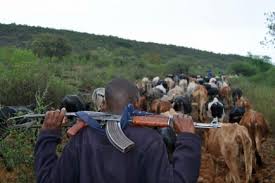
The bandits have reportedly rustled over 100 cows of the residents, the development that came barely few hours after unknown gunmen roamed and killed 15 farmers at Gakurdi village of the state.

It was gathered that Danye Gaba village is said to be situated about two kilometres away from the 17 brigade, a military barracks in Katsina.

The Police Spokesman in Katsina, SP Gambo Isah, said, “Right now, we are there with the CP to assess the situation.”

Suspected bandits kill councilor, abduct wives

By Uzair Adam Imam

A newly-elected councillor in Katsina State was gunned down as bandits rampaged through Gozaki town of Kafur local government area of the state.

The late councillor, Alhaji Nasiru Magaji, was killed in his residence in the wee hours of Wednesday.

Multiple sources confirmed the incident, saying the bandits had also abducted the two wives of the slain councillor.

A resident, Abdullahi Gozaki, said the bandits, who were about ten stormed the community, killed Magaji and abducted his wives.

However, the wives have reportedly regained freedom without any ransom.

“They attacked in the early hours of today (Wednesday) around 12:30 am, killed the councillor and abducted his two wives but later sent them back home,” he said.

Katsina: Villagers neutralise armed bandits while collecting ‘tax’

By Uzair Adam Imam 

Citizens in Kahiyal in Bugaje word of Jibia, Katsina State, have bravely stood up to bandits who invaded the village to collect tax from the innocent people. 

The Daily Reality gathered that two armed bandits came into the village in broad daylight, asking people to give them money. 

The villagers feigned to oblige but only for one of them to quickly grab the bandit’s rifle while dropping the money. Other locals, who also had their weapons, helped him.

A citizen, Professor Abdussamad Umar Jibia, narrated the incident on his Facebook wall.

He said the bandits “stayed in one place and asked the villagers to contribute money and bring it to them. 

“The villagers did that. However, unfortunately for the criminals, the person who brought the money dropped it and quickly grasped the boy holding the rifle. 

“Other villagers who were ready with their local weapons rushed on the criminals and finished them off as it should be,” he said.

Insecurity and banditry are the major security issues bedevilling the northwestern part of the country, leading to thousands of deaths while numerous others are forced to migrate.

The criminals impose unlawful taxes on countless farmers and others living in the affected areas.

Tribute to Danmasanin Funtua

By Zaharadeen Muhammad

Some weeks ago, His Royal Highness, The District Head of Funtua, Sambo Idris Sambo, announced the confirmation of chieftaincy titles on some few outstanding sons of Funtua in recognition of their contributions to the town and the country as a whole. One of them is an unsung luminary in academia, and the health sector whose take off to educational journey began as Newton’s apple. But was it not William Shakespeare who likens the world to a theatre role with entrance – often by fluke, stage performance and exit? This time, Dr Umar Aminu’s entrance and performance will be profiled, and it will be quite the zinger.

Almost half a century ago, a religious scholar left Funtua for Katsina on a mission to supervise Islamic schools and carried his much younger brother with him. On a particular day, the curious lad wandered off to explore the new surrounding, and as fate would have it, he chanced upon a primary school in the neighbourhood. He surreptitiously tucked himself behind the door panel as he peeped into a class through the apertures relishing the nectar of the lesson.

He was to frequent the school many more times afterwards. Unknown to the school teachers and his brother, till the momentous day that his inert nature got the very best of him, he ventured an answer from his hideout to a puzzling question that appeared to elude the students sitting inside. Having gotten over his shock, the startled teacher identified where the voice emerged from, walked stealthily but tactfully toward the doorway and seized the kid. “he has to be enrolled,” thought the teacher. The brilliant boy in this tale was Dr Umar Aminu, and the elder brother was sheikh Aminu Liman of blessed memory. The anecdote was a watershed.

His academic sojourns would take him to Zamfara, Bauchi, Zaria culminating in him bagging a PhD in Public Health from Texila American University, USA. He gathered the mountain of knowledge and wealth of experience over the years working in public and private organizations and international agencies such as UNICEF, WHO, USAID, and FRIM. He brings to bear in solving various societal issues in Katsina state and beyond. To paraphrase sir Winston Churchill, what is the use of living if it is not to make this muddled world a better place for our posterity long after our departure.  

His first landmark contribution was to the health sector way back in 1999 when a glaring shortage of health personnel in the state was a cause of deep concern. Then, as a key member of the MSSN, he broached the idea at one of its meetings for establishing a centre for training health technicians who can, in the long run, make up for the inadequacy. The program began with only a handful of students and has metamorphosed into the world-class Muslim Community College Of Health Science and Technology, Funtua. Today, the school runs a wide range of health-related courses at ND and HND levels and draws a motley of students from every nook and corner of Nigeria.

His curiosity and a natural aversion to passivity and mediocrity made him the first to be on the ball whenever things appear to go south. That is why when there was statewide successive massive failures in SSCE between 1999 and 2003, a big blow to the quintessential reputation of the state in that regard,  instead of joining the wagon by stepping on the pedestal of lamentation, he met with stakeholders in the ministry to find out ways of ironing out the problem. He was one of the brains behind creating the refresher program, which, under the able stewardship of Malam Ilyasu Umar, has hatched hundreds of students who became medical doctors, pharmacists, engineers,  mathematicians, etc. Thus, leaving another indelible footprint in the sand of time.

His empathy and compassion dispose him to pursue numerous charitable causes, especially in education, where he has facilitated and personally offered many scholarships and grants to the less privileged. Moreover, his being a versatile and cynosure in education and business informed our decision to invite him to speak at our first (NIPES) public lecture themed ‘Our Economic Mindset’ held on February 2021. The advocate of functional education, self-development and entrepreneurship eloquently demystified our present unemployment crises that became ubiquitous clog and articulated sundry out of the box ways of putting a dent in the issue.

Dr Umar Aminu, The Danmasanin Funtua possesses most attributes our people recognize in the words of Anthony Kirk-Green as ‘Mutumin Kirki” in the book of the same title. These are truthfulness, trustworthiness, generosity, patience, good sense, bashfulness, courtesy, self-esteem, wisdom and scrupulous behaviour.  

“When a mother-cow is chewing grass,” said Chinua Achebe in Things Fall Apart, “its young watch its mouths”  We, the youngsters, have been watching from afar and up close and have drawn so much inspiration from his noble deeds. For these reasons and more, we join the joyous multitudes celebrating this well-deserved title. Allah shi tayaka riko, amin.

Zaharadeen Muhammad wrote from Abdullahi Aminci Road, Funtua, Katsina State via Zaharadeen2020@gmail.com.

Kano Emir calls on Katsina counterpart for closed-door meeting

By Uzair Adam Imam 

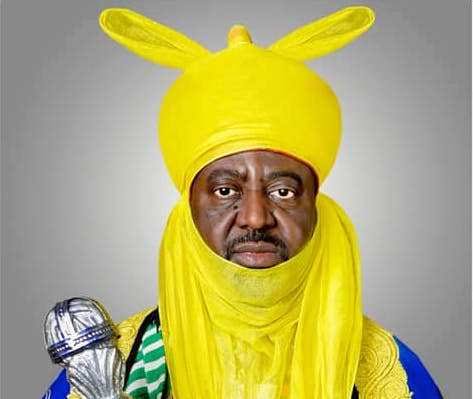
The Emir of Kano, Alhaji Aminu Ado Bayero, has called on his Katsina counterpart, Alh. Abdulmumini Kabir Usman, this afternoon for a closed-door meeting.

Reports disclosed that the meeting, which started at 12:30 pm at the palace of the Katsina Emir, lasted for more than one and half hours.

Although the details of the meeting were not made public at the time of filing this report, there were speculations that it was about the resignation of Wazirin Katsina,  Prof. Sani Abubakar Lugga.

Recall that Prof Lugga signed his resignation after responding to the query by the Katsina State Emirate Council over statements he made about the menacing security challenge in the North.

Lugga, in a statement to the Katsina State Emirate Council, argued that he did not speak on the matter on behalf of the emirate council but as a citizen of the country.

Nigeria’s border closure and its socio-economic hangover

By Salisu Yusuf

Since August 2019, when Nigeria decided to close its border with neighbouring Benin, Cameroon, Chad and Niger, the Nigeria-Niger border has become a boundary for smuggling of especially arms and massive adornment of corruption. Officials of the Federal Government have turned the borderline into a business venture where collecting and giving unearned rewards are the order of the day.

A haulier recently told me that from Maigatari (in Jigawa State), Babban Mutum and Kongolam (in Katsina), there are no fewer than 30 border outposts where officers wave down passing motorists to collect kickbacks. This has resulted in creating more alternate routes where hauliers circumvent border posts.

To fully understand the level of corruption in our border guards, go to the length and width of the borderline between, say, Daura and Babban Mutum. You will easily see bits of laterite earth inlets going north, where these illegal hauliers transport goods in cars and trucks to avoid sandy earth on their way to Magaria in the Niger Republic.

In the midst of this, the new Nigeriene President, Bazoum Mohammed, introduced a free trade route-policy for the teeming youth. Formerly, Niger operated a protectionist economic policy under former President Tandja Muhammadu. Then, importing goods, especially petroleum products, was prohibited, and culprits were duly punished under strict laws. But, don’t forget that Niger, like its counterpart, also exports petroleum products.

Mr Bazoum, I think, implements his free trade policy, where youth are allowed to import goods from Nigeria due mainly to socio-political issues in the neighbouring countries; the raging civil war in Libya and insurgency in Nigeria and Mali. The President wants crime-free youth. Moreover, issues surrounding his election. He was labelled a Western stooge before his election. His policy might have changed that perception.

The free trade policy has given thousands of youth free access to illegally enter Nigeria, buy these products at a subsidized price as we buy, and export them on motorbikes to sell at a higher price. It’s indeed a gain. 

You see them in our filling stations with jerricans queuing for the products daily. The spectre from the filling station to their convoy with a load of jerricans inside huge sacks, their high-velocity speed is so chaotic. They create a scene. Cases of collisions among motorcyclists, knocking down passersby, especially children, result in massive injuries and deaths. Wàllahi, there’s nothing like a border in those areas, only passages!

In addition, daily cases of traversing over the people’s farmlands by these marauding smugglers (because they don’t tread normal paths) pose a threat to possible tillage erosion. Their constant comings and goings leave no hope for agricultural sustainability. 

Recently, smuggling has reached another dimension. Gendarmes in Niger have apprehended smugglers with huge caches of armaments trying to cross the border. Villagers discovered a cache of arms near Daɗin Sarki in Niger. Those who had kept the cache were possibly waiting for the cover of night to take it into Nigeria – a dumping ground for every malfeasance.

The clip of the arms is still viral on the WhatsApp application. Now I retrospectively see sense in former President Trump’s border wall with Mexico in order to evade criminals. Likewise, it’s high time Nigeria erected a border wall with Niger because their leaders, like their French counterparts, stocked in an international conspiracy, are after their country’s survival than the stability of Nigeria.

 Nigeria misses millions of Naira in revenue from closing its borders and the hauliers’ ploys. When you tell the government this sad reality, some government economic mouthpieces put forward classroom economic theories to defend their economic policies. To understand this point, visit an excise office in the outskirts of Magaria in the Niger Republic and see lines of cars and trucks with loads of Nigerian goods. You will swear they all pass through the sky – alas, they pass through alternate routes that are discovered and explored by Nigeriene motorists and their local guides after the border closure.

The recent surge in kidnappings in Gumel and Suletankarkar in Jigawa State is a pointer to a grim future. However, there’s more to this border issue than meets the eye. It’s high time authorities in Nigeria nipped it in the bud before the Nigeria-Niger border becomes a threat not only to Nigeria but Africa. May we see a better Nigeria.

Salisu Yusuf wrote from Katsina via salisuyusuf111@gmail.com.

The most dreadful experience of my life

By Yahuza Abdulkadir

Many a time, I listen to people expressing their feelings and emotions, telling their beautiful and ugly stories, talking about the experiences they encountered through their journeys.

But then, there’s this story I wanted to write, but I couldn’t. Whenever I tried to, fear overwhelmed me. So, I overcame my fears and summoned the courage to write this story today.

In April 2021, while travelling to Funtua in Katsina State, I had a dreadful experience that left a big scar on my heart.

On that day, I reached Kano at around 6:30 PM and boarded the ‘Adaidata Sahu’ tricycle to Rijiyar Zaki Park because I was told that it’s only there I could get a car that would take me to Funtua by that time.

We started the journey to Funtua at around 9:00 PM. It was late and a lovely friend who happened to know how the road used to be at night advised me to stay till morning. But I couldn’t heed her advice because I wanted to reach Funtua that night and complete my assignment the following day.

I started regretting why I embarked on the journey when our car spoiled at Malumfashi. The driver tried to get the car back to work for almost an hour but no progress. Finally, he decided to walk a few metres away to get a mechanic. And we were lucky that he came back with one. After several trials, the car engine started, and it got back to work.

I can still echo the voices of the two women seated at the back, pouring blessings upon the mechanic who helped fix the car’s problem. He really tried, but God’s miracle has taken place, I believe.

As we continued the journey – chatting and listening to other passengers telling their stories, I fixed my eyes on the road, and many thoughts knocked me on the head. When I noticed no car coming from the other side of the road, fear robbed my mind. My heart kept beating. I wanted to tell the driver that I was uncomfortable with this journey, but silence kissed my lips. I kept mute for some minutes. But deep inside of me, I wasn’t feeling okay.

A few kilometres to Bakori, we spotted torchlights reflecting from a close distance. And I heard the driver saying, “Inna-lillahi Waa Inna Ilaihir-rajiun,” meaning: “From Allah we are, and unto him is our return.” He tried turning the car to escape the trap in our front, but the sound of gunshots flying in the air made him stop the car.

I couldn’t remember what happened, but I saw people with guns and torchlights telling us to get out of the car. We went out, and I was terrified. Some voices began to whisper into my ears, “Had I known, I could have stayed in Kano till the following day like my friend said, but my stubbornness got me into this, it’s not my fault; this is my fate.”

That night we were robbed. “The Children of the Night” collected all our money and that of the driver. Then, they took away our cell phones and walked into the bush, shooting in the air.

When they left, I got into the car, shivering. Then, I realized that my smartphone was inside my small travelling bag, which I kept close to where I sat. I put the phone into the bag earlier because its battery was flat. So, I was lucky that my smartphone was still with me, though they took my small phone I used for calls. I know that we were lucky enough to be alive that night.

We stayed there till dawn because our car couldn’t get back to work again. We were thinking of what to do next when a car carrying bags of maize showed up. We waved hands for the driver to stop. And he did. He got out of the car and headed to where we stood. We told him about the incident, and he showed his concern, sympathizing with us. He told our driver that he was rushing to get to his destination. Then I saw him removing some money from his pocket and offering it to our driver. The driver thanked him and asked us to do the same. This man is very kind. Humanity lies in his heart, I whispered.

We kept waiting there till an empty commercial bus came. Then, after discussing with its driver, he asked us to get in. And we headed to Funtua. Our driver left his car with the intention to get a mechanic at Funtua who could repair it.

When we reached Funtua, I wished the other passengers well and prayed for their safety everywhere they would be. Then, I took my travelling bag and walked to my destination.

Although I have been travelling along the Damaturu-Maiduguri highway, I have never felt shocked and frightened like this before.

This was the most dreadful experience of my life. It’s a memory I can never forget.

Yahuza Abdulkadir wrote via yahuzaabdulkadir50@gmail.com.
Terrorist bandits kill security officers in Katsina attack

By Muhammad Sabiu

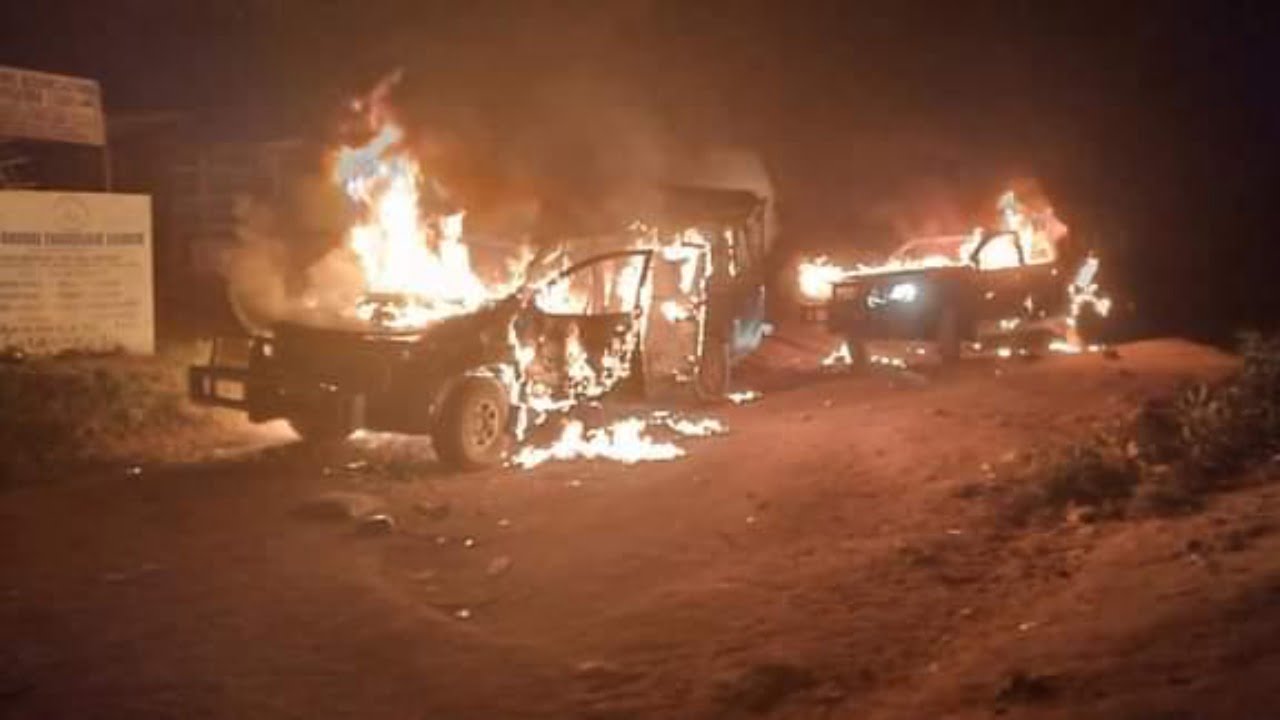
Bandits raided a military base in the Shinfida community, Jibia Local Government Area, Katsina State, killing one soldier and an official of the Nigeria Security and Civil Defence Corps (NSCDC).


By 10 p.m. Tuesday, the bandits were said to have stormed the base, shooting indiscriminately.


During the attack, they set fire to two patrol vehicles and utilized another patrol vehicle to transport food from nearby villages.


DSC Muhammad Abdara, a spokeswoman for the NSCDC in the state, verified the attack and the number of people killed.


According to reports, the officers who were shot died instantaneously, while those who sustained gunshot wounds were being treated at an unidentified hospital.


“The terrorists attacked the military base located within Government Day Secondary School Shinfida last Tuesday. They killed one soldier and one NSCDC officer on the spot and left many others injured.


“They attacked the military base on their motorcycles. Despite the efforts of the military personnel, the terrorists killed the two victims and set ablaze two patrol vehicles and drove away one with food items stolen from neighbouring villages,” the source was quoted as saying.