Kano State

Kano assembly serves impeachment notice to Deputy Governor Aminu Abdulsalam

By Uzair Adam

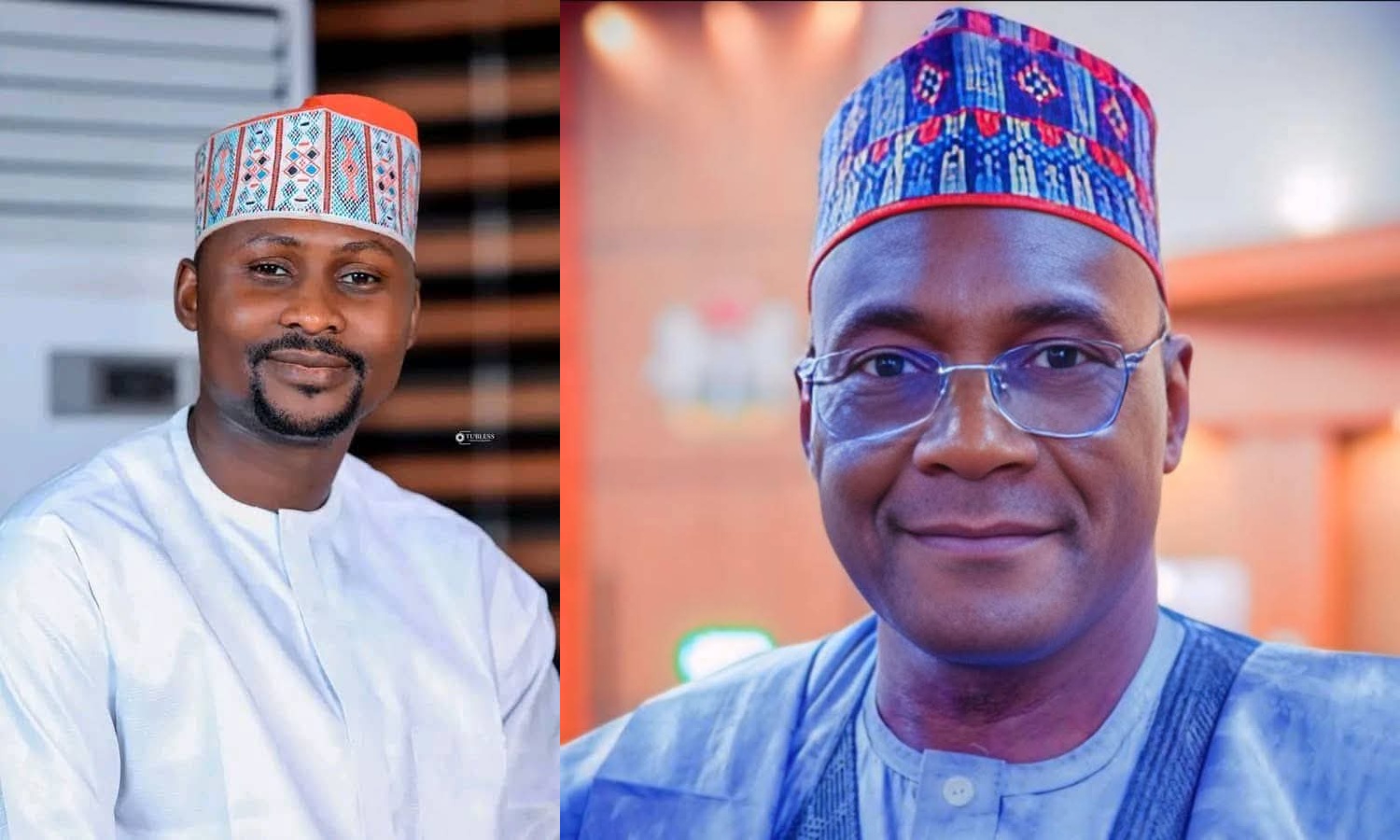
The Kano State House of Assembly has formally commenced the impeachment process against Deputy Governor Comrade Aminu Abdulsalam Gwarzo by serving him a notice to respond to allegations that could warrant his removal.

At a special plenary session on Thursday, the notice, read before the House, contained charges of gross misconduct, abuse of office, and breach of public trust.

Addressing journalists after the session, House Majority Leader Lawal Hussaini Yangurasa confirmed that he presented the notice, which was signed by 38 members of the House.

He explained that following the service of the notice, the deputy governor is expected to respond within two weeks, after which the House will review his defence before deciding whether to proceed with the impeachment process.

Details later….

Abba Yusuf, Kwankwaso and the politics of mandate

By Abdulhamid Abdullahi Aliyu

In Kano today, politics is no longer whispered in corridors; it is argued loudly in markets, mosques and on social media timelines. Since Governor Abba Kabir Yusuf’s reported decision to part ways with the NNPP, the city has become a theatre of competing loyalties, sharp sarcasm and deeper constitutional questions. Supporters have reduced complex political choices into street labels—Abba’s camp being teased as ’yan a ci dadi lafiya, while the Kwankwasiyya faithful wear wuya ba ta kisa as a badge of honour. Beneath the banter, however, lies a serious national issue: who truly owns a political mandate?

Governor Abba Yusuf did not emerge from a vacuum. His ascent to the Kano Government House was inseparable from the Kwankwasiyya political machinery, a movement painstakingly built by Senator Rabiu Musa Kwankwaso over two decades. From red caps to ideological messaging, the movement transcended party platforms and became a political identity. In the 2023 elections, many voters did not merely vote for a party; they voted for Kwankwasiyya as a symbol of continuity, defiance and populist appeal.

Yet, Abba Yusuf is no ceremonial beneficiary. He contested, won, survived legal battles and now governs with all the constitutional powers vested in an elected governor. His mandate, in law, is personal. Once sworn in, no political godfather—however influential—can legally issue directives from outside the Government House. This is where the tension lies: the clash between moral ownership of political capital and constitutional authority of office.

Those derisively tagged ’yan aci dadi lafiya by opponents argue that governance is about pragmatism, access to power and delivering dividends to the people. From their perspective, a sitting governor must build alliances beyond sentiment, protect his administration and ensure stability. Politics, they insist, is not a monastic vow of hardship but a strategic exercise in survival and results.

On the other side stand the wuya bata ƙi sa faithful—Kwankwasiyya loyalists who believe political struggle must be endured to preserve ideology. To them, Abba Yusuf’s move is not strategy but betrayal. They see it as an attempt to reap the fruits of a movement while discarding its architect. In their view, suffering with the movement, even outside power, is preferable to comfort without loyalty.

This divide exposes a recurring Nigerian dilemma: the uneasy relationship between political movements and the individuals they propel into office. From Awolowo’s disciples to Aregbesola’s rupture with Tinubu, Nigerian politics is littered with fallouts between founders and beneficiaries. Kano’s current drama is simply the latest chapter.

Kwankwaso’s influence in Kano politics is undeniable. Beyond elections, he represents a moral compass for millions who see him as a symbol of resistance against elite dominance. His supporters’ anger is therefore not merely partisan; it is emotional and ideological. To them, Abba Yusuf’s political identity was inseparable from Kwankwaso’s shadow.

However, governance demands autonomy. A governor who appears perpetually tethered to an external authority risks administrative paralysis and legitimacy questions. Abba Yusuf’s defenders argue that Kano cannot be governed from outside its constitutional structures. They insist that the electorate voted not just for Kwankwaso’s endorsement but for Abba Yusuf’s promise to lead.

The real casualty in this contest, unfortunately, risks being governance itself. When political energy is consumed by loyalty tests and factional supremacy, policy focus suffers. Kano’s challenges—urban congestion, youth unemployment, educational deficits, and security concerns—require a governor fully immersed in administration, not in constant political firefighting.

There is also the electoral implication. While Kwankwasiyya remains a formidable grassroots force, incumbency is a powerful weapon. State resources, visibility, and administrative control can quickly reshape political narratives. The assumption that loyalty automatically translates into electoral dominance may underestimate the pragmatism of Nigerian voters, especially when power dynamics shift.

Yet, Abba Yusuf’s path is equally fraught. Detaching from a movement that delivered his victory carries political costs. Kano’s electorate is emotionally invested, and symbols matter. If his administration fails to convincingly outperform expectations, the narrative of ingratitude could harden into electoral punishment.

Ultimately, this is not just a Kano story; it is a Nigerian one. It forces a national reflection on whether mandates belong to parties, movements, godfathers or the individuals elected by the people. The Constitution is clear, but politics rarely is.

Perhaps the wisest outcome lies not in triumph or humiliation but in recalibration. Political movements must learn to institutionalise beyond personalities, while elected officials must acknowledge the moral debts that brought them to power. Neither absolute loyalty nor total independence offers a sustainable path.

As the dust settles, the sarcasm of ’yan a ci dadi lafiya and wuya ba ta kisa may fade, but the questions will linger. In Nigeria’s democracy, mandate is both a legal instrument and a moral contract. Kano’s unfolding drama reminds us that ignoring either side of that equation comes at a cost—sometimes higher than any political suffering.

Abdulhamid Abdullahi Aliyu is a journalist and syndicate writer based in Abuja

Beware of social media scams targeting young footballers

By Hadiza Abdulkadir 

I am speaking out as a concerned sister after my younger brother from Kano, Nigeria, Ismail, was repeatedly contacted on TikTok by individuals claiming to be football agents.

They asked about his football journey and promised trials in another state where “European agents” would scout talented players. However, there was one condition: he had to pay for the registration form.

When I advised Ismail to ask what the form looked like, the so-called agent sent a blurry screenshot of a flashy, unprofessional document with no official logo, no verified organisation, and no connection to recognised bodies like the Nigeria Football Federation or FIFA. That was a big red flag.

According to people with deep knowledge about scouting, real agents do not randomly scout players on TikTok and demand upfront payments. Thankfully, Ismail asked questions before making any decision and did not send any money.

Many young footballers dream of playing professionally, and scammers are exploiting that dream. Parents and players must verify every claim, research every agent, and never pay fees without confirmed legitimacy.

Patience and due diligence can protect young talents from becoming victims. Beware.

Hadiza is Nigerian but writes from Cologne, Germany. She can be contacted via hadiza225@gmail.com.

On ‘Makiyan Kano’ slogan

By Umar Sani Adamu (Kawun Baba)

The defection of Kano State Governor Abba Kabir Yusuf from the New Nigeria Peoples Party, NNPP, to the All Progressives Congress, APC, has exposed more than a political shift. It has laid bare the fragility of slogans elevated above reason and the contradictions within Kano’s dominant political movement.

For years, the phrase “Mayiyan Kano” was used by followers of Senator Rabiu Musa Kwankwaso whenever events did not go their way. It served as a blanket response to court rulings, electoral outcomes, and opposing views. What began as a casual expression gradually hardened into a political shield used to dismiss criticism rather than engage it.

Ironically, Governor Yusuf was once celebrated as the ultimate proof of loyalty to the Kwankwasiyya structure. A report by The Daily Reality during the early phase of his administration went to remarkable lengths to present him as a devoted disciple of his mentor and political godfather. His actions, his rhetoric, and even his body language were framed as evidence of unquestionable allegiance. At the time, loyalty was portrayed as a virtue, and Yusuf was held up as its finest example.

That narrative has now collapsed under the weight of political reality. Following his defection, the same voices that once applauded his loyalty have rushed to brand him disloyal. The sudden moral outrage is striking not because politicians change camps but because of the selective memory at play. If loyalty were absolute, then it should have been defined beyond convenience. If it were conditional, then honesty demands admitting that politics is transactional, not sentimental.

The revival of Makiyan Kano, that’s “The enemy of Kano” or “One who works against the interests of Kano”. In this context reveals its emptiness. Rather than interrogate why a sitting governor would abandon the platform that brought him to power, some loyalists have retreated to slogans. It is easier to chant than to reflect. Easier to accuse than to accept that political authority ultimately rests with individuals, not movements.

What this moment exposes is a deeper problem within Kano politics: the attempt to freeze loyalty in time while ignoring changing realities. Governance is not sustained by personal allegiance to a mentor but by navigating power structures, resources, and national relevance. To pretend otherwise is to confuse political romance with political responsibility.

Supporters of the governor argue that his decision was informed by pragmatism and the pursuit of Kano’s broader interests. Whether one agrees or not, it is a position that deserves debate, not dismissal. Slogans do not govern states. Decisions do.

Makiyan Kano has returned to public discourse, but its meaning has shifted. It no longer signals confidence. It now sounds like frustration. In the end, movements that rely on chants instead of ideas often struggle when reality refuses to cooperate. Kano politics appears to be learning that lesson the hard way.

Umar Sani Adamu (Kawun Baba) wrote via umarhashidu1994@gmail.com.

Police bust major car theft syndicate in Kano, recover three vehicles

By Hadiza Abdulkadir

The Kano State Police Command has successfully dismantled a notorious six-member car theft syndicate, recovering three stolen vehicles in a targeted operation led by the Special Intervention Squad (SIS).

The crackdown followed a directive from the Inspector-General of Police to intensify efforts against organized crime. According to a statement by the Command’s Public Relations Officer, CSP Abdullahi Haruna, the breakthrough began on February 13, 2026, with the arrest of the primary suspect, 35-year-old Aliyu Mamman.

Mamman, a resident of Gusau, Zamfara State, was apprehended at Hotoro Ring Road in Kano. During interrogation, he confessed to stealing several vehicles across Kano, Kaduna, and Katsina States. His testimony led detectives to five accomplices: Abdulhamid Usman, Saliha Abdulhamid, Auwal Shuaibu, Sani Bala, and Ahmad Mannir.

The recovered vehicles include a Golf Wagon, a Golf Opel, and a Hijet (commonly referred to as “Kurkura”).

The Kano State Police Command attributed the success to its transition toward intelligence-led and technology-driven operations. Commissioner of Police Ibrahim Adamu Bakori has ordered a full investigation to identify other members of the network and urged the public to stay vigilant.

The suspects are expected to be charged in court following the conclusion of the investigation.

Governor Yusuf replaces Galadima as Kano Poly governing council chair

By Hadiza Abdulkadir

The Abba Kabir Yusuf has relieved Engr. Buba Galadima of his position as Chairman of the Governing Council of Kano State Polytechnic.

The decision was announced in a statement issued on Saturday by the Governor’s spokesperson, Sunusi Bature Dawakin Tofa.

In his place, the Governor approved the appointment of the Aliyu Ibrahim Abdulkadir, Emir of Gaya, as the new Chairman of the institution’s Governing Council.

According to the statement, the removal followed a restructuring process aimed at aligning the Polytechnic with the administration’s Kano First Agenda and ongoing reforms to enhance institutional performance. Although members of the Governing Council are expected to serve a three-year tenure, Galadima’s appointment was terminated before its expiration as part of the reform measures.

Governor Yusuf expressed appreciation to Galadima for his contributions during his tenure and urged the new Chairman to deploy his experience and leadership in repositioning the Polytechnic for improved academic and administrative excellence.

Fresh blaze hits Singa market, traders fear wider destruction

By Uzair Adam

A raging fire on Saturday tore through Gidan Gilas, popularly known as “Gidan Mai,” at Singa Market, destroying goods and triggering fresh fears among traders that the inferno could spread to nearby buildings.


The Daily Reality gathered that the shops, where provision materials are sold, was engulfed in flames as thick smoke rose into the sky, attracting a crowd of anxious residents and traders. Many were seen making frantic efforts to salvage goods while others attempted to stop the fire from extending to adjoining structures.

Eyewitnesses said parts of surrounding buildings had already been affected, deepening tension across the busy commercial hub. “The fire is still burning, and we are afraid it may catch other shops if help does not come quickly,” one trader said.

As of the time of filing this report, the cause of the outbreak had not been ascertained, with no immediate trace to what might have triggered the incident.

Officials of the Kano State Fire Service arrived at the scene with a tanker of water, but the supply was quickly exhausted as firefighters battled to contain the flames. Another tanker was later deployed to reinforce the effort.

A private water tanker from Aspira Nigeria Limited also joined the emergency response to assist in extinguishing the fire.

However, several traders expressed concern that the number of tankers on ground may not be sufficient to completely put out the blaze.

They warned that without additional support, the fire could escalate and affect a larger section of the market.

The latest incident comes just weeks after a devastating fire outbreak at Singa Market caused heavy losses for business owners, further compounding the challenges faced by traders in the area.

Hisbah to enforce ban on female passengers sitting beside tricycle drivers in Kano

By Hadiza Abdulkadir

The Kano State Hisbah Board has concluded arrangements to commence enforcement against female passengers who sit beside male tricycle drivers in Kano State, in a move it says is aimed at promoting morality in society.

In a statement issued by its Director of Public Enlightenment, Auwalu Ado Sheshe, the Board said the operation would be carried out in collaboration with associations of tricycle riders and owners across the state.

The directive specifically targets situations where women ride in close proximity to drivers who are not their maharams while using commercial tricycles, popularly known as Adaidaita Sahu. The Board described the measure as part of efforts to sanitize the transport sector and prevent actions that could attract the displeasure of Allah (SWT).

It called on all tricycle operators to comply with the new regulation to avoid sanctions, warning that enforcement would begin imminently.

Female passengers were also urged to adhere to the directive, which the Board said is intended to safeguard their dignity and that of their families.

The Hisbah Board reaffirmed its commitment to ensuring a morally upright society guided by Islamic teachings, stressing that it is fully prepared to enforce the measure across the state.

EFCC arraigns ex–FUDMA VC over alleged ₦19.7m bribery in Katsina

By Muhammad Sulaiman

The Economic and Financial Crimes Commission (EFCC), Kano Zonal Directorate, on Thursday, February 5, 2026, arraigned a former Vice-Chancellor of the Federal University Dutsinma (FUDMA), Professor Armaya’u Hamisu Bichi, before the Katsina State High Court over an alleged N19.7 million bribery scheme.

Bichi was docked before Justice Musa Danladi Abubakar alongside two others—Lawal Tukur Mani and Aliyu Lawal Jari—on a five-count charge bordering on bribery.

According to the EFCC, Bichi, while serving as Vice-Chancellor, allegedly received kickbacks from contractors through the two co-defendants in exchange for the award of contracts at the university. One of the charges alleged that he obtained N5 million in July 2023 from a contractor as gratification for contracts involving the supply of medical equipment and laboratory furnishing, with the funds paid into a bank account belonging to one of the co-defendants.

All three defendants pleaded not guilty to the charges.

Following their pleas, prosecuting counsel, Salihu Sani, requested a trial date, while defence counsel moved applications for bail. Justice Abubakar granted each defendant bail in the sum of N5 million with one surety in like sum and adjourned the case to March 12, 2026, for the commencement of trial.

Zauren Mallam Aminu Kano as a Social Repair

By Abubakar Muhammad

Crime is a prominent feature of the city. The mitigation of crime and other social vices is a responsibility that falls not only on the government. The health of society is a responsibility that spans multiple dimensions, from authorities with direct power to families and residents of the community as a whole. The social health of the city is also the work of architects and planners. 

Physical planning is an important factor in influencing the social health of society and its inhabitants. Respected voices in urban planning note how a great urban environment, in terms of design and social services, can enhance people’s quality of life and foster a sense of community. In this piece, I set out to use Zauren Mallam Aminu Kano as a social repair tool and a planning theory for combating crime and other social ills in our society. 

We have recently heard the gruesome murder of an entire family in Kano, first in Tudun Yola and then in Ɗorayi, by the same alleged criminals. Cities are characterised by petty and violent crimes. The job of residents and governments is to implement policies that prevent crime to ensure the safety of inhabitants and the prosperity of the city. Sustainable urbanism involves governments at various levels, as well as city residents. 

I was particularly happy weeks ago when I learned that communities around Dala have mobilised to construct a police station around Kuka Bulukiya cemetery to combat persistent phone snatching that has cost countless lives of innocent passersby. The idea of constructing security outposts in crime hotspots has been a productive strategy for combating crime. It is not only about fighting crime; it also replaces crime with security and constant human presence and activity. It not only prevents crime and protects lives but also brings life and economic activity to beleaguered areas.

My friend once took me to an area of the ancient city to pay my condolences. It was a long time ago I cannot remember the name of the neighbourhood. Those who know Kano intimately can piece together snippets from my narration to figure out the area. I can vaguely say that the area was around Mandawari, Yar Mai-Shinkafi, Gyaranya, Baƙin Ruwa, or Gwauran Dutse. We walked through the alleys after the condolence and appeared at the Aminu Kano Way. 

The neighbourhood has a shelter christened Zauren Mallam Aminu Kano. It is an open pavilion in the heart of the neighbourhood. I was intrigued not only by the discovery but also by the place’s name and social function. This was the first time I had ever heard of the place, or any shelter named Zauren Mallam Aminu Kano in the city. I began to think about the connection between the place and the famed radical politician. 

I did not ask the naming history behind the shelter, but my imagination wagered that this must be the spot where Mallam Aminu Kano hung out with friends and conducted his public life. It must be the local context where he started his political career, a gathering place for the nightly schooling and political organising. My guess was supported by my assumption that the place is located within the ancient city, and not far from his initial dwelling at the Aisami/Sani Mainagge axis. I was intrigued by the place for its great potential to build a community.

The Zauren Mallam Aminu Kano is a mini square and public space for the community. It enables the residents to perform social and religious functions. Residents of the neighbourhood, particularly the elderly and retirees, use the pavilion to hang out. The community uses the open space to perform the funeral salat for the deceased. The main street around the space serves as a collector road, receiving people from nearby alleys and neighbourhoods. Thus, the open space becomes vibrant with life. Residents and visitors use the space to park their vehicles. Around the square, activities sprang up: informal people, vendors, and small entrepreneurs set up stalls offering services, various wares, delicacies like tsire and awara, and other household items that cater to the neighbourhood’s hospitality and social needs. The shelter becomes a living room of the community. My reading is that Zauren Mallam Aminu Kano is an open space that allows residents to do things that they cannot perform in the narrow alleys of their neighbourhood.

Part II

For this reason, Zauren Mallam Aminu Kano stays with me. I want to suggest an expanded version of this space be built in as many places as possible in the ancient city, its suburbs and major towns across the state. This is based on key spatial ideas for sociability and security of communities and neighbourhoods. 

Ancient cities like Kano had been built around their traditional institutions. The city spread out from the Emir’s Palace, surrounded by other civic buildings such as the court and the central mosque, which eventually formed the city centre. Spreading in a radial pattern, subsequent expansions and settlements of the city and major towns followed the same tradition. All roads lead to the city centre. And the civic centre, or city centre, is almost always located in the vicinity of the traditional ruler’s dwelling. Outside the city, the Maigari’s or Dagaci’s house sat at the centre of the settlements.

The best location for the Zauren Mallam Aminu Kano is to look for the ugliest and most dangerous part of the neighbourhood and tear it down to create a large enough open space to build the shelter. This place should be the heartbeat of the area by consolidating basic services in one building: a small local clinic, a school, a library, administrative offices for Mai-unguwa, Dagaci, and security agents, and a conference room for important community meetings and non-partisan civic engagements.

A strong civic component and social life are essential. The idea is to overwhelm crime, blight and unsightly facades. The building can serve as a venue for adult literacy classes, mass education and public orientation centres for social mobilisation and political awareness. As a multipurpose building, the place can host activities such as elections, immunisation campaigns, skills and personal development training for local youth. 

A mosque can be located close to the shelter. Around the mosque, the elderly sit, dine, and eat. It is where they enjoy calm, festive hours by day and night. Zauren Mallam Aminu Kano should be the agora and living room of the community. Clusters of civic buildings, residential and commercial uses can create sociability. This is not new; it is something that needs to be consciously improved upon existing traditions. Several Hausa villages have a santa or tsakar gari, which serves mixed purposes and brings people together. Since the shelter is located near the mosque, it should also serve as an open space for conducting funeral prayers. Commercial activities can be encouraged around the area to provide a more vibrant economic life. In Kano city, many neighbourhoods have ƴar kasuwa within walking distance, allowing residents to make purchases for their daily needs. 

The small clinic located in the centre should offer first-aid services and cater to the health needs of the most vulnerable. It should deliver basic drugs and inexpensive medications, medical advice and other services that might not require a trip to the hospital. Local people with training in medical fields can volunteer to operate the place. They can also request NYSC corps members to be posted there. Funding can come from donations from wealthy residents of the community. People who have retired from active service in various walks of life can participate. Skilled individuals can also ask to set up offices and contribute their services to the community. Community services can serve as a clear benchmark for future political leaders. People can see what potential representatives have contributed to their local communities before they enter politics – what they have done for the people before asking for their votes.  

It would not be a bad idea to allow car owners to park their vehicles in and around the shelter. Community-owned assets, such as donated vehicles for transporting the deceased, a power transformer, and water sources like a borehole, can be sited there. The underlying assumption is that communities would actively work to protect their assets and improve their neighborhood. Their commitment or otherwise to safeguarding their assets is clear proof of their collective responsibility, leadership, accountability and readiness for sustainable development. 

The idea is to use Zauren Mallam Aminu Kano to make the targeted area active and vibrant with human activity. The dwelling of the traditional ruler should be sited there to continue to facilitate administrative functions and liaison with various levels of governments for record-keeping, issuing birth certificates and documents, and other civic engagements. The closest idea to this is Ofishin Wakili, which can be upgraded where they already exist. If built with magnificent architecture, places like this can become historic sites that represent the community and its traditions.  

The building should house an office for joint security agencies, including the police and Hisbah. This is where disputes will first be reported. It will enhance coordination and timely reporting of suspicious activities to support early crime prevention. Emphasis is placed on civil matters and on preventing violent crimes. The activities and involvement of the security should be largely civil and minimal. The point is to increase safety through informal supervision. Security agents, the elderly, and small business operators are public figures who keep an eye on the neighbourhood. Retirees and the elderly also fill the void and silence when others are at work or school. They can alert parents – and the security agents – to what is happening in the neighbourhood. Sustainable urbanism can be achieved by densifying social life in hitherto dark corners without militarising the neighbourhood. The refurbishment of the neighbourhood is a valued alternative to blight, providing security through communal social space. Services and buildings can be distributed according to the community’s needs and resources. The purpose is to chase away the thugs from the heart of the community and bring light to the dark corners and crevices. In the process, services are brought closer to the people. Traditional institutions are involved more closely and meaningfully in public service for their immediate communities.

Stakeholders – government, traditional institutions, and community members – should work together to realise the Zauren Mallam Aminu Kano as a state-supported, neighbourhood-funded civic infrastructure across Kano State. Zauren Mallam Aminu Kano should be conceived as a community and family resources centre for the neighbourhood’s residents. It should be designed as a crime-prevention tool through visibility, social life, and shared spaces that strengthen grassroots governance and access to basic services.  It is also an embodiment of the spatial practice of good neighbourliness, the warmth, and the communal character of the Mutumin Kirki society. 

 Abubakar Muhammad is from Kano, Nigeria.