By Ahmed Musa Husaini
In June last year, during the 12-Day war, I described the situation as the end of peace in the middle-east, arguing that a broader conflict between Iran and its proxies on one hand, and US-Israel and their gulf lackeys on the other, is inevitable.
Israel exists on three myths: that it is the only democracy in the middle-east, that it is a strategic asset for the US and the Christian West’s bulwark against an irrational Islamic and Arab enemy, thus positioning itself as US guarantor of American energy security, protector of western maritime lines, and other US/western interests without the need for permanent American boots on ground.
These myths lack any basis in facts or rational geopolitics. Israel is an apartheid state, a security liability for the US, and the biggest source of instability in the region that continues to occupy territories of it’s neighbors and violates more international laws and UN conventions than any country on earth.
Since its founding in 1948, Israel has fought multiple wars with its Arab neighbors. In the early years post-1948, Egypt emerged as its most sophisticated threat due to its size as the most populous Arab nation and its border with Israel, making it impossible to be decisively defeated by Israel in any conventional way.
Aware of such threats, Israel, worked through the US, to sign a peace treaty with Egypt in 1979, in what Israeli leaders and analysts referred to as the “most important strategic shift in Israel’s history,” one that reshaped Israel’s strategic environment in profound ways. It effectively neutralized the most powerful Arab military power, decapitated the Egypt-led Arab military coalition which had crossed Suez Canal in 1973 and took Israel by surprise. With Egypt now removed from the strategic equation, Israel could focus its resources elsewhere.
That’s why Menachim Begin was able to make far-reaching concessions to the Egyptians in 1979: returning the Sinai peninsula along with dismantling over 170 military Israeli installations, as well as the handing over of the Alma oil fields which at the time supplied half of Israel’s energy needs with estimated $100 billion in untapped reserves. To this day, the US pays Egypt $1.3-1.5 billion annually to maintain that agreement.
With the removal of the Egyptian threat, the years from 1979 to the end of the cold war marked a period of Israeli undisputed military superiority. It was Israel’s golden age, a period of unparalleled conventional military dominance. Nowhere was that superiority displayed than in its invasion of Lebanon in 1982 (and its defeat of Syrian forces) in order to dislodge the Palestinian Liberation Organization (PLO).
Ironically, it was Israel’s invasion of Lebanon in 1982 and its prolonged occupation of southern Lebanon that gave birth to Hezbollah. Hurting from the suffering and humiliation of the Shiite constituents in Southern Lebanon, Hezbollah emerged (under IRGC’s tutelage) with the explicit goal of ending Israeli occupation of southern Lebanon, a feat it achieved in 2000 when Israel was finally chased out of Southern Lebanon.
In the same vein, the eruption of the First Intifada due to years of Israeli occupation and subjugation of Palestinian Arab people led to the birth of Hamas as a military threat. Prior to that, Hamas was a local charity organization with a vast network of schools, clinics, mosques, and youth clubs, providing crucial social services and embedding itself in the daily life of Palestinian communities. Immediately after the outbreak of the first intifada, Sheikh Ahmad Yassin and other leaders announced the formation of Harakatul Muqawama Al-Islamiya – the Islamic Resistance Movement, known by its acronym as Hamas.
With the end of cold war, Israeli focus shifted to Iraq. Israeli illusion of invincibility was shattered during the Gulf War, with Saddam’s Iraq firing 39 scud missiles at Israeli population centers. For the first time, the Israeli home front was attacked by a different type of weapon that renders its air superiority ineffective, an experience that gave birth to Israel’s famed missile defense technology.
With the elimination of Saddam in 2003 in another costly US war at the behest of Israel, Israel’s new focus shifted to Iran. Iran represented a different kind of threat. For a start, Iran is a non-Arab, Shiite power, with a nuclear and missile delivery technology, and a network of proxies in Gaza, Lebanon, Syria, Iraq and Yemen; posing a challenge to Israel’s military dominance in ways its strategists could not have imagined in the heady days after its peace treaty with Egypt in 1979 or the elimination of Saddam in 2003.
In the build up to the Israeli-instigated US invasion of Iraq, Netanyahu even told the US Congress that removing Saddam Hussein from power would usher in a period of peace and stability in the Middle-east. Immediately Saddam was removed, the incitement shifted to Iran, and if Iran were to be removed today, Israel would create a new enemy to continue justifying its belligerence.
The fact is, Israel is created from chaos, from tragedy: the dispossession of millions of indigenous Palestinian Arab populations. The existence and survival of Israel as an occupier, expansionist, racial and ethnic state is predicated on endless chaos and conflict. Even if Hezbollah, Hamas or Iran do not exist, Israel would create one.
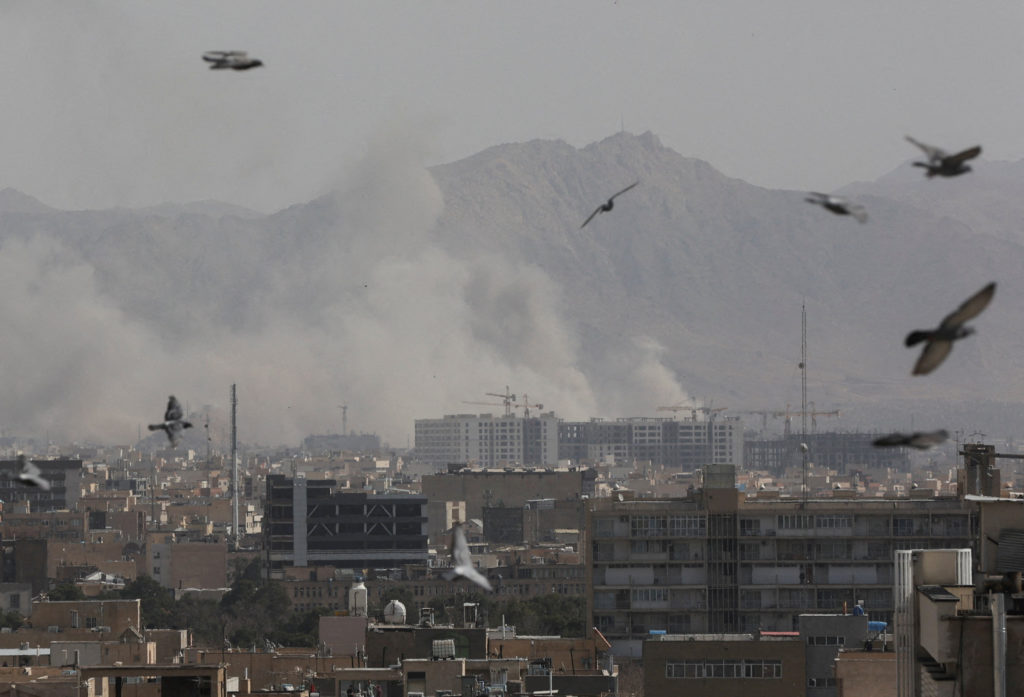
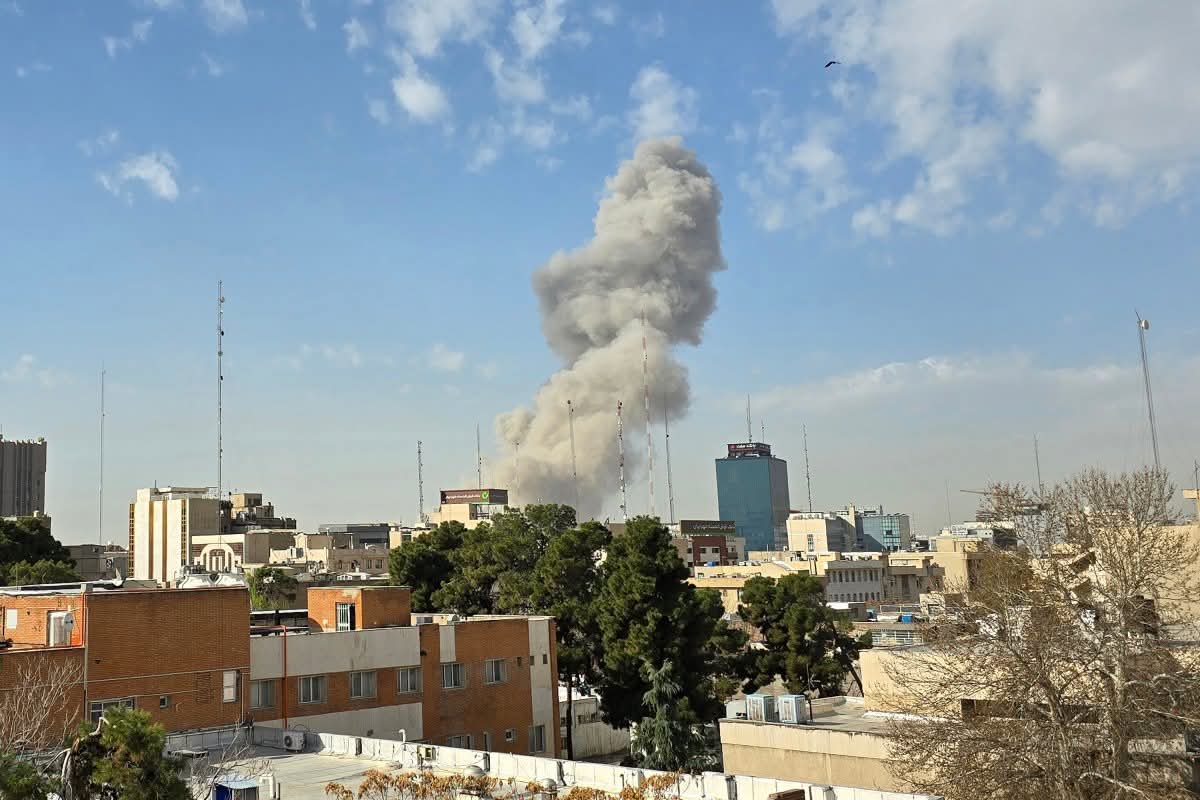
The current war with Iran is nothing but a continuation of Israeli impunity under American patronage, in order to guarantee Israel’s qualitative military edge, preserve America’s diplomatic monopoly, and continue to create conditions for continuous US presence in the middle-east.
That’s why Trump’s own objectives for the war keep changing, from regime change and liberating Iranians, to destroying Iranian defense capabilities and industrial infrastructure. Just days ago, the Iranians have agreed to most of Trump’s demands about halting uranium enrichment and the commitment not to pursue nuclear weapons, but negotiations for the US and Israel were just a smokescreen to buy time and reposition forces in the region.
I am under no illusion about American military superiority. If Iran were to fall today, if the Iranian threat were to be eliminated today, Israel would create another threat. Already, Israeli leaders are talking about Muslim nuclear-armed Pakistan and Muslim NATO member Turkey. For Israel to exist, a new enemy must be created after the elimination of the last one, a forever war is needed.
This state of forever war is important for Israel’s domestic population. The Israelis disagree on everything except on the treatment and subjugation of their Arab neighbors. Creating an external enemy serves as a unifying force against an existential threat, thus suppressing internal political and ethnic divisions, distract from their leaders (Netanyahu’s) domestic and personal failures, and delegitimize political dissent as betrayal.
It also has an international dimension. First on the basis of strategic interests by projecting Israel as America’s strategic asset against a common Muslim Arab enemy while conveniently ignoring Palestinian Christian suffering. And most importantly, from an apocalyptic dispensationalist theological belief that the triumph of Israel and the ensuing conflict are prophesied conditions for the “End Times,” culminating in the Battle of Armageddon and guaranteeing the return of Christ. To these groups, which form a core part of the Republican Party’s base and hold immense political influence, unconditional support for Israel is a religious duty and the conflict must continue and even intensify to fulfil a biblical prophecy.
These three elements: the need for an enemy, the value as an American proxy, and the political weaponization of apocalyptic theology make Israel’s policy of forever war not just a failure of American policy in the middle-east, it is the American policy itself. Israel will be locked into a cycle of creating and perpetuating enemies even if all its neighbors surrender.
But nature abhors vacuum. The resistance dynamic will always run its course. Actions will generate reactions. Israeli occupation and subjugation will create collective suffering, and collective suffering creates anger, desperation and desire for revenge, leading to radicalization and the emergence of violent resistance groups whose promise of resistance and dignity will always find fertile ground for recruitment and popular support. And the cycle repeats.
This is exactly what is happening in the current war on Iran. Iran knows quite well it cannot stand the combined military might of the US and Israel, but it chose to fight with dignity rather than face humiliation and surrender. This heroic and noble stand alone, whose story will be told across generations, will galvanize resistance movement across every inch of the middle-east, whose seeds will germinate in the next 20-30 years to trigger seismic geopolitical events across the region as was seen in the Iranian Revolution of 1979 and recently the Arab Spring.
Victory for Iran is not in militarily defeating the US, it is in denying the US and Israel their objectives of regime change and submissive leadership. It is the same victory the Taliban recorded in Afghanistan and the resistance bloc recorded in Iraq after over 20 years of US aggression and occupation.
The solution to all these lies first in saving Israel from itself, from its perpetual sense of forever war and tendency to self-destruct. Israel must be forced to exist as a single biracial state with equal rights for Palestinians and Jews, just as was the case with Apartheid South Africa. And secondly, America’s diplomatic monopoly must end. Asking America to broker a peace involving Israel is akin to asking Iran to broker peace involving Hezbollah. It is against the basic law of natural justice and fairness to ask the state that sponsors, arms, shields, and protects one side to serve as impartial broker.
To Achieve that, the Arabs, Israel’s immediate environment and victims, must do their part. These countries, are run by regimes who continue to ignore the suffering of their people in order to appease their American patrons. The world (Russia or China or any rival power) will not do the job for them. Neither Israel nor their American patrons will change their behavior without incentives. More Abraham Accords can be signed, and more middle-eastern governments can be co-opted into the illusion of American patronage and Israeli security, but as long as the Arab street reeks of domestic discontents and regional outcry against Israeli aggression, as long as the Palestinian question remains unsolved and Israeli belligerence remains untamed, a forever war is in our hands.