Ilorin

Fire Destroys Shops, Goods Worth Millions at Kwara Market

By Sabiu Abdullahi

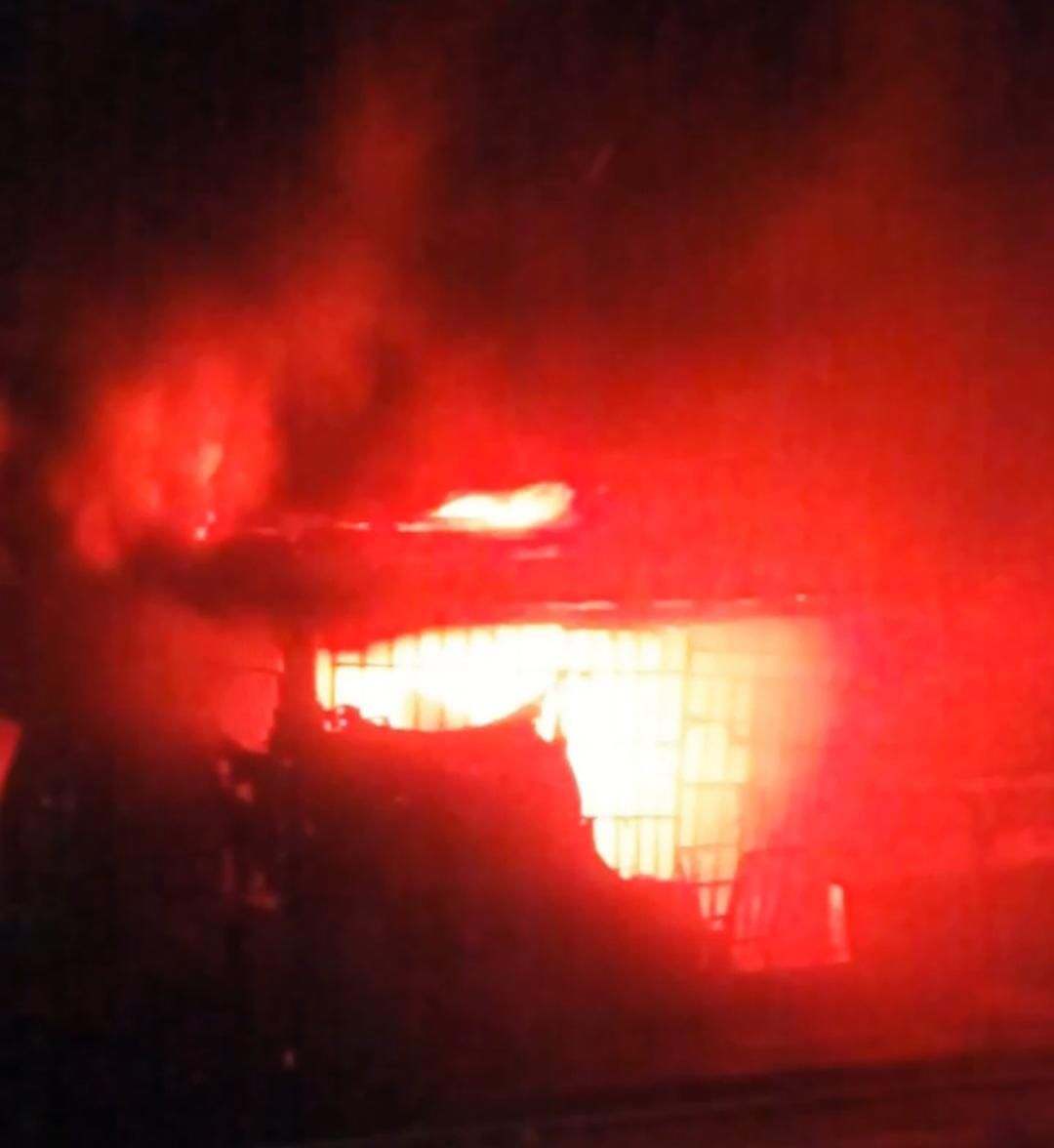
A fire outbreak has destroyed several shops and goods worth millions of naira at the popular Mandate Market in Ilorin, the Kwara State capital.

The incident occurred in the early hours of Tuesday and caused panic among traders and residents in the busy market.

Residents and traders reportedly tried to control the fire before firefighters arrived at the scene.

Eyewitnesses said many shops were affected, while traders lost large quantities of goods to the inferno.

The Babalola of Mandate Market, Alhaji Murtala Tambaruku, said the destruction left many traders devastated.

“Several properties were destroyed running into several millions of naira. Some of the traders fainted and we are talking about those selling rice, vegetable oil, drinks, drugs and gadgets. One of the rice sellers just got over five million naira supply yesterday and everything is gone.

“The walls and the shops were completely razed without the affected traders salvaging anything”, he said.

The Kwara State Fire Service confirmed the incident and said it received a distress call around 4:44am before firefighters were deployed to the market.

According to the agency, the affected section belongs to a market that contains more than 200 shops, while 24 shops were destroyed by the fire.

The Fire Service blamed the scale of the destruction on the late reporting of the incident, stating that the fire had already spread before emergency officials arrived.

“Nevertheless, the gallant firefighters of the Kwara State Fire Service displayed exceptional courage and professionalism in combating the inferno and successfully averted further destruction across the market,” the agency’s spokesperson, Hassan Adekunle, said.

Adekunle disclosed that preliminary findings showed that the fire started as a result of a power surge.

“The fire was said to have started from a shop dealing in phone accessories and phone charging services before spreading to adjoining shops where foodstuffs and other goods were stored,” he said.

He added that the Director of the Kwara State Fire Service, Alabi Muhammed, later visited the market to assess the level of damage and sympathise with the affected traders.

“During the visit, he met with leaders of the market associations and reassured them of the agency’s support.

“He also urged traders and market operators to prioritise fire safety measures, including the installation of fire extinguishers, smoke detectors, sprinkler systems, fire alarms and electrical protection devices,” he noted.

Adekunle also said the agency reminded market leaders about its yearly fire safety awareness campaigns across markets in the state and urged traders to follow safety guidelines to avoid future incidents.
Chief Imam of Ilorin, Sheikh Muhammad Bashir Saliu, dies at 75

By Muhammad Abubakar

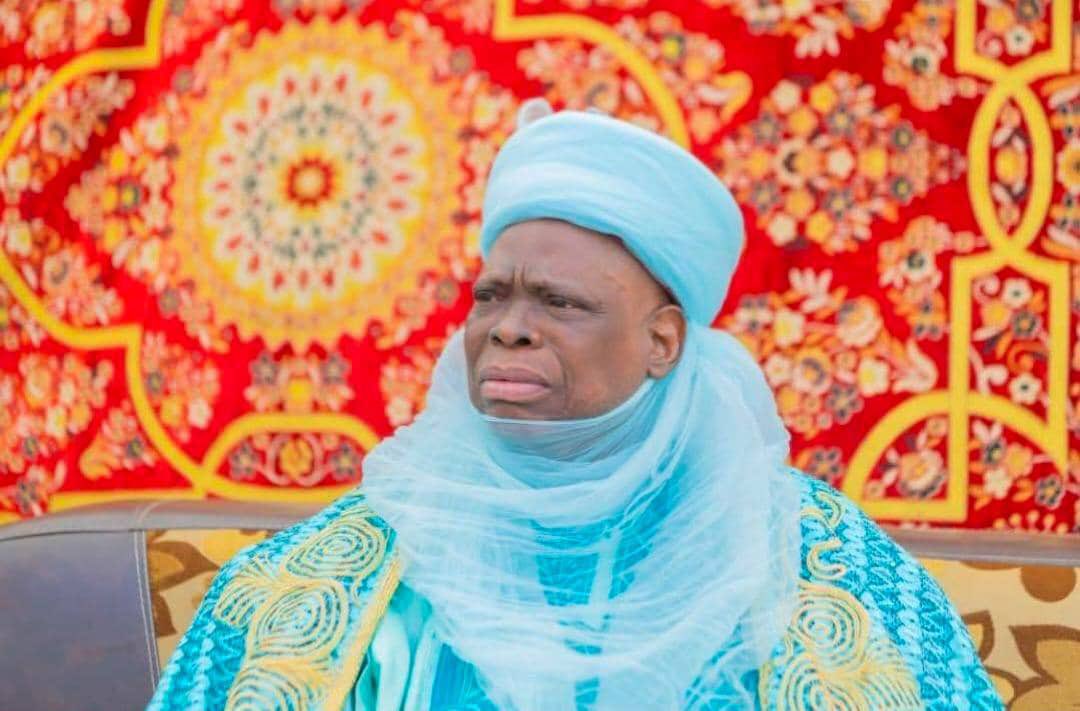
Sheikh Muhammad Bashir Saliu, the Chief Imam of Ilorin, has passed away at the age of 75.

His death was confirmed on Monday, January 19, 2026. The revered Islamic scholar reportedly died after decades of devoted service to Islam and the Ilorin Emirate.

Sheikh Muhammad Bashir Saliu was widely respected for his scholarship, spiritual leadership, and commitment to promoting peace and Islamic values within Ilorin and beyond.

His passing marks the end of an era for the Ilorin Muslim community, where he played a central role in religious guidance and communal affairs.

Tributes are expected to pour in from religious leaders, traditional institutions, and faithful across Nigeria, mourning the loss of a prominent cleric and community leader.

Saliu Mustapha: The echo Ilorin cannot ignore

By Haroon Aremu Abiodun

There are mornings in Ilorin when silence feels heavier than sound. The call from the mosques echoes through the still air, the streets breathe quietly, and the city wears its memories like scars. Old voices recall leaders who once came with grand promises of tomorrow, only for those promises to collapse into dust. Over time, people have learned to wait with folded arms, half-expecting betrayal, half-resigned to it. In such silence, names either fade away or return as stubborn echoes. For Ilorin, one such echo is Saliu Mustapha.

Ironically, his story does not begin with privilege or inherited power. Born on September 25, 1972, he followed ordinary paths: Bartholomew Primary School in Zaria, Command Secondary School in Kaduna, then Kaduna Polytechnic, where he studied Mineral Resources Engineering. His foundation was not gilded, but shaped by discipline and a technical education that sharpened his instinct for problem-solving, a skill he would later carry into politics.

Politics did not come to him as an inheritance. He carved his own space, first as the National Publicity Secretary of the Progressive Action Congress, and later as the National Deputy Chairman of the Congress for Progressive Change. These were not glamorous titles but challenging, foundational roles in party-building, long before the APC became the political behemoth it is today. His fingerprints are etched into the DNA of Nigeria’s political evolution, even before his name became widely recognised on the Senate floor.

In 2021, Ilorin’s political and traditional calculus shifted when Mustapha was turbaned as Turaki of Ilorin. What many saw as a mere ceremony was, in fact, a rupture of entrenched political alignments. For the first time, a politician already known for grassroots philanthropy was formally woven into the traditional fabric of Ilorin. That title would become part of his political identity, following him into every campaign, every negotiation, every conversation.

Today, he serves as the Senator representing Kwara Central and chairs the Senate Committee on Agriculture Production, Services, and Rural Development. This portfolio is not symbolic; it is central to Nigeria’s survival. In a country where food crises threaten households and livelihoods, the committee he leads touches what matters most: food on tables and jobs in villages.

But Abuja titles mean little without ground truth. On the streets of Ilorin and across Kwara Central, his presence is felt through the quiet but steady work of the Saliu Mustapha Foundation. From funding scholarships and refurbishing classrooms to constructing the Al-HikmahOnimalu road, his interventions blend education, infrastructure, and empowerment. His scholarship program for Arabic and Islamic Studies students, under the NBAIS framework, reflects cultural sensitivity that is often absent from mainstream politics.

Even his empowerment programs carry an unusual personal stamp. With ₦100 million branded as Turaki Cash, artisans and traders were lifted into small but meaningful stability. Unlike many politicians who shy away from direct ownership of initiatives, Mustapha attached his name to the initiative, underscoring his responsibility and intent.

There is also philanthropy done quietly, beyond the glare of headlines — clearing hospital bills for indigent patients, including children whose stories might otherwise never be heard. These gestures rarely make it into campaign flyers, but they build a loyalty deeper than billboards ever could.

Perhaps most striking is his approach to accountability. Unlike most of his peers, Mustapha documented his first year in the Senate with a public scorecard, published on his official website. Every project, every intervention, is laid out for public scrutiny. This transparency may not make him the loudest voice in the chamber, but it makes him one of the most accountable to the people he represents.

Recognition has followed. In 2025, the University of Ilorin hosted him as a Distinguished Personality, a rare academic acknowledgement that demonstrated his relevance had extended beyond politics into civic and intellectual spheres.

So what does all this mean on his birthday? It means that, unlike many whose legacies are written in lofty speeches, Saliu Mustapha’s is being written in roads, scholarships, markets, and farms. It means that, in a society addicted to noise, he has chosen the language of implementation. And it means his name has become that stubborn echo Ilorin cannot ignore.

Happy birthday to Senator Saliu Mustapha, Turaki of Ilorin. History has not given you a free pass; it has given you a challenge: to turn your uncommon record into an indelible legacy.

Haroon Aremu Abiodun is an Associate Member of the Nigerian Institute of Public Relations (NIPR).

Prof. Oloyede retires, leaving a lasting impact on higher education

By Ahmed Rufa’i Shehu

Although unprepared for this, I am excited to celebrate a renowned educational and religious scholar, Professor Ishaq Oloyede (JAMB Registrar), for his successful retirement from the University of Ilorin. 

Prof. Oyedele has left the famous University of Ilorin after spending meritorious years as a lecturer. This led to his appointment as the Registrar of the Joint Admissions and Matriculation Board (JAMB). 

Prof. Oloyede is undoubtedly one of the people who made the University of Ilorin one of the best in Nigeria and Africa. The send-forth dinner was very colourfully organised.

Although Prof. Oyedele has retired from active university teaching, he still contributes his quota to the tertiary education sector. The ancient city of Ilorin was alive with celebrations for Prof. Oloyede.

One need not mention the innovations he has brought to the conduct of the JAMB examination and the running of the board’s affairs, including the welfare of the staff. It’s a blessing to have him as a boss. His unwavering support for his staff will not be overemphasised. Therefore, for me, the University of Ilorin should grieve after losing this astute Scholar. 

It took me eight years to understand his policies despite my beliefs and doubts, but I have concluded that Professor Ishaq Oloyede means Discipline and Integrity.

Happy Birthday and Happy Retirement, Sir