Gaza

On Donald Trump’s decision against Nigeria

By Saidu Ahmad Dukawa 

Introduction

At last, the President of the United States, Donald Trump, has made the decision he had long planned against Nigeria, following complaints by some Nigerian Christians who alleged that they were victims of religious persecution in the country.

Trump had once placed a similar sanction on Nigeria during his first term, but after he lost the election to Joe Biden, Biden reversed that “rash and unfair” decision.

This new ruling, however, requires Nigeria to take certain actions in line with America’s interests — or face a series of sanctions. For example, these “American interests” could include the following:

1. Any Nigerian state practising Sharia Law must abolish it.

2. Any law that prohibits blasphemy against the Prophet Muhammad (peace be upon him) must be repealed.

3. Any location where Christians wish to build a church must grant them permission to do so.

4. Anything that Christians claim makes them “uncomfortable” in the country — such as businesses involving halal trade — must be stopped.

5. All businesses that Christians desire, such as the alcohol trade, must be freely allowed across the nation.

These are just examples of the complaints made by some Christian groups to the United States, which may also include political and economic demands.

This action by Trump mirrors what America once did to Iraq under Saddam Hussein — accusing the country of possessing weapons of mass destruction, just to justify an invasion.

If true justice were the goal, then both sides — the accusers and the Nigerian authorities — should have been listened to, including Muslim organisations that provided counter-evidence.

Even among Christians, many reasonable voices have spoken against these exaggerated claims, yet their words are ignored. Clearly, a plan against Nigeria had already been set in motion.

So, what is left for the Nigerian government and its citizens to do? Here is my opinion:

WHAT THE NIGERIAN GOVERNMENT SHOULD DO

1. Use diplomatic channels to inform the Trump administration that the situation is being misrepresented. Even if America remains adamant, the rest of the sensible world will know that any step America takes against Nigeria on this basis is pure injustice, and that knowledge itself will have benefits.

2. Reduce dependence on the United States in key areas such as trade, education, and healthcare. Nigeria should instead strengthen its ties with other countries, such as Russia, China, and Turkey.

3. Unite Nigerians — both Muslims and Christians who do not share this divisive mindset — to resist and expose any malicious plots against the nation.

WHAT THE NIGERIAN PEOPLE SHOULD DO

1. All Nigerians — Muslims and Christians alike — should begin to reduce their personal and travel ties with the United States, especially visa applications, as it may no longer be easy to obtain them.

2. Those who hold large amounts of US dollars should consider converting their funds into other global currencies.

3. Muslims with good relationships with Christians should not let this tension destroy their friendships — and vice versa. Let unity prevail.

4. Muslims must not lose hope or courage. They should realise that they have no powerful ally. Non-Muslims are the ones with global backing. The Jews can commit atrocities against Muslims, and America will support them. In India, Muslims are being killed — America is silent. In China, Muslims face persecution — America is silent.

In Nigeria, there is no single town where Muslims have chased out Christians, but in Tafawa Balewa, Christians expelled Muslims and took over the town. Terrorists who kill indiscriminately in Nigeria have taken more Muslim lives than Christian ones — yet Trump publicly declared that only Christian lives matter.

Still, Muslims can take comfort in one fact: Islam is spreading fast in both America and Europe. Perhaps, one day, when Islam gains ground there, justice and fairness will finally return to the world — because today’s problem is rooted in the injustice that Western powers built the world upon.

5. Nigerian Christians themselves need to wake up to the truth — that the Western world does not honestly care about Christianity, only about controlling resources and power.

If they really cared about Christian lives, they wouldn’t have ignored what’s happening in Congo — a country with one of the largest Christian populations — where Christians kill one another. The same goes for Haiti, South Sudan, the Central African Republic, and Rwanda.

There are numerous examples of Christian nations facing crises. And when Nigerian Christians think of running to the US for refuge, they will realise that America will not take them in. Therefore, it’s wiser to live peacefully with their Muslim brothers and sisters here in Nigeria.

6. Finally, it is the duty of all believers to constantly pray for Nigeria — that God protects it from every form of harm and evil.

Peace and blessings of Allah be upon you all.

Dr Saidu Ahmad Dukawa wrote from Bayero University, Kano (BUK).

Over 100 killed in Israeli strikes on Gaza amid ceasefire dispute

By Maryam Ahmad

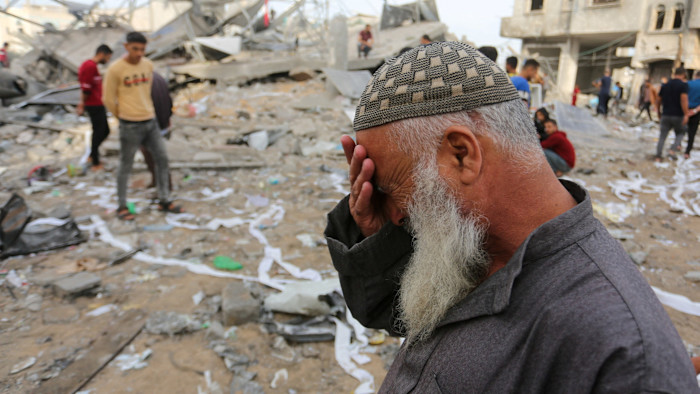
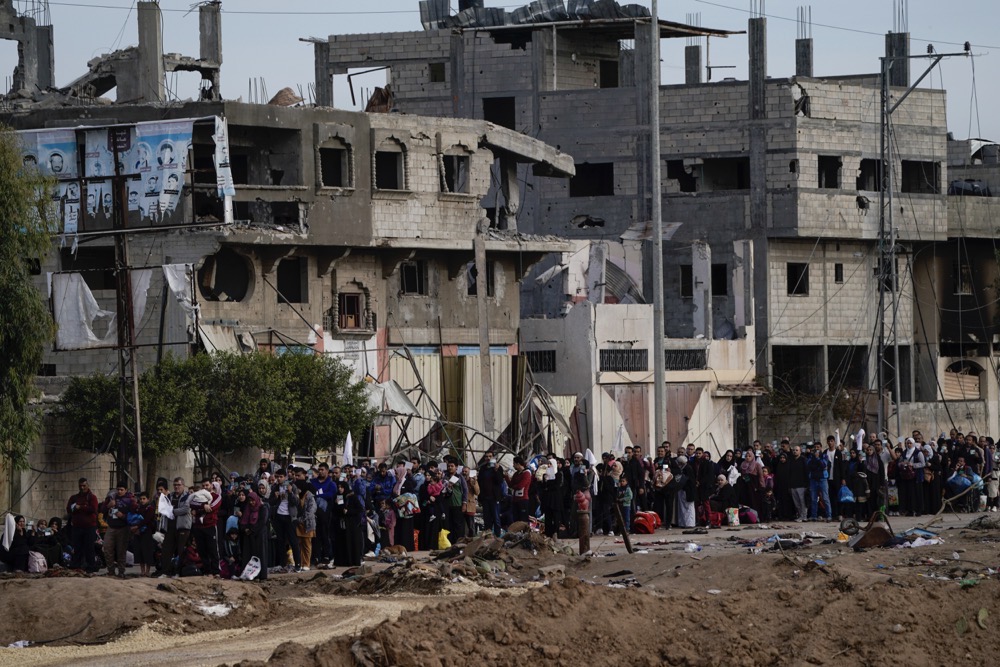
More than 100 people were killed in a series of Israeli airstrikes across Gaza on Tuesday, according to health officials in the enclave. The strikes came shortly after Israel accused Hamas of violating a fragile ceasefire agreement — an allegation Hamas has denied.

Palestinian health authorities said the attacks targeted several densely populated areas, leaving scores of civilians among the dead and many others injured. Rescue teams continued to search through the rubble for survivors late into the night.

In a statement, Hamas rejected Israel’s claims of ceasefire breaches and accused Israel of deliberately escalating the conflict. The group also said Israeli authorities had prevented the return of the bodies of Israeli hostages who were killed during earlier clashes.

The renewed violence has raised fears of a broader breakdown in the ceasefire, which had offered a brief respite after months of devastating fighting. International calls for restraint have grown as humanitarian conditions in Gaza continue to worsen.

Italy gripped by strikes over weapon shipments to Israel

By Muhammad Abubakar

Italy is witnessing widespread labour unrest as dockworkers, unions, and students have launched strikes and demonstrations to protest the shipment of weapons to Israel amid the Gaza conflict.

In Ravenna, Mayor Alessandro Barattoni and local authorities stopped two trucks carrying explosives meant for Haifa, citing solidarity with Palestinians and concerns over loopholes allowing arms transit through Italy.

In Genova, dockworkers participating in a strike have blocked access roads to the port and rallied under the banner of preventing Italian ports from facilitating arms transfers. Similar protests are underway in Livorno. Public transportation services have been disrupted in cities such as Rome and Milan, and several schools have been closed.

Unions are demanding that the Italian government suspend both commercial and military cooperation with Israel, close legal loopholes related to transit of arms, lift any humanitarian blockade on Gaza, and formally recognise the State of Palestine.

The protests highlight increasing internal tensions in Italy’s politics, especially under Prime Minister Giorgia Meloni’s government, which has traditionally aligned more with Israel diplomatically. Observers suggest the strike actions test if citizen and labour moral pressure can influence the government to curb arms exports and transit.

Eric Cantona calls for UEFA and FIFA to ban Israel as Spain proposes a World Cup boycott

By Muhammad Abubakar

Former Manchester United legend Eric Cantona has called on football’s governing bodies, UEFA and FIFA, to impose an immediate ban on Israel over its ongoing military actions in Gaza. Cantona, known for his outspoken views, said football cannot remain silent while civilians continue to suffer.

His statement comes amid growing international pressure on Israel, with Spain reportedly considering a boycott of the upcoming World Cup should the situation persist. 

Spanish officials have hinted that participation in global tournaments could be reconsidered if FIFA does not take more decisive action.

The calls echo previous instances where sporting sanctions were used as leverage against states accused of human rights violations, most notably the bans imposed on apartheid-era South Africa and, more recently, Russia following its invasion of Ukraine.

Neither UEFA nor FIFA has officially responded to Cantona’s demand or Spain’s potential boycott threat, but the developments add further weight to the debate over the role of football in addressing global conflicts.

Israel is committing genocide in Gaza, scholars say

By Muhammad Abubakar

The world’s foremost body of genocide experts has declared that Israel’s military campaign in Gaza meets the legal definition of genocide.

In a resolution issued this week, the International Association of Genocide Scholars (IAGS) urged Israel to “immediately cease all acts that constitute genocide, war crimes and crimes against humanity against Palestinians in Gaza.”

The association cited starvation, the blocking of humanitarian aid, and forced displacement among the practices that, in its view, fulfill the criteria set out under international law.

The resolution adds to growing international pressure as civilian casualties and a deepening humanitarian crisis continue to draw condemnation from human rights groups and global leaders.

Reuters journalist resigns, accuses Western media of ‘strongly’ enabling Israel’s murder of reporters in Gaza

By Sabiu Abdullahi

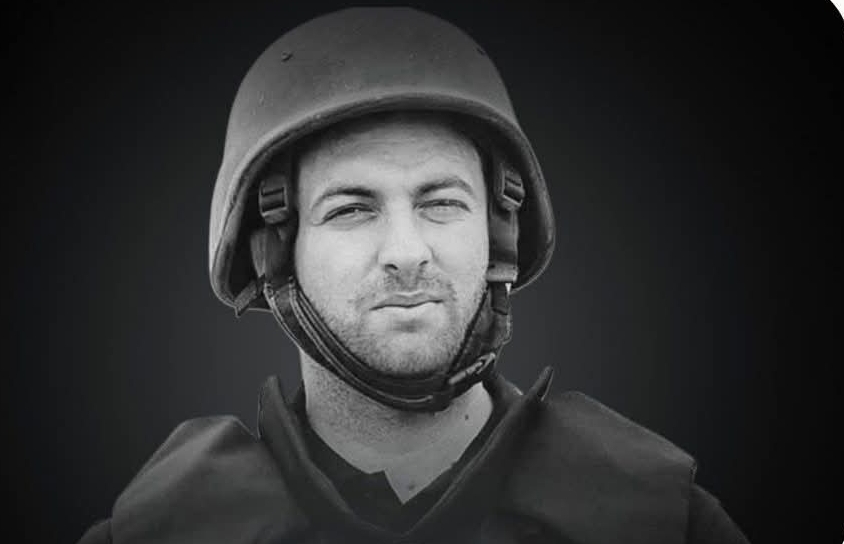
Canadian photojournalist Valerie Zink has announced her resignation from Reuters, accusing the news agency and other Western outlets of “justifying and enabling the systematic assassination of 245 journalists in Gaza.”Zink, who contributed to Reuters for eight years with her photographs widely circulated across the globe, said she could no longer remain linked to the organisation.

She argued that Reuters had failed in its journalistic duty by amplifying Israeli narratives while neglecting the plight of reporters under attack in Gaza.In a statement shared on social media Tuesday, she criticised Reuters’ coverage of the August 10 killing of Palestinian journalist Anas Al-Sharif.

“When Israel murdered Anas Al-Sharif, together with the entire Al-Jazeera crew in Gaza City on August 10, Reuters chose to publish Israel’s entirely baseless claim that Al-Sharif was a Hamas operative – one of countless lies that media outlets like Reuters have dutifully repeated and dignified,” Zink said.

She noted that Reuters’ stance had not shielded its own staff from Israeli attacks.“Reuters’ willingness to perpetuate Israel’s propaganda has not spared their own reporters from Israel’s genocide.

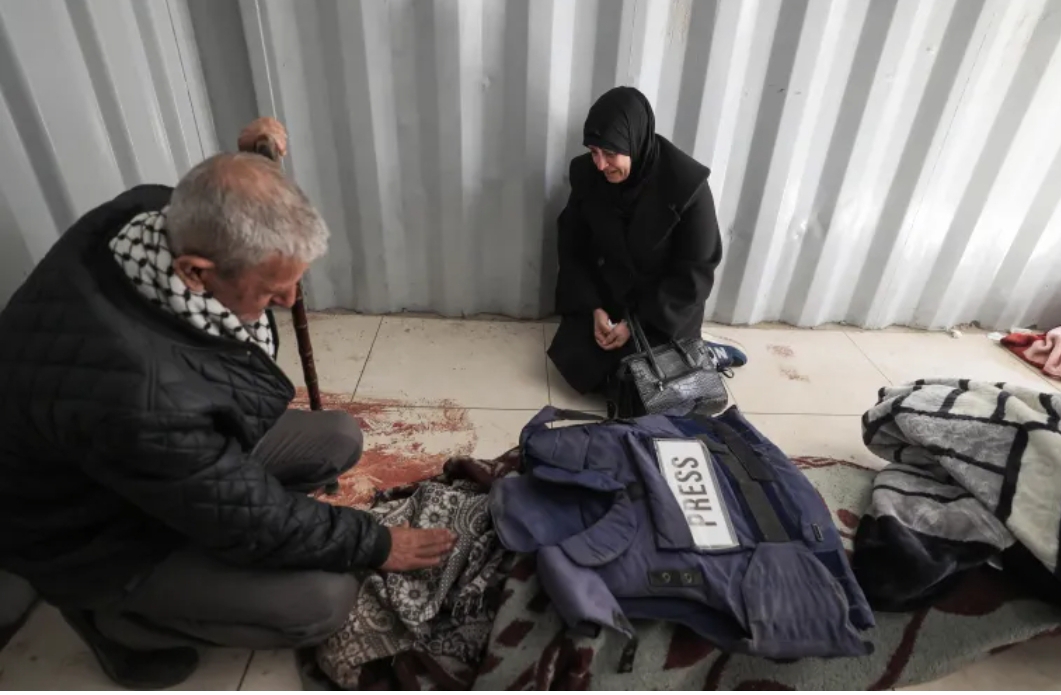
Five more journalists, including Reuters cameraman Hossam Al-Masri, were among 20 people killed this morning in another attack on Nasser hospital.

“It was what’s known as a ‘double tap’ strike, in which Israel bombs a civilian target like a school or hospital; waits for medics, rescue teams, and journalists to arrive; and then strikes again.”

Zink said responsibility for such killings also rested with Western outlets that repeated official talking points without scrutiny.

She referenced journalist Jeremy Scahill’s assessment, stating that “every major outlet – from the New York Times to the Washington Post, from AP to Reuters – has served as a conveyor belt for Israeli propaganda, sanitizing war crimes and dehumanizing victims, abandoning their colleagues and their alleged commitment to true and ethical reporting.”

According to her, this failure of duty has directly contributed to the unprecedented number of journalist deaths in Gaza.

“By repeating Israel’s genocidal fabrications without determining if they have any credibility – willfully abandoning the most basic responsibility of journalism – Western media outlets have made possible the killing of more journalists in two years on one tiny strip of land than in WWI, WWII, and the wars in Korea, Vietnam, Afghanistan, Yugoslavia, and Ukraine combined, to say nothing of starving an entire population, shredding its children, and burning people alive,” she said.

She also accused Reuters of turning its back on Al-Sharif despite his Pulitzer-winning work for the agency.

“The fact that Anas Al-Sharif’s work won a Pulitzer Prize for Reuters did not compel them to come to his defence when Israeli occupation forces placed him on a ‘hit list’ of journalists accused of being Hamas and Islamic Jihad militants,” she said.

“It did not compel them to come to his defence when he appealed to international media for protection after an Israeli military spokesperson posted a video making clear their intention to assassinate him following a report he did on the growing famine. It did not compel them to report on his death honestly when he was hunted and killed weeks later.”

Zink added that she now felt only grief and shame in carrying a Reuters press pass.

“I have valued the work that I brought to Reuters over the past eight years, but at this point I can’t conceive of wearing this press pass with anything but deep shame and grief,” she said.

She vowed to dedicate her future work to honouring Gaza’s fallen journalists. “I don’t know what it means to begin to honour the courage and sacrifice of journalists in Gaza – the bravest and best to ever live – but going forward I will direct whatever contributions I have to offer with that front of mind.”

At least 20 people, including five journalists, were killed on Monday after Israeli strikes hit al-Nasser Hospital in southern Gaza, according to Palestinian health officials.

The Guardian reported that the dead included Hussam al-Masri, a Reuters cameraman; Mariam Abu Dagga, a freelance journalist with the Associated Press; Mohammed Salam of Al Jazeera; and Moaz Abu Taha, who worked with NBC. Another Reuters photographer, Hatem Khaled, was severely injured.

Footage aired by al-Ghad TV showed civil defence workers and journalists in orange vests attempting to recover al-Masri’s body when they themselves came under fire. In their final moments, the rescuers raised their hands for protection before being struck.

Nine Dutch ministers resign in solidarity with Gaza

By Muhammad Abubakar

In a stunning act of political defiance, nine Dutch ministers have resigned en masse, declaring they could not be complicit in what they described as the “silent endorsement of a humanitarian catastrophe” in Gaza.

The resignations have sent shockwaves through the Netherlands’ political establishment, shaking the foundations of the coalition government and igniting fierce debate across Europe. In their fiery joint statement, the departing ministers condemned the West’s “selective morality” and accused their own government of “turning a blind eye to mass suffering.”

Crowds gathered outside parliament in The Hague to applaud the move, with activists hailing it as an unprecedented moral stand in modern European politics. Critics, however, warned the resignations could plunge the government into chaos at a time of deepening international tensions.

“This is not about politics; it is about conscience,” one of the resigning ministers declared. “History will not forgive silence in the face of Gaza’s devastation.”

Analysts say the mass resignation marks a rare moment where political survival has been sacrificed for principle—an act many believe will reverberate far beyond Dutch borders.

OIC summit convenes amid Middle East turmoil, with little hope of influence

By Muhammad Abubakar

Leaders and foreign ministers from the 57 member states of the Organisation of Islamic Cooperation (OIC) are gathering in Istanbul this Saturday for a high-stakes summit overshadowed by escalating tensions in the Middle East, most notably Israel’s war with Iran and the ongoing devastation in Gaza.

Iranian Foreign Minister Abbas Araghchi is set to attend, as many of his counterparts are expected to call for an immediate ceasefire. Yet the OIC, long criticised for its limited political clout, is unlikely to shift the course of either conflict.

The situation in Gaza—now in its 21st month—remains dire. Humanitarian workers report that more Palestinians are killed by the Israeli army while trying to collect food than in actual combat. 

On June 17th, at least 59 people were killed when Israeli tanks reportedly opened fire near an aid distribution centre run by the Israel-backed Gaza Humanitarian Foundation. Israel’s military has pledged to investigate the incident.

Despite repeated condemnations and emergency meetings, the OIC has remained largely powerless in stemming the violence in Gaza. With tensions now spilling into a broader regional confrontation, the summit is expected to issue a familiar call for peace that few expect to alter the course of events.

US Army colonel suspended after calling Israel “Our worst ally”

By Muhammad Sulaiman

The U.S. Army has suspended Colonel Nathan McCormack following controversial remarks in which he described Israel as “our worst ‘ally,’” igniting a firestorm of political and military reaction.

In a statement made during a closed-door security forum that was later leaked online, Col. McCormack reportedly said: “Israel is our worst ‘ally.’ We get literally nothing out of the ‘partnership’ other than the enmity of millions of people in the Middle East, Africa and Asia.”

The Pentagon confirmed McCormack’s suspension on Tuesday, stating that the remarks are under formal review for possible violations of the Uniform Code of Military Justice and Department of Defence policies on political expression.

“While service members are entitled to personal opinions, public statements by active-duty officers that could affect diplomatic relations are taken seriously,” a Defence Department official said on condition of anonymity.

Col. McCormack, a senior officer with experience in multiple overseas deployments, has not yet commented publicly, but sources close to him say he stands by his critique and views it as a matter of strategic honesty.

His suspension has drawn sharply divided reactions. Critics called his comments inflammatory and damaging to U.S.-Israel relations, while supporters praised his candour, arguing that Washington’s unconditional support for Israel has long gone unquestioned within military circles.

The incident adds to a broader debate in Washington over the costs and consequences of U.S. foreign policy in the Middle East, especially amid ongoing international criticism of Israel’s actions in Gaza and Iran.

Sanders condemns Netanyahu’s attack on Iran, warns against U.S. involvement

By Muhammad Sulaiman

U.S. Senator Bernie Sanders (I-Vt.) issued a strongly worded statement condemning Israeli Prime Minister Benjamin Netanyahu’s unilateral military strike on Iran, calling it a reckless escalation that defies international law and endangers global stability.

Sanders accused Netanyahu of previously violating the Geneva Conventions through the starvation of children in Gaza and now pursuing an illegal attack on Iran, risking a full-scale regional war. He stated that the strikes ignored the diplomatic efforts of the United States to resolve tensions over Iran’s nuclear program and undermined planned negotiations.

“The world is more dangerous and unstable as a result of the extremist Netanyahu’s government ongoing defiance of international law,” Sanders said.

The senator urged the U.S. and international community to resist being drawn into another conflict, and instead push for de-escalation and renewed diplomacy.

“We should do everything possible to prevent an escalation of this conflict and bring the warring parties to the negotiating table,” he emphasized.