Gaza

Al Jazeera Correspondent Killed In Israeli Strike As Journalist Death Toll Rises In Gaza

By Sabiu Abdullahi

An Al Jazeera correspondent, Mohammed Wishah, has lost his life after an Israeli strike reportedly hit his vehicle in Gaza City.

The incident happened amid ongoing clashes despite a ceasefire brokered by the United States to ease tensions. Wishah’s death has increased concern over the rising number of journalists killed in the conflict.

According to Al Jazeera, the strike directly hit his vehicle, killing him at the scene. Details surrounding the attack remain uncertain, and Israeli authorities have not issued an immediate response.

In a statement released on Wednesday, the network said: “Al Jazeera Media Network strongly condemns the heinous crime of targeting and killing Al Jazeera Mubasher correspondent, Mohammed Wishah, following a strike on the vehicle in which he was travelling west of the Gaza Strip.

“This constitutes a new and flagrant violation of all international laws and norms, and reflects a continued systematic policy of targeting journalists and silencing the voice of truth.”

The organisation described the incident as part of a broader pattern of attacks against media workers. It said the development signals an escalation that threatens press freedom and limits coverage from the region.

“Mohammed Wishah joins the ranks of Al Jazeera journalists killed by Israeli occupation forces in Gaza: Samer Abu Daqqa, Hamza Al Dahdouh, Ismail Al Ghoul, Ahmed Al Louh, Hossam Shabat, Ibrahim Thaher, Mohammed Qreiqea, Mohammed Nofal, Anas Al Sharif, and Mohammed Salama,” Al Jazeera said.

“As Al Jazeera mourns its correspondent Mohammed Wishah, who joined the Network in 2018, it affirms that his killing was not a random act but a deliberate and targeted crime intended to intimidate journalists and prevent them from carrying out their professional duties.”

The network said it holds Israeli forces responsible for the incident. It added that the action forms part of a consistent pattern aimed at silencing its reporters and restricting coverage on the ground.

Al Jazeera extended condolences to the family and colleagues of the deceased. It stated that such incidents will not stop its work. The organisation also urged the international community and rights groups to act. It called for accountability and an end to attacks on journalists.

The network said it will pursue legal steps to ensure justice for its staff and other journalists killed in Gaza.

Wishah’s death brings the number of Palestinian journalists killed since October 2023 to 262. The figure has raised fresh concerns among press freedom groups about the safety of reporters in conflict zones.

Elsewhere in Gaza, violence has continued. Health officials said at least 10 people died in an Israeli airstrike near a school that sheltered displaced residents in central Gaza.

“At least 10 people were killed and dozens injured, including six in critical condition, by Israeli shelling and clashes east of Maghazi refugee camp,” the Al-Aqsa Martyrs Hospital said in a statement.

Witnesses reported that drones fired missiles during the incident. The attack followed clashes between residents and members of a militia said to have Israeli backing.

“The residents tried to defend their homes, but the occupation forces targeted them directly,” Ahmed al-Maghazi told Reuters.

The latest developments have increased scrutiny on conditions faced by journalists and civilians in Gaza, where access to safe environments remains limited amid continued military operations.

Israeli air strike kills Palestinian journalist Amal Shamali in Gaza

A Palestinian journalist, Amal Shamali, has died after an Israeli air strike hit the Nuseirat refugee camp in central Gaza, according to the Palestinian Journalists Syndicate (PJS).

Shamali worked as a correspondent for Qatar Radio. The PJS said the journalist was killed on Monday when Israeli forces carried out the strike on the camp.

In a statement, the union explained that Shamali had also contributed to several Arab and local media organisations. It added that she remained active in her profession despite the ongoing war in Gaza. The organisation said she was among reporters who continued their work throughout the conflict in the territory.

The PJS described the rising number of journalists killed in Gaza as alarming. It noted that more than 270 journalists and media workers have died since Israel launched its military campaign in the enclave on October 7, 2023. The war began after Hamas-led attacks targeted southern Israel.

The union said: “This represents one of the bloodiest periods for journalists in modern history, reflecting the scale of the deliberate targeting of Palestinian journalism in an attempt to silence the voice of truth and prevent the documentation of the crimes and violations committed against the Palestinian people.”

The organisation added: “Targeting journalists will not succeed in breaking the will of the Palestinian journalistic community or deterring it from fulfilling its professional and humanitarian mission of conveying the truth and documenting the crimes and aggression faced by the Palestinian people.”

Gaza’s Government Media Office also reacted to the killing. In a statement, it said it “strongly condemns the systematic targeting, killing, and assassination of Palestinian journalists by the Israeli occupation”.

The office further stated that it “holds the Israeli occupation, the U.S. administration, and the countries participating in the crime of genocide – such as the United Kingdom, Germany, and France – fully responsible for committing these heinous and brutal crimes”.

It called on international and regional media organisations, as well as human rights groups, to condemn what it described as attacks against journalists in Gaza. The office urged the international community to work toward holding Israel accountable for its “ongoing crimes” against Palestinian journalists.

Data compiled by the monitoring platform Shireen.ps indicates that Israeli attacks have killed roughly 13 journalists every month during the more than two years of fighting. The platform is named after Al Jazeera journalist Shireen Abu Akleh, who died after Israeli forces shot her in the occupied West Bank in 2022.

The monitoring group also reported that at least 10 of the journalists killed during the war worked for Al Jazeera. One of them was Arabic correspondent Anas al-Sharif, who reported extensively from northern Gaza.

Researchers say the war in Gaza has become the deadliest conflict for journalists in modern times. The Costs of War project at Brown University reports that the number of journalists killed in Gaza since October 7, 2023 exceeds the total killed in several major wars combined. These include the US Civil War, both World Wars, the Korean War, the Vietnam War, conflicts in the former Yugoslavia, and the post-9/11 war in Afghanistan.

A report released earlier this year by the International Federation of Journalists (IFJ) also identified Palestine as the most dangerous place in the world for journalists in 2025.

The report said the Middle East recorded the highest number of journalist deaths last year. It accounted for 74 fatalities out of the 128 media workers killed worldwide. Africa followed with 18 deaths. The Asia-Pacific region recorded 15, while the Americas had 11 and Europe reported 10.

Meanwhile, Gaza’s Ministry of Health says that since a ceasefire mediated by the United States and Qatar took effect in October, at least 640 Palestinians have died and about 1,700 others have been wounded.

Health authorities in Gaza say that since the start of the war in October 2023, at least 72,123 Palestinians have died and 171,805 have been injured. Israeli officials say that 1,139 people were killed during the Hamas-led attacks on Israel on October 7, 2023.

The return of naked power: What Africa must learn from today’s global conflicts

By Iranloye Sofiu Taiye

The world has entered a phase in which power no longer feels compelled to wear moral disguises. From Eastern Europe to the Middle East, from East Asia to Latin America, coercion has re-emerged as an acceptable instrument of statecraft, and sovereignty has become increasingly conditional, least respected when convenient and violated when costly restraint disappears.

The Russia–Ukraine war, China’s posture towards Taiwan, Israel’s war in Gaza, and the long-standing pressure campaign against Venezuela are not isolated crises. They are symptoms of a systemic transition: the erosion of post–Cold War restraint and the reassertion of raw power politics in a crowded, mistrustful, and increasingly multipolar international system.

For Africa, this moment is not abstract. It is existential. The same forces reshaping Europe, Asia, and Latin America are already present on the African continent through resource competition, security outsourcing, debt diplomacy, sanctions regimes, proxy alignments, and political conditionality. The difference is that Africa often confronts these forces without a unified strategy, relying instead on appeals to history, morality, or international goodwill. That approach is no longer sufficient.

Realist theory, as articulated by thinkers such as Hans Morgenthau and John Mearsheimer, offers a brutally honest diagnosis of the international system. It reminds us that global politics is characterised by anarchy, not law; that survival, not virtue, motivates states; and that power, not rhetoric, ultimately determines outcomes.

Recent conflicts confirm realism’s core claims: Russia acted in Ukraine not because of moral failure but because it perceived a narrowing window to secure its sphere of influence. China’s pressure on Taiwan is driven less by ideology than by long-term assessments of capability, timing, and strategic opportunity. Israel’s conduct in Gaza reflects the logic of overwhelming deterrence in an insecure regional environment. The United States’ treatment of Venezuela illustrates how economic warfare substitutes for direct military intervention in an era of reputational constraints.

In each case, capability trumped legality, and vulnerability invited pressure. Yet realism, while accurate in diagnosing power behaviour, becomes dangerous when treated as destiny. Taken to its logical extreme, it suggests that weaker states have only three options: submission, alignment, or destruction. This is analytically lazy and politically paralysing.

History and current global practice demonstrate that survival is not reserved for the strongest but for the most strategically positioned. The key distinction between states that withstand pressure and those that collapse is not moral standing but strategic architecture.

Ukraine did not survive Russia’s invasion because it matched Moscow militarily. It survived because it transformed a bilateral war into a multilateral stake. By embedding its security dilemma within NATO, the EU, and global norms, Ukraine increased the cost of Russian victory beyond the battlefield.

Taiwan’s resilience lies not only in its arms but also in its economy. Its centrality to global semiconductor supply chains converts any military action into a worldwide economic crisis. Invasion becomes irrational not because it is impossible, but because it is prohibitively disruptive.

Palestine commands unprecedented global sympathy yet remains structurally vulnerable. Without credible security guarantees, economic leverage, or institutional power, moral legitimacy alone has not translated into sovereignty.

Venezuela’s leadership adopted confrontational rhetoric without building defensive alliances, diversified economic networks, or institutional shields. The result has been isolation, sanctions, and internal fragility, confirming that outrage without insulation invites coercion. The lesson is stark: states do not survive because they are right; they survive because they are costly to dominate. Afghanistan’s resilience is a case study. 

Africa today occupies a paradoxical position. The continent is: Central to the global energy transition (critical minerals), demographically pivotal, geopolitically courted by rival powers, and numerically powerful in multilateral institutions; alas, Africa remains strategically fragmented. Most African states still approach global politics through the language of gratitude, alignment, or moral appeal rather than through calculated leverage. The continent’s diplomatic posture is often reactive rather than anticipatory.

This is dangerous in a world where: aid is weaponised, debt is politicised, sanctions are normalised, and security assistance comes with strategic strings. Africa risks becoming the quiet theatre of the next great-power contest, not because it is weak, but because it is insufficiently coordinated.

What Africa requires is neither idealism nor cynicism, but strategic realism with agency a doctrine that accepts power politics while refusing subjugation.

Such a doctrine would rest on five pillars.

1. Strategic Indispensability: Africa must move beyond raw resource exportation toward value-chain centrality. Countries that control processing, logistics, and industrial ecosystems are harder to coerce than those that merely supply inputs.

2. Networked Sovereignty: Sovereignty in the 21st century is not isolationist. It is embedded on favourable terms through regional blocs, trade regimes, and security compacts that dilute unilateral pressure.

3. Institutional Power, Not Institutional Faith: Africa must stop treating international institutions as moral referees and start using them as arenas of contestation. Voting blocs, agenda-setting, and procedural leverage matter.

4. Strategic Non-Alignment, Not Passivity: Non-alignment must evolve from rhetorical neutrality into active hedging, diversifying partnerships, avoiding dependency traps, and exploiting multipolar competition without becoming a proxy.

5. Continental Coordination: No African state, regardless of size, can negotiate effectively alone in a hardened global system. Continental coherence in economic, diplomatic, and security-related is no longer aspirational; it is existential.

Conclusively, power will not wait for Africa to be ready; the defining feature of the emerging world order is not chaos, but selective constraint. Power will be exercised where resistance is weak, fragmented, or sentimental and restrained where costs are high, and consequences diffuse. Africa cannot afford another century of learning this lesson too late. The continent must abandon the illusion that shared history, moral standing, or international sympathy will shield it from coercion. Those narratives did not protect Ukraine, Palestine, or Venezuela. They will not protect Africa.

What will protect Africa is a strategy: the ability to anticipate pressure, restructure vulnerability, and convert relevance into leverage. In a world where power has shed its disguises, survival belongs not to the loudest protester, but to the most strategically prepared.

Iranloye Sofiu Taiye is a policy analyst and wrote via iranloye100@gmail.com.

Pep Guardiola speaks out for Palestinian children at Barcelona charity event, says “I’m not neutral; I’m Palestinian”

By Sabiu Abdullahi

Manchester City manager Pep Guardiola has delivered an emotional speech in support of Palestinian children, calling on world leaders to take action over the humanitarian crisis in Gaza.

Guardiola spoke on Thursday evening at a charity concert in Barcelona, which led to his absence from Manchester City’s usual pre-weekend news conference on Friday. The club later explained that he missed the briefing for personal reasons, with assistant coach Pep Lijnders stepping in to address the media ahead of Sunday’s Premier League match against Tottenham Hotspur.

Appearing on stage wearing a keffiyeh scarf, the 55-year-old expressed deep distress over the suffering of children affected by the conflict.

“Good evening, salam alaikum, how wonderful,” Guardiola said at the event.

He went on to describe the scenes that have troubled him over the past two years. “When I see a child in these past two years with these images on social media, on television, recording himself, pleading, ‘where is my mother?’ among the rubble and he still doesn’t know it.”

Guardiola said such images often left him reflecting on the emotional state of the children involved. “And I always think: ‘What must they be thinking?’ And I think we have left them alone, abandoned.”

He added that he imagined the children calling out for help. “I always imagine them saying: ‘Where are you? Come help us.’”

The Manchester City boss criticised global leadership for failing to respond adequately. “And even now, we haven’t done it. Perhaps because those in power are cowards, because they basically send innocent young people to kill innocent people.”

Guardiola urged collective responsibility and action, calling for what he described as a “step forward,” as he said he was making “a statement for Palestine and… a statement for humanity”.

His comments came amid continued tension in Gaza. Although Hamas and Israel agreed to a ceasefire in October, Gaza’s health ministry reports that more than 400 Palestinians have been killed in the months that followed. Israeli media, citing senior military officials, also reported that Israel’s military now accepts that around 70,000 Palestinians have been killed since the war began.

Guardiola’s appearance at the Barcelona event took place during the football season, with Manchester City scheduled to return to action on Sunday.

Israeli air strikes kill 11 Palestinians in Gaza, health ministry says

By Sabiu Abdullahi


At least 11 Palestinians were killed in Israeli air strikes across the Gaza Strip on Saturday, according to the territory’s ministry of health, AFP reports.

The ministry said the victims included civilians who were taking shelter in a tent in the southern part of Gaza. Munir al-Barsh, the general director of the ministry, which operates under Hamas authority, told AFP that 11 people were killed and 20 others were injured “as a result of strikes carried out by the occupation targeting civilians in a tent and an apartment”.

Barsh said those wounded were taken to hospitals in Gaza City in the north and Khan Yunis in the south for medical treatment.

He also accused Israel of breaching the ceasefire agreement. According to him, Israel “continues its serious violations of the ceasefire agreement amid a severe shortage of medical supplies, medicines and medical equipment”.

Meanwhile, Gaza’s Hamas-run government press office said the strike on the tent in the south killed seven members of the same displaced family. The victims reportedly included a child and an elderly person.

A ceasefire brokered by the United States has been in place since October and entered its second phase in January. The phase is expected to involve Hamas’s disarmament, a gradual withdrawal of Israeli forces, and the deployment of an international stabilisation force. Despite the agreement, Israel and Hamas have repeatedly accused each other of violating the truce.

According to the Gaza health ministry, 509 people have been killed since the ceasefire took effect on October 10.

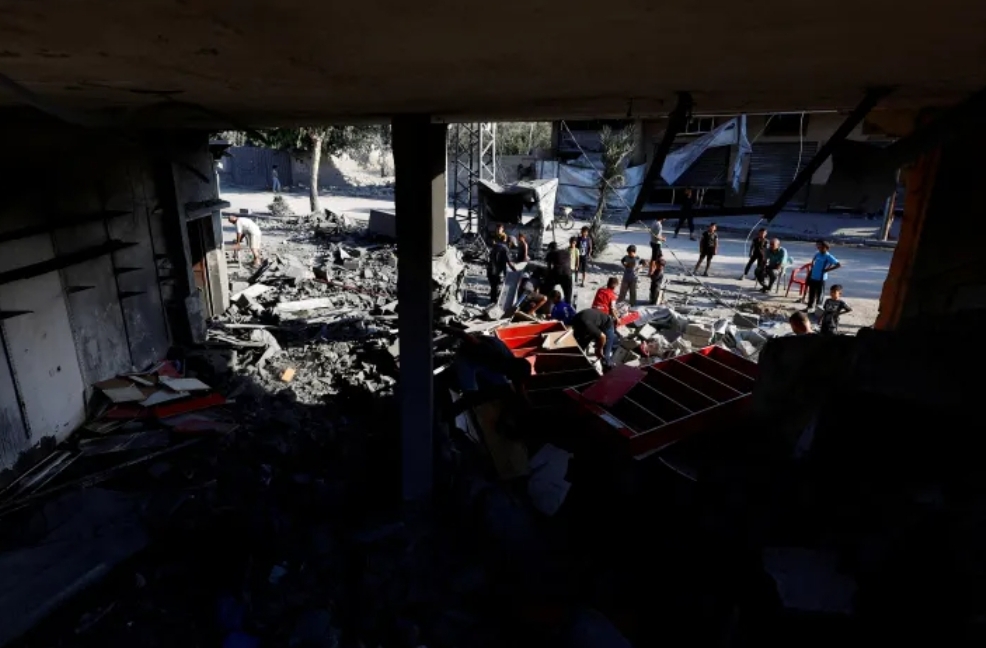
The war has displaced almost the entire population of Gaza at least once. Many residents still live in tents or makeshift shelters across the territory.

The conflict began after Hamas launched an attack on Israel on October 7, 2023, which killed 1,221 people, based on an AFP tally using official Israeli figures. Israel’s military response caused widespread destruction in Gaza, a territory that had already faced repeated rounds of fighting and an Israeli blockade imposed since 2007.

The health ministry said more than 71,769 people have been killed in Gaza since the start of the war. The United Nations considers the ministry’s figures to be reliable.

Gaza infants battle harsh cold as Israel continues to restrict aid flow

By Sabiu Abdullahi

Humanitarian workers have raised fresh concerns over the deteriorating living conditions in the Gaza Strip, warning that freezing temperatures are worsening the health situation of displaced families as Israel maintains tight restrictions on relief supplies.

Doctors Without Borders, also known as MSF, disclosed on Wednesday that infants across Gaza are “suffering from severe cold” while thousands of families remain in fragile, makeshift shelters following months of destruction.

The organisation reported a surge in respiratory infections, skin ailments and other cold-related illnesses, which have spread rapidly among vulnerable groups living in overcrowded and poorly protected encampments.

In a message shared on social media, the group stated: “People are facing torrential rain and heavy winds while living in makeshift shelters,” and added, “All the while Israel continues to block or delay the entry of vital supplies like tents, tarpaulins, and temporary housing.”

Large parts of Gaza’s population have been displaced since the outbreak of the war, forcing hundreds of thousands of families to seek refuge in tent settlements and damaged structures that offer little protection against the harsh winter weather.

Humanitarian observers note that the continued blockade of essential materials has contributed to widespread hunger and worsening health conditions. Legal analysts have also pointed out that the restrictions breach Israel’s obligations as an occupying power to ensure the welfare of civilians in territories under its control.

The limits on aid deliveries also contradict a ceasefire arrangement brokered by the United States in October, which required Israel to permit the daily entry of 600 humanitarian trucks into Gaza. Despite repeated appeals from the United Nations and other international bodies, the restrictions have remained in place.

Israel has further tightened its stance by cancelling the operating permits of 37 aid organisations, among them MSF and the Norwegian Refugee Council. The new regulations demand extensive disclosure of staff details, funding sources and operational activities.

Responding to the development, MSF said the decision “is a cynical attempt to prevent organisations from providing services in Palestine and is in breach of Israel’s obligations under international humanitarian law”.

Meanwhile, Gaza continues to endure strong winds, heavy rainfall and sub-zero temperatures, which have intensified the suffering of displaced families sheltering in inadequate living conditions.

The ceasefire has not halted violence completely. According to figures released by the Palestinian Health Ministry, at least 424 Palestinians have lost their lives since October 11, while another 1,199 people have sustained injuries in continued Israeli attacks.

As winter deepens, humanitarian agencies warn that without the urgent delivery of shelter materials and relief items, the health crisis in Gaza could worsen further in the coming weeks.

World Council of Churches urges EU to sanction Israel over Gaza genocide

By Ibrahim Yunusa

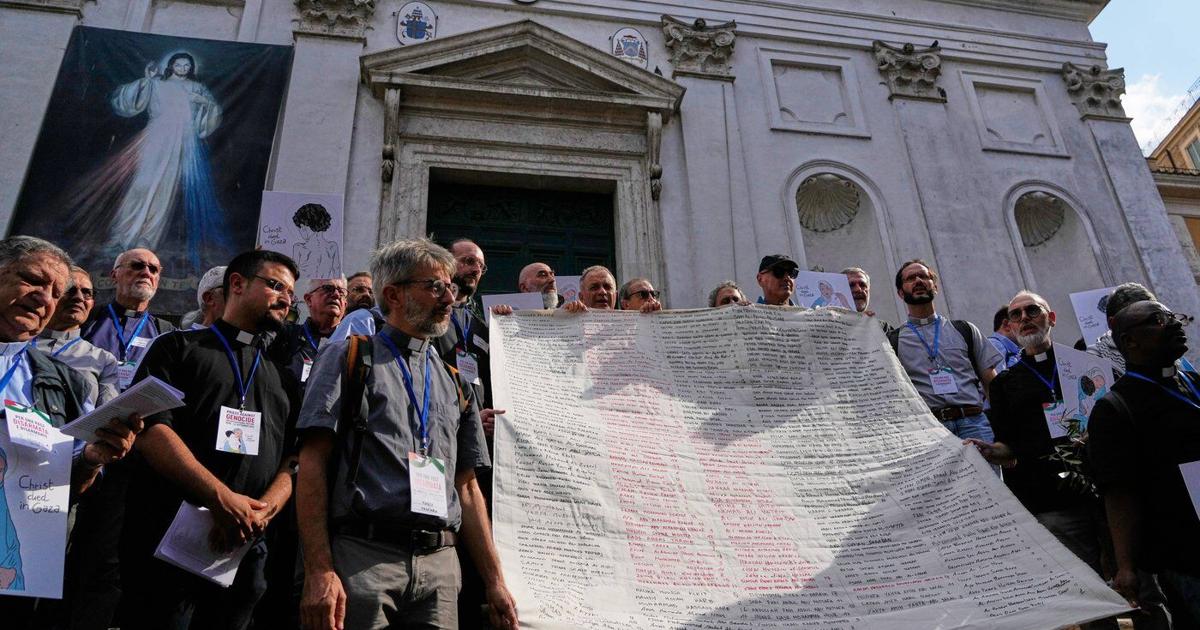
The World Council of Churches (WCC) has called on the European Union to impose sanctions and an arms embargo on Israel, citing what it described as a “war of genocide” in Gaza and an ongoing pogrom against Palestinians in the West Bank.

Speaking on Tuesday, Iskandar Majlton, a local coordinator of the Ecumenical Accompaniment Programme in Palestine and Israel a WCC-affiliated initiative said the council was deeply shocked by the relentless violence and human suffering unfolding in the region.

Majlton emphasized that the WCC’s position is grounded in international law and human rights, condemning all attacks on civilians regardless of the source. He described the situation in Gaza as an “unprecedented humanitarian disaster,” with thousands killed mostly women and children and nearly the entire population displaced amid destruction, hunger, and disease.

He further stressed that the ongoing crisis did not begin in October 2023 but is rooted in decades of occupation, the blockade of Gaza, and structural inequality, urging global actors to address the deeper causes behind the cycle of violence.

Christmas: Pope Leo urges Israel to honour ceasefire commitments

By Maryam Ahmad

In his Christmas address, Pope Leo appealed for an immediate end to violence and renewed efforts toward peace in the Gaza Strip. Speaking to worshippers during the traditional Christmas message, he expressed deep concern over the humanitarian suffering caused by the ongoing conflict.

The Pope called on world leaders and all parties involved to choose dialogue over confrontation, stressing the need to protect civilians, especially children and other vulnerable groups. He urged the international community to work tirelessly for a just and lasting peace in the Gaza Strip and across the broader Middle East.

He also lamented reports of continued killings of Palestinians in the Gaza Strip, noting that violence has persisted despite announcements of a ceasefire. The Pope described the situation as deeply troubling.

He called on Israel and all parties to respect international humanitarian law, honour ceasefire commitments, and take concrete steps to end the suffering of civilians caught in the conflict.

Concluding his message, Pope Leo emphasised that the spirit of Christmas is rooted in compassion, reconciliation, and hope, values he said must guide global responses to conflict and human suffering.

Mainz lose court appeal over Anwar El Ghazi’s dismissal

By Maryam Ahmad

Bundesliga club Mainz 05 have lost their appeal against the unfair dismissal ruling in favour of Dutch winger Anwar El Ghazi, who has been awarded €1.7 million in compensation.

A German labour court had earlier found that the club acted unlawfully when it terminated El Ghazi’s contract in November 2023 following social-media posts he made during the Gaza–Israel crisis. The arbitration panel upheld that decision, rejecting Mainz’s argument that the posts constituted grounds for immediate dismissal.

In a statement, Mainz said it accepted the ruling but stressed its commitment to maintaining its internal code of conduct. El Ghazi welcomed the outcome, describing it as a vindication of his right to express his views.

Italian journalist dismissed after question on Israel at EU briefing

By Maryam Ahmad

Italian journalist Gabriele Nunziati, a Brussels-based correspondent for the Italian news agency Nova, has been dismissed after posing a question about Israel during a European Commission press briefing.

According to reports from La Stampa, Nunziati asked officials about Israel’s responsibility in the ongoing Middle East conflict — a question his employer later described as “inappropriate” and “embarrassing.” Shortly after the exchange, Nova informed him that his collaboration had been terminated.

The incident has sparked debate within journalistic circles about press freedom and the limits of editorial control. Colleagues in Brussels expressed concern that the dismissal reflects growing pressure on journalists covering sensitive international issues, particularly those related to Israel.

Neither Nova nor the European Commission has issued a detailed statement on the matter. Nunziati, for his part, has defended his question as a legitimate exercise of journalistic duty.