Federal Government of Nigeria

ASUU Strike: Endless negotiations and FG’s disregard for the future of Nigerian students

By Babatunde Qodri

Since Nigeria’s independence in 1960, we have never witnessed such a long and suffocating strike as it is at the moment when public tertiary institutions would be closed down, and there would be no serious move by those concerned to avert it. In two years, our universities have suffered unprecedented deterioration due to incessant industrial action by the Academic Staff Union of Universities (ASUU).

Consequently, students are often condemned to stay at home. But this is what we get any time we elect a leader that cares less about the education sector. Ministers of Education and Labour Adamu Adamu and Chris Ngige, respectively, largely contribute to this agelong industrial action. Yet, despite a series of meetings, nothing tangible has happened to facilitate the return of students to class. This is unarguably appalling. 

Professor Emmanuel Osodeke, ASUU Chairman, recently revealed the lack of readiness by the Federal Government to yield to the demands of striking lecturers when he appeared on Channels TV. Osodeke slammed the Minister of Labour for misleading the public on the development while accusing the Federal Government of insincerity in its dealing with the Union. One then wonders whether this administration actually places a premium on the future of Nigerian students. The government’s body language is symptomatic of what these abandoned students have to contend with for years.

This is not to throw a jab at the Minister of Education or the Labour Minister. Unarguably, however, I am disturbed by the carefree approach of the Federal Government to the situation that affects millions of young Nigerians. It is sad to stress that this unfortunate development has resulted in many problems.

For instance, several Nigerians affected by the industrial action have been forced into activities that negatively affect society and their future. Because they say idle hands are susceptible to devilish errands, most students are now into internet fraud and other related engagements to the country’s detriment. This is in addition to the fact that some of these students, having stayed at home for a long, have lost interest in education, thereby engaging in unprofitable endeavours.

It is necessary also to admit that the protracted strike translates to a waste of time, with students spending more time than necessary. And this puts them at a disadvantage. While their counterparts in private and state universities have seamlessly unhindered years to run and complete their programs, students in public universities are trapped. Those supposed to be used as innovation agents are abandoned to situations that delimit them. This is thoroughly depressing.

Moreover, the strike has a way it contributes to the debilitating nature of the Nigerian education system. Today, Nigerian lecturers seek opportunities outside the country to make their skills and knowledge relevant. There are cases of Nigerians in the medical fields going to countries abroad in search of better conditions. This is not good for the country as it ultimately leads to a shortage of competent lecturers in our various public tertiary institutions. Even if the industrial action is called off, the fact that it has forced talented Nigerians to opt to lose confidence in the system remains a threat.

My final take: If the Federal Government cannot meet up with the demands of the Union, at least it must identify with its clamour since it is in the best interest of public tertiary institutions. Both parties must forge a new mode of communication that recognizes the yearnings of Nigerians. Done based on sincerity, the government might agree to attend to the union’s demands in batches. Between all of these is the need for committed Ministers of Labour and Education who can drive the Government to do the needful. This is necessary to put the country on the path of steady development.

Babatunde Qodri wrote via babatundelaitan@gmail.com.
On derogatory comments and memes about ASUU members

By Kasim Isa Muhammad

Someone I will not mention by name forwarded memes written in the Hausa language to my WhatsApp number. The content reads: “Tunda naga level coordinator din mu ya sa Shadda a status, na karaya.” This means “I lost hope upon viewing the brocade on the status of our level coordinator.” At first glance, of course, one would laugh it out. But, on second and more critical thought, the memes are a deliberate attempt to ridicule members of the Academic Staff Union of Universities (ASUU), whose salaries have been stopped for the past four months or so by President Buhari-led government.

That is one of the several unhealthy memes spreading on social media about ASUU members and their predicament due to the strike. Unsurprisingly, the person who intentionally shared this meme and his likes are bent on making caricatures of ASUU members. This explains the level of irresponsibility and how mean people can be.

In the first place, a university lecturer that converted their social media page for the sole purpose of business enterprise signifies that the lecturer in question is responsible and utilizing the strike effectively. When did engaging in business become a subject of ridicule? Or a sheer violation of the code of conduct?

Let me educate the public a little. The job description of all Nigerian academics includes teaching, research, home and community service, or any other duty as assigned by the Head of the Department. The work has been made flexible to enable lecturers interested in other genuine businesses to complement the paltry salary they receive each month.

Notably, lecturers in departments that are practice-based, such as law, medicine, mass communication, theatre, fine arts, and engineering, to mention a few, have the upper hand in multiple sources of income. This is because they engage in private practice outside the university job, which serves as’ Plan B’. 

Sadly, a portion of the blame goes to the government for reducing the profession to ridicule and making it less attractive because of the absence of a decent salary and deliberate stoppage of salaries whenever members embark on strike. Nothing like this can happen in a saner society.

Kasim Isa Muhammad is a student at the Department of Mass Communication, University of Maiduguri.

ASUU Strike: Negotiations end, ASUU awaits FG’s position

By Uzair Adam Imam

Reports from different sources have indicated that negotiations between the federal government of Nigeria and the Academic Staff Union of Universities (ASUU) have been completed.

Meanwhile, ASUU awaits reports from the federal government to decide the fate of many promising students in the country.

However, demands of the union were made through a committee set up by the government to negotiate with it. The committee was reportedly headed by Prof. Nimi Briggs.

Speaking, the ASUU President, Prof. Emmanuel Osodeke, stated that the union had done its best in the circumstance.

He added, “we have made our presentations to the committee, and there is nothing more to add.”

Dear children of the masses, wake up

By Hassan Ahmad Usman

What else do we need to see before we believe that we don’t have anyone to cry out to, fight with, or even be our hope? 

Two things happened over the weekend that explained clear how dualism exists in Nigeria. First, the gap between the so-called “elites” and the masses is so wide that you can’t imagine these two people living and sharing a country.  It is a clear call for us, the less privileged children, to have sense and redirect where we burn our energies and pursue a realistic future.

First, when airline operators announced their resolution to stop operations on May 9 due to the ever-increasing prices of aviation fuel, we thought it was time for them too (elites) to feel how discomfort Nigeria can be and how a malfunctioning Nigeria is not suitable for anyone. But our curiosity got punctured when we woke to the news that the operators had suspended the planned stoppage of operations.  Why? How? We only have one answer – it is something that has to do with them (“elites ” or “big men” if you like). They don’t deserve humiliation. On the contrary, they deserve a swift response to what affects them (even behind closed doors). They are the true Nigerians.

 How do you expect an Atiku, Tinubu, Moghalu, Wike, Amaechi and the rest to campaign without air transport? Osinbajo will undoubtedly use the presidential fleets. So he’s a bigger boy. 

On the hand, ASUU announced the end of their warning strike of three months with another three months of strike ( it doesn’t even sound logical). How can you go on strike while on strike? So it is another painful morning for the children of the poor and their parents. 

It is high time we understood that to survive in Nigeria with these same elites; we must go beyond being their praise singers or political foot soldiers for actualizing their political dreams.  We must understand that our unborn children deserve much more than we have.  

Our schools have been closed for a quarter of this year, and we’ve braced up for another quarter to go unaccounted for.  Unfortunately, given the political atmosphere looming for the next general election, the ground is set for them to cultivate many young, hungry people for political thuggery with the help of our lecturers who never see sense in keeping us in school to shape us for the future.  

My dear children of the masses, our lives and future are not and never tied to any politician.  Therefore, despite our condition, we can dream and aspire just like their children. What we need is to focus and keep building in ourselves.

Let’s equip ourselves with relevant skills. The certificates ASUU and the Federal Government of Nigeria are denying us are becoming irrelevant on the global stage. Yes,  education is good, but there is no specified timeframe for it. We can build ourselves before going back to classes. So, let’s endeavour to show that we’ve not only come of age, our senses, too, have come of age.  

Hassan Ahmad Usman writes from Lafia, Nasarawa State, Nigeria. He can be reached via basree177@gmail.com.

There’s unholy handshake between bandits, Boko Haram insurgents – FG

By Uzair Adam Imam

The Federal Government of Nigeria said the preliminary reports of what transpired at the Kaduna train attack had revealed a kind of collaboration between the bandits and the dislodged Boko Haram terrorists from the northeast. 

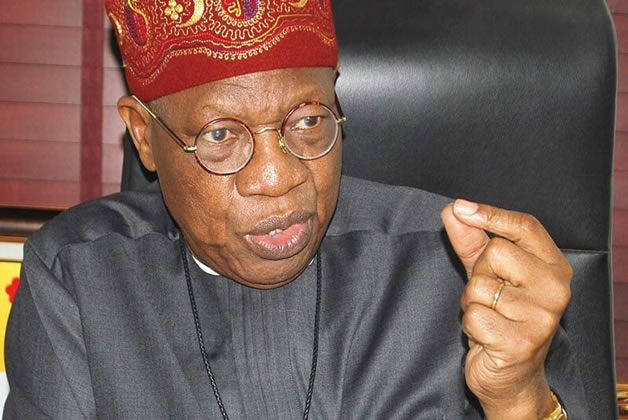
The Minister of Information, Lai Mohammed, disclosed this Wednesday while responding to the State House reporters in Abuja.

Recall that The Daily Reality reported how no fewer than nine persons died, hundreds sustained injuries while over sixty were kidnapped when terrorists stormed a passenger train along the Abuja-Kaduna railway a few weeks ago.

Mohammed reportedly intervened after the Minister of Defence, retired Major General Bashir Salihi Magashi, was questioned to provide details on the perpetrators of the train attack.

He said: “What is happening now is that there is a kind of an unholy handshake between bandits and Boko Haram insurgents. 

“Preliminary reports of what transpired at the Kaduna train attacks show that there is a kind of collaboration between the bandits and the dislodged Boko Haram terrorists from the northeast. I can tell you very confidently that the Federal Government is on the top of this matter.”

Magashi, in his earlier response to the question, stated that: “Honestly, I think the security chiefs are working hard to unveil those that are involved, and we will tell you very soon those that are carrying out these attacks. 

“Both Jos and Kaduna, we will come and explain to the public what is really going on and our efforts to ensure that all these activities are stopped once and for all. We are rarely on top of the situation, we are planning hard, and we will get it out as soon as possible.”

ASUU NEC members to meet tomorrow amidst one–month warning strike

By Muhammad Sabiu

The Academic Staff Union of Universities (ASUU) will meet on Sunday for its National Executive Council (NEC) to assess the ongoing strike and determine the appropriate action to take next.

The union’s president, Emmanuel Osodeke, a soil science professor, stated this on Saturday but did not provide details about the scheduled meeting.

A member of the NEC who did not want to be named to avoid sanctions, however, indicated that the meeting would be held in Abuja.

Recall that about a month ago, the union declared a one-month warning strike to mount pressure on the Federal Government to have its promises fulfilled.

Therefore, tomorrow’s meeting is the determinant as to whether the strike will continue or not.

Can we tell the truth to ourselves?

By Isma’il Alkasim

Education is the passport to the future, for tomorrow belongs to those who prepare for it today— Malcolm X

Unequivocally, the educational sector requires critical and colossal funding from various stakeholders, whether civil society or a particular individual, not only the government. The intervention programs, which are basically designed to address the critical challenges bedevilling the sector, contribute a greater percentage to the educational sector’s wellbeing. 

The United Nations Educational, Scientific and Cultural Organization has recommended that 20—25% of the country’s budget be allocated to the educational sector to ensure the sector’s effectiveness. 

Notwithstanding, Benjamin Franklin, asserted that an investment in education pays the best interest. This has been a rejoinder to the elites who had no clue what would guide them through, thereby emanating a cohesive plan towards the educational reform.

A concert series of strikes, declared by the Academic Staff Union of the Universities (ASUU), leave a deep scar in the memory of the students whose interest and ambitions were solely dependent upon their studies. And this is a serious threat to the nation where insecurity and poverty threaten the lives of its citizens. The ASUU and the government should understand the gravity of the tension this strike may accelerate.

Furthermore, the last industrial action in 2020 through 2021, which ASUU has spent almost a year striking, led to a gigantic imbroglio to university education. Meanwhile, nearly every university could not fulfil its academic calendar in a duly prescribed time. This strike, all despite a whole year spent due to the outbreak of the Covid—19 pandemic, but both parties, the government and ASUU, had failed to get rid of the strike before the lift of lockdown. This indicates how lackadaisical the government is to prevent the ASUU from continuing an indefinite, elongated, and pervasive strike.

Are we really serious?

Probably, not; we are not serious at all. If the government and ASUU can’t sit and share the same cup of tea to find the lasting solution to this horrendously, repulsive and awful strike, as citizens of conscience can’t hold both parties accountable? Why can’t to come out en mass and protest against the lackadaisical of both parties? It worked in an EndSARS protest, so we need to borrow and use the same language as a last resort.

The worst part of this ASUU—FG drama is that those at the centre of the controversy do not value the Nigerias’ education system. Perhaps, their sons and daughters aren’t the victims of the elongated strikes since they spent or are spending their educational journey abroad; the great countries that have done everything possible to redefine and standardise their educational sectors.

The United Kingdom, for example, had spent at least 900 solid years revitalising and meliorating their educational sector before it came to fruition and privatised the industry. This indicated that the suggestions and recommendations made to the government of Lugards’ amalgamation in 1914 to take a bold step towards commercialising the sector would not yield any positive result. Instead, it’s a giant stride to uplift, breed and enhance corruption in the educational sector. More so, privatising the sector is unbecoming. The reason is that the educational sector is a system that is a babysitter that has weaned and breastfed every individual in the Nigerias’ domain.

How should it be?

On a lighter note, we should embrace ourselves collectively. As a whole entity, we shouldn’t lie to ourselves; there’s a limit to what government can achieve within its capacity about the economic status. This deserves no clarification to any discerning individual, but that shouldn’t be an excuse to circumvent and leave our educational sector (not only universities) in the stage of mediocre. We must value the system to make progress.

The education we are supposed to give our utmost priority is the basic education as the foundation ground and necessary stage for all citizens. But, until we resolve the odds vexing the UBE, the thirst to get rid of our universities’ problems can’t be quenched. So, at this juncture, the clamour to refine and redefine the universities system in Nigeria by ASUU is graceless and unbecoming.

May Nigeria prosper.

Isma’il Alkasim writes from Garki, Jigawa State. He can be reached via kogasgarki@gmail.com.

Musings on the solution to university education in Nigeria

By Ahmadu Shehu, PhD

Once again, there is a total blackout in Nigerian public universities. Last week, the Academic Staff Union of Universities (ASUU), the umbrella Union of academics working in Nigerian public universities, declared a one-month warning strike to remind the government of their promises signed just a year or two ago. 

It has been decades since the rift between ASUU and the Federal Government of Nigeria took the lives and progress of Nigerian students to ransom without a foreseeable end to the debacle.

ASUU was a child of necessity born out of the precarious situation Nigerian lecturers found themselves in the 70s under the various military juntas bent on killing the tertiary education in Nigeria as they did basic education. 

Thanks to radical scholars and the rise of socialism as an alternative economic and political ideology to capitalism the government prefers, ASUU got a deep ideological rooting. It also gets a wide acceptance among diverse social domains of the Nigerian society, who, like ASUU, were disenfranchised by and dissatisfied with the tyranny of successive regimes. 

The confrontations between ASUU and the military junta of Ibrahim Babangida and Sani Abacha made the association a front-wheel of social activism in Africa and gave it a legitimate voice that is believed to stand for the masses not just on education but also human rights and socioeconomic advancement. 

Over the decades, ASUU became very wealthy and stubbornly anti-establishment, which had assisted in its success against the government and lost popularity among Nigerians. But, these are topics for another day. 

While there are physical successes credited to ASUU struggles, the incessant strikes have killed many, delayed millions and subverted trillions of aspirations, destinies and successes of millions of Nigerians. Thus, one of the emergencies facing Nigerian university education today is this endless and worthless rift between ASUU and the Federal Government. 

A serious-minded government in Nigeria should have education as a priority. Any education policy that does not consider the solution to this rift is not comprehensive enough and may not solve the quagmire of education in Nigeria. 

How do we end this decades-old problem that has defied most solutions? Some people have advocated for the privatisation of Nigerian universities to have a purely money-driven university system reminiscent of the US-style, where citizens have to pay through their noses to acquire tertiary education. 

An opposite idea is one the one ASUU pursues. It is a totally free, accessible, and one hundred per cent public university education where all willing and qualified citizens can enrol and acquire tertiary education in fields of their choices and mental capabilities. 

ASUU’s idea is noble and ideal of a functional socialist society where education is an inalienable right of citizens. However, the situation in Nigeria and our economic ideology doesn’t allow for either of these ideas to work. It is why ASUU and the government have been going around the same hole of self-deceit and conscious pretence. 

To provide a lasting solution to this endless crisis that have killed our education and our economy,  I believe that privatisation is not the right solution, just as a costless education is not. We’re not America that the insensitive capitalists admire without reason nor the defunct Soviet Union that ASUU loves to imitate. These approaches do not fit our realities.

The alternative is for the government to collect and allocate special taxes to fund education. Again, we can see the models in Western and Central Europe, even in Asia, where citizens pay special taxes to fund education. In this regime, a specific percentage of all taxations will be allocated to education, and citizens will access this service which has been paid for in a different way, supposedly free of charge. 

Then, all federal universities shall submit and defend their budgets at the national assembly, effectively giving universities financial autonomy and removing them from the shackles of the ministry of education and, by extension, the cumbersome nature of mainstream Nigerian civil service. 

That means that each university will be an independent government entity responsible for 100% of its affairs without recourse to other government agencies. This equally requires that we abolish bottlenecks such as Tetfund or limit their capacity to specific funds. The ministry of education will only be a regulatory body in collaboration with the National Universities Commission (NUC). 

That way, the university management can be charged with the responsibilities of funds generation and management to the extent that lecturers no longer need ASUU as an association as all employees of a given university are totally within the purview of the university that employs them. The Federal Government doesn’t need to deal with the basic needs of university academics, such as salary and allowances.

In this model, academics take up their jobs knowing that their remuneration and social welfare are subject to their immediate employers, which is the university management. In turn, they submit their budgets yearly to the national budget and planning office, which will be debated and approved by the national assembly. Whatever they get is their own cup of tea. 

That effectively means that ASUU as an association will cease to exist because each of its members will be totally and absolutely under the purview of their immediate employers  – their home universities. There won’t be the federal government to fight. The common enemy will be gone, and there won’t be the basis for a national strike because each is on their own. 

This, as simple as it is in words, is a herculean task that cannot be easy to achieve. It requires a huge political will, legislative and administrative changes. 

No matter how long it takes, making universities entirely independent and autonomous while subjecting them to the same accountability measures prevalent on other government agencies is the surest, if not the only way to achieve a stable, qualitative and functional university system.

That way, there won’t be ASUU talk more of strikes, and the quality and quantity of education will be solely a responsibility of the universities and, therefore, the academics. 

Dr Ahmadu Shehu writes from Kaduna and can be reached via ahmadsheehu@gmail.com.

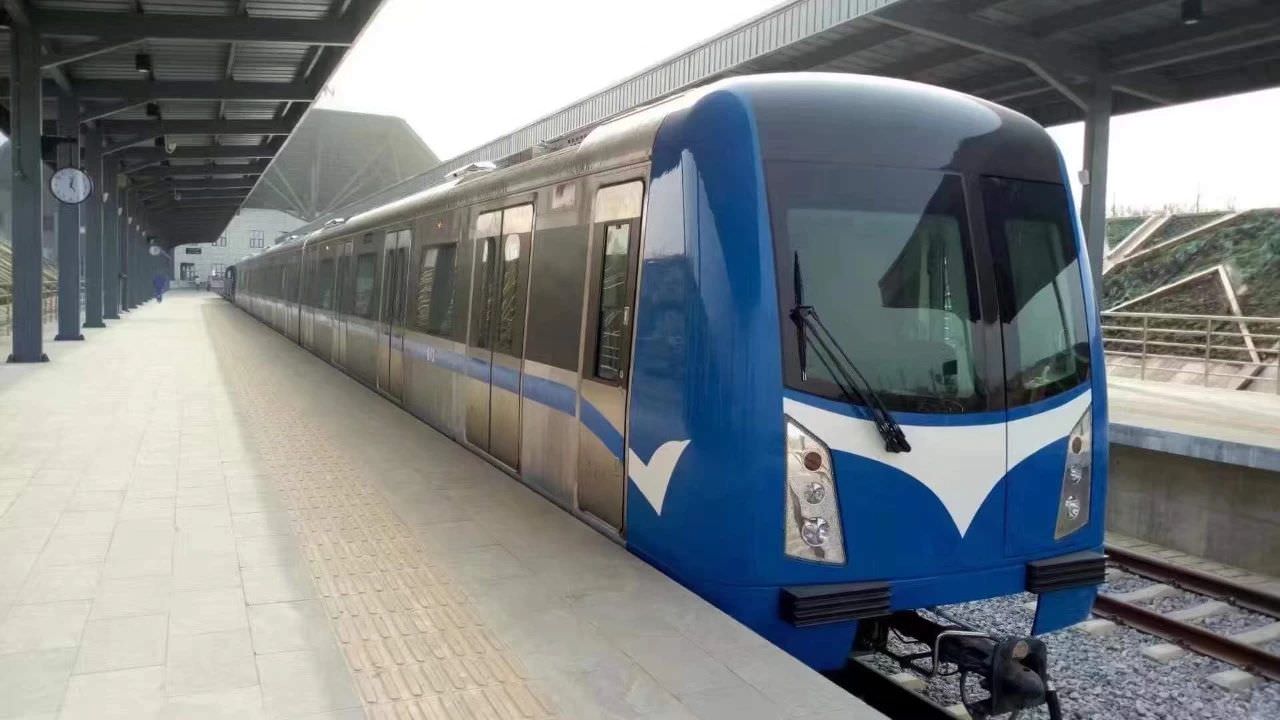
Light Rail: A panacea for Abuja traffic jam

By Tajuddeen Ahmad Tijjani

The increasing traffic gridlock in Abuja is simply nerve-wracking. A journey that, in normal circumstances, would have taken 30 minutes takes more than an hour now. This has not only caused daily waste of precious man-hours but has also inflicted enormous pain on commuters who have to contend with extra costs at this challenging time of a shrinking economy. It’s not a changing time for Nigeria to borrow a leaf from the developed world. We should not continue suffering since there are long-term and short-term solutions.

To be specific, here are some notable spots where heavy traffic snarls are a constant feature, which unfortunately affects the well-being of the people. They include Mararaba-Nyanya Bus Stop; AYA Roundabout along the Abuja-Keffi corridor; Madala-Zuba-Kubwa-Gwarinpa-Aso Radio Junction, along the Abuja-Kaduna corridor; and Girri Junction-Alaita-City Gate, along the Abuja-Gwagwalada corridor. Indeed, a lot of concern was raised about these notorious traffic hubs. And I can’t believe it if someone tells me the FCT administration is not aware of this development.

To be fair to the FCT minister, he’s trying, though his best is not enough. It’s gruesomely inadequate. We must come to terms with the fact that we’re in the 21st century and that new technology should be put in place to reduce the long-suffering of commuters. The axes mentioned above need to be expanded to accommodate the daily traffic volume.

I’d be willing to bet my bottom dollar that if the FCT administration built “railroad tracks” from end to end of the city, beyond a shadow of a doubt, this unbearable traffic jam would disappear in no time. Both the income and the revenue generation will increase. An uncountable number of commuters will drop their vehicles.

The transportation system will give cheerful colour, beautify the city, and compete with global best practices. Can’t we do these for the benefit of all? But, someone might decide to ask, where should we get the funds? Yes, there it is. Invite investors and strike a Public-Private Partnership. I believe we can do it. Building, operating, and transferring is one of the surest ways of getting it done. 

I urge the FCT administration to look inward and try railway tracks in the city. For instance, the same should be in place in other axes from Zuba to Dey Dey, Kubwa, Dutsen Alhaji Junction, Gwarimpa, Maitama to Mararraba, etc. It would be a life-changing event for both the government and the people. Indeed, this will enhance internally generated revenue and increase work productivity. It will be a win-win for the country.

Tajuddeen Ahmad Tijjani writes from Abuja. And can also be reached via sen.taju@gmail.com.

FG is ready to meet with ASUU on all issues they’ve raised – Education Minister

By Uzair Adam Imam

 The Minister of Education, Malam Adamu Adamu, has said that the federal government is ready to meet with the Academic Staff Union of Universities (ASUU) on all issues they have raised.

Adamu said that he was surprised by the decision of the union to embark on a four-week strike. 

He added that the decision of the university lecturers came abruptly amidst ongoing meetings that aimed at resolving the menace.

The minister stated this on Wednesday while fielding questions from State House reporters after the Federal Executive Council (FEC) meeting in Abuja. 

However, despite several negotiations, the minister also cleared the government of any fault over failure to reach an agreement with ASUU. 

According to him, “ASUU, unfortunately, they have gone on strike, and I am looking for them because all the issues are being addressed. The last thing that happened was that our committee looked at their demands, but there are renegotiations going on. They submitted a draft agreement which the ministry is looking at.”

Speaking on ASUU’s draft agreement, Adamu said, “A committee is looking at it. Immediately it finishes, the government is meant to announce what it had accepted. Then suddenly, I heard them going on strike.”

Clearing his name over allegations from ASUU about his absence from meetings, the minister said, “ASUU will never say that. I always call the meeting myself. The meetings I didn’t attend were those that happened when I was in hospital in Germany.

“We want a peaceful resolution. The federal government is ready to meet them on all issues they have raised, and if there are so many meetings and the gap is not closing, then I think it’s not the fault of the government.

Asked about the possibilities of reconciliation between the FG and ASUU  before the end of the 30-day strike, he said, “I can’t give you time. I am ready to reach an agreement with ASUU now, but since I’m not the only one, I can’t give you time, but certainly, we are going to reach an agreement very soon.”