European Union

Italian journalist dismissed after question on Israel at EU briefing

By Maryam Ahmad

Italian journalist Gabriele Nunziati, a Brussels-based correspondent for the Italian news agency Nova, has been dismissed after posing a question about Israel during a European Commission press briefing.

According to reports from La Stampa, Nunziati asked officials about Israel’s responsibility in the ongoing Middle East conflict — a question his employer later described as “inappropriate” and “embarrassing.” Shortly after the exchange, Nova informed him that his collaboration had been terminated.

The incident has sparked debate within journalistic circles about press freedom and the limits of editorial control. Colleagues in Brussels expressed concern that the dismissal reflects growing pressure on journalists covering sensitive international issues, particularly those related to Israel.

Neither Nova nor the European Commission has issued a detailed statement on the matter. Nunziati, for his part, has defended his question as a legitimate exercise of journalistic duty.

Germany gears up for crucial federal elections


By Hadiza Abdulkadir

The political atmosphere in Germany is intensifying as the country approaches its highly anticipated federal elections on February 23, 2025. With multiple parties in the race, the election results are expected to influence Germany’s domestic policies and international stance significantly.

Key political parties are ramping up their campaigns, focusing on issues such as economic stability, immigration, climate change, and Germany’s role in global affairs. Analysts predict a tight contest, with shifting voter sentiments crucial to determining the next government.

Among the key contenders is the ruling Social Democratic Party (SPD), led by Chancellor Olaf Scholz, facing strong challenges from the conservative Christian Democratic Union (CDU) under Friedrich Merz. 

The Greens, led by Annalena Baerbock, are pushing a climate-focused agenda, while the Free Democratic Party (FDP), under Christian Lindner, is emphasising economic liberalisation.

The far-right Alternative for Germany (AfD) and the leftist Die Linke are also competing for voter support, making this election highly competitive and defining for Germany’s political future.

As Germany finds itself at a crossroads, the results of these elections will not only influence the nation’s governance but also have significant repercussions on European and global politics.

EU condemns Nigeria’s blasphemy laws, calls for release of Yahaya Sharif-Aminu

By Hadiza Abdulkadir

The European Parliament has passed a resolution condemning the continued detention and possible execution of Nigerian singer Yahaya Sharif-Aminu on blasphemy charges. The resolution, adopted on Thursday, urges the Nigerian government to immediately release Sharif-Aminu and abolish blasphemy laws that violate human rights.

Sharif-Aminu was sentenced to death by an Upper Sharia Court in Kano State on August 10, 2020, for allegedly composing a song with lyrics deemed derogatory to the Prophet Muhammad. His trial was conducted without legal representation, and his family has reportedly faced harassment and persecution since his arrest. 

Although the Kano State High Court ordered a retrial in January 2021 and later upheld by the Court of Appeal in August 2022, the constitutionality of Sharia-based blasphemy laws was affirmed, raising fears that the death sentence might still be enforced. His appeal to the Supreme Court, filed in November 2022, remains pending.

The European Parliament highlighted that Sharif-Aminu’s health is deteriorating due to inadequate access to food, clothing, and medical care while in detention. The resolution calls for his unconditional release, guarantees for his safety, and an expedited and fair appeals process at the Supreme Court.

The Parliament further criticised Nigeria’s blasphemy laws, stating that they contravene international human rights commitments, the African Charter, and Nigeria’s own constitution, which upholds freedom of expression and religion. It also highlighted that blasphemy accusations frequently lead to mob violence and extrajudicial killings, putting religious minorities at risk.

In addition to demanding Sharif-Aminu’s release, the European Parliament urged the Nigerian government to abolish blasphemy laws, impose a nationwide moratorium on executions, and take concrete steps to prevent impunity for those inciting or perpetrating violence over alleged blasphemy cases. It also called on the European Union and its member states to raise human rights concerns with Nigerian authorities and observe future legal proceedings related to blasphemy cases.

The resolution commended the recent acquittal of Rhoda Jatau and the release of Mubarak Bala, both previously detained on blasphemy-related charges. It reaffirmed that blasphemy laws should be abolished to protect fundamental freedoms in Nigeria.

The European Parliament’s President has been instructed to forward the resolution to the European Commission, the European Council, the European External Action Service, and the Nigerian government and parliament for immediate action.

Tesla sales plunge in Europe and UK amid Musk’s controversial politics

By Maryam Ahmad

Tesla is experiencing a sharp decline in sales across Europe and the UK, with analysts pointing to CEO Elon Musk’s political controversies as a key factor.

In January, Tesla sales plummeted by 59.5% in Germany compared to the previous year despite an overall rise in electric vehicle (EV) registrations. France recorded an even steeper drop of 63%, while UK sales fell by 8%, with no Tesla model ranking among the top 10 best-selling cars.

Industry experts suggest Musk’s public support for far-right figures and controversial statements have alienated European consumers, many of whom favour progressive policies. This backlash, coupled with Tesla’s ageing model lineup and delays in launching the refreshed Model Y, has led potential buyers to turn to competitors.

While Tesla remains a dominant force in the global EV market, the recent downturn underscores the growing impact of Musk’s political stance on the company’s brand and sales performance.

Kano secures EU funding for education, empowerment programme

By Sabiu Abdullahi

Kano State has emerged as a primary recipient of a groundbreaking European Union-funded initiative.

The programme, designed to enhance learning and empower youth, is set to make a substantial impact in Kano, Jigawa, and Sokoto states. 

The Ministry of Education’s Director of Public Enlightenment issued a statement on Tuesday, detailing a briefing by a delegation from the United Nations Children’s Fund (UNICEF) led by Mr. Michael Banda.

The initiative aims to bolster education and skills development opportunities for both girls and boys in the selected states. 

Running for four years, from September 2023 to August 2027, the programme will be implemented across 10 Local Government Areas (LGAs) in each of the three states.

Its ambitious scope encompasses approximately 1.2 million learners, 5,000 teachers, 150 education officials, and 5,400 community members, focusing on various educational interventions. 

Mr. Banda outlined the programme’s three primary objectives as strengthening education governance and learning, expanding access to safe and inclusive learning environments, and delivering quality, continuous learning with enhanced competencies. 

Recognising the evolving digital landscape, Mr. Banda emphasised the importance of digital training for both teachers and learners.

He stressed the need for a systematic approach involving teachers, learners, and ministry officials to successfully integrate digital technology into the education sector. 

The programme also places emphasis on empowering education committees, such as the Schools Based Management Committee, to foster community partnerships and elevate the overall standard of education. Addressing potential challenges, Mr. Banda noted that data assessment might be a hurdle in Kano, citing historical inaccuracies in teacher recruitment.

To address this, he advocated for the establishment of a Teachers Management Information data system. Expressing gratitude, Commissioner Umar Doguwa thanked the EU for selecting Kano as a beneficiary state.

He also pledged the administration’s unwavering support to reach the targeted 1.2 million students and 5,000 teachers, highlighting the state government’s approval of funds for a comprehensive census of all teachers.

EU report is an imperialist agenda – MURIC

By Muhammad Abdurrahman

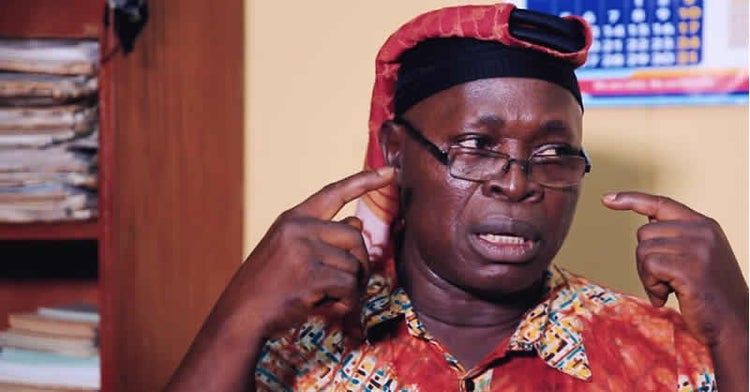
An Islamic human rights group, the Muslim Rights Concern (MURIC), has faulted the final report of the European Union observer team on Nigeria’s 2023 general election. MURIC described the report as an imperialist agenda.   

The group spoke on Tuesday, 4th July 2023, through its Executive Director, Professor Ishaq Akintola.

His full statement:

“The Chief Observer of the European Union Election Observer Mission (EU EOM), Barry Andrews, at a news conference in Abuja last week presented its final report on the 2023 general election in Nigeria. The report was an undisguised indictment of Nigeria’s electoral system.

“We are nonplussed by this blatant attempt to push an imperialist agenda down the throat of Nigerians. The report is a premeditated attempt at inciting anarchy in the country with the hope of gaining political and economic influence at the outbreak of commotion.

“The EU EOM final report is the odd one out when juxtaposed with those of other election monitoring groups. We saw nothing close to this in the report of the US-based International Republican Institute (IRI) and the National Democratic Institute (NDI). NDI/IRI came with 40 observers from 20 countries led by Dr. Joyce Banda, former president of Malawi. They did not sow any seed of confusion.

“229 different observer groups deployed 146,913 domestic and international monitors. 33 of these were international observer missions which deployed 2,113 observers and the Independent National Electoral Commission (INED) threw its doors wide open for them.

“Why is the EU EOM report a different cup of tea? Is this group trying to tell the world that the Commonwealth Observer Group led by Thabo Mbeki which also covered the elections is blind? The African Union had its team and so did the Economic Community of West African States (ECOWAS) observer team led by Dr Kwadwo Afari-Gyan.

“Nigerians should not allow the EU EOM to destabilise the country. Imperialists will never teach you what will benefit your country but what will make you despise it. The aim is divide et impera. MURIC rejects this EU EOM report. It is jaundiced.”

Ukraine war: US President Biden to attend physical meeting with NATO allies in Brussels

By Muhammad Sabiu

President of the United States, Joe Biden, is set to travel to Brussels, Belgium’s capital, amidst the invasion of Ukraine by Putin’s Russia.

President Biden is expected to hold a physical meeting with the North Atlantic Treaty Organisation (NATO) leaders in a show of support for Ukraine.

Press secretary of The White House, Jen Psaki, has confirmed to reporters on Tuesday that the meeting would be held on March 24.

Ms Psaki was quoted as saying, “The President will travel to Brussels, Belgium, later this month, where he will join the extraordinary NATO Summit on March 24 to discuss ongoing deterrence and defense efforts in response to Russia’s unprovoked and unjustified attack on Ukraine, as well as to refer reaffirm our ironclad commitment to our NATO allies.”

“He will also join a scheduled European Council summit to discuss our shared concerns about Ukraine, including transatlantic efforts to impose economic costs on Russia, provide humanitarian support to those affected by the violence and address other challenges related to the conflict.”

This is coming amidst condemnations and concern expressed by NATO allies as Russia continues to advance its invasion in parts of Ukraine.

After 16 years, Germans vote for Merkel’s successor

By Muhsin Ibrahim

German Chancellor Angela Merkel doesn’t need any introduction. Divorced and with a doctorate in Physics, Merkel, 67, has been a leader of Germany for sixteen years. She is the first woman to lead Europe’s economic powerhouse and the beacon of democracy.


Chancellor Merkel wanted to leave in 2016. However, many people, including world leaders, encouraged her to stay. With Donald Trump coming to power in the US, Brexit knocking on the door of the European Union and the smoke of refugee crises still smouldering, almost everyone knew that Merkel was the best in that crucial position. Thus, she re-contested in 2017 and, expectedly, won.


But, whatever has a beginning has an end. Germans go to poll tomorrow, Sunday 26, 2021, to elect Merkel’s successor. The electorates are practically voting for parties, not a particular candidate for the chancellery. The parties would, of course, want to have the majority to form a government, but it does not happen. Often if not always, a party will have to negotiate with another party – or even other parties – to have enough votes to appoint a chancellor in the Bundestag. The negotiations can take months.


There are three chief contestants from three major political parties. They are 60-year-old Armin Laschet (CDU/CSU), 40-year-old Annalena Baerbock (Greens) and 62-year-old Olaf Scholz (SPD). The first, Mr Laschet, is the current Minister-President of North Rhine-Westphalia (where Cologne is) and leader of Merkel’s party, CDU.


Despite Merkel’s endorsement of Mr Laschet, he is unlikely to win. It may surprise you to know that what may cause him this defeat is mere laughter. Deadly flooding killed people in Germany and some neighbouring countries in July. The President of Germany visited a town destroyed by the catastrophic flood. While the President was delivering a sombre speech, a camera caught Mr Laschet laughing behind him. Since that faux pas, many people have lost confidence in him.


Ms Baerbock is young, energetic and confident and started her campaign with a lot of optimism. Nonetheless, her party does not have enough clout to win nationally. But, that is not the real issue for their candidate. You may also find it astonishing to hear what has befallen Baerbock’s candidacy and tarnished her reputation. It was possible plagiarism and padding of her CV.


Olaf Scholz is Vice-Chancellor and Minister of Finance. So far, opinion polls favour his chances of succeeding Merkel. Unlike the two other leading contestants, he has almost no major ‘sin’ affecting his campaign. Moreover, his party, SPD, was in power until Merkel’s outstanding victory in 2005. Thus, they are thirsty for a win and are therefore doing everything possible to come back.


Frau Merkel will be greatly missed. People around the world will never forget her extraordinary benevolence during the 2015 refugee crisis. As a German resident with no right to vote yet, I wish for the best outcome in the elections. May we continue to live in peace and prosperity, amin.

Muhsin Ibrahim is a Nigerian. He studies and works at the Institute of African Studies and Egyptology of the University of Cologne. He can be reached via muhsin2008@gmail.com.