Europe

Should Muslims go dialoguing? The roadmap to understanding ‘interfaith’ in Nigeria

By Sadiya Abubakar Isa, PhD

It appals me to see the Muslim North divided on a trivial yet substantial religious issue like ‘interfaith’. I have for long heard Muslim clerics discrediting the whole idea of interfaith since the establishment of its centre in Bayero University Kano – one of North’s prestigious universities, something which was otherwise not their business. Still, thanks to this institution, interfaith is now localized enough to get such stimulating clerical attention in Northern Nigeria.

Having had the opportunity to study Islamophobia exploringly, I would say interfaith is significantly relevant where the identity of Islam is greatly contested. By definition, interfaith, whether as a dialogue in research or academic discourse, revolves around the peaceful, complaisant, and constructive interaction between people of different faiths for mutual benefit. It involves striking balance, a tolerable understanding of such interrelationships and beneficial engagements through dialogues, academic events, and activities aimed at peaceful coexistence. To say all these aren’t relevant for a Muslim community is a dismal misunderstanding of the whole concept and reasoning of interfaith.

The world witnessed an unprecedented rise in Islamophobia shortly after 9/11; statistics show that Islamophobia reached its peak in 2016. If you reside in the Western world in the decade after 9/11, you will understand the intricacy of the threat Islamophobia puts Muslims into. Especially for Muslim women who are more obviously identified than their male counterparts. Muslim women were subjected to hate speech, discrimination, and abuse, thanks to the incessant misrepresentation of Islam and Muslims in the Western media. Since the Muslims are a minority in such Western countries, their religious identity was at stake. As such, the results were provocative political discourses, foreign policies and the whole activities of the Islamophobia industry vigorously tarnished the image of Islam beyond doubt.

Islam was always portrayed as an intolerant and backward religion that advocates terrorism. Muslim men are seen as utter misogynists, violent, barbaric, and bloodthirsty fanatics, while Muslim women are said to be oppressed, voiceless, helpless, and subordinate in dire need of immediate liberation. Now, this has been the case centuries before 9/11, but the Orientalism surged after 9/11 because there was an agenda to create fear of Muslims and control the world using that purported fear—New World Order?

Consequently, 9/11, subjugation of women in Afghanistan, terrorist activities by ISIS, Boko Haram etc., were leveraged as justifications for those claims. The average Westerner believes every accusation about Islam and has little or no interest in discerning the images. One may ask, so what if they believed?

The consequences are bigotry against Muslims, vandalism of religious places, hate speeches, discrimination, loss of jobs (or other vital opportunities), rejection in the community they ought to belong to, and the worst is loss of lives. We have seen so many Islamophobic attacks on the Muslims, the New Zealand mosque shootings, for example. This misconception renders the Muslim communities in the West vulnerable. It puts them in constant fear of perceived danger and, consequently, loss of faith. Yes, look at it from the perspective of younger generations struggling to fit in.

Among many other factors, I acknowledge the efforts of Yaqeen Institute by Sheikh Omar Suleiman, a Palestinian American scholar. He has taken the lead in fighting Islamophobia through interfaith dialogues, among other methods. Why shouldn’t the Muslims engage in interfaith dialogue when it has been an avenue for discussing the Muslims’ predicaments? It has given Muslims a platform to talk about their real lives and share their religious practices contrary to the media’s narrative.

Interfaith dialogue has helped quell the flame of hate. It has given Muslims the room to openly operate as an inclusive religion – with lots of global moves to ascertain cultural harmony. It has opened laypeople’s minds about Islam which they would otherwise have remained unaware of. It has opened the door for discussion of religious differences politely and positively, which pushed many non-Muslims toward studying Islam.

Do you know the result of this increased curiosity about Islam? Acceptance of Islam, the Christian West has seen rapid growth in conversion to Islam. So, where is that extreme hate of Islam/Muslims today? Alhamdulillah, there is a significant improvement in the situation, thanks to interfaith dialogue, among other efforts taken by anti-Islamophobes.


So is interfaith precarious to Muslims in Nigeria? Why all the debates?

Would Nigerians understand the need for an interfaith dialogue without foreknowledge of Islamophobia, global diplomacy and religious inclusiveness? It’s a fact that Muslims aren’t a minority in Nigeria, but ethno-religious crises are still ravaging, in the North especially; crises in Jos and Kaduna would have been addressed amicably if the interfaith dialogue was well embraced. It is utterly disconcerting to say that, in this age, people are having religious disputes.

Similarly, Boko haram has been synonymous with Islam in Nigeria in that it is always referred to as an ‘Islamic terrorist group’. Don’t we need to dispel the myth of Islam advocating terror in Nigeria? Are Muslims too big to have a peaceful inter-religious conversation in Nigeria? Are we blind to the fact that Islam is under attack in Nigeria? When professor Farooq Kperogi wrote on Islamophobia in Yorubaland, I was bemused because I never expected that of all the tribes in Nigeria, Yorubas would discriminate against their tribespeople based on religion. The rapidity at which Islamophobia is manifesting in Nigeria is quite alarming. Nigerian Christain’s support for Donald Trump in the last election spells out their desperation for Muslims’ continued exclusion.

Religious harmony is still farfetched in most regions of Nigeria. We are just pretending to be harmonious and tolerant. Little wonder how minuscule events easily trigger provocation. We need to talk about our differences positively and engage in healthy interactions to progress as a nation. Colonialists already bond us together, so unity in diversity becomes a necessity. Or do we wait until our children begin to ask us questions before we get to talk about our differences nicely? If not for anything, interfaith in Nigeria will allow non-Muslims to learn about your faith – Islam. Isn’t that a form of da’awa?

My research acknowledges how interfaith dialogue in the US, Europe and other parts of the world contributed to the curbing of Islamophobia by promoting peaceful coexistence. So to use religion to relegate the whole idea is quite imprudent. To quote Shafiq, Muhammad, and Mohammed Abu-Nimer, the authors of Interfaith Dialogue: A Guide for Muslims, “although a relatively modern term, interfaith dialogue has, in fact, had a long and enduring history for Muslims, underscored by a spirit of genuine inquiry and respectful exchange. The primary role of interfaith dialogue is to remove misunderstanding and accept difference….”

Some Ulamas in Nigeria have taken a critical stance on this matter. I listened to one yesterday opening that interfaith is an extension of secularism. While I appreciate his disposition, I beg to disagree that ‘we don’t need interfaith’ due to his stated reasons. It should be at the participant’s discretion to know the aim of every dialogue before engaging in one. My focal point is that whoever participates in interfaith dialogue should be cognizant of their religious jurisdiction and wary of their intentions. I kindly advise our Ulama to focus on ways to religiously liberate the Northerners from the abject poverty that has infested this region instead of the debates surrounding the appropriateness of interfaith – which is long overdue.

Dr Sadiya Abubakar Isa is interested in research related to Islamophobia. She can be contacted via sadeeyaa@yahoo.com.
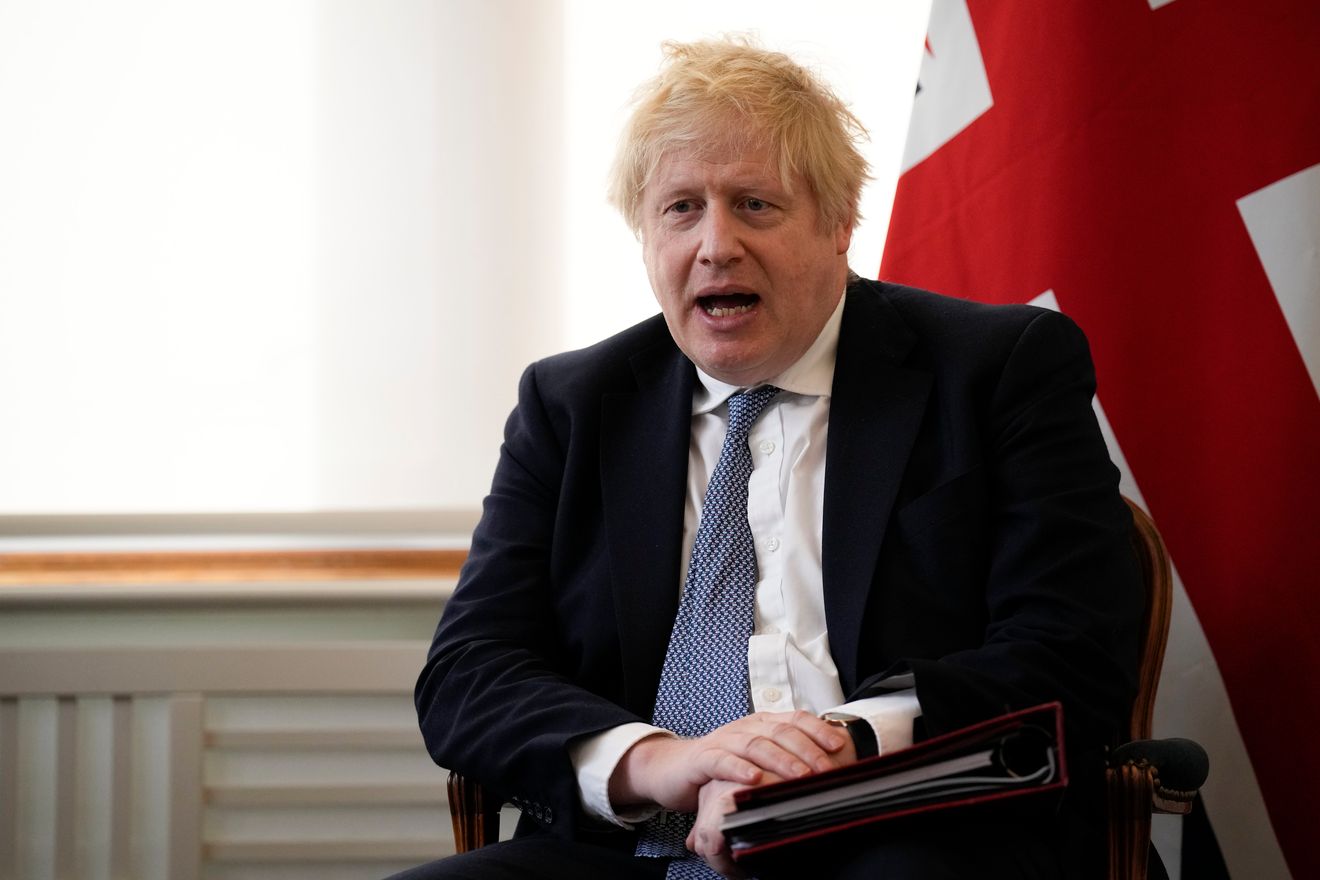
Ukraine: Boris Johnson describes Russian invasion as ‘catastrophe’ for Europe

By Muhammad Sabiu

The invasion of Ukraine by Russia is a “catastrophe” for Europe, according to British Prime Minister Boris Johnson, who has asked for an emergency summit of the NATO military alliance led by the United States.

He was quoted as saying on Twitter: “This is a catastrophe for our continent.”

Mr. Johnson added that he would make a national address on the developments.

“I will also speak to fellow G7 leaders and I am calling for an urgent meeting of all NATO leaders as soon as possible,” he said.

President of Ukraine Volodymyr Zelenskyy calls on citizens to fight

Zelenskyy has appealed to all civilians who are willing to protect Ukraine against Russian soldiers to come forward, stressing that Kyiv will provide firearms to anyone who requests them.

Ukrainian President Petro Poroshenko also urged Russians to resist Moscow’s plan to invade their country’s neighbour.

Recall that Russian President Vladimir Putin has ordered the launch of attacks on parts of Ukraine as part of the move to support intending breakaway regions in the Eastern part of the country.

The attack has caused outrage and condemnations from world powers as citizens flee Kyiv, the Ukrainian capital city, although Putin stated that the attacks were not targeted at unarmed civilians.

Ukraine claimed that it had shot down fighter jets belonging to the Russian forces stationed in the unresting part of the country.

Fuel scarcity worsens in Kaduna

By Sumayyah Auwal Usman

The worsening fuel scarcity that hit Kaduna State has forced several motorists to abandon their vehicles in queues at many filling stations when petrol was not available to go back home.

The Daily Reality visited some filling stations and observed that long queues have risen exponentially. Motorists were seen in the early hours, precisely, 6.30 am, queueing at Mobil Fuel Station, Independence Way, Kaduna, where PMS was dispensed via only one nozzle point with four orders inactive.

Also, at the filling stations on Constitution Road, Ali Akilu Road, Yakowa Way, among others, fuel attendants were seen turning back motorists.

The development came almost one week after the import of millions of dirty PMS from Europe into Nigeria disrupted the fuel supply system of the country, leading to long queues nationwide. The situation has resulted in total confusion and long lines of vehicles at various filling stations in the metropolis.

Kurt Zouma and the challenge of being a black footballer in Europe

By Aliyu Yakubu Yusuf

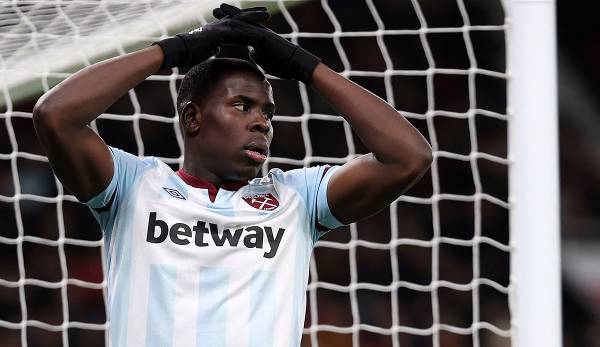
Unless you don’t follow European football, you might have seen a viral video of a man of black ancestry kicking and slapping a cat inside what appears to be an apartment. That man is a French, West Ham footballer, Kurt Zouma. Since that video came to public consciousness, Zouma has been in the eye of the storm. When writing this article, more than 250,000 people have signed a petition calling for Zouma’s prosecution on account of animal abuse. And if that were to happen, he may be facing up to a 4-year prison sentence.

Again, Adidas, the famous German multinational sportswear conglomerate, have terminated their contract with him. And to add insult to injury, his club has fined him his two weeks’ wages. Of course, what Zouma did is indefensible in its entirety. As vulnerable as they are, animals, too, need to be protected from our cruelty. However, I believe that the whole incidence is being blown out of proportion.

When I first read the news, I assumed it was just another mundane story that would naturally wane away in a matter of days. But seeing how the story was trending on all news platforms, I quickly visited YouTube to watch the video. My impression at the time was of Zouma being overly aggressive towards the animal. This is largely down to the sensational headlines across several media outlets. After viewing the video carefully, I observed that the player was not violent towards the pet cat. His kick was just a mild one, attempting to chase the animal away. But is this the first time the Western media maltreat Blacks? No.

In 2013, the then Liverpool striker, Luis Suarez, was accused of racially insulting former Manchester United captain Patrice Evra. Suarez unequivocally admitted to using the word ‘negro’ (a term with a racist undertone) to refer to Evra. At that time, no one launched any petitions against Suarez. On the contrary, his Liverpool teammates even donned a commemorative shirt to support him, alleging that his remarks against Evra were taken out of context. And coincidentally, Suarez was also an Adidas player. However, Adidas felt no need to terminate Suarez’s sponsorship deal. Instead, they sent him a toothless warning, asking him to watch his future behaviour.

Similarly, Eden Hazard once kicked a ball boy and was only fined a paltry £250,000 and never lost his sponsorship. Harry Maguire was convicted for human assault and bribery in Greece but received only a suspended prison sentence. He neither lost his Manchester United captaincy nor any of his sponsorship deals as a result. These incidents beg the question, ‘is animal abuse more serious in Europe than human rights abuse’? Have all these events transpired the way they did because Suarez, Hazard and Maguire are all white, while both Evra and Zouma are blacks?

From Samuel Eto’o, Emile Heskey and Peter Odemwingie to Daniel Alves, Franck Kessie, and Raheem Sterling, the list of Europe-based black players subjected to monkey chants is endless. Ironically, sometimes the racist abuses were done by supporters of the very clubs for whom the players ply their trade. However, no clubs were ever punished by points deduction or even a severe fine to make the mean-spirited fans behave appropriately. No arrests, no stadium bans for the culprit and nothing. Compare this to another event late last year involving West Ham fans who were filmed on a plane chanting anti-Semitic songs at a Jewish man as he was boarding the plane. That incident generated wide condemnation. All the fans involved were promptly arrested. West Ham issued a public statement that squarely condemns all the perpetrators. A similar incident happened to a Chelsea fan who posted anti-Semitic tweets directed at a Tottenham player. He, too, was promptly arrested and prosecuted.

I am happy about how fans on Twitter quickly pointed out the hypocrisy of Adidas. This is a corporation that specialises in producing shoes from animals’ hides. Which animal has ever granted anyone permission to kill it and use its hide to make shoes? Who draws a line between right and wrong as far as animals are concerned? And where are the animal rights agitators when riders use canes (made from animal skin) to whip animals during horse racing? Besides, who has ever sought approval from any animal before he rides on it?

Look, I am not out to defend Zouma. He undoubtedly made a mistake, and that is beyond doubt. I only want to point out the double standard that has trailed this incident. Black players in Europe are adjudged on a different set of criteria. When they are racially insulted, they expect to look the other way and not be overdramatic or create an unnecessary scene. They are always expected to exhibit good behavioural conduct or risk facing social stigma. The mantra of ‘what is good for the goose is good for the gander’ does not apply to footballers of the black race.

Aliyu is a lecturer at the Department of English and Literary Studies, Bayero University, Kano. He can be reached via aliyuyy@gmail.com.

Five reasons why northerners are not ‘well represented’ in Super Eagles

By Aliyu Yakubu Yusuf

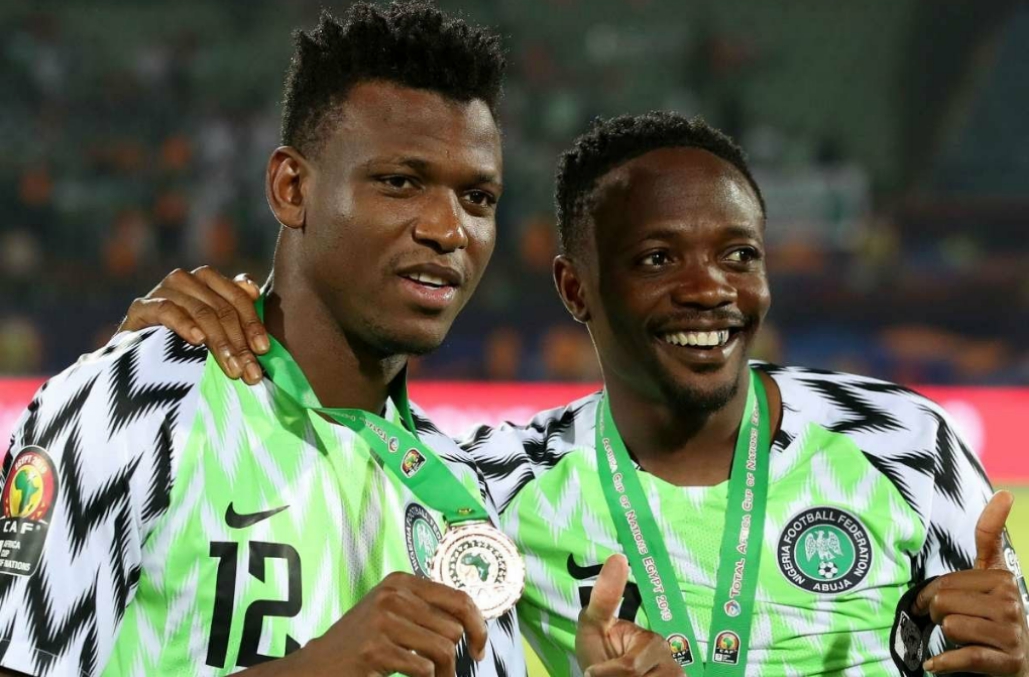
In the not too distant past, there was a widespread belief that footballers of northern Nigerian (read: Hausa-Muslims) extraction are serially marginalised when it comes to a call-up to the Super Eagles. Due to the proliferation of viewing centres in the North that has brought a relative exposure to European football and the easy access to internet-powered mobile phones, most northerners have realised that there was a plot against players from the region. The ongoing African Cup of Nations in Cameroon has somehow brought the debate about whether the North, with its vast landmass and way larger population, is criminally under-represented in the Super Eagles. I don’t believe in any conspiracy theory as far as this argument is concerned. Here is why.

1. Unlike in the South, football is regarded as, first and foremost, a hobby in the North and not a trade or a career. As a result, many talented northern players lack the ambition to push themselves to the limit, to build football as their way of living. For example, some of his close friends testified that former Kano Pillars player, Ahmed Garba Yaro-Yaro, failed to settle at the German Club, Borussia Dortmund, because he couldn’t withstand the cold weather in the European city, among other reasons. That was a player who had the chance not only to make millions but also make a name for himself at the Super Eagles set up. Instead, he blew the opportunity and shortly returned to Kano Pillars via a Tunisian Club, Esperance. Imagine an Igbo or a Yoruba getting this once-in-a-lifetime opportunity.

2. Culture and religion also discourage our football players. In most quarters in the North, top-level European football, the utmost dream of all footballers worldwide, is seen as a strictly Euro-Christian tradition. Most parents would rather have their children become petty traders in Kano, Kaduna or Abuja than millionaire footballers in London so as not to have their culture and religion contaminated by the infidel westerners. In fact, the few football players that take the game seriously and attempt to reach the highest level of local football (the Nigerian Premier League) are often seen as wayward, low-IQ fellows who couldn’t make it in school and therefore resort to football.

3. Historical factors also play against the North. Just like western education, football was brought here by the Europeans and has taken a firm root in the South before the North. Because of their connection to their former European clubs, some Nigerian ex-footballers convince the clubs to establish football academies. The location of these academies is, more often than not, the South. Chelsea, Arsenal, Bayern Munich, Barcelona and Real Madrid all have football academies in Abuja, Lagos and a few southern cities but none in the North. The ex-Super Eagles’ golden boy, Nwankwo Kanu, has an academy in his native Owerri. I wonder whether we can say the same about the likes of Garba Lawal and Tijjani Babangida. Lagos alone has more than ten football academies, while the whole 13 states of the ‘core’ north have zero, with Kwara state as the only northern state with a football academy. If we genuinely want to compete with the South, we need football academies in the North. These academies employ agents that look for young players, recruit them, train them and open doors for them to pursue a career in top-level football. And because of historical factors, most football agents and scouts of European clubs seem to look for talents in the South rather than the North.

4. All around the South are former footballers who succeeded in the game and, therefore, serve as mentors and role models for aspiring young players. You quickly draw inspiration when you have a practical example right in front of you. A player from Delta state, for example, would look no further than Okocha, Keshi and Oruma, to know that he, too, can follow their enviable footsteps. Some of these ex-players use their networks of relationships to send young players for trial in some European clubs. However, the story is entirely different here.

5. All countries, including Argentina, Brazil and Uruguay, essentially select players who ply their trade in European football. Apart from the economic aspects, Europe is where football is played at its most competitive level. If you select Nigerian-based players primarily, they would be schooled by the likes of Salah, Aubameyang and Mane, who are more experienced in the game. Now, compared to the South, how many northern players can we mention who play football in Europe? I challenge everyone here to mention just ten prominent northerners in European football.

For these reasons, I don’t believe the Nigerian national team is rigged against us. As it stands, we are not doing enough to be selected for the national team. If our young players give it a better go, we have the potential to equal the South in that regard. I find it amusing that while most things are done on a quota system basis, football players are chosen purely on merit. Perhaps that is why it is the single most crucial thing that unifies Nigerians across diverse ethnic, religious and regional leanings. If we can begin to choose our leaders on merit (not quota system), I believe the country stands a better chance to progress.

Aliyu is a lecturer at the Department of English and Literary Studies, Bayero University, Kano. He can be reached via aliyuyy@gmail.com.

After 16 years, Germans vote for Merkel’s successor

By Muhsin Ibrahim

German Chancellor Angela Merkel doesn’t need any introduction. Divorced and with a doctorate in Physics, Merkel, 67, has been a leader of Germany for sixteen years. She is the first woman to lead Europe’s economic powerhouse and the beacon of democracy.


Chancellor Merkel wanted to leave in 2016. However, many people, including world leaders, encouraged her to stay. With Donald Trump coming to power in the US, Brexit knocking on the door of the European Union and the smoke of refugee crises still smouldering, almost everyone knew that Merkel was the best in that crucial position. Thus, she re-contested in 2017 and, expectedly, won.


But, whatever has a beginning has an end. Germans go to poll tomorrow, Sunday 26, 2021, to elect Merkel’s successor. The electorates are practically voting for parties, not a particular candidate for the chancellery. The parties would, of course, want to have the majority to form a government, but it does not happen. Often if not always, a party will have to negotiate with another party – or even other parties – to have enough votes to appoint a chancellor in the Bundestag. The negotiations can take months.


There are three chief contestants from three major political parties. They are 60-year-old Armin Laschet (CDU/CSU), 40-year-old Annalena Baerbock (Greens) and 62-year-old Olaf Scholz (SPD). The first, Mr Laschet, is the current Minister-President of North Rhine-Westphalia (where Cologne is) and leader of Merkel’s party, CDU.


Despite Merkel’s endorsement of Mr Laschet, he is unlikely to win. It may surprise you to know that what may cause him this defeat is mere laughter. Deadly flooding killed people in Germany and some neighbouring countries in July. The President of Germany visited a town destroyed by the catastrophic flood. While the President was delivering a sombre speech, a camera caught Mr Laschet laughing behind him. Since that faux pas, many people have lost confidence in him.


Ms Baerbock is young, energetic and confident and started her campaign with a lot of optimism. Nonetheless, her party does not have enough clout to win nationally. But, that is not the real issue for their candidate. You may also find it astonishing to hear what has befallen Baerbock’s candidacy and tarnished her reputation. It was possible plagiarism and padding of her CV.


Olaf Scholz is Vice-Chancellor and Minister of Finance. So far, opinion polls favour his chances of succeeding Merkel. Unlike the two other leading contestants, he has almost no major ‘sin’ affecting his campaign. Moreover, his party, SPD, was in power until Merkel’s outstanding victory in 2005. Thus, they are thirsty for a win and are therefore doing everything possible to come back.


Frau Merkel will be greatly missed. People around the world will never forget her extraordinary benevolence during the 2015 refugee crisis. As a German resident with no right to vote yet, I wish for the best outcome in the elections. May we continue to live in peace and prosperity, amin.

Muhsin Ibrahim is a Nigerian. He studies and works at the Institute of African Studies and Egyptology of the University of Cologne. He can be reached via muhsin2008@gmail.com.

Taliban’s follies, Western gains

By Salisu Yusuf

Almost 20 years since the September 11 attacks in the U.S. and the subsequent occupation of Afghanistan, the last Friday’s swift vacation of Bagram Airbase by the U.S forces, the situation in Afghanistan gets worst. The country is becoming more divided; social strife grows, and citizens become more disenchanted. Hostilities between the Hazara Shia minority and mainly Pashtun Sunni majority increases. All over the country, people feel less secure in groups and individually as each one is afraid that the rival militia may attack them. The hitherto communal Afghanistan is fast turning individualistic, especially as a result of Talibans’ follies, misrule, the failure of the sectarian/tribal leadership, the role of Ulama and by the Russian occupation in the 70’s and ’80s, as well as the U.S’s so-called war on terror.

I have never seen a religious sect that clings to power and unorthodoxly turns to folly like the Taliban. They have crossed religious, ethical lines. They ask their members to attack hospitals, with women under labour, children receiving natal care, and other defenceless people receiving treatment. In one instance in 2020, they struck a maternity hospital belonging to the international organisation Medicines Sans Frontiers in Kabul. They gruesomely murdered 24 victims, including impoverished women, children, and babies. A week-old baby was among the dead; another two-week-old baby survived though his mother could not. There has not been a worse unnatural disaster!

Moreover, coordinated, reciprocal attacks by both Sunni and Shia militants are on the rise. I have not seen thoughtless sects like the two groups in Afghanistan/Pakistan axis, where each group asks its members to attack the other while performing obligatory prayers in mosques! And when such attacks are carried out, while the victims’ relatives nurse them and mourn other fatalities, the attackers get euphoric as they believe that they have fulfilled a religious duty. Outrageously they think that should if they die in the process, they would directly go to paradise – as if it belongs to their fathers!

 In addition to such senseless attacks, the Taliban has stepped up on a campaign against girl-child education. As a result, hundreds of innocent girls have been killed on their way to schools because, to them, girls’ education is a deviation from the norm. 

In one such horrendous attack, the vocal Malala Yusafzai is lost to the West. The girl was 11 when she’s shot in the head on her way to school. The girl’s crime was pleading to the Taliban to let girls pursue their educational careers. As the saying goes, the rest is history. Malala is now an Oxford University graduate in philosophy, politics and economics. 

Malala is lost to the West with her two young brothers. Pakistanis could only watch her on T.V. addressing the U.N. Assembly, celebrating her birthday, or receiving Nobel Prizes. If she had not been shot, she would have been in Pakistan, and a practising Muslim, whose talent might have been used in teaching and aspiring young girls. Girls like Malala could have been used to heal the growing social division between Sunni and Shia; alas, she’s lost to Europe.

More painful is the list of Nadia Nadim. A more intelligent and talented girl who’s also lost to the West. Nadia’s father was also killed by the Taliban when she’s a child. Under a false identity, the girl fled Afghanistan on a truck at just 11 years. She’s currently living in Denmark, studying reconstructive surgery. Nadia, like Malala, is lost to the West. Her colossal talent would have been more beneficial to Afghanistan because she’s a prospective scientist. Nadia speaks 11 languages. She also plays football for the Danish National Team, scores 200 goals, making her a celebrity.

If Nadia’s father lived, she would have been left to pursue her career, would have been in Afghanistan practising Islam. She could have been a medical doctor, possibly assisting thousands of Afghan women in need of medical care. But, alas, she’s lost to football, playing a celebrity role, her beauty being explored, etc. 

The above are a few lessons to Nigerian youth who sympathise with terrorist groups like Boko Haram. Such groups are in for regression rather than progression.

While the so-called Doha Peace Conference between the Afghan government and Taliban is in progress, the country is hotly on the brink of another civil war. The Taliban is advancing towards Kabul, inciting more antagonism while the country suffers from brain drain; indeed, it’s Talibans’ folly, but Western gains.

Salisu Yusuf teaches at the Department of English, Federal College of Education, Katsina. He can be reached via salisuyusuf111@gmail.com.