Electricity

Nigeria Electricity Regulatory Commission, Net Billing Regulation: A New Era for Nigeria’s Two-way Grid Network

By Muhammad Masud

Nigeria’s electricity sector is undergoing a gradual but important transformation. For decades, the country’s power system has relied predominantly on centralised generation, with consumers depending on a combination of grid electricity and various forms of conventional thermal generation to meet their energy needs. More recently, declining solar technology costs and growing concerns about energy reliability have accelerated investment in distributed renewable energy systems across commercial, industrial, and institutional sectors.

Against this backdrop, the Nigerian Electricity Regulatory Commission (NERC) has introduced the Draft Net Billing Regulations, a policy framework that could significantly reshape the relationship between consumers and the electricity grid. While the regulation appears to focus primarily on billing arrangements for renewable energy users, its broader implications extend to investment, grid operations, energy security, and the future architecture of Nigeria’s electricity market.

Understanding Net Billing

At its core, net billing allows customers who generate renewable electricity to export excess energy to the distribution network and receive credits in return. Rather than allowing surplus electricity to go unused, customers can monetise the energy they produce but do not immediately consume.

Under the proposed framework, electricity imported from the grid is charged at the applicable retail tariff, while electricity exported to the grid is compensated at a separate export tariff determined by the regulator. This differs from traditional net metering schemes, where exported electricity may be credited at the same rate as imported electricity.

The regulation applies to renewable energy systems ranging from 50 kWp to 5 MWp, making it particularly relevant to commercial buildings, industrial facilities, universities, hospitals, shopping centres, and large residential estates.

In practical terms, the regulation formally creates a new category of electricity customer: the “prosumer”a customer who both consumes and produces electricity.

What This Means for Consumers

The regulation introduces a significant opportunity for organisations already investing in renewable energy.

Historically, many solar installations were designed solely to offset electricity consumption. During weekends, holidays, or periods of reduced operational activity, excess electricity often had little economic value. Under the proposed net billing framework, surplus generation becomes a potentially revenue-generating asset.

For businesses, this could improve the financial viability of renewable energy investments by creating an additional revenue stream alongside reduced electricity purchases. The ability to export excess energy may shorten project payback periods, improve investment returns, and encourage larger-scale renewable energy deployments.

The framework also provides consumers with greater flexibility in managing their energy portfolios. Rather than sizing renewable energy systems strictly around instantaneous demand, organisations may have greater confidence in investing in larger systems that maximise available rooftop or land resources.

Most importantly, net billing creates an economic incentive for consumers to become active participants in the electricity market rather than remaining passive recipients of electricity.

What This Means for Investors

From an investment perspective, the Draft Net Billing Regulation may be one of the most important developments in Nigeria’s distributed energy sector in recent years.

The regulation creates opportunities across multiple segments of the value chain, including:

* Renewable energy developers.
* Engineering, Procurement and Construction (EPC) contractors.
* Equipment suppliers.
* Metering providers.
* Energy service companies.
* Battery storage developers.
* Infrastructure and private equity investors.

One of the biggest barriers to renewable energy investment is regulatory uncertainty. Investors require confidence that connection procedures, technical requirements, compensation mechanisms, and approval processes are clearly defined and consistently applied.

By establishing a structured framework for renewable energy exports, NERC is providing the regulatory certainty necessary to unlock private sector investment.

If implemented effectively, the regulation could stimulate substantial growth in commercial and industrial solar deployment across Nigeria while attracting additional capital into the broader distributed energy ecosystem.

What This Means for the Electricity Grid

While the consumer and investment benefits are relatively straightforward, the implications for the electricity grid are more complex.

On one hand, distributed renewable generation can provide significant operational benefits. Electricity generated closer to the point of consumption reduces transmission and distribution losses, alleviates pressure on network infrastructure, and can improve local supply reliability.

Distributed generation can also contribute to addressing Nigeria’s long-standing supply deficit by supplementing electricity supplied from centralised power stations.

However, increasing renewable penetration introduces important technical considerations that must be carefully managed.

Unlike conventional synchronous thermal generation, solar photovoltaic systems are inverter-based resources. Conventional generators contain large rotating masses that naturally provide inertia, fault current contribution, and frequency support to the power system.

Solar PV systems do not inherently provide these characteristics.

As inverter-based renewable penetration increases, the system may experience:

* Reduced system inertia.
* Faster frequency deviations following disturbances.
* Lower fault current levels.
* Greater voltage management challenges.
* Increased complexity in protection coordination.

These issues do not necessarily prevent renewable integration, but they require careful planning and investment in supporting technologies.

Has Grid Stability Been Adequately Considered?

The Draft Net Billing Regulation includes several provisions intended to protect network stability.

These include:

* Technical feasibility assessments before connection.
* Anti-islanding protection requirements.
* Voltage control standards.
* Bi-directional metering requirements.
* A limit restricting renewable exports to 30% of the average load on a distribution feeder.

These measures help address distribution level operational concerns and reduce the risk of localised network problems.

However, as renewable deployment grows, broader system-level challenges may emerge.

The regulation does not currently place significant emphasis on system inertia, fault-level support, synthetic inertia provision, or grid-forming inverter requirements. While this is understandable given the current scale of renewable penetration, these considerations may become increasingly important as Nigeria moves toward higher levels of distributed renewable generation.

Over time, maintaining system stability may require complementary investments in:

* Synchronous compensators.
* Grid-forming inverter technologies.
* Battery Energy Storage Systems (BESS).
* Advanced network monitoring and control systems.
* Enhanced grid code requirements.

The conversation therefore extends beyond renewable adoption to the future technical resilience of Nigeria’s power system.

The Opportunity to Build a Smarter Electricity System

Perhaps the most significant longterm opportunity presented by net billing is the transition from a passive electricity network to an active energy ecosystem.

Historically, electricity flowed in a single direction from generators to consumers. Net billing introduces two-way power flows, allowing consumers to contribute electricity back into the network.

This creates the foundation for future innovations, including:

* Distributed energy markets.
* Virtual power plants.
* Battery aggregation.
* Electric vehicle integration.
* Demand-side flexibility programmes.
* Local energy trading platforms.

In many respects, net billing is not simply a renewable energy policy. It is a first step toward a more decentralised and intelligent electricity system.

Challenges to Successful Implementation

Despite its potential benefits, successful implementation will require overcoming several challenges.

Distribution companies will need to modernise metering infrastructure and billing systems capable of accurately measuring imported and exported electricity. Technical capacity will be required to assess connection requests and manage increasingly complex distribution networks.

The attractiveness of the framework will also depend heavily on the export tariff established by the regulator. If compensation rates are too low, investment uptake may be limited. Conversely, tariffs that are appropriately structured can accelerate renewable energy deployment while maintaining the financial sustainability of distribution companies.

Public awareness and stakeholder engagement will also be critical. Many potential participants remain unfamiliar with net billing, application procedures, and technical compliance requirements.

What Is the Minimum Required to Participate?

For eligible organisations, participation generally requires:

* A renewable energy system with a minimum capacity of 50 kWp.
* Compliance with applicable technical standards.
* A bi-directional meter capable of recording imports and exports.
* Technical approval from the local distribution company.
* Registration under the NERC framework.
* Inspection and certification by the relevant authorities.

For many commercial and industrial consumers already operating solar installations, participation may require only modest upgrades rather than entirely new investments.

Conclusion

The Draft Net Billing Regulation represents far more than a new billing mechanism. It signals a shift in the way electricity is generated, consumed, and valued within Nigeria’s power sector.

By enabling consumers to become active participants in electricity supply, the regulation has the potential to unlock private investment, improve energy security, and accelerate renewable energy deployment. At the same time, it raises important questions about the future operation of a grid increasingly supported by inverter-based renewable resources.

As Nigeria gradually transitions from a system dominated by centralised synchronous thermal generation towards one incorporating larger volumes of distributed renewable energy, attention must extend beyond customer participation and investment incentives. Equal focus must be placed on grid stability, frequency response, voltage control, system inertia, and network resilience.

Ultimately, the success of net billing will not be measured solely by the number of renewable energy systems connected to the network. It will be measured by how effectively Nigeria balances innovation, investment, consumer participation, and grid reliability in building the electricity system of the future.

Muhammad Masud

Why Electricity Will Define Nigeria’s Future

By Muhammad Masud Yerima


From 2005 to 2025, the global electricity access story changed dramatically. Countries like India and Bangladesh moved from being among the countries with the highest populations without electricity access to largely exiting the list. Meanwhile, Nigeria moved in the opposite direction from third place in 2005 to leading the world in the number of people without access to electricity by 2025.

That should concern every policymaker, investor, planner, and citizen.

In 2005, India had over 360 million people without electricity access. Today, India is no longer on the list. Nigeria, on the other hand, increased from roughly 77 million people without access in 2005 to over 88 million in 2025. This is despite Nigeria being one of Africa’s largest economies and one of the world’s biggest oil and gas producers.

The question is simple:
What did India do right, and what is Nigeria still getting wrong?

India treated electricity not just as infrastructure, but as a national development priority. The country invested aggressively in grid expansion, rural electrification, generation capacity, transmission infrastructure, and policy reforms. Programs like village electrification schemes, renewable energy deployment, and public-private sector collaboration accelerated access across both urban and rural communities. More importantly, India planned long-term and executed at scale.

Nigeria’s challenge is more complex than simply “not enough power generation.” The issue is systemic.

First, population growth has outpaced infrastructure development. Nigeria’s population has expanded rapidly, but transmission networks, distribution systems, and generation capacity have not grown at the same pace. Even where generation exists, the grid often cannot evacuate or distribute the power efficiently.

Second, infrastructure investment has been inconsistent. Transmission bottlenecks, aging equipment, weak distribution networks, vandalism, and underinvestment continue to limit reliability and access. In many parts of the country, being connected to the grid does not even guarantee stable electricity.

Third, planning and execution remain fragmented. Energy policy changes frequently, projects are abandoned, and long-term continuity is weak. Electrification requires coordinated planning across generation, transmission, distribution, regulation, financing, and industrial development not isolated projects.

What makes this more worrying is the timing.

The world is entering a new economic era driven by artificial intelligence, cloud computing, automation, robotics, and digital infrastructure. Data centers are becoming the factories of the digital economy, and none of them can function without reliable electricity.

From the Agricultural Revolution to the Industrial Revolution, then the Information Age, and now the AI-driven digital economy, every major leap in civilization has been powered by energy.

Without reliable electricity:

* industries cannot scale,
* manufacturing becomes expensive,
* innovation slows,
* startups struggle,
* and Nigeria risks falling behind in the global digital economy.

The next global race will not only be about oil or population size. It will be about computational power, digital infrastructure, and energy resilience.

Beyond politics, this is a conversation Nigerian youths and every citizen must begin to take seriously. The future of Nigeria cannot depend only on election cycles and political debates. We need long-term systemic thinking about infrastructure, industrialization, energy security, education, and technology.

Nigeria is our country.

And if we truly want to compete globally in the modern economy, then stable and accessible electricity can no longer be treated as a secondary issue. It is the foundation upon which modern nations are built.

Muhammad Masud Yerima Mohayerima@gmail.com

Tinubu Clears N3.3 Trillion Power Debt to Boost Electricity Supply

By Abdullahi Mukhtar Algasgaini

President Bola Tinubu has approved a N3.3 trillion payment plan to settle long-standing debts in Nigeria’s power sector, a move aimed at restoring reliable electricity nationwide.

The debt, accumulated between February 2015 and March 2025, was verified and agreed upon as a full and final settlement under the Presidential Power Sector Financial Reforms Programme.

Implementation is already underway, with 15 power plants signing settlement agreements worth N2.3 trillion. The Federal Government has raised N501 billion for the payments, of which N223 billion has been disbursed.

According to a statehouse release, the government expects the settlement to stabilise generation, improve electricity reliability, attract investment, create jobs, and enhance service delivery.

“This programme is not just about settling legacy debts. It is about restoring confidence across the power sector, ensuring gas suppliers are paid, power plants can keep running, and the system begins to work more reliably,” said Olu Arowolo-Verheijen, Special Adviser on Energy to the President.

She noted that broader reforms, including better metering and service-based tariffs, are also progressing. The government is prioritising power supply to businesses and industries to boost job creation and economic growth.

President Tinubu commended stakeholders involved in resolving the legacy issues and confirmed that the next phase (Series II) will begin this quarter.

Tudun Jukun residents face unbearable KEDCO bills amid worsening economic hardship

By Maryam Shehu

Electricity remains one of the most essential public utilities in Nigeria–central to daily life, small-scale enterprises, and family survival. Yet for residents of Tudun Jukun, Madaci and other communities in Zaria, power has become a source of deepening hardship rather than progress.

For nearly three weeks, Tudun Jukun and several neighbouring communities have been plunged into a persistent blackout, with no meaningful announcement from the Kaduna Electricity Distribution Company (KEDCO) or any government authority. The outage comes on the heels of a controversial and devastating spike in electricity bills that many residents say they were never consulted about and cannot afford.

In October, KEDCO reportedly reclassified the community into Band A, one of the highest electricity tariff categories, despite Tudun Jukun’s socio-economic reality. The community, home to more than 2,000 households, has less than 40 per cent of residents considered middle class, while the majority struggle daily with food insecurity, unstable income, and rising costs of living. Many parents rely on public schools, yet still struggle to provide basic learning materials for their children.

Residents say KEDCO claimed to have engaged community elites before implementing the Band A classification. Shortly after, households were issued bills of ₦10,000—already burdensome for a community where many live below the poverty line.

The situation worsened dramatically in early November, and households received bills as high as ₦115,000, and in some houses, even higher. With residents unable to pay, the community was soon thrown into darkness. Since November 20, 2025, Tudun Jukun has remained without electricity, despite petitions and repeated attempts by concerned people to seek redress.

The power cut has devastated small and micro-businesses that rely on electricity to function. Welders, tailors, food vendors, shop owners, and artisans have seen their livelihoods crumble.

“My father is old and serves as a Ladan at a nearby mosque, so my family depends on me for everything,” said Ibrahim, a local welder. “I tried carrying my machines to Hayin Usama, where they had light, but now they also haven’t had power for two days. My clients are collecting their materials without waiting, and things are completely ruined for me.”

Women-led household businesses are also affected. “I used to make ₦3,000 to ₦5,000 daily from soyamilk and zobo,” said Hadiza, a mother and small-scale producer. “That money supported my household, but since the first week of this outage, I’ve had to learn how to survive without income.”

Across the community, youths, artisans, and family breadwinners now face worsening poverty, prolonged idleness, and rising frustration as no tangible explanation or action has been offered by authorities.

Residents are calling on KEDCO, the local government, and all responsible bodies to urgently address the issue. They argue that the prolonged outage and unexplained tariff hikes undermine their rights to dignity and economic participation as protected under Sections 14(2)(b) and 17(3)(a) of the Constitution of the Federal Republic of Nigeria, which obligate the government to ensure the welfare of citizens and provide adequate facilities for their livelihood. They also reference the regulatory duties of electricity distribution companies under the Nigerian Electricity Act and NERC guidelines, which require fair billing, transparency, and continuous service except in cases of officially communicated faults or approved maintenance.

Residents are demanding a transparent review of the billing process, a resolution to the petitions already submitted, and direct engagement with the community’s leaders. They insist that electricity must be restored immediately, alongside compensation or remedial measures for what they describe as an unjust disruption of their rights and livelihoods.

Until then, Tudun Jukun remains in darkness, both literally and economically.

Maryam Shehu writes from Zaria and can be reached at maryamshehu6354@gmail.com.

Effect of electricity tariff increment on Nigerian business environment

By Abdulrahman salihu

Electricity is one of the most crucial factors in the development of every industrial country, which factories, financial hubs, and technological companies rely heavily upon for their operations.

In Nigeria, on 1st April 2024, the Nigerian Electricity Regulatory Commission (NERC) increased the price of Kilowatt per hour by 300% from N68 Naira to N225 Naira to urban Customers popularly known as “Band A” customers, who are 15% of the total number of Electricity Consumers in the country.

The electricity tariff increment comes after President Bola Ahmed Tinubu removed the fuel subsidy in his inauguration speech on 29 May 2023, which triggered massive hyperinflation in Nigeria that resulted in hikes on almost every commodity and inflicted severe suffering among Nigerians.

The Nigerian Electricity Regulatory Commission (NERC) has claimed that the hike in the electricity tariff will only affect the “Band A” customers. Therefore, the remaining 75% of customers (Band B-C-D-E) who get less than 20 hours daily will not be affected.

However, the multiplier effect of the tariff increment dramatically influences the cost of production of foodstuff processing companies, manufacturers and other producers of goods that the masses use, thereby affecting the price of commodities.

Moreover, some artisans and small business owners have been put out of business because the financial institutions will increase the interest rate to meet the electricity tariff hike, making it unaffordable to businesses that take loans from them, rendering the artisans jobless. Businesses will collapse in the long run.

On the other hand, the government may not be able to generate revenue from the businesses that shut down, so also the artisans and craftsmen will not get customers as a result of lack of adequate electricity in their “Band”, which will make them unable to pay taxes to the government. 

Therefore, as a matter of urgency, the federal government and the stakeholders in the power sector should suspend the electricity tariff increment and invest in modern solar power plants. This will generate more power for the country and will go a long way in mitigating global warming and climate change.

The federal government should also find ways to improve the electricity supply, as the current supply is insufficient to make things work effectively. 

The governors of hydroelectric power-producing states should initiate policies and partner with international investors to boost power generation for their states and the country. At the same time, the other states should also render support where necessary.

This will encourage foreign investors to troop to Nigeria for investment, bringing job opportunities and facilitating unprecedented revenue flow into the accounts of both the federal and state governments.

Abdulrahman Salihu wrote via abutalatu72@gmail.com.

A mistake called ‘Band A’

By Zayyad I. Muhammad

The principle “you only sell what you have” is a cornerstone of all businesses, resonating throughout different industries and emphasizing the importance of aligning offerings with available resources and expertise.

It’s crucial to provide goods or services that are accessible and within one’s capabilities. However, Nigerian power distribution companies (DISCOs) are selling services they cannot deliver to their customers. For example, the promised 20–24-hour electricity supply under the new tariffs, such as Band A, appears to be unsuccessful.

The DISCOs are simply selling 20–24 hours of darkness, causing disappointment, eroding trust, and damaging the reputation of both the DISCOs and the Minister of Power.

Among economics and political observers, there is a widely held belief that credibility is paramount in retail, manufacturing, or service-oriented businesses. Customers expect transparency and reliability, and any deviation from this expectation can have detrimental effects on long-term success.

The DISCOs want to emulate other countries, but in those with privatized electricity, tariffs are usually categorized into residential, commercial, and industrial sectors. However, in Nigeria, consumers are simply grouped into ‘BANDs.’ For instance, in countries with reliable electricity, like the EU, consumers have the freedom to choose an electricity supplier from the full range available in their area, as well as the type of tariffs they prefer. In Nigeria, DISCOs hold a monopoly. If your service provider is Ibadan Electric, Kaduna Electric, Yola Electric, etc., you have no alternative; you must remain with that specific DISCO and the tariff band they have assigned to you.

We must acknowledge that every business, including DISCOs, operates within constraints, whether financial, logistical, or technical. While acknowledging these constraints is logical, the new tariff appears to be nothing more than an attempt to expedite Nigeria’s electricity sector development without addressing underlying challenges. How can Nigeria implement tariffs similar to those in countries with well-developed electricity sectors, characterised by massive infrastructure, reliable electricity, flexible tariff structures, and numerous options for consumers in choosing service providers?

The Band A tariff is nothing but overpromising and underdelivering. Businesses that embrace this principle prioritise maximising profits at the expense of their customers’ needs and freedom of choice.

In fact, the majority of Nigerian electricity consumers, regardless of whether they are in Bands A, B, C, D, or E, are angered by two entities: DISCOs and the Minister of Power. DISCOs are perceived as collecting money for services not rendered, while the minister is seen as defending the indefensible.

In serious countries, electricity supplies and tariffs are considered a security and economic imperative. Thus, electricity tariffs can vary widely depending on factors such as economic conditions, infrastructure, government policies, and production methods.

Presently, Nigeria’s economic conditions cannot support or sustain these new tariffs; we lack the infrastructure and economic strength for businesses to bear such high tariffs. Consequently, this would lead to high commodity prices as production costs increase, ultimately resulting in higher prices for goods and services.

In countries with efficient electricity systems, tariffs often reflect the costs of generation, distribution, and maintenance, resulting in lower rates for consumers. For instance, countries like Norway, Sweden, and Switzerland utilise a mix of hydroelectric, nuclear, and renewable energy sources, which helps keep tariffs relatively low compared to gas-powered alternatives.

The Minister of Power and DISCOs must revisit the drawing board as the new tariff has failed upon arrival. For instance, according to an investigative report by the Daily Trust on April 12, 2024, DISCOs issued 37 apologies to Band A customers within one week. They are struggling to sustain a 20–24-hour power supply to Band A customers.

It’s crucial to remind DISCOs of the provision by the Nigeria Electricity Regulatory Commission (NERC): ‘When the Disco fails to meet the committed service level to a Band A feeder for seven consecutive days, the feeder shall be automatically downgraded to the recorded level of supply in accordance with the applicable framework.

Zayyad I. Muhammad writes from Abuja, 08036070980, zaymohd@yahoo.com

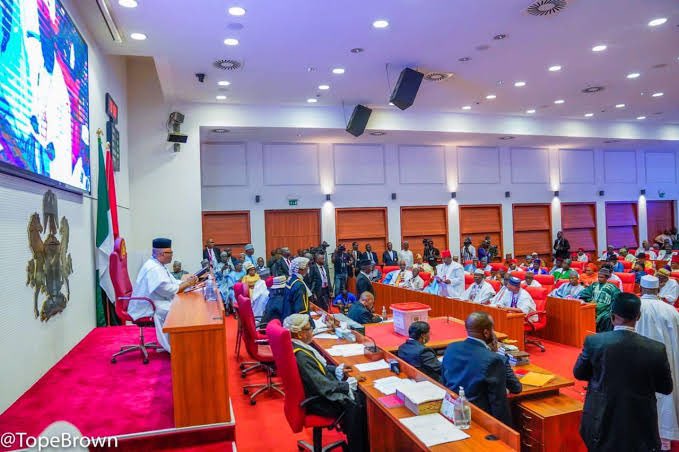
Senate approves resolution urging continued electricity subsidy amidst hardship

By Sabiu Abdullahi 

The Nigerian Senate has endorsed a resolution urging the federal government to continue with the electricity subsidy in light of the prevailing challenges confronting the nation.

This decision comes in response to the pressing concerns raised regarding the ongoing hardships experienced by citizens across the country. 

During a comprehensive deliberation at the plenary session, Senator Aminu Iya Abbas of the People’s Democratic Party (PDP), representing the Adamawa Central Zone, tabled a motion advocating for the continuation of the electricity subsidy.

The proposal garnered widespread support from fellow lawmakers, leading to its unanimous approval. 

Addressing the Senate, Senator Abbas reiterated the significance of prioritising the welfare of the populace amidst economic uncertainties and social challenges. 

The decision reflects a concerted effort by the Senate to address the concerns voiced by constituents and stakeholders regarding the affordability and accessibility of electricity, particularly during these turbulent times. 

By advocating for the continuation of the subsidy, lawmakers aim to alleviate the financial burden on households and mitigate the adverse impact of rising utility costs. 

In approving the resolution, the Senate reaffirmed its commitment to championing policies and initiatives aimed at safeguarding the interests and well-being of the Nigerian populace.

The collective endorsement of Senator Abbas’s motion underscores the bipartisan consensus on the imperative of sustaining vital support mechanisms to alleviate socioeconomic strains and promote inclusive development.

Blackout for Nigerians as electricity workers join NLC indefinite strike

By Sabiu Abdullahi 

The National Union of Electricity Employees (NUEE) has joined the Nigeria Labour Congress (NLC) indefinite strike that began today, October 1, 2023. 

The NLC is protesting the high price of petroleum resulting from the removal of the fuel subsidy as well as other anti-labour policies by the government. 

NUEE has directed its members to totally withdraw their services and participate in street protests and rallies until the government responds to the union’s demands. 

The union’s demands include the reversal of the removal of the fuel subsidy, an increase in the minimum wage, improved working conditions for electricity workers, and the payment of all outstanding salaries and allowances. 

The NUEE strike is expected to have a significant impact on the power sector, as it will lead to blackouts nationwide.

The union has apologised to the public for the inconvenience the strike will cause, but it has said that it is necessary to protect the interests of its members and the Nigerian people. 

The government has appealed to the NLC and NUEE to call off the strike, but the unions have refused to back down.

The strike is expected to continue until the government meets the unions’ demands.

Obasanjo denies involvement in $6bn hydropower project

By Ahmad Deedat Zakari

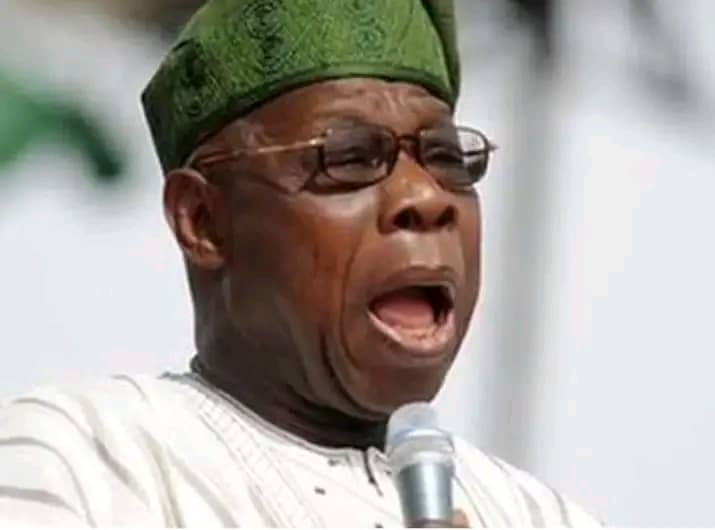
Nigeria’s former president, Olusegun Obasanjo, has denied any involvement in the $6bn hydropower contract awarded to Sunrise Power and Transmission Ltd in 2003.

Obasanjo challenged Olu Agunloye, the former minister of power and steel, to tell Nigerians where he derived the authority to award a $6 billion contract to Sunrise Power and Transmission Ltd in respect of the Mambila Hydropower Project in 2003.

Sunrise Power is currently in arbitration with Nigeria at the International Chamber of Commerce (ICC), Paris, France, over an alleged breach of contract by the federal government.

In the first arbitration, Sunrise is asking for a compensation of $2.3 billion, claiming it had spent millions of dollars on financial and legal consultants before the contract was jettisoned.

In the second one, the company is asking for a $400 million settlement being the terms of the agreement it entered with the federal government in 2020 to end the arbitration.

Nigeria is fighting the claims on the grounds that Agunloye, who suspiciously awarded the contract one week to the end of his tenure as power minister in 2003, acted illegally.

In an interview with The Cable during the weekend, Obasanjo denied authorising Agunloye to commit Nigeria to the $6 billion “build, operate and transfer” contract.

“When I was president, no minister had the power to approve more than N25 million without express presidential consent. It was impossible for Agunloye to commit my government to a $6 billion project without my permission and I did not give him any permission,” Obasanjo disclosed in the interview with The Cable.

Obasanjo challenged Agunloye to explain where he got the power and authority.

“If a commission of inquiry is set up today to investigate the matter, I am ready to testify. I do not even need to testify because all the records are there. I never approved it,” Obasanjo said.

“When he presented his memo to the federal executive council (on May 21, 2003), I was surprised because he had previously discussed it with me and I had told him to jettison the idea, that I had other ideas on how the power sector would be restructured and funded.

“I told him as much at the council meeting and directed him to step down the memo. I find it surprising that Agunloye is now claiming he acted on behalf of Nigeria. If I knew he issued such a letter to Sunrise, I would have sacked him as minister during my second term. He would not have spent a day longer in office.”

The former president also said Leno Adesanya, the promoter of Sunrise Power, ran away from Nigeria when he was president.

“I would have jailed him if he was in the country because of the things I knew about him. After I left office, he returned and I saw him. I told him that he was lucky I was no longer president. Otherwise, I would have jailed him,” He told The Cable.

National electricity grid collapse puts Nigeria in darkness

By Muhammad Sabiu

National electricity grid collapse puts Nigeria in darkness Nigeria’s shaky national energy grid has crashed once more, leaving numerous towns in the dark, including the federal capital Abuja.

Late Sunday, power companies stated that the outage began shortly before 7 p.m.It’s the sixth reported collapse in 2022, while some speculate that the number could be higher.

The administration attributes the recurring breakdowns to inadequate management and a lack of gas supplies.

On Sunday, Jos Electricity Distribution Plc sent out a Facebook message to its clients informing them of the power outage.

The head of corporate communication, Friday Elijah, stated that “The Management of Jos Electricity Distribution Company Plc wishes to inform the general public that the current outage being witnessed is a result of system collapse.

“We hope to restore supply as soon as supply is restored,” he added.