Electricity

Minister Abubakar, epileptic power supply: the solution

By Zayyad I. Muhammad 

When ordinary Nigerians are faced with epileptic power supply, their first grumble is on Discos and the Minister of Power. They don’t bother where the problem is coming from because Discos and the Minister of Power are the two ‘entities’ who the common-man rely on electricity matters. Discos charge them for electricity bills, while they view the Minister as the overall head of the power sector in Nigeria, which is true. This is the dilemma every Nigerian minister of power and Disco faces.

Discos often blame poor supply from the transmission end. The Transmission Company of Nigeria (TCN) says the insufficient power supply experienced nationwide is due to low power generation by the generation companies (GenCos).- some of the problems are- Technical hitch in Egbin plant and poor gas supply etc

We must admit that the transmission sector has witnessed tremendous progress – Nigeria witnessed only four grid collapses in 2020 as against the 42 in 2010.

A total system collapse means a total blackout throughout the country, and this is one of the biggest challenges Minister for Power, Engr. Abubakar D. Aliyu has to get an alternative to- because once the country witnesses a total grid collapse, Nigerians will quickly forget the progress made in many years- thus, for example, a 24-hour failure will erase a one-year success.

What should the Minister and his team do to bring a shorter-term solution once the country witnesses a total system collapse? The answer – we need a reductionist approach. Our electricity sector operates on a holistic system  – for example, once the Egbin Thermal Power Station in Ijede / Egbin, in Ikorodu, Lagos witnessed a technical problem, a consumer in Jimeta, Adamawa state will feel the impact, thus blaming his Disco and the Minister of power

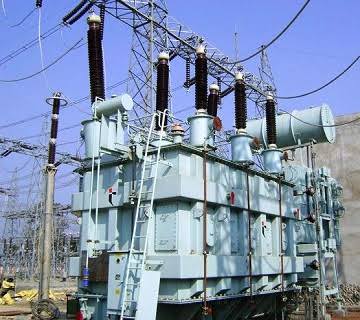
The best solution to tackle this issue is Neighborhood Solar Power and Wind-power model. Each neighbourhood in Nigeria that is connected to the national grid has an electricity-transformer site. Technicians and experts in the Ministry of Power, the Rural Electrification Agency (REA), and Discos, in collaboration with other private firms, should look into a model to build solar panel farms and mini wind turbines at these transformers sites or near it at each community. This will help connect the neighbourhoods with alternative power –this will allow members of a community to share the benefits of solar energy when the national grid collapses, even if they lack solar panels on their properties. This system is being operated globally; Nigeria should benchmark it.

Lightweight, flexible wind turbines and small solar panel farms within the neighbourhood can be used to power communities when the national grid collapse without the people feeling any impact- thus, the Minister of Power and Disco will be free from public criticisms. At the same time, Gencos will have ample time to rectify any technical glitch. 

Though Community solar panel farms and Community wind turbines are basically for the population in rural areas without access to the national grid, Nigeria’s electricity system should be a combination of a  ‘hybrid power system’- national grid, mini solar, and mini wind turbine at communities. A  decentralized electricity supply system that alternates between the national grid and renewable energy can be one of the best technical options available for Nigeria. 

We must admit that these two alternatives- neighbourhood solar and wind turbine are not new to the government – some reports say there are ten large-scale Solar Power Plants in Mega Watt in some locations in Nigeria. Nigeria has not put much interest in such a project because of the country’s capacity to generate enough power from its plants. However, transmission and distribution bottlenecks should be a big reason for the government to seriously look into utility-scale solar and mini wind turbine power generation in neighbourhoods to serve as an option when the country is faced it total or partial national grid failure, as the country is witnessing now 

Zayyad I. Muhammad writes from Abuja via zaymohd@yahoo.com.
Electricity: Nigeria still in darkness in the 21st century

As FG is set to reverse the sale of DISCOs and GENCOs, it shows the highest form of corruption and mismanagement that continue to pester in their management. Go to their offices and see mismanagement and corruption personified, poor customer services and daylight bribery, before a meter is issued to a customer and so on.

There are 11 electricity distribution companies in Nigeria. Majority of them violated the agreement they entered with FG. There are over 20 electricity generating companies in Nigeria today but the top six GenCos providing the country with electricity are Egbin Power Limited, Transcorp Power, Shiroro, Kainji/Jebba, Sapele and Geregu. They have also failed to inject money into power generation and are begging government for funds.

Don’t get me wrong. I am not against privatisation of NEPA, but I am certainly not happy with the hurried way the government sold the utility corporation without putting it in good shape so that the private hands that will buy it will have a smooth and easy take up.

I was against selling the power corporation to former leaders, cronies and incompetent men by the Jonathan administration.

The past government didn’t rehabilitate the power plants before selling them. All money set aside were stolen by officials. The government refused to listen. We said they should take a cue from global trend. Almost all countries around the world began their power reforms from different starting points with a long history of handing over relatively well managed power corporations.

In contrast, Nigeria is privatising inherited pieces of the old NEPA systems, a derelict corporation where power generation was allowed to dip below 3500mw .

Nigeria will be the only nation in the world that sold its utility corporation at such an abysmal low power generation level, 3500MW to be precise.

Privatization of the Power and Natural Gas Industries around the world has a starting point which include: industry structure, wholesale market, labour and management relations, regulatory framework, privatization objectives and privatization methods.

Nigeria was so much in a hurry to sell out the entire system without taking a holistic appraisal of the likely consequences of the exercise to the nation.

And this explains why the country will remain in darkness for a very long time!

Aliyu Nuhu write from Abuja, Nigeria.

FG approves DISCOS’ electricity tariff increase

By Aliyu Nuhu

The federal government of Nigeria has approved DISCOS to increase the price of electricity in September. It could be as early as Monday. Already Lagos DISCOS had issued notices to that effect. It will interest you also to know that NNPC will increase the price of petroleum anytime. It could be in a matter of weeks.

The implications are so many. Inflation that is hovering around 100% will be on the rooftop. About 90% of Nigerians are already finding it difficult to feed. Salary earners will turn to beggars as inflation without a commensurate salary increase will see them working for peanuts. Life will be worse off for those that earn nothing. Businesses will be running at a loss. Even before the electricity price increase, most companies said they were working for DISCOS. This is because electricity prices by far outstrip their net profit.

The government said it wants to reduce poverty, but the major component of poverty is hunger. No man with an empty stomach can claim to be rich. The government wants to revive the economy and restore the strength of the Naira. There is no faster way to kill the Naira than allowing inflation to run unchecked.

Prices of cooking gas, kerosene and diesel have long been increased. Poor Nigerians will surely be in a sorry state by the time the government completes its increments in energy prices.

With his harsh economic policies, President Buhari is becoming the undertaker of the poor Nigerians that helped put him in power. Some of them used their last savings to buy his campaign cards that gave him the money to spend on his election, and this is how he is paying them. It is so bad.