Death

Mr Ibu’s family failed him

By Abdurrazak Mukhtar

The late John Okafor, popularly known as Mr Ibu, spent decades making Nigeria laugh. He gave his best years to Nollywood, entertaining millions across Africa with his unique comic genius and irreplaceable screen presence. He was more than an actor. He was a cultural institution. Yet today, the story surrounding his estate and his family’s welfare is anything but funny. It is a tragedy of greed, betrayal, and inexcusable injustice.

Mr Ibu rose from humble beginnings to become one of the most recognisable faces in Nigerian cinema. His comedy was not merely entertainment. It was a mirror held up to society, reflecting the struggles and absurdities of everyday Nigerian life with warmth and wit. When he fell ill, Nigerians did not hesitate. From all walks of life, fans, colleagues, and well-wishers contributed generously to his medical bills, demonstrating the depth of love this nation had for him. That outpouring of support was a testament to the kind of man he was and the joy he had brought to so many homes.

Reports indicate that Mr Ibu left behind significant assets, including properties in Lagos, Enugu, and Asaba, several cars, and substantial funds. Beyond his personal estate, generous Nigerians donated large sums during his illness to cover his medical treatment. Additional funds were raised at the time of his burial. By all reasonable accounts, there was more than enough to ensure that his widow and young children would be protected and provided for in the years ahead. But that is not what happened.

His son, Somotochukwu, came forward with a deeply troubling allegation. He claimed that his stepmother, Stella, sold a Lagos property for ₦60 million, an Enugu property for approximately ₦17 million, and another in Asaba for ₦11 million, yet he received only ₦40,000, presented not as his rightful share of his father’s estate, but as a personal gift. Furthermore, family members accused one another of embezzling the very donations that kind-hearted Nigerians had sacrificed to give during Mr Ibu’s illness.

The consequences of this alleged mismanagement are not abstract. They are visible and heartbreaking. Mr Ibu’s widow is reportedly fetching water from a well because she cannot afford her rent. Three young children, aged 10, 12, and 14, have been forced to drop out of school. The family’s electricity was disconnected for months, leaving them to depend on neighbours to charge their phones. These are the children of a Nollywood legend, reduced to conditions that no Nigerian child should endure.

This is not a private family matter to be quietly swept aside. It is a public failure with public consequences. The funds donated by ordinary Nigerians for Mr Ibu’s treatment were not gifts to any individual. They were acts of collective love for a man who belonged to the nation. Those who received and managed those funds bear a moral and legal responsibility to account for every naira. Silence in the face of such allegations is not neutrality. It is complicity.

The Actors Guild of Nigeria, Nollywood stakeholders, and relevant authorities must not look away. If funds donated publicly were misappropriated, the law provides remedies, and those remedies must be pursued. Transparency is not optional in matters such as these.

To the family of Mr Ibu, this moment calls for maturity, unity, and honesty. Whatever grievances exist between the widow and the children from other relationships, they must not be settled at the expense of the innocent. Those children did not choose the circumstances of their birth. They did not create the disputes dividing this family. They deserve access to education, shelter, and a dignified life, not as charity, but as their rightful inheritance from a father who worked hard all his life.

It is strongly advised that all parties submit to a transparent, legally supervised process for the distribution of Mr Ibu’s estate. A lawyer or court-appointed administrator should be engaged immediately to protect the interests of all dependents, especially the minor children. Settling this matter in the media through emotional appeals and counter-accusations serves no one, least of all the children.

The story of Mr Ibu’s family is not an isolated one. Too many Nigerian entertainers have died, leaving their families in poverty, not because they did not earn, but because there were no structures in place to protect what they built. The entertainment industry must begin to take the welfare of its members seriously, not only in death but in life. Wills, estate planning, life insurance, and welfare funds are not luxuries. They are necessities that every serious professional body must promote and facilitate.

The Actors Guild of Nigeria and similar bodies should establish a dedicated welfare framework that provides legal and financial guidance to members, ensuring that what happened to Mr Ibu’s family does not become a pattern.

Mr Ibu gave Nigeria laughter when it needed it most. He gave the film industry his talent, his energy, and ultimately his health. In return, the very least Nigeria owed him was the assurance that his children would be cared for and that his legacy would be honoured with integrity.

It is not too late to make it right. Mr Ibu’s children are still young. They still have futures ahead of them. Whoever holds the keys to their father’s estate must open that door with justice, fairness, and the fear of God. Because a man who made millions smile deserves far better than to be remembered as a cautionary tale about family greed.

He deserved better. His children deserve better. And Nigeria must do better.

In Loving Memory of Baba Ahmad Kaugama

By Aisha Musa Auyo 

Innalillahi wa inna ilaihi raji’un. I am still struggling to absorb the shock of Baba Ahmad’s passing. Saying goodbye to a father, mentor, and teacher whose impact on my life cannot be overstated is one of the hardest things I have ever had to do.

I owe my Doctorate in Educational Psychology entirely to him. Among all the paths I could have taken in life, he was the one who steered me toward this field.

I was sixteen, in my first year, when I walked into Educational Psychology 001 and met Prof. Ahmad for the first time. Back then, I resented studying education when all I had ever wanted was medicine. But his intellectual energy, his rigour, and his sheer passion changed something in me. I remember thinking, so there’s a medical side to education, a psychology that isn’t strictly clinical. This is it. This is what I should specialise in. The workings of the human mind had always fascinated me, and the learning theories he introduced us to were captivating, made simple by his rare gift for turning abstract ideas into something anyone could grasp.

That evening, I told my father about this brilliant professor. He smiled. “We went to secondary school together, in Hadejia,” he said. “Prof. Abubakar, too, from educational psychology, also from Hadejia. They’re your fathers as well. You should go and greet them sometime.”

When I finally did, before I could even say a word, he looked at me and said my name. “You’re Aisha Auyo. Your resemblance to your father is striking.” We wouldn’t cross paths again until I returned for my master’s.

He was nothing short of supportive through it all. During my defence, he could be stern, but it was the kind of sternness that steadied rather than shook you. “Aisha, kinga, dukanmu nan mu iyayenki ne. Ki kwantar da hankalinki.” Aisha, look, all of us here are your parents. If there’s anything you don’t understand, we will always be here to help and guide you.”

Whenever Prof. Ahmad spoke about psychology and research, you understood immediately that you were in the presence of someone who had mastered his craft. There was no corner of educational psychology, no angle, including its Islamic dimensions, that he hadn’t explored. He designed curricula, taught, researched, supervised, and mentored thousands. How he managed to keep expanding his knowledge alongside everything else he carried never ceased to amaze me. Dedication, commitment, grit, passion….. that rare combination made him a force wherever he stood.

His mind absorbed and retained information in a way few others could. Many of us in educational psychology drew our energy from him. He pushed people to study even on the days they had no will left to. His influence stretched across Northern Nigeria and beyond.

Students called him the “Dodo” of every defence session because if you tried to cut corners or talk your way around a gap in your work, he would catch it from a single glance. He could smell unpreparedness from a mile away, and he had no patience for laziness or carelessness, which led some to assume he lacked warmth. He didn’t. He was simply a principled man who valued hard work and honesty. Behind that exacting exterior was a humble, selfless, generous soul who helped more people than most of us will ever know.

I remember a conference in Gombe, when he learned I was staying with family friends instead of with him. He was furious and immediately tried to change the arrangement. “Aisha ba ki da inda ya fi cancanta ki zauna fiye da gidana a garin Gombe”. Aisha, there is nowhere more fitting for you to stay in Gombe than my house. He was on sabbatical at the time. When my hosts came to collect me, he kept insisting, “Diyata ce fa. Babanta yana nan” …She is my daughter. Her father is right here. Eventually, we compromised: two days with my hosts, two days with him. He opened his home to so many students, and those days were full of warmth and laughter.

When I finished my master’s defence, relieved and overjoyed that I was finally done, he called my father to congratulate him and urged him to push me back for a PhD. My father called and said, “Babanki Dr Kaugama ya ce ki dawo PhD”. Your father, Kaugama, says you should return for your PhD. I told him I would, just not yet, in sha Allah, someday soon.

My father never let it go. Every time we spoke, while I was in Ogun, he reminded me about the PhD. Your father, Ahmad, says you will have all the support you need. That was how I found myself buying the form and sitting the aptitude test. When he saw me in the exam hall, he lit up. “Aisha, I know you’ll ace this,” he said. “Kina da ƙoƙari da himma” Those words carried me through. I told myself I would not let down everyone who believed in me. Alhamdulillah, I passed and was given admission number 00001 that year.

During my PhD coursework exams, he once noticed my hands trembling and asked what was wrong. “I’m hungry, sir, I haven’t eaten,” I admitted. I had been reading and lost track of time. He told me, plainly, that as an educational psychologist, I ought to know better that the brain runs on food. He said, You need it to read, to understand, to recall, to organise your thoughts. He asked what I wanted to eat and went out himself to arrange it. I couldn’t write a word until I had eaten. Once I was full, he said, “Now continue your paper. I won’t add a single second for you. Time off is time off, for everyone.” I wrote as fast as I could and managed to answer every question. I never made that mistake again.

After my PhD viva, I asked to take a photo with him. “Aisha, ba ni da lokaci,” he teased. “Baba, you forced me to come back for this program,” I reminded him. “Remember how you called my father?” He laughed. “Yes, I remember everything.” “Then I’m forcing you to take this picture with me,” I said. “You’re part of my academic journey. You’re the reason I fell in love with educational psychology.” We took a few photos together and said our goodbyes.

Baba Ahmad was a father to many. His home was always full of orphans and relatives from Kaugama. He was a comrade, a tireless community man, a teacher in the truest sense. His death is an immense loss to his immediate family, to the NISEP family, and to every endeavour he poured himself into. May his contributions to academia continue to benefit him in this life and the next.

When I heard the news, my first thought was: Will he meet my father there? Allah ya yi musu rahama da gafara duka. Allah ya kula da bayansa. Allah ya hada mu duka a Aljanna.

May Allah grant them mercy and forgiveness, watch over those they left behind, and reunite us all in Paradise.

Aisha Musa Auyo, PhD, is an Educational Psychologist, author, and media professional passionate about translating research into practical, everyday impact. She writes on parenting, family dynamics, and education, drawing from both professional expertise and personal experience. Aisha is also a parenting and relationship coach and the founder of Eesher Auyo’s Empire. She is based in Abuja, Nigeria.
Nollywood star Alex Ekubo passes away at 40

By Hadiza Abdulkadir

The Nigerian entertainment industry is in deep mourning following the news that beloved Nollywood actor and model, Alexx Ekubo, has passed away at the age of 40.

Reports emerged late Tuesday, May 12, indicating that the star died at a private medical facility in Lagos. While his family has yet to release an official statement regarding the cause of death, sources close to the actor suggest he had been quietly battling a long-term illness.

Ekubo’s passing comes after a prolonged and mysterious absence from the spotlight. Once a fixture of the Lagos social scene and a prolific presence on social media, the actor had not been seen publicly or posted online since late 2024, leading to months of mounting concern from his global fanbase.

Rising to fame as the first runner-up in the 2010 Mr. Nigeria contest, Ekubo transitioned into a powerhouse acting career. Known for his wit and charm, he became a household name through blockbuster hits like Weekend Getaway, Lagos Cougars, and Sugar Rush. Over his decade-long career, he earned numerous accolades, including the Best Supporting Actor trophy at the 2013 Best of Nollywood Awards.

Beyond the screen, Ekubo was a trained lawyer and a traditional chief, holding the title of Ikuku of Amumara Town.

Tributes have already begun pouring in from colleagues and fans, who remember him not just as a talented performer, but as a vibrant “breath of fresh air” in the African film industry.

Former Chinese Defence Minister Sentenced to Death for Corruption

By Muhammad Abubakar

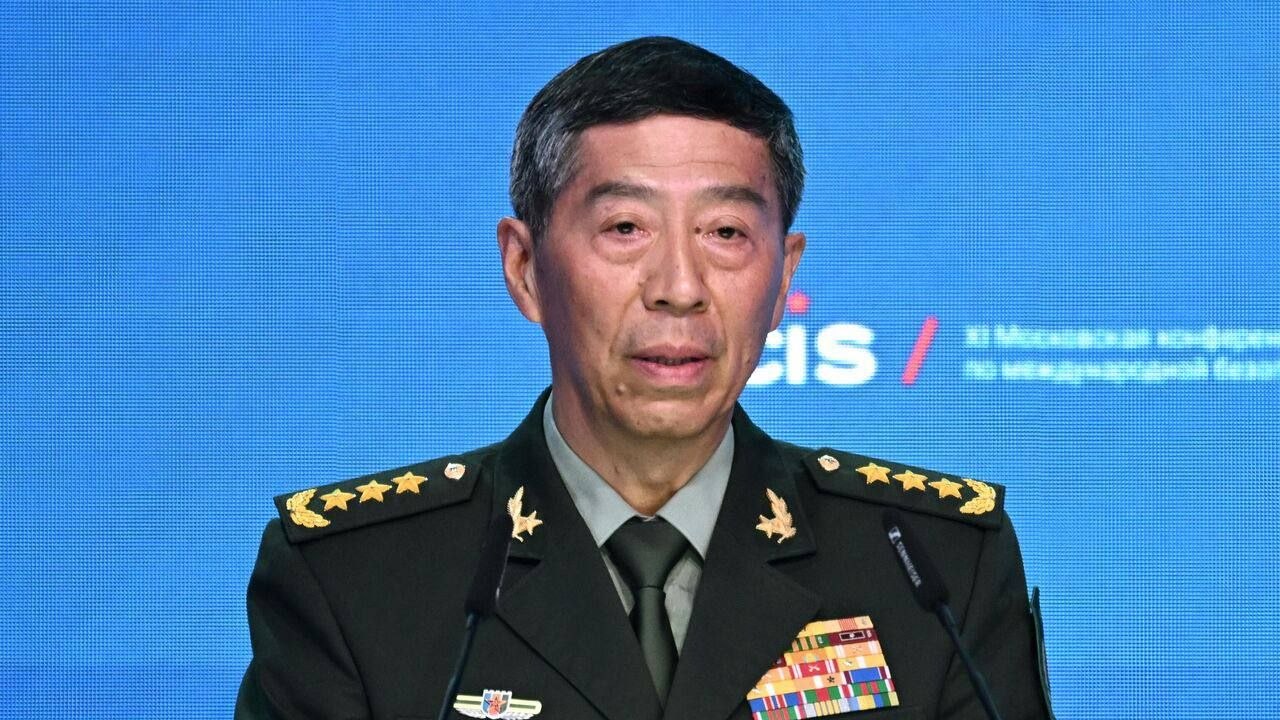
A military court in China has sentenced former Defence Minister Li Shangfu to death for corruption, with a two-year reprieve on the execution of the sentence, state broadcaster China Central Television reported.

Li, who previously served as one of China’s top military officials, was found guilty of corruption-related offences following an investigation by Chinese authorities. Under China’s legal system, a death sentence with a two-year reprieve is often commuted to life imprisonment if the convict is deemed to have shown good behaviour during the suspension period.

The ruling marks another major development in China’s sweeping anti-corruption campaign, which has targeted senior political and military figures in recent years. Li was removed from office in 2023 after months out of public view, fuelling speculation about investigations into alleged misconduct within the military establishment.

BUK Mass Communication student dies

By Kamal Alkasim

Hauwa Salisu Fagge, a 100-level student of the Department of Mass Communication at Bayero University, Kano (BUK), has passed away.

Her death was announced on Sunday by the President of the Mass Communication Students’ Association, Mustapha Ukkasha Abubakar, who described the loss as painful and heartbreaking for the department and the wider university community.

Hauwa was actively involved in campus media activities and worked with BUK FM, where she contributed to the morning news programme. She was widely regarded by her colleagues as a passionate and dedicated media enthusiast.

“Her demise is a painful loss to the Department of Mass Communication, her family, friends, and the entire university community,” the MACOSA president said while extending condolences to her loved ones.

The association prayed that Almighty Allah forgive her shortcomings, grant her Jannatul Firdaus, and give her family and friends the strength to bear the irreparable loss.

Florida’s 18th execution scheduled as inmate declines final appeal

By Maryam Ahmed

Florida is poised to carry out its 18th execution of the year on Tuesday, marking the state’s deadliest year on record, after death row inmate Mark Geralds declined to challenge his death warrant.

Geralds, convicted of the 1989 murder of a woman in Panama City, spent more than three decades on death row before Governor Ron DeSantis signed his execution order last month. In a rare move, Geralds informed officials that he would not pursue the final round of appeals typically filed by inmates facing imminent execution.

His execution by lethal injection will also contribute to a national surge in capital punishment, pushing the United States toward its highest annual total in nearly twenty years. Florida, which has significantly accelerated its use of the death penalty in recent years, now accounts for a large share of the country’s executions in 2025.

The spike has intensified debate among legal experts, civil-liberties groups, and faith leaders, many of whom warn that the growing pace leaves less room to identify wrongful convictions or address longstanding concerns about racial bias, mental health, and sentencing disparities.

State officials, however, argue that the system provides ample opportunity for review and that carrying out sentences brings long-delayed closure to victims’ families. Geralds’ execution, they say, follows decades of litigation, during which multiple courts upheld his conviction and sentence.

Don’t postpone kindness, you may never get another chance (1)

By Aisha Musa Auyo

When you can be kind and helpful, do it immediately. Don’t procrastinate or wait for the “right time.” You may not live to see that time, or the person you want to help may not. The point of power is always now.

I’m inspired to share this because two recent incidents made me reflect deeply. One was the death of a close relative, the other, the passing of an acquaintance I only met once but stayed connected with through social media.

In the first incident, an aunt of mine came from another town for her monthly hospital appointment. She usually arrived a day before to avoid being late. That evening, after visiting some relatives, she spotted a shawarma shop and sighed: “Zan so na ci shawarma ko da sau ɗaya ne a rayuwata” (“I would love to taste shawarma at least once in my life”).

My cousin, who was driving, ignored her words and sped past. I pleaded with him to go back, but he insisted the shop was closed and wouldn’t open until 7 p.m., which is true. My aunt looked disappointed.

Later at home, I begged him again to get me shawarma bread so I could prepare it for her. He brushed it off, saying he was tired, and reminded me she’d be leaving early the next morning. “You can always make it for her next month,” he said. But my heart wouldn’t allow me to postpone it.

Eventually, he bought the bread, and I stayed up late preparing the fillings, finishing by midnight. I set my alarm for 4 a.m., woke up, rolled, and grilled the shawarma. By 5 a.m., it was ready. When I handed it to her, she was overjoyed. She couldn’t believe I went to such lengths to fulfil her simple wish. She prayed for me with a smile, and we said our goodbyes.

Later that day, she called to say she had arrived home safely and that my shawarma exceeded her expectations. She even saved some to take home. Though I joked, it must have been cold by then. She prayed again for me before hanging up the phone.

A few days later, she passed away.

I was in shock. Just last week, she was with us, longing for shawarma. I wept, but deep down, I thanked Allah that I didn’t delay. That shawarma became her first and last.

The lesson is clear: never delay an act of kindness. Tomorrow is not promised for you or for them.

Aisha Musa Auyo is a doctoral researcher in Educational Psychology. A wife, a mother, a homemaker, a caterer, a parenting and relationship coach. She can be reached via aishamuauyo@live.co.uk.

Tribute to my father

By Sulaiman Maijama’a

My elder brother’s call – Bello, requesting that I show up at our family house on Sunday morning, August 10th, 2025 – is the most difficult phone call I have ever answered in my life. Immediately, I overheard crying in chorus from the background; I knew what it meant and told my wife that the inevitable we have all been waiting for is here: Baba is no more.

Our father, Alhaji Maijama’a Iliyasu, first fell sick on August 5th, 2023, but later recovered and was taken to go about his business by us (his children). His illness resurfaced on November 24th, 2024; he was bedridden for some weeks at ATBUTH, later discharged and has remained home since then. Seeing his body was not recuperating, yet he was discharged from the hospital, we understood the doctors’ body language and got to a point where we believed that it was terminal. Consequently, whenever I received a phone call from any of my siblings, I picked up with a nervous disposition, fearing what they had to tell me.

On the fateful day, I went home. I found the dead body of our dear father surrounded by my brothers and sisters, uttering “Inna Lillahi Wa Inna Ilaihi Raji’un,” submitting to the will of Allah and crying profusely. I felt that my imagination of how it feels when one loses a father failed me, as I never thought the magnitude of the pain and sense of despair it creates is to that extent. The feeling defies expression. But the crowd of sympathisers trooping to the house and visitors making speeches of eulogy and testimonies of the person our father was were what consoled us the most.

Testimonies of people on earth about the good reputation of a deceased can be a means of his entry into Jannah, as reported in an authentic Hadith, where our beloved Prophet says, “…the believers are the witnesses of Allah on the earth…” That is why it is Islamically encouraged to amplify the virtues of a dead person, but judgment belongs to the Merciful.

An old man who came to sympathise with us stated and emphasised our father’s respect for his parents and elders. The man said he was a living witness that when our father was in active business in Central Market before he relocated his mother to our house, he used to go and check on her three times every single day: in the morning before he went to the market, in the afternoon after Zuhr prayer, and in the evening when he closed. I’m not surprised because my mother always tells me that, in the years he had lived with his mother Innah, his goodness for her could fill the earth.

I personally did not grow up seeing his mother, but I mistook his elder sister for his mother because of the respect he had for her. Even his granddaughters, named after his mother, and his daughters-in-law bearing the name were called “Innah” or “Mamana” and enjoyed special treatment from him.

His closest childhood friend, Alhaji Sule Sarkin Kasuwa, told us that one day in the 1980s, Innah directed our father to go to Kaduna and apprehend a relative who ran away and refused to return home. There was no intelligence report of the man’s whereabouts, no telephone to call, and the man was of no fixed location. However, Baba, out of obedience to his late mother, requested Alhaji Sule to escort him to Kaduna, and they searched all over but could not find him. Our father became deeply concerned that his mother would not be comfortable, but Alhaji Sule assured him that God knows he had complied.

I grew up seeing my father as a very disciplined man with a strict daily schedule. After the dawn prayer, he recited his Warsh copy of the Glorious Qur’an until around 8 a.m., took breakfast, and went shopping in Central Market. Returned home around 6 p.m., went to Bauchi Central Mosque to pray Magrib and waited for Isha, returned home, ate dinner, and listened to the radio before he slept. His philosophy on the education of his children is “Qur’an first.” All of his eighteen children were never enrolled in a Western school until we learned to read the Qur’an alphabetically and possessed reasonable proficiency in reciting the Qur’an when we were around seven years old. I can still see in my mind’s eye the day I was enrolled in primary school in 2004, when I was 8 years old, meeting Malama Safiya and Mrs. Roda as my first primary female teachers.

By Allah, I cannot remember a day that passed without him reciting his Warsh copy of the Qur’an. I never saw him sitting by the roadside, talking ill of others. As strict as his schedule was, he ensured that his children followed suit, never allowing us to enjoy leisure time since childhood. We would be woken up at dawn, sent to “Makarantar Allo“, and returned around 7 a.m. We would then be sent to primary school, returned in the afternoon, and sent to Ismiyya until around Magrib. By the time we finished primary school, we would be sent to learn different skills, and that is why we realised the realities of life early and were relieved of many responsibilities.

Our father exemplified a firm belief in the power of the Qur’an and Dua. Whenever he or any of his children had something profound to pursue, he would sit on his mat, spread out in a slight angle in his room, and spend hours reciting and praying for us. Any act of goodness we did, he prayed for us, all the goodness of this world and the hereafter, until you got tired of answering “ameen”. Until he fell sick, when any of his daughters was about to deliver in her matrimonial home, he would personally inscribe Qur’an verses and send them to wash and consume the water. Regardless of our age, if he gave any of us a certain Qur’an verse or dua as a “lakani” and then asked us to recite it back the next time, and we failed, we would be scolded accordingly. I still have small papers containing his inscriptions.

Now that the crowd of sympathisers has dispersed, my recollection of his prayerful and caring nature sparks a sense of nostalgia in my subconscious mind. I remember that whenever I was late at work, Baba would call to ask why, and whenever I was on the road at night, he would call several times to check on my safety and would never retire to bed until I was home. We will forever miss this. Standing on truthfulness and imposing strict rules on his family were some of the qualities Allah blessed him with. In the house, none of us could dare tell lies on phone calls in his presence, gossip, or insult. If you talked ill of others, he would ask, “Can you say the same if the other person were here?” His family setting was highly regimented and fully localised.

Our father departed this world without owing anybody a Kobo on earth. To us, it is no surprise because we know his philosophy of living within one’s means and never taking credit, no matter how little. When he fell sick, he sent someone to the market to buy him something. When I told the man of his illness, he said, “Allah sarki, baban nan da ba ya cin bashi.” No matter how close to him you were or how many years he spent buying from you, he would never agree to take credit for a single penny. A certain government official once approached him with a form for a loan scheme the government had designed to disburse funds to support businesses. Still, Baba rejected it, saying he preferred to live and die well without a burden. When the news reached us, we tried our best to convince him, telling him, “Irin bashin gwamnati ne da su ke yafewa,” but he insisted on his stance.

Indeed, Allah fulfilled his wish: he lived well, built a solid foundation of discipline for his family, mentored his children to understand life early, stood for righteousness, and, in fervent service to his Creator, eschewed taking any burden of his fellow human beings. Baba passed away peacefully, leaving us full of nostalgia. May Allah be merciful to our beloved father, forgive his shortcomings, shower illumination into his grave, accept his good deeds, and admit him into Jannatul-Firdaus. I’m grateful to all the people who prayed for him, visited us, sent a text message, or called to sympathise with us. I acknowledge and thank you gratefully, once again.

Sulaiman Maijama’a

Manager, Admin & Commercials

Eagle Radio Bauchi.

MAKIA: Route to the Saudi sword

Mohammad Qaddam Sidq Isa (Daddy) 

The recent revelation that three Nigerians, recently detained by Saudi authorities on allegations of drug trafficking, had been framed by an international drug trafficking syndicate operating at Malam Aminu Kano International Airport (MAKIA) further confirms the persistence of such nefarious activities, bringing to mind a similar scandal in 2019 that nearly cost an innocent woman her life in the Kingdom. 

The syndicate’s modus operandi begins by targeting unsuspecting travellers at MAKIA who appear to have little or no experience in international air travel protocols. 

Exploiting the fact that such travellers rarely turn up at the airport check-in counter with enough luggage to take up their full luggage allowance, if they are even aware of it, the syndicate members covertly tag and check in drug-containing luggage under the travellers’ names.

On arrival in Jeddah or Madinah, the syndicate’s Saudi-based Nigerian accomplices monitor the luggage processing. If the bags make it through undetected, they somehow manage to claim them, sometimes with, and other times without, the traveller’s knowledge or involvement.

However, if the bags are flagged, the accomplices vanish, leaving the unsuspecting travellers to be apprehended and subjected to the Kingdom’s strict judicial system, where drug trafficking can carry the ultimate punishment: public beheading.

Despite Nigerian authorities’ assurances since the 2019 scandal that all structural and operational loopholes exploited by the syndicate had been addressed, the latest incident demonstrates that these measures were insufficient. It also underscores the growing notoriety of the otherwise reputable MAKIA as a hub for international drug trafficking syndicates specialising in framing unsuspecting travellers. 

If organised crime of this sophistication can occur at the relatively less corruption-prone MAKIA, one can only imagine what might be happening at Murtala Muhammed International Airport in Lagos or Nnamdi Azikiwe International Airport in Abuja. 

Only Allah knows how many innocent people, framed in this way and too unlucky for their ordeals to be publicised or their innocence to be proven, ended up publicly beheaded in Saudi Arabia. 

Although the Nigerian government has assured that it will leave no stone unturned to secure the exoneration of these innocent Nigerians currently facing drug trafficking charges in Saudi Arabia, it should not take the situation for granted. 

Meanwhile, it should also take decisive action to address this menace at MAKIA and other airports across the country. After all, the few individuals apprehended may represent only a fraction of the culprits, with many others likely still out there.

Mohammad Qaddam Sidq Isa (Daddy) wrote via mohammadsidq@gmail.com.

My daughter Rahma, cerebral palsy, and death

By Abubakar Suleiman

“I am sorry, the brain of your child has been insulted.” Those were the words of a friend who is also a medical doctor after reviewing the EEG result of my late daughter, Rahma, three years ago. He continued, “Abubakar, you have a case in your hands, Allah Ya baka ikon cin jarabawa.”

The phrase “brain being insulted” was unfamiliar to me then. I had to start browsing to be sure that the words weren’t what I feared. Alas, it turned out to be what I thought.

Being a twin, Rahma came into the world weak after her twin sister, Rayhana. And she was put in an incubator to resuscitate her. Before the EEG investigation, Rahma had jaundice that was detected when she was just seven days old.

Upon arrival at the pediatric clinic, after her vitals were taken and a series of tests conducted, she was hospitalised. Phototherapy and an exchange blood transfusion were carried out. And that marked the beginning of a pilgrimage, ranging from one consultant paediatrician to another neurologist, then a physiotherapist throughout her 3 years, 2 months and 1 week of existence.

“Hypertonia.” The word a doctor muttered after we were discharged from the hospital drove me to the internet. Slowly, I became an overnight ‘neurologist’ so much so that whenever we find ourselves in the hospital, the doctors were so surprised by how well I understood some medical concepts. Knowing that hypertonia is a form of cerebral palsy sent chills down my spine. What could have led to this? Loss of oxygen during birth? The jaundice that led to the exchange blood transfusion? Abi na all join? إلى الله المشتكى 

Cerebral palsy rendered Rahma almost helpless. She could not sit, talk, walk or fall asleep with ease all her life. She doesn’t eat any kind of food. Feeding her required tact. Nutritionists’ aid was sought. Her neck control was only partial. We could only try to improve her quality of life with therapeutic interventions and the support of a caregiver. 

While her twin sister, Rayhana, was energetic and quickly enrolled in school, Rahma was mostly on controlled drugs to help her sleep. From phenobarbital, clonazepam, phenytoin, diazepam, to all sorts of medications depending on her weight and other medical variables, as noticed by the doctor. Zamzam water and ruqya weren’t exempted.

Her smile and laughter were expensive. But whenever it appeared, it melted hearts. She shared many features of my late Dad. She is hairy and, in many ways, more uniquely beautiful than her siblings. Her ill health exposed me to the limitations of modern medicine, the high level of professionalism of some doctors and nurses, and, of course, the unruly and unprofessional attitude of others. It also made me renegotiate many priorities in life.

Sicknesses like cerebral palsy drain one psychologically and financially. It pushes one to the boundaries of imaan. In the mix of all these were suggestions, positive and negative. I heard whispers that my ‘Izala’ is becoming too much since I am not willing to try some traditional concoctions or so-called Islamic medicine (whatever that means). Again, I am also not given to superstitions. But alhamdulillah for a strong wife who never wavered in giving her best for Rahma and her siblings. Her imaan was unshaken. It was exhausting, but her resolve was steel-like.

To helplessly watch your child in pain or a medical crisis hits differently. It requires imaan, admonition and strong mental stamina. Whenever Rahma convulsed or cried out due to exhilarating pains, aside from Hasbunallahu wa ni’imal wakeel, all I could tell her was: 

‎اصبري يا رحمة فإن موعدك الجنة إن شاء الله. 

“Be patient, Rahma, your final abode is paradise, InshaAllah.” Even though she doesn’t hear me, I find solace in uttering those words.

My family and friends did everything they could to make things easy for me. Not to mention that the emotional, moral,and even financial support from them would amount to being economical with the situation. I was showered with love and admonition during Rahma’s trial and after her death. 

Death. When your time is not up, you will not die. Rahma was hospitalised countless times, so I no longer informed relatives, friends or family. It became a routine. Her medical conditions were sometimes complicated and severe, so I often prepared myself for the announcement of her death when receiving some phone calls. But she bounced back. However, when it was time to depart the world, she bade us farewell peacefully in her sleep. It was indeed a bumpy ride and a heavy trail. Alhamdulillaah.

I am optimistic that Rahma has found peace inshaAllah. I pray Allah grants her Jannatul Firdaus. May Allah comfort all parents with children having special needs.